Ohio Last Will and Testament for Divorced and Remarried Person with Mine, Yours and Ours Children
Understanding this form
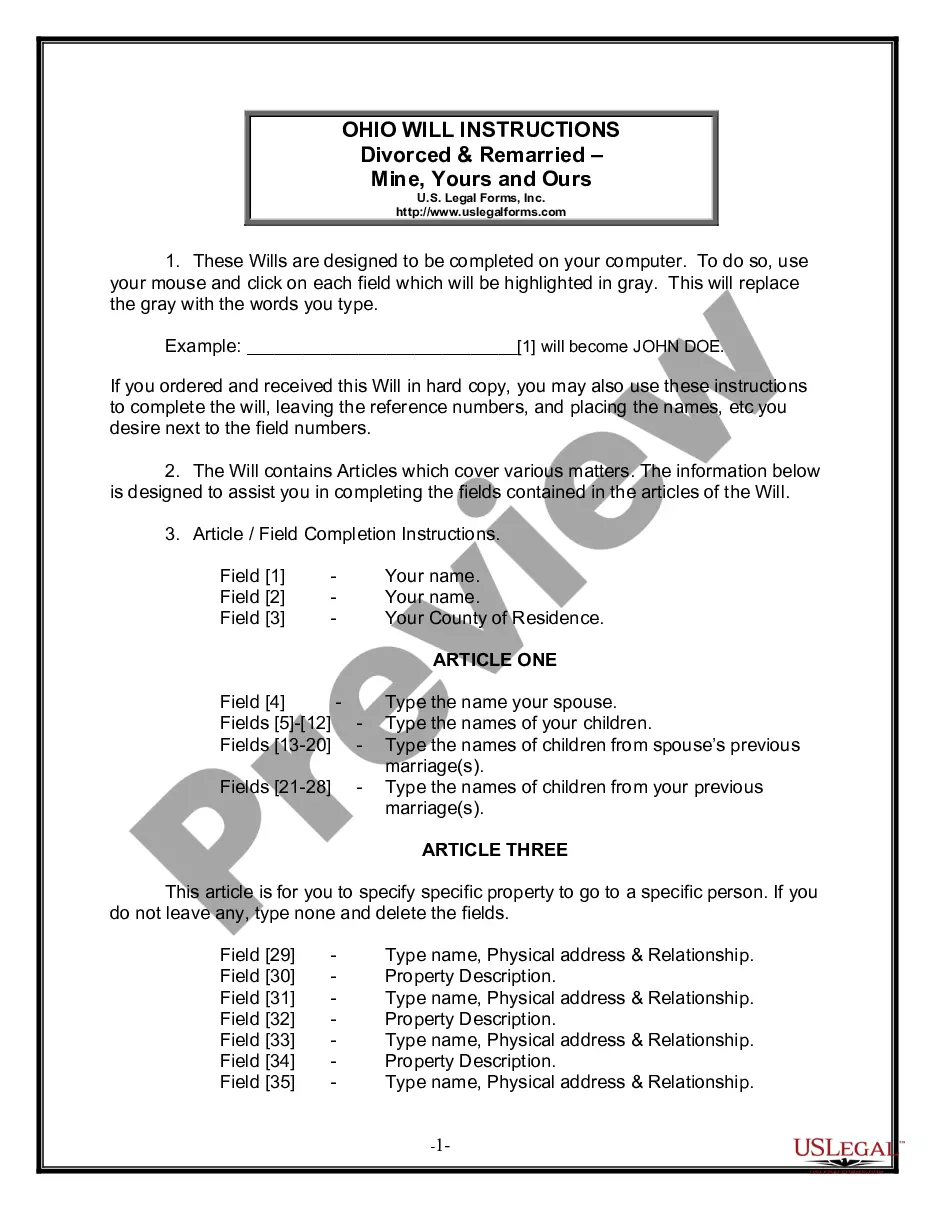
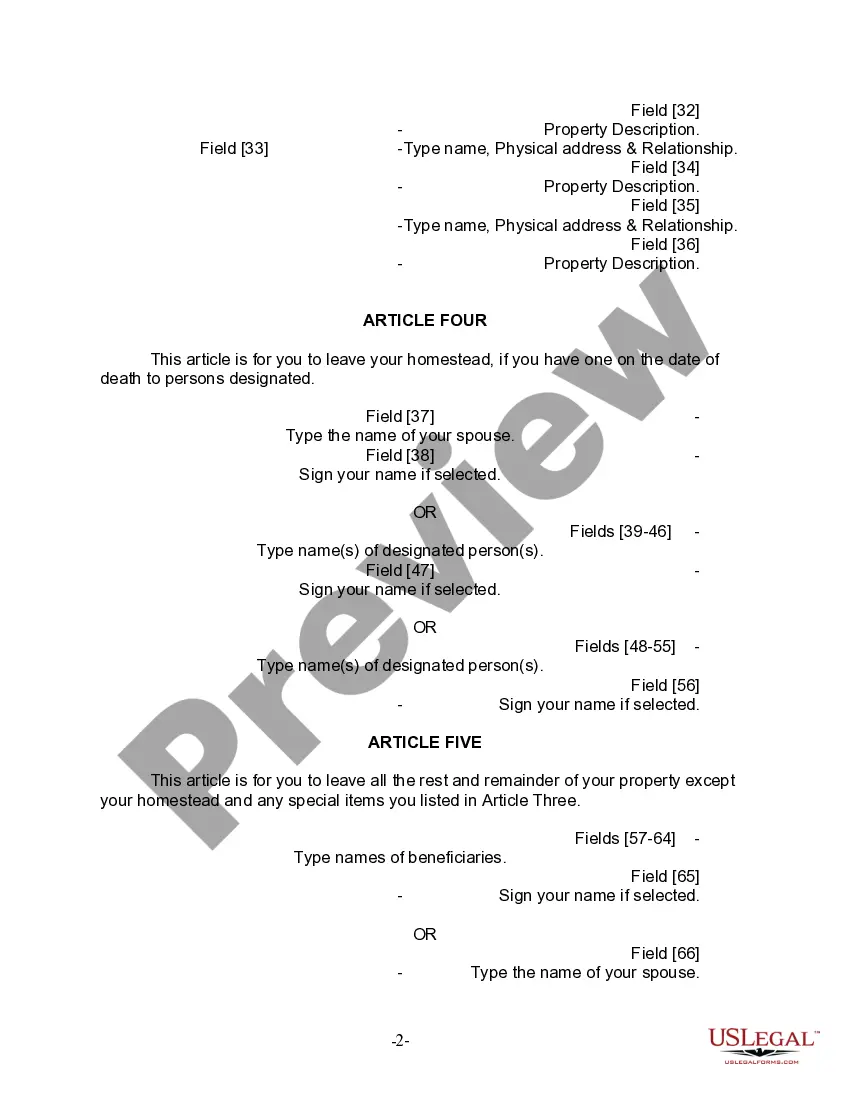
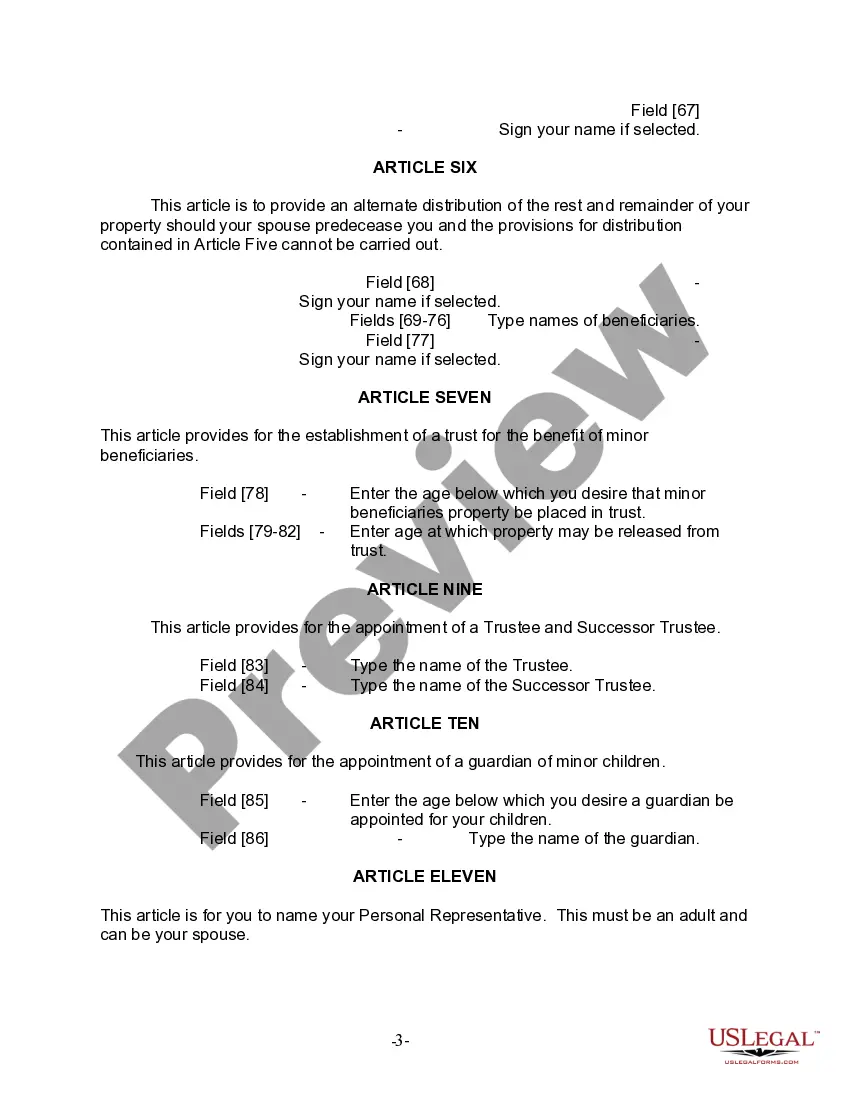
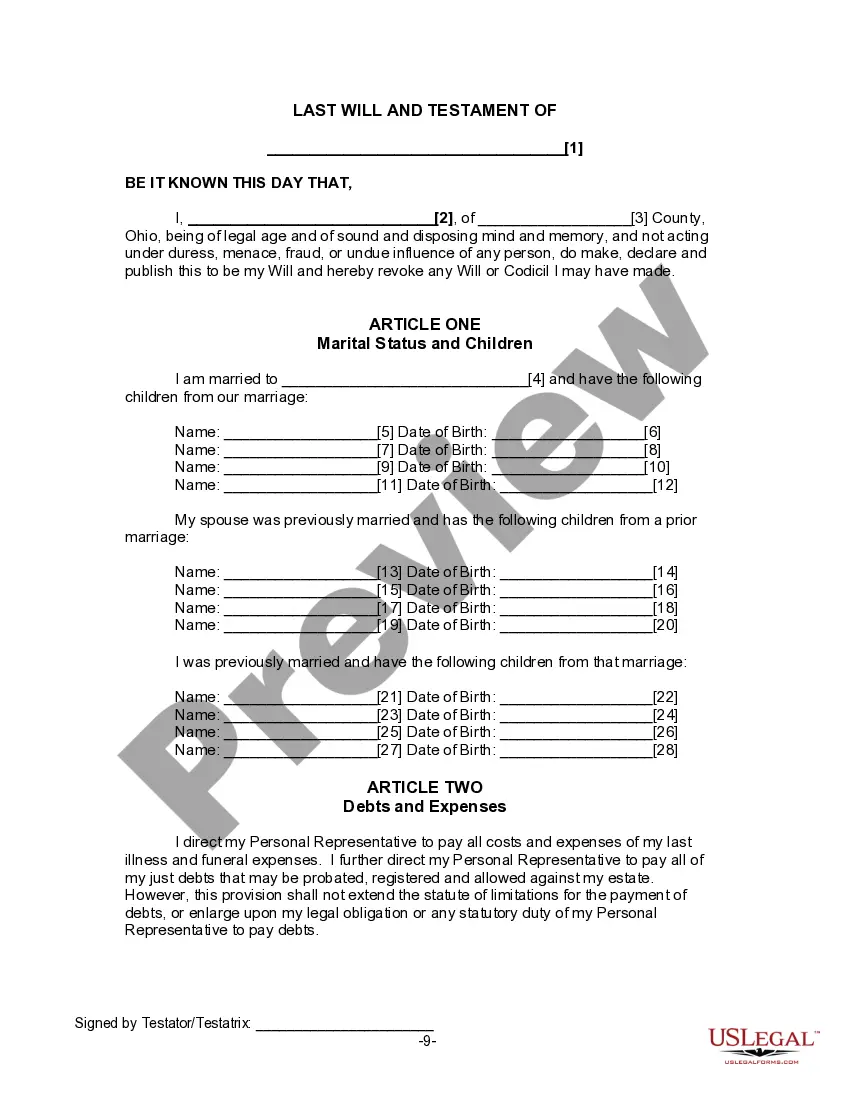
The Last Will and Testament for Divorced and Remarried Persons provides a legal document that outlines how a person's estate should be distributed after their death. Unique to individuals who have remarried and have children from multiple relationships, this form allows for the clear designation of beneficiaries and ensures that the wishes of the testator (the individual making the will) are honored. It includes provisions for appointing an executor, addressing debts and expenses, and handling property specifically for minor children.
Key components of this form
- Marital status and detail of children from current and previous marriages
- Direction for payment of debts, funeral expenses, and administration costs
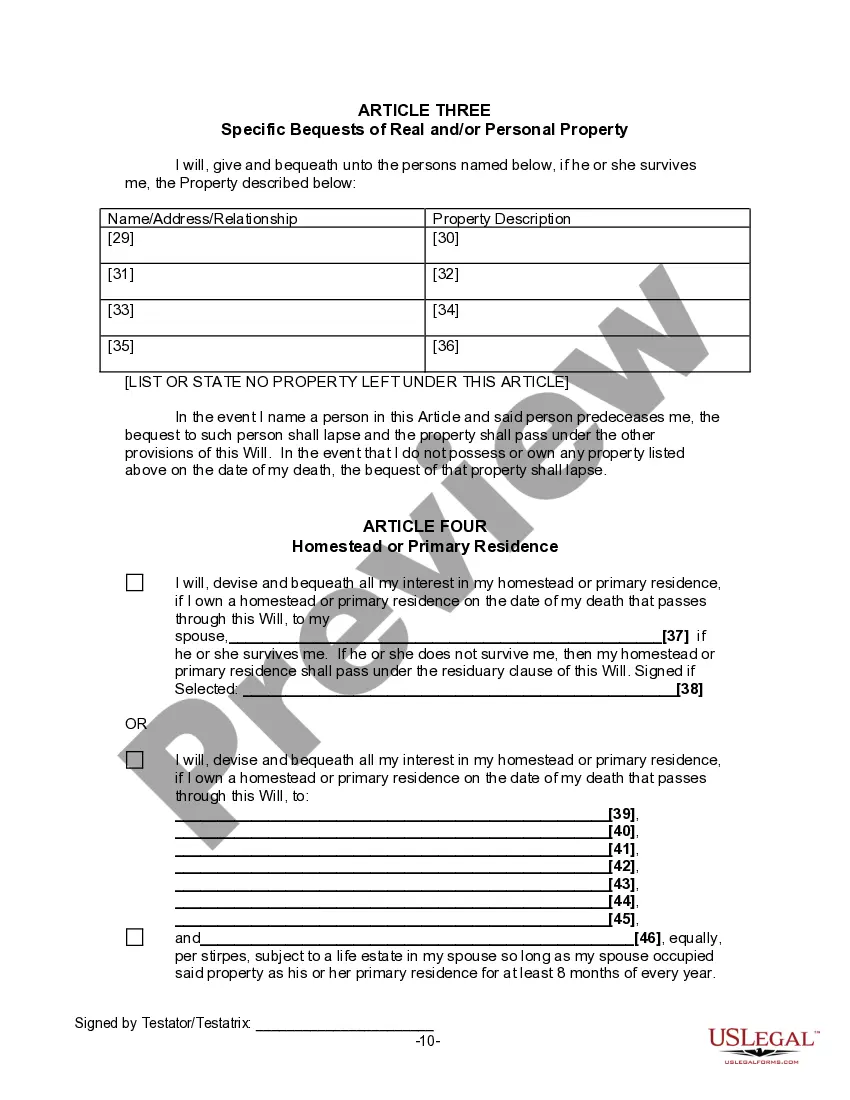
- Specific bequests for property and assets
- Residuary clause for remaining property distribution
- Trust provisions for minor children
- Appointment of a personal representative to manage the estate








Common use cases
This form is essential for individuals who have been divorced and are now remarried, particularly those with children from both their current marriage and past relationships. It is designed to ensure that all children are considered in estate planning and that assets are divided according to the testator's wishes. Use this will to clarify who will inherit specific assets and who will be responsible for managing the estate.
Intended users of this form
- Individuals who are currently married and have children from prior relationships.
- Those who want to ensure fair distribution of their estate among all children.
- Anyone seeking to name a trusted person as the executor of their estate.
- People wishing to provide for minor children through a trust.
How to complete this form
- Enter your personal information and specify your marital status.
- List all children from both current and previous marriages along with their birth dates.
- Specify your bequestsâdetailed descriptions of property and assets.
- Designate an executor who will manage the execution of your will.
- Ensure the will is signed in the presence of two witnesses who are not named in the will.
Does this document require notarization?
Yes, this form must be notarized to be legally valid. In addition to witnessing, a notary public's signature may provide additional assurance of the will's authenticity and compliance with Ohio law.
Get your form ready online
Our built-in tools help you complete, sign, share, and store your documents in one place.
Make edits, fill in missing information, and update formatting in US Legal Forms—just like you would in MS Word.
Download a copy, print it, send it by email, or mail it via USPS—whatever works best for your next step.
Sign and collect signatures with our SignNow integration. Send to multiple recipients, set reminders, and more. Go Premium to unlock E-Sign.
If this form requires notarization, complete it online through a secure video call—no need to meet a notary in person or wait for an appointment.
We protect your documents and personal data by following strict security and privacy standards.

Make edits, fill in missing information, and update formatting in US Legal Forms—just like you would in MS Word.

Download a copy, print it, send it by email, or mail it via USPS—whatever works best for your next step.

Sign and collect signatures with our SignNow integration. Send to multiple recipients, set reminders, and more. Go Premium to unlock E-Sign.

If this form requires notarization, complete it online through a secure video call—no need to meet a notary in person or wait for an appointment.

We protect your documents and personal data by following strict security and privacy standards.
Typical mistakes to avoid
- Not properly witnessing the will, leading to potential validation issues.
- Failing to clearly identify assets or beneficiaries, which can create confusion.
- Not updating the will after significant life changes, such as additional children or remarriage.
- Omitting trust provisions for minor children, which may jeopardize their inheritance.
Why complete this form online
- Convenience of accessing and completing the form from home.
- Ability to edit and customize the document to fit individual needs.
- Reliability of using templates drafted by licensed attorneys.
Summary of main points
- The form is specifically designed for divorced and remarried individuals.
- It allows clear instructions on the distribution of assets among children from different marriages.
- Proper execution including witnesses and notarization is crucial for validity.
- Using this online service ensures access to attorney-drafted templates and ease of use.
Looking for another form?




Form popularity
FAQ
The will must be in writing handwritten or typewritten. The will must be signed by the testator. 2 or more competent witnesses must watch the testator sign the will or hear the testator acknowledge his/her signature and subscribe the will.
No. You can make your own will in Ohio, using Nolo's do-it-yourself will software or online will programs. However, you may want to consult a lawyer in some situations. For example, if you think that your will might be contested or if you want to disinherit your spouse, you should talk with an attorney.
How do I file a will in Ohio? In the state of Ohio, the testator can file a will in their county probate court for safekeeping. There is a filing fee of $25.
Age: The testator must be at least 18 years old. Capacity: The testator must be of sound mind and memory and not under restraint. Signature: The will must be signed by the testator or by someone else in the testator's name in his conscious presence, by his express direction.
Create the initial document. Start by titling the document Last Will and Testament" and including your full legal name and address. Designate an executor. Appoint a guardian. Name the beneficiaries. Designate the assets. Ask witnesses to sign your will. Store your will in a safe place.
The Free Last Will and Testament Template for Word is compatible with Word 2003 or later versions.
The testator must be at least 18 years of age or older; The testator must be of sound mind and memory and not experiencing duress or undue influence from another person; The will must be in writing; The testator must sign the will; The testator's signature must be witnessed by two disinterested parties; and.
A handwritten will, sometimes referred to as a holographic will, is lawful in a majority of states, including Ohio.As with typewritten wills, the will must be signed by the person making the will (the testator) or by some other person in the testator's conscious presence and at the testator's express direction.
Does a will have to be notarized in Ohio? A will does not need to be notarized in order for it to be a valid legal document.