Ohio Last Will and Testament for Divorced person not Remarried with Adult Children
About this form
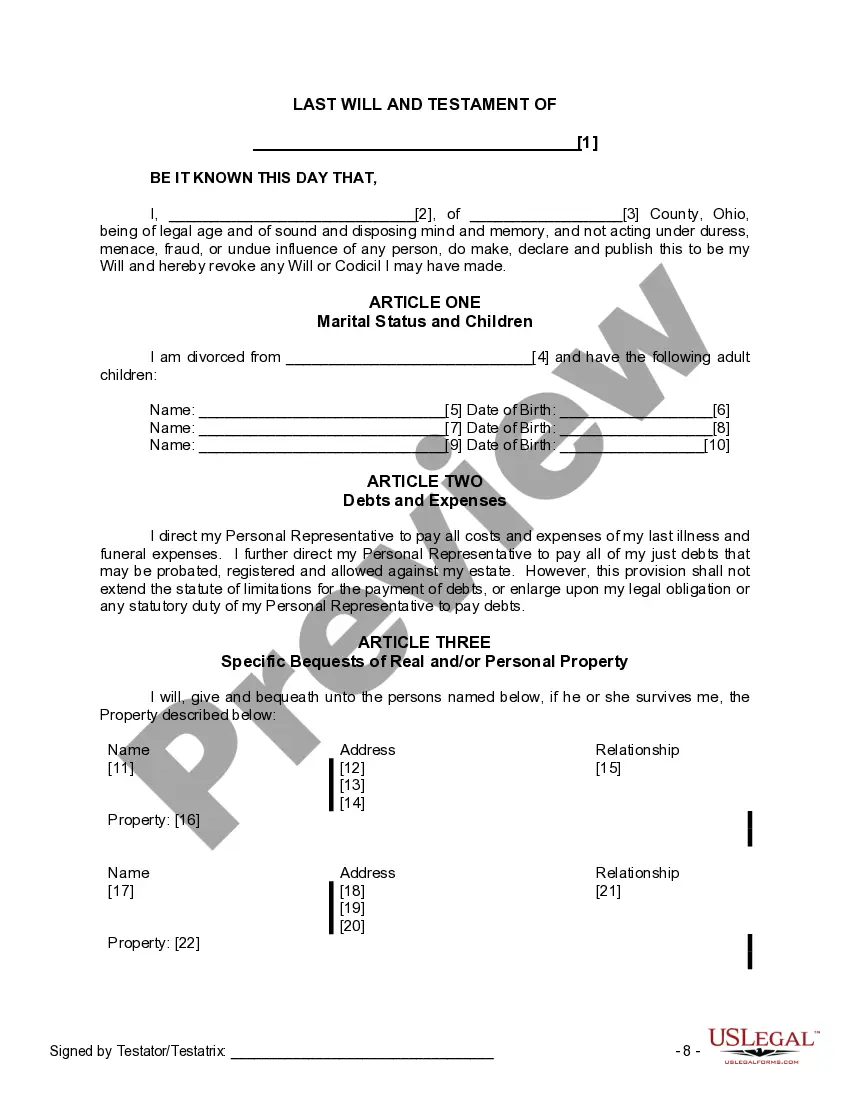
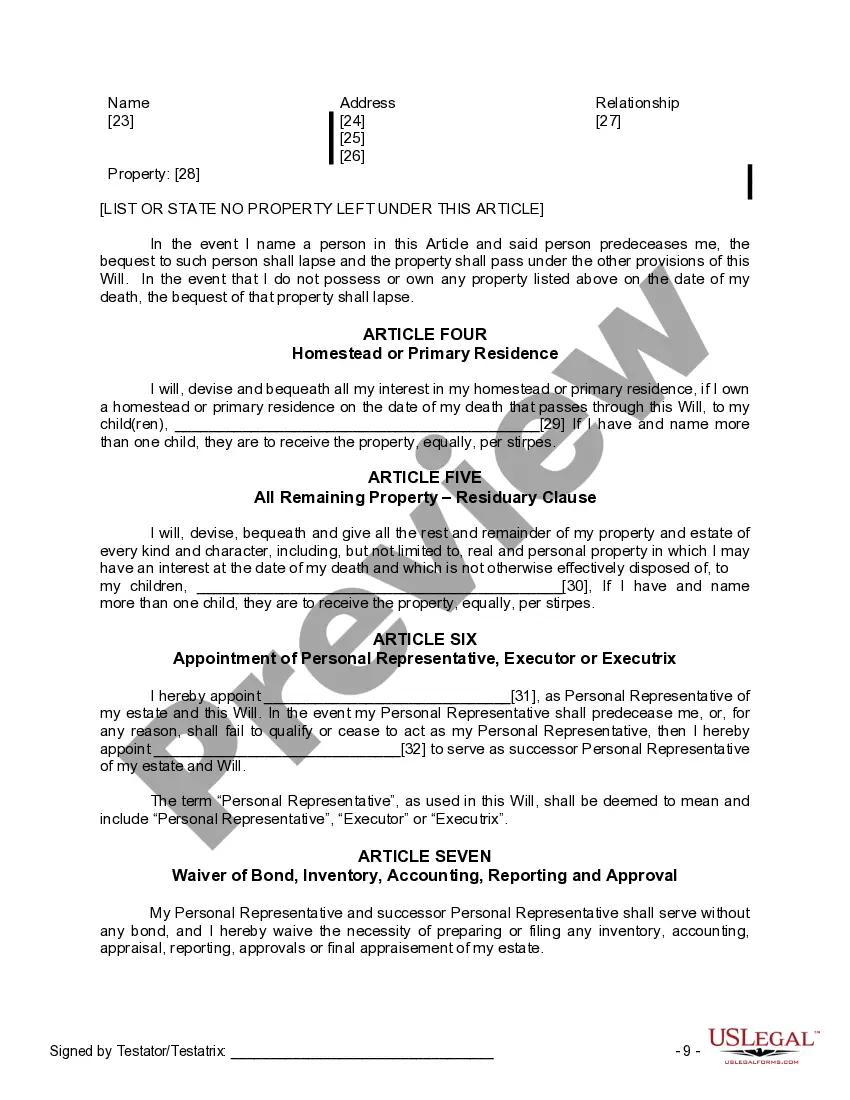
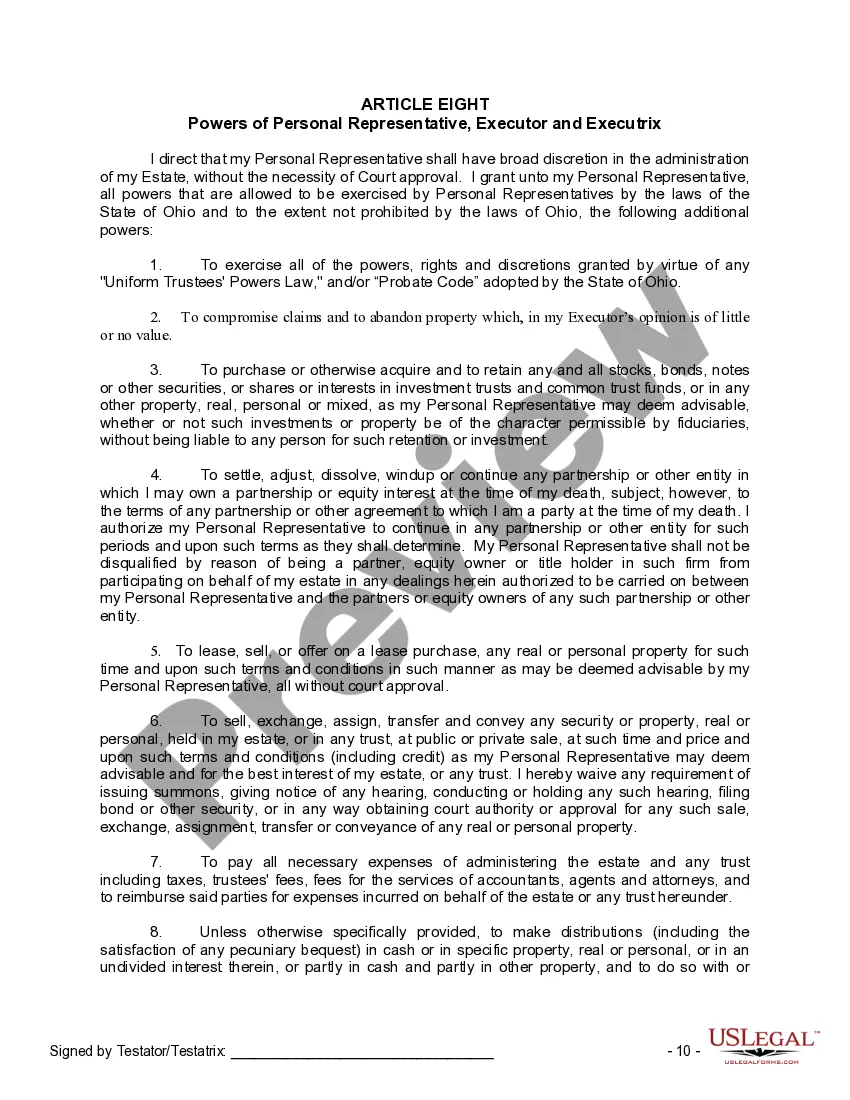
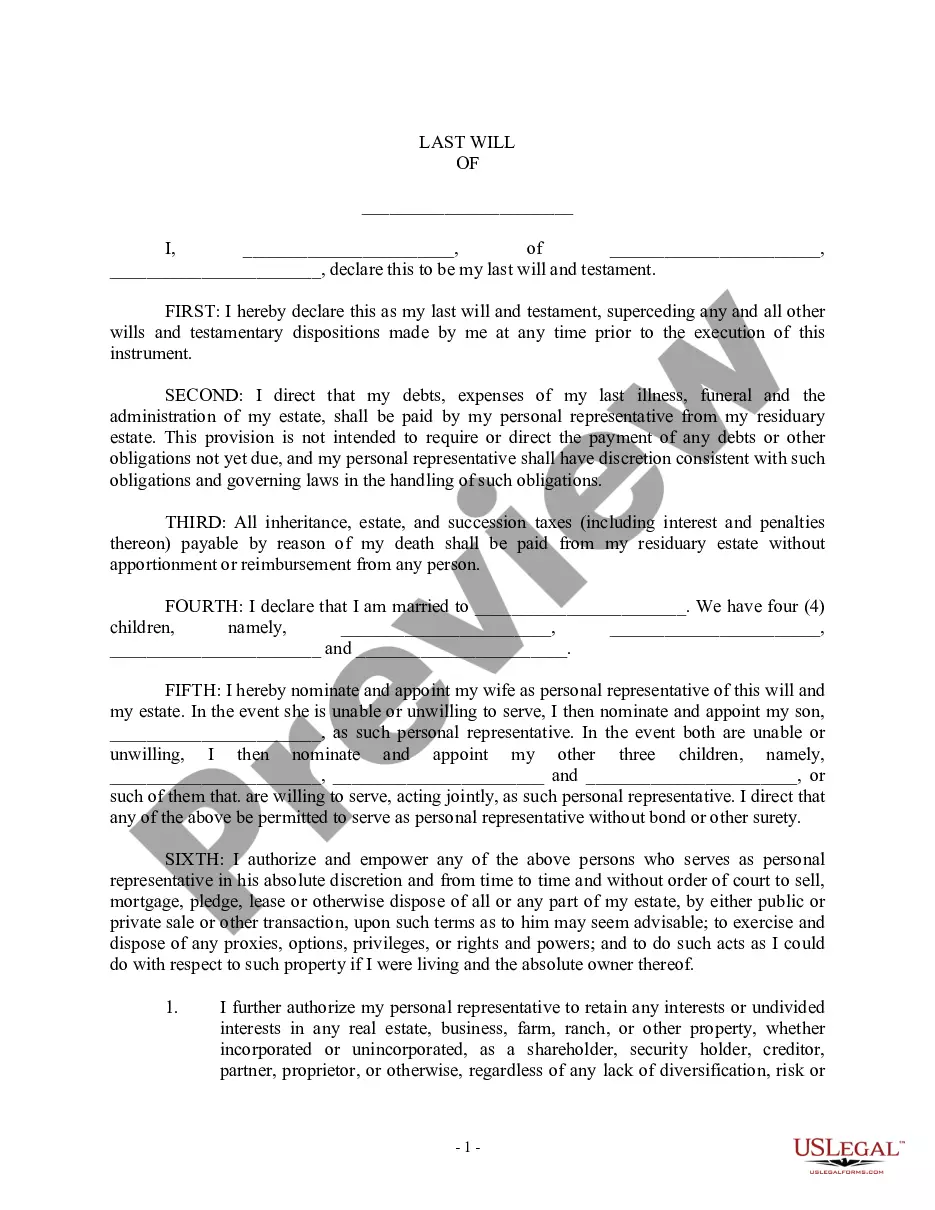
The Last Will and Testament for a divorced person not remarried with adult children is a legal document that outlines how your assets will be distributed upon your death. This particular Will is tailored to meet the needs of individuals who have undergone a divorce and have adult children, allowing them to specify the distribution of their estate clearly and avoid potential disputes. Unlike standard Wills, this form takes into account your personal circumstances as a divorced individual with adult beneficiaries.
Key parts of this document
- Appointment of a personal representative to handle the estate.
- Specification of beneficiaries, including adult children and ex-spouse.
- Provision for specific bequests of personal and real property.
- Clauses regarding debts, final expenses, and the homestead.
- Instructions for signing in front of witnesses and notarization if necessary.





When to use this document
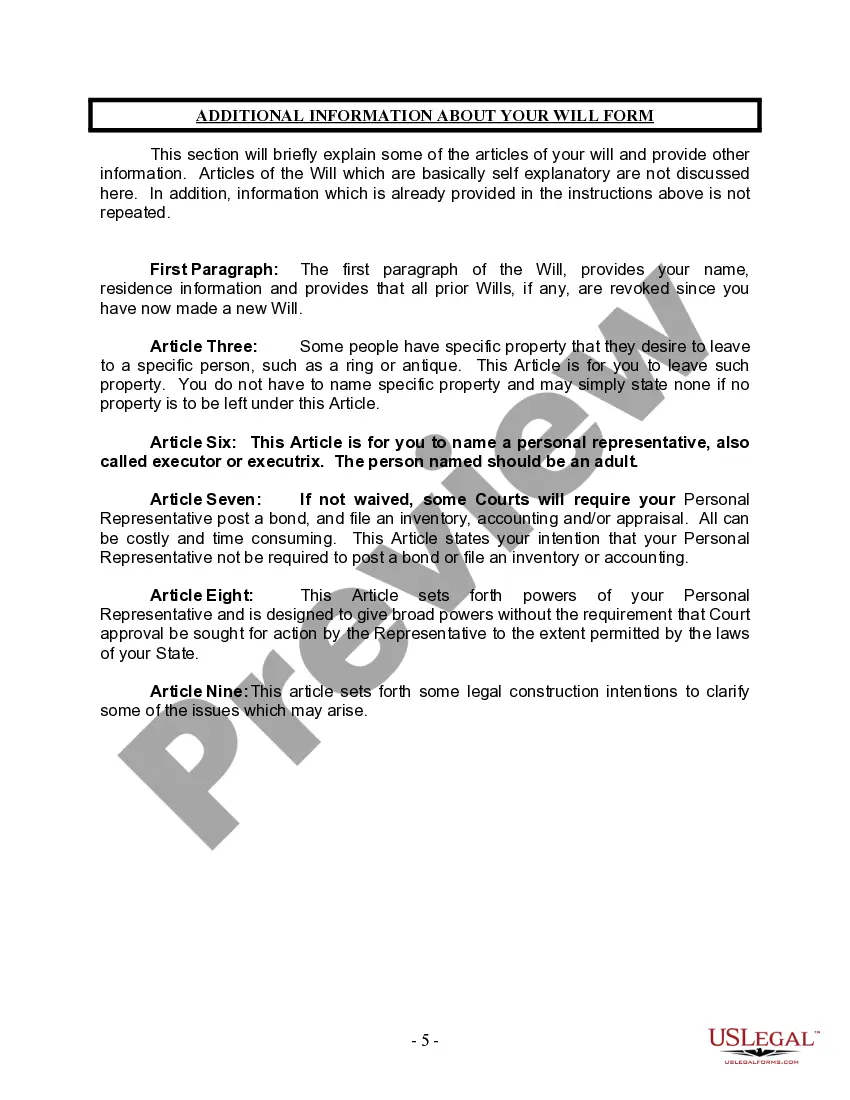
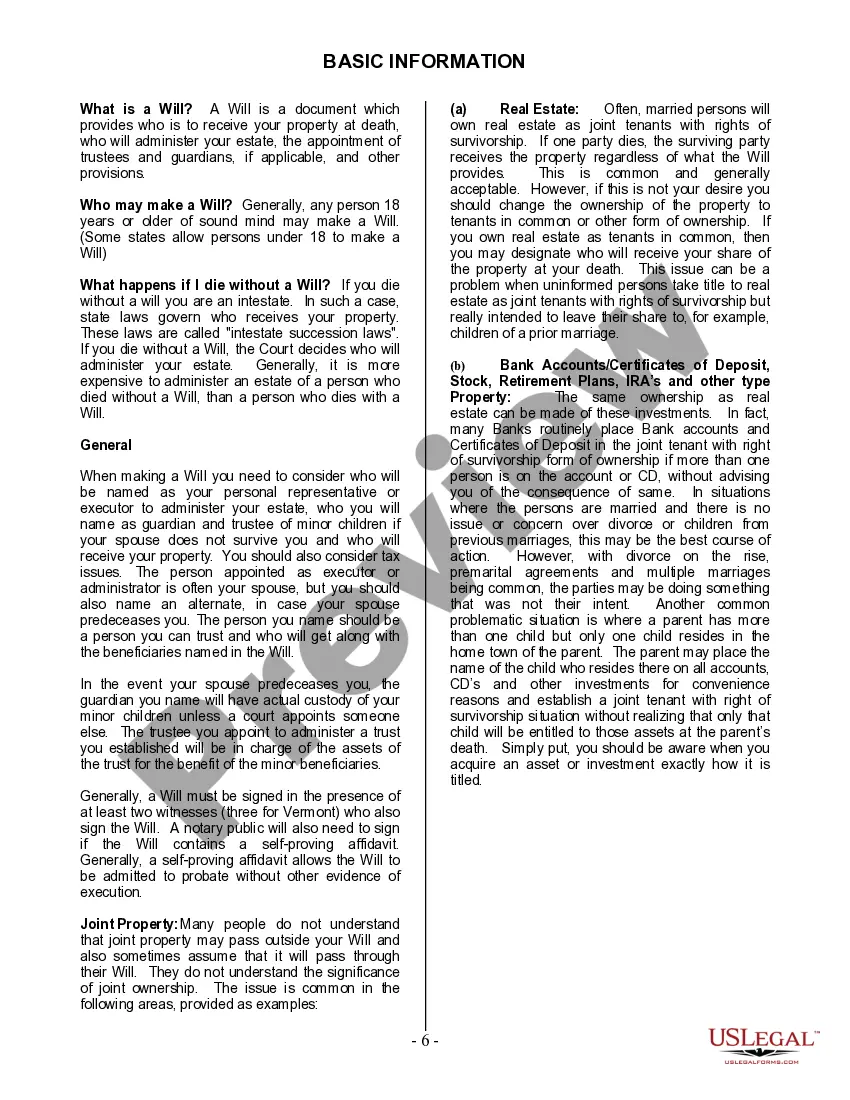
You should use this form when you wish to create a legally binding document that specifies how your assets will be distributed after your death. This is particularly important if you have been divorced and are not remarried, ensuring that your adult children receive your inheritance as you intend. Additionally, if you want to revoke previous Wills made during your marriage, this Will accomplishes that as well.
Intended users of this form
- Individuals who are divorced and not remarried.
- Parents of adult children looking to designate inheritance.
- Persons wanting to ensure specific distributions of property.
- Anyone seeking to revoke any previous Wills due to changing circumstances.
Instructions for completing this form
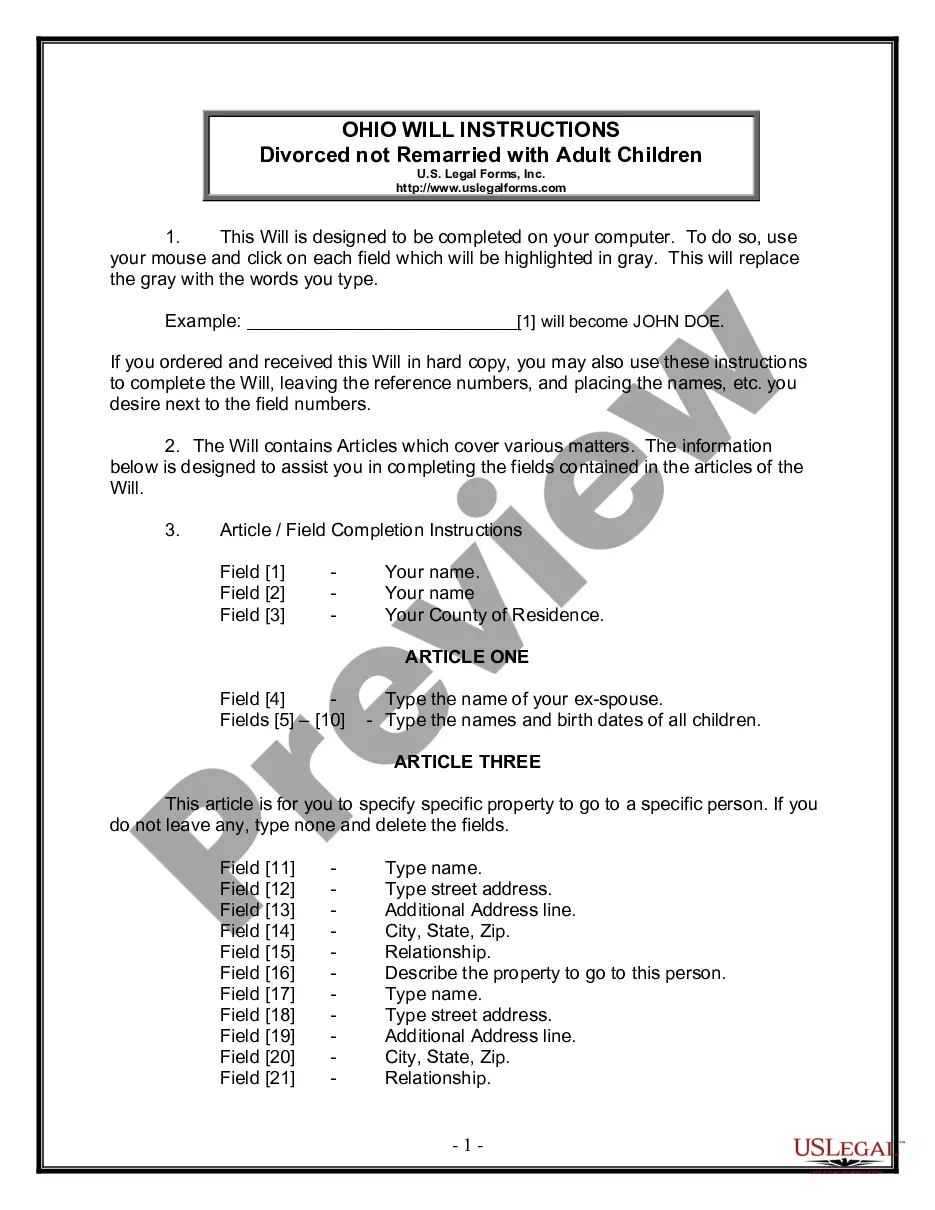
- Enter your full name and county of residence at the beginning.
- Specify your ex-spouse's name and provide the names and birth dates of all adult children.
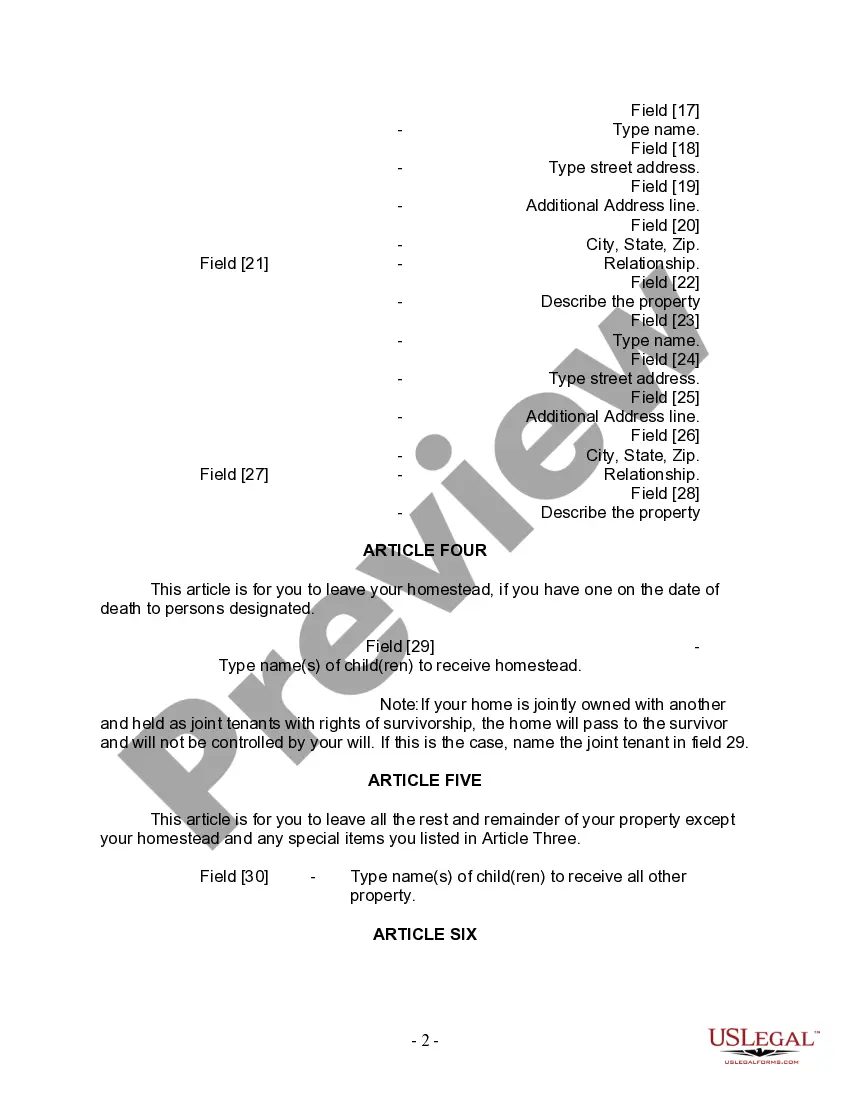
- Detail any specific property you want to bequeath by filling out the respective fields.
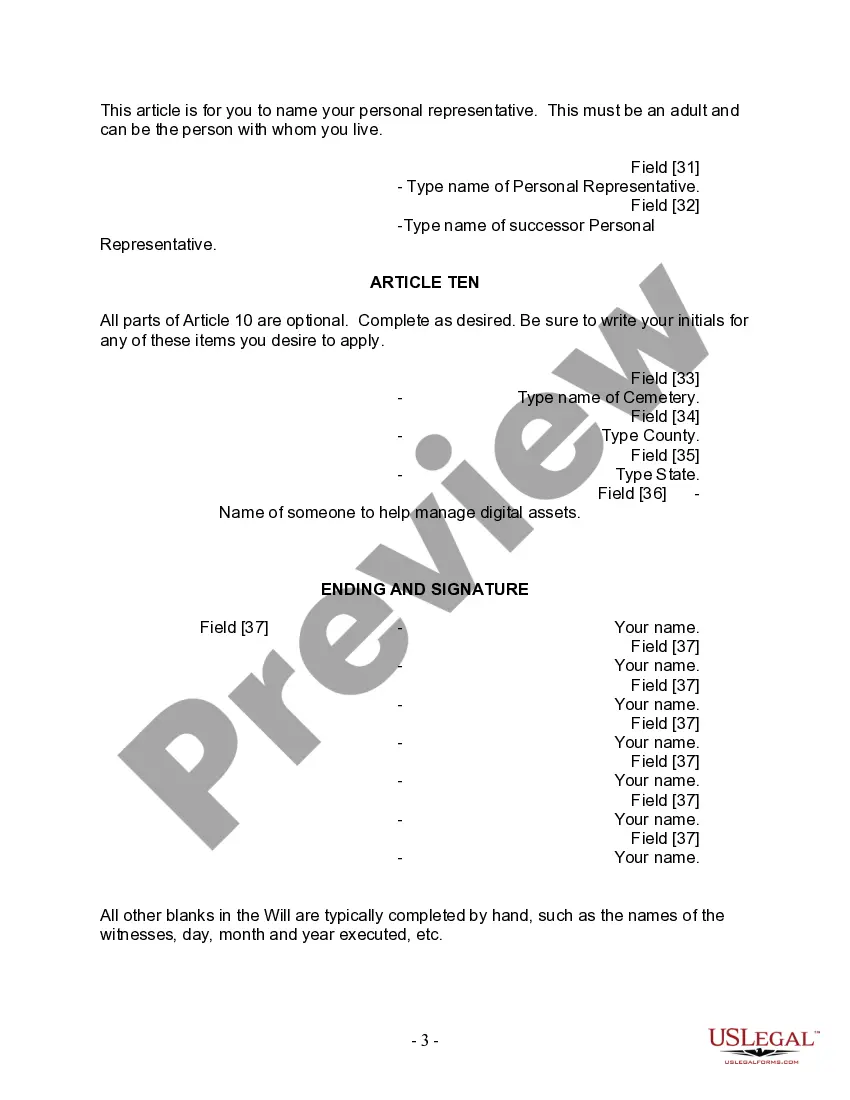
- Designate your personal representative who will manage your estate after your death.
- Ensure the completed Will is signed in the presence of two witnesses, and include notarization if required.
Is notarization required?
Notarization is required for this form to take effect. Our online notarization service, powered by Notarize, lets you verify and sign documents remotely through an encrypted video session, available 24/7.
Get your form ready online
Our built-in tools help you complete, sign, share, and store your documents in one place.
Make edits, fill in missing information, and update formatting in US Legal Forms—just like you would in MS Word.
Download a copy, print it, send it by email, or mail it via USPS—whatever works best for your next step.
Sign and collect signatures with our SignNow integration. Send to multiple recipients, set reminders, and more. Go Premium to unlock E-Sign.
If this form requires notarization, complete it online through a secure video call—no need to meet a notary in person or wait for an appointment.
We protect your documents and personal data by following strict security and privacy standards.
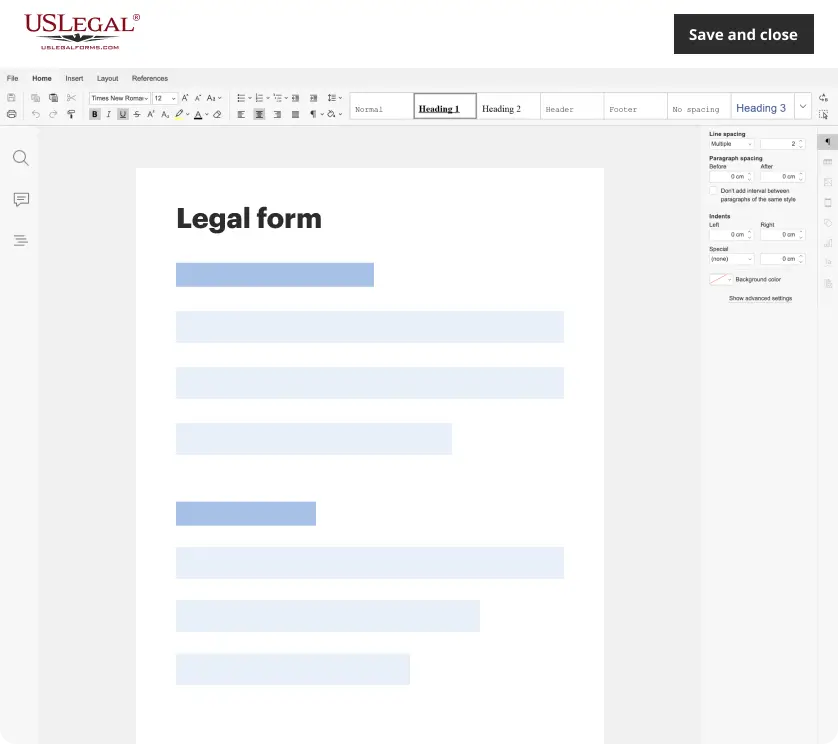
Make edits, fill in missing information, and update formatting in US Legal Forms—just like you would in MS Word.
Download a copy, print it, send it by email, or mail it via USPS—whatever works best for your next step.
Sign and collect signatures with our SignNow integration. Send to multiple recipients, set reminders, and more. Go Premium to unlock E-Sign.
If this form requires notarization, complete it online through a secure video call—no need to meet a notary in person or wait for an appointment.
We protect your documents and personal data by following strict security and privacy standards.
Mistakes to watch out for
- Failing to have the Will signed in the presence of the required number of witnesses.
- Not specifying property clearly, leading to potential disputes among beneficiaries.
- Not updating the Will after significant life changes, such as additional divorces or changes in family dynamics.
Why use this form online
- Convenience of completing your Will from home at your own pace.
- Editable format allows you to customize the Will to your specific needs.
- Access to expert knowledge through templates drafted by licensed attorneys.
What to keep in mind
- Create a will to ensure your property is distributed according to your wishes.
- Include essential details about your marital status and beneficiaries.
- Ensure the will is properly executed with required signatures and notarization for legality.
Looking for another form?
Form popularity
FAQ
Family Law covers issues that can have a major impact on individual's lives. Family involves emotionally charged issues such as child custody battles, division of assets during a divorce as well as wills, and what happens when they are contested.
Anyone who is an immediate family member of the deceased, whether or not he or she is listed in the will, is legally entitled to view a copy.Those are the primary parties who may request access to a will, but there are other less groups of people that also have a legal right to view and receive copies of the document.
As an heir, you are entitled to a copy of the Will, whether you are named as a beneficiary or not. If there is a probate estate, then you should receive a copy of the Will. If you do not, you can always get it from the court. If there is no probate estate, then the Will is not going to do anything.
Once filed, the will is a matter of public record. Anyone can see it. Interested parties can also usually learn the name of the executor by getting a copy of the death certificate from the county registrar.
No. You can make your own will in Ohio, using Nolo's do-it-yourself will software or online will programs. However, you may want to consult a lawyer in some situations. For example, if you think that your will might be contested or if you want to disinherit your spouse, you should talk with an attorney.
The simple answer is no. There is no automatic entitlement to see a person's will until a grant of probate has been passed. At that point, it is a public document and it is open to anyone to apply to the Probate Office to see a copy. That right is not limited to family or to people named in the will.
The will of a person, after divorce, remains valid as to any person named as a beneficiary, except the former divorced spouse, whose beneficiary status if any, has been rendered invalid or nonexistent by statute.
According to Ohio law and case history, a will is valid if it meets the following requirements: The testator (the person who is leaving the will) must be 18 years of age or older. The testator must be of sound mind. The testator must not otherwise be under restraint or under the undue influence of another person.
In Ohio, with very few exceptions, all wills need to be in writing. Ohio does allow holographic wills, which means you can actually handwrite your own will in the state. As long as your handwritten will meets the other requirements, it will be valid.