New York New State Resident Package
What is this form package?
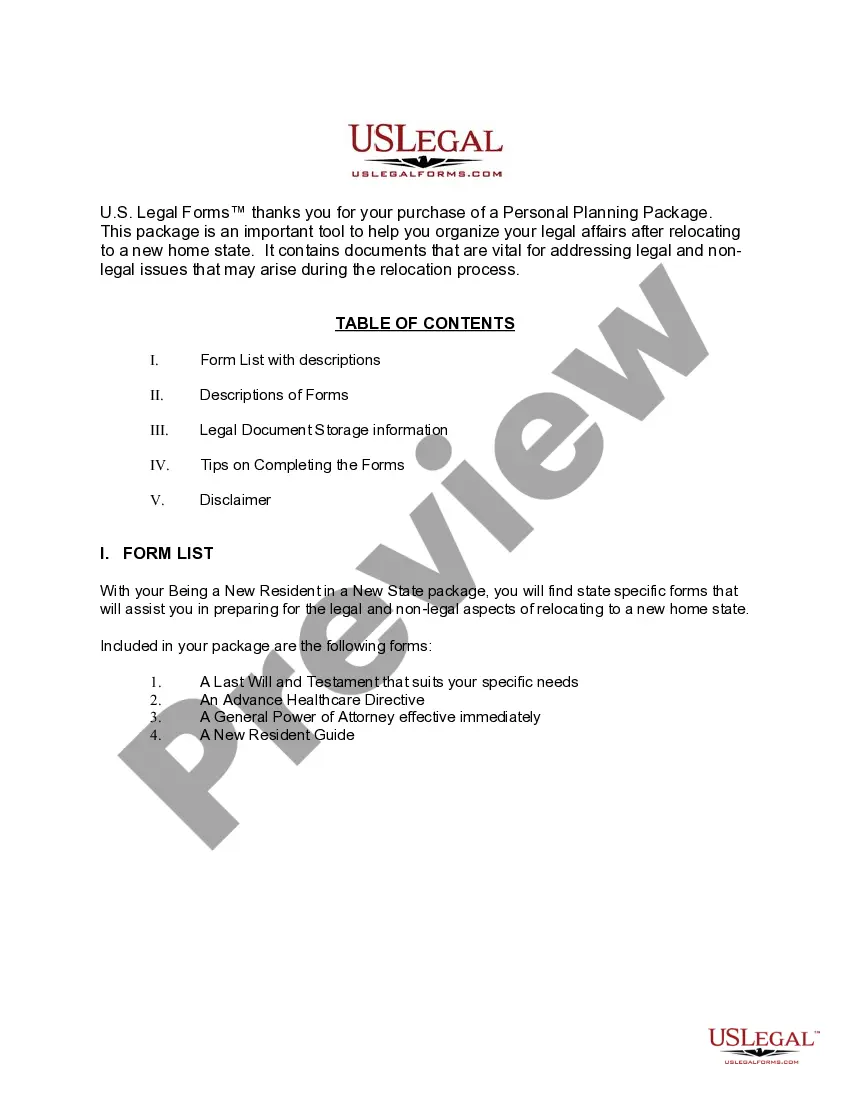
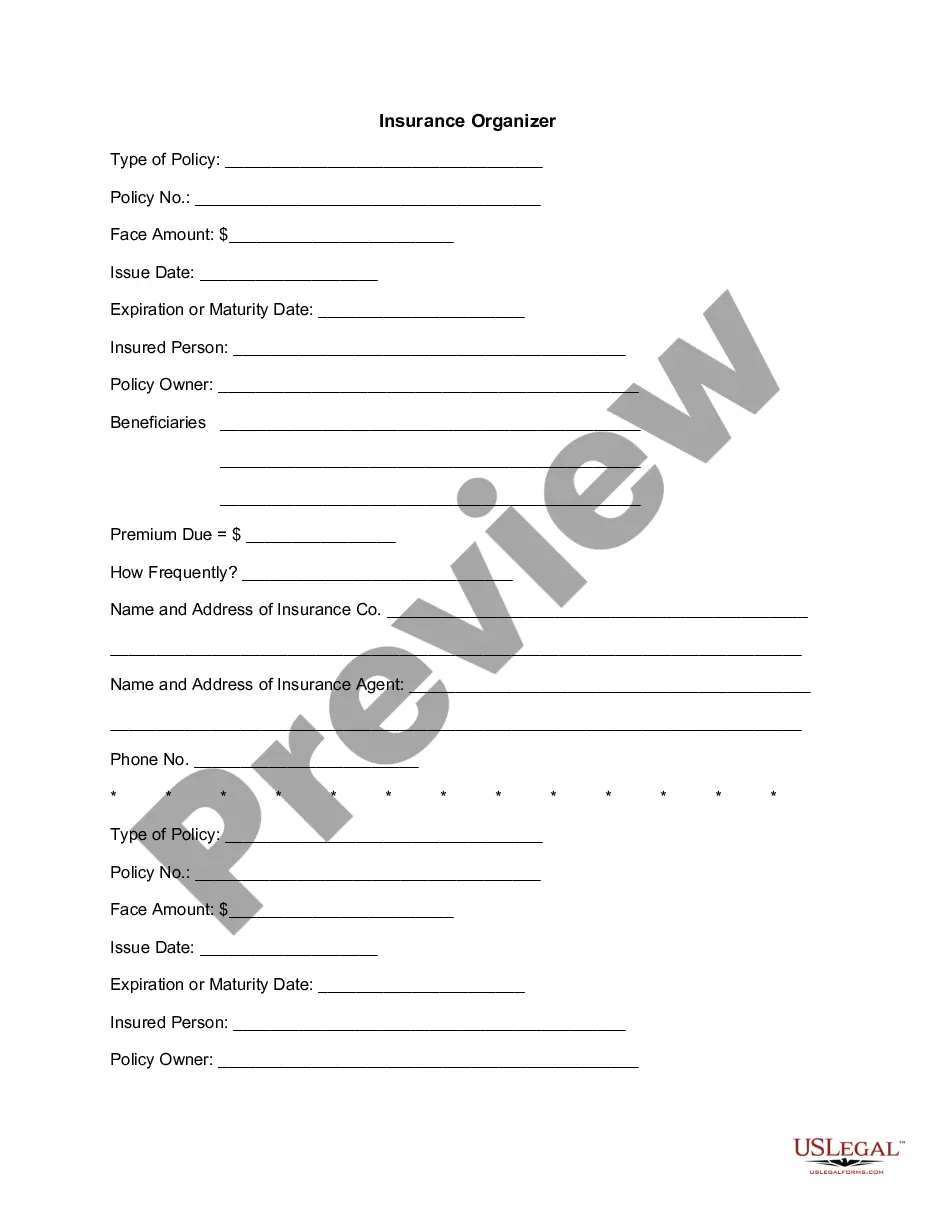
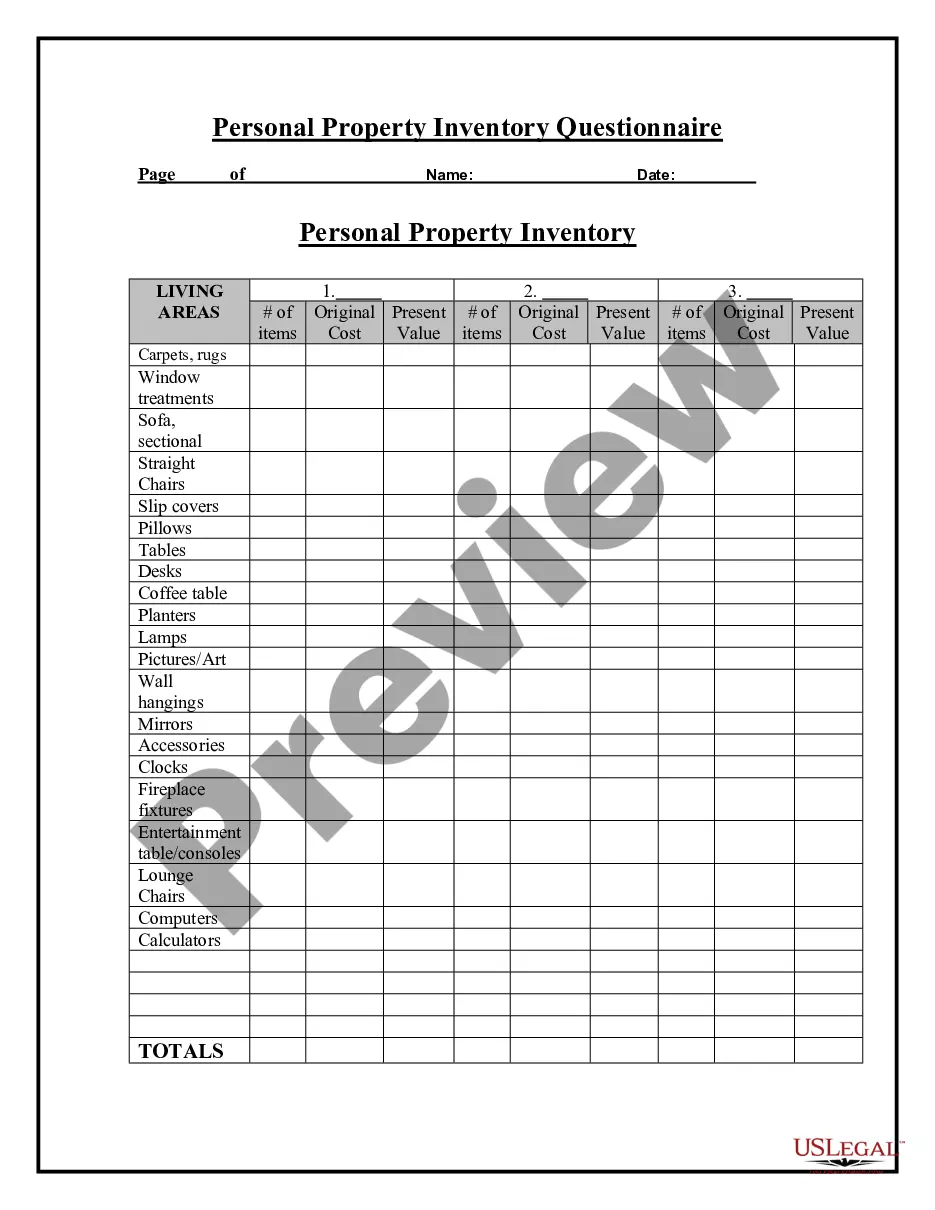
The New York New State Resident Package is designed to help individuals who have relocated to New York organize their legal affairs. This package includes essential state-specific documents that address both legal and non-legal issues arising from your move. Unlike other packages, it is tailored specifically for new residents in New York, ensuring compliance with local laws and practices.
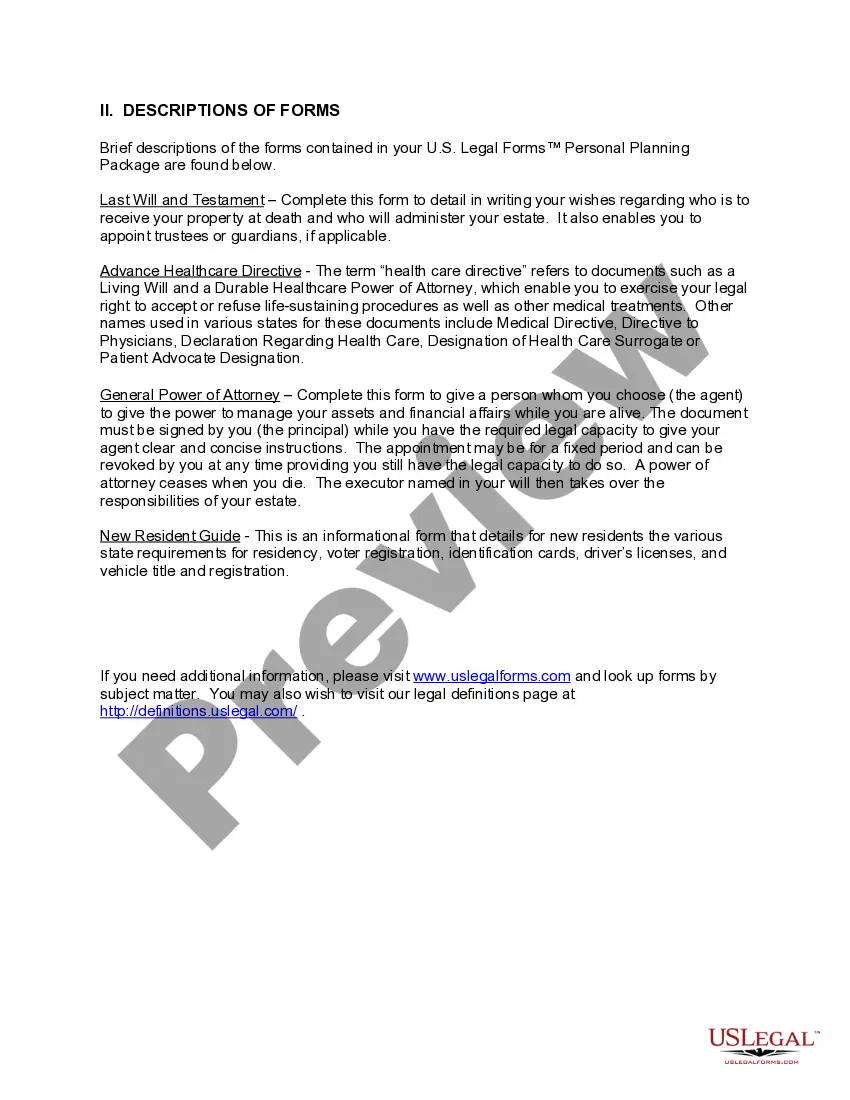
Forms you’ll find in this package
When this form package is needed
This package is ideal for individuals who have recently moved to New York and need to manage important legal matters. Consider using this package when:
- You want to establish a Last Will and Testament to specify how your assets should be distributed.
- You need to create an Advance Healthcare Directive to outline your medical preferences.
- You require a General Power of Attorney to designate someone to handle your financial affairs.
- You need guidance on the legal requirements for new residents, including voter registration and vehicle registration.
Intended users of this form package
- Individuals who have recently relocated to New York.
- Anyone needing to establish or update their legal documents in line with New York law.
- New residents looking for guidance on state-specific requirements and rights.
How to complete these forms
- Review each document in the package to understand its purpose and requirements.
- Complete the Last Will and Testament by filling out your details and specifying your beneficiaries.
- Fill out the Advance Healthcare Directive to articulate your medical care preferences.
- Designate an agent in the General Power of Attorney to manage your financial matters as needed.
- Follow the instructions in the New Resident Guide to ensure compliance with local regulations.
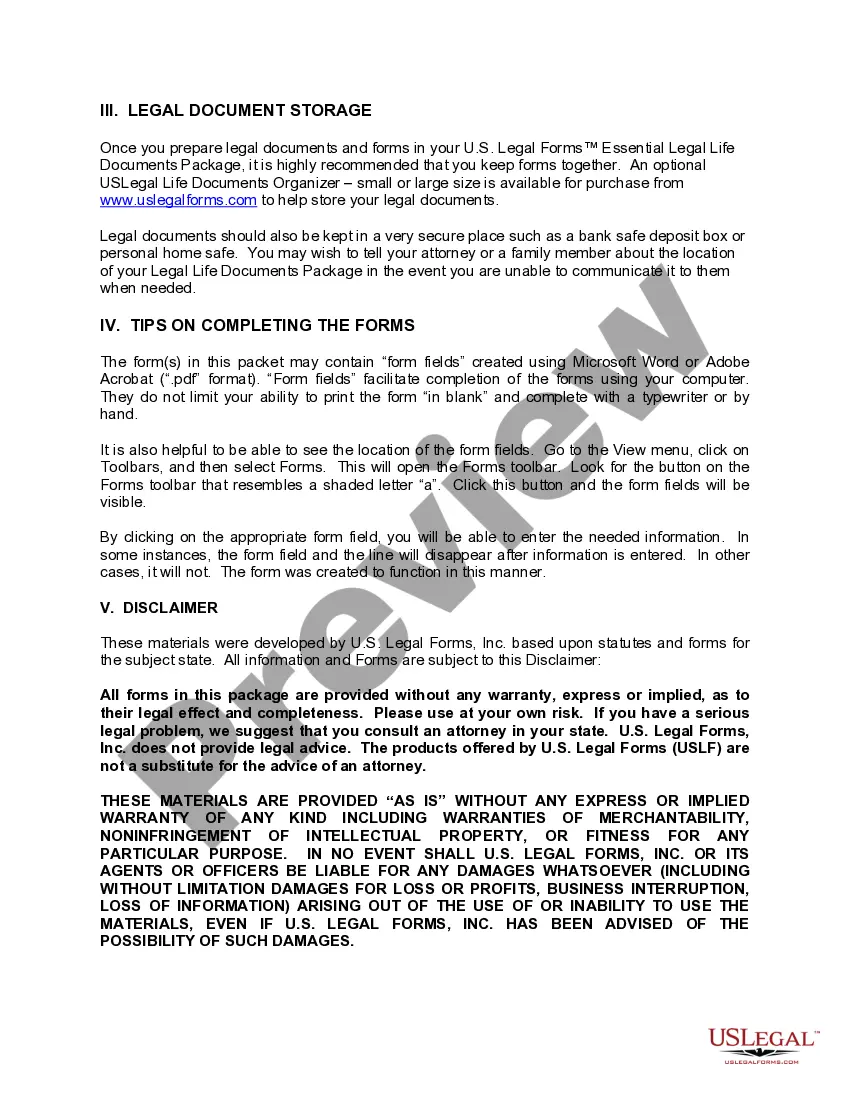
- Store your completed documents securely, such as in a safe or a bank safe deposit box.
Do forms in this package need to be notarized?
Notarization is required for one or more forms in this package. US Legal Forms provides secure online notarization powered by Notarize, allowing you to complete the process through a verified video call.
Get your form ready online
Our built-in tools help you complete, sign, share, and store your documents in one place.
Make edits, fill in missing information, and update formatting in US Legal Forms—just like you would in MS Word.
Download a copy, print it, send it by email, or mail it via USPS—whatever works best for your next step.
Sign and collect signatures with our SignNow integration. Send to multiple recipients, set reminders, and more. Go Premium to unlock E-Sign.
If this form requires notarization, complete it online through a secure video call—no need to meet a notary in person or wait for an appointment.
We protect your documents and personal data by following strict security and privacy standards.
Make edits, fill in missing information, and update formatting in US Legal Forms—just like you would in MS Word.
Download a copy, print it, send it by email, or mail it via USPS—whatever works best for your next step.
Sign and collect signatures with our SignNow integration. Send to multiple recipients, set reminders, and more. Go Premium to unlock E-Sign.

If this form requires notarization, complete it online through a secure video call—no need to meet a notary in person or wait for an appointment.
We protect your documents and personal data by following strict security and privacy standards.
Typical mistakes to avoid
- Failing to update the Last Will and Testament after a significant life change.
- Not providing clear instructions in the Advance Healthcare Directive.
- Overlooking local deadlines for voter or vehicle registration as a new resident.
- Neglecting to communicate the location of your documents to a trusted person.
Why complete this package online
- Convenience of immediate access and downloadable formats for ease of use.
- Editability allows you to customize documents from home at your own pace.
- Reliability of forms created by licensed attorneys to meet New York legal standards.
Summary of main points
- The New York New State Resident Package provides essential legal documents for new residents.
- Using this package helps ensure compliance with state-specific legal requirements.
- Careful completion and storage of these documents can help protect your rights and wishes.
Looking for another form?

Form popularity
FAQ
Students applying for in-state tuition must have resided in New York State, with the intent to stay, for at least one year prior to the first day of class for the semester in which they are applying for a determination. Students must submit proper documentation along with the CUNY Residency Application (pdf).
For proof of residency in CA, a printed copy of a cell phone bill, utility bill, credit card/bank statement is acceptable.
Electronic utility bills showing an Alberta address. Telephone bill. Gas bill. Cable TV bill. Other non-utility statements or correspondence mailed to your Alberta address. Bank / Credit Card statement. Alberta Social Benefit Statements. Income tax assessment summary (Notice of Assessment)
Examples of acceptable proof of residency are: 25aa lease or deed, or if not available, a letter from a landlord on the landlord's letterhead indicating dates of tenancy and rent payments 25aa postmarked envelope mailed to you at your current address, dated less than six (6) months ago 25aa prior year's income tax return (
Persons who have been physically present in New York State for at least twelve months but have maintained a fixed, permanent and principal residence outside of New York State shall not be considered New York State residents.
If you don't have any utility bills, you can still prove your residency through other means. You can use a combination of your license, tax documents, bank statements, lease agreements, and other official paperwork. The essential factor is that the form of proof shows your address and name.
These proofs of residency usually come in the form of other government ID (showing an address), utility bill, lease agreement, or any valid document showing an address with the resident's name.
You are a New York State resident for income tax purposes if:you maintain a permanent place of abode in New York State for substantially all of the taxable year and spend 184 days or more in New York State during the taxable year, whether or not you are domiciled in New York State for any portion of the taxable year.