Utah Petitioner's Affidavit of Jurisdiction and Grounds for Divorce
Overview of this form
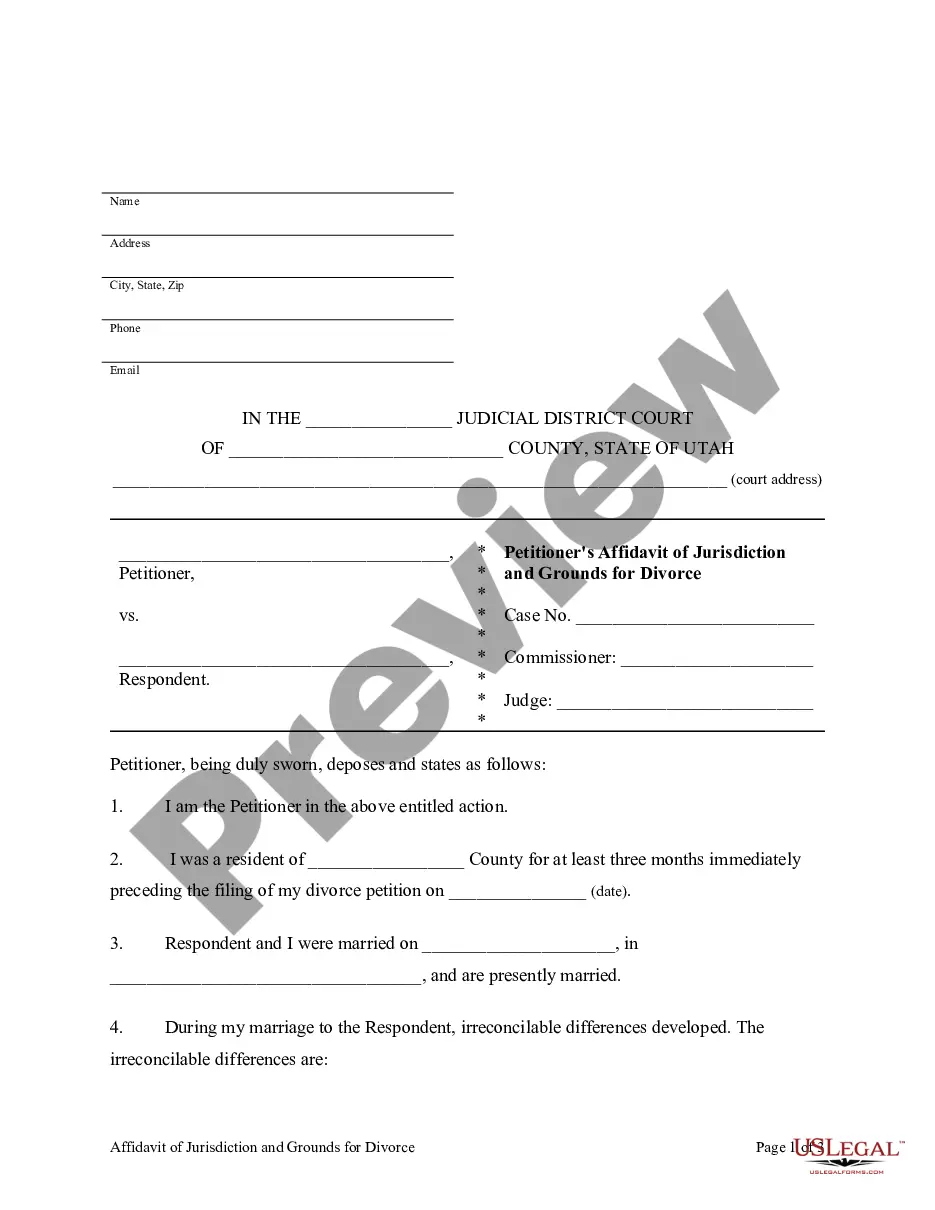
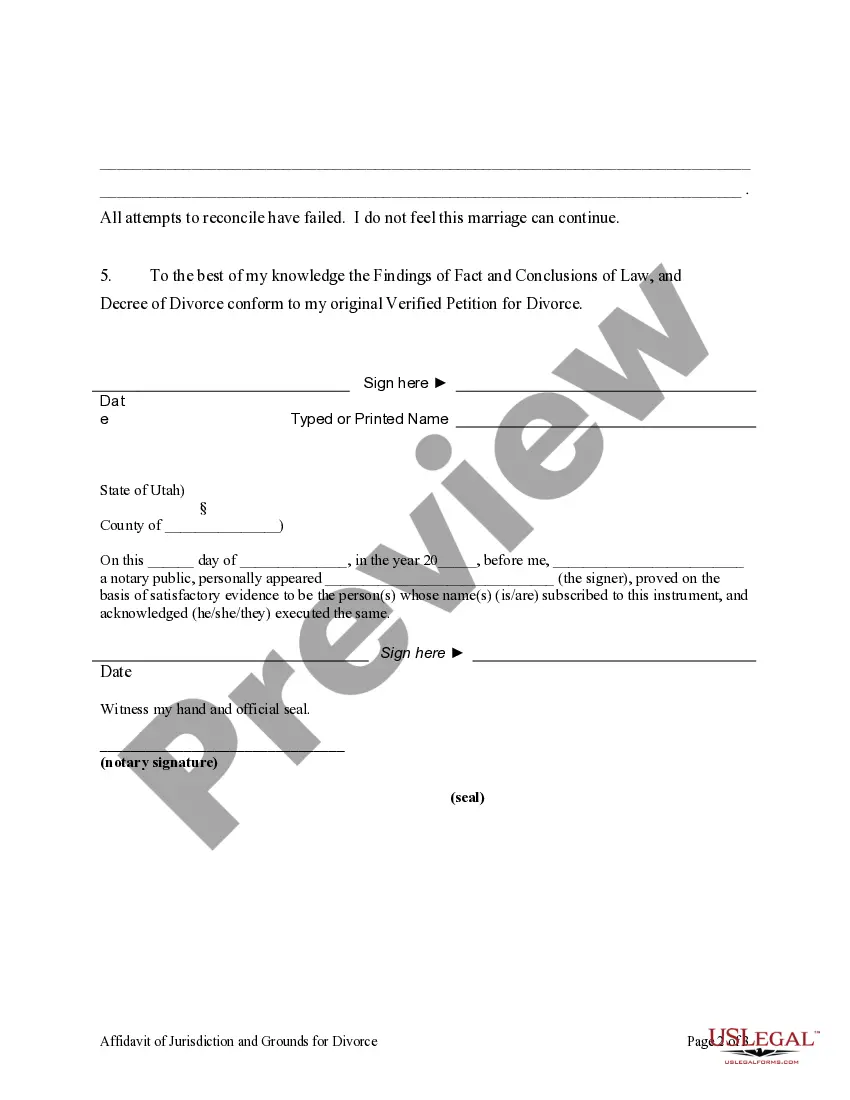
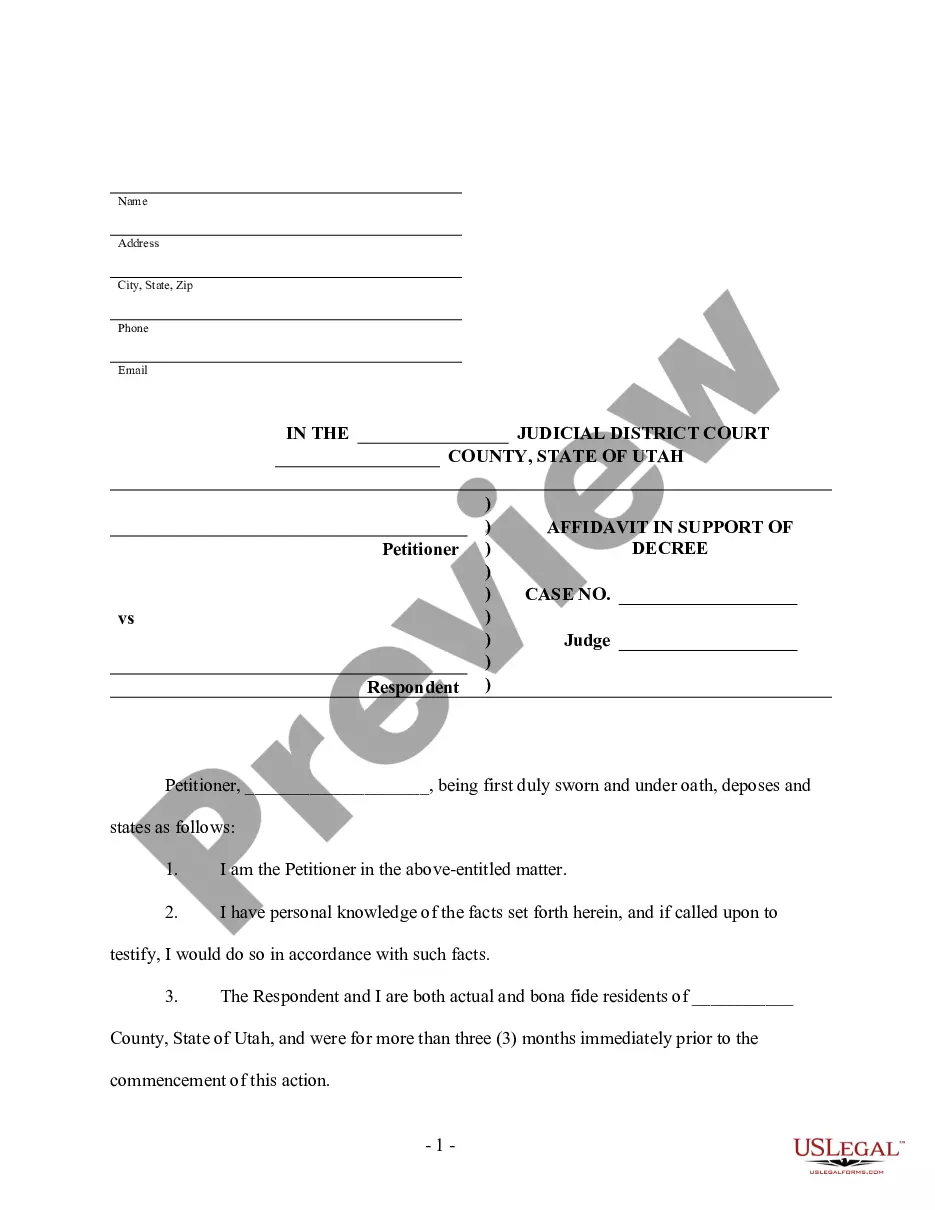
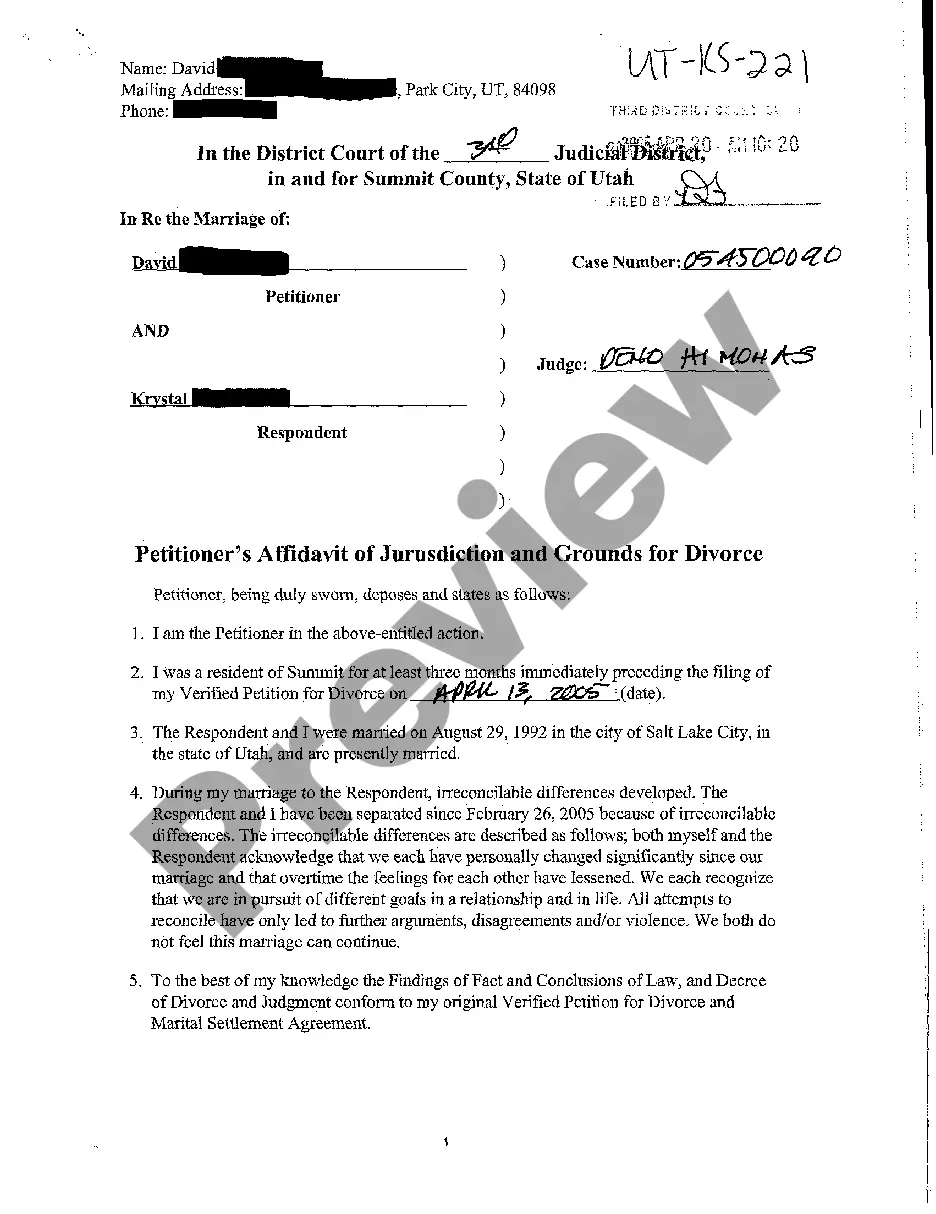
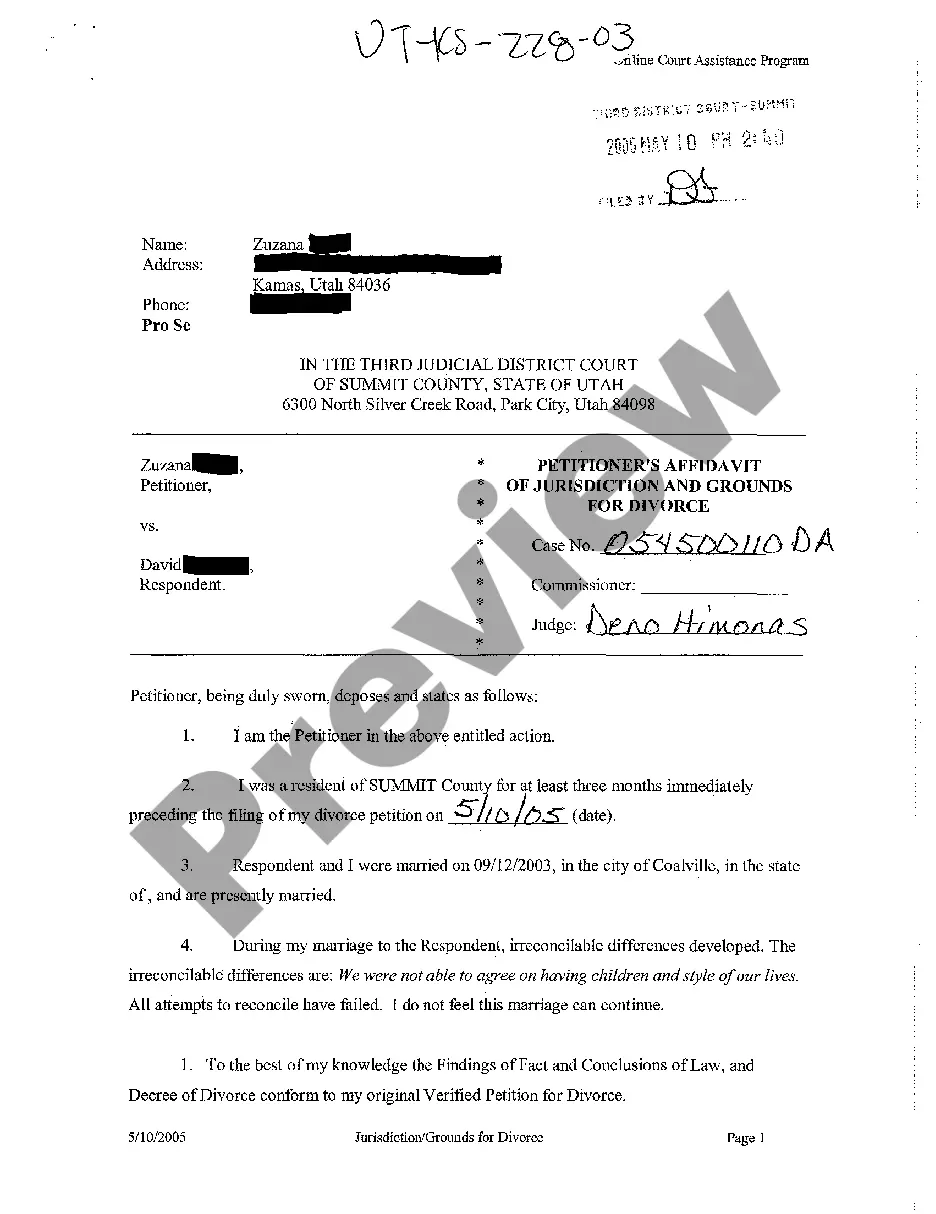
A Petitioner's Affidavit of Jurisdiction and Grounds for Divorce is a legal document that affirms the truth of the allegations made in a divorce petition. This form certifies that the Findings of Fact, Conclusions of Law, and Decree of Divorce align with the original Verified Petition. It is essential for demonstrating the basis for the court's jurisdiction and the grounds for divorce, distinguishing it from other forms used in the divorce process.
Form components explained
- Case details, including the judicial district, county, and court address.
- The petitioner's confirmation of residency requirements in Utah.
- Marriage details, including the date and place of marriage.
- A statement of irreconcilable differences, explaining why reconciliation has failed.
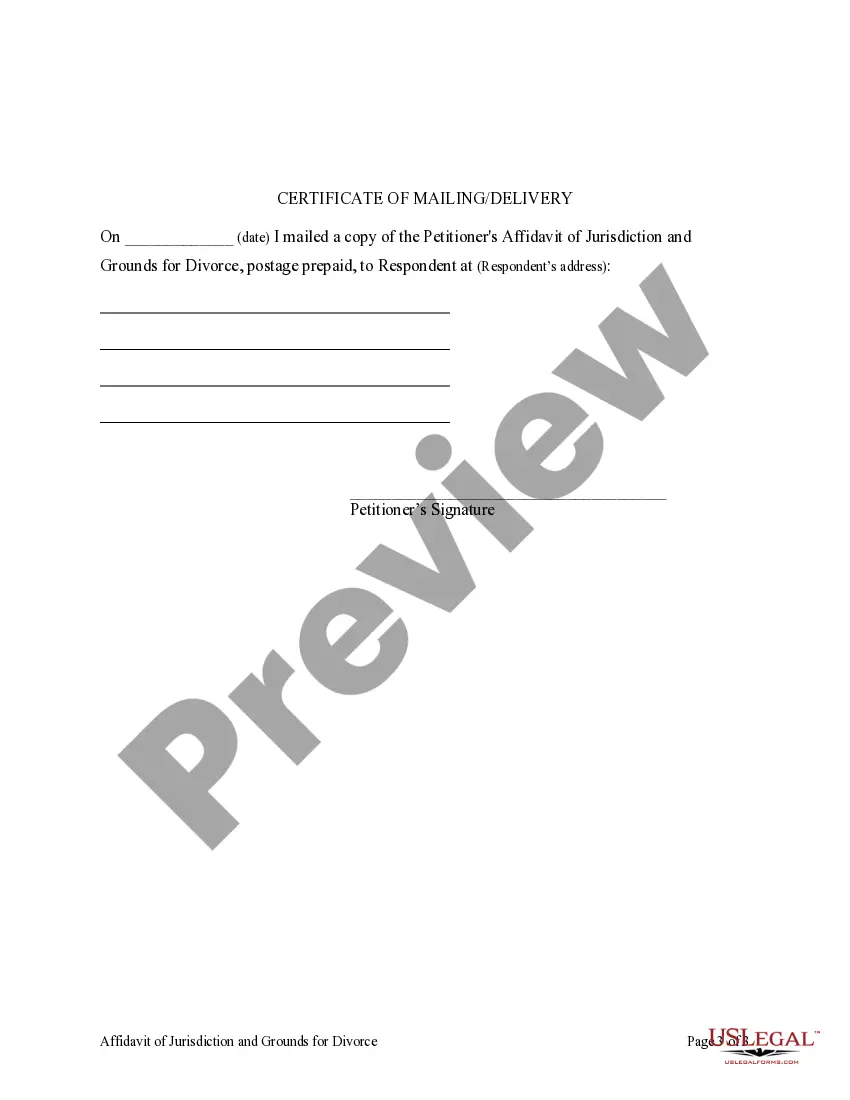
- A certification of mailing or delivery to the respondent.
When this form is needed
This form is used in the divorce process when the petitioner needs to affirm that the information provided in the divorce petition is accurate. It is particularly necessary if the court requires confirmation of jurisdiction and grounds for divorce. You should use this affidavit when you are ready to finalize your divorce proceedings and ensure that all facts presented are formally recognized by the court.
Intended users of this form
Intended audience:
- Individuals filing for divorce in Utah as the petitioner.
- Those who need to affirm residency and jurisdictional details in their divorce case.
- Anyone seeking to clarify and document the grounds for their divorce.
Instructions for completing this form
Steps to complete the affidavit:
- Identify the court and complete the case number section.
- Provide your residency details, including the county and the date of filing.
- Enter the marriage details, including the date and place of marriage.
- Describe the irreconcilable differences that led to the divorce.
- Sign and date the affidavit, ensuring you have complied with mailing requirements.
Notarization requirements for this form
This form does not typically require notarization unless specified by local law. However, it is always a good practice to confirm your local requirements to ensure the legality of your affidavit.
Get your form ready online
Our built-in tools help you complete, sign, share, and store your documents in one place.
Make edits, fill in missing information, and update formatting in US Legal Forms—just like you would in MS Word.
Download a copy, print it, send it by email, or mail it via USPS—whatever works best for your next step.
Sign and collect signatures with our SignNow integration. Send to multiple recipients, set reminders, and more. Go Premium to unlock E-Sign.
If this form requires notarization, complete it online through a secure video call—no need to meet a notary in person or wait for an appointment.
We protect your documents and personal data by following strict security and privacy standards.

Make edits, fill in missing information, and update formatting in US Legal Forms—just like you would in MS Word.

Download a copy, print it, send it by email, or mail it via USPS—whatever works best for your next step.

Sign and collect signatures with our SignNow integration. Send to multiple recipients, set reminders, and more. Go Premium to unlock E-Sign.

If this form requires notarization, complete it online through a secure video call—no need to meet a notary in person or wait for an appointment.

We protect your documents and personal data by following strict security and privacy standards.
Avoid these common issues
- Failing to accurately complete the residency section.
- Omitting details regarding the grounds for divorce.
- Not mailing or delivering a copy of the affidavit to the respondent.
- Not signing the affidavit before a notary if required.
Why use this form online
- Convenient access to legal forms ready for download.
- Edit the form to fit your specific circumstances.
- Reliability of documents drafted by licensed attorneys.
Looking for another form?
Form popularity
FAQ
One of the main legal advantages that a person gains by filing the divorce petition before his or her spouse does is that the filer can request a Standing Order from the court when filing the petition.If the matter should go to a hearing, the person who files the petition usually presents his or her case first.
Generally no, it doesn't matter which spouse files for divorce. There is no legal advantage to filing the petition for divorce first; however, there may be strategical advantages. Whoever files the petition first chooses which court will be hearing the divorce.
Only one spouse needs to file for a divorce. Utah is a no-fault divorce state, meaning divorce can be granted without proving who is guilty. Although, if there is serious fault by one spouse that evidence can be used to affect the ultimate judgment, such as in alimony awards or property divisions.
But in 1959, then Attorney-General Sir Garfield Barwick introduced a federal law: the Matrimonial Causes Bill, stipulating 14 grounds for divorce. This included desertion, adultery, habitual drunkenness, cruelty, insanity and imprisonment.
In Utah, adultery doesn't directly impact property division in a divorce. If a spouse spent a significant amount of the couple's money on an affair, however, the court may give the faithful spouse a larger share of the couple's property to compensate for the lost money.
In Utah, there is no minimum time period that you need to be separated before a divorce is granted. No matter how long you have been separated, the court will grant your divorce 91 days after filing.
Separate maintenance allows married couples to legally separate their affairs without obtaining a divorce under limited circumstances. A separate maintenance order governs child custody, child support, parent time, alimony, and property and debt division, but the parties remain married.
The length of alimony is different in each case, however Utah law mandates that a spouse may receive alimony for up to the number of years that the marriage lasted. So if a couple was married for 15 years, alimony could be awarded for up to 15 years. This is up to the discretion of the court.
How property is divided in a divorce. Utah law requires an equitable division of marital property.For long-term marriages, equitable may mean a 50-50 split, or the court may decide that it is fair to give one party more or less than 50% of the property.