New York Assignment of Lien by Individual
What this document covers
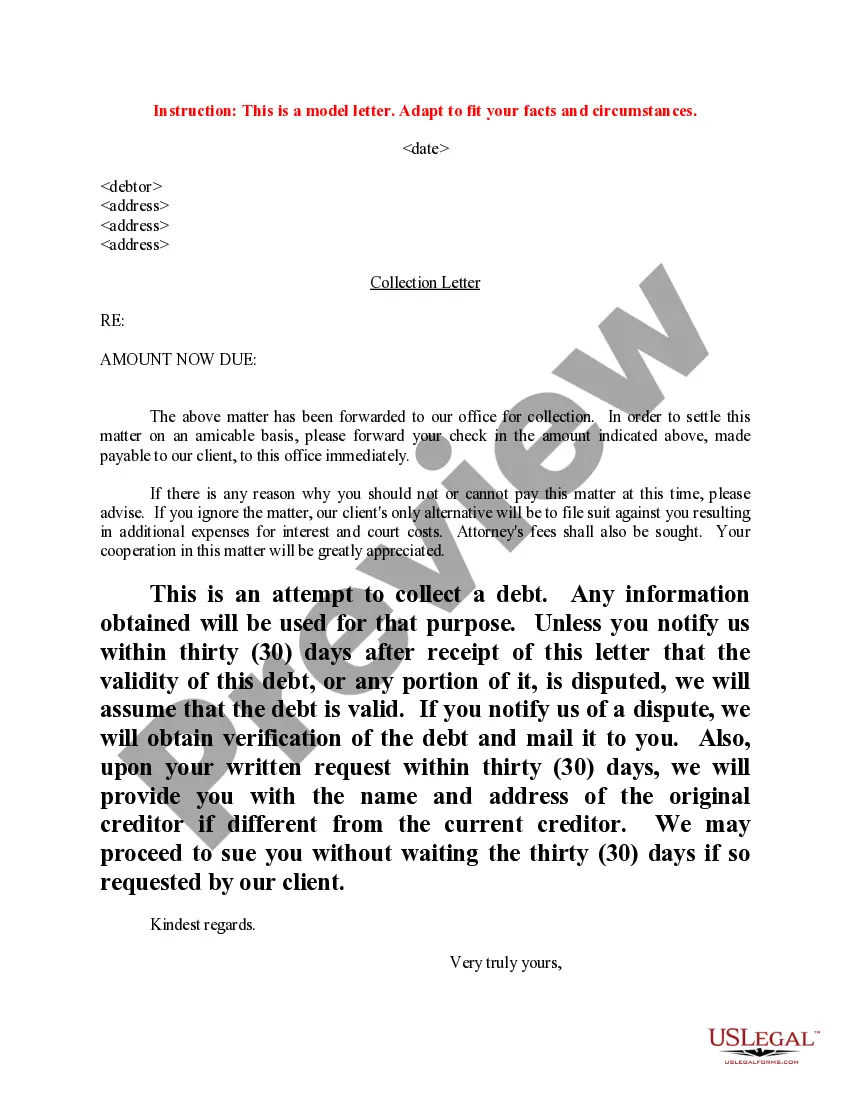
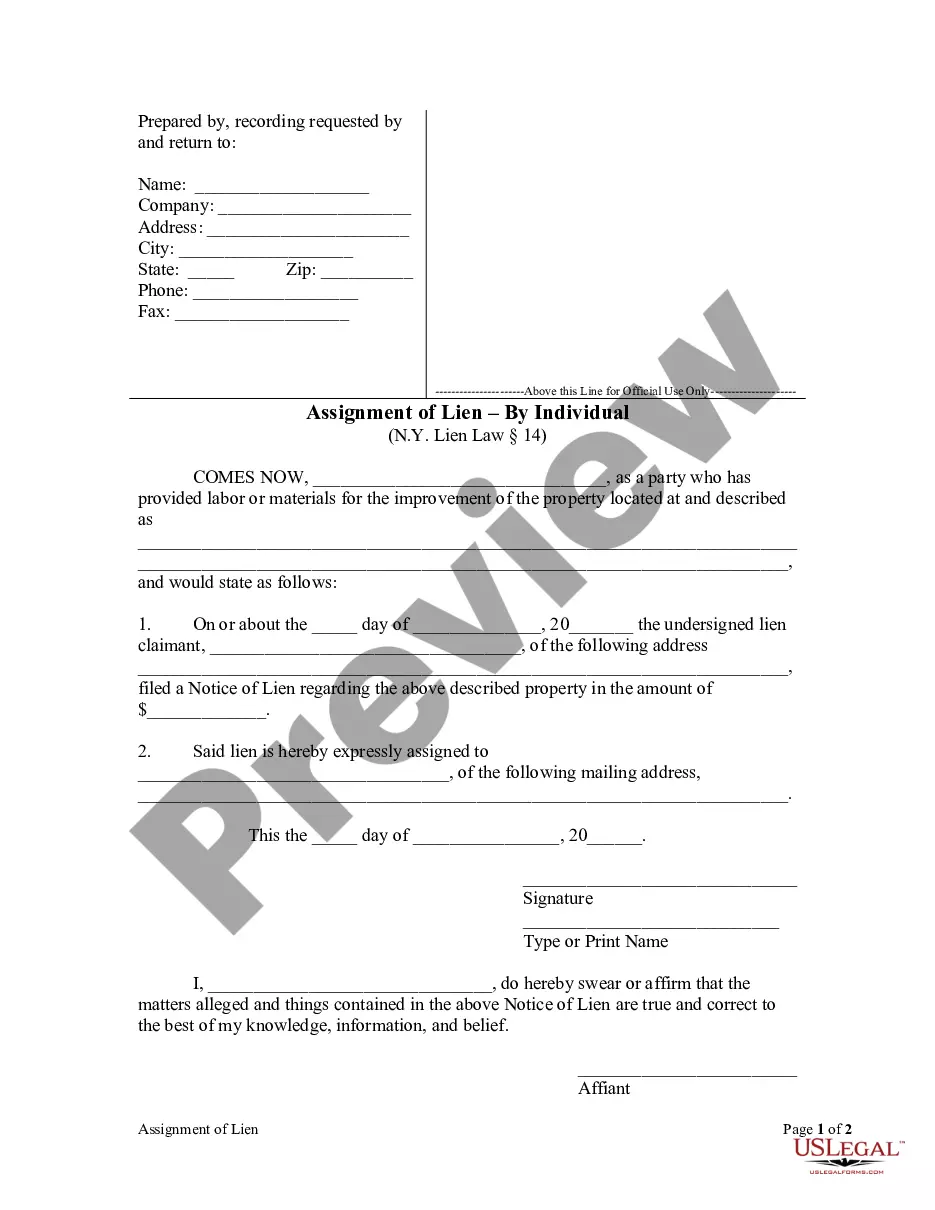
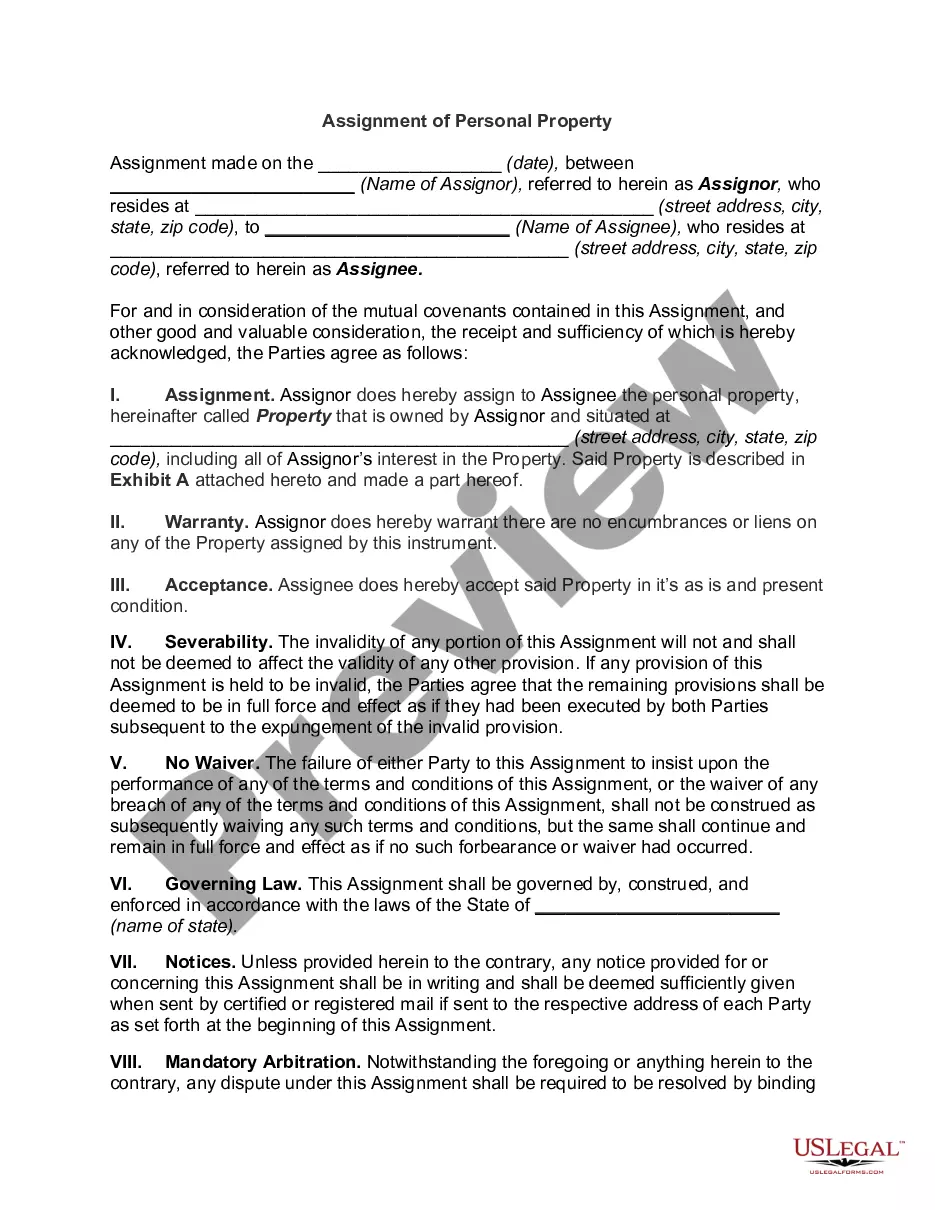
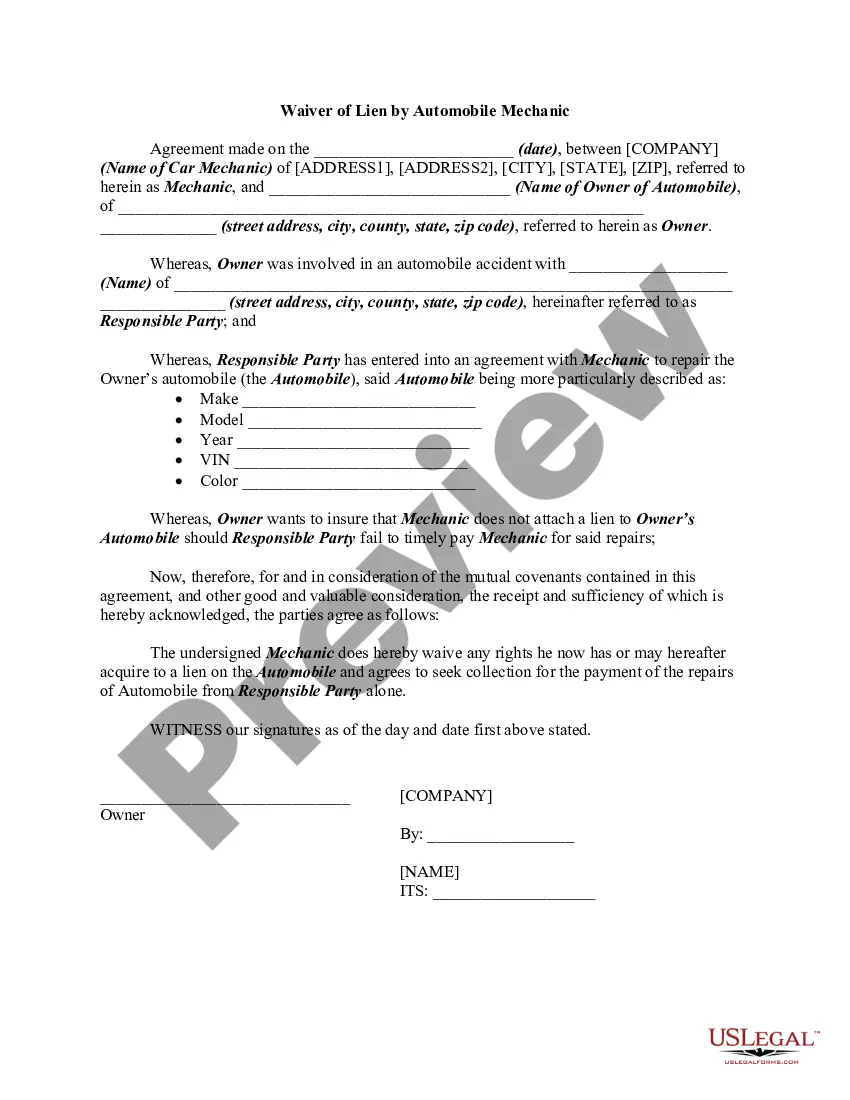
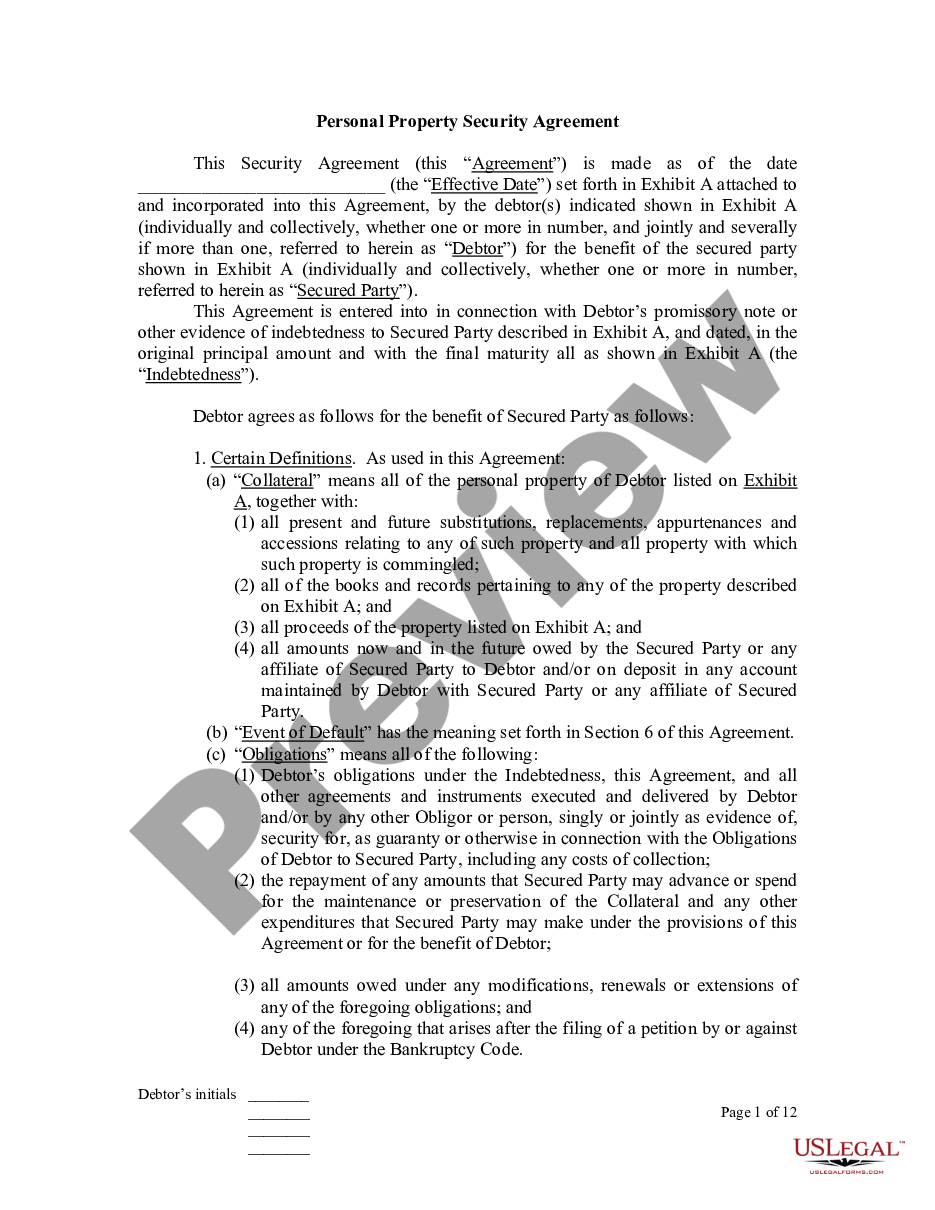
The Assignment of Lien by Individual is a legal document that allows a lien holder in New York to transfer their claim to another party. This form serves to formalize the assignment of a lien for services rendered or materials provided in the context of real property improvements. By using this form, individuals can ensure that the assignment is documented in compliance with New York law, differentiating it from other types of lien-related documents, such as lien waivers or releases.
Key components of this form
- Parties involved: identifies the original lien holder and the assignee.
- Property description: provides details about the property that is the subject of the lien.
- Amount of lien: specifies the financial claim associated with the lien.
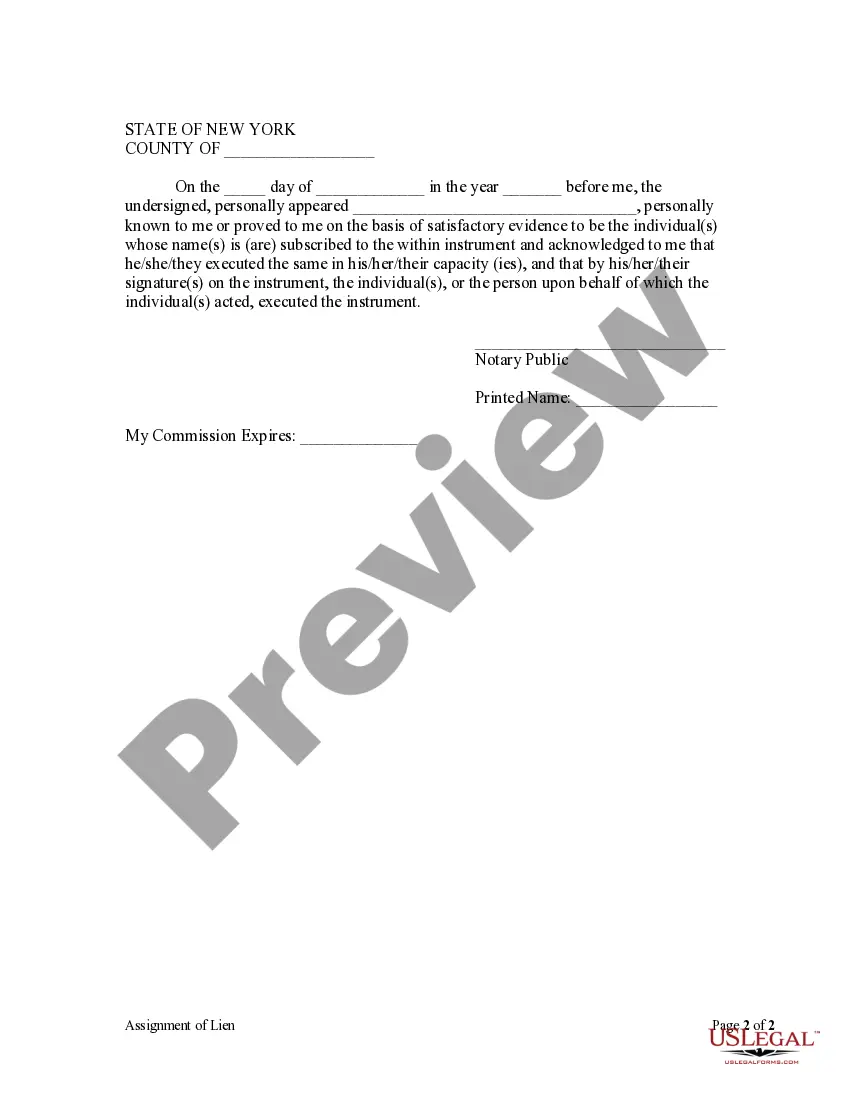
- Signature sections: includes required signatures of the parties and a notary acknowledgment.
- Statement of truth: includes an affirmation of the accuracy of the lien information provided.
When to use this form
You should use the Assignment of Lien by Individual when you need to transfer an existing lien on a property you have worked on. This form is particularly useful if you are a contractor or supplier who wishes to assign your claim to another individual or organization. Common scenarios include selling your rights to a payment or when collaborating with other contractors who may take over your claim.
Who should use this form
- Contractors who have filed a notice of lien and want to assign it.
- Suppliers of materials who have a lien on property improvements.
- Individual homeowners who need to transfer a lien for unpaid services.
- Businesses engaged in construction or property improvement.
How to prepare this document
- Identify the parties: fill in the names and addresses of both the original lien holder and the assignee.
- Specify the property: provide a detailed description of the property associated with the lien.
- Enter the lien amount: indicate the total amount of the lien being assigned.
- Sign and date the form: both parties must sign and date the document.
- Complete notary section: have the document notarized to validate the assignment.
Notarization guidance
This form needs to be notarized to ensure legal validity. US Legal Forms provides secure online notarization powered by Notarize, allowing you to complete the process through a verified video call, available anytime.
Get your form ready online
Our built-in tools help you complete, sign, share, and store your documents in one place.
Make edits, fill in missing information, and update formatting in US Legal Forms—just like you would in MS Word.
Download a copy, print it, send it by email, or mail it via USPS—whatever works best for your next step.
Sign and collect signatures with our SignNow integration. Send to multiple recipients, set reminders, and more. Go Premium to unlock E-Sign.
If this form requires notarization, complete it online through a secure video call—no need to meet a notary in person or wait for an appointment.
We protect your documents and personal data by following strict security and privacy standards.

Make edits, fill in missing information, and update formatting in US Legal Forms—just like you would in MS Word.

Download a copy, print it, send it by email, or mail it via USPS—whatever works best for your next step.

Sign and collect signatures with our SignNow integration. Send to multiple recipients, set reminders, and more. Go Premium to unlock E-Sign.

If this form requires notarization, complete it online through a secure video call—no need to meet a notary in person or wait for an appointment.

We protect your documents and personal data by following strict security and privacy standards.
Typical mistakes to avoid
- Failing to provide a complete property description.
- Not including the correct lien amount.
- Omitting signatures of both parties.
- Neglecting to have the form notarized.
- Using the form without ensuring all information is accurate and truthful.
Main things to remember
- The Assignment of Lien by Individual is essential for transferring lien claims in New York.
- Accurate completion of the form is crucial to avoid legal complications.
- Notarization is required to validate the assignment.
Looking for another form?

Form popularity
FAQ
A mortgage creates a lien on your property that gives the lender the right to foreclose and sell the home to satisfy the debt. A deed of trust (sometimes called a trust deed) is also a document that gives the lender the right to sell the property to satisfy the debt should you fail to pay back the loan.
To remove a lien, you must send the DMV: form Application for Duplicate Title (MV-902), checked to show that a lien release is included with the application, and. the $20 fee for a duplicate title certificate, and.
To attach the lien, the creditor files the judgment transcript with the county clerk in the New York county where the debtor's property is located.
If you have unpaid debt of any kind, this can lead the creditors that you owe money to place a lien on your assets.In other cases, liens may be placed on property by a court order as a result of legal action.
While it's unlikely that just anyone can put a lien on your home or land, it's not unheard of for a court decision or a settlement to result in a lien being placed against a property.
A judgment lien is enforced through a sale of the property by the sheriff or marshal, or can be satisfied by paying the judgment. The lien is good for ten years but can be renewed after that time for another ten years.
To remove a lien, you must send the DMV: form Application for Duplicate Title (MV-902), checked to show that a lien release is included with the application, and. the $20 fee for a duplicate title certificate, and.
Unless the lien is satisfied, you can receive a New York registration but not a Certificate of Title.To receive a New York State title certificate after the lien is satisfied, you must mail the out-of-state title, the proof of lien satisfaction, and a letter of explanation to the Title Bureau.