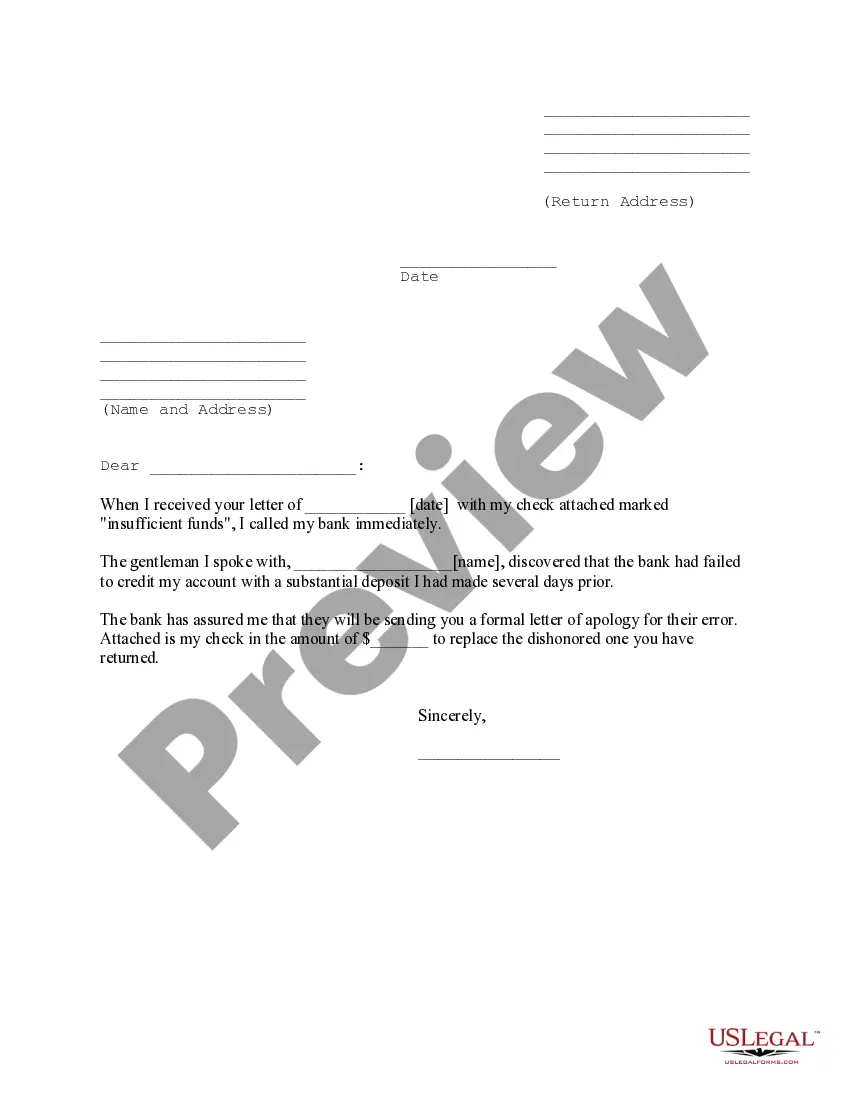
New York Renunciation And Disclaimer of Joint Tenant or Tenancy Interest
Overview of this form
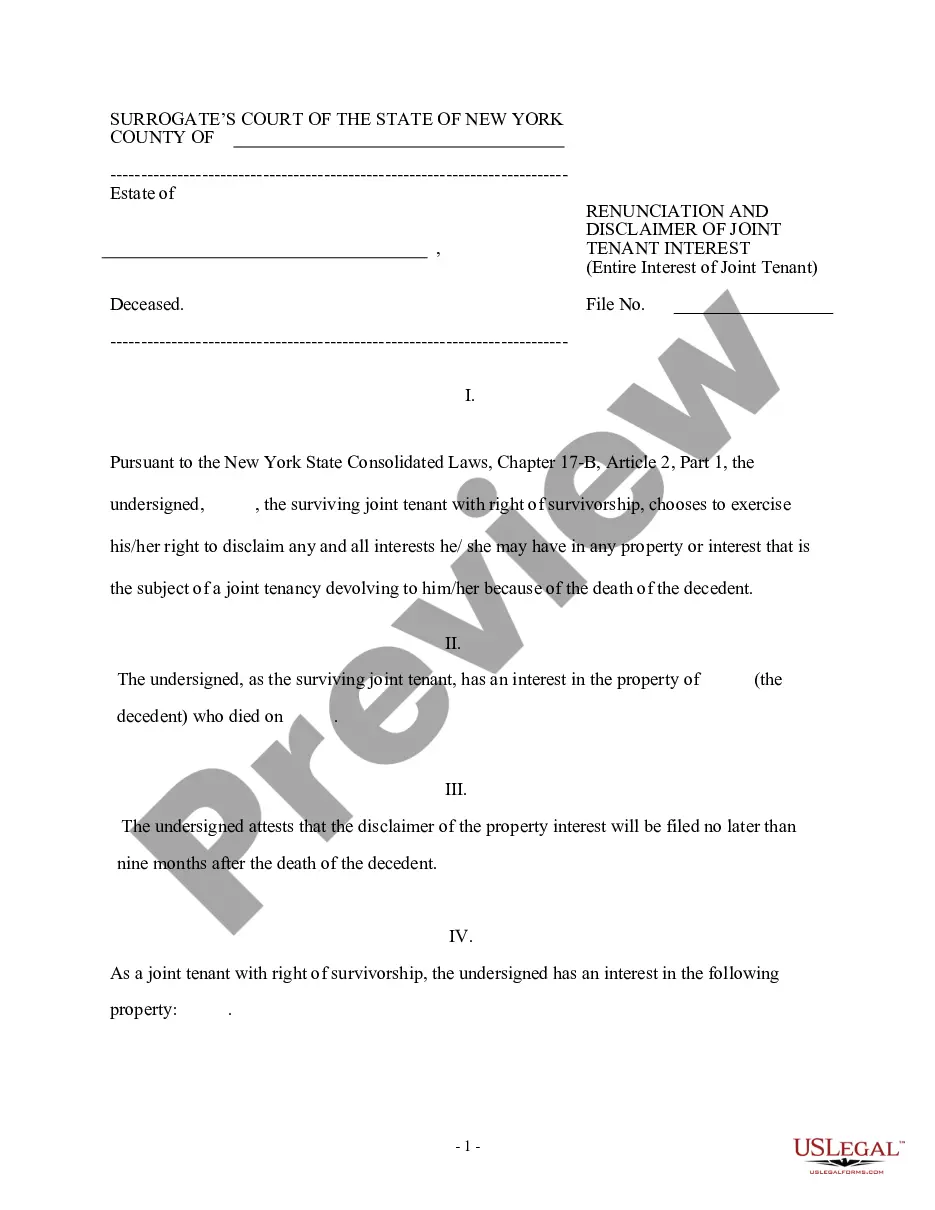
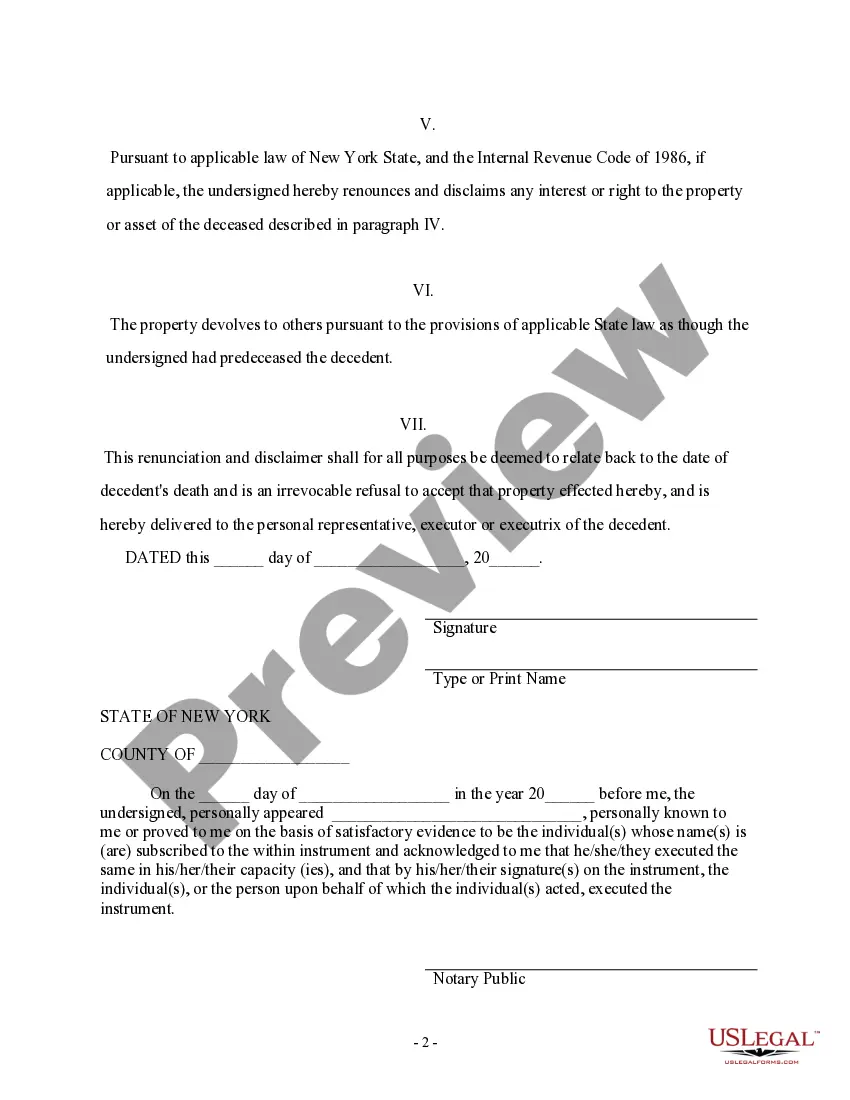
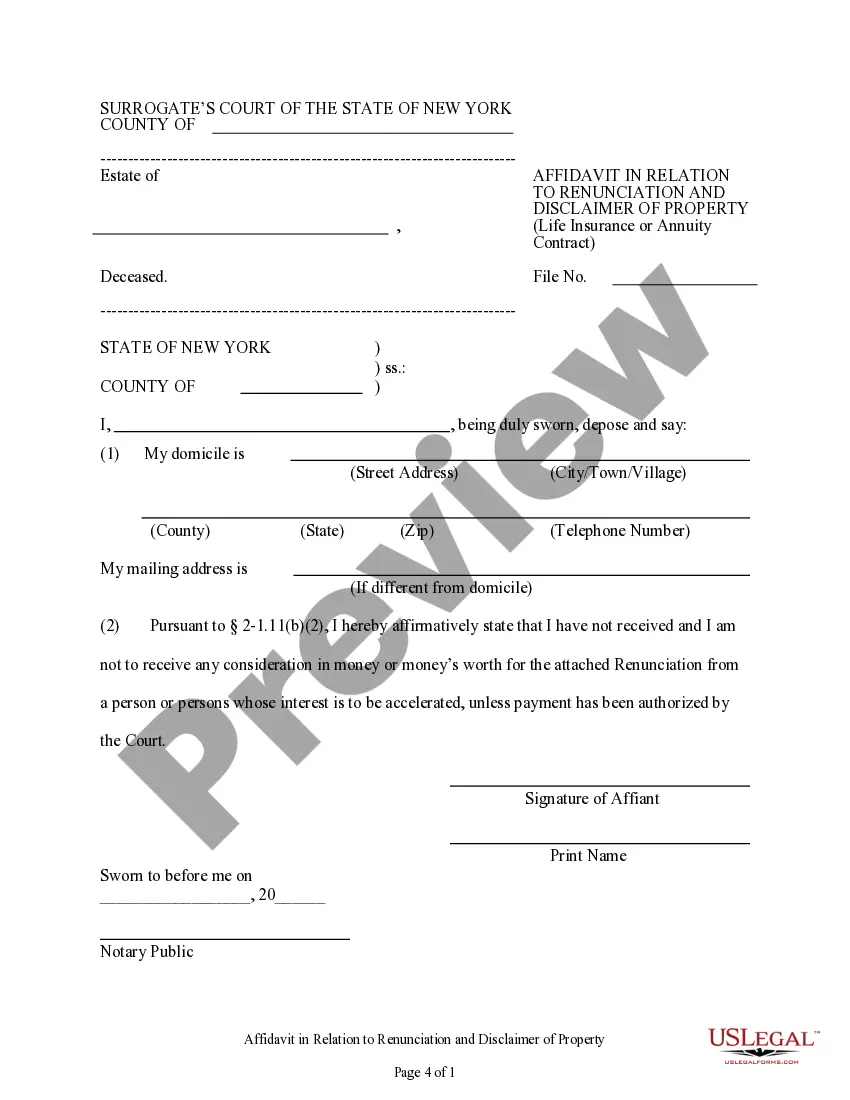
The Renunciation and Disclaimer of Joint Tenant or Tenancy Interest is a legal form used when a surviving joint tenant consciously chooses to refuse their interest in jointly held property after the death of the other tenant. This form serves to document the decision and ensure that the property is treated as if the disclaiming tenant had predeceased the deceased joint tenant. This distinguishes it from other inheritance forms, as it effectively renounces any claim to the property and allows it to pass according to state law.
Key components of this form
- Identification of the property subject to renunciation.
- Declaration of the decedentâs death.
- Statement of the disclaimantâs intention to renounce their interest.
- Acknowledgment of the legal effect relating back to the date of death.
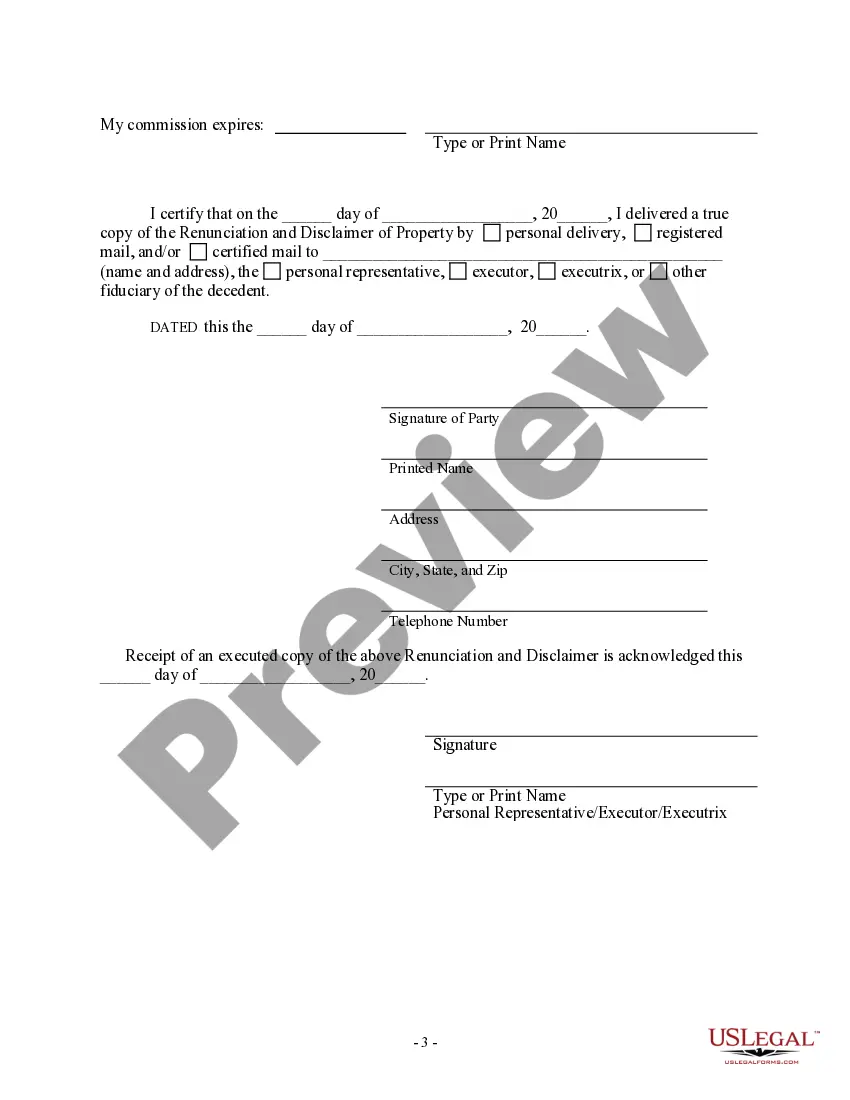
- Signature and date fields for formal execution.


When to use this form
This form should be used when a surviving joint tenant does not wish to inherit property that they hold jointly with a deceased individual. Situations may include wanting to enable children or other heirs of the deceased to inherit the property instead, or if the surviving tenant has personal or financial reasons to refuse the property. Using this form clarifies the intent and ensures proper legal handling of the estate.
Who should use this form
- Surviving joint tenants who do not wish to inherit the property.
- Heirs or beneficiaries seeking to clarify property ownership after a joint tenantâs death.
- Legal representatives or fiduciaries managing estate matters.
Steps to complete this form
- Identify the joint tenant(s) and the property involved.
- Enter the date of the decedent's death.
- Clearly state your desire to renounce the property interest.
- Sign and date the form in the designated areas.
- Deliver the completed form to the decedent's personal representative or executor.
Notarization guidance
This form does not typically require notarization unless specified by local law. However, it's often recommended to have it notarized to enhance its legal validity and to confirm the identity of the signer.
Get your form ready online
Our built-in tools help you complete, sign, share, and store your documents in one place.
Make edits, fill in missing information, and update formatting in US Legal Forms—just like you would in MS Word.
Download a copy, print it, send it by email, or mail it via USPS—whatever works best for your next step.
Sign and collect signatures with our SignNow integration. Send to multiple recipients, set reminders, and more. Go Premium to unlock E-Sign.
If this form requires notarization, complete it online through a secure video call—no need to meet a notary in person or wait for an appointment.
We protect your documents and personal data by following strict security and privacy standards.

Make edits, fill in missing information, and update formatting in US Legal Forms—just like you would in MS Word.

Download a copy, print it, send it by email, or mail it via USPS—whatever works best for your next step.

Sign and collect signatures with our SignNow integration. Send to multiple recipients, set reminders, and more. Go Premium to unlock E-Sign.

If this form requires notarization, complete it online through a secure video call—no need to meet a notary in person or wait for an appointment.

We protect your documents and personal data by following strict security and privacy standards.
Common mistakes
- Failing to properly identify the property, which can lead to enforcement issues.
- Missing signatures or dates, which may invalidate the form.
- Not delivering the completed form to the appropriate party, risking disputes over property ownership.
Advantages of online completion
- Convenience of immediate access and downloading from anywhere.
- Editability allows for easy tailoring to specific needs.
- Reliability, as forms are drafted by licensed attorneys ensuring legal compliance.
Legal use & context
- This form legally documents the decision to disclaim property interests under New York law.
- Failure to properly execute can result in unintended acceptance of property rights.
- Understanding the implications of this disclaimer is crucial for effective estate planning.
Quick recap
- The form is essential for a surviving joint tenant wishing to decline a property interest.
- It must be properly filled out and delivered to the decedent's representative.
- Familiarity with the specific state laws is important for valid execution.
Looking for another form?


Form popularity
FAQ
DiSalvo. My condolences on your situation. A qualified renunciation (meaning one which qualifies as a true disclaimer for federal gift and estate tax purposes) is irrevocable, so not, you should not be able to revoke your disclaimer.
If you do not want to be the executor, then you do not have to allow the court to appoint you to this role. You can decline to take on the responsibility. If the deceased person named a backup executor, the backup executor will take the responsibility of seeing the will through the probate process.
In the law of inheritance, wills and trusts, a disclaimer of interest (also called a renunciation) is an attempt by a person to renounce their legal right to benefit from an inheritance (either under a will or through intestacy) or through a trust.A disclaimer of interest is irrevocable.
You may find that serving as executor is too difficult or time consuming, or that you don't have the skills necessary to serve effectively. In that case, you can, and should, resign as executor. In California, you can resign at any time, for any reason, by filing a petition with the court.
Anyone named as an executor in a will may abandon the role by signing a renunciation witnessed by a disinterested witness, ie the witness must not be mentioned in the will, and should not be a family member. It is only possible to renounce if you have not intermeddled in the deceased's estate.
In most states, all you need to complete is a Renunciation of Executor form, which is a legal document that states the person named in the will as executor will not act as executor for the estate. This form can be filled out in your local probate court. Some states offer this form online as well.
Disclaimer may be revoked if procured by undue influence The disclaimed property passed to the disclaimant's nephew who was the contingent beneficiary of the will and the executor. The disclaimant then filed a document with the court purporting to revoke the disclaimer. The nephew objected and won summary judgment.
A: You may need to clarify what type of administration you are referring to, but if you are asking about administration of a decedent's estate, then renunciation refers to giving up your right to be qualified as the Administrator of the estate.
A codicil is a legal document that changes specific provisions of a last will and testament but leaves all the other provisions the same. You can modify, update, or even completely revoke your last will and testament at any time as long as you're mentally competent.