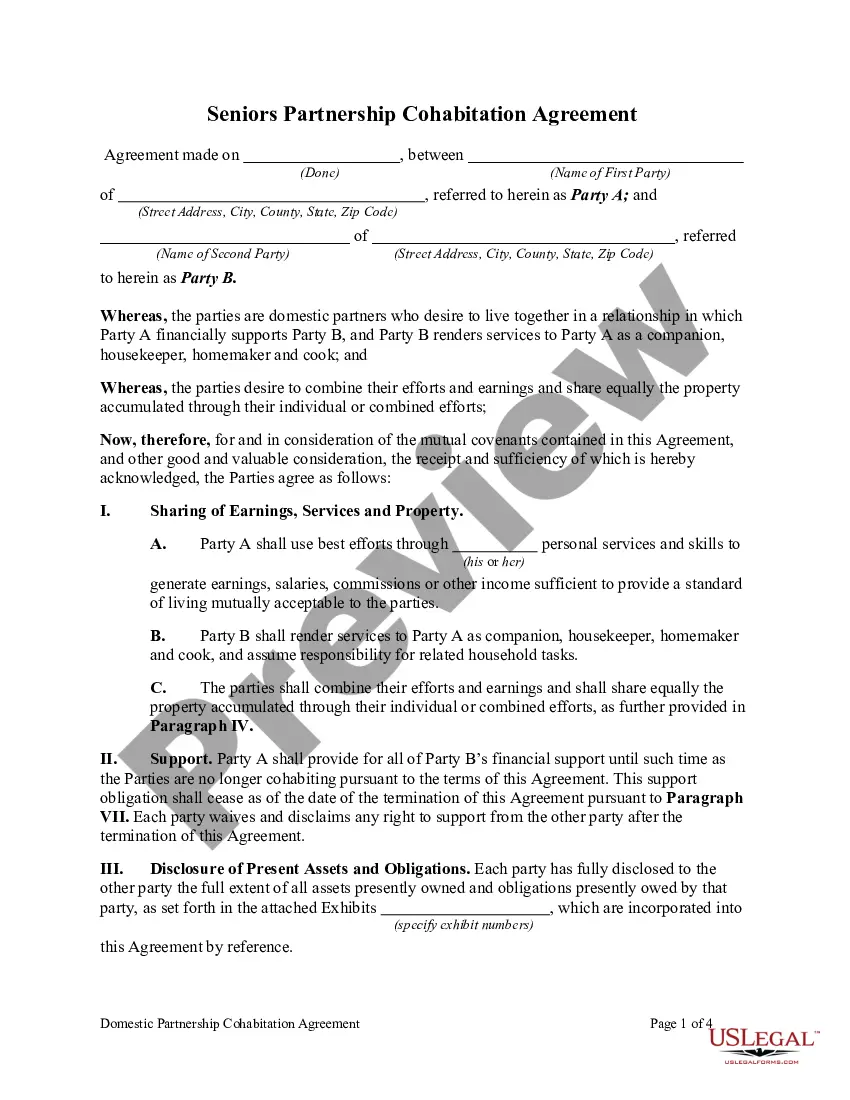
New York Discovery Interrogatories for Divorce Proceeding for either Plaintiff or Defendant
About this form
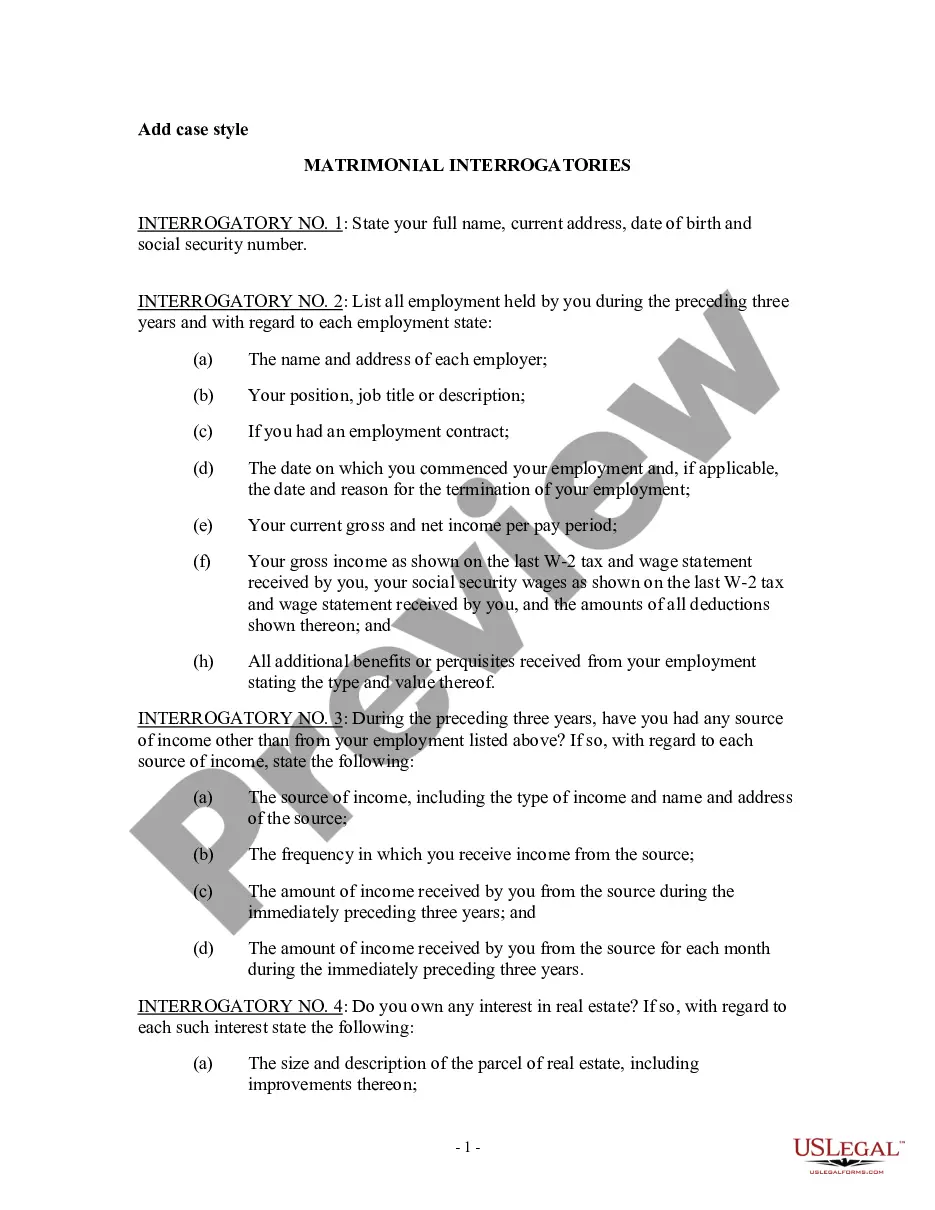
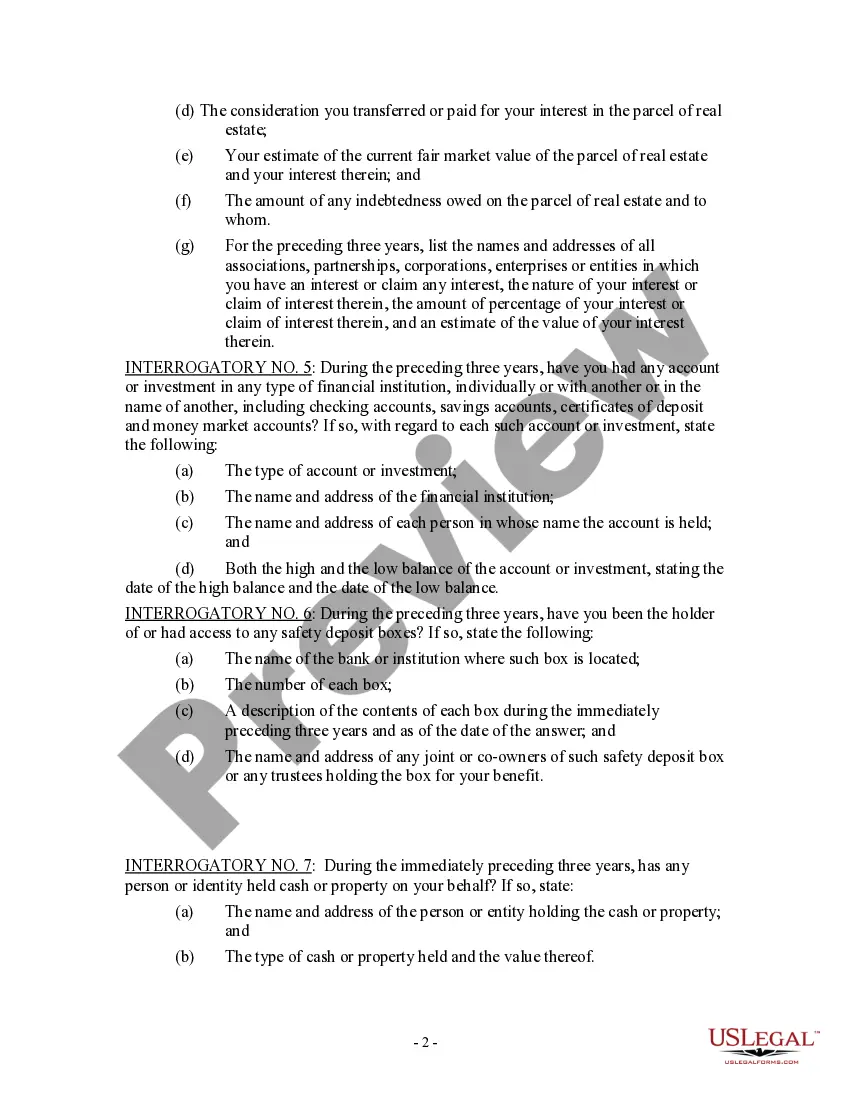
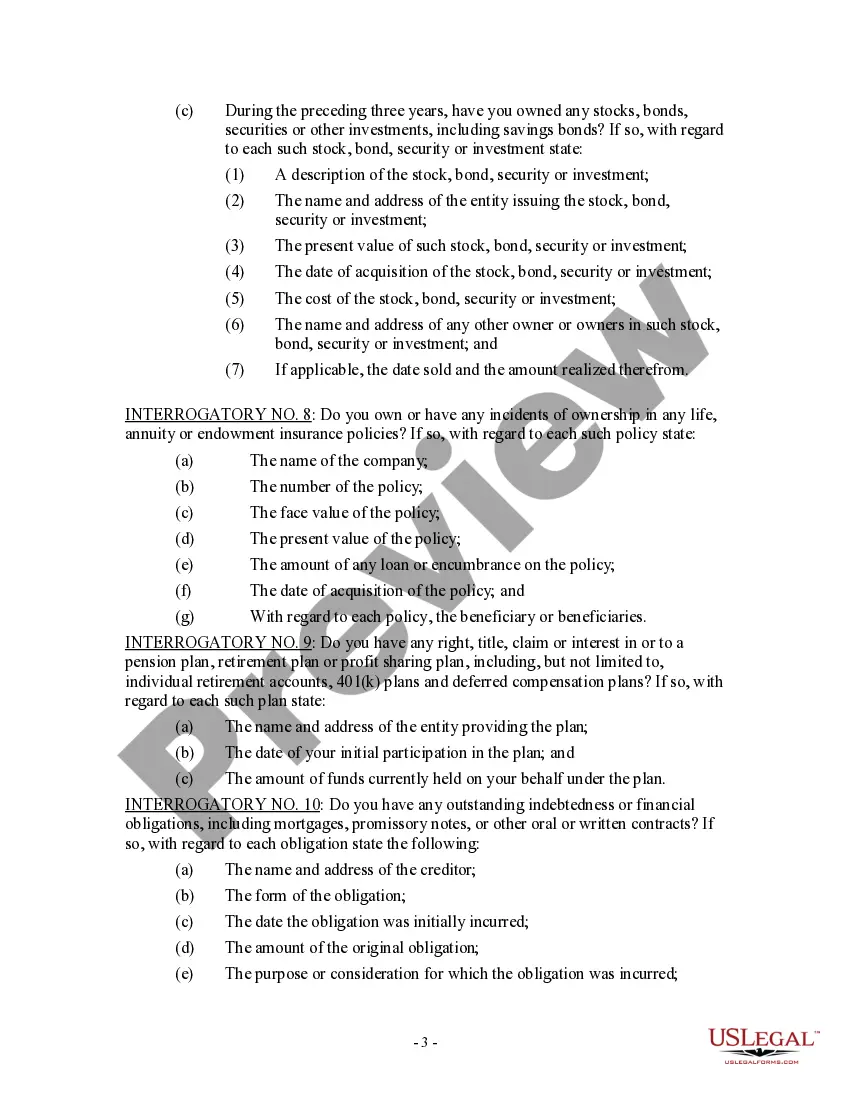
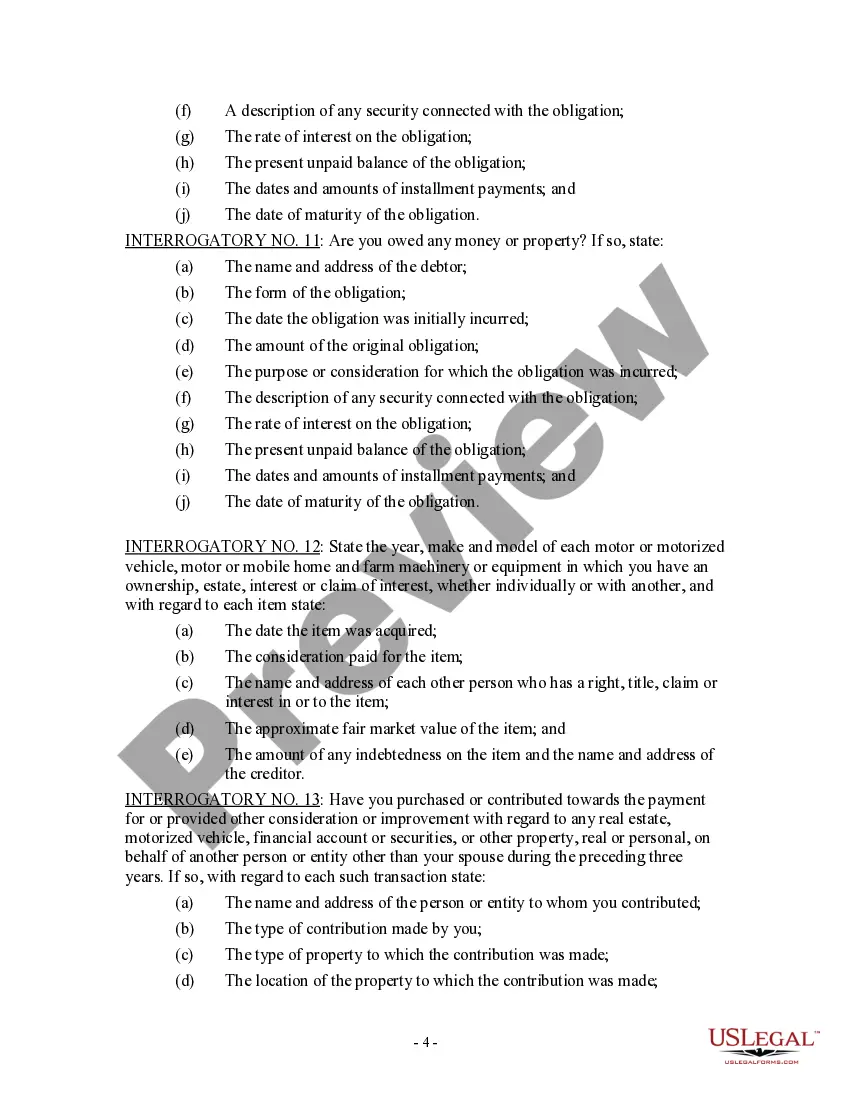
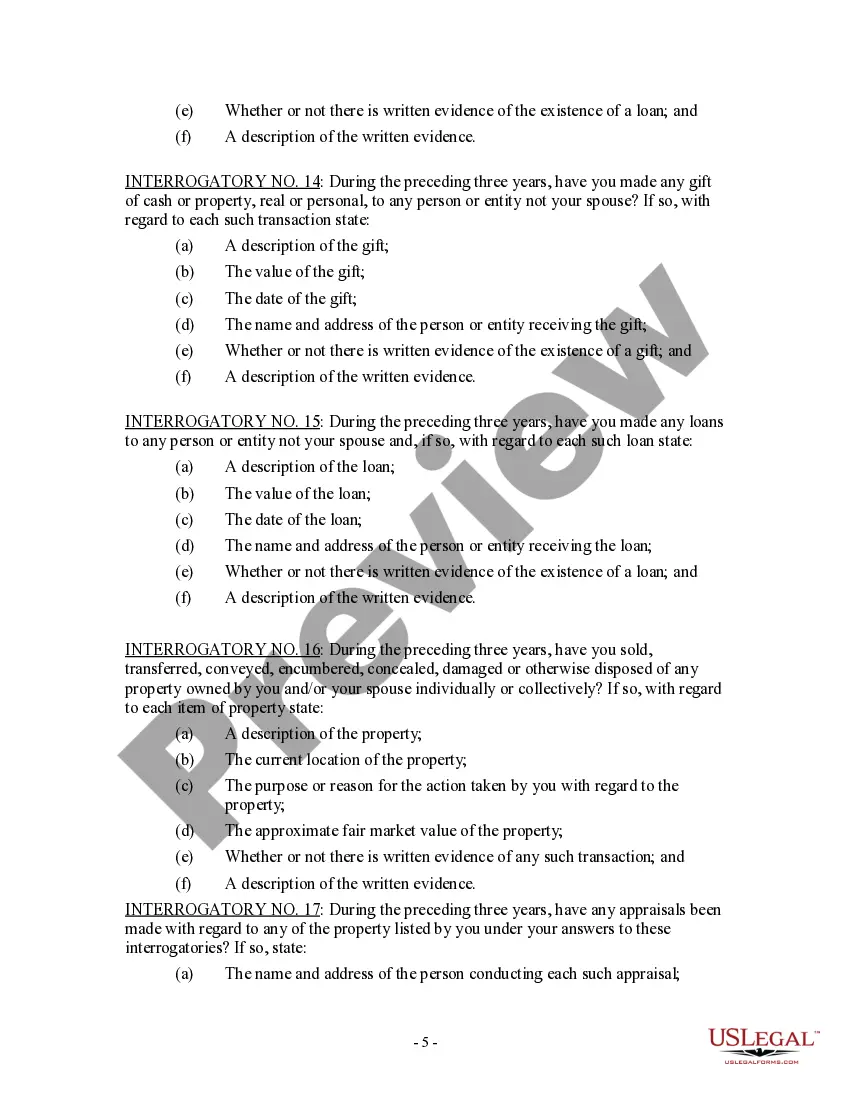
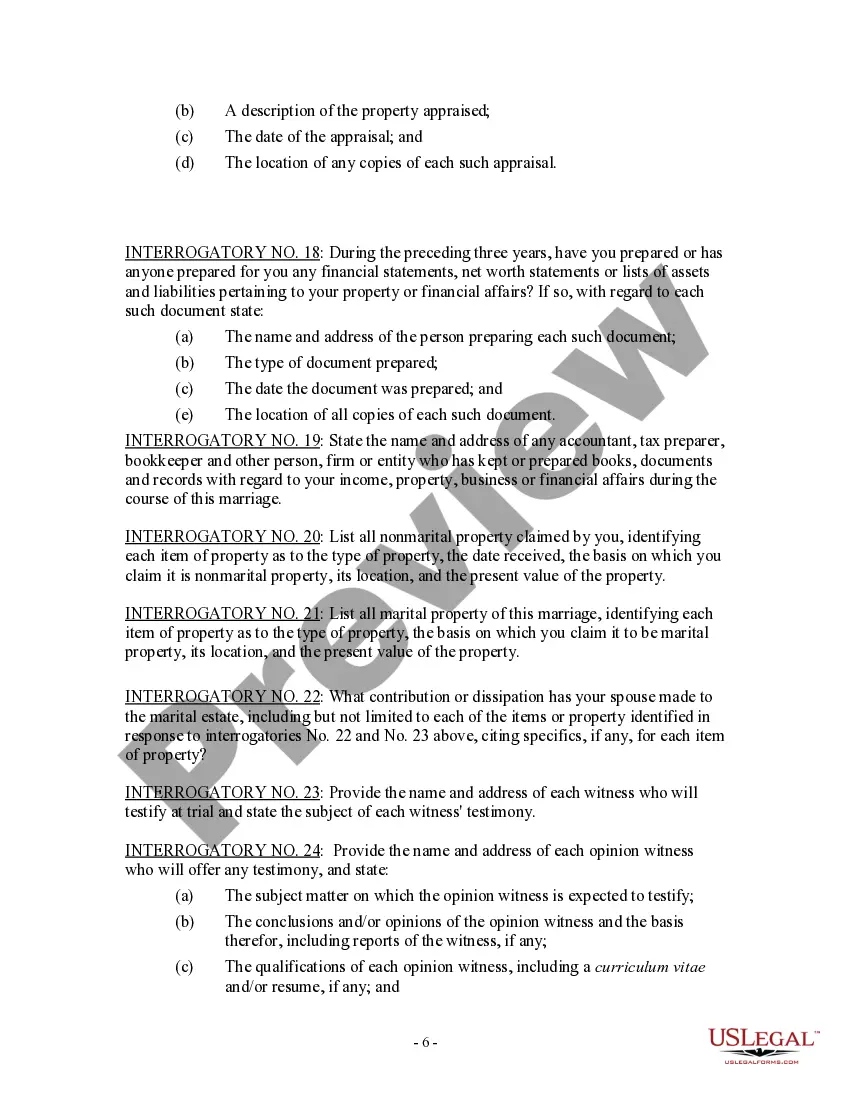
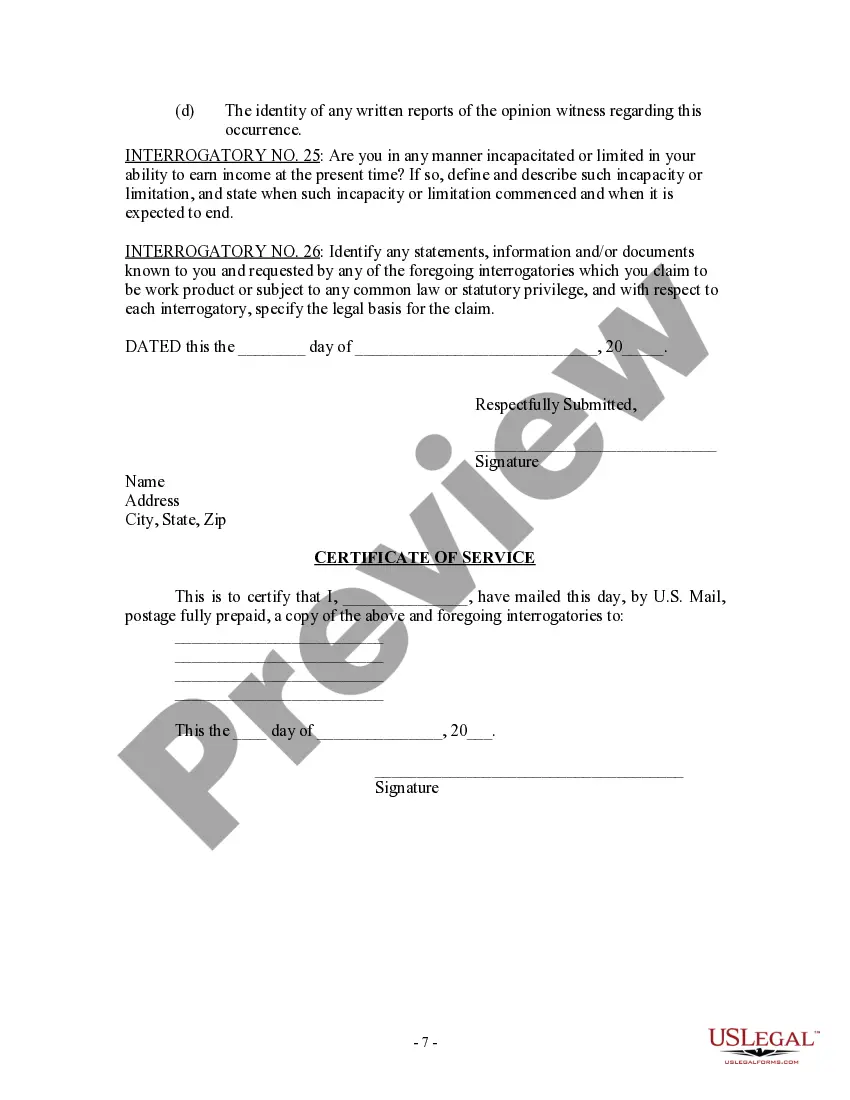
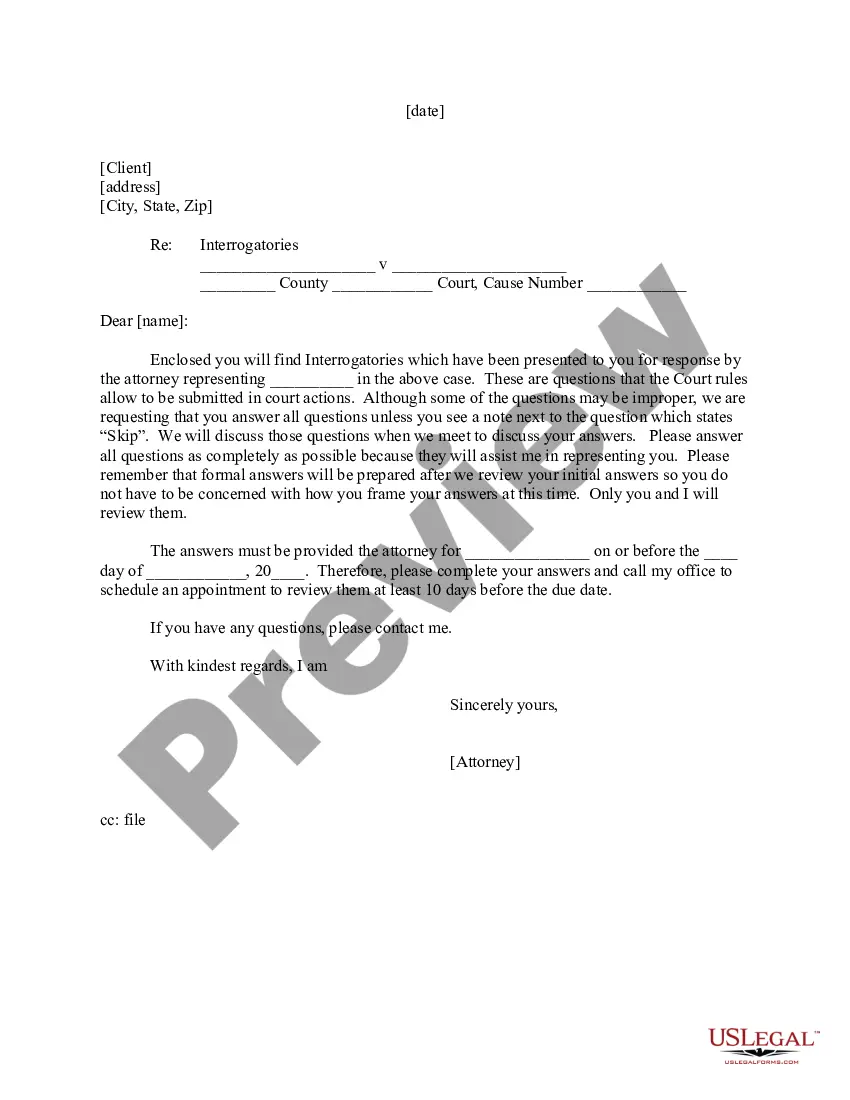
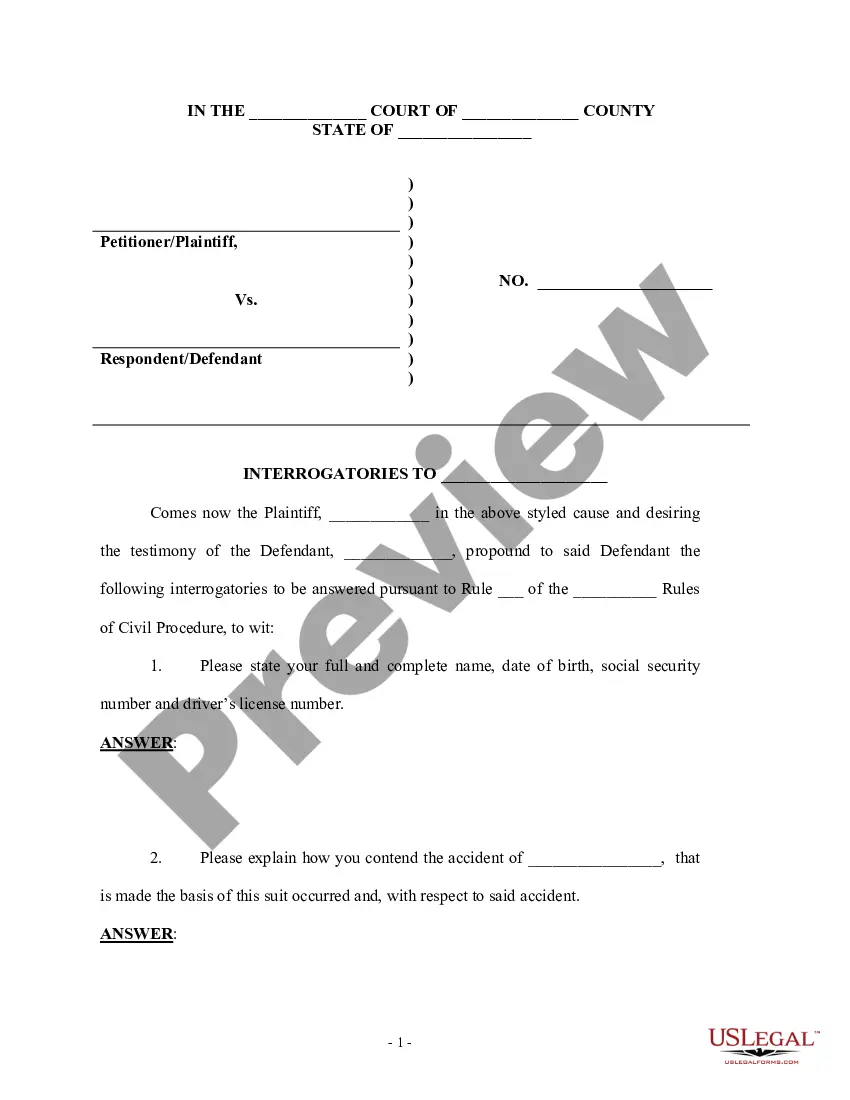
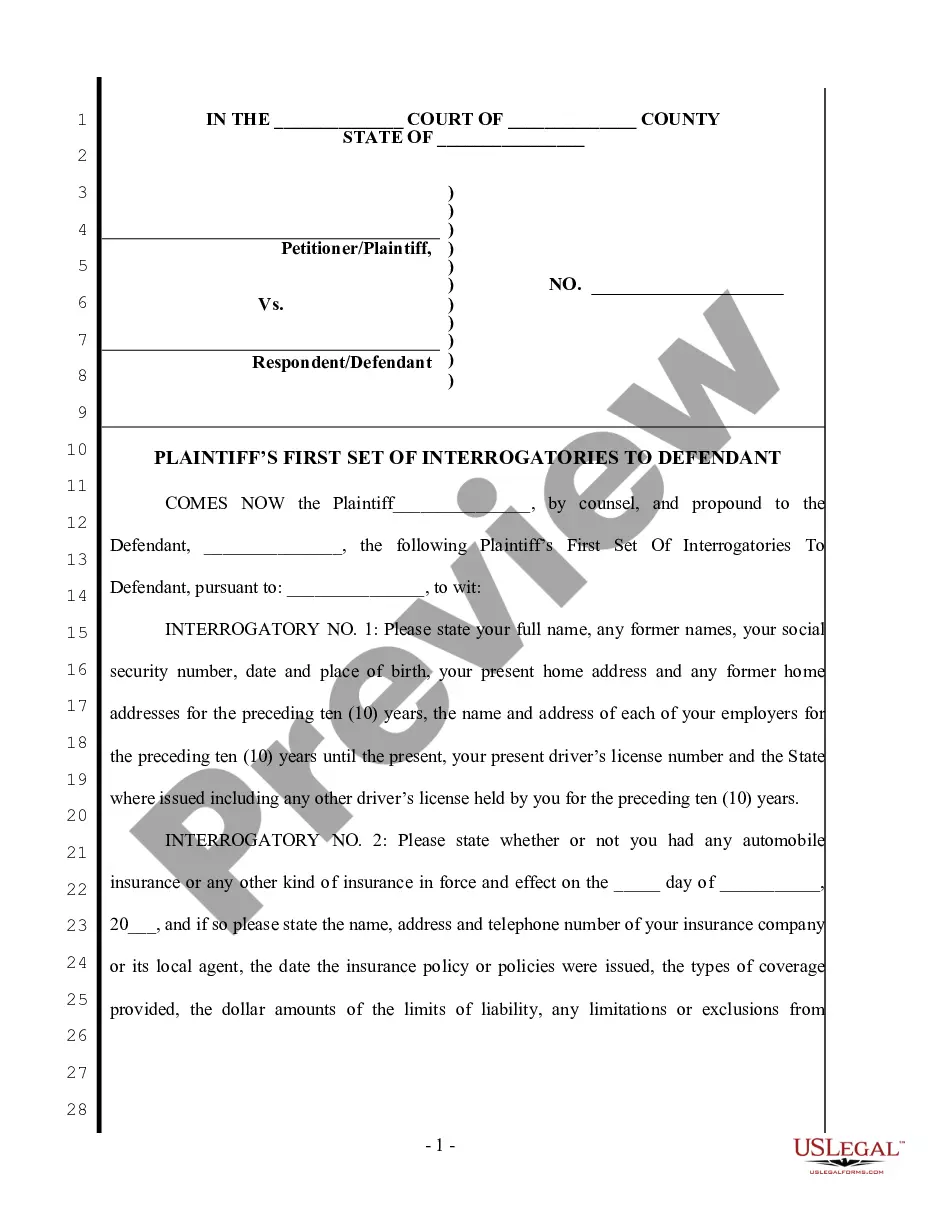
The Discovery Interrogatories for Divorce Proceeding is a legal form designed to facilitate information gathering in a divorce case. This form allows the Plaintiff to pose questions to the Defendant regarding various aspects of their financial status, assets, and other relevant details. Unlike basic divorce forms, these interrogatories are thorough and include requests for document production, ensuring that both parties provide necessary information to support their respective cases.
Key parts of this document
- Identifying information, including names, addresses, and birthdates.
- Detailed employment history, including gross income and employment benefits.
- Assets owned, including real estate and financial accounts.
- Liabilities and financial obligations, such as mortgages and loans.
- Nonmarital and marital property disclosures.
- Witness and expert testimony information.
When to use this document
This form is essential during the divorce process when one party requires detailed information about the other party's financial situation and assets. It is typically used after the filing of divorce papers and before trial to ensure that all relevant financial data is disclosed. This helps both parties reach a fair settlement or prepare adequately for court proceedings.
Who needs this form
This form is intended for:
- The Plaintiff in a divorce case who needs to gather information from the Defendant.
- Individuals seeking to clarify asset distribution and financial obligations during divorce proceedings.
- Legal representatives assisting clients in divorce negotiations or litigation.
How to prepare this document
- Fill in the names and contact details of both parties involved in the divorce.
- Answer each interrogatory clearly and truthfully, ensuring accurate information is provided.
- Delete or modify any irrelevant questions to suit your circumstances.
- Compile any requested documents for submission alongside the interrogatories.
- File the completed form with the court according to local rules.
Notarization requirements for this form
This form does not typically require notarization unless specified by local law.
Get your form ready online
Our built-in tools help you complete, sign, share, and store your documents in one place.
Make edits, fill in missing information, and update formatting in US Legal Forms—just like you would in MS Word.
Download a copy, print it, send it by email, or mail it via USPS—whatever works best for your next step.
Sign and collect signatures with our SignNow integration. Send to multiple recipients, set reminders, and more. Go Premium to unlock E-Sign.
If this form requires notarization, complete it online through a secure video call—no need to meet a notary in person or wait for an appointment.
We protect your documents and personal data by following strict security and privacy standards.

Make edits, fill in missing information, and update formatting in US Legal Forms—just like you would in MS Word.

Download a copy, print it, send it by email, or mail it via USPS—whatever works best for your next step.

Sign and collect signatures with our SignNow integration. Send to multiple recipients, set reminders, and more. Go Premium to unlock E-Sign.

If this form requires notarization, complete it online through a secure video call—no need to meet a notary in person or wait for an appointment.

We protect your documents and personal data by following strict security and privacy standards.
Common mistakes
- Providing incomplete or inaccurate information, which can lead to legal repercussions.
- Neglecting to delete irrelevant questions, resulting in confusion.
- Failing to submit required document requests with the interrogatories.
Advantages of online completion
- Convenience of accessing and filling out the form anytime, from anywhere.
- Editability allows users to customize questions to their specific needs.
- Reliable templates drafted by licensed attorneys ensure legal validity.
Key takeaways
- The Discovery Interrogatories for Divorce Proceeding is essential for gathering crucial information during a divorce.
- Completing this form accurately can aid in a fair resolution of divorce-related issues.
- It is important to review state-specific requirements to ensure compliance.
- Common mistakes in filling out the form can be avoided by careful review and complete responses.
Looking for another form?

Form popularity
FAQ
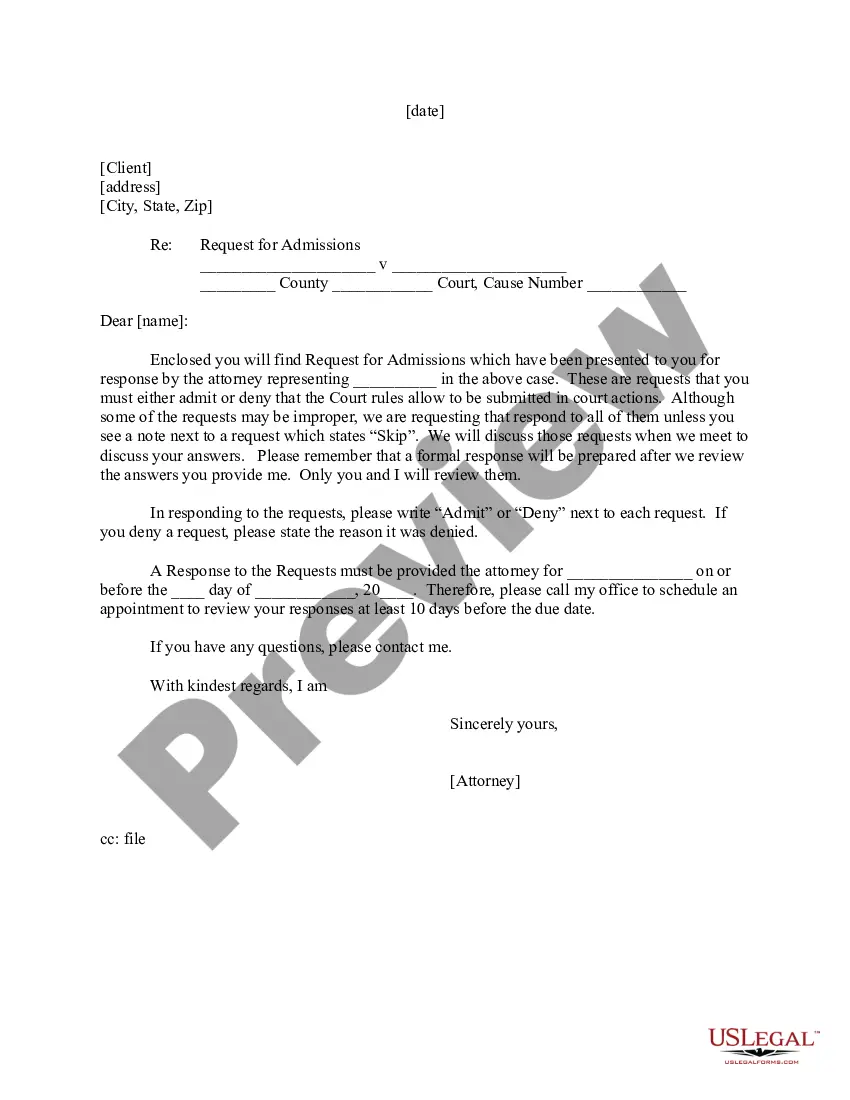
Written questions called interrogatories or requests for admission. Using these discovery tools, your spouse must answer questions in writing, or admit specific statements that you believe are true. Inspection demands. You can ask to inspect property like a safe deposit box or wine collection.
Respond Truthfully. You should answer each interrogatory honestly, even if it involves an uncomfortable topic. Submit Your Responses on Time. Answer Every Interrogatory. Save the Sarcasm. You Can Object When Appropriate.
The type of discovery include: Interrogatorieswhich are written questions that must be answered under oath. Requests for production of documentsasking that certain documents be provided by you or your spouse. Requests for admissionsasking that certain facts be admitted or denied.
You can certainly make discovery requests that go further back than three years, especially if you have good cause to make such requests. There is nothing that prohibits you from making the request.
Your answers to the interrogatories should usually be short, clear, and direct and should answer only the question that is being asked. This is not the time to set out your entire case or defense to the other side. Take the time to make sure your answers are correct and truthful.
So, can you refuse to answer interrogatories? The answer is, no, you may not.That answer must either permit inspection of the requested information or object to the production of the information for a specific reason.
Request for Production of Documents: You can ask the plaintiff to produce documents that prove what they are claiming: like bills, their ledger and contract with you. Request for Interrogatories: You can ask the plaintiff to answer questions in writing about your case and the debt, like.
What is the discovery phase of a divorce? By definition, discovery is part of the pre-trial phase of a divorce in which each side obtains evidence and information from the other side.Discovery can include interrogatories, requests for production of documents, requests for admissions, depositions and subpoenas.