New York Warranty Deed from Corporation to Two Individuals
About this form
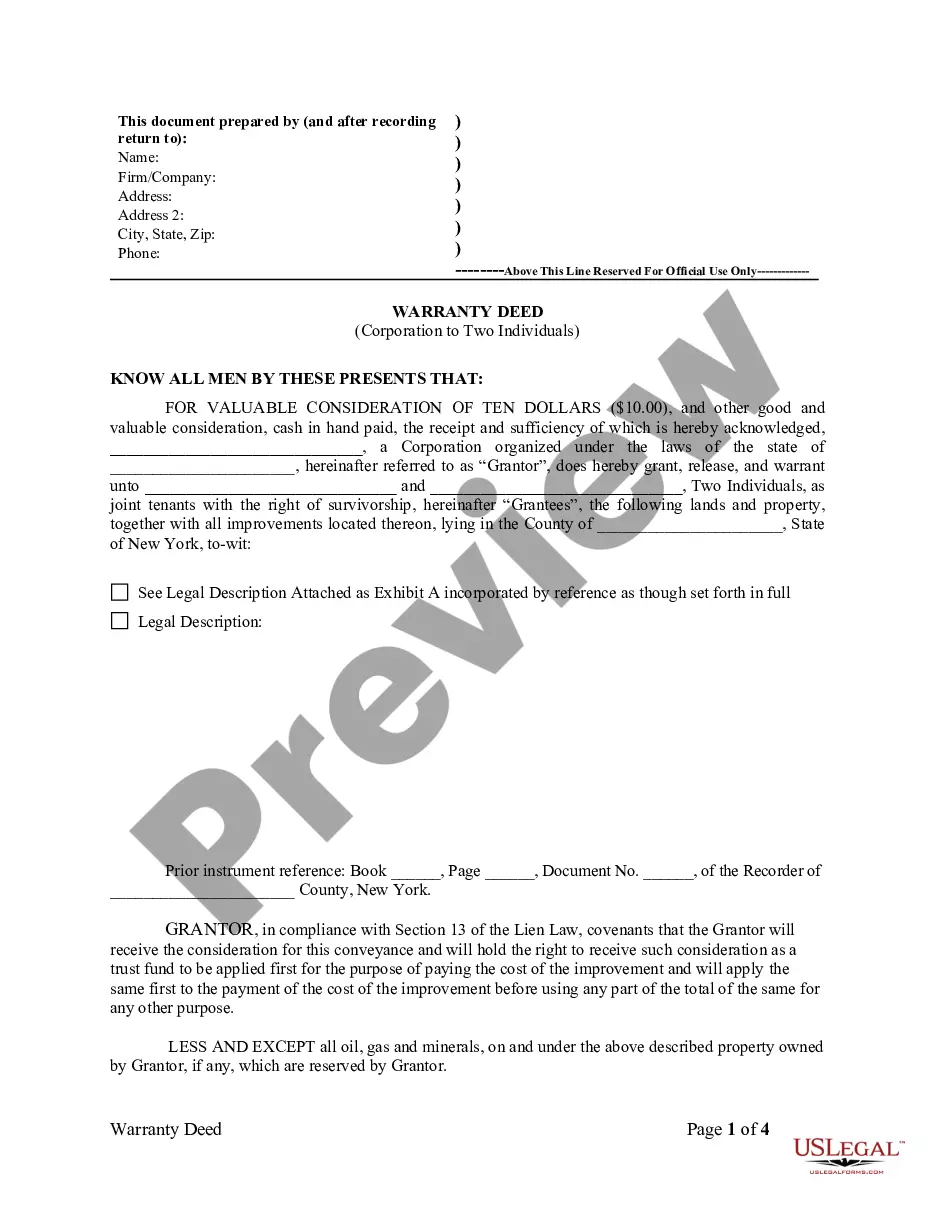
This Warranty Deed from Corporation to Two Individuals is a legal document that facilitates the transfer of property from a corporation (the Grantor) to two individual recipients (the Grantees). This form outlines the terms of the transfer and ensures that the property is conveyed without any encumbrances, except for specific reservations such as oil, gas, and minerals. This form is distinct from other types of deeds due to its specific use case of involving a corporation as the seller and two individuals as buyers, which adds a layer of complexity to the property transaction.
Form components explained
- Legal description of the property being transferred, included as an exhibit.
- Reservation clause for oil, gas, and minerals under the property.
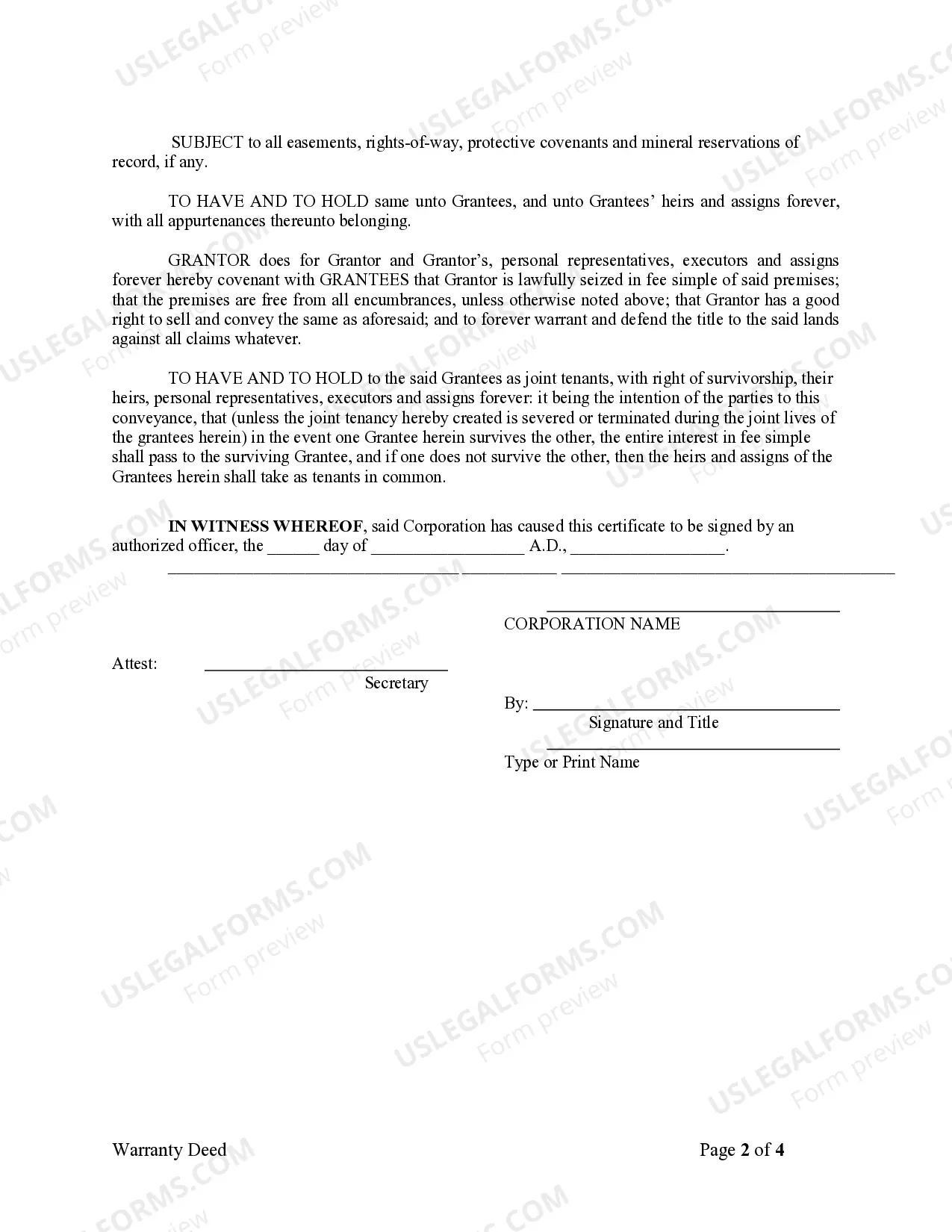
- Covenant that the Grantor is lawfully able to convey the property.
- Specification on the rights of the Grantees, including joint tenancy with right of survivorship.
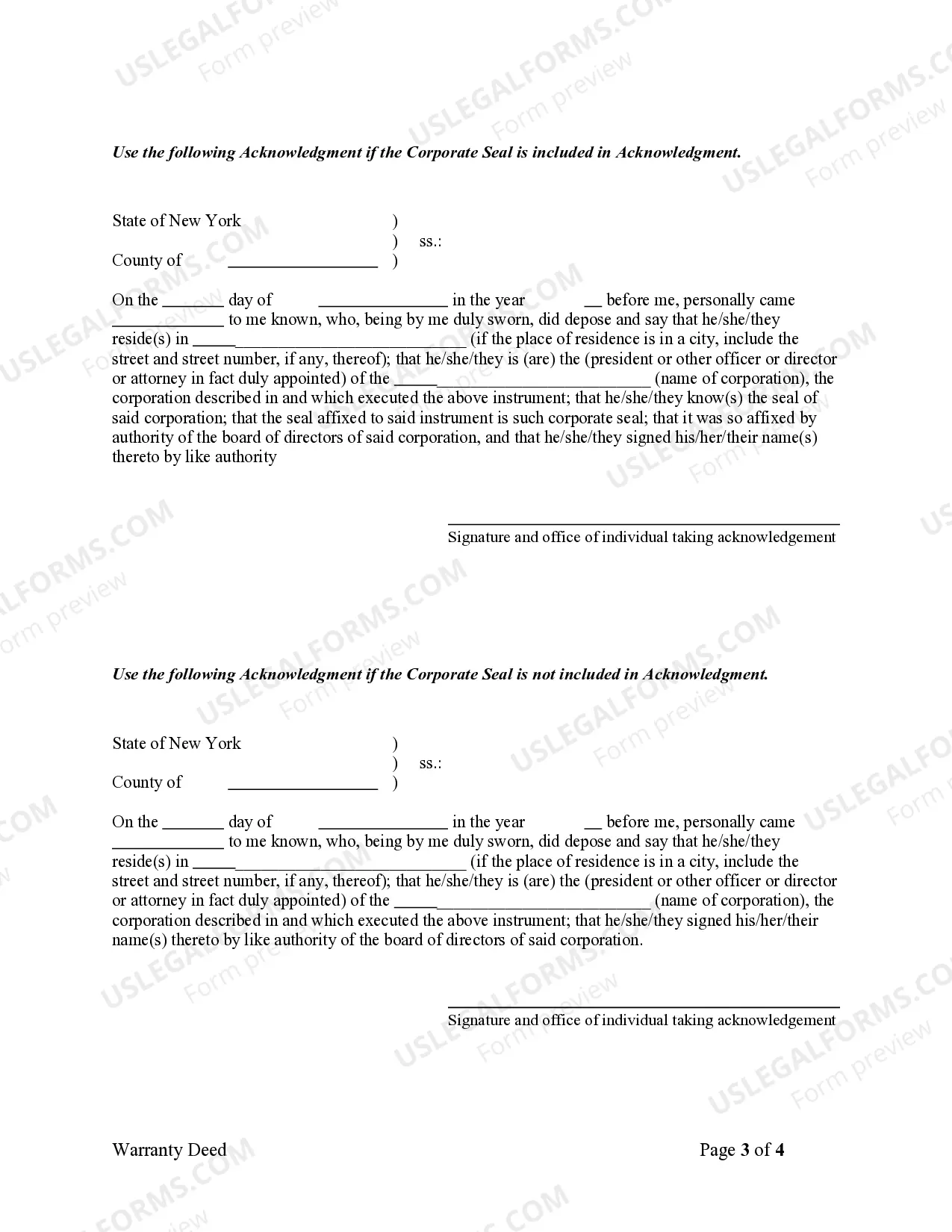
- Signature and notarization sections to validate the deed.




When this form is needed
This form should be utilized when a corporation is transferring ownership of real property to two individuals. Common scenarios for its use include:
- When a corporation is selling or gifting property to employees or stakeholders.
- In cases where property is being divided among family members from a corporation's holdings.
- When a corporation needs to formally document the transfer of property for tax or legal purposes.
Who can use this document
This form is intended for:
- Corporations wishing to convey property to two individuals.
- Individuals receiving property from a corporation.
- Attorneys or legal representatives handling a property transfer involving corporate entities.
Steps to complete this form
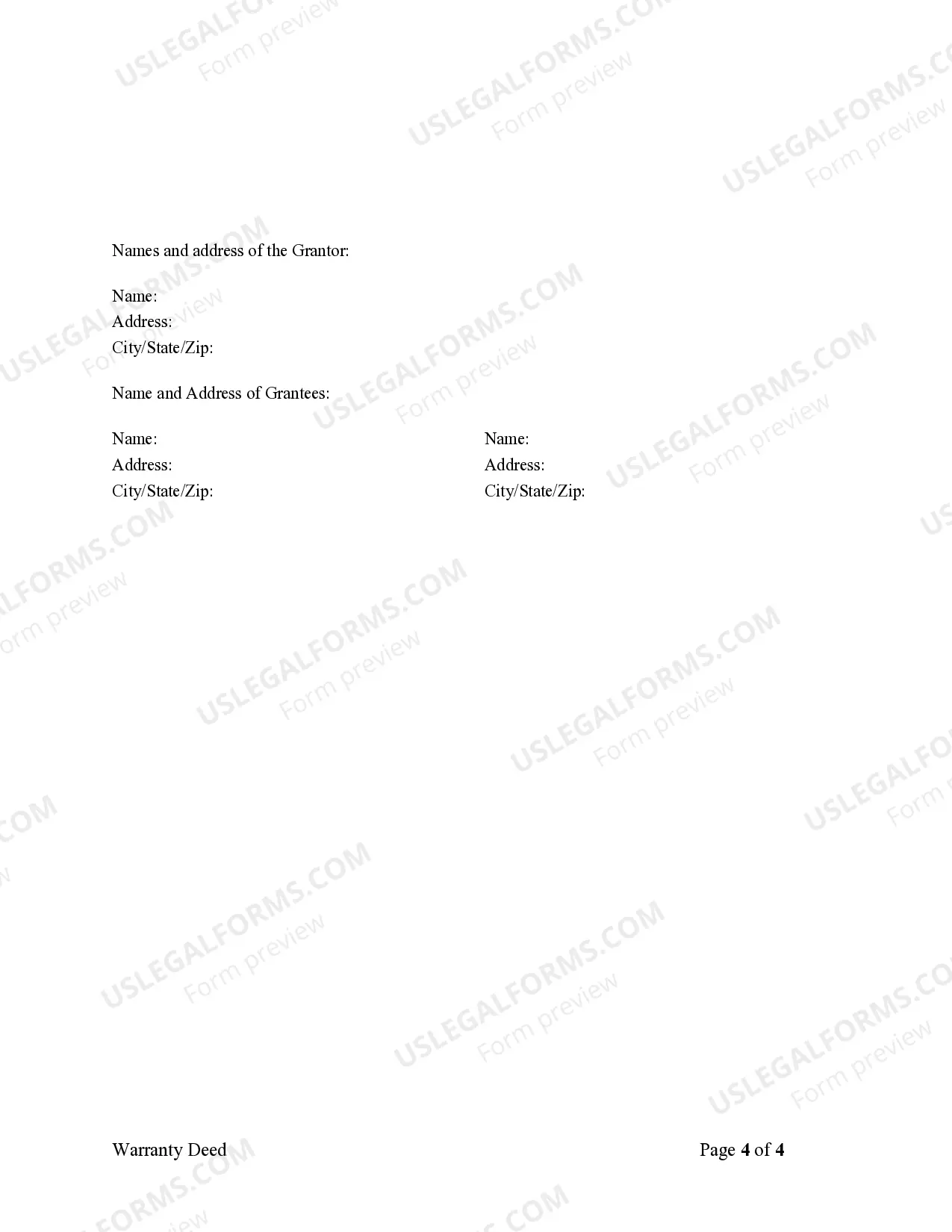
- Identify the parties involved: the corporation (Grantor) and the two individuals (Grantees).
- Provide a detailed legal description of the property, attaching it as Exhibit A.
- Specify any reservations, such as oil, gas, and mineral rights.
- Have an authorized officer of the corporation sign the deed.
- Complete the notarization sections, ensuring all parties are present and properly identified.
Notarization guidance
This document requires notarization to meet legal standards. US Legal Forms provides secure online notarization powered by Notarize, allowing you to complete the process through a verified video call, available 24/7.
Get your form ready online
Our built-in tools help you complete, sign, share, and store your documents in one place.
Make edits, fill in missing information, and update formatting in US Legal Forms—just like you would in MS Word.
Download a copy, print it, send it by email, or mail it via USPS—whatever works best for your next step.
Sign and collect signatures with our SignNow integration. Send to multiple recipients, set reminders, and more. Go Premium to unlock E-Sign.
If this form requires notarization, complete it online through a secure video call—no need to meet a notary in person or wait for an appointment.
We protect your documents and personal data by following strict security and privacy standards.

Make edits, fill in missing information, and update formatting in US Legal Forms—just like you would in MS Word.

Download a copy, print it, send it by email, or mail it via USPS—whatever works best for your next step.

Sign and collect signatures with our SignNow integration. Send to multiple recipients, set reminders, and more. Go Premium to unlock E-Sign.

If this form requires notarization, complete it online through a secure video call—no need to meet a notary in person or wait for an appointment.

We protect your documents and personal data by following strict security and privacy standards.
Avoid these common issues
- Failing to include a complete and accurate legal description of the property.
- Not specifying any reservations, which can lead to misunderstandings post-transfer.
- Forgetting to have the document signed by an authorized officer of the corporation.
- Neglecting to notarize the form when required, impacting its validity.
Benefits of completing this form online
- Convenient and quick access to customizable legal forms that can be downloaded instantly.
- Edit and tailor the form to meet your specific needs easily.
- Assurance that the forms are drafted to comply with state laws by licensed attorneys.
- Access to resources about property conveyance and related legal matters.
Looking for another form?
Form popularity
FAQ
Typically, the lender will provide you with a copy of the deed of trust after the closing. The original warranty deeds are often mailed to the grantee after they are recorded. These are your original copies and should be kept in a safe place, such as a fireproof lockbox or a safe deposit box at a financial institution.
Retrieve your original deed. Get the appropriate deed form. Draft the deed. Sign the deed before a notary. Record the deed with the county recorder. Obtain the new original deed.
Fill in the deed form. Print it out. Have the grantor(s) sign and get the signature(s) notarized. Complete a transfer tax form, Form TP-584. Complete and print out Form RP-5217 (or, if you are in New York City, Form RP-5217NYC).
After your Warranty Deed has been recorded at the County Clerk's Office, it can be sent to the grantee. However, any person or corporation can be designated as the recipient of the recorded Warranty Deed.
The original deed is returned to the owner of the property from the office of the recorder after proper entry. The office of the Recorder of Deeds maintains a set of indexes about each deed recorded, for an easy search. Almost all states have a grantor-grantee index including a reference to all documents recorded.
The fees to file a New York quitclaim deed vary from county to county, but some of the fees are similar. As of 2018, the basic fee for filing a quitclaim deed of residential or farm property is $125, while the fee for all other property is $250. These fees are for the RP-5217 form.
Adding someone to your house deed requires the filing of a legal form known as a quitclaim deed. When executed and notarized, the quitclaim deed legally overrides the current deed to your home. By filing the quitclaim deed, you can add someone to the title of your home, in effect transferring a share of ownership.