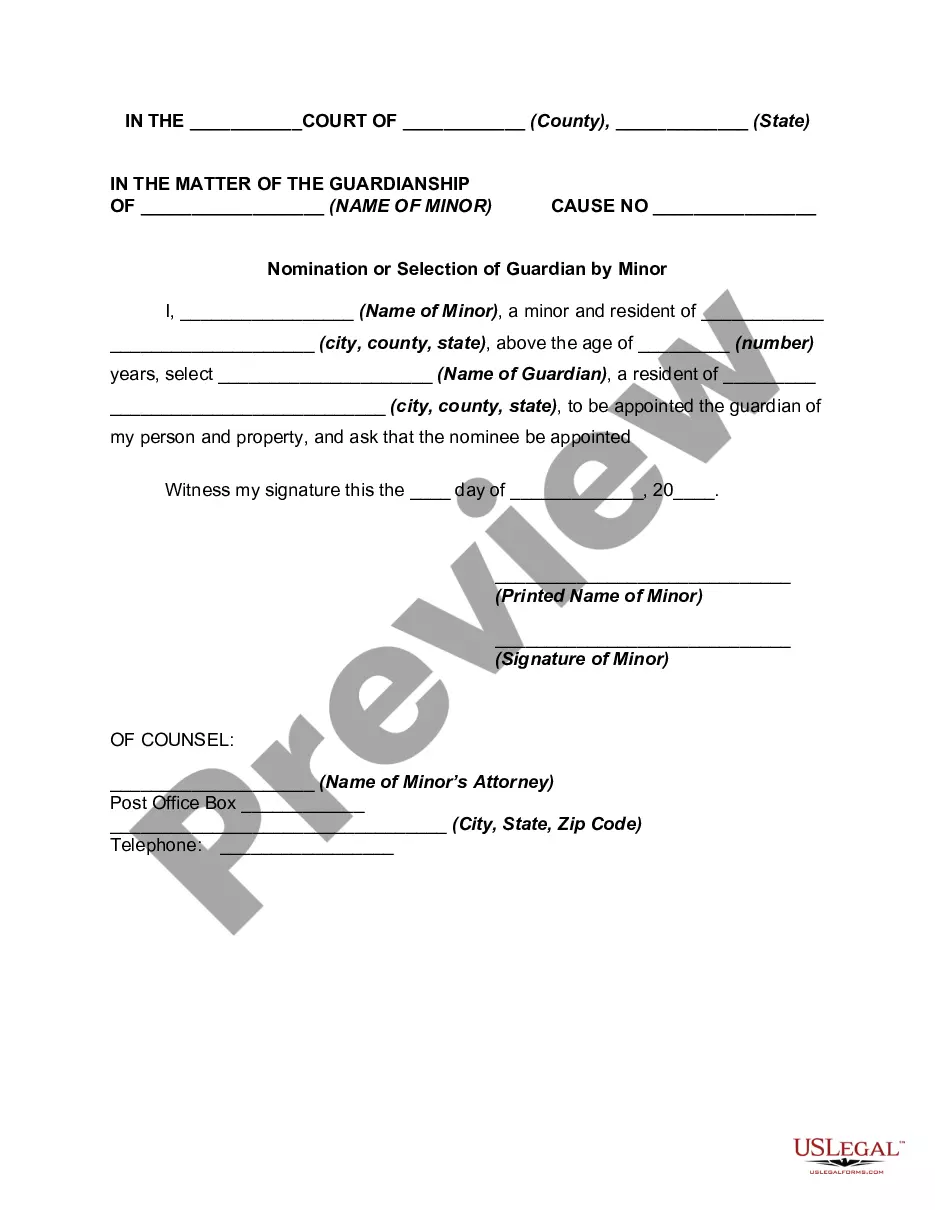
Nevada Last Will and Testament for Widow or Widower with Minor Children
Overview of this form
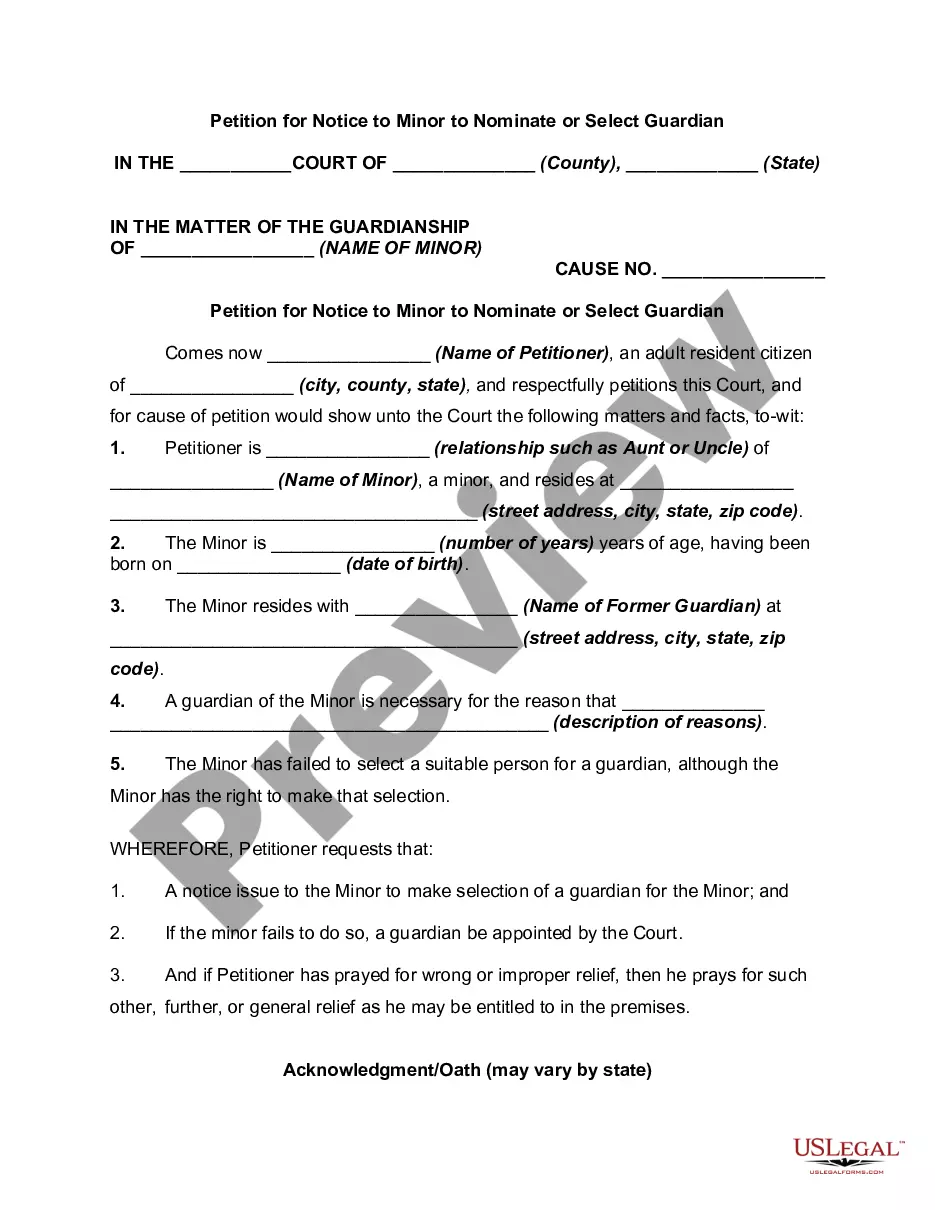
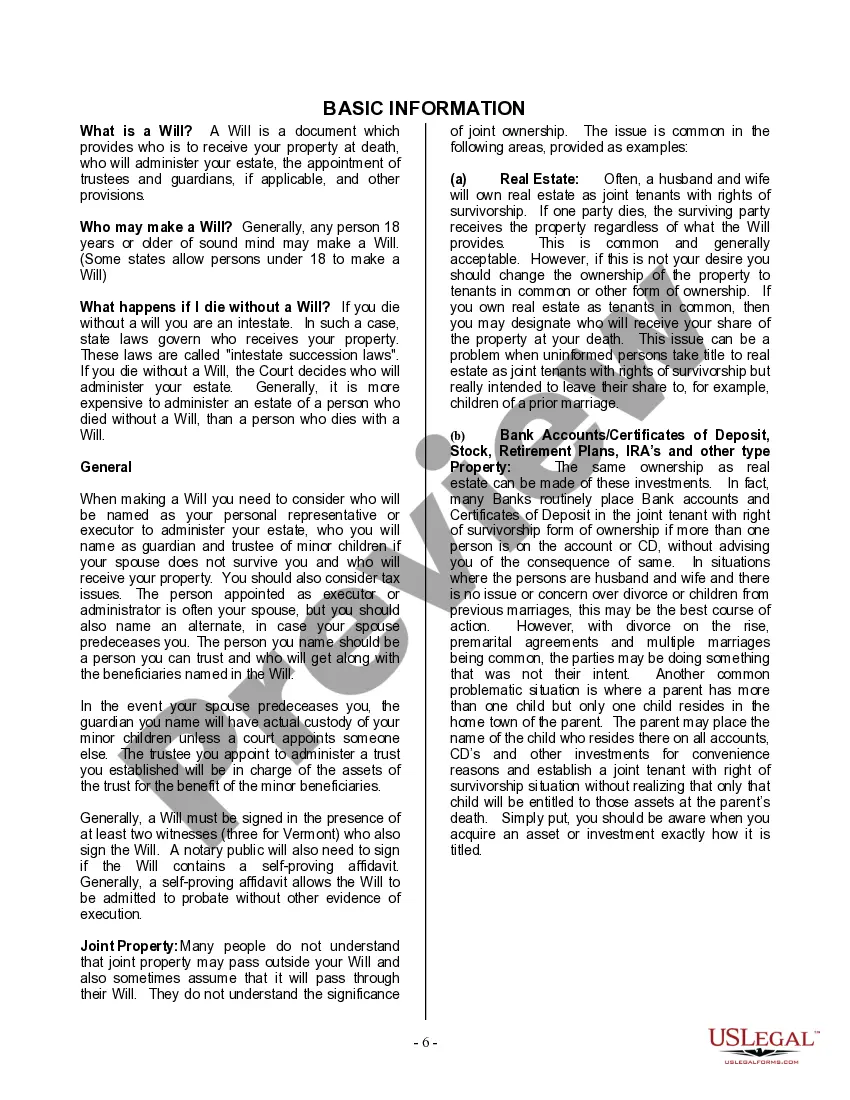
The Last Will and Testament for Widow or Widower with Minor Children is a legal document designed for individuals who have lost a spouse and need to outline their wishes for the distribution of their estate. This form specifically addresses the unique circumstances of a widow or widower with minor children, including the appointment of guardians, trustees, and the designation of property beneficiaries. It sets forth how assets will be allocated, ensuring that the minor children are taken care of according to the deceased parent's intentions.
Key components of this form
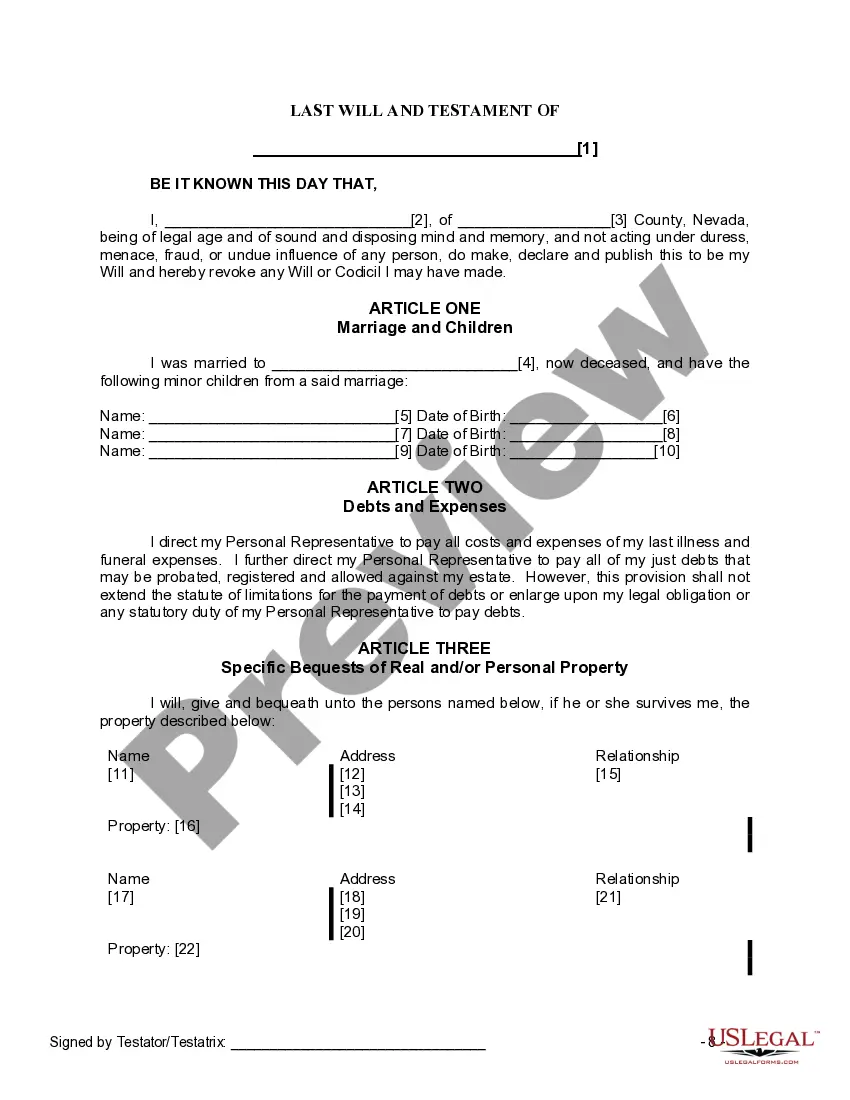
- Appointment of Personal Representative: Designates an executor to manage the estate.
- Specific Bequests: Allows for the distribution of specific items to named beneficiaries.
- Guardian for Minor Children: Names a guardian to care for the minor children in the event of the parent's death.
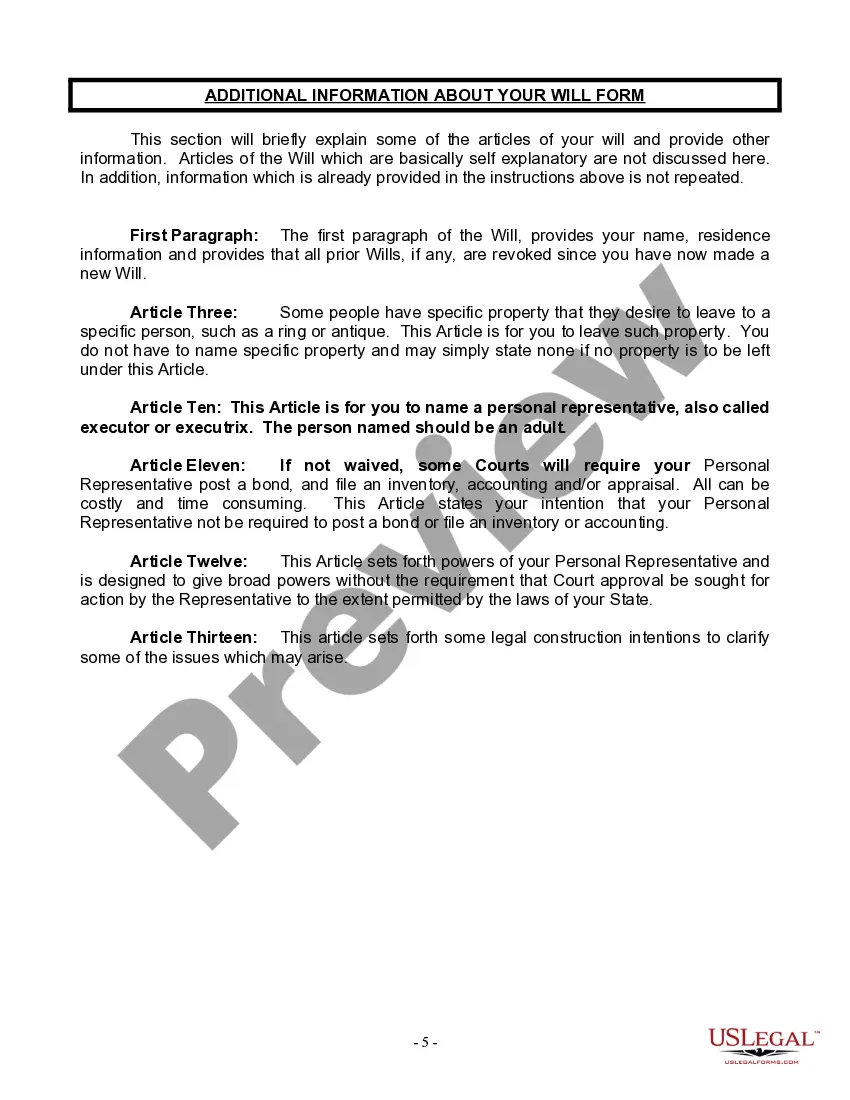
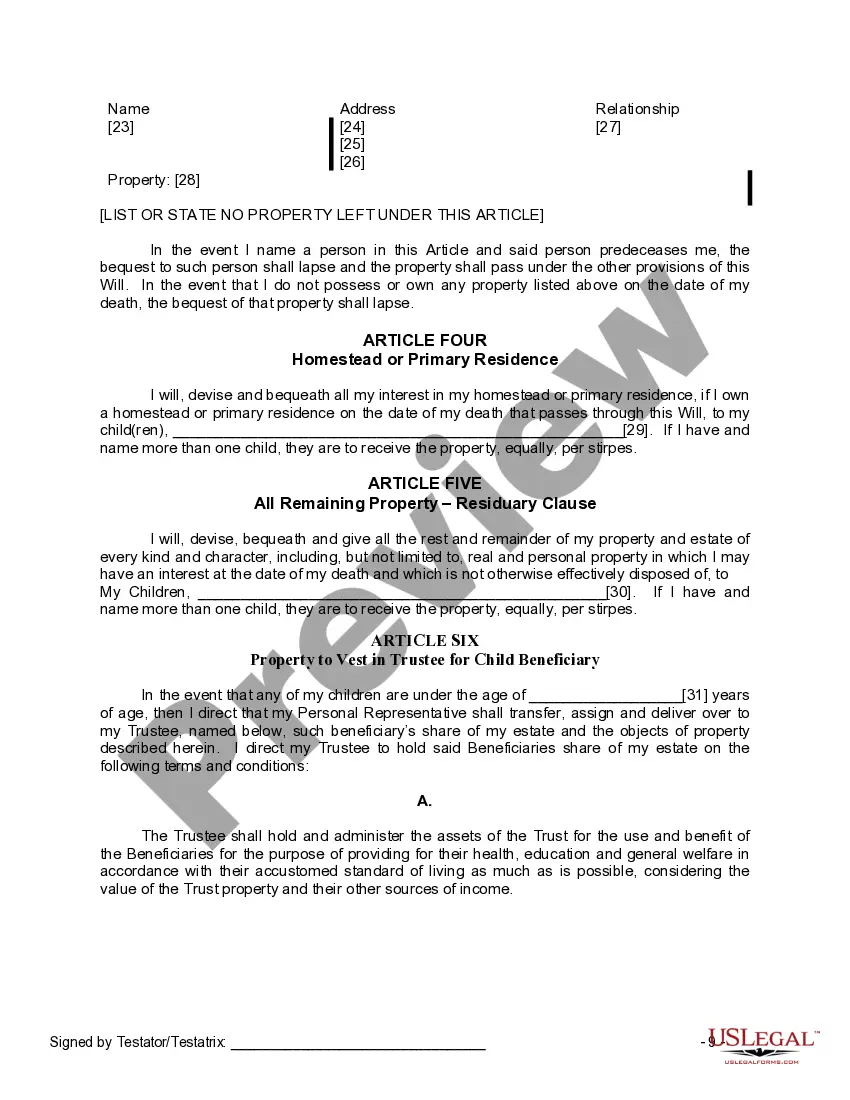
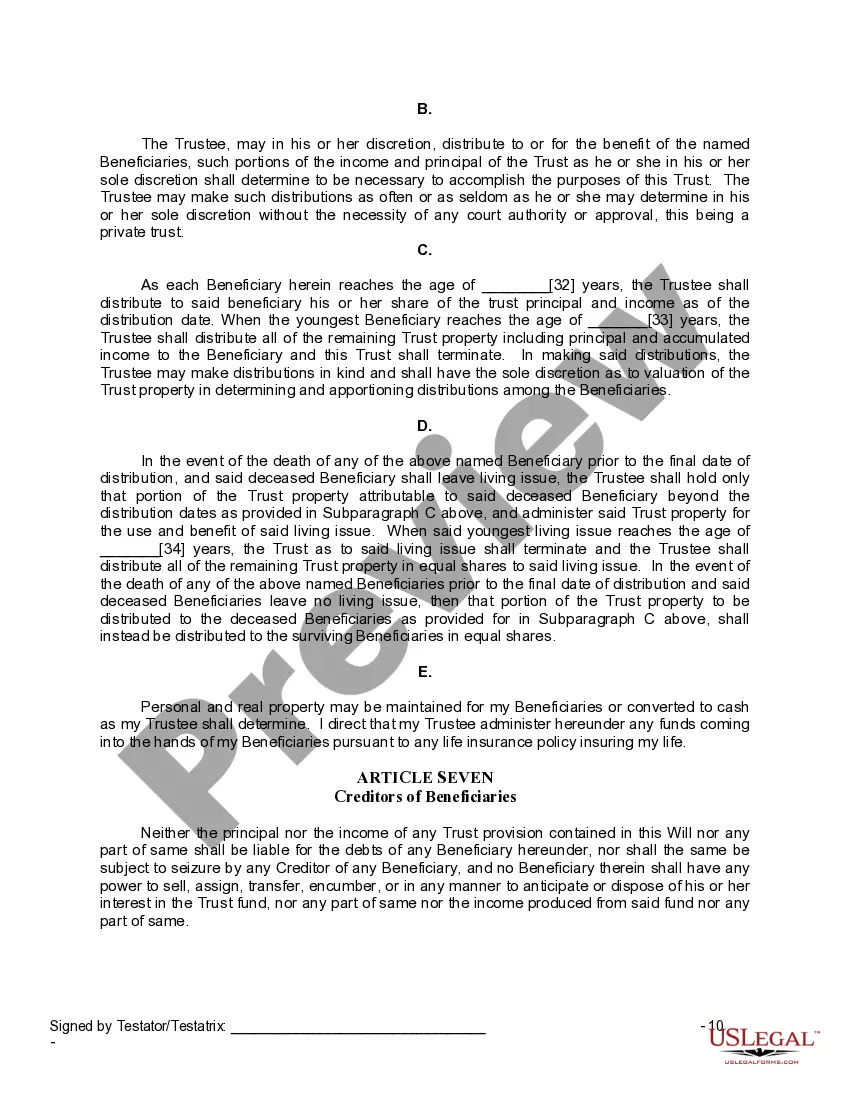
- Trustee Designation: Appoints a trustee to manage assets left to minor children until they are of age.
- Homestead Allocation: Specifies how the primary residence will be passed to heirs.





When this form is needed
This Last Will and Testament should be used by individuals who are widows or widowers with one or more minor children. It is essential when you want to ensure that your minor children are provided for after your passing. Additionally, it is applicable if you need to appoint a guardian and a trustee to oversee your children's inheritance until they reach adulthood. This form is crucial when planning your estate to avoid intestate succession laws, which may not reflect your wishes.
Who can use this document
- Widows or widowers with minor children.
- Individual parents seeking to secure their children's future.
- Anyone wanting to ensure their assets are distributed according to their specific wishes.
- Individuals who need to appoint guardians or trustees for minor beneficiaries.
How to complete this form
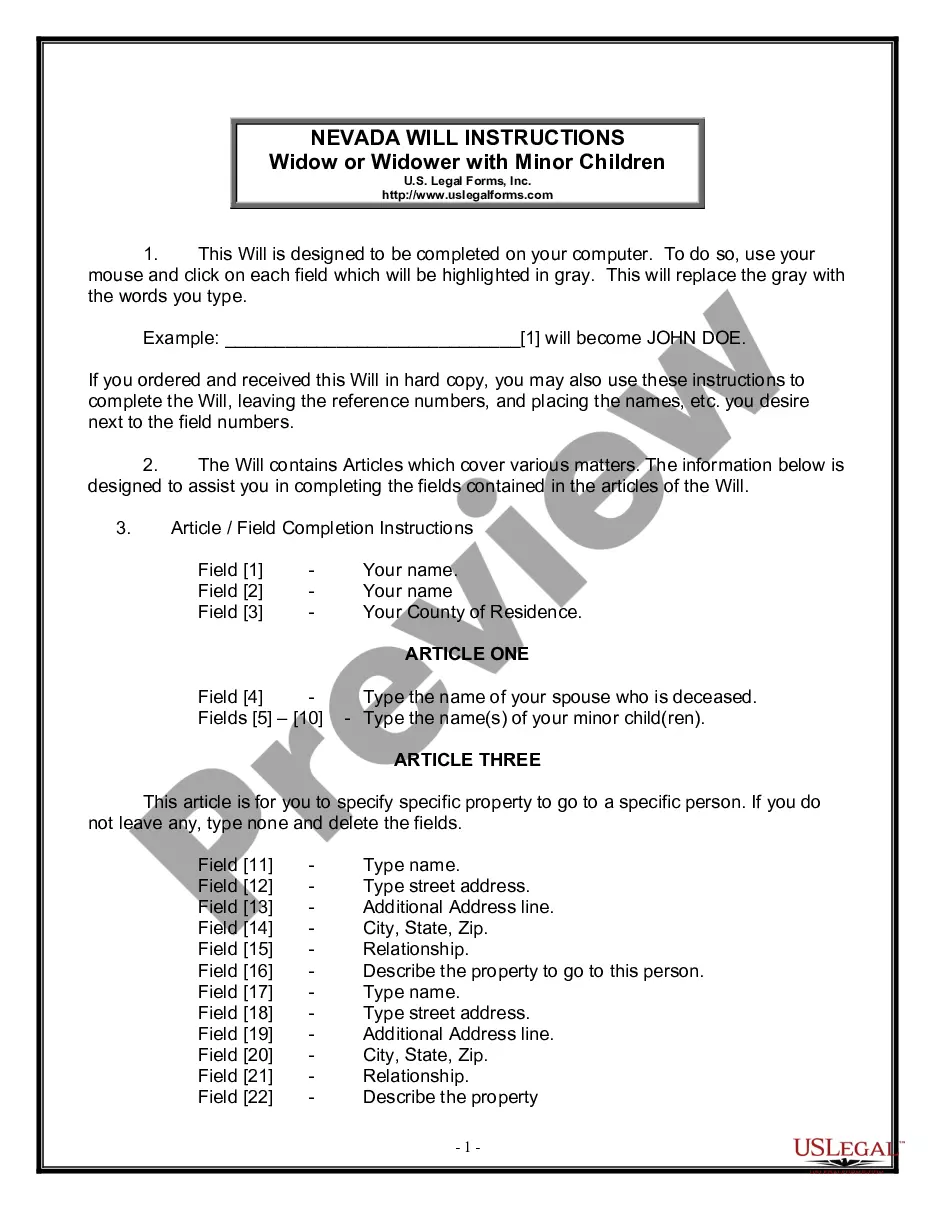
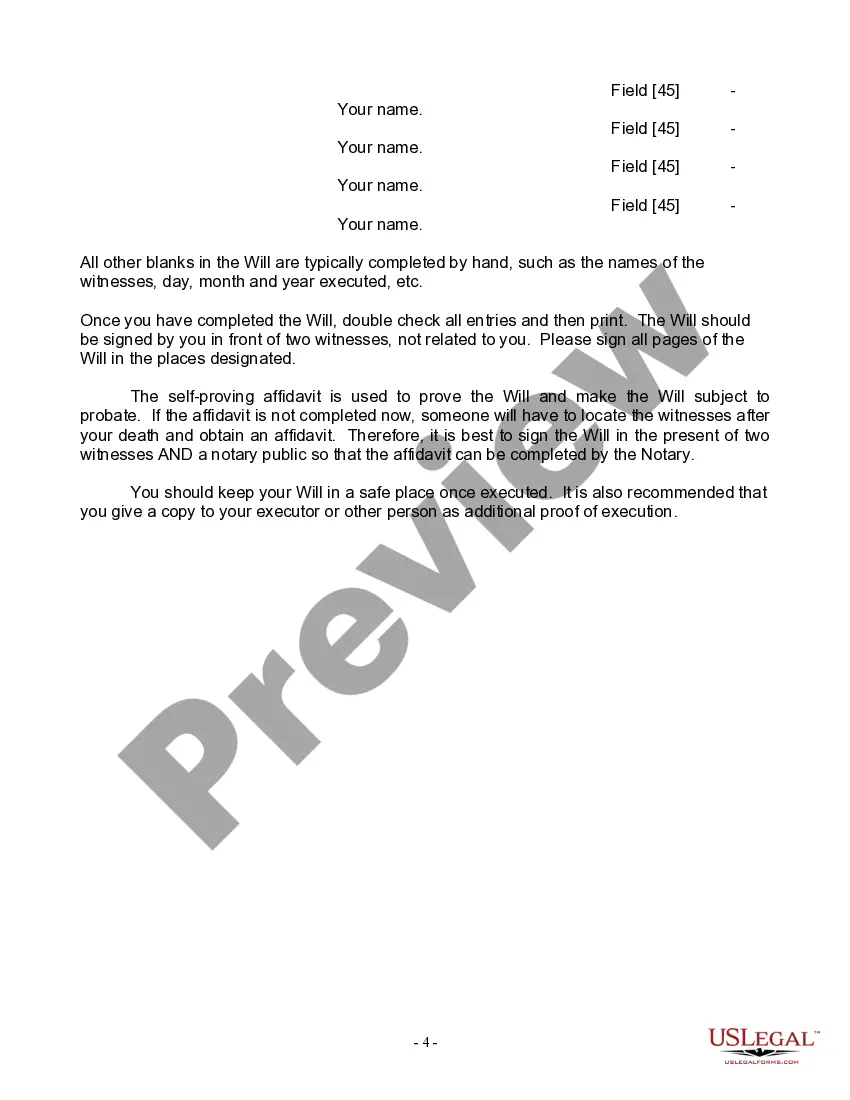
- Identify yourself and provide your county of residence.
- Detail the name of your deceased spouse and list your minor children's names and birth dates.
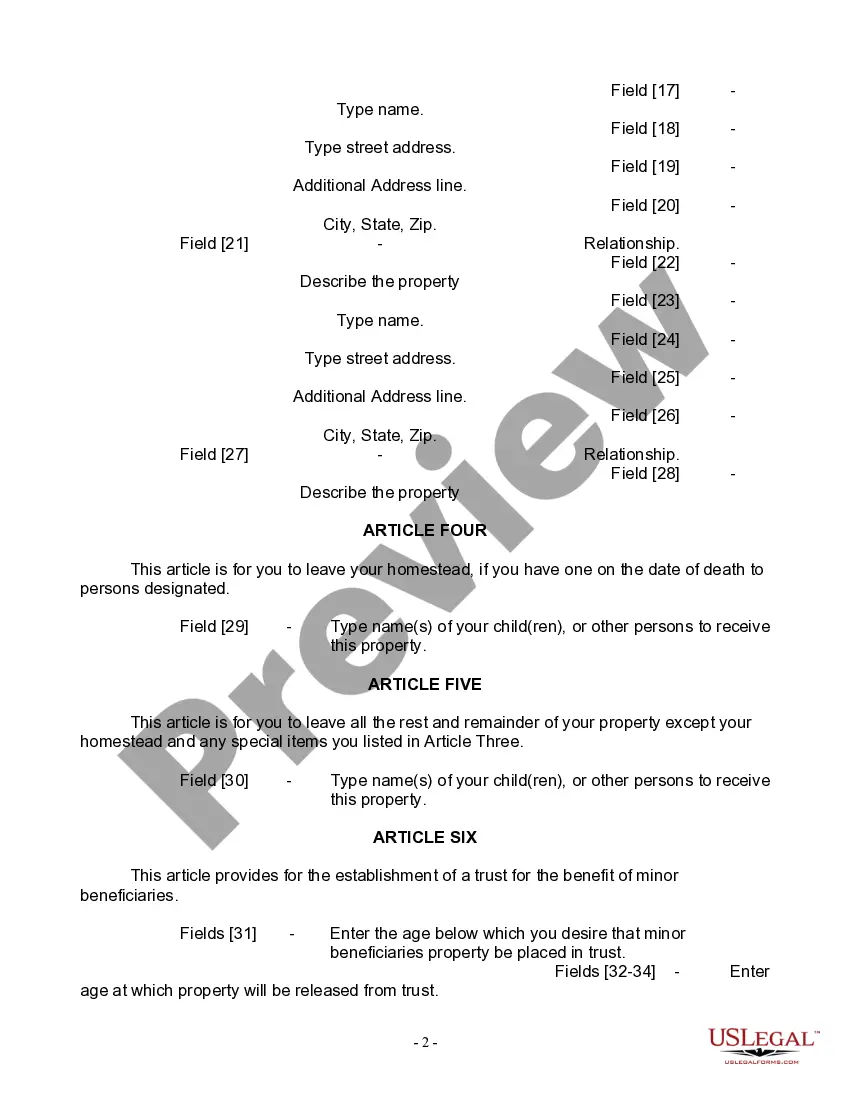
- Specify any specific property you wish to bequeath to particular individuals.
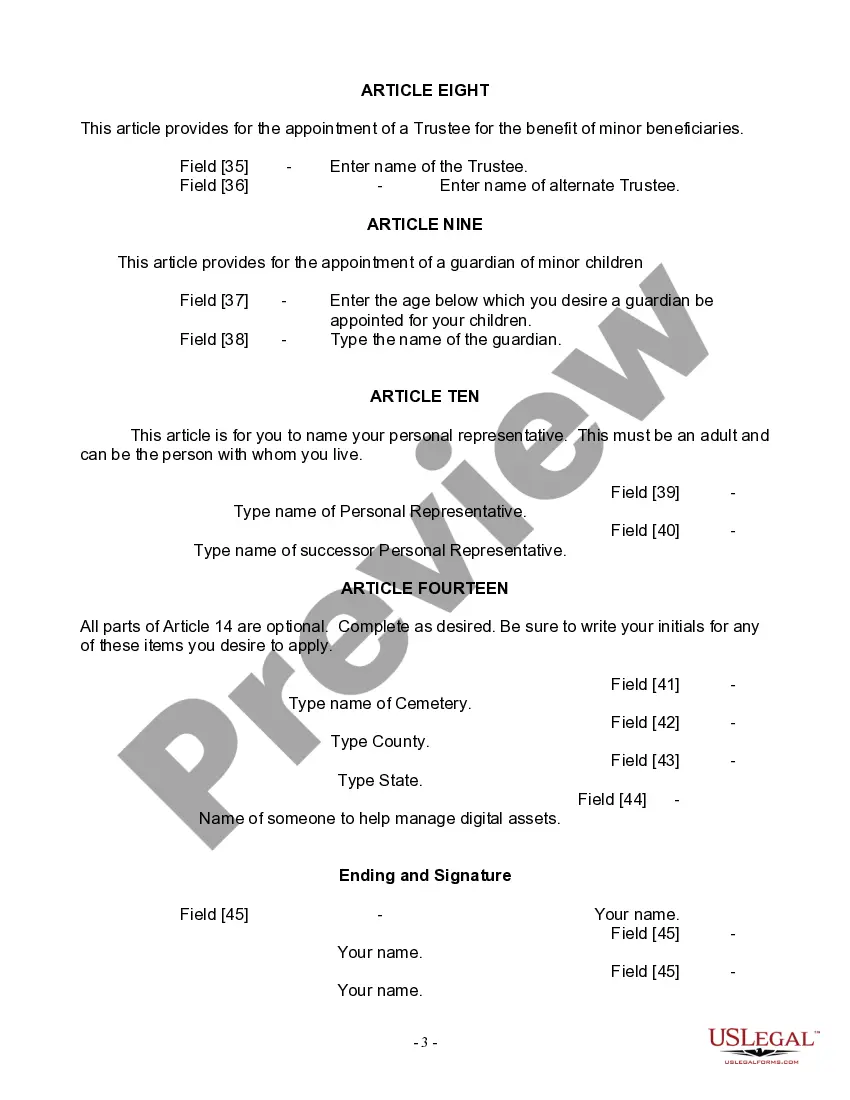
- Designate a guardian for your minor children and a trustee for their inheritance.
- Sign the document in front of two witnesses who cannot be beneficiaries.
Does this document require notarization?
This form must be notarized to be legally valid. US Legal Forms provides secure online notarization powered by Notarize, allowing you to complete the process through a verified video call.
Get your form ready online
Our built-in tools help you complete, sign, share, and store your documents in one place.
Make edits, fill in missing information, and update formatting in US Legal Forms—just like you would in MS Word.
Download a copy, print it, send it by email, or mail it via USPS—whatever works best for your next step.
Sign and collect signatures with our SignNow integration. Send to multiple recipients, set reminders, and more. Go Premium to unlock E-Sign.
If this form requires notarization, complete it online through a secure video call—no need to meet a notary in person or wait for an appointment.
We protect your documents and personal data by following strict security and privacy standards.

Make edits, fill in missing information, and update formatting in US Legal Forms—just like you would in MS Word.

Download a copy, print it, send it by email, or mail it via USPS—whatever works best for your next step.

Sign and collect signatures with our SignNow integration. Send to multiple recipients, set reminders, and more. Go Premium to unlock E-Sign.

If this form requires notarization, complete it online through a secure video call—no need to meet a notary in person or wait for an appointment.

We protect your documents and personal data by following strict security and privacy standards.
Common mistakes
- Failing to properly witness the Will according to state requirements.
- Not updating the Will after significant life changes.
- Ignoring tax implications for the estate.
- Neglecting to designate a guardian or trustee.
Why complete this form online
- Convenience of filling out the form from your home.
- Editable fields that allow for immediate corrections and updates.
- Access to attorney-drafted templates ensuring legal compliance.
- Easy downloading and printing options for personal records.
Main things to remember
- This will form is tailored for widows or widowers with minor children.
- It provides instructions for appointing guardians and trustees.
- Proper completion and witness requirements are critical for legal validity.
- Online access makes it easier to manage your estate planning needs.
Looking for another form?
Form popularity
FAQ
A. You don't have to have a lawyer to create a basic will you can prepare one yourself. It must meet your state's legal requirements and should be notarized.A do-it-yourself will that's poorly drafted can save you money but create a mess for your heirs when you're gone.
Include personal identifying information. Include a statement about your age and mental status. Designate an executor. Decide who will take care of your children. Choose your beneficiaries. List your funeral details. Sign and date your Last Will and Testament.
Age: The testator must be at least 18 years old. Capacity: The testator must be of sound mind. Signature: The will must be signed by the testator or by an attending person at the testator's direction.
Contrary to popular belief, you do not need to have an attorney draft a will for you. Anyone can write this document on their own, and as long as it meets all of the legal requirements of the state, courts will recognize one you wrote yourself.
Contrary to popular belief, you do not need to have an attorney draft a will for you. Anyone can write this document on their own, and as long as it meets all of the legal requirements of the state, courts will recognize one you wrote yourself.
You can file the will at the clerk's office for the Eighth Judicial District Court, which is located on the 3rd floor of the Regional Justice Center at 200 Lewis Avenue, Las Vegas, NV 89155 or at the Family Courts and Services Center at 601 N. Pecos Road, Las Vegas, NV 89101.
No, in Nevada, you do not need to notarize your will to make it legal. However, Nevada allows you to make your will "self-proving" and you'll need to go to a notary if you want to do that. A self-proving will speeds up probate because the court can accept the will without contacting the witnesses who signed it.
Create the initial document. Start by titling the document Last Will and Testament" and including your full legal name and address. Designate an executor. Appoint a guardian. Name the beneficiaries. Designate the assets. Ask witnesses to sign your will. Store your will in a safe place.
What Makes a Handwritten Will Legally Binding? A written will is valid if it is: (1) in writing; (2) signed by the testator, i.e., the person making the will; and (3) signed by at least two witnesses who saw the testator sign the will or acknowledge the signature on the will.