Nevada Discovery Interrogatories from Plaintiff to Defendant with Production Requests
Overview of this form
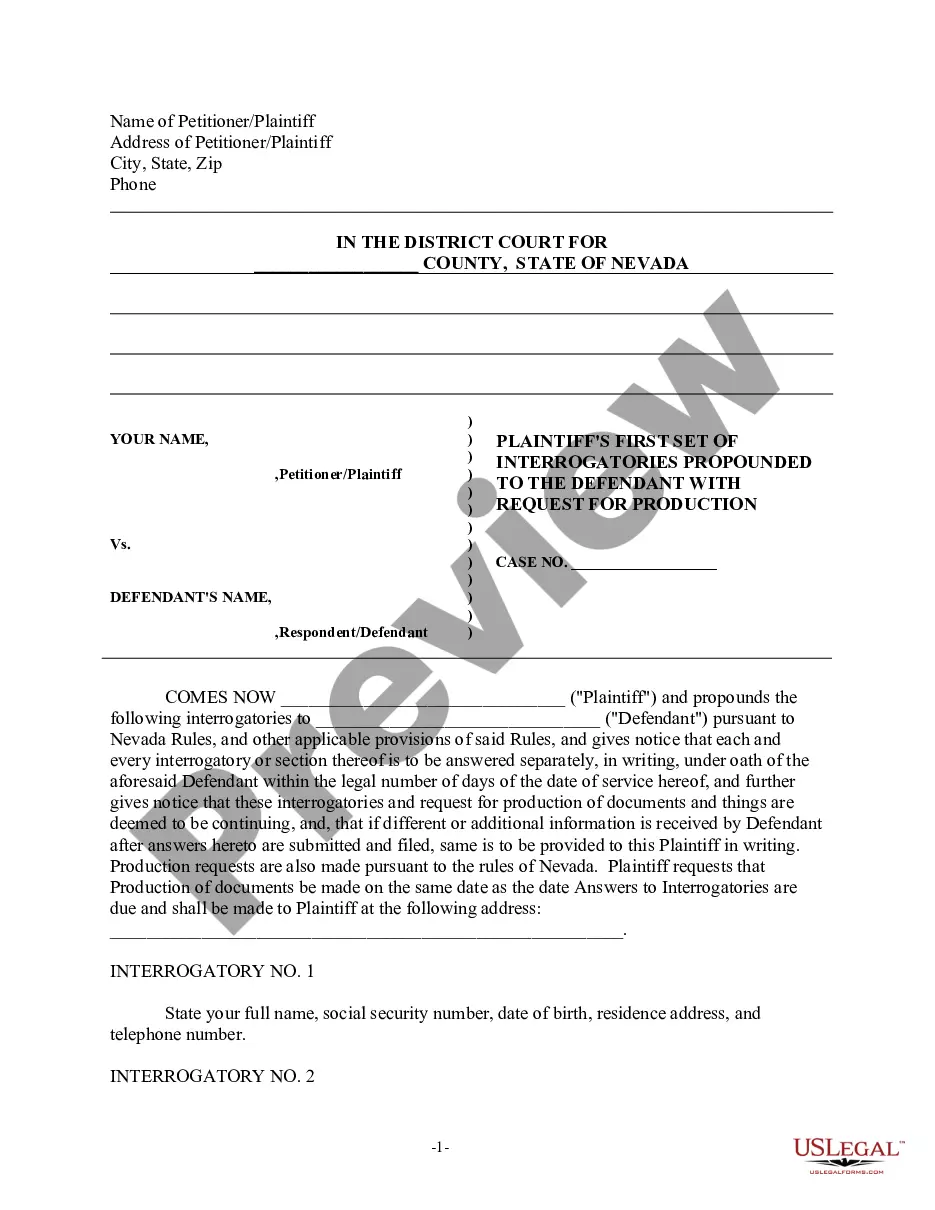
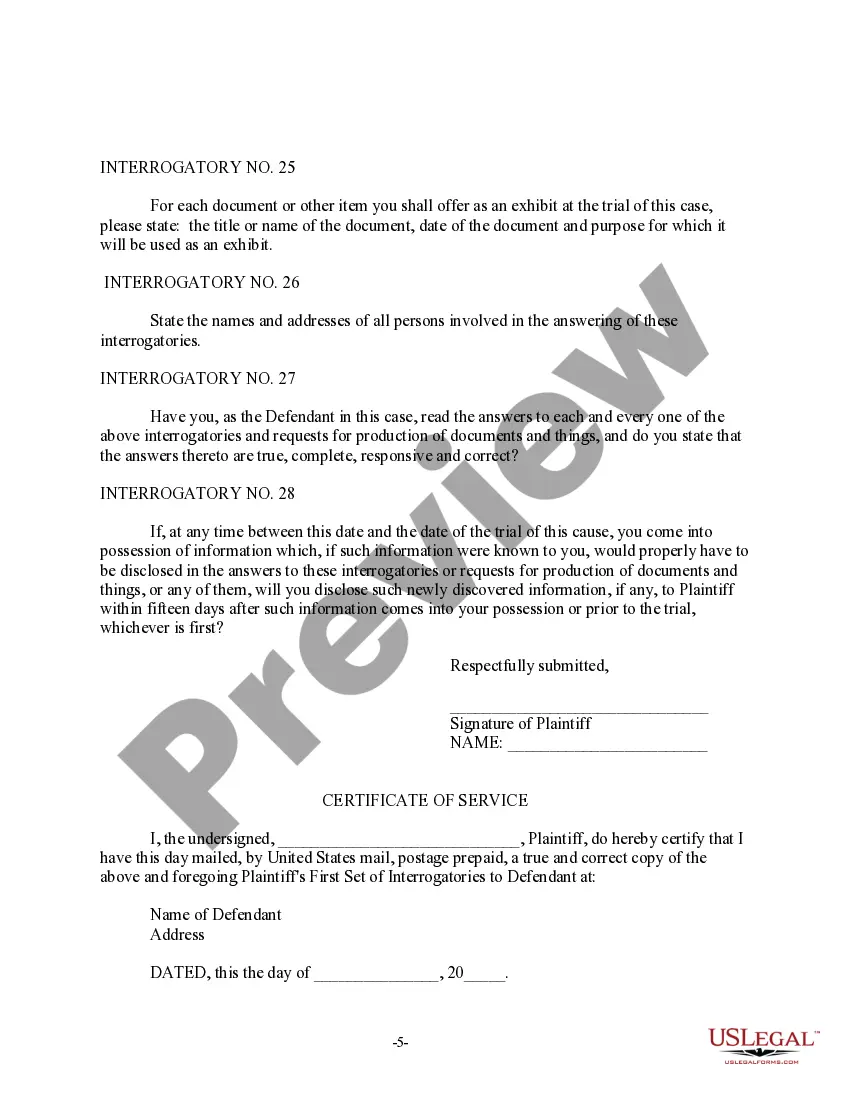
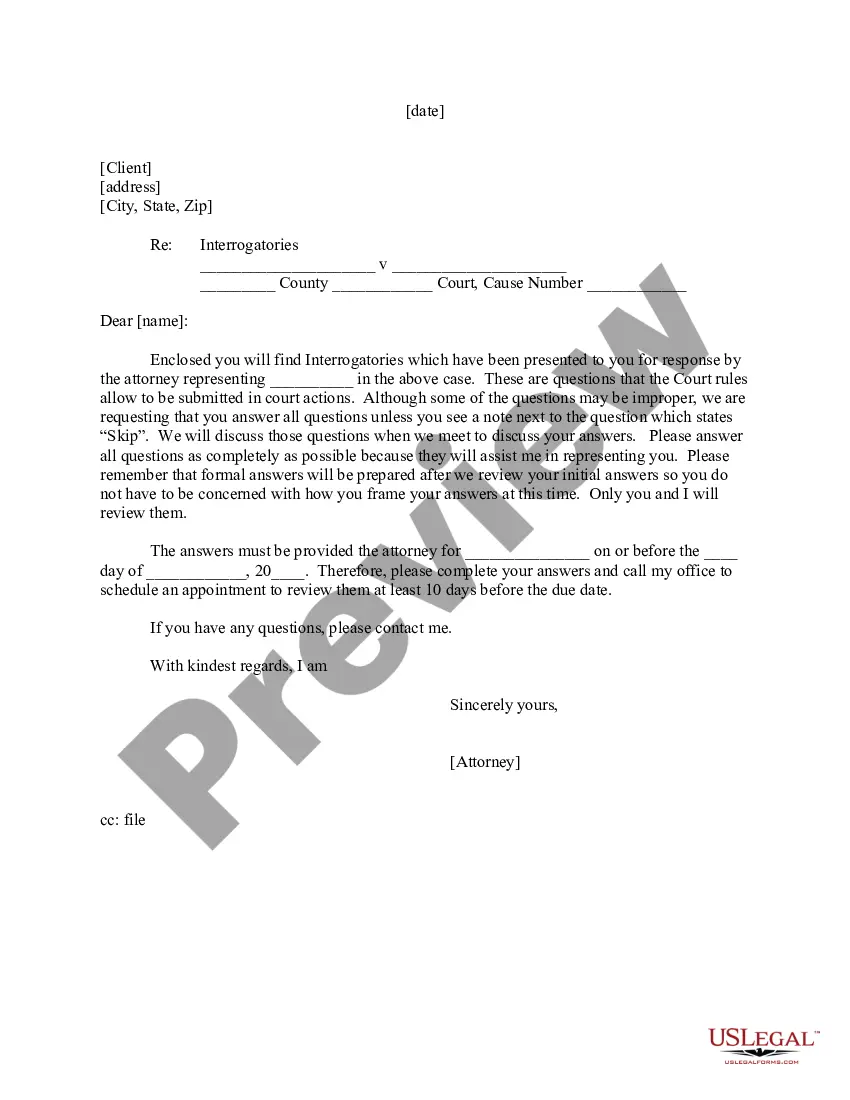
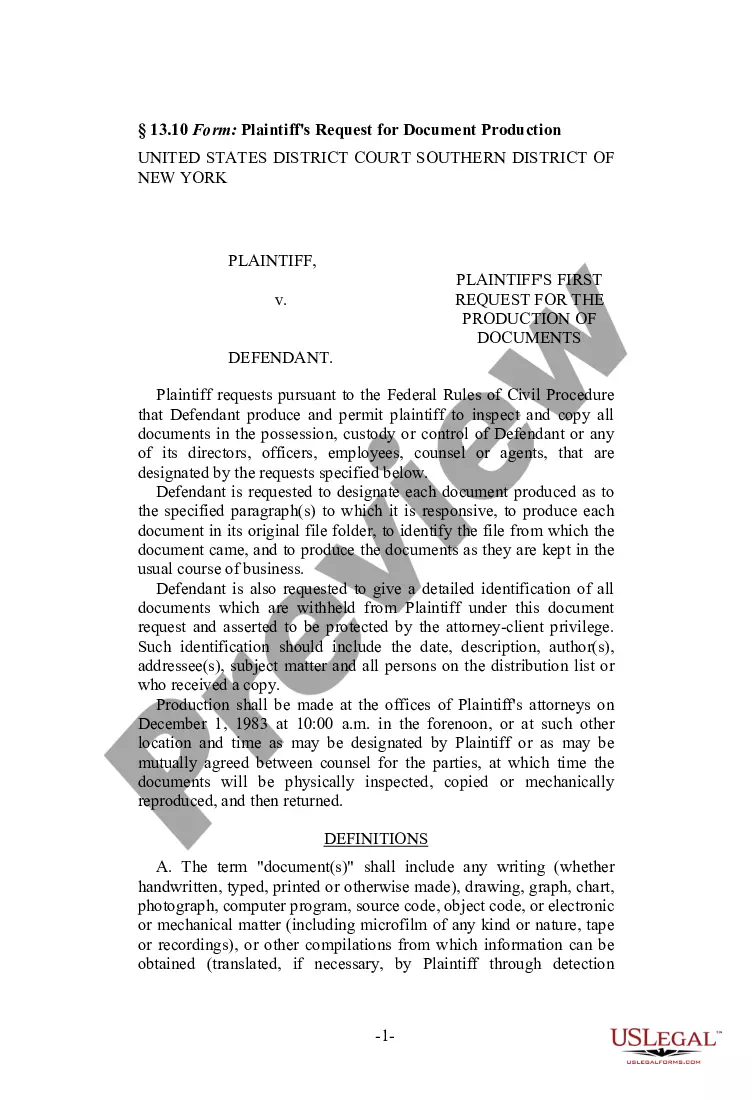
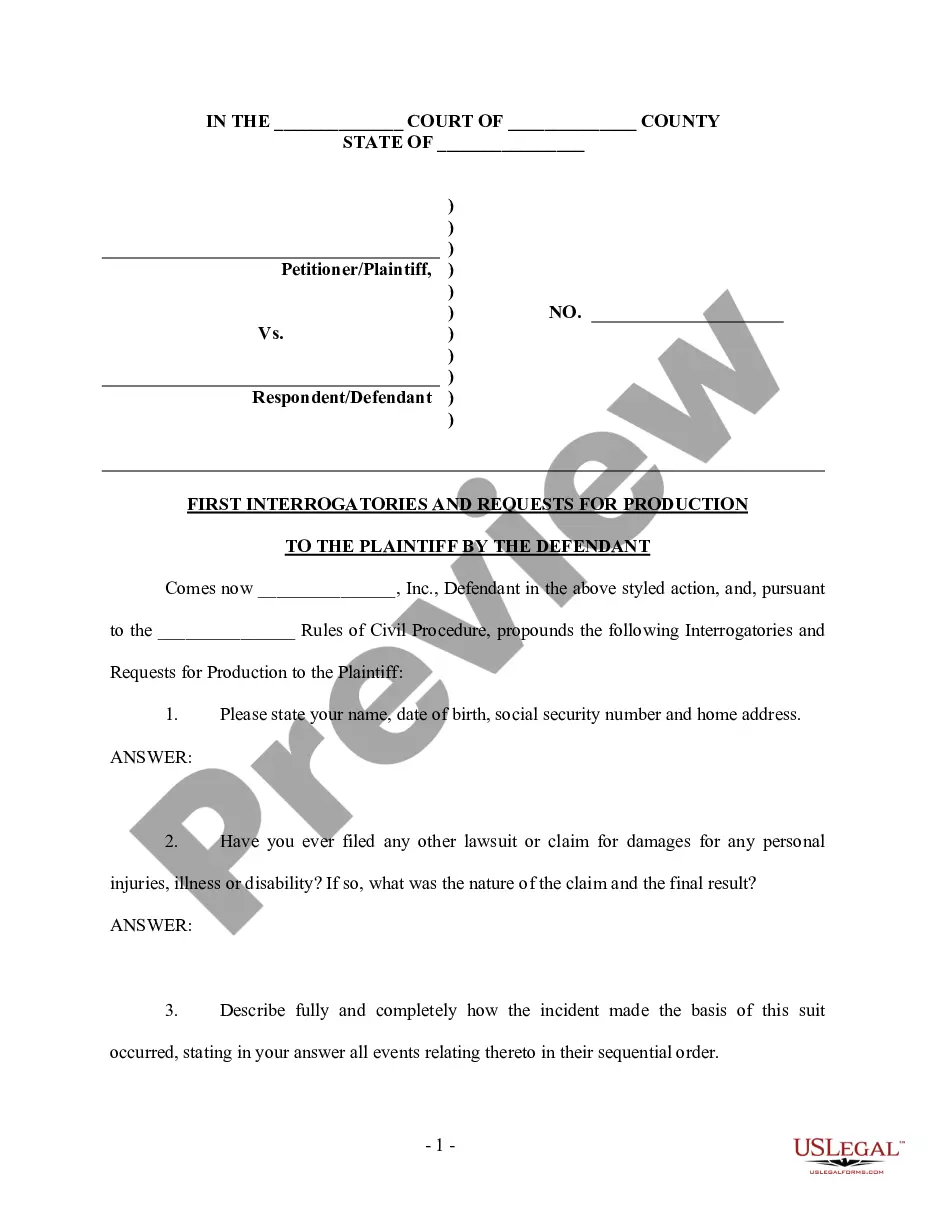
The Discovery Interrogatories from Plaintiff to Defendant with Production Requests is a legal document used in divorce cases. This form allows the plaintiff to formally request information and documents from the defendant to prepare for court proceedings. It is distinct from other legal forms as it combines both interrogatories (questions requiring written answers) and requests for the production of documents, facilitating a thorough exchange of necessary information between parties.
Key parts of this document
- Petitioner/Plaintiff's information: Includes name, address, and contact details.
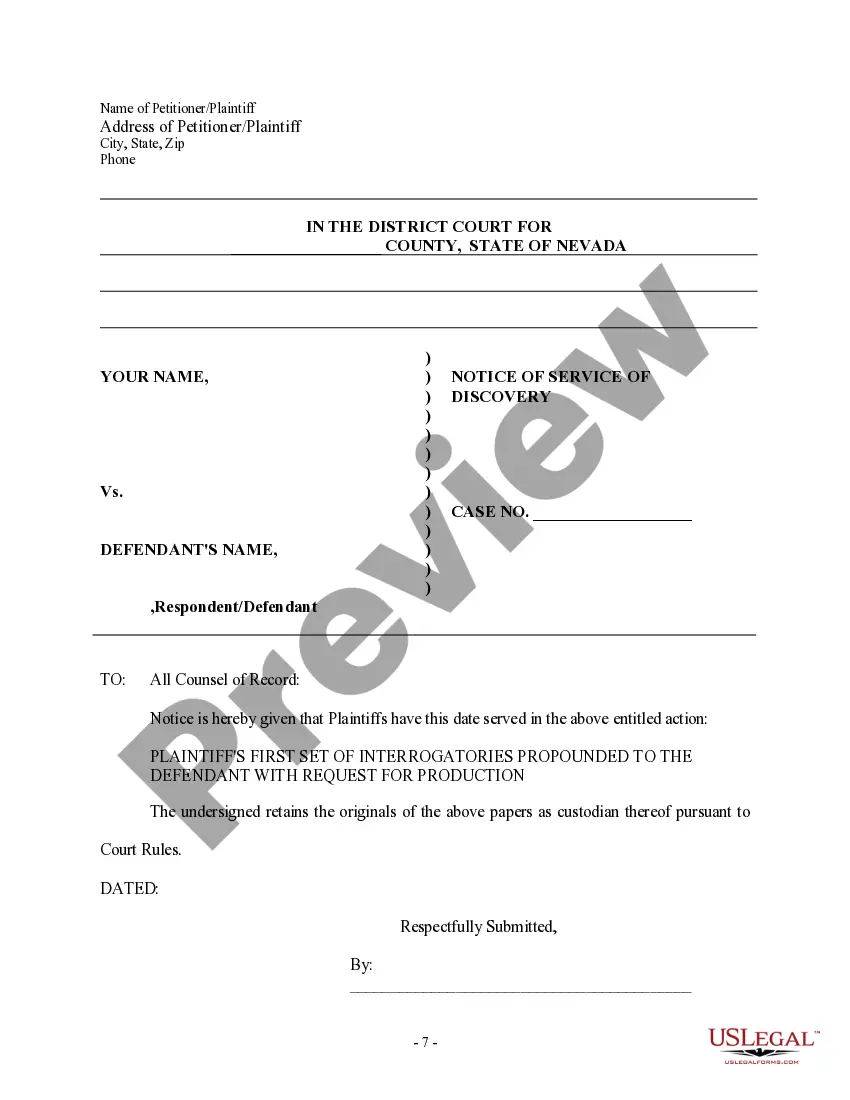
- Defendant's information: Requires name and case-related details to properly address the interrogatories.
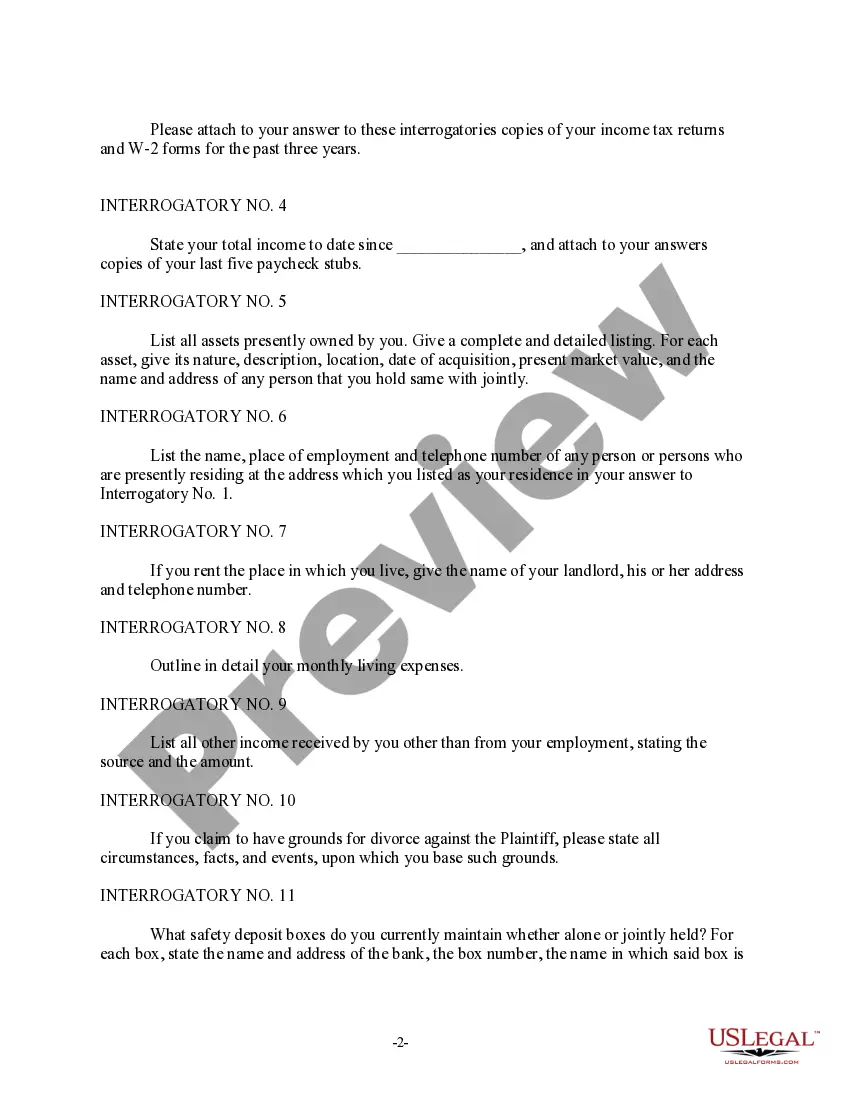
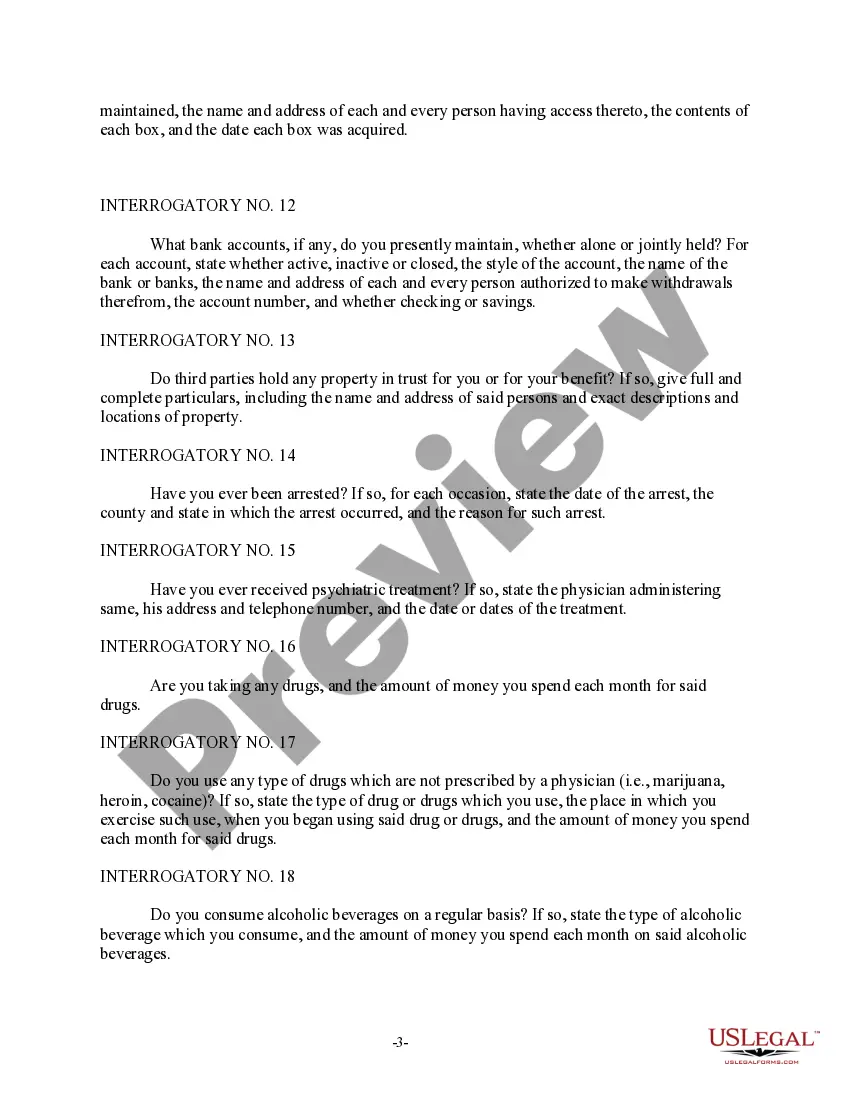
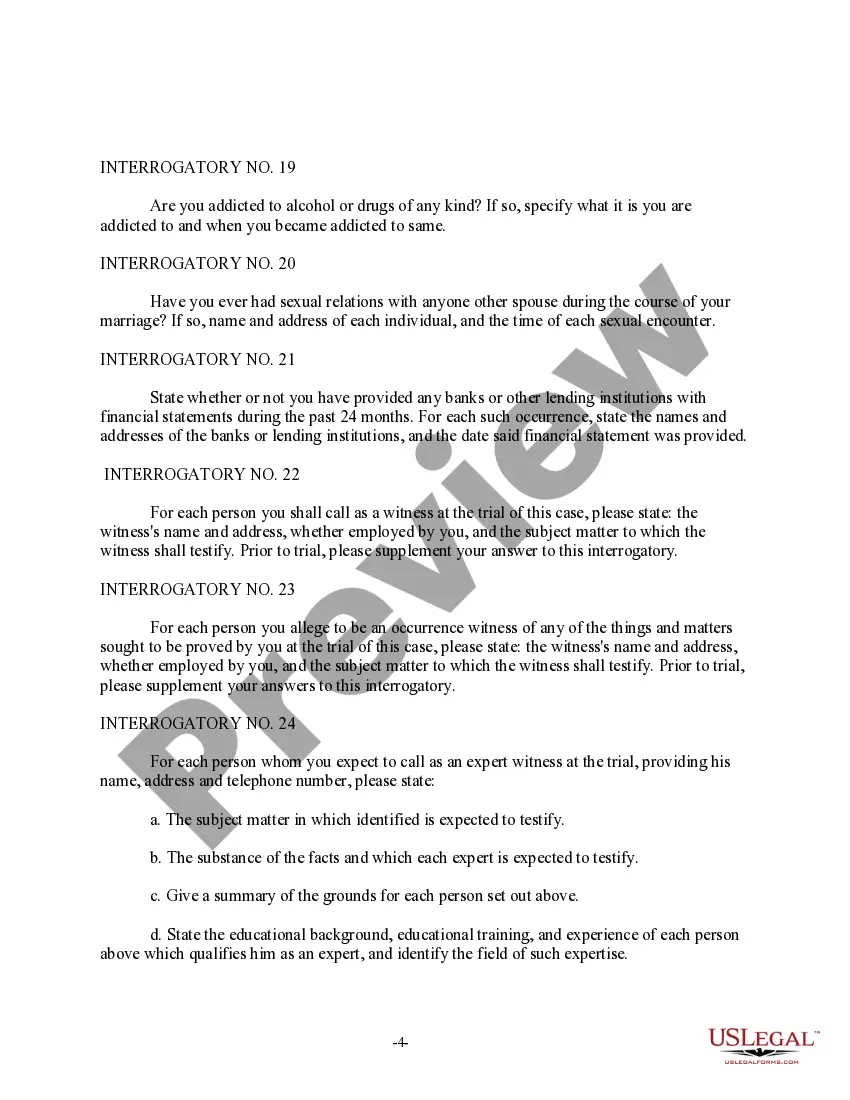
- Interrogatories: A series of questions directed at the defendant covering income, assets, and other relevant information.
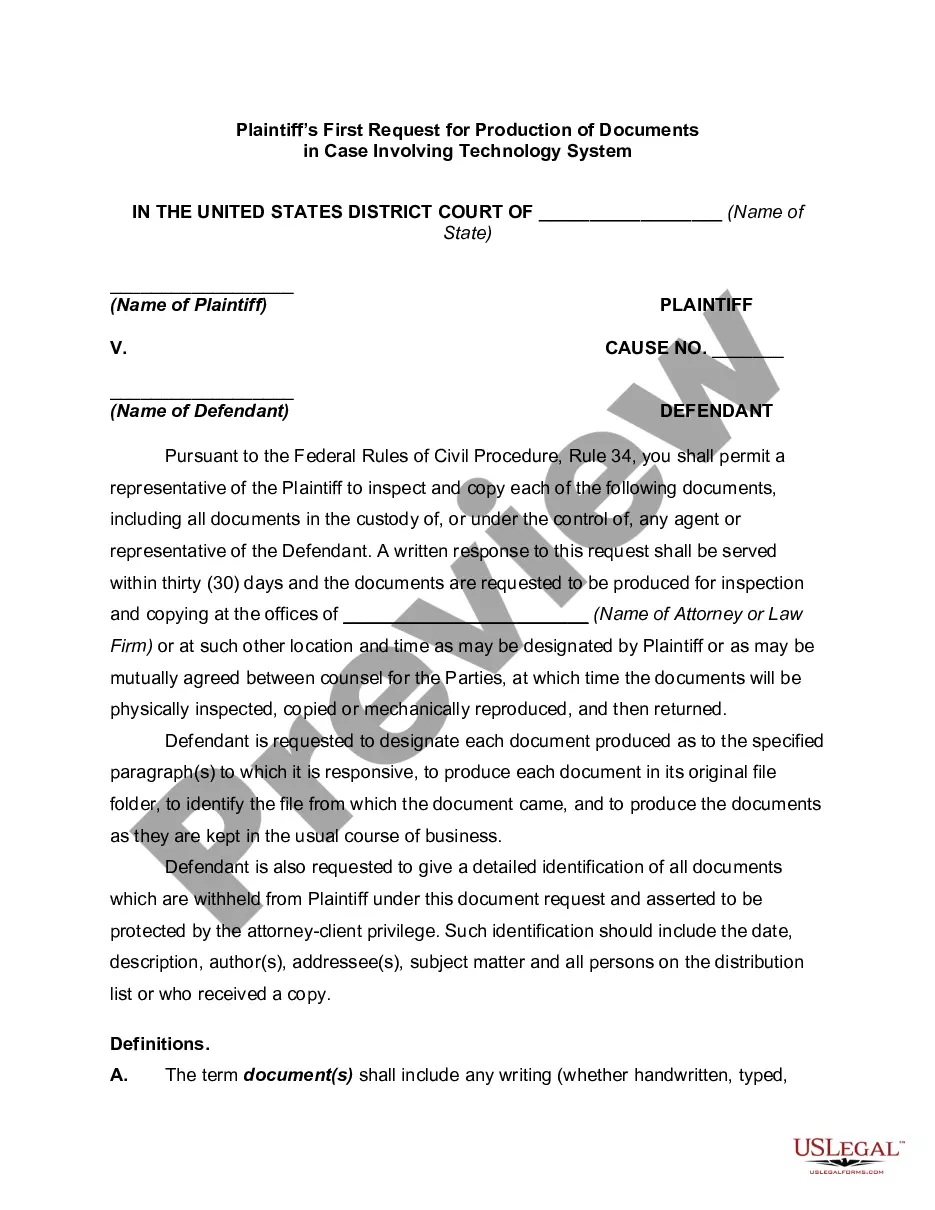
- Requests for production: Specific requests for documents that support the interrogatories.
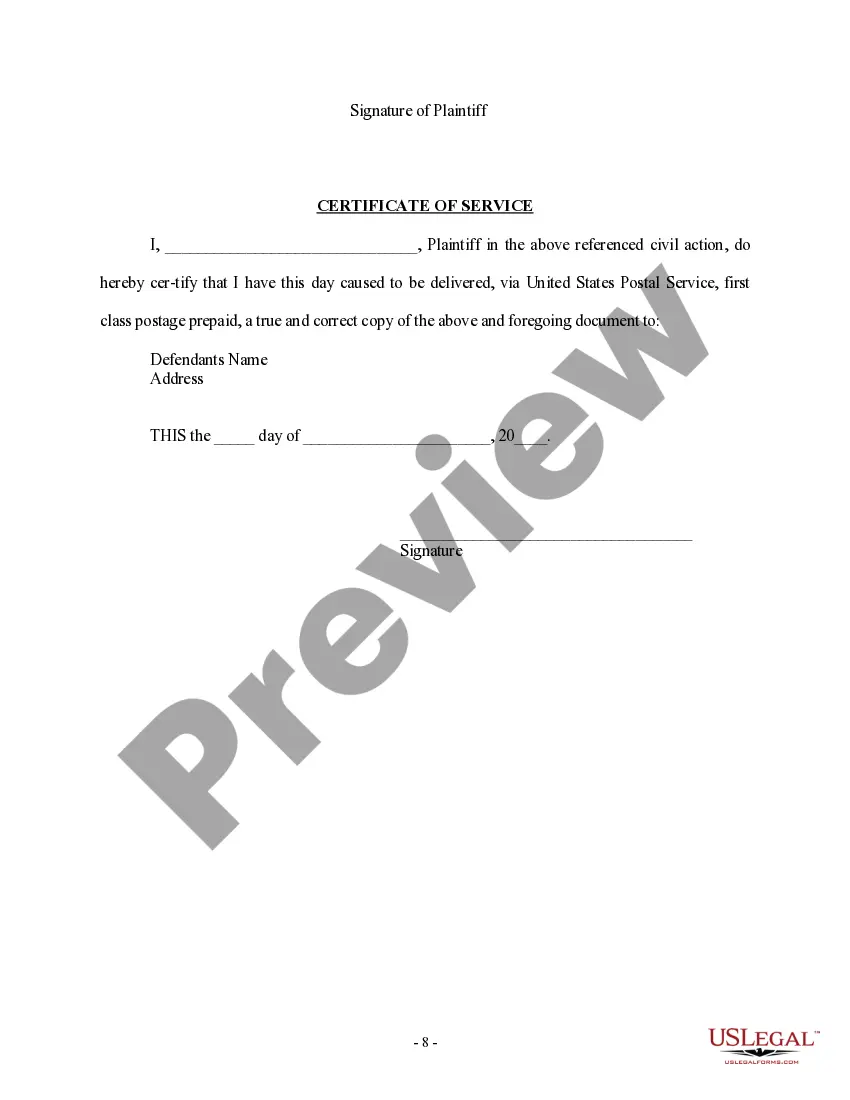
- Notice of service: Confirmation of document delivery to the defendant.
- Signature: Certification by the plaintiff that the information is correct and complete.


When to use this form
This form is necessary when initiating a divorce action and needing detailed information from the defendant. It is typically used during the discovery phase of litigation, where both parties exchange relevant information to prepare for trial or settlement discussions. Situations may include assessing financial assets, determining income, or clarifying the grounds for divorce.
Who needs this form
- Individuals currently engaged in divorce proceedings as a plaintiff.
- Legal representatives of plaintiffs who require specific information from the defendant.
- Parties involved in disputes regarding asset division or financial responsibilities associated with a divorce.
Steps to complete this form
- Identify the parties: Fill in the names and contact details of both the plaintiff and the defendant.
- Draft the interrogatories: Customize the questions based on the specifics of your case, ensuring relevance and clarity.
- Specify production requests: Clearly state the documents you want the defendant to provide.
- Sign the document: Certify that the information is accurate and complete by providing your signature.
- Serve the form: Use appropriate methods to deliver the document to the defendant and retain proof of service.
Is notarization required?
Notarization is generally not required for this form. However, certain states or situations might demand it. You can complete notarization online through US Legal Forms, powered by Notarize, using a verified video call available anytime.
Get your form ready online
Our built-in tools help you complete, sign, share, and store your documents in one place.
Make edits, fill in missing information, and update formatting in US Legal Forms—just like you would in MS Word.
Download a copy, print it, send it by email, or mail it via USPS—whatever works best for your next step.
Sign and collect signatures with our SignNow integration. Send to multiple recipients, set reminders, and more. Go Premium to unlock E-Sign.
If this form requires notarization, complete it online through a secure video call—no need to meet a notary in person or wait for an appointment.
We protect your documents and personal data by following strict security and privacy standards.

Make edits, fill in missing information, and update formatting in US Legal Forms—just like you would in MS Word.

Download a copy, print it, send it by email, or mail it via USPS—whatever works best for your next step.

Sign and collect signatures with our SignNow integration. Send to multiple recipients, set reminders, and more. Go Premium to unlock E-Sign.

If this form requires notarization, complete it online through a secure video call—no need to meet a notary in person or wait for an appointment.

We protect your documents and personal data by following strict security and privacy standards.
Common mistakes
- Failing to customize interrogatories to fit the specifics of the case.
- Omitting required information regarding the parties involved.
- Not providing proper requests for document production.
- Neglecting to sign the form before submission.
- Inaccurately serving the document, leading to delivery issues.
Why complete this form online
- Convenience: Easily access and complete the document at any time, from anywhere.
- Editability: Make necessary adjustments to the form based on your unique situation before downloading.
- Reliability: Utilize templates drafted by licensed attorneys to ensure legal compliance and accuracy.
Looking for another form?
Form popularity
FAQ
So, can you refuse to answer interrogatories? The answer is, no, you may not.That answer must either permit inspection of the requested information or object to the production of the information for a specific reason.
A request for production is a discovery device used to gain access to documents, electronic data, and physical items held by an opposing party in a legal matter. The aim is to gain insight into any relevant evidence that the opposing party holds.
Interrogatories ask questions; the responding party provides written answers. A request for production of documents requests the production of documents (or other tangible things); the responding party provides documents.
Thank you for your inquiry regarding our product or service. Thank you for your interest in our product or service. We would like to thank you for your letter inquiring about our product. We truly appreciate your letter asking for information about our service.
Interrogatories, which are written questions about things that are relevant or important to the case. (NRCP 33; JCRCP 33) Requests for production of documents or things, which are written requests that demand the other side provide particular documents or items.
The purpose of interrogatories is to learn a great deal of general information about a party in a lawsuit. For example, the defendant in a personal injury lawsuit about a car accident might send you interrogatories asking you to disclose things like: Where you live.
The plaintiff must give you responses to the request for interrogatories within 45 days of when you mailed the request. If they do not give you a response you can send a final request to the plaintiff. In the final request tell the plaintiff they have another 30 days to give you answers to your interrogatory requests.
Interrogatories Interrogatories are written questions that are sent by one party to another.Requests for production are the means by which you can ask the other party to make copies of documents, photographs, records, etc. and to request the inspection of property.
If a request asks for a document, make a copy of the document; in your response, describe the document and say that a copy is attached; and attach a copy of the document to the responses you send back to the other side.