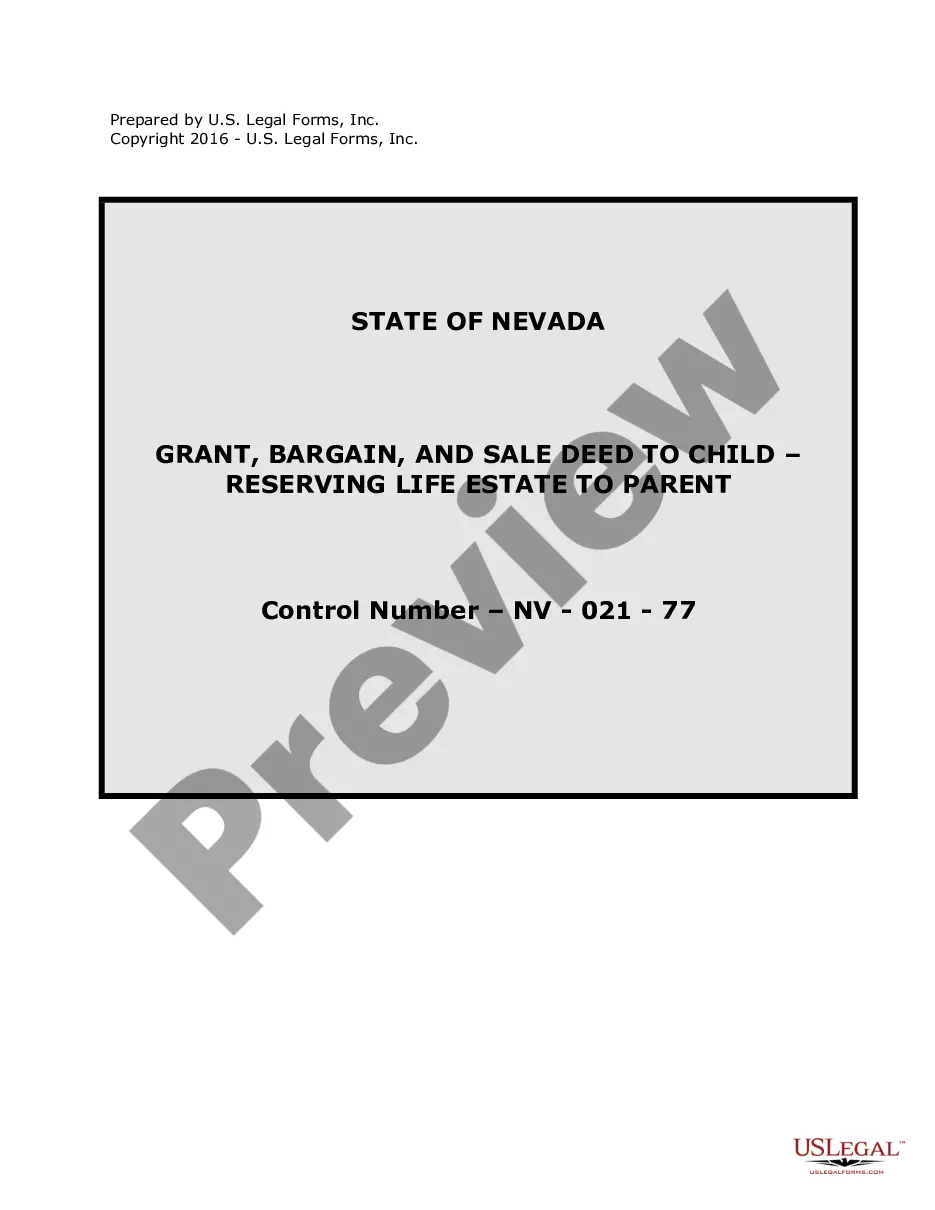
Nevada Warranty Deed to Child Reserving a Life Estate in the Parents
Understanding this form
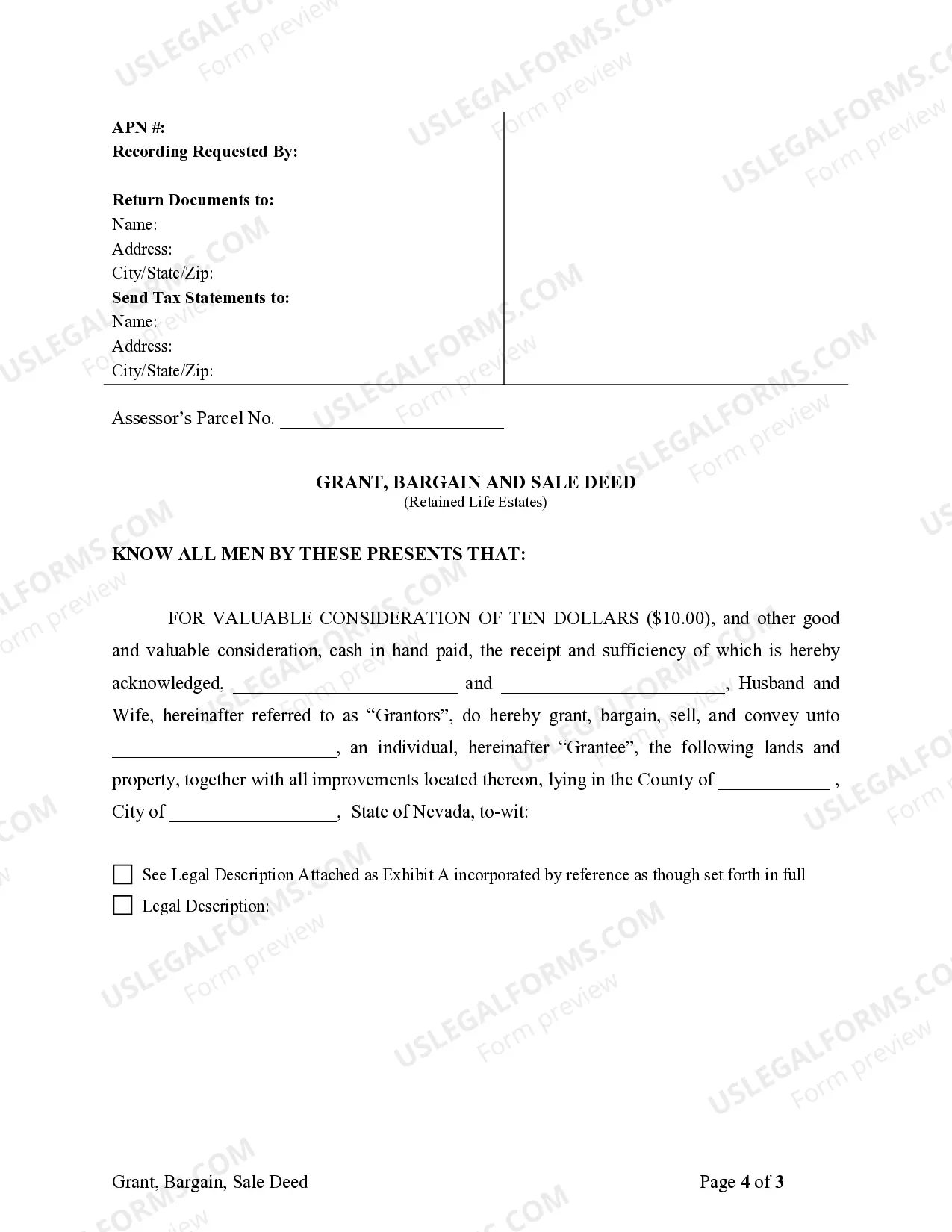
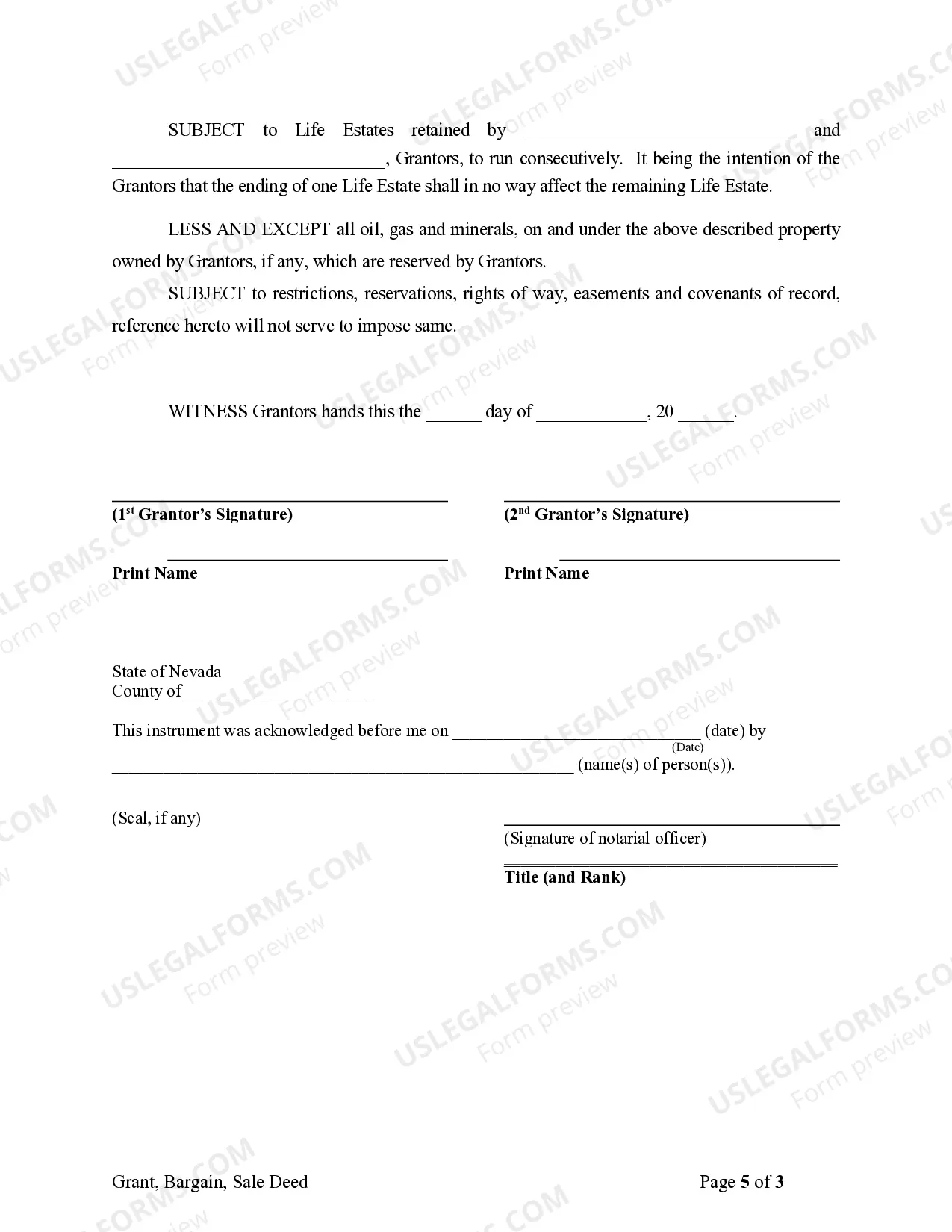
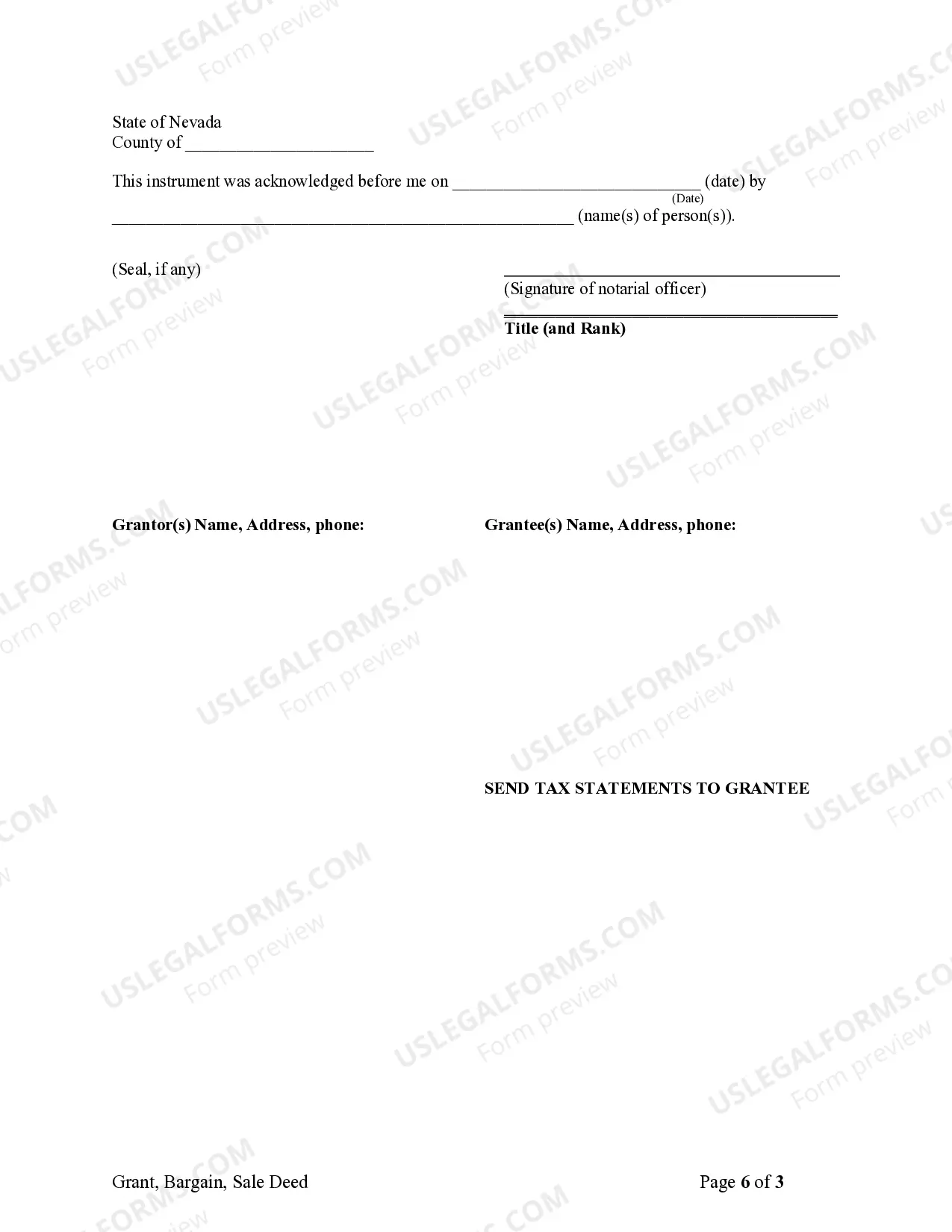
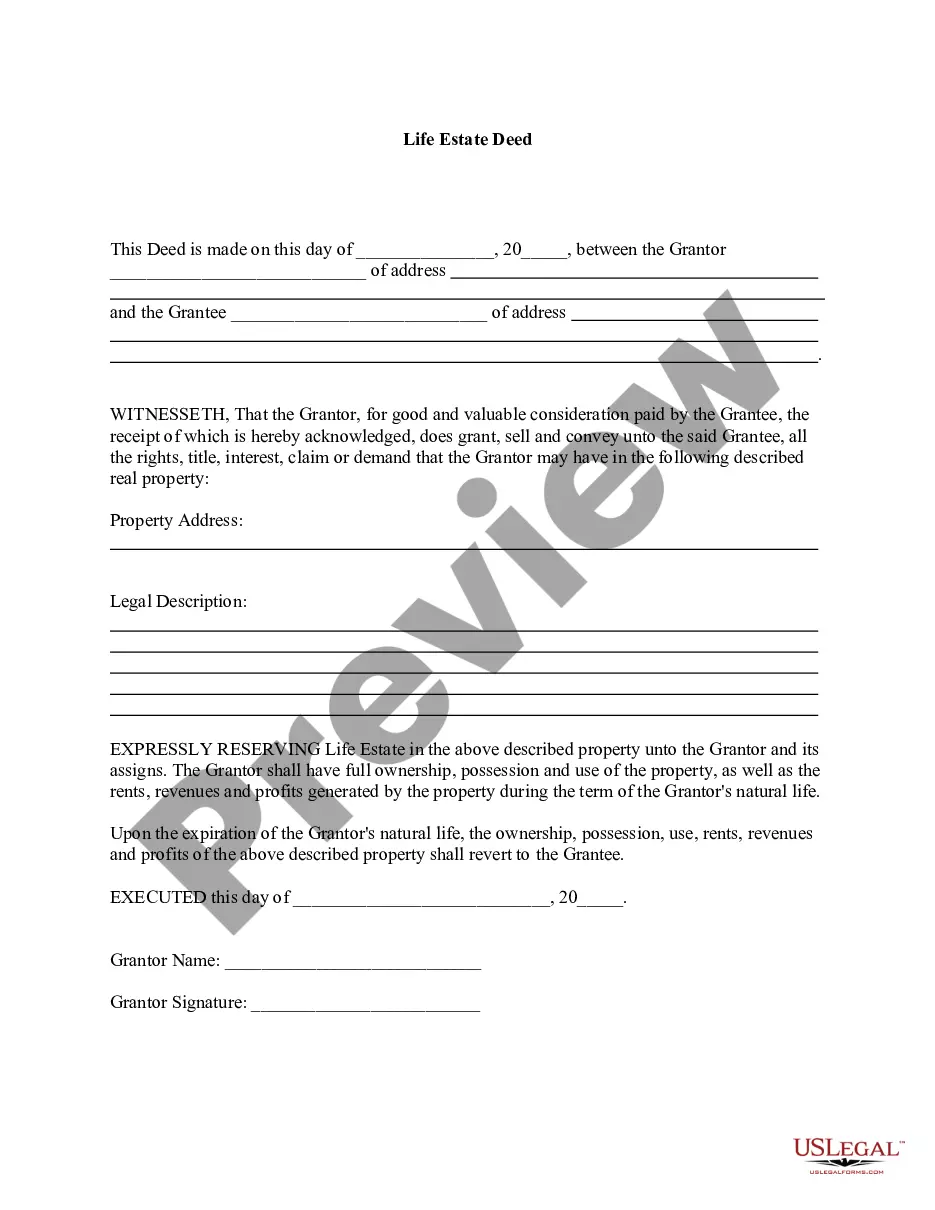
The Warranty Deed to Child Reserving a Life Estate in the Parents is a legal document that allows parents to transfer property ownership to their child while retaining the right to live on the property for the duration of their lives. This form differs from standard warranty deeds by incorporating a life estate reservation, ensuring that parents maintain certain rights over the property even after the transfer of ownership. This can be a useful estate planning tool for families looking to manage property distribution while providing for their own housing needs in retirement.
Form components explained
- Grantors: Names of the parent(s) transferring the property.
- Grantee: Name of the child receiving the property.
- Property Description: Detailed legal description of the property being transferred.
- Life Estate Reservation: Clauses that clarify the parents' rights to live on the property for their lifetime.
- Signatures: Spaces for the grantors' signatures and date of execution.



Common use cases
This form is applicable when parents wish to gift real estate to their child while retaining the right to occupy the property for their own use. It may arise in situations such as estate planning, where parents want to ensure their living arrangement is secured while also facilitating an early transfer of property to beneficiaries.
Who this form is for
- Parents who own property and want to transfer title to their child.
- Families planning for estate matters and looking to minimize future probate issues.
- Individuals seeking to retain their residence while granting ownership to their children.
Instructions for completing this form
- Identify the parties involved: Enter the names of the grantors (parents) and the grantee (child).
- Specify the property: Fill in the detailed legal description of the property as required.
- Enter the date: Include the date when the deed is executed.
- Sign the form: Have all grantors sign the deed to complete the property transfer.
- Consider notarization: While not always necessary, check local regulations for any specific requirements.
Notarization guidance
To make this form legally binding, it must be notarized. Our online notarization service, powered by Notarize, lets you verify and sign documents remotely through an encrypted video session.
Get your form ready online
Our built-in tools help you complete, sign, share, and store your documents in one place.
Make edits, fill in missing information, and update formatting in US Legal Forms—just like you would in MS Word.
Download a copy, print it, send it by email, or mail it via USPS—whatever works best for your next step.
Sign and collect signatures with our SignNow integration. Send to multiple recipients, set reminders, and more. Go Premium to unlock E-Sign.
If this form requires notarization, complete it online through a secure video call—no need to meet a notary in person or wait for an appointment.
We protect your documents and personal data by following strict security and privacy standards.

Make edits, fill in missing information, and update formatting in US Legal Forms—just like you would in MS Word.

Download a copy, print it, send it by email, or mail it via USPS—whatever works best for your next step.

Sign and collect signatures with our SignNow integration. Send to multiple recipients, set reminders, and more. Go Premium to unlock E-Sign.

If this form requires notarization, complete it online through a secure video call—no need to meet a notary in person or wait for an appointment.

We protect your documents and personal data by following strict security and privacy standards.
Common mistakes to avoid
- Failing to accurately describe the property leading to potential disputes.
- Not including all necessary signatures from the grantors.
- Ignoring local laws that may require additional provisions or modifications.
Advantages of online completion
- Instant access to legal forms created by licensed attorneys.
- Ability to fill out and customize the form conveniently from your computer.
- Time-saving compared to traditional methods of obtaining legal documents.
Looking for another form?

Form popularity
FAQ
A life estate deed permits the property owner to have full use of their property until their death, at which point the ownership of the property is automatically transferred to the beneficiary.
A life estate is a form of joint ownership that allows one person to remain in a house until his or her death, when it passes to the other owner.
The creation of a life estate is accomplished by the language to Recipient for life or, if it is to be a life estate pur autre vie, to recipient for the life of (another person). The holder of the life estate is called the life tenant. If the property is to return to the original owner after the death of the life
The life tenant cannot change the remainder beneficiary without their consent. If the life tenant applies for any loans, they cannot use the life estate property as collateral. There's no creditor protection for the remainderman. You can't minimize estate tax.
What happens to a life estate after someone dies? Upon the life tenant's death, the property passes to the remainder owner outside of probate.They can sell the property or move into and claim it as their primary residence (homestead). Property taxes will not be reassessed.
Can a life estate deed be contested? The answer is YES! The Life estate is an agreeable choice, particularly where there is an advantage in having the life estate revert back to its real owner (Grantor or Life Tenant).
Possible tax breaks for the life tenant. Reduced capital gains taxes for remainderman after death of life tenant. Capital gains taxes for remainderman if property sold while life tenant still alive. Remainderman's financial problems can affect the life tenant.
Almost all deeds creating a life estate will also name a remaindermanthe person or persons who get the property when the life tenant dies.The life tenant is the owner of the property until they die. However, the remainderman also has an ownership interest in the property while the life tenant is alive.
A California Revocable Transfer-On-Death Deed does not take effect until the property owner dies.As long as the original owner is alive, he can revoke the transfer, sell the property, add or remove beneficiaries, and otherwise maintain complete control over the property.
A person owns property in a life estate only throughout their lifetime. Beneficiaries cannot sell property in a life estate before the beneficiary's death. One benefit of a life estate is that property can pass when the life tenant dies without being part of the tenant's estate.