New Jersey Warranty Deed from Limited Partnership or LLC is the Grantor, or Grantee
About this form
The Warranty Deed from Limited Partnership or LLC is a legal document that transfers property ownership from a limited partnership or LLC (the grantor) to another party (the grantee). Unlike other forms of deeds, this warranty deed specifically accommodates entities such as limited partnerships or LLCs, which are distinct in their legal structure. It guarantees that the grantor has the right to convey the property, ensuring the buyer has clear title and protection against future claims.
Form components explained
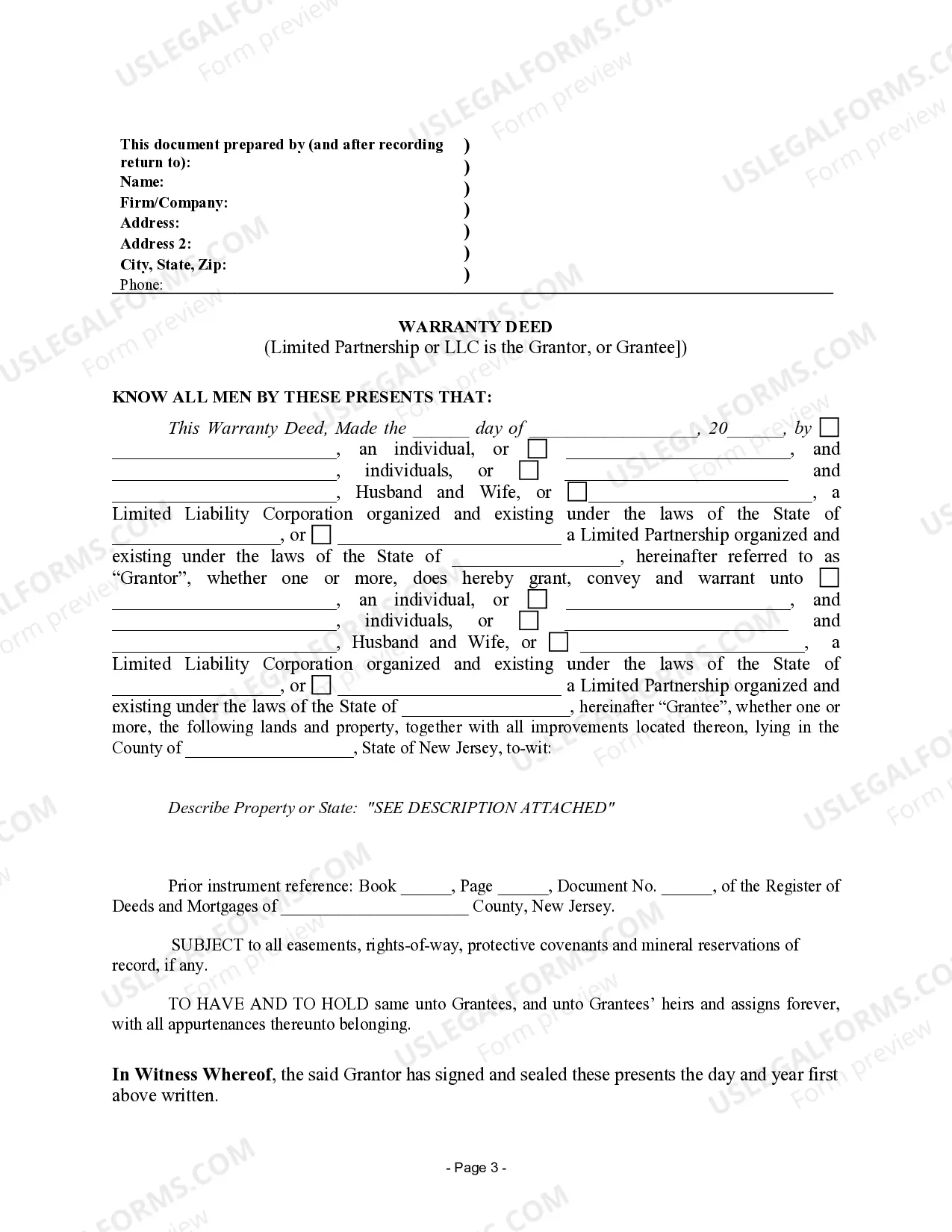
- Identification of the grantor: Includes details about the limited partnership or LLC transferring the property.
- Identification of the grantee: Specifies who receives the property, which can include individuals or entities.
- Description of the property: Outlines the lands and any improvements being conveyed.
- Consideration statement: Records the monetary value exchanged for the property, a requirement in New Jersey.
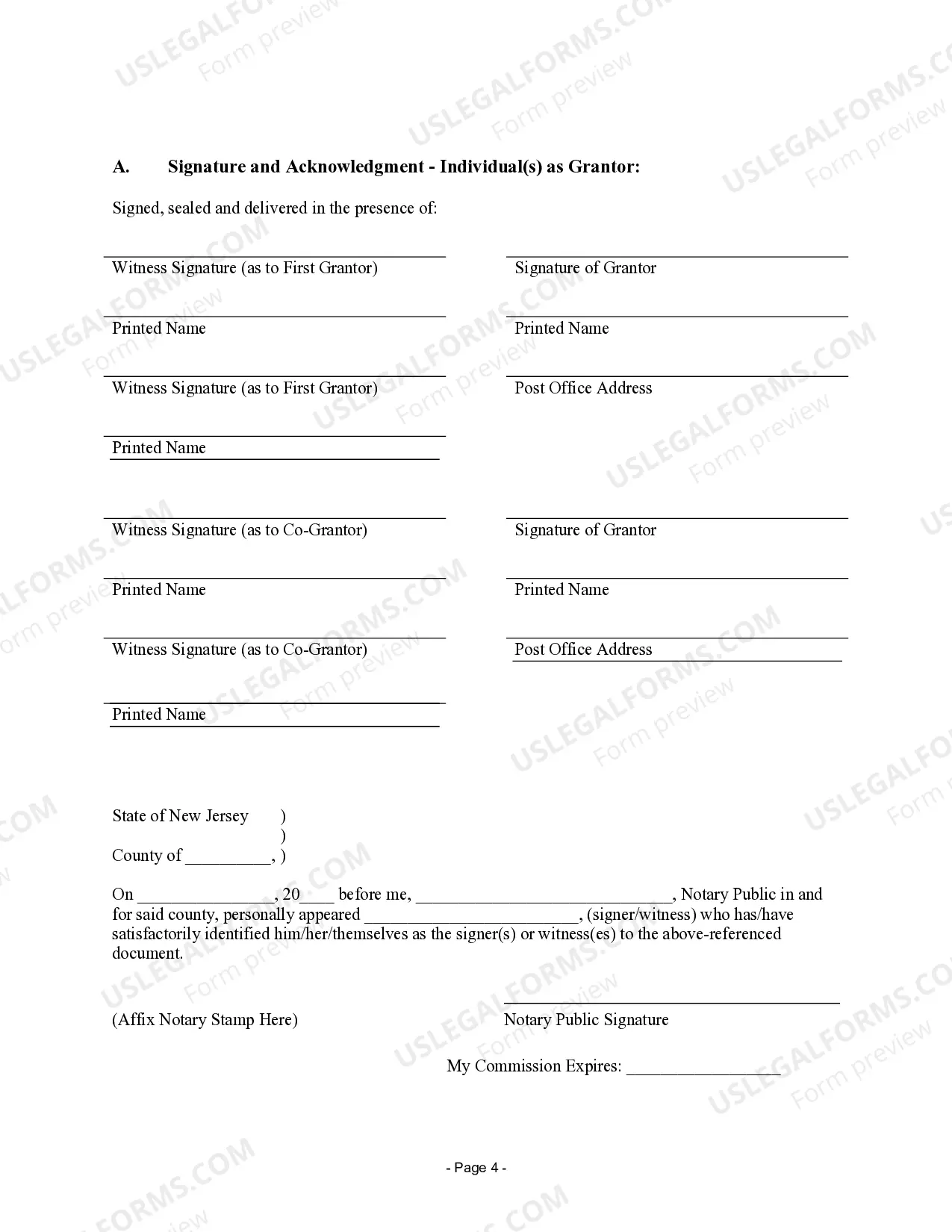
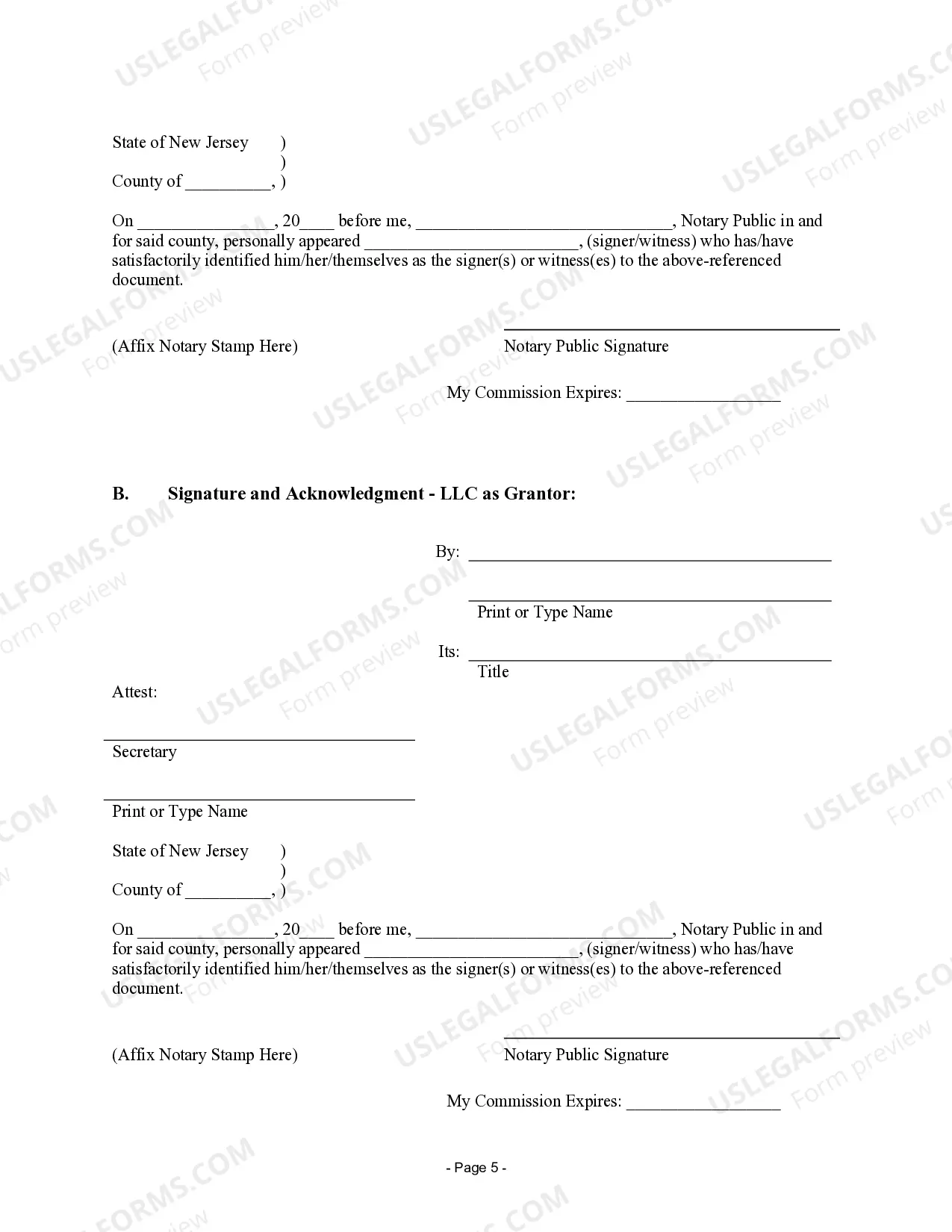
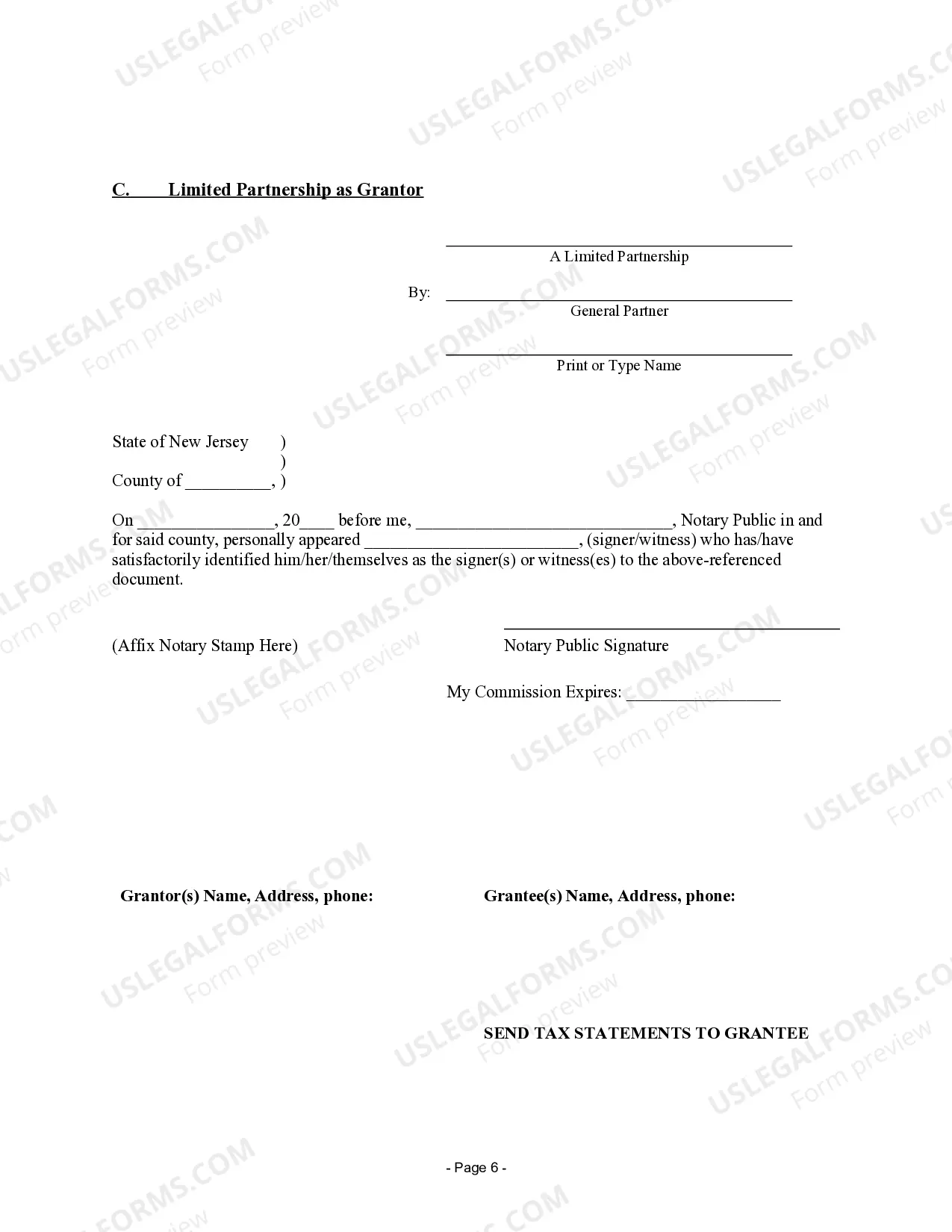
- Signatures: Includes areas for necessary signatures from the grantor and witnesses, as well as a notary acknowledgment.




Situations where this form applies
This form should be used when a limited partnership or LLC wishes to transfer ownership of real property. Typical scenarios include selling commercial real estate, transferring property as part of a business restructuring, or transitioning ownership among partners. It is essential for ensuring that all parties involved are protected in the transaction.
Who can use this document
- Limited partnerships or LLCs involved in property transactions.
- Individuals or entities purchasing property from a limited partnership or LLC.
- Real estate attorneys or agents assisting clients with property transfers.
Completing this form step by step
- Identify the parties: Fill in the names and statuses of the grantor (limited partnership or LLC) and the grantee.
- Specify the property: Describe the property being transferred, including any legal descriptions or attachments.
- Enter the consideration: Indicate the monetary value exchanged for the property, as required by New Jersey law.
- Sign and date: Ensure that all required parties sign the document in the appropriate sections.
- Obtain notarization: If necessary, have the completed document notarized to validate the transfer.
Is notarization required?
Yes, this form must be notarized to be legally valid. The signature of the grantor and any witnesses must be acknowledged by a notary public to ensure that the document is enforceable. US Legal Forms offers integrated online notarization services that are available 24/7 via secure video calls, providing convenience and ensuring legal equivalence without requiring in-person meetings.
Get your form ready online
Our built-in tools help you complete, sign, share, and store your documents in one place.
Make edits, fill in missing information, and update formatting in US Legal Forms—just like you would in MS Word.
Download a copy, print it, send it by email, or mail it via USPS—whatever works best for your next step.
Sign and collect signatures with our SignNow integration. Send to multiple recipients, set reminders, and more. Go Premium to unlock E-Sign.
If this form requires notarization, complete it online through a secure video call—no need to meet a notary in person or wait for an appointment.
We protect your documents and personal data by following strict security and privacy standards.

Make edits, fill in missing information, and update formatting in US Legal Forms—just like you would in MS Word.

Download a copy, print it, send it by email, or mail it via USPS—whatever works best for your next step.

Sign and collect signatures with our SignNow integration. Send to multiple recipients, set reminders, and more. Go Premium to unlock E-Sign.

If this form requires notarization, complete it online through a secure video call—no need to meet a notary in person or wait for an appointment.

We protect your documents and personal data by following strict security and privacy standards.
Common mistakes to avoid
- Failing to include all required signatures, which could render the deed invalid.
- Leaving out the description of the property or failing to attach necessary legal documents.
- Not specifying the consideration amount, which is mandated by law in New Jersey.
Advantages of online completion
- Convenience of completing the form at your own pace from any device.
- Editability allows you to make changes easily before finalizing any details.
- Access to forms drafted by licensed attorneys, ensuring legal compliance.
- Immediate availability for download eliminates the wait time associated with traditional printing methods.
Summary of main points
- The Warranty Deed from Limited Partnership or LLC ensures the secure transfer of property owned by partnerships or LLCs.
- It is essential to provide complete information, including property details and monetary consideration.
- All necessary parties must sign the document, and notarization is required in New Jersey for validity.
Looking for another form?
Form popularity
FAQ
In general, a grantor is someone who transfers a property right to a grantee. In a real estate transaction, the grantor is the current holder of the property right, or in other words, the seller. The deed, which transfers ownership, is the grant.
No, California does not require that the Grantee sign a warranty deed. However, some states and counties require that the deed be signed by the Grantee in addition to the Grantor.
In a Warranty Deed, the grantee is the person who the interest in a property is being transferred to. For example, if you are buying a property from someone else, you are the grantee, and the person selling it is the grantor.
A grantee is the recipient of something, such as a college grant or real estate property. A grantor is a person or entity that transfers to another person or entity the interest or ownership rights to an asset. Legal documents, such as deeds, detail the transfer of assets between grantors and grantees.
The grantor is the owner, and the grantee is the buyer who is acquiring an equitable interest but not bare legal interest in a property. It's essential that a deed clearly states the grantee, grantor, and a description of the property involved in the transaction.
The Grantee in a Quitclaim Deed is the person who is being given interest in a property from the Grantor. It is possible for someone to be both a Grantor and a Grantee in a Quitclaim Deed.Most real estate deeds are notarized by attorneys.
Typically, the lender will provide you with a copy of the deed of trust after the closing. The original warranty deeds are often mailed to the grantee after they are recorded. These are your original copies and should be kept in a safe place, such as a fireproof lockbox or a safe deposit box at a financial institution.
The Grantor is the seller (on deeds), or borrower (on mortgages). The Grantor is usually the one who signed the document.