New Jersey Marital Domestic Separation and Property Settlement Agreement for persons with no Children, no Joint Property, or Debts Effective Immediately
Overview of this form
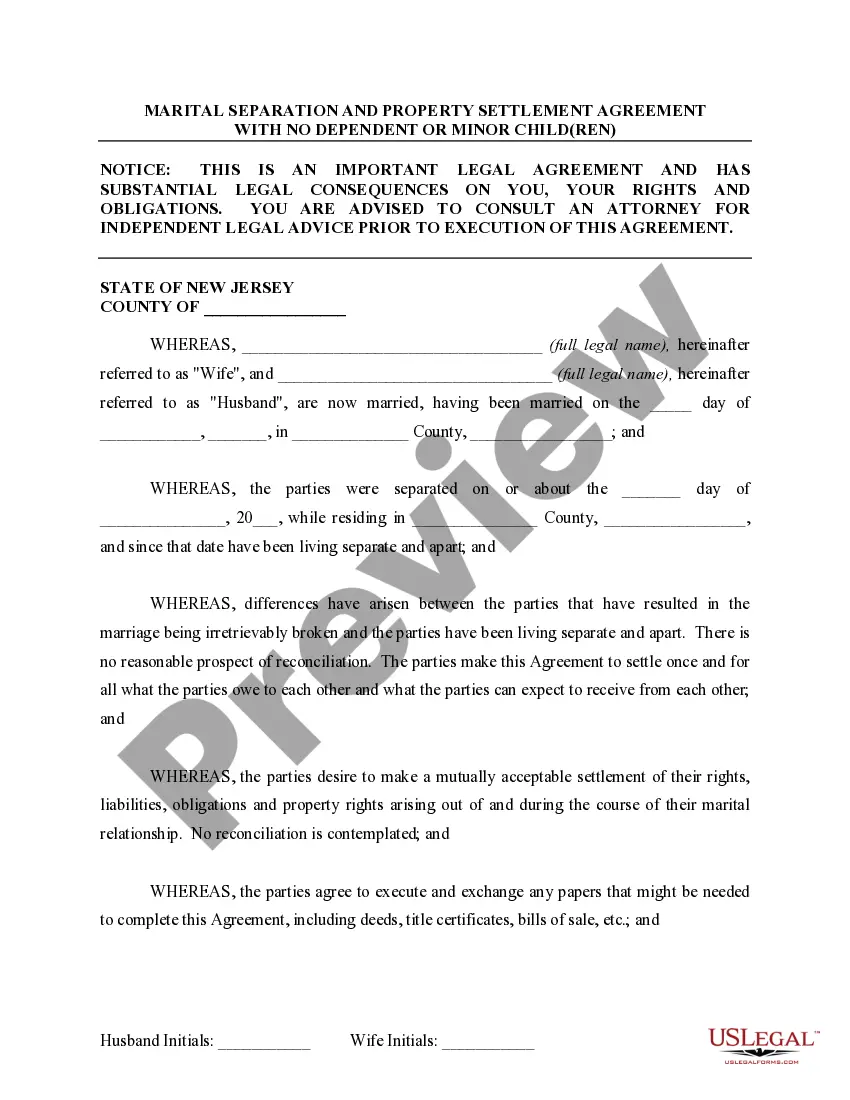
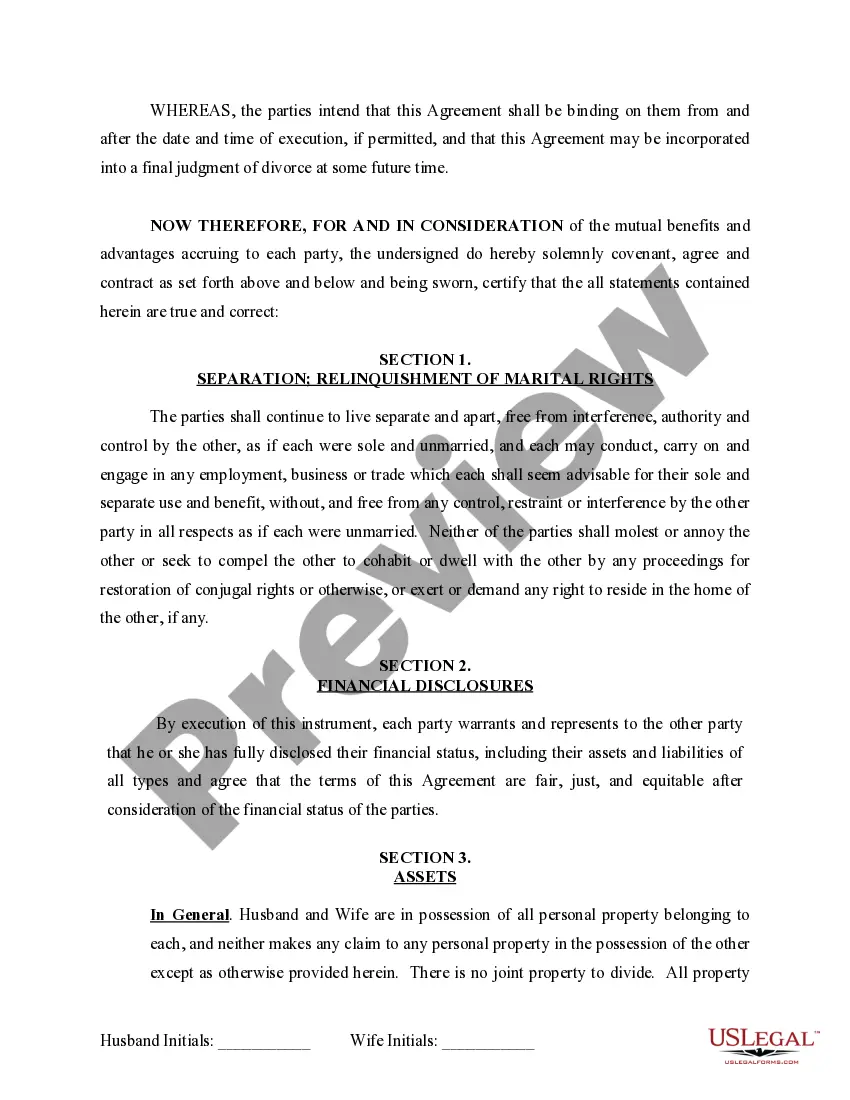
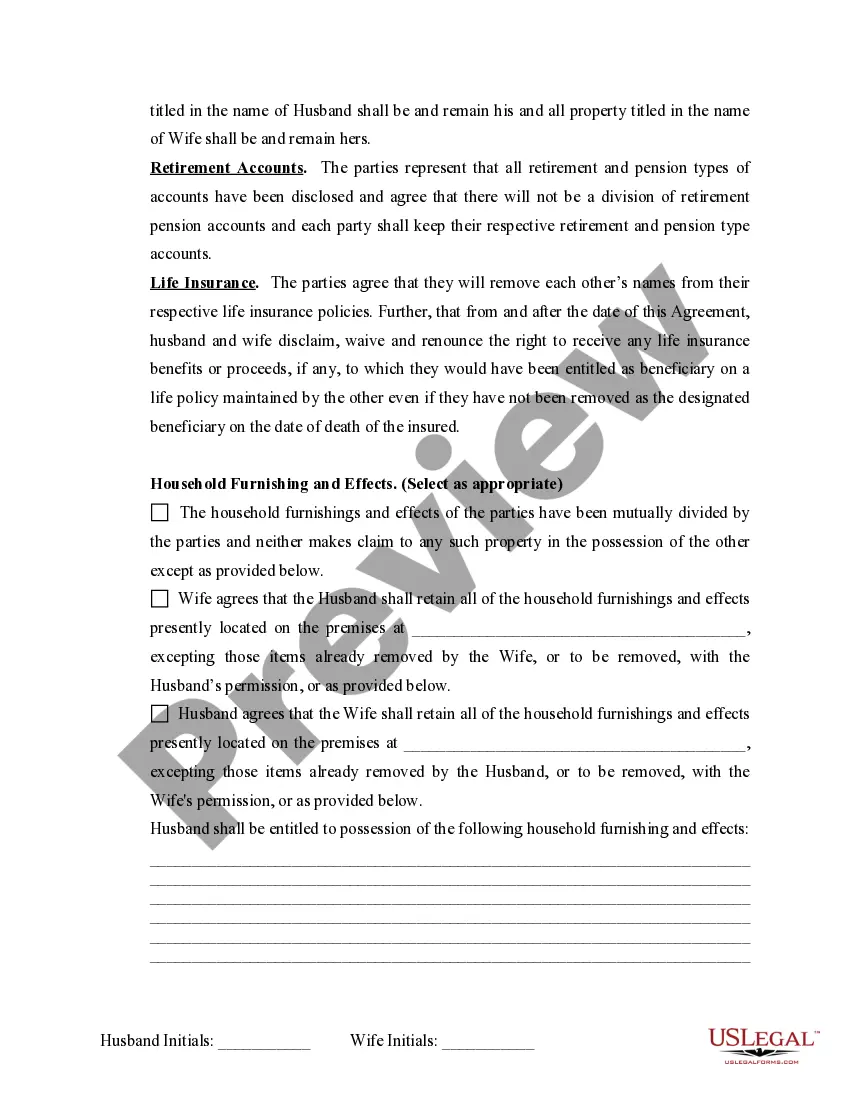
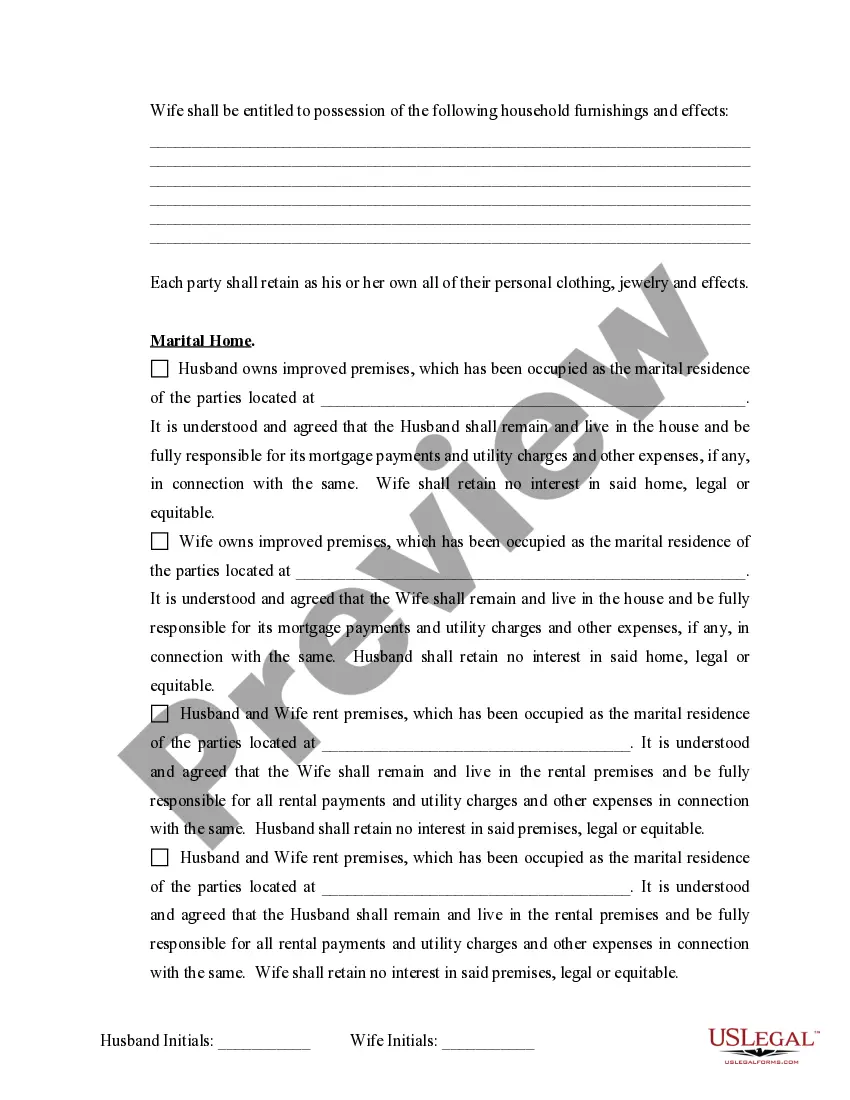
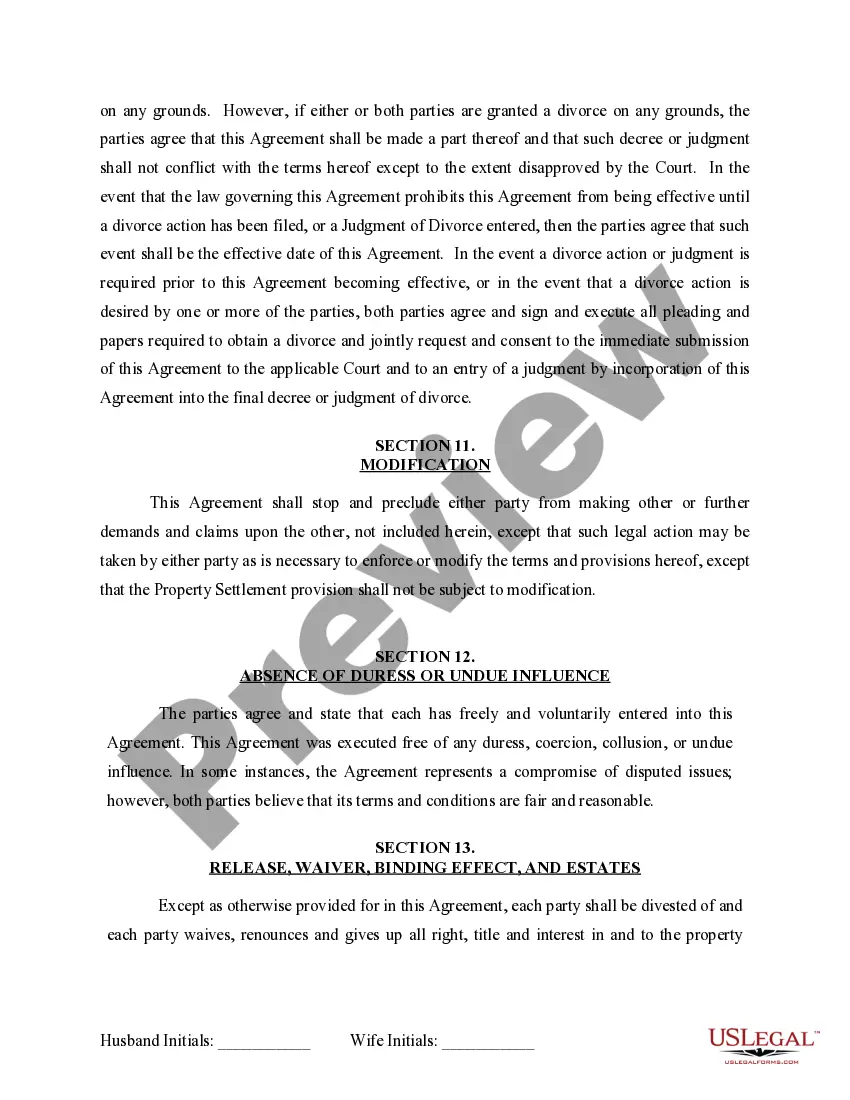
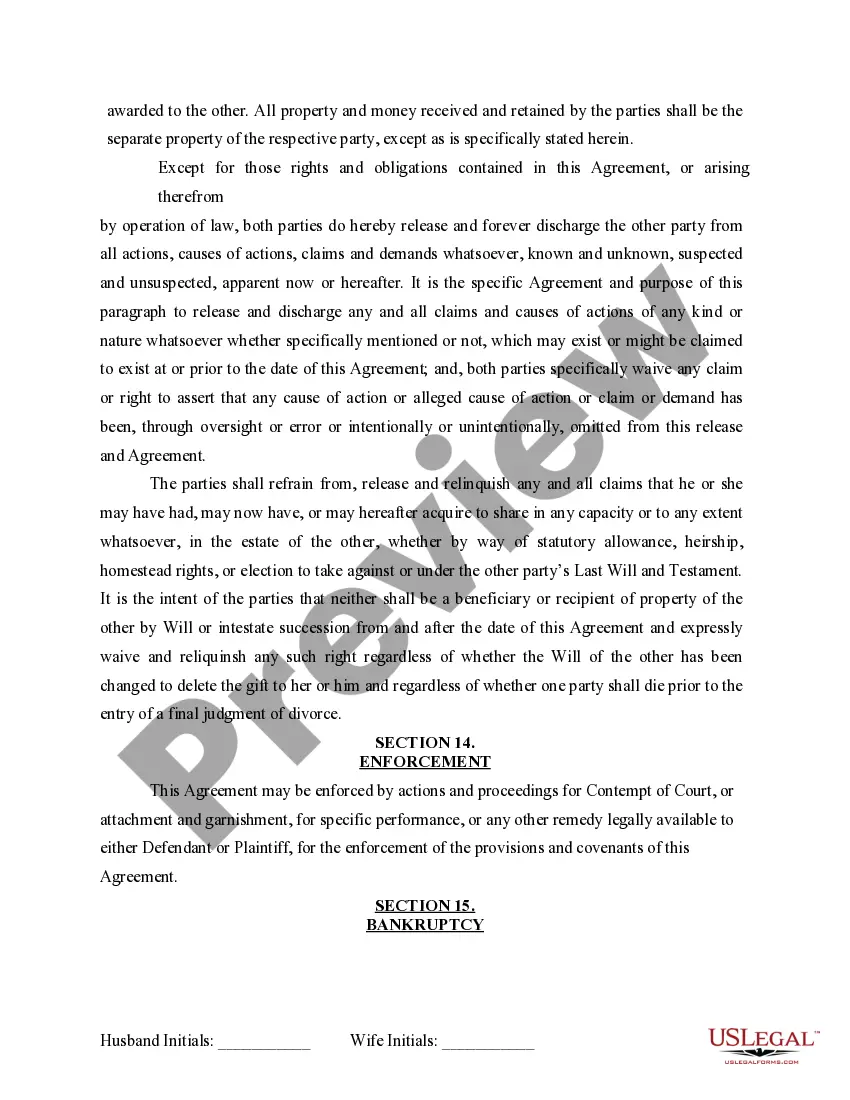
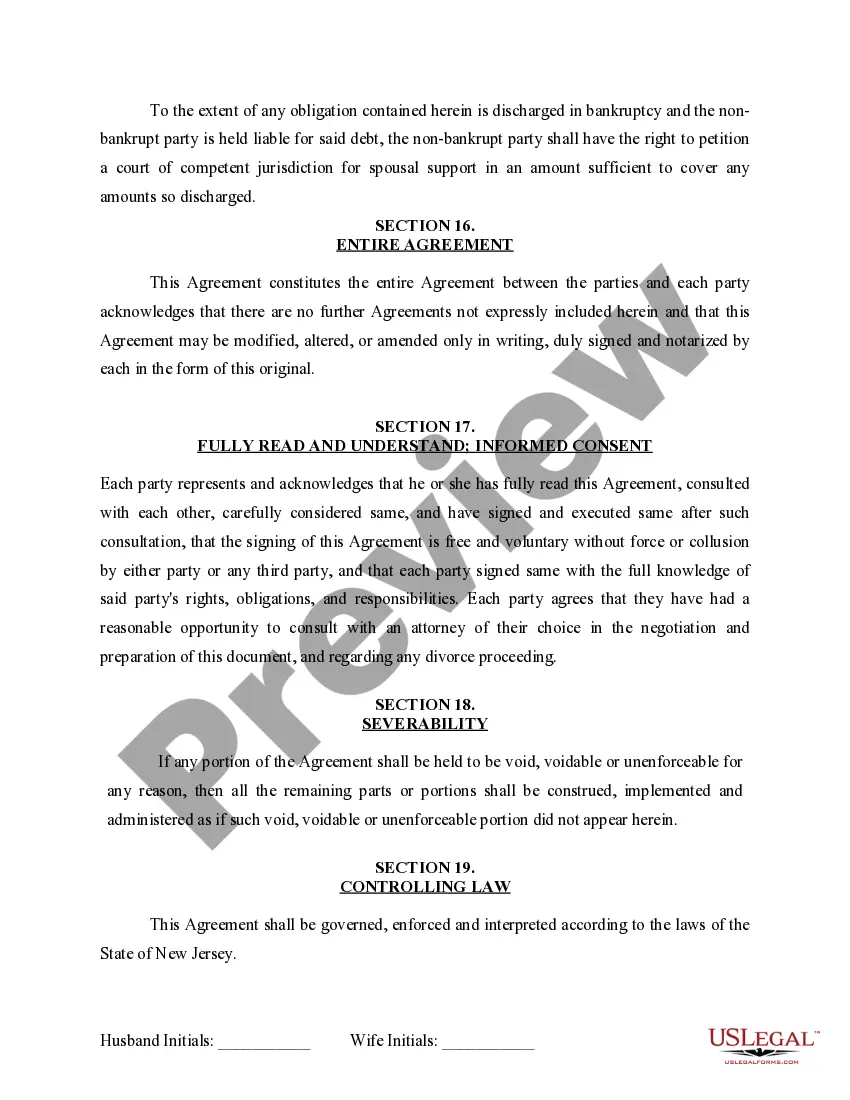
The Marital Domestic Separation and Property Settlement Agreement for persons with no Children, no Joint Property, or Debts Effective Immediately is a legal document that formalizes the separation between married couples who do not have children or shared assets. Unlike a divorce, this agreement allows the parties to outline their rights and responsibilities without having to file for divorce, providing a clear understanding of how to manage their separate lives. This form helps ensure both parties agree on the division of their assets and liabilities, preventing future disputes.
Key parts of this document
- Separation clause detailing the agreement to live apart.
- Financial disclosures outlining the assets and debts of each party.
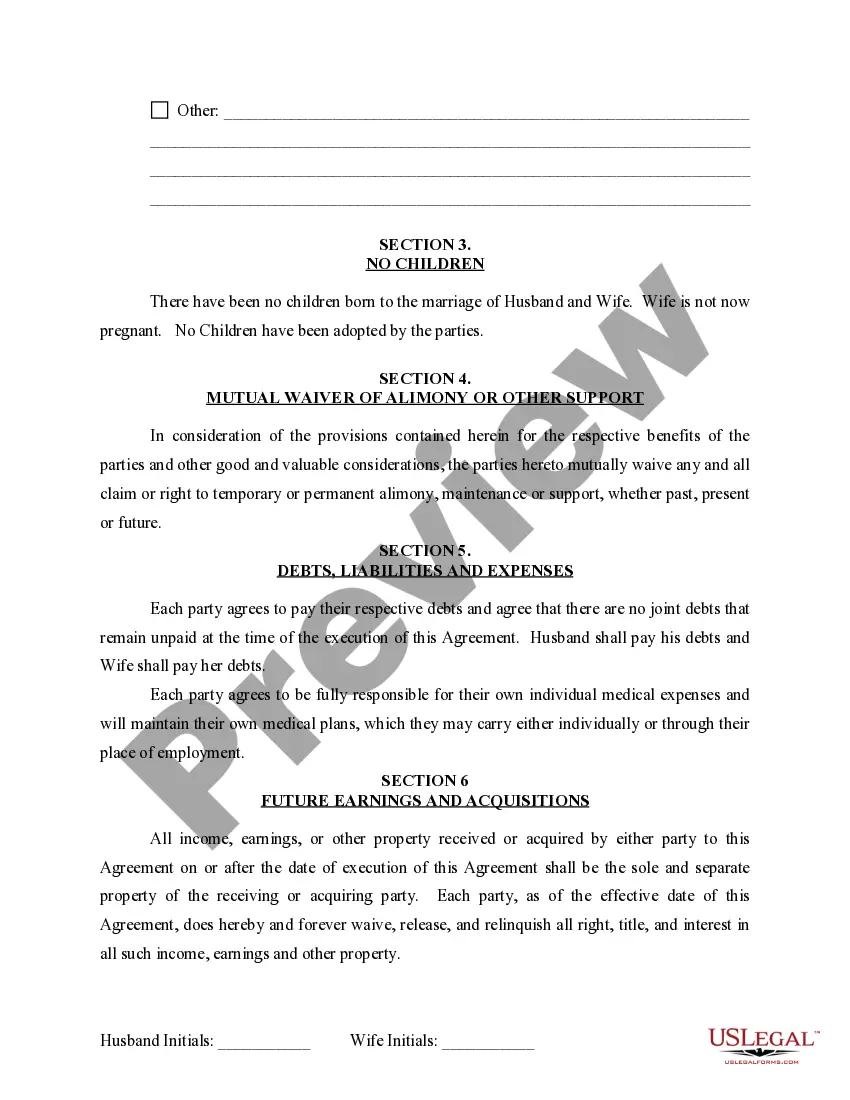
- Mutual waiver of alimony or support rights.
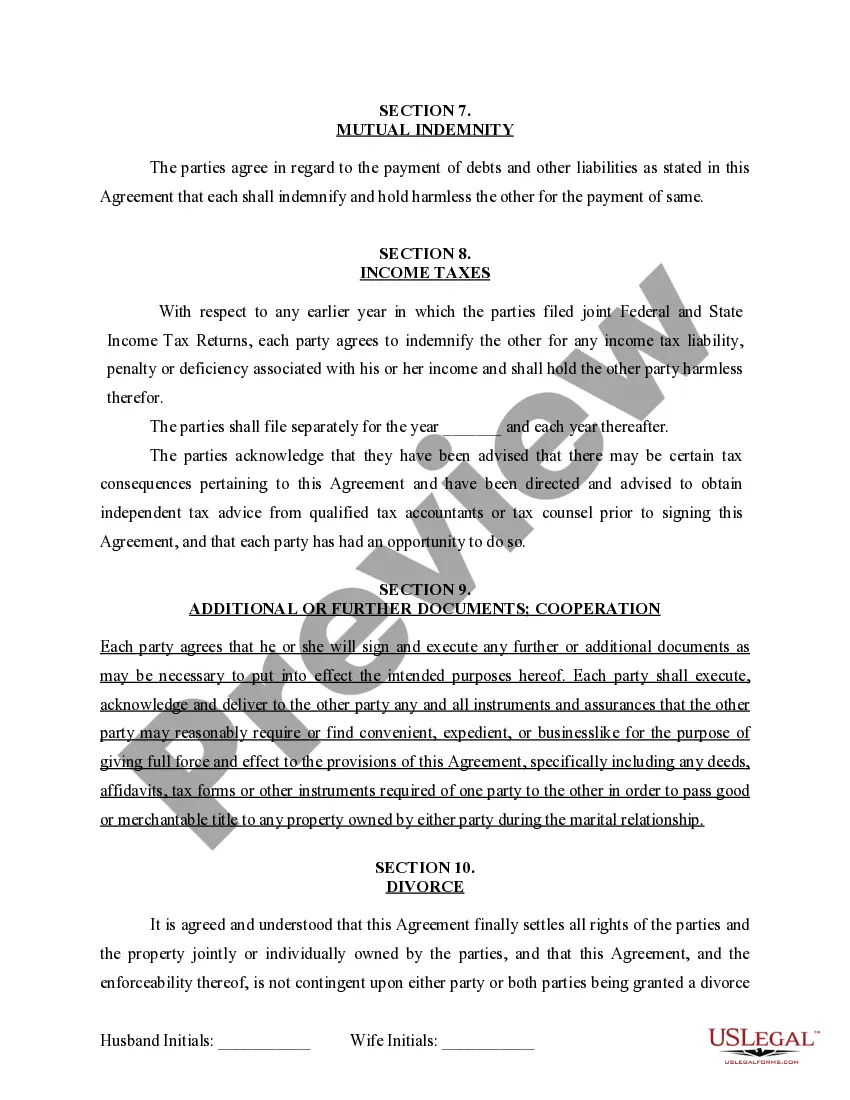
- Specifications on the handling of any acquired income or future property.
- Indemnity provisions protecting against liability for debts.
- Notarization requirements for the agreement to be legally binding.


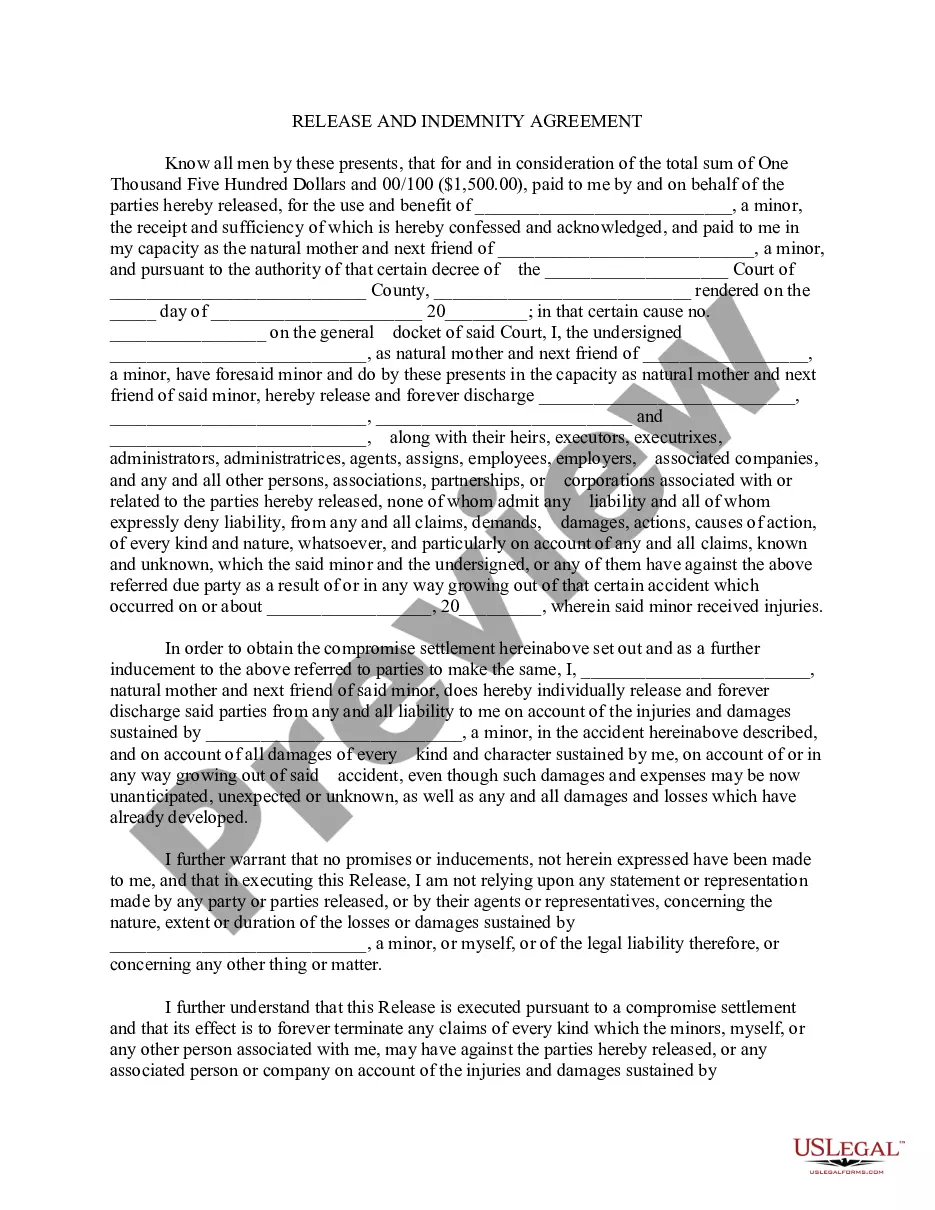
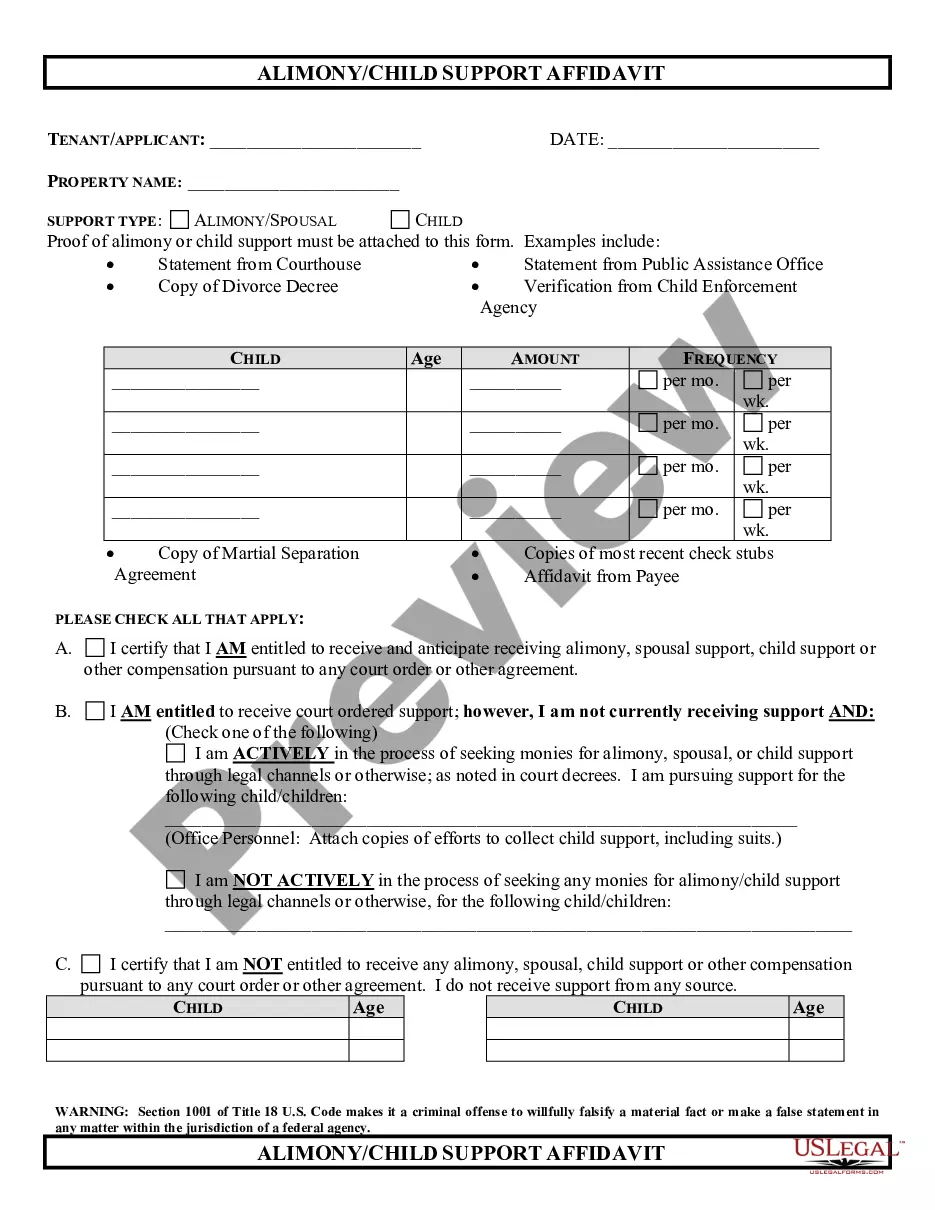
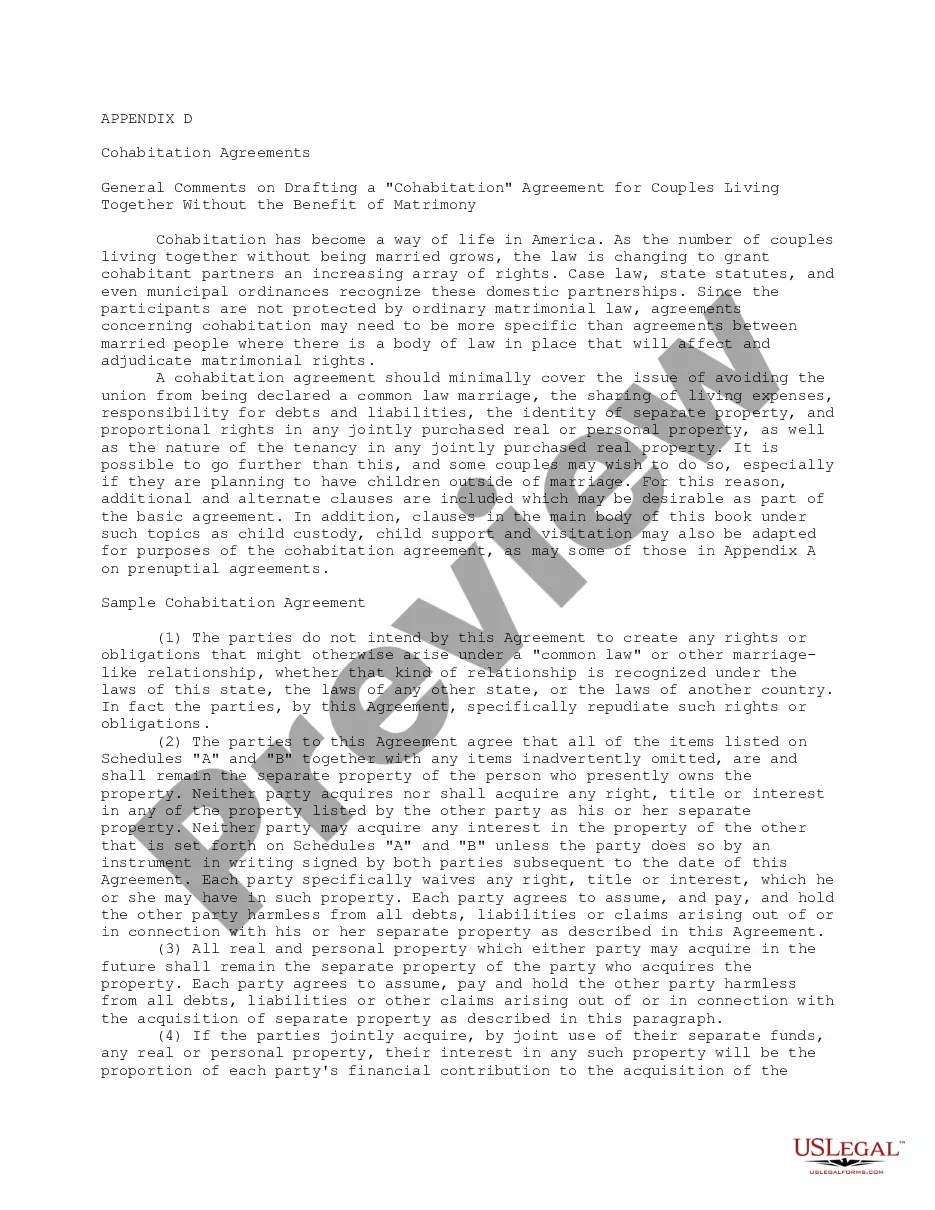
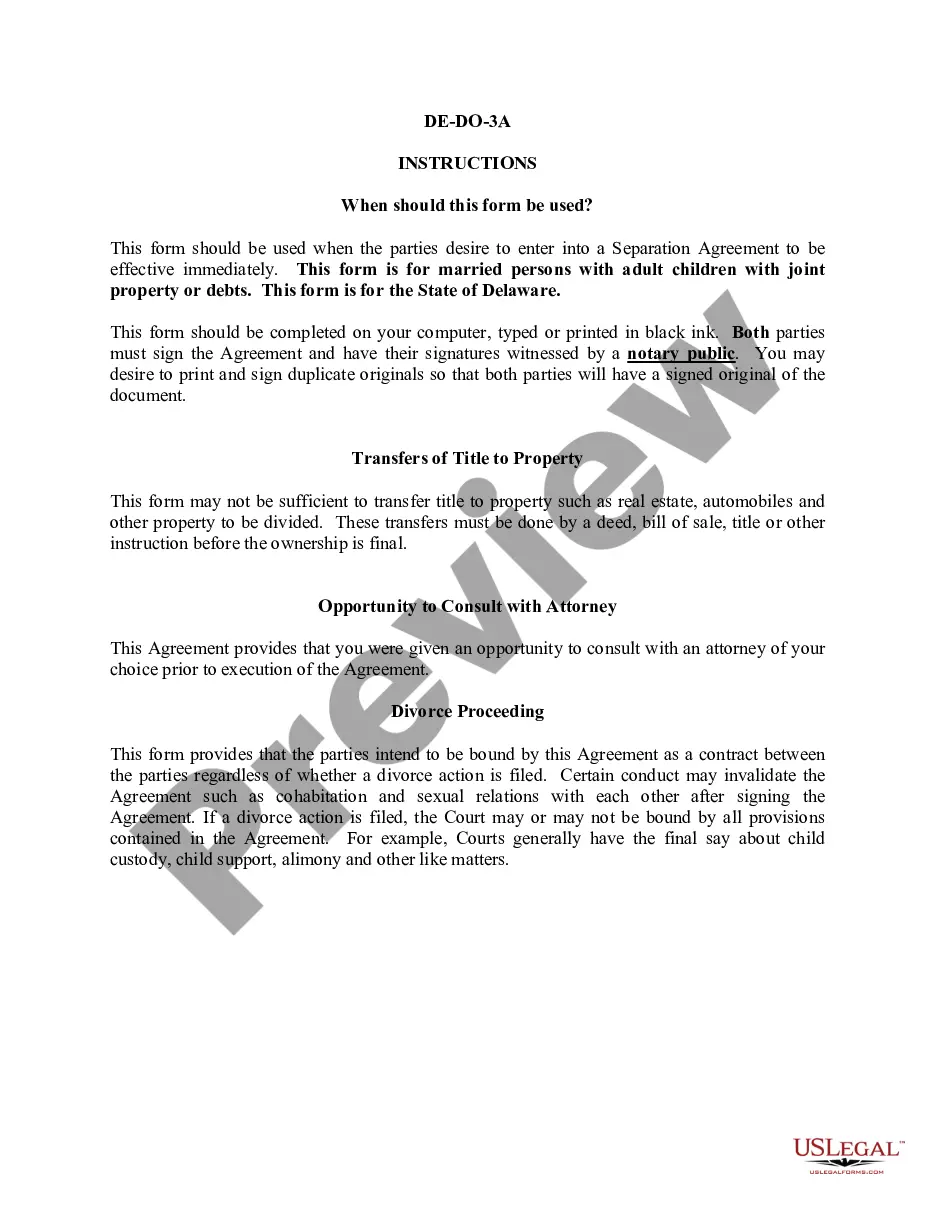
When to use this document
This form should be used when a married couple decides to separate but has not filed for divorce. It is suitable for couples who do not have children and whose financial ties are limited to individual debts and assets. This agreement is effective immediately upon signing and helps to clarify each party's rights while they transition to separate lives.
Who can use this document
- Married couples in New Jersey without children.
- Parties who do not share joint property or debts.
- Couples seeking to formalize separation before pursuing divorce.
Completing this form step by step
- Identify the parties involved by filling in their full legal names and details.
- Provide details of the separation date and clarify living arrangements.
- Complete financial disclosures outlining the assets and liabilities of each party.
- Both parties should sign the Agreement in the presence of a notary public.
- Make sure to retain a copy of the signed agreement for personal records.
Is notarization required?
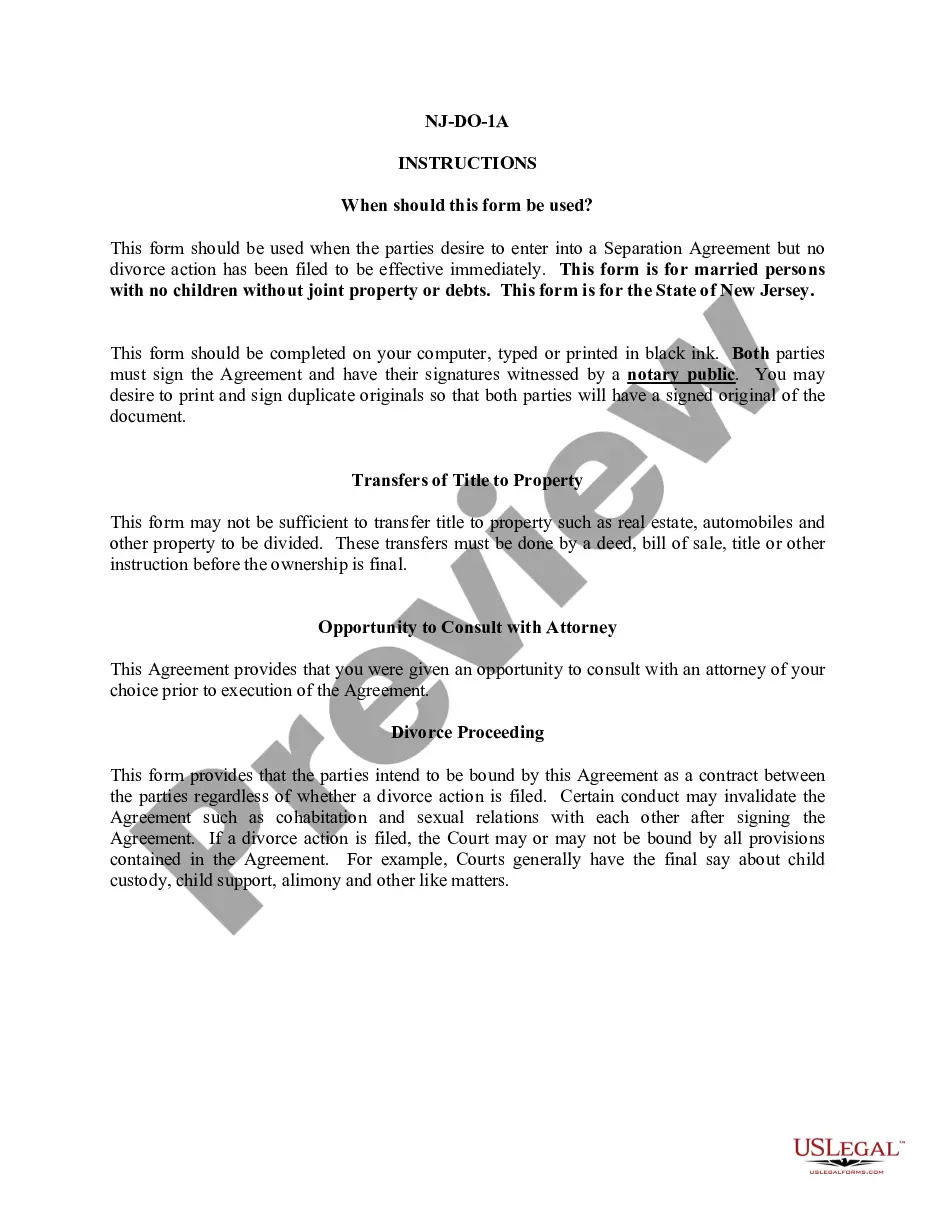
This form must be notarized to be legally valid. US Legal Forms provides secure online notarization powered by Notarize, allowing you to complete the process through a verified video call.
Get your form ready online
Our built-in tools help you complete, sign, share, and store your documents in one place.
Make edits, fill in missing information, and update formatting in US Legal Forms—just like you would in MS Word.
Download a copy, print it, send it by email, or mail it via USPS—whatever works best for your next step.
Sign and collect signatures with our SignNow integration. Send to multiple recipients, set reminders, and more. Go Premium to unlock E-Sign.
If this form requires notarization, complete it online through a secure video call—no need to meet a notary in person or wait for an appointment.
We protect your documents and personal data by following strict security and privacy standards.

Make edits, fill in missing information, and update formatting in US Legal Forms—just like you would in MS Word.

Download a copy, print it, send it by email, or mail it via USPS—whatever works best for your next step.

Sign and collect signatures with our SignNow integration. Send to multiple recipients, set reminders, and more. Go Premium to unlock E-Sign.

If this form requires notarization, complete it online through a secure video call—no need to meet a notary in person or wait for an appointment.

We protect your documents and personal data by following strict security and privacy standards.
Mistakes to watch out for
- Failing to fully disclose financial information leading to imbalanced agreements.
- Not having the document notarized, which can affect its enforceability.
- Assuming the agreement is valid without understanding its terms fully.
Benefits of completing this form online
- Convenience of drafting from home and accessing the form anytime.
- Editable format allowing you to ensure accuracy and clarity in your agreement.
- Access to templates and instructions drafted by licensed attorneys.
Legal use & context
- This agreement is legally binding and enforceable in New Jersey.
- Plan for future obligations and rights is clearly laid out to avoid misunderstandings.
- Courts may have final authority over certain matters if a divorce action is later filed.
Quick recap
- The form is designed for couples without children or joint property to formalize their separation.
- It is effective immediately upon signing and promptly notarization.
- Consultation with a legal advisor is recommended before execution to understand the implications.
Definitions you should know
- Notary Public: An official authorized to witness signatures on legal documents.
- Indemnity: A guarantee against financial loss or liability.
- Alimony: Financial support one spouse may be required to pay to the other after separation.
Looking for another form?
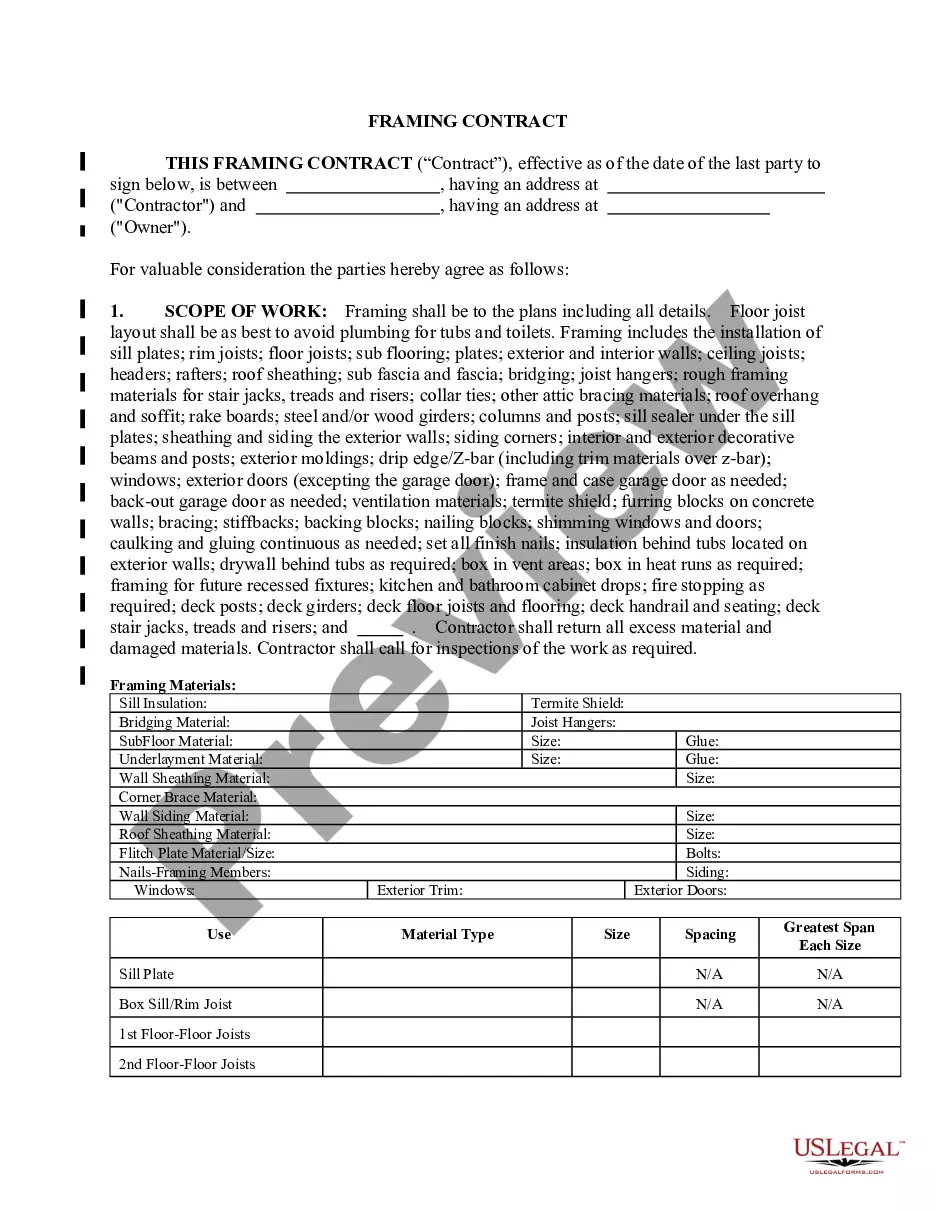
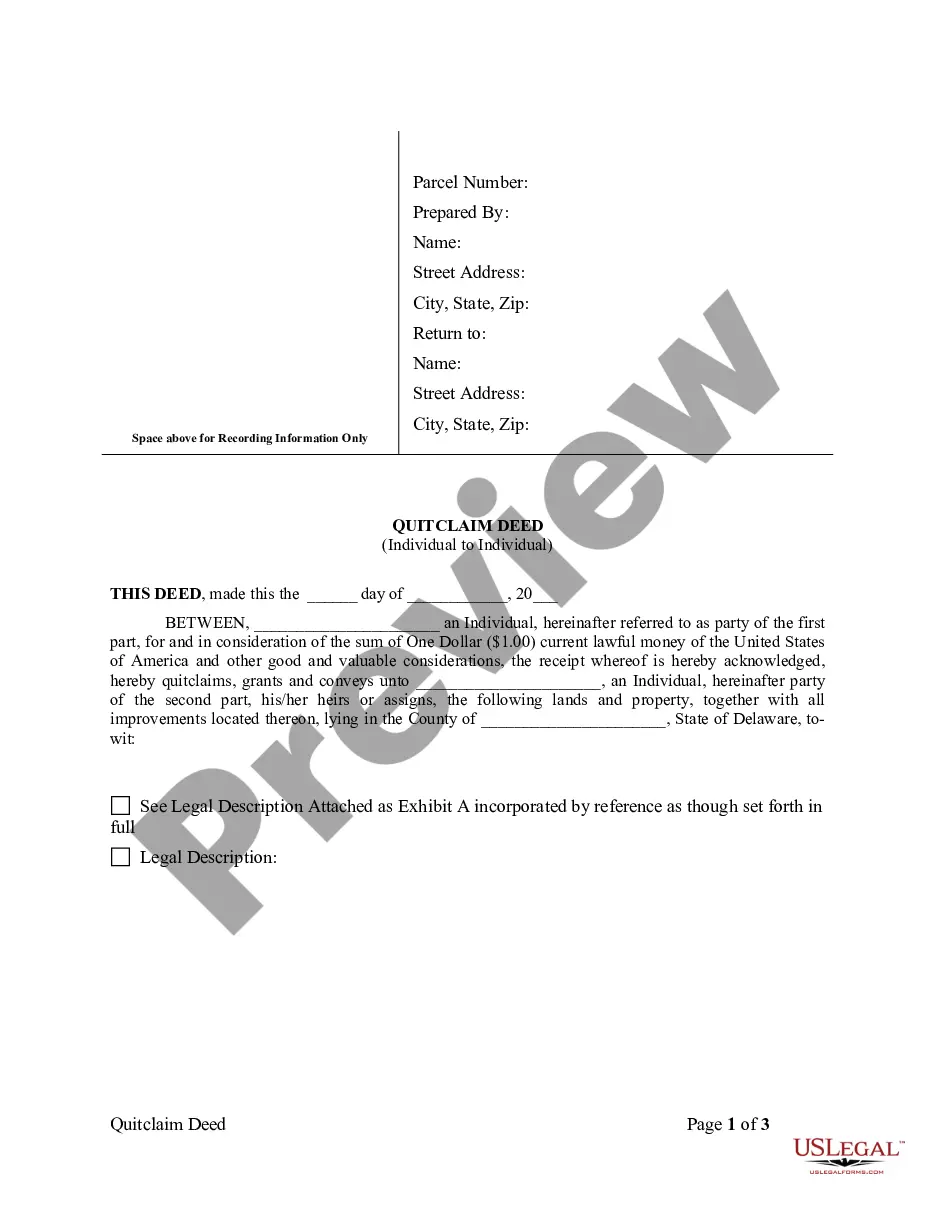
Form popularity
FAQ
A fair settlement should include ample parenting time for each parent. An equitable visitation agreement may not give parents equal custodial time, but it should provide for frequent and continuing contact with each parent.
Some people wonder if they can save even more by money by writing their own settlement agreement and not seeking the help of a divorce attorney at all. While there is no legal requirement that you have a lawyer draft your settlement agreement, it is certainly a good idea to do so.
#1. Start with the Basics. #2. Include the Details. #3. Confirm Your Agreement. #4. Identify and Divide Assets and Debts. #5. Create a Parenting Plan for Custody and Visitation. #6. Agree on Child Support and Spousal Support (Alimony) #7. Polishing Your Agreement. Conclusion.
You need to have your written agreement notarized. Make sure, when you sign the agreement, that you understand everything you are agreeing to. This type of agreement is often called a marital settlement agreement or MSA.
In New Jersey limited duration alimony, permanent and/or rehabilitative alimony, reimbursement alimony, or a combination thereof will be ordered. For example, a spouse unable to get skills and training necessary to get a job and support themselves may be entitled to permanent alimony.
#1. Start with the Basics. #2. Include the Details. #3. Confirm Your Agreement. #4. Identify and Divide Assets and Debts. #5. Create a Parenting Plan for Custody and Visitation. #6. Agree on Child Support and Spousal Support (Alimony) #7. Polishing Your Agreement. Conclusion.
Marital Settlement Agreements, reached between the parties in writing and signed by the parties, become legally binding when approved by the court at the time of the final court hearing.Once approved by the court, such post judgment stipulations do become legally binding and enforceable between the parties.
If you and your spouse can agree on all of the terms of your divorce, you can present your settlement agreement to the court. If the court finds your agreement is fair and in line with California law, the judge can simply approve the agreement and incorporate those terms into your final divorce judgment.