Oklahoma Notice of Default in Payment of Rent as Warning Prior to Demand to Pay or Terminate for Residential Property
Description

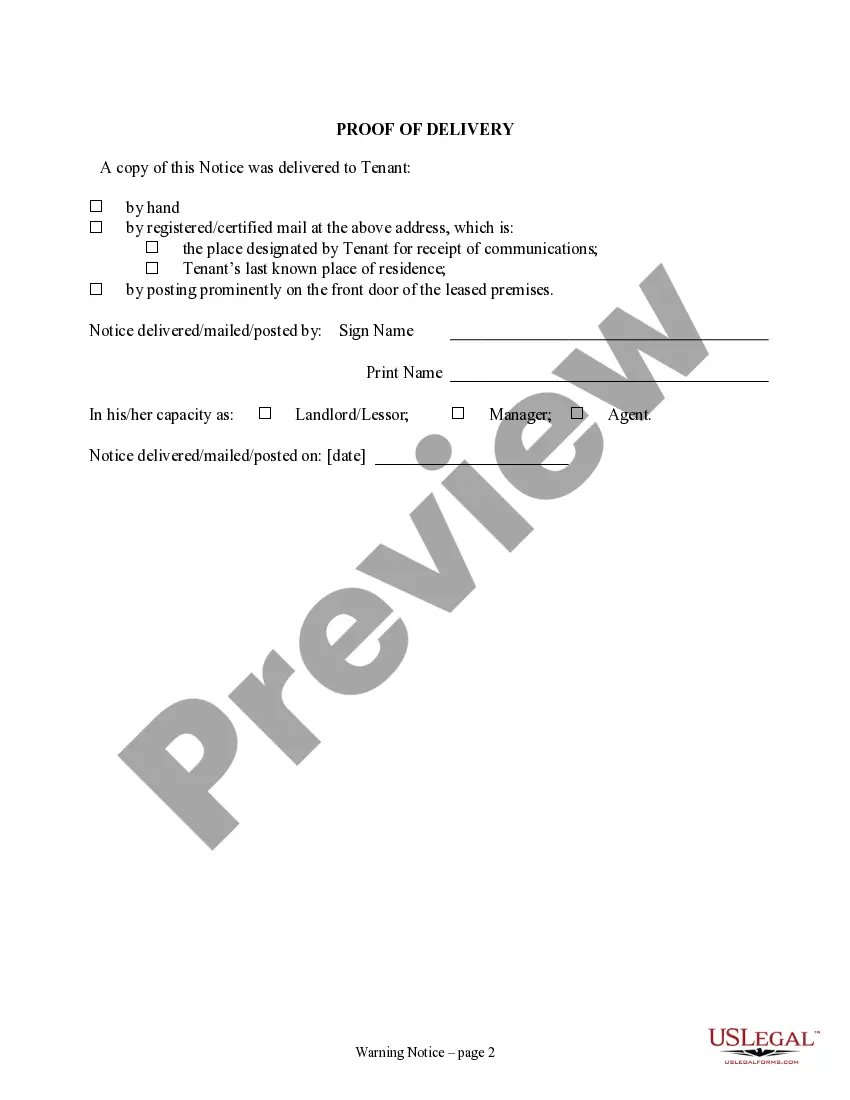
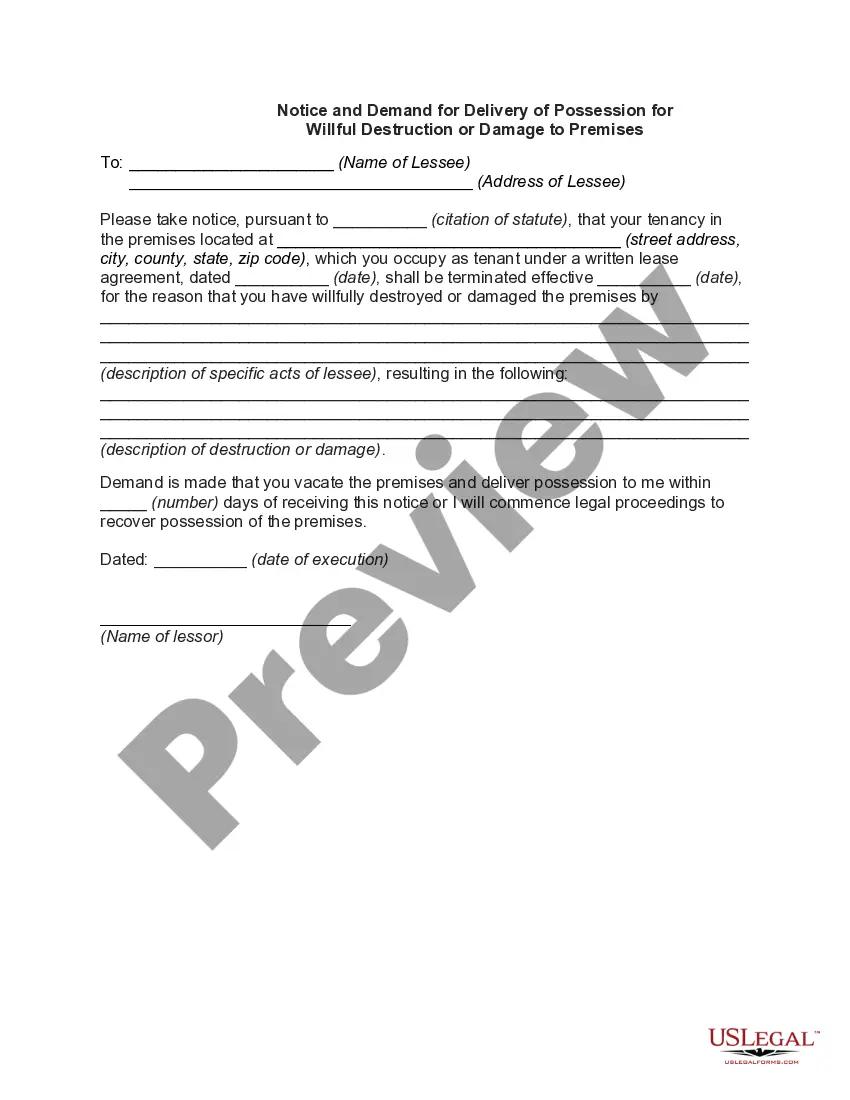
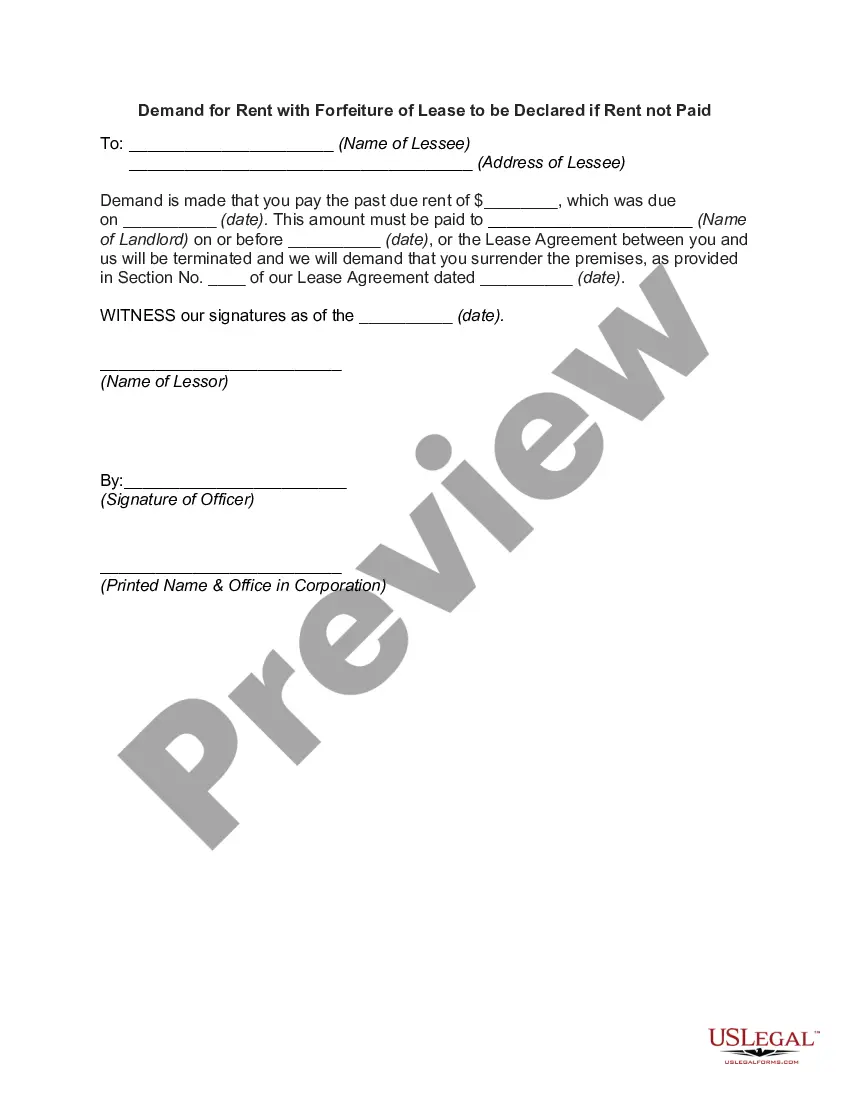
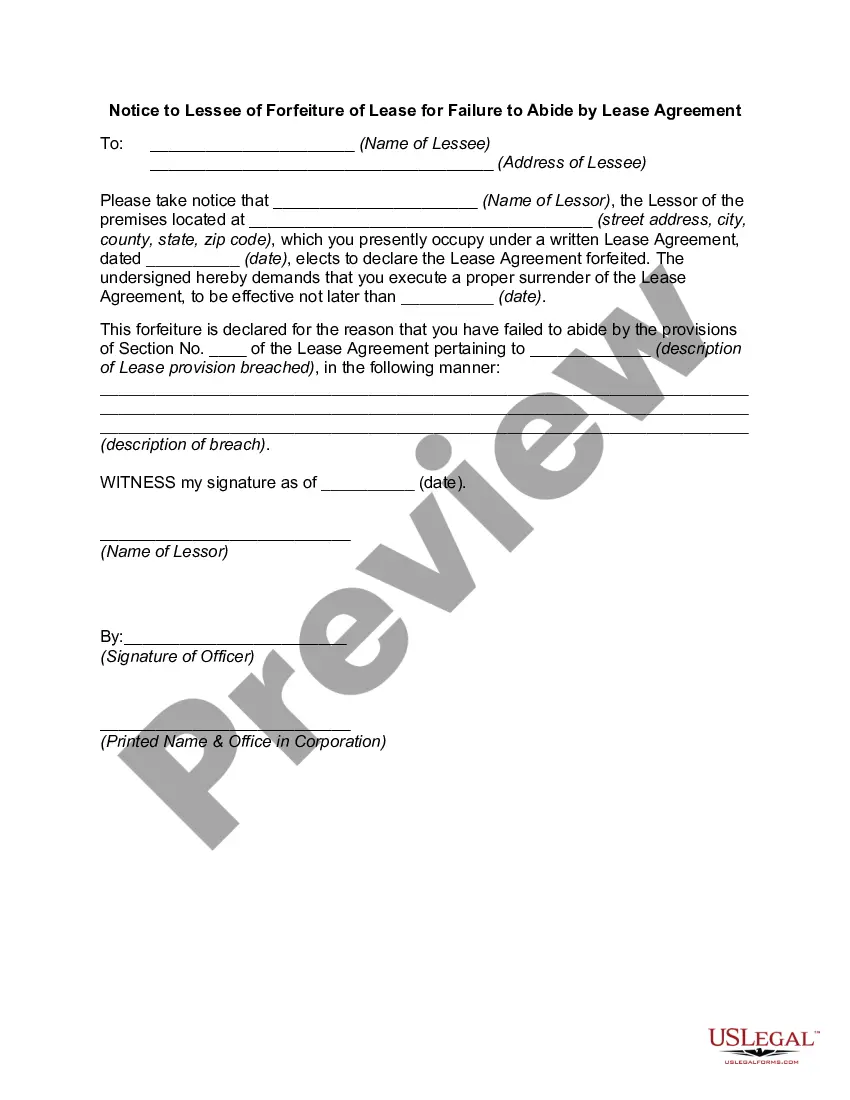
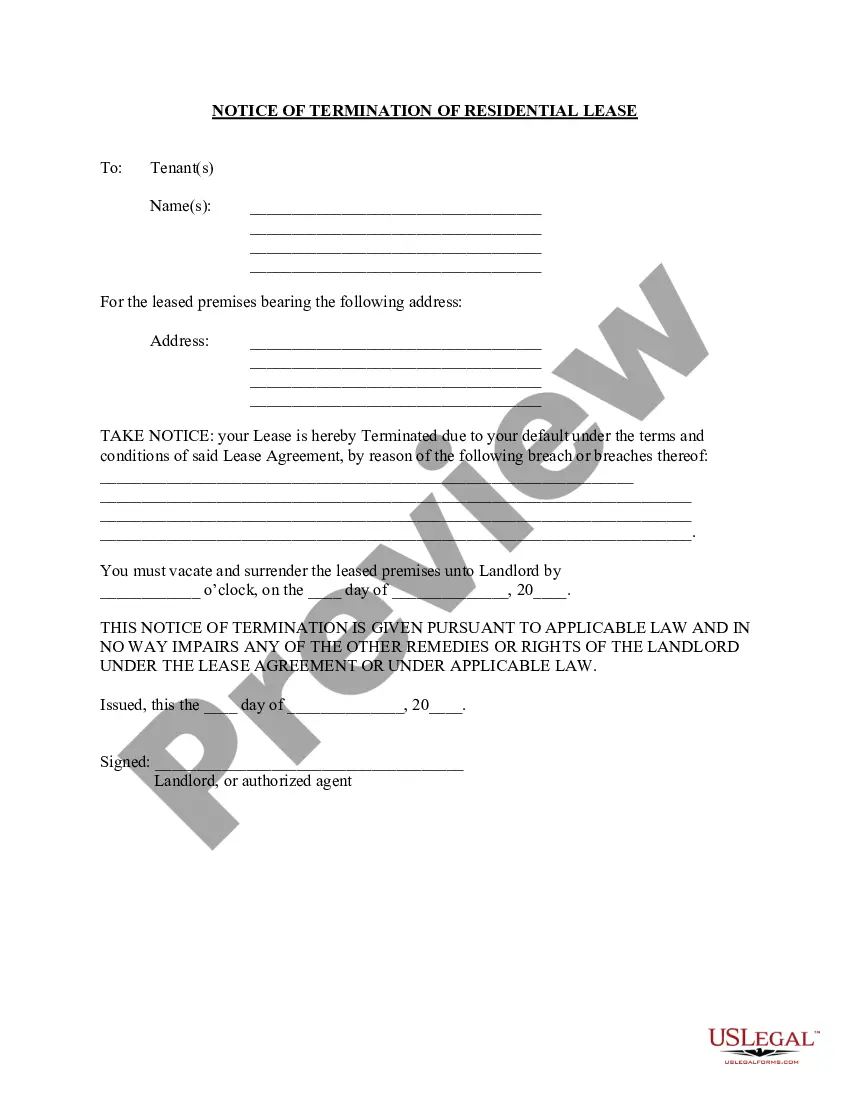

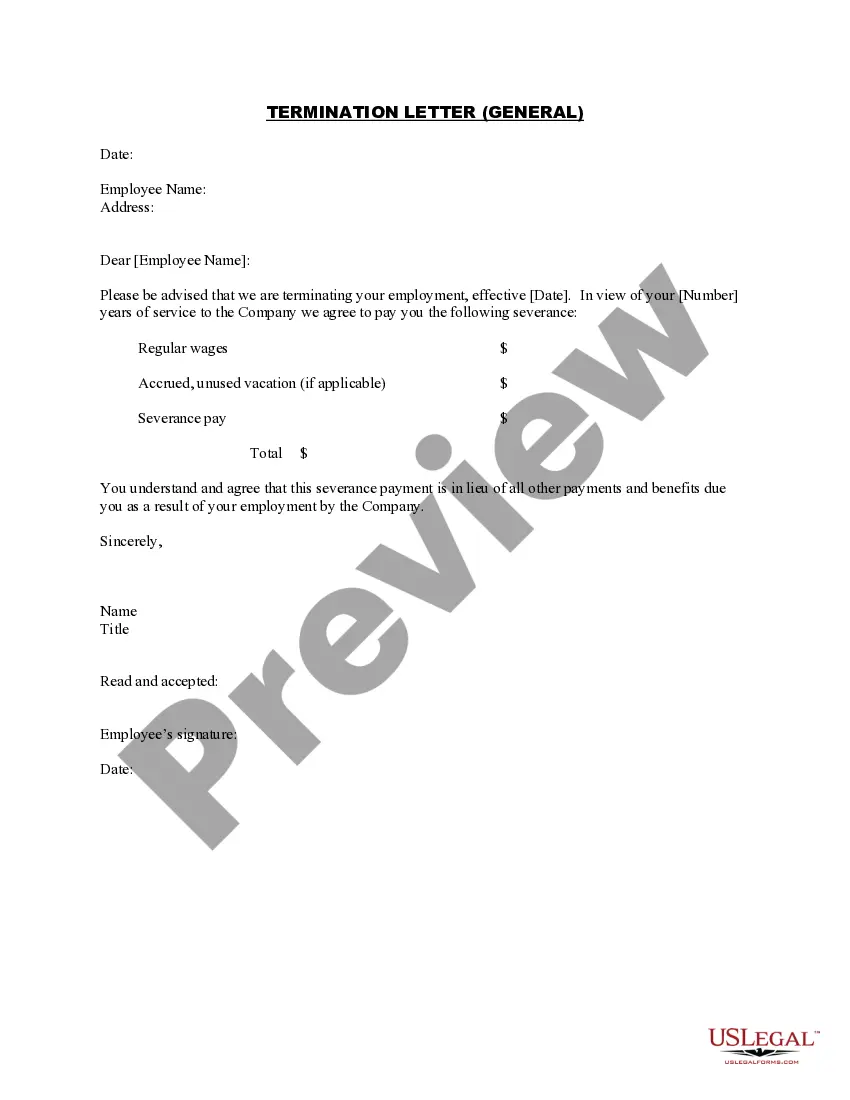
How to fill out Oklahoma Notice Of Default In Payment Of Rent As Warning Prior To Demand To Pay Or Terminate For Residential Property?
When it comes to filling out Oklahoma Notice of Default in Payment of Rent as Warning Prior to Demand to Pay or Terminate for Residential Property, you almost certainly think about a long process that requires getting a ideal form among countless very similar ones then being forced to pay an attorney to fill it out for you. On the whole, that’s a sluggish and expensive option. Use US Legal Forms and pick out the state-specific template within just clicks.
For those who have a subscription, just log in and then click Download to have the Oklahoma Notice of Default in Payment of Rent as Warning Prior to Demand to Pay or Terminate for Residential Property sample.
In the event you don’t have an account yet but want one, stick to the point-by-point guideline listed below:
- Be sure the document you’re getting applies in your state (or the state it’s required in).
- Do it by reading the form’s description and through clicking on the Preview option (if offered) to find out the form’s information.
- Click on Buy Now button.
- Pick the appropriate plan for your budget.
- Sign up to an account and select how you would like to pay out: by PayPal or by card.
- Download the document in .pdf or .docx format.
- Find the file on the device or in your My Forms folder.
Professional lawyers work on creating our templates to ensure after downloading, you don't need to bother about enhancing content material outside of your individual details or your business’s details. Be a part of US Legal Forms and receive your Oklahoma Notice of Default in Payment of Rent as Warning Prior to Demand to Pay or Terminate for Residential Property sample now.
Form popularity
FAQ
1Step 1 The landlord must provide the tenant or occupant with a notice as to why they are being evicted.2Step 2 A landlord must file and serve a Summons and Complaint in Forcible Entry and Detainer as the next step in the Oklahoma eviction process.3Step 3 File an Execution.
Once a notice to quit expires, there is no longer a landlord and tenancy relationship. By law, even though he is no longer regarded as a tenant to the landlord, the tenant is still expected to pay the rent he owes to the landlord whether he has been given a notice to quit or not.
Every time the tenancy ends legally, the notice to quit also expires. This is valid when the tenancy is renewed for either a new fixed term or a new periodic tenancy. When the rent is increased or decreased, a new tenancy has to be issued, so any notice served is deprecated.
Pay any delinquent rent that is due to the landlord within the allotted time of the notice. Move out of the premises within the allotted time of the notice. File an answer with the judicial court. File a motion to stay with the court.
Unfortunately that is not the case. Once a break notice has been served is cannot be unilaterally withdrawn. Even if both parties agree that the notice is withdrawn, service of the notice terminates the existing lease and creates a new tenancy by implication. There are a number of consequences that flow from this.
1Pay any delinquent rent that is due to the landlord within the allotted time of the notice.2Move out of the premises within the allotted time of the notice.3File an answer with the judicial court.4File a motion to stay with the court.
An eviction notice must state a reason why you are being evicted, otherwise it is invalid.For tenants who lived in the property for more than 12 months, the landlord must provide at least 60 days prior notice to vacate, under California Civil Code 1946.
Unfortunately that is not the case. Once a break notice has been served is cannot be unilaterally withdrawn. Even if both parties agree that the notice is withdrawn, service of the notice terminates the existing lease and creates a new tenancy by implication. There are a number of consequences that flow from this.