Separation Notice for Independent Contractor
About this form
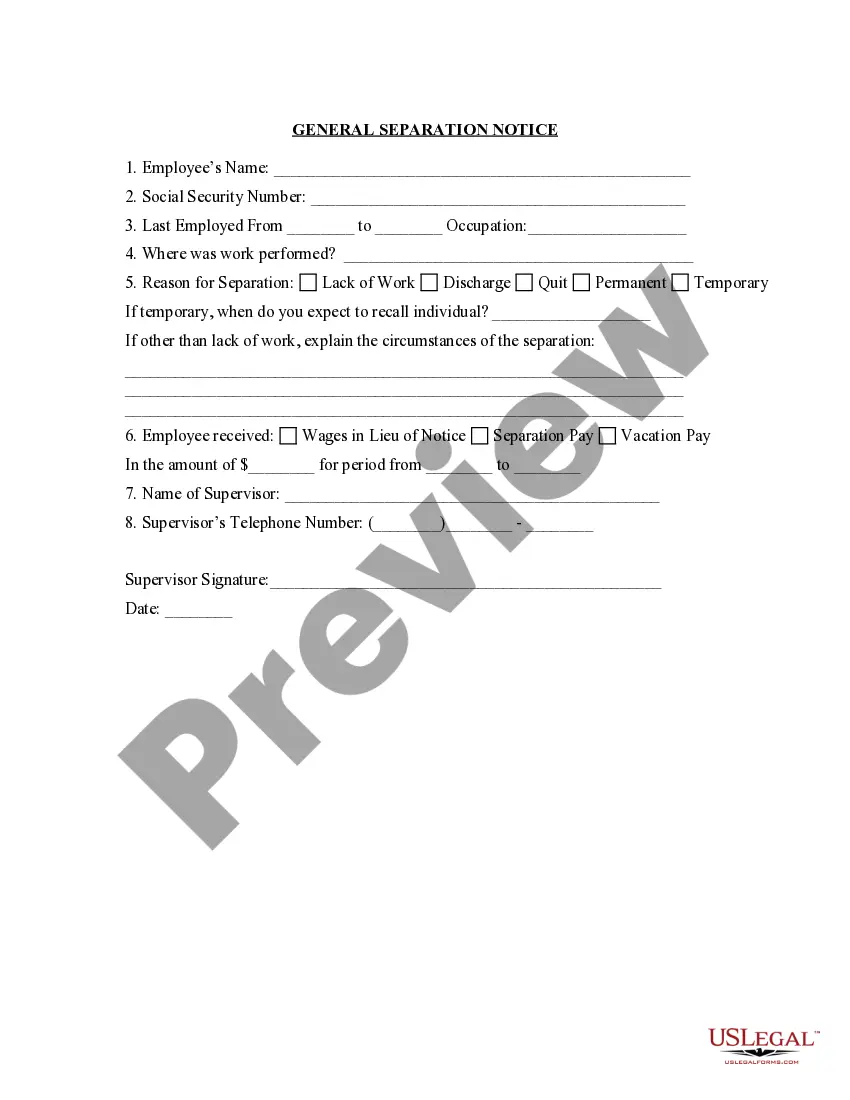
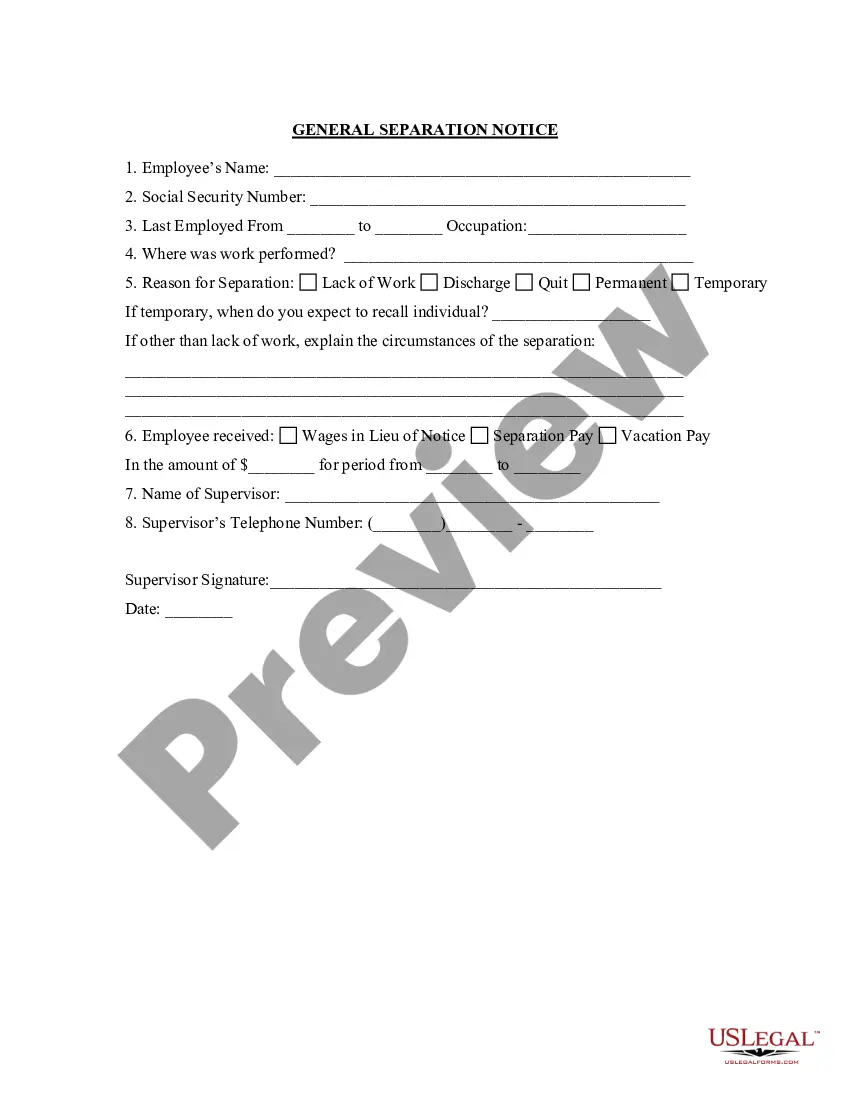
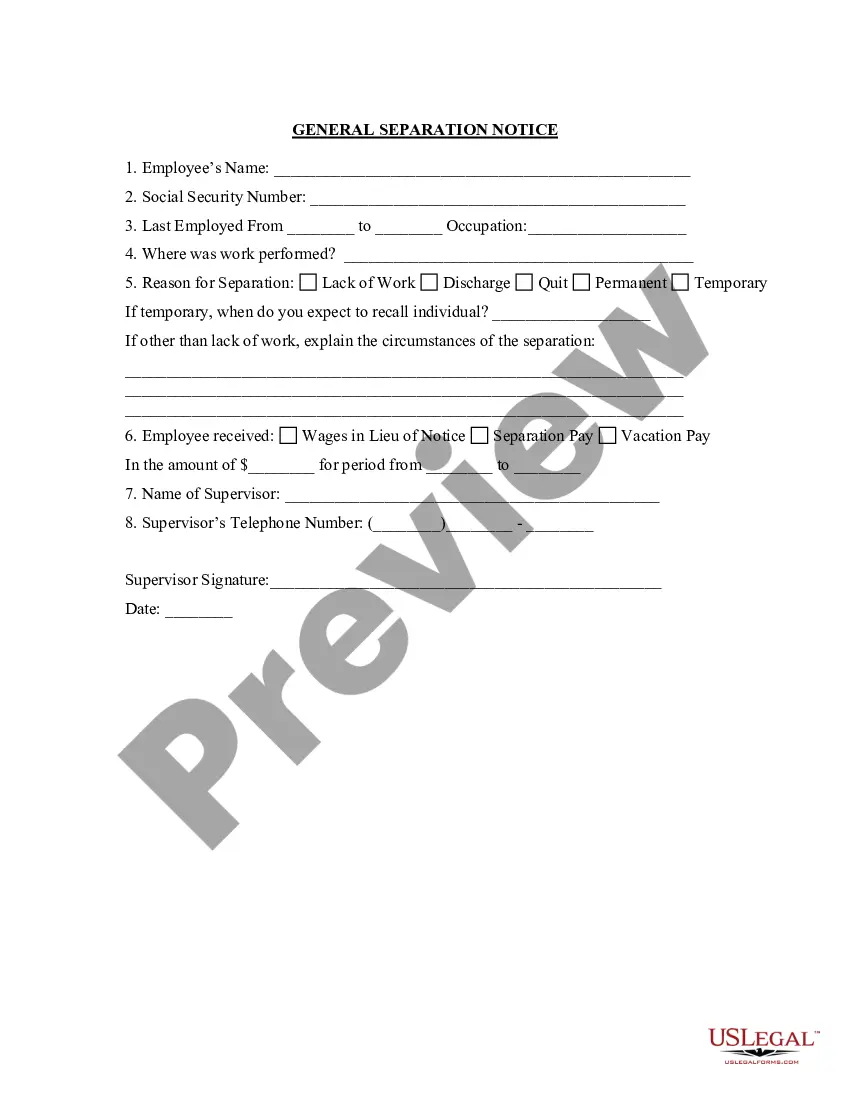
The Separation Notice for Independent Contractor is a formal document that communicates the end of a working relationship between a contractor and a client or organization. This form serves to provide a clear record of the separation along with important details, such as the reasons for the separation and any final payments owed. Unlike other employment termination forms, this notice specifically addresses independent contractors, ensuring clarity in unique contractual relationships.
Key components of this form
- Employee's name and Social Security number
- Employment duration and occupation
- Location where work was performed
- Reasons for separation with options for lack of work or discharge
- Details about wages owed, including separation pay and vacation pay
- Supervisor's information and signature to validate the notice
When to use this document
This form is used when an independent contractor is being officially separated from a business or client. Scenarios include when a contractor has completed their project, when work has been terminated due to external factors like a lack of work, or when a contractor has voluntarily decided to quit. It is essential to document the separation to protect both parties and clarify any financial obligations.
Who should use this form
- Companies that hire independent contractors
- Independent contractors ending their business relationship with clients
- HR professionals or managers overseeing contractor relationships
- Legal representatives involved in contract management
Completing this form step by step
- Fill in the independent contractor's name and Social Security number.
- Specify the employment period by entering the start and end dates.
- Indicate where the work was performed and the contractual occupation.
- Select the reason for separation and provide any additional details if necessary.
- Enter the financial details regarding any payments owed to the contractor.
- Have the supervisor sign and date the notice to validate the separation.
Is notarization required?
Notarization is not commonly needed for this form. However, certain documents or local rules may make it necessary. Our notarization service, powered by Notarize, allows you to finalize it securely online anytime, day or night.
Get your form ready online
Our built-in tools help you complete, sign, share, and store your documents in one place.
Make edits, fill in missing information, and update formatting in US Legal Forms—just like you would in MS Word.
Download a copy, print it, send it by email, or mail it via USPS—whatever works best for your next step.
Sign and collect signatures with our SignNow integration. Send to multiple recipients, set reminders, and more. Go Premium to unlock E-Sign.
If this form requires notarization, complete it online through a secure video call—no need to meet a notary in person or wait for an appointment.
We protect your documents and personal data by following strict security and privacy standards.

Make edits, fill in missing information, and update formatting in US Legal Forms—just like you would in MS Word.

Download a copy, print it, send it by email, or mail it via USPS—whatever works best for your next step.

Sign and collect signatures with our SignNow integration. Send to multiple recipients, set reminders, and more. Go Premium to unlock E-Sign.

If this form requires notarization, complete it online through a secure video call—no need to meet a notary in person or wait for an appointment.

We protect your documents and personal data by following strict security and privacy standards.
Common mistakes to avoid
- Failing to provide complete contractor details, such as name or Social Security number.
- Not selecting a reason for separation or not providing sufficient explanation.
- Omitting signatures from the supervisor or failing to date the notice.
- Leaving out financial information related to any final payments.
Benefits of using this form online
- Convenience of downloading and completing the form from anywhere.
- Editability allows you to fill in details easily and make changes if necessary.
- Reliability of having a professionally drafted form by licensed attorneys.
Legal use & context
- This form provides necessary documentation that can protect both parties in case of disputes.
- It serves as an official record that clarifies the end of the working relationship.
- Using this form helps ensure compliance with relevant contractor employment laws and regulations.
Key takeaways
- The Separation Notice for Independent Contractor is essential for formally ending contractor relationships.
- Complete all necessary sections to ensure clarity and legality.
- Utilize this form to document financial obligations clearly and to protect against potential disputes.
Looking for another form?

Form popularity
FAQ
Usually, independent contractors cannot be fired at-will like employees can because they have contracts that outline termination.
California is an employment-at-will state, meaning that the employer can choose to fire you at any time without providing a reason. It also means that you can stop working for the employer at any time.
In most cases, a contract can be terminated by one party if the other party fails to execute their end of the agreement. If one party is unwilling or unable to keep to the terms of the contract, you can legally end the contract.
If your independent contractor agreement contains a provision that allows the parties to terminate the relationship at any time, revise the agreement to include a notice provision with at least some kind of a notice period required for termination of the contract.
By definition, independent contractors are able to dictate their schedules. This means that employers cannot tell an independent contractor when to work unless they want to give the worker the benefits of a true employee.
If neither the employment contract or any company policy requires the employee to give notice, no notice is legally required under California law. This is because California is an at-will employment state.Similarly, at-will employees can also leave their employer at any time, even without a two weeks' notice.
While employees are always eligible for unemployment benefits if they are laid off, an independent contractor will only be eligible if they pay separately into the state unemployment fund. However, if your status as an independent contractor is questionable, filing for unemployment may be worth a try.
When you are resigning as an independent contractor it is not necessary to give a specific amount of notice, however, notice is always appreciated. Do mention your availability for additional work prior to your resignation, if any, in your resignation letter.