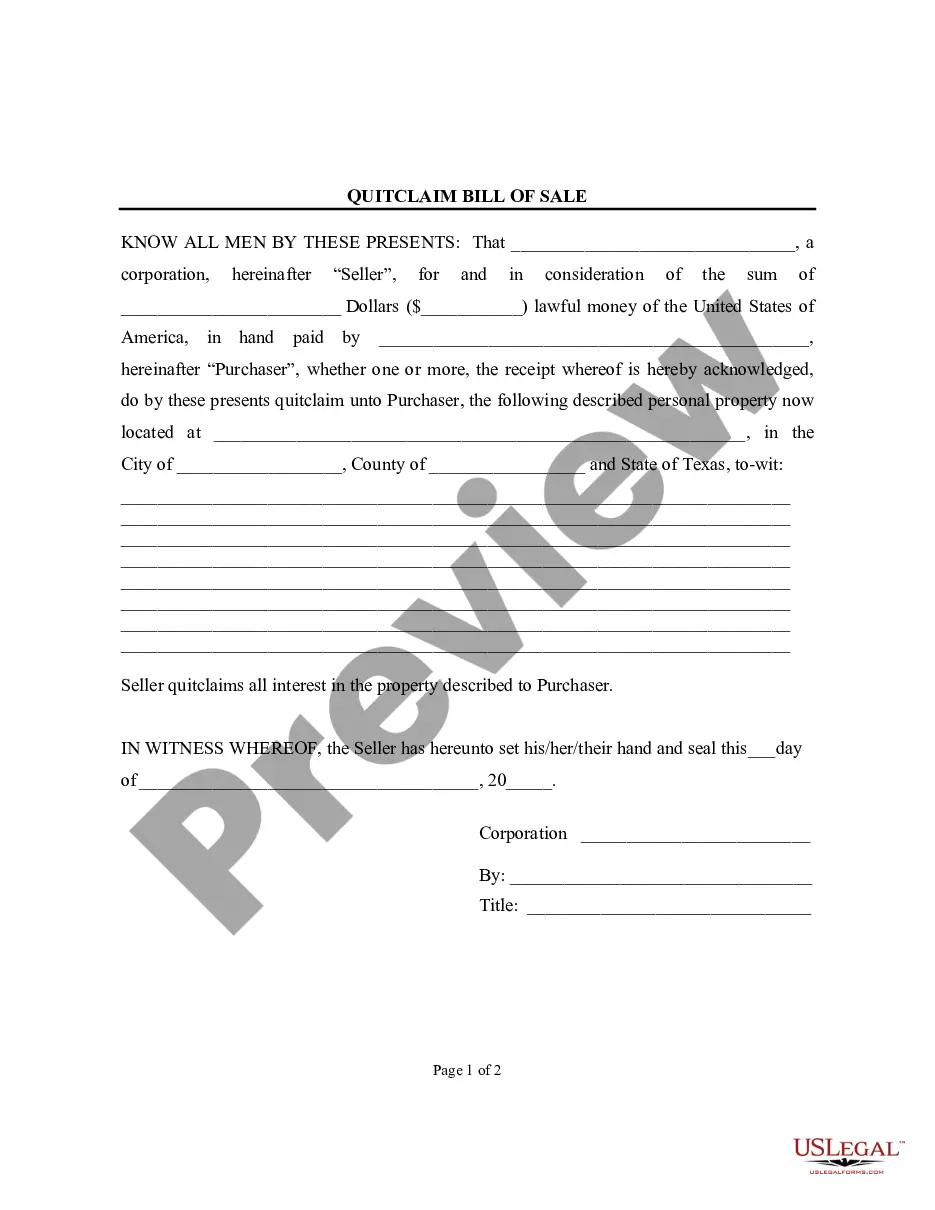
Nevada Assignment of Lien - Individual
What this document covers
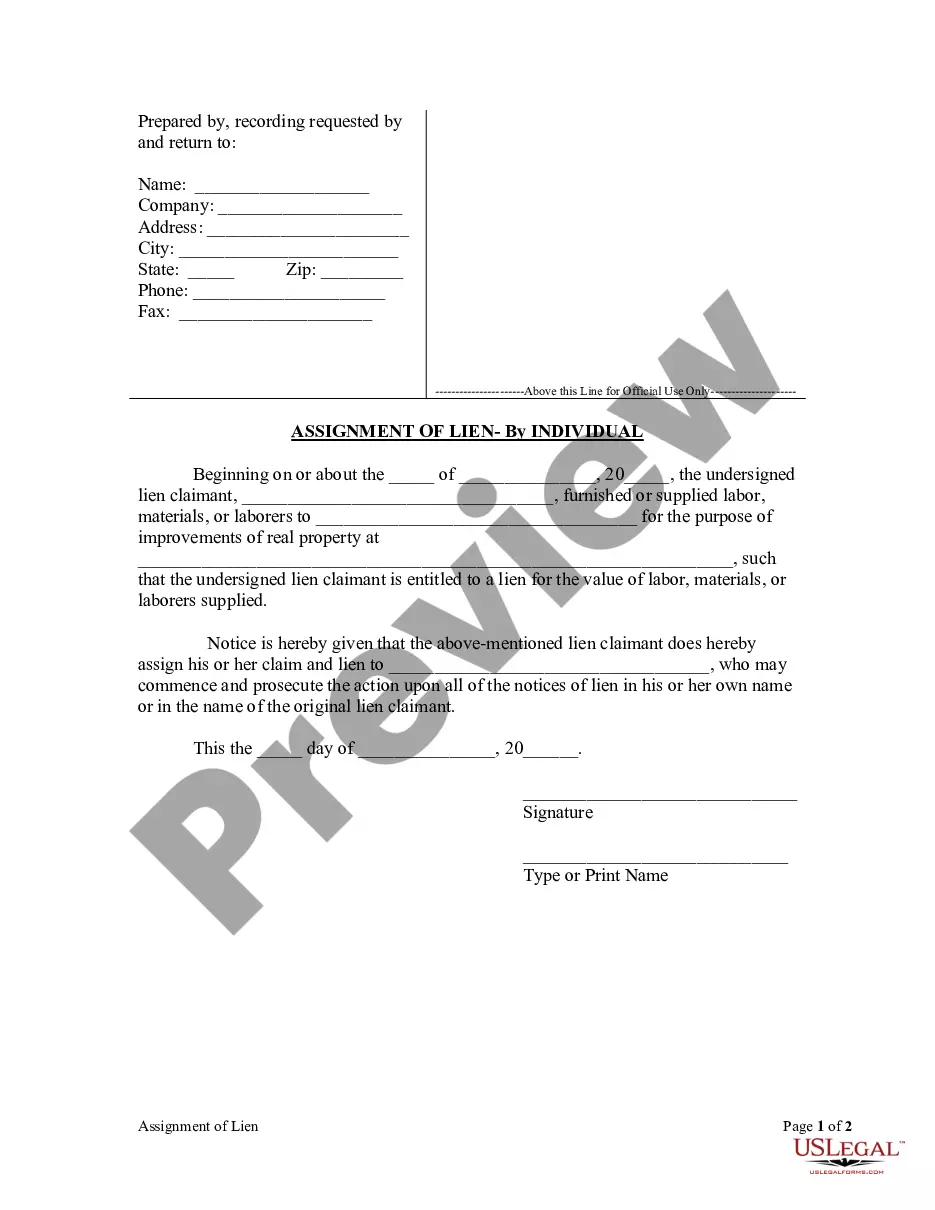
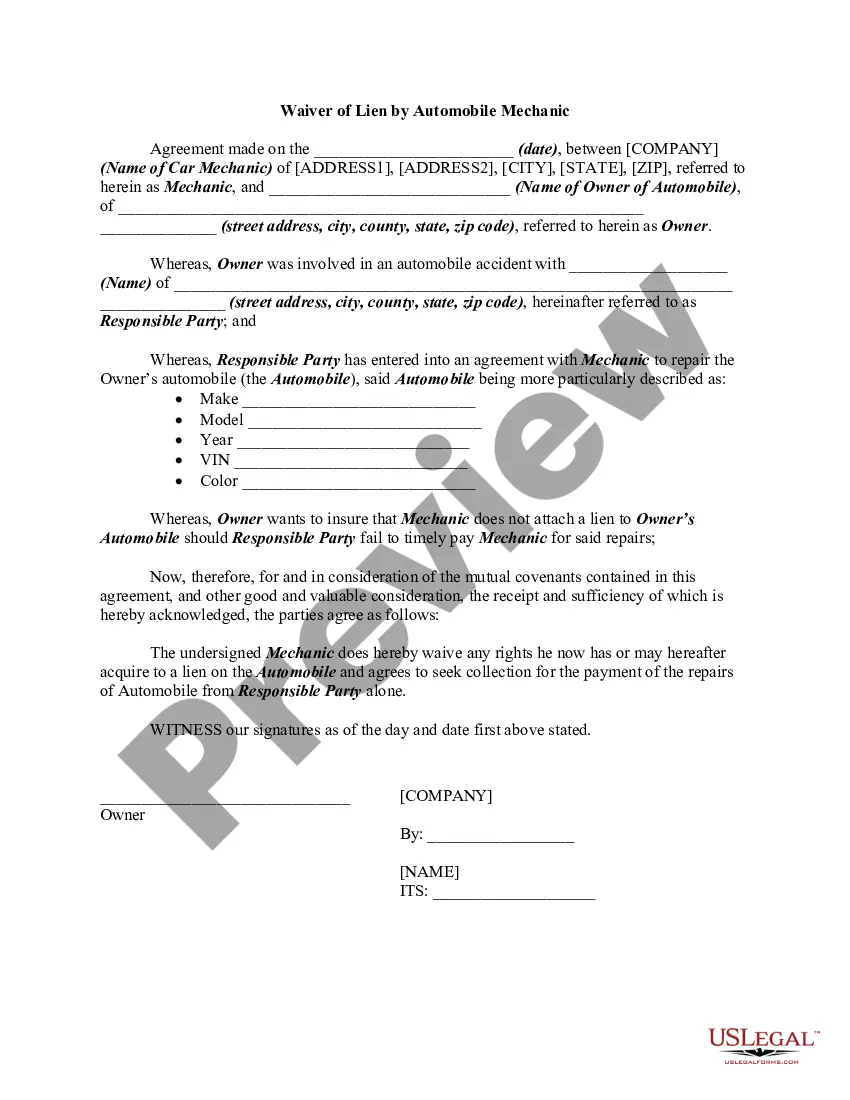
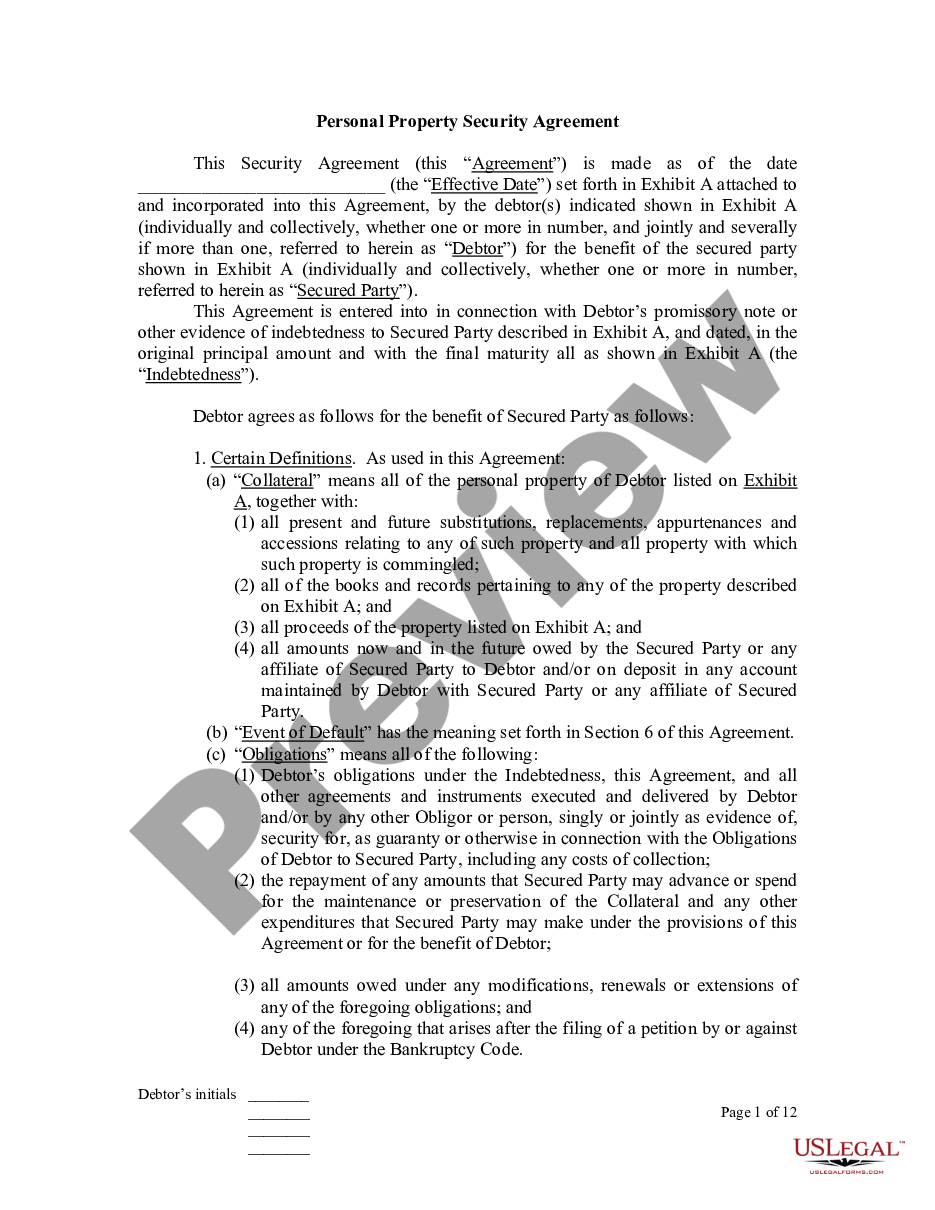
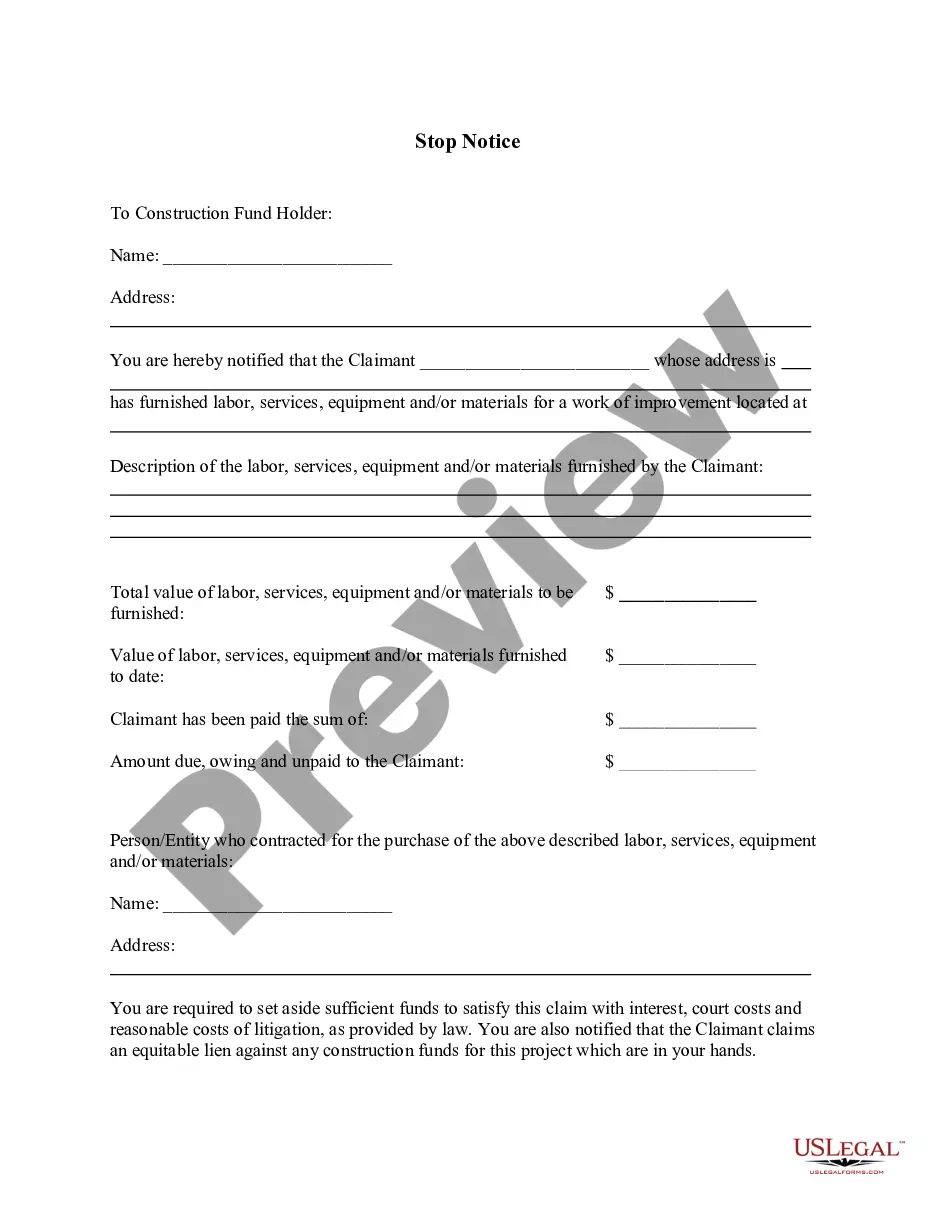
The Assignment of Lien - Individual form is a legal document used by an individual lien claimant who has provided labor, materials, or laborers for real property improvements. This form allows the claimant to assign their lien and claim to another individual, enabling that person to pursue legal action regarding the lien in either their own name or the original claimant's name. This form is essential for transferring lien rights effectively and can differ from other lien assignment forms by focusing specifically on individual claimants rather than businesses or corporations.
Form components explained
- Name and contact information of the lien claimant.
- Description of labor, materials, or services provided.
- Details of the property where improvements were made.
- Recipient information for the assignment of the claim.
- Signatures of both the assignor and the assignee.
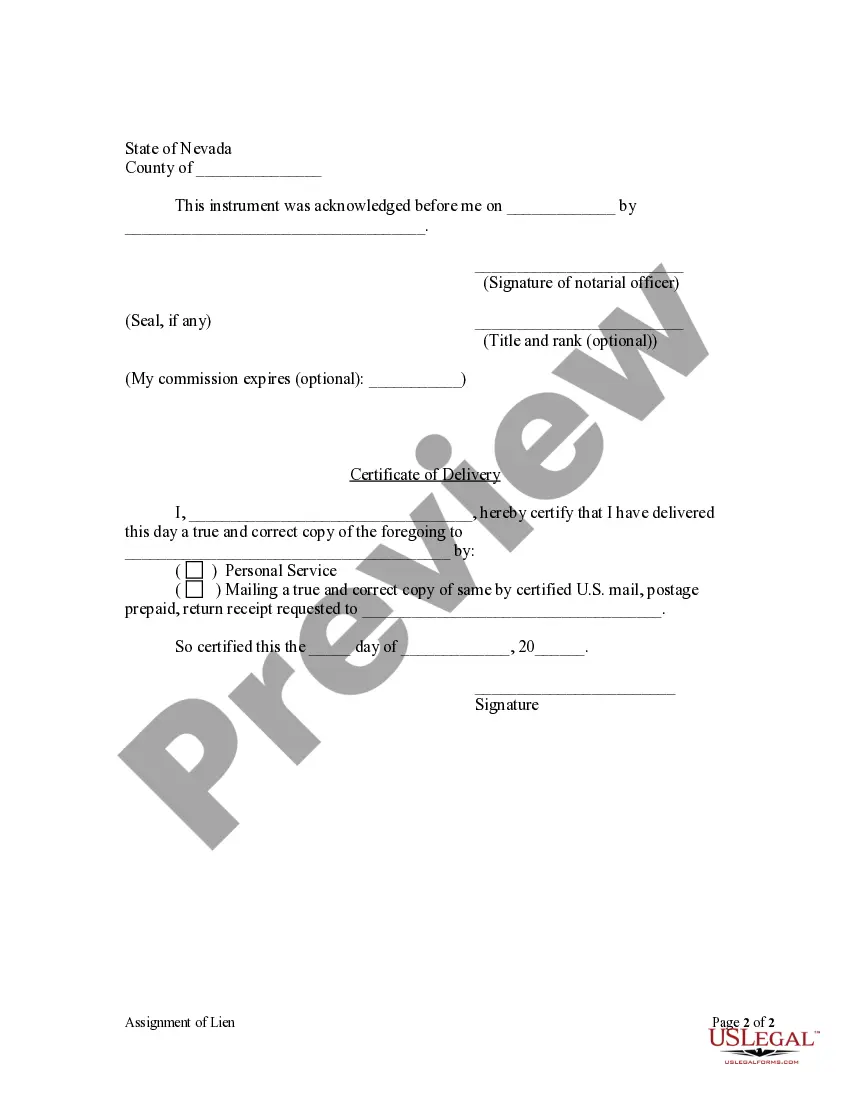
- Notarial acknowledgment section for legal verification.
When to use this document
This form is needed when an individual has supplied labor or materials that qualify for a lien on a property and wants to transfer their right to pursue the lien to another individual. It may be useful in situations where the original claimant cannot pursue the claim due to various reasons, such as lack of time, expertise, or ongoing legal matters.
Who should use this form
- Individuals who have provided labor or materials for home or property improvements.
- Those who wish to assign their lien rights to another individual.
- Contractors or subcontractors who have not been paid for their services.
Completing this form step by step
- Provide your name and contact information as the lien claimant.
- Specify the date and details of the labor or materials supplied.
- Enter the name of the individual to whom you are assigning the lien.
- Sign and date the form to officially complete the assignment.
- Ensure the form is notarized if required by local law.
Does this form need to be notarized?
This document requires notarization to meet legal standards. US Legal Forms provides secure online notarization powered by Notarize, allowing you to complete the process through a verified video call, available 24/7.
Get your form ready online
Our built-in tools help you complete, sign, share, and store your documents in one place.
Make edits, fill in missing information, and update formatting in US Legal Forms—just like you would in MS Word.
Download a copy, print it, send it by email, or mail it via USPS—whatever works best for your next step.
Sign and collect signatures with our SignNow integration. Send to multiple recipients, set reminders, and more. Go Premium to unlock E-Sign.
If this form requires notarization, complete it online through a secure video call—no need to meet a notary in person or wait for an appointment.
We protect your documents and personal data by following strict security and privacy standards.

Make edits, fill in missing information, and update formatting in US Legal Forms—just like you would in MS Word.

Download a copy, print it, send it by email, or mail it via USPS—whatever works best for your next step.

Sign and collect signatures with our SignNow integration. Send to multiple recipients, set reminders, and more. Go Premium to unlock E-Sign.

If this form requires notarization, complete it online through a secure video call—no need to meet a notary in person or wait for an appointment.

We protect your documents and personal data by following strict security and privacy standards.
Typical mistakes to avoid
- Failing to include all required signatures.
- Not providing accurate details about the work performed or materials supplied.
- Neglecting to comply with the notarization requirement when applicable.
- Overlooking the delivery certification that serves as proof of document submission.
Benefits of using this form online
- Immediate access to legal forms anytime.
- Convenient editing options to fill in personal information accurately.
- Reliable templates created according to state-specific legal standards.
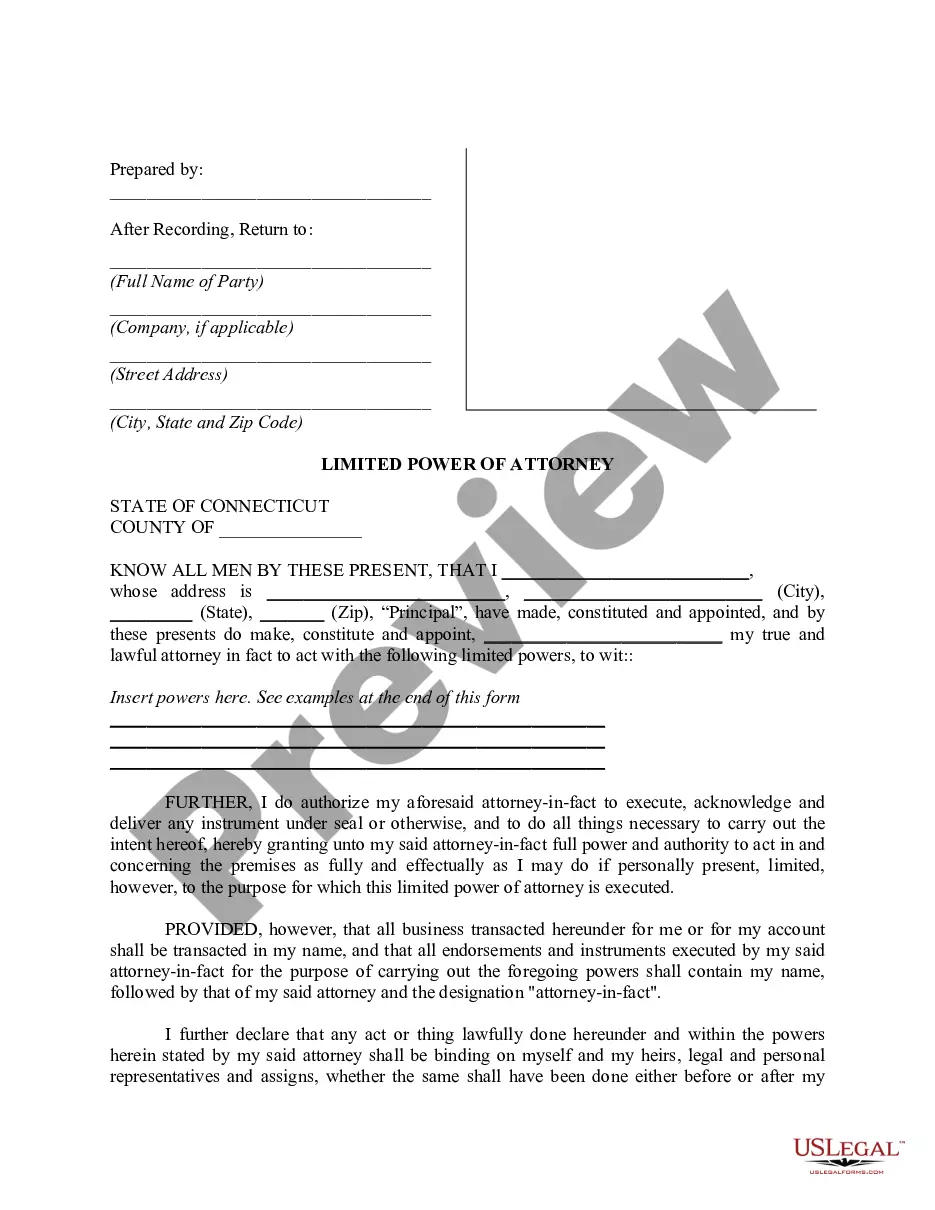
Looking for another form?

Form popularity
FAQ
Lien Satisfied/Title Holder Release (REG 166) form: A formal document that releases any lienholder on the vehicle. Notice of Transfer and Release of Liability (REG 138) form: It is a document that certifies that you have sold or transferred the vehicle to another party.
Bring the title to a DMV office. If you will be registering and driving the vehicle, you must obtain Nevada liability insurance in the same name(s) which will be on the new title and registration. If your vehicle requires a smog check, you must have a new test done if the last one is more than 90 days old.
To get the title quickly, go to the lender's office with the buyer to make the final payment and receive a copy of the title. You can close out the loan, remove the title's lien, receive money for the vehicle, and transfer the vehicle's ownership.
The title appears in the article and in search results. Can I pick up my letter of satisfaction/title at a U.S. Bank branch once the loan/line is paid off? The option to have the title sent to a branch is not available. Electronic titles are sent to the state, while paper titles are sent directly to you.
Once you've paid off your loan, your lien should be satisfied and the lien holder should send you the title or a release document in a reasonable amount of time. Once you receive either of these documents, follow your state's protocol for transferring the title to your name.
Notify Your Car Insurance Company Notify your car insurance company when you've paid off your loan so you can remove the lien holder from your policy. You don't need to wait until you have the title in your hand to make the call.Once you've paid off the car and own it outright, the payment goes to you.
Release ownership by signing on line one on the front of the title. If the vehicle is, or was financed, the lienholder's name appears in the legal owner section and their release with counter signature is required on line two. For step-by-step instructions see the California DMV instructional video here.
On the front of the title, near the middle, the seller must write in the current odometer reading on the vehicle. Near the bottom, the seller must fill in the following information on the appropriate lines: Date the vehicle was sold, and their printed name and signed name (which should be written on the same line).
Your lienholder has the right to repossess the motor vehicle if you stop making your auto loan payments. Once you make your final payment, you have a right to obtain a lien release from the lienholder. When you get a lien released, you can receive a clear title from the DMV.