New Jersey Notice of Default in Payment of Rent as Warning Prior to Demand to Pay or Terminate for Residential Property
What is this form?
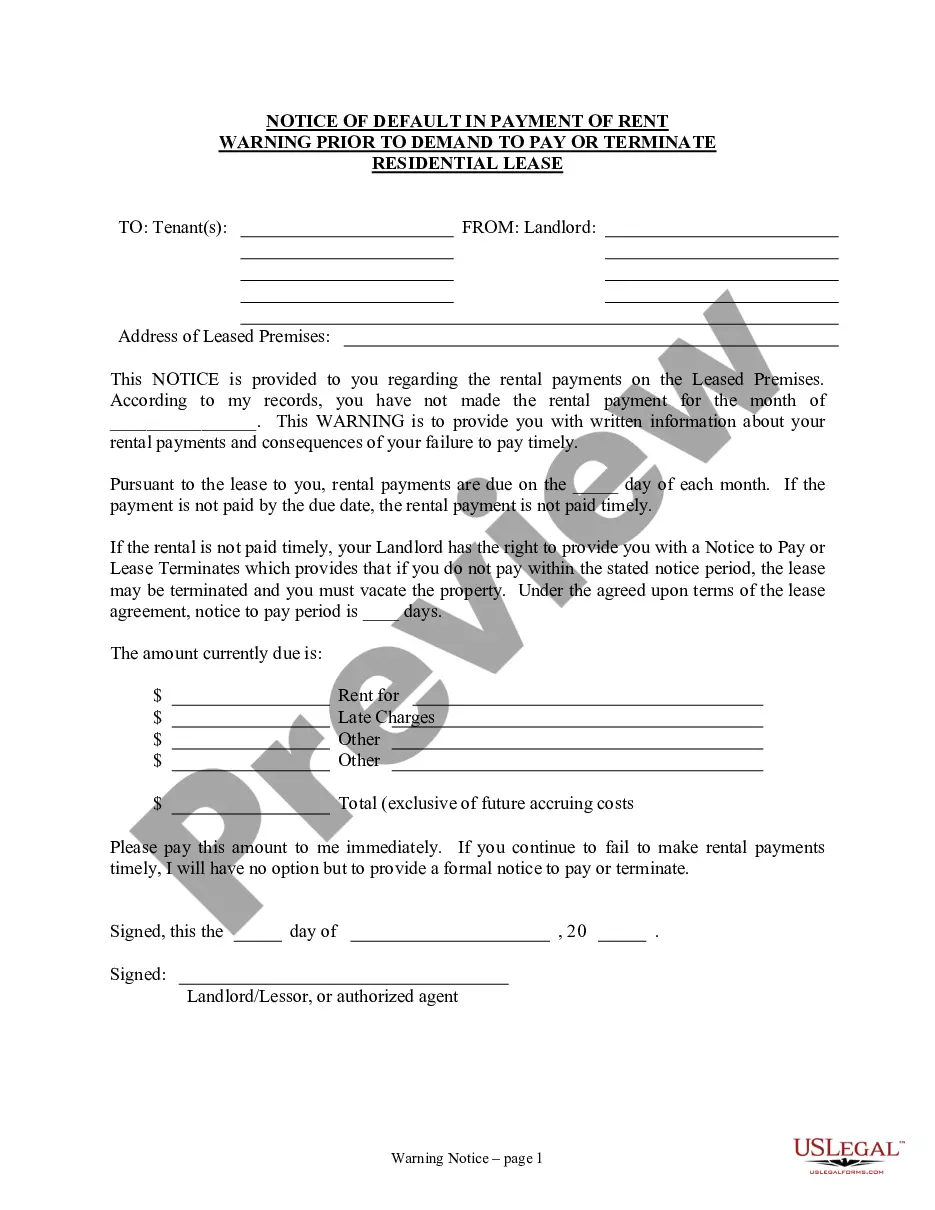
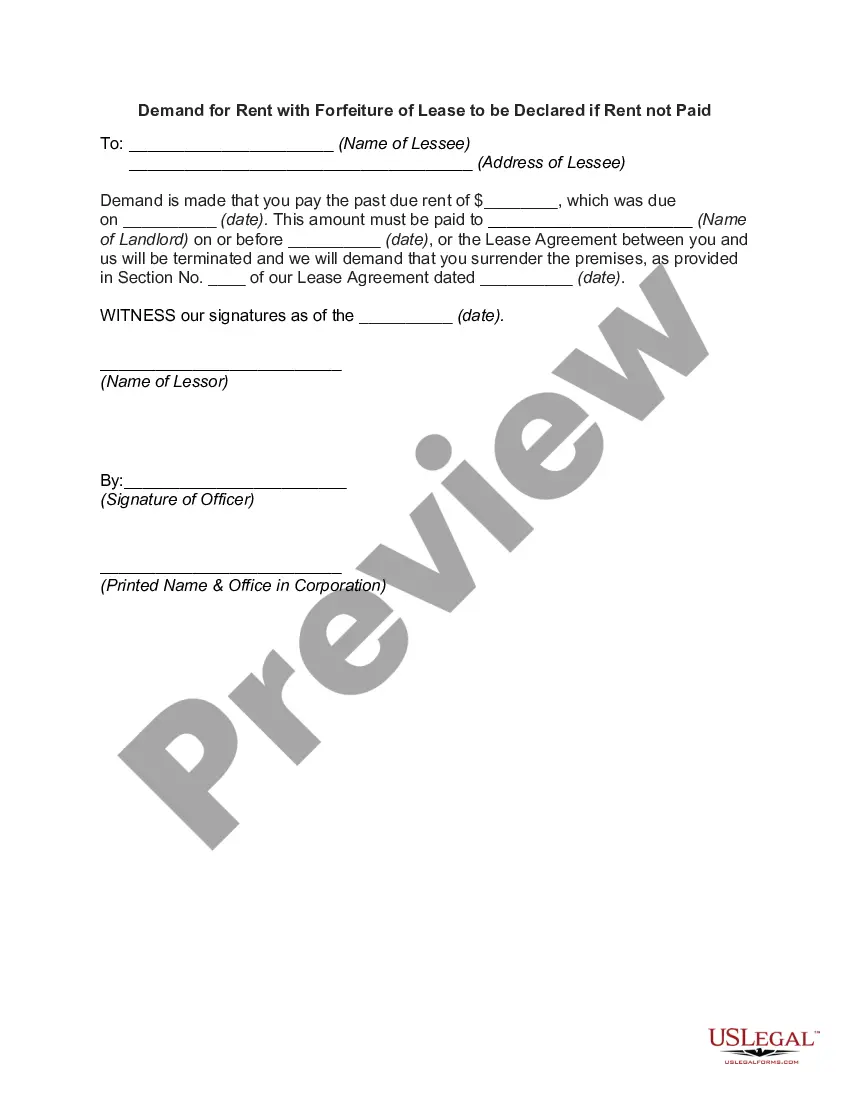
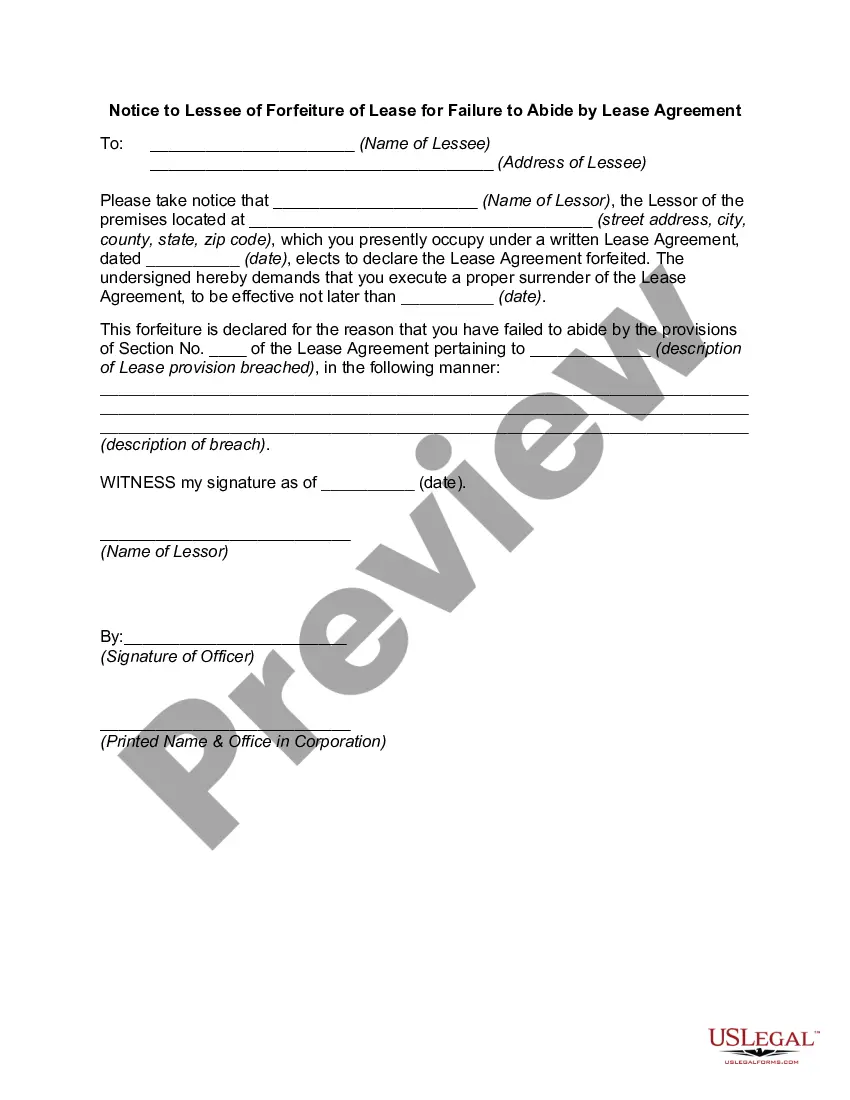
The Notice of Default in Payment of Rent as Warning Prior to Demand to Pay or Terminate for Residential Property is a legal document used by landlords to formally notify tenants of unpaid rent. This form serves as a warning before the landlord escalates the situation by issuing a formal demand to pay or notice of termination. It clearly outlines the amounts due, payment deadlines, and the repercussions of continued non-payment, distinguishing it from other residential lease documents.
What’s included in this form
- Notice heading indicating it is a warning prior to demand to pay or terminate.
- Identification of tenant(s) and the landlord.
- Address of the leased premises.
- Details about the specific rental payment that is overdue.
- Consequences of failing to pay rent on time, including potential lease termination.
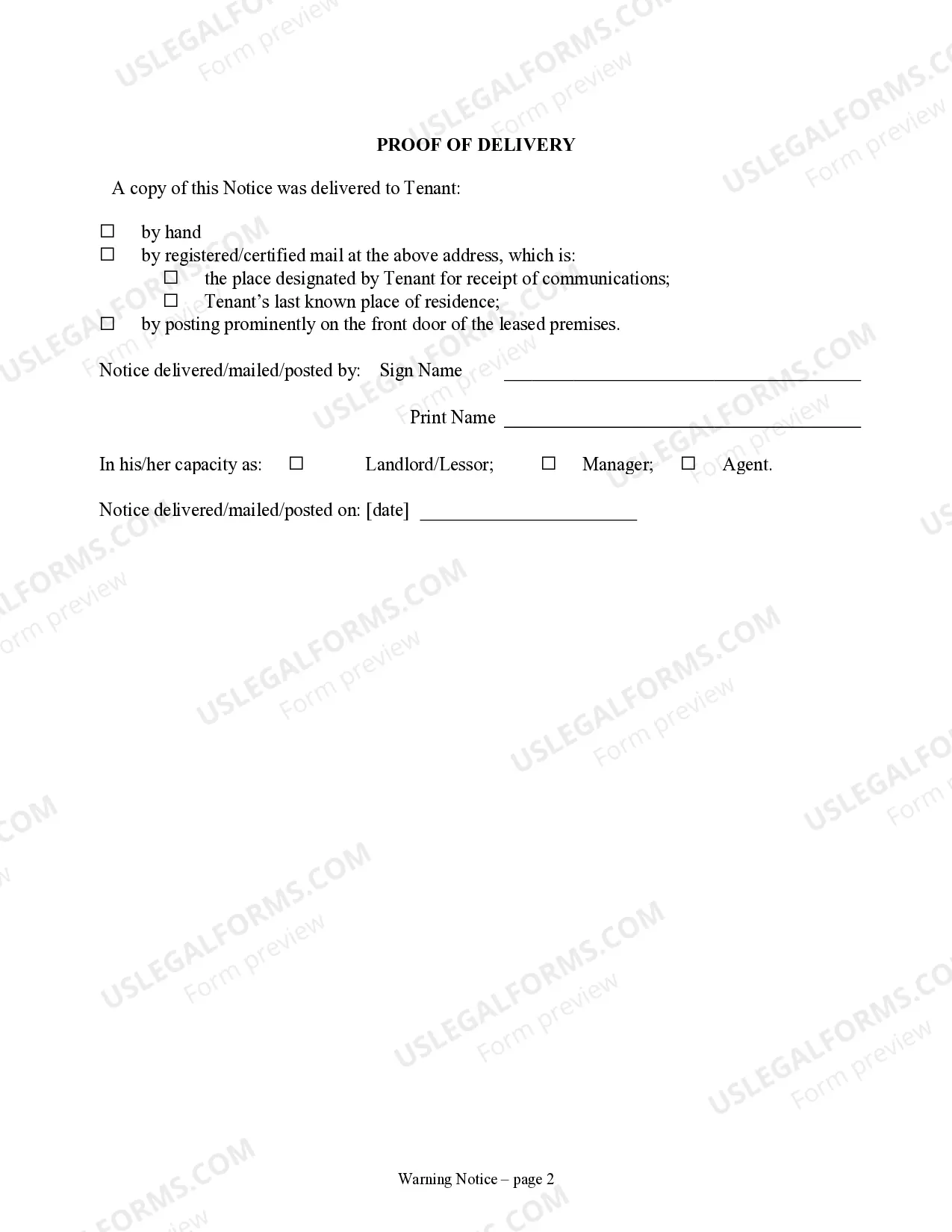
- Proof of delivery section to document how the notice was provided to the tenant.


When to use this document
This form is used when a landlord needs to formally notify a tenant that their rent payment is overdue. It is a critical step in the eviction process, allowing the landlord to communicate potential consequences if the payment is not made. This notice acts as a warning before the landlord issues a formal demand to pay or terminates the lease. It is advisable to use this form as soon as the payment deadline has passed to ensure compliance with state laws.
Who can use this document
- Landlords renting residential properties.
- Property managers acting on behalf of landlords.
- Real estate professionals involved in property leasing.
Completing this form step by step
- Identify the landlord's and tenant's names and addresses.
- Specify the month and year for which rent is due.
- Enter the due date of payment and the number of days allowed for payment after the due date.
- List the total amount due, including any late charges.
- Sign and date the form to validate the notice.
- Deliver the notice using the defined methods (hand delivery, certified mail, or posting).
Notarization guidance
Notarization is not commonly needed for this form. However, certain documents or local rules may make it necessary. Our notarization service, powered by Notarize, allows you to finalize it securely online anytime, day or night.
Get your form ready online
Our built-in tools help you complete, sign, share, and store your documents in one place.
Make edits, fill in missing information, and update formatting in US Legal Forms—just like you would in MS Word.
Download a copy, print it, send it by email, or mail it via USPS—whatever works best for your next step.
Sign and collect signatures with our SignNow integration. Send to multiple recipients, set reminders, and more. Go Premium to unlock E-Sign.
If this form requires notarization, complete it online through a secure video call—no need to meet a notary in person or wait for an appointment.
We protect your documents and personal data by following strict security and privacy standards.

Make edits, fill in missing information, and update formatting in US Legal Forms—just like you would in MS Word.

Download a copy, print it, send it by email, or mail it via USPS—whatever works best for your next step.

Sign and collect signatures with our SignNow integration. Send to multiple recipients, set reminders, and more. Go Premium to unlock E-Sign.

If this form requires notarization, complete it online through a secure video call—no need to meet a notary in person or wait for an appointment.

We protect your documents and personal data by following strict security and privacy standards.
Avoid these common issues
- Failing to include all necessary tenant and landlord information.
- Not specifying the correct date or amount due.
- Omitting the delivery method or failing to document delivery.
- Using outdated forms that do not comply with current law.
Benefits of completing this form online
- Convenient access: Download and complete the form from anywhere at any time.
- Editability: Easily fill in specific details to tailor the document to your needs.
- Reliability: Ensure the form is drafted by licensed attorneys, maintaining legal correctness.
Legal use & context
- The notice acts as a formal communication to the tenant about their rental obligations.
- Failure to comply with the notice can lead to legal consequences, including eviction.
- This document protects landlords' rights under rental agreements and applicable state laws.
What to keep in mind
- The Notice of Default in Payment of Rent is crucial for landlords managing overdue payments.
- Use this form as an initial step before pursuing lease termination or eviction.
- Ensure all sections are accurately completed to avoid common mistakes and uphold legal standards.
Looking for another form?
Form popularity
FAQ
The State of New Jersey does not have a law controlling or governing rent increases or rent leveling. However, any municipality within the State of New Jersey may adopt an ordinance controlling rent increases.Once controls are lifted, increased demand will usually result in higher rents being asked and paid.
A landlord must have good cause to evict a tenant.Each cause, except for nonpayment of rent, must be described in detail by the landlord in a written notice to the tenant. A Notice to Quit is required for all good cause evictions, except for an eviction for nonpayment of rent.
NJ is not landlord friendly and has a ton of rent control towns and other restrictions.
Notice to Terminate the Lease A month-to-month tenant must give written notice of lease termination at least one full month prior to moving. Most yearly leases require a 60 to 90 day notice from the tenants in order to terminate the lease.
Essentially, this means your landlord can only raise rents if they're in line with the current market. The AST often has a section suggesting how much rents could increase by. The percentage is typically between 0.5 and 5%, with market rents expected to be somewhere in that bracket after a 12-month AST comes to an end.
Rent Control The State of New Jersey does not have a law governing rent increases. However, municipalities within the State may adopt ordinances regulating the amount and frequency of rent increases within their specific municipality.
A typical New Jersey eviction process will take anywhere from 6 weeks to 6 months but they can drag on for much longer if you aren't careful. Below is a broad overview of what you can expect in the NJ eviction process.
Tenant Rights to Withhold Rent in New JerseyTenants may withhold rent or exercise the right to repair and deduct if a landlord fails to take care of important repairs, such as a broken heater.