Ohio Property Manager Agreement
Understanding this form
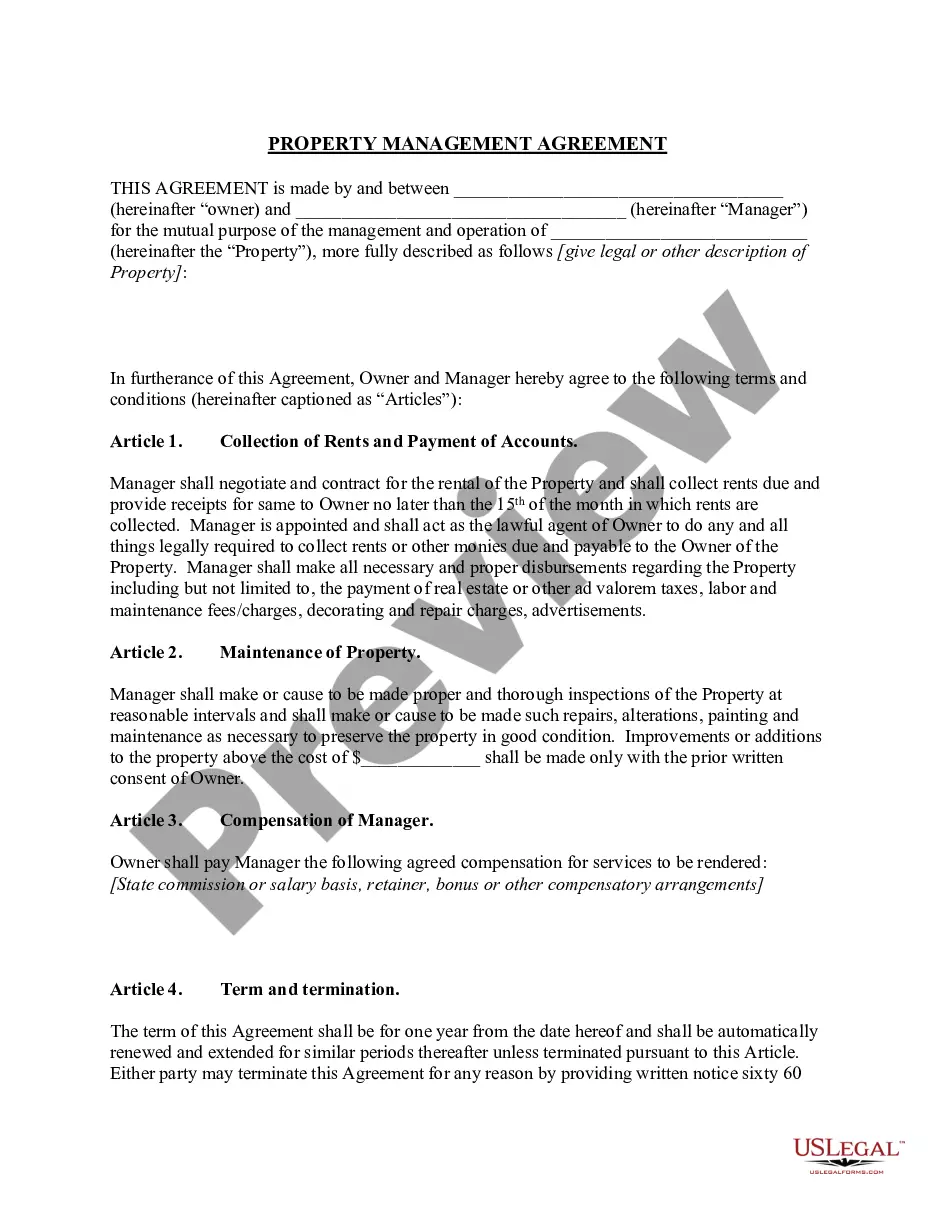
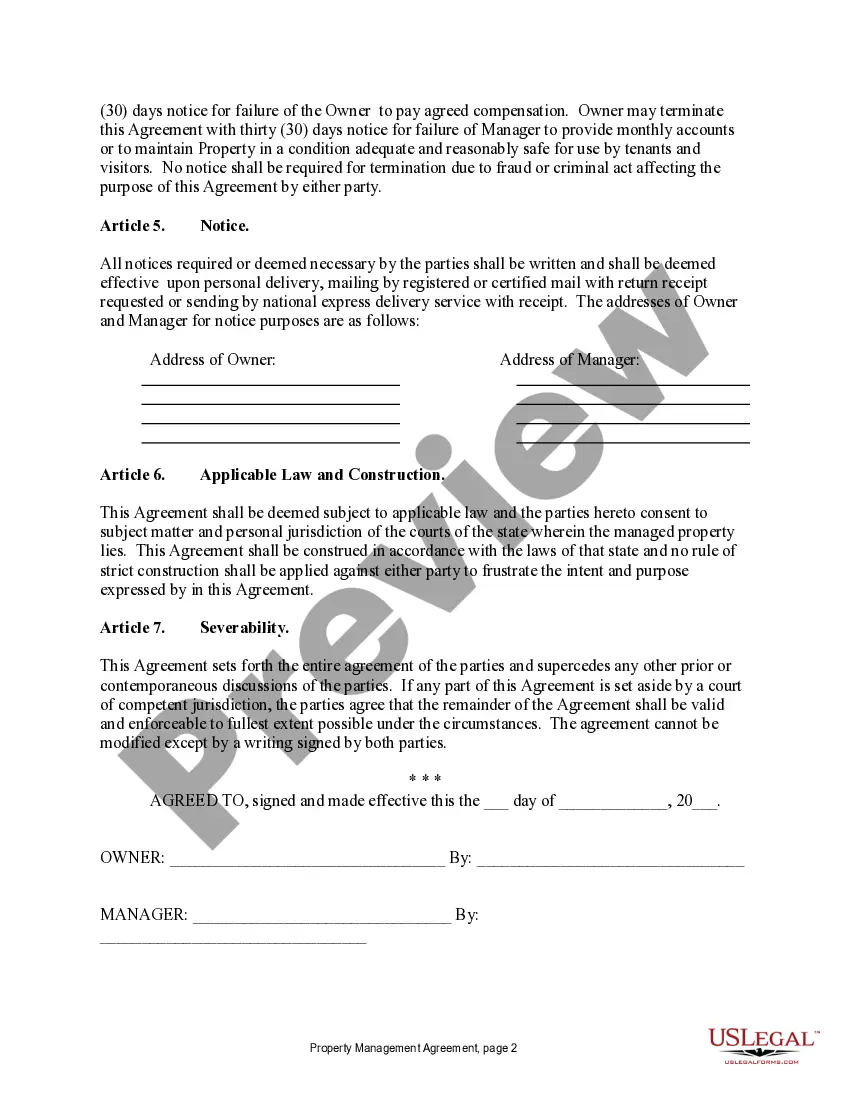
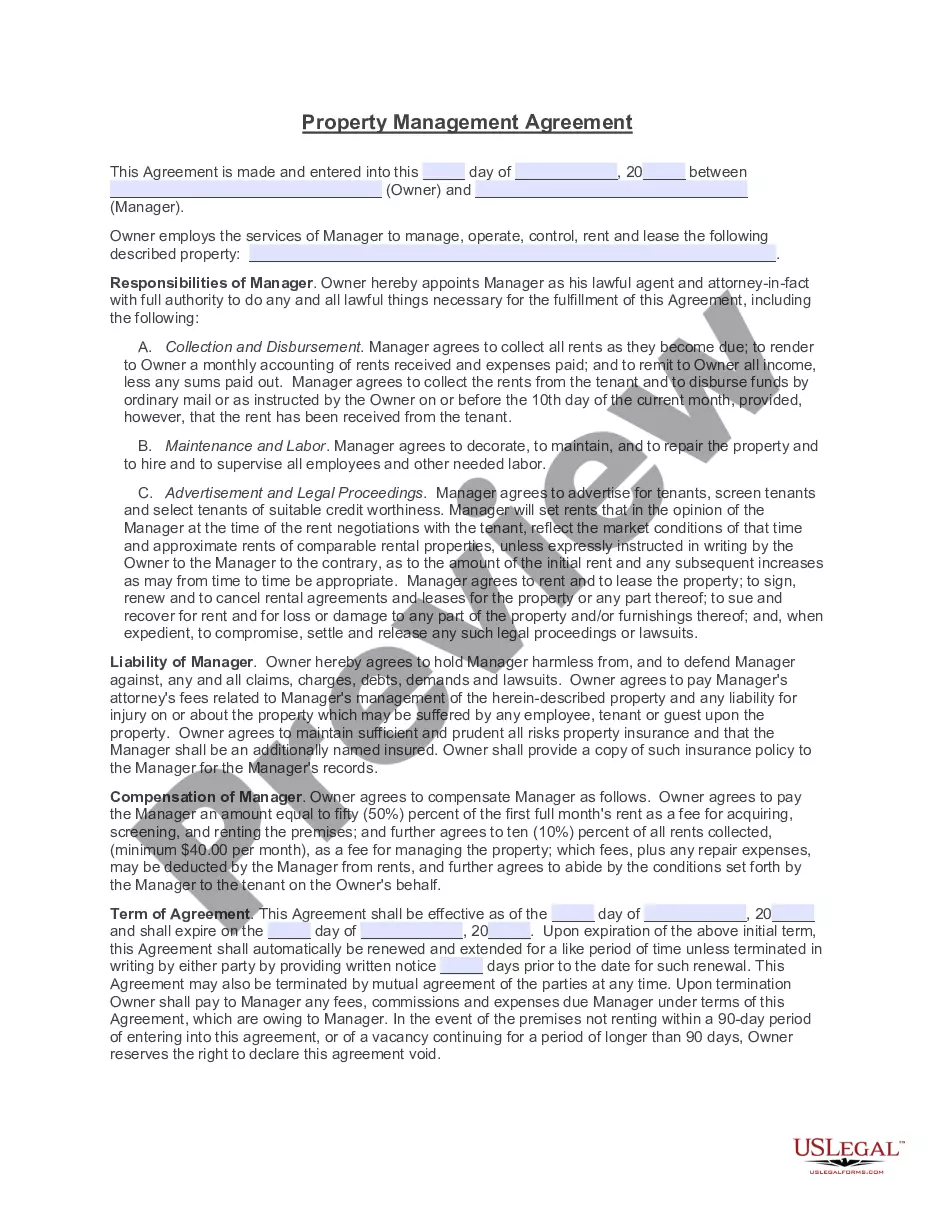
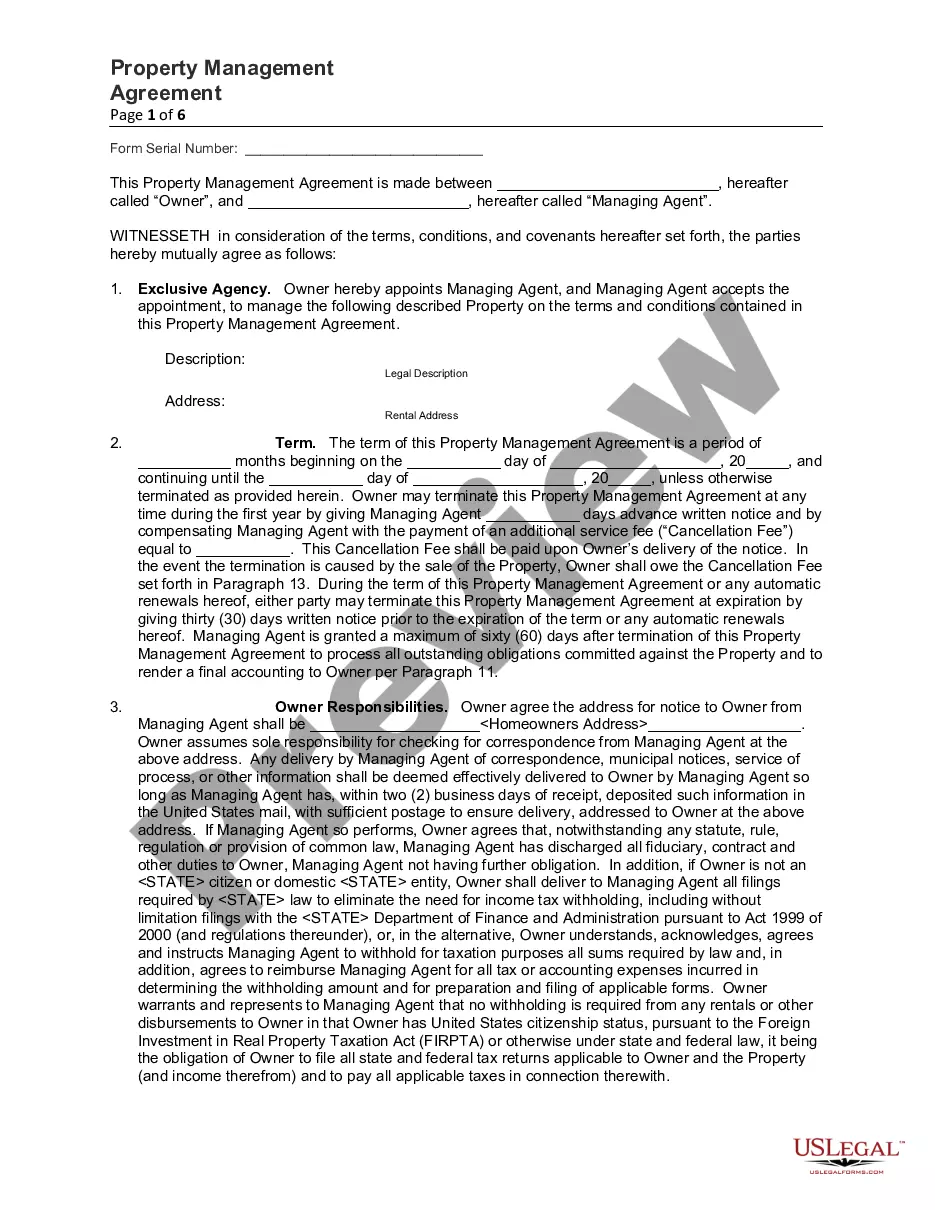
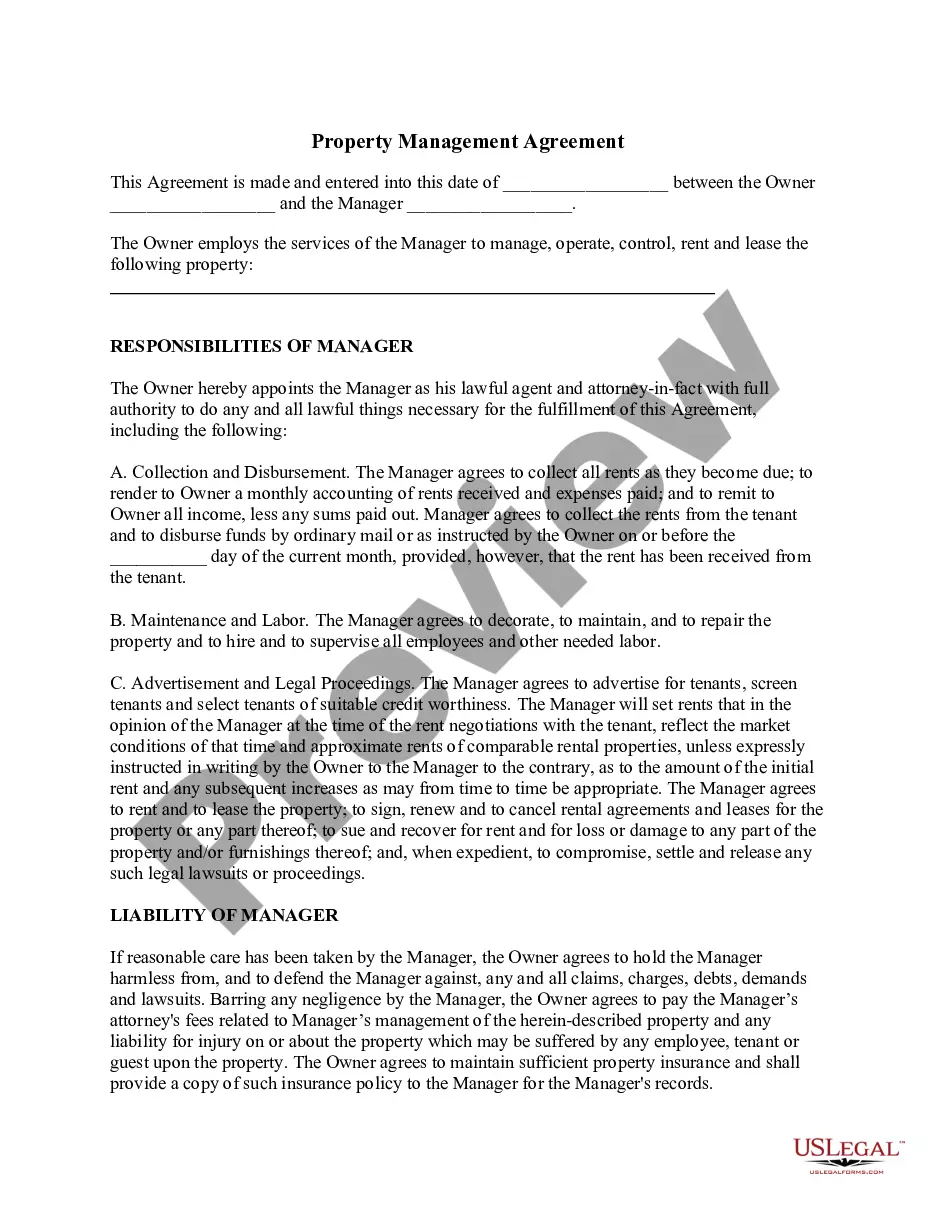
The Property Manager Agreement is an employment contract between a property owner and a property manager. This form outlines the terms and conditions under which a property manager is hired to manage and operate rental properties. It is designed to comply with state statutory law, detailing responsibilities for both parties and ensuring clarity in the property management relationship. Unlike other real estate agreements, this contract specifically addresses the ongoing obligations of property management services.
Main sections of this form
- Identification of the owner and manager, including their roles.
- Description of the property being managed.
- Duration of the agreement and automatic renewal terms.
- Conditions under which either party may terminate the agreement.
- Severability clause ensuring the agreement remains enforceable even if parts are invalidated.
Situations where this form applies
This Property Manager Agreement should be used when a property owner wishes to hire a property manager to oversee the rental and management of their property. It is particularly useful in situations where the owner is unable or unwilling to manage the property directly and needs a professional to handle tenant relations, maintenance, and financial reporting.
Who needs this form
- Property owners who are renting out residential or commercial properties.
- Property managers seeking formal agreements with property owners.
- Real estate professionals involved in property management services.
- Investors who want to maintain a clear understanding of their responsibilities regarding property management.
How to complete this form
- Identify the parties involved: fill in the names and contact information for both the property owner and the property manager.
- Specify the property: provide a clear legal description or address of the property to be managed.
- Enter the term of the agreement: set the duration, typically one year, and detail renewal conditions.
- Describe termination conditions: outline under what circumstances either party can terminate the agreement.
- Sign and date the agreement: both parties must sign the document to make it legally binding.
Does this form need to be notarized?
This form usually doesn’t need to be notarized. However, local laws or specific transactions may require it. Our online notarization service, powered by Notarize, lets you complete it remotely through a secure video session, available 24/7.
Get your form ready online
Our built-in tools help you complete, sign, share, and store your documents in one place.
Make edits, fill in missing information, and update formatting in US Legal Forms—just like you would in MS Word.
Download a copy, print it, send it by email, or mail it via USPS—whatever works best for your next step.
Sign and collect signatures with our SignNow integration. Send to multiple recipients, set reminders, and more. Go Premium to unlock E-Sign.
If this form requires notarization, complete it online through a secure video call—no need to meet a notary in person or wait for an appointment.
We protect your documents and personal data by following strict security and privacy standards.

Make edits, fill in missing information, and update formatting in US Legal Forms—just like you would in MS Word.

Download a copy, print it, send it by email, or mail it via USPS—whatever works best for your next step.

Sign and collect signatures with our SignNow integration. Send to multiple recipients, set reminders, and more. Go Premium to unlock E-Sign.

If this form requires notarization, complete it online through a secure video call—no need to meet a notary in person or wait for an appointment.

We protect your documents and personal data by following strict security and privacy standards.
Common mistakes
- Failing to provide a clear description of the property being managed.
- Not specifying the payment terms and conditions for services rendered by the property manager.
- Overlooking the importance of detailing termination conditions, which can lead to disputes in the future.
Benefits of completing this form online
- Convenient downloadable format allows for quick access and use.
- Editable template to customize the agreement as per specific needs of the parties.
- Reliability assured as the form is drafted by licensed attorneys to comply with current laws.
Legal use & context
- The Property Manager Agreement is a legally binding contract that establishes the roles and obligations of both parties.
- It is enforceable in a court of law, provided it is completed correctly and signed by both parties.
- The agreement protects the interests of both the property owner and the manager, outlining clear expectations.
What to keep in mind
- The Property Manager Agreement formalizes the relationship between property owners and managers.
- It includes essential components like property description, term, and termination clauses.
- Using this form online offers convenience and ease of editing for specific needs.
Looking for another form?
Form popularity
FAQ
Check For a Cancellation Policy. There is a likely a specific cancellation policy in your management agreement. Send the Cancellation Notice in Writing. Prepare For Possible Costs. Make Sure the Management Company Notifies the Tenant. Collect Necessary Documents and Materials. Tell Them Why You're Cancelling.
Government Issued Real Estate License & REALTOR® License: Many states, including Ohio, require that a property manager have a real estate broker's license, as well; the only exception to this law is a property owner.
Most property managers are required to hold a property management license or a real estate broker's license in order to conduct real estate transactions, which includes those related to managing and leasing rental properties. Only a couple of states do not have this requirement.
The percentage collected will vary, but is traditionally between 8% and 12% of the gross monthly rent. Managers will often charge a lower percentage, between 4% and 7%, for properties with 10 units or more or for commercial properties, and a higher percentage, 10% or more, for smaller or residential properties.
Property management isn't worth the money to some investors.One important note, even if you choose to manage your own properties it pays to have a backup plan in case you're no longer able to handle them. For others investing in real estate, there's no way they'd choose to manage their own rental properties.
Undertake a certificate-level course in real estate. To become licensed as a property manager in your state, you can complete a Certificate IV (QLD and NSW) or a Certificate of Registration or Licensing Program (all states).
What is a property manager's first responsibility to the owner? To realize the maximum profit on the property that is consistent with the owner's instructions.
A property manager costs approximately 7-10% of your total rental income, however the services and expertise offered by a good property manager is worth much much more than this fee, plus in many cases the agents service fee is tax deductable.
In Ohio, subject to limited exceptions, property management companies must have a real estate broker's license. While there is no specific Ohio statute governing property managers, Chapter 4735 of the Ohio Revised Code governing Real Estate Brokers is dispositive.