North Dakota Financial Statements only in Connection with Prenuptial Premarital Agreement
Overview of this form
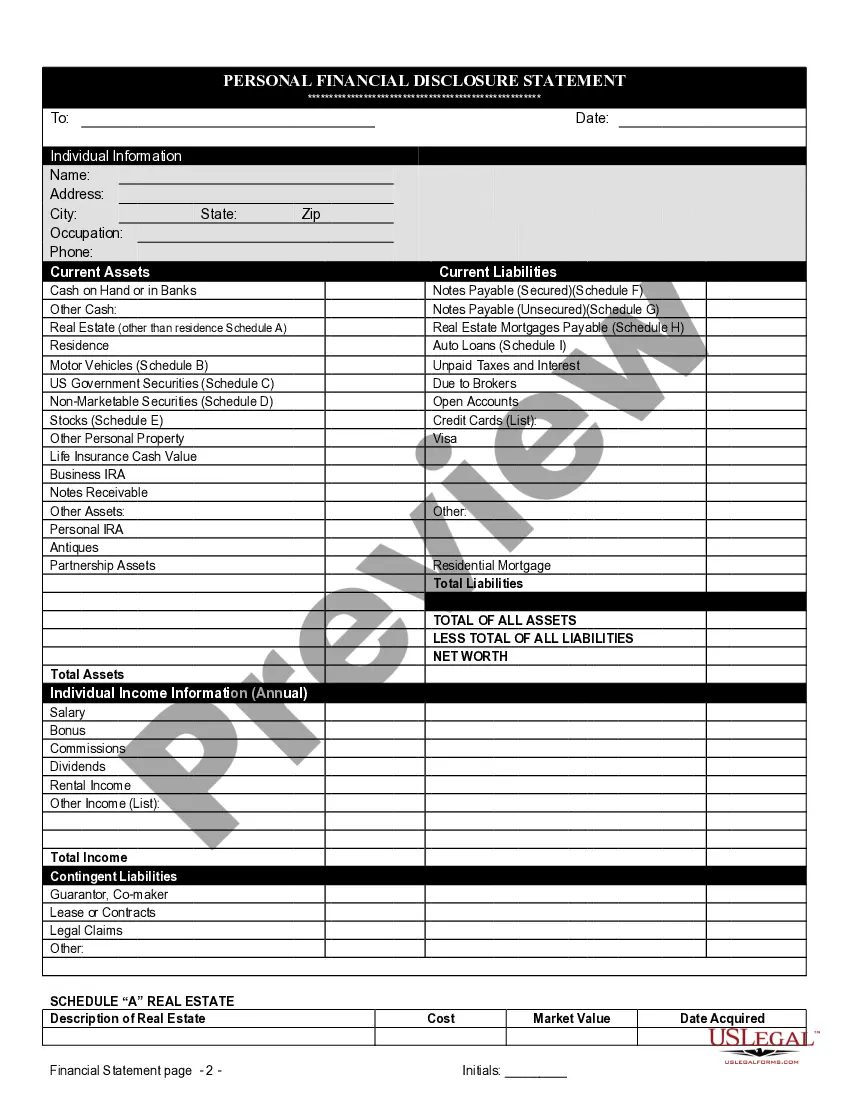
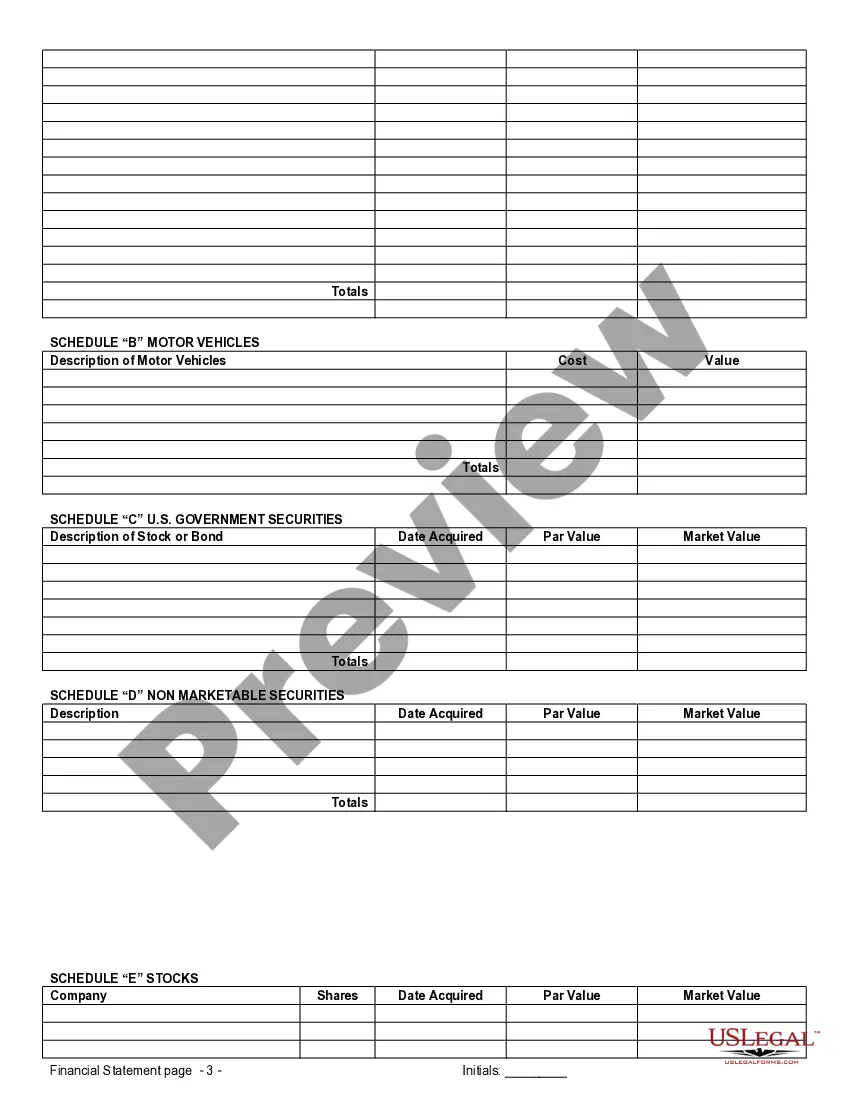
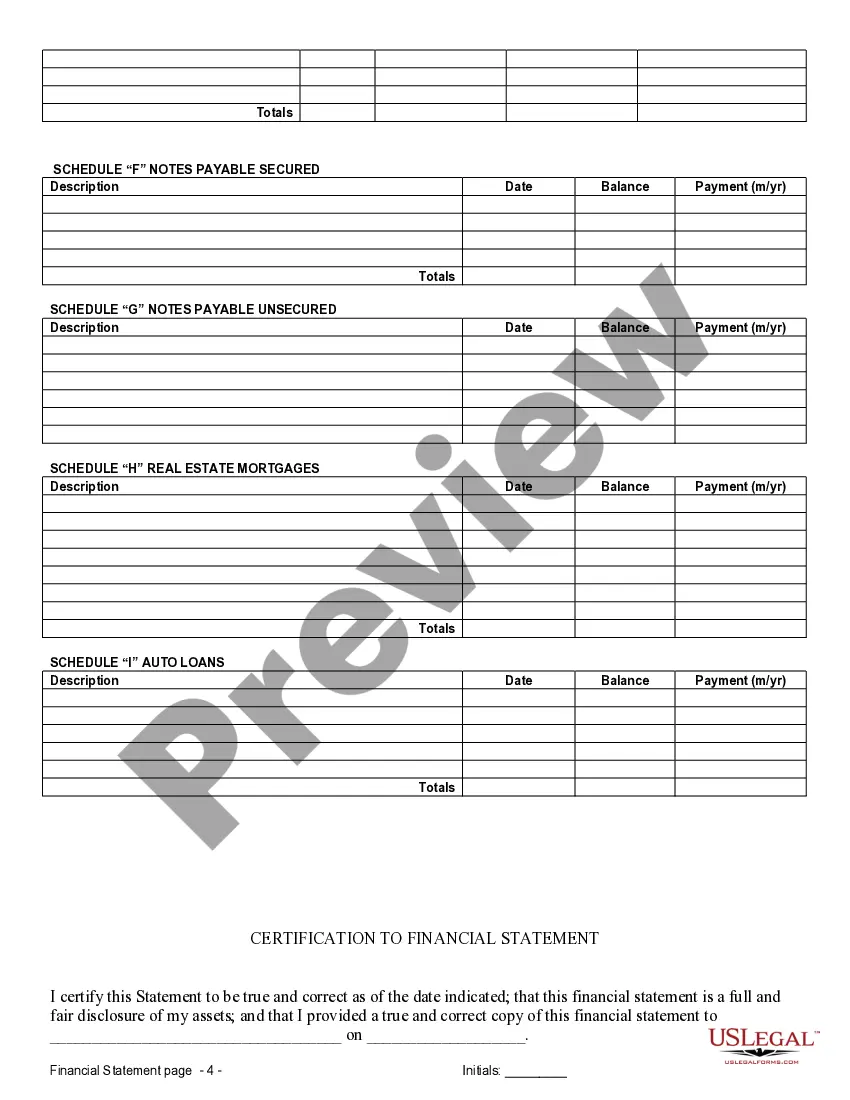
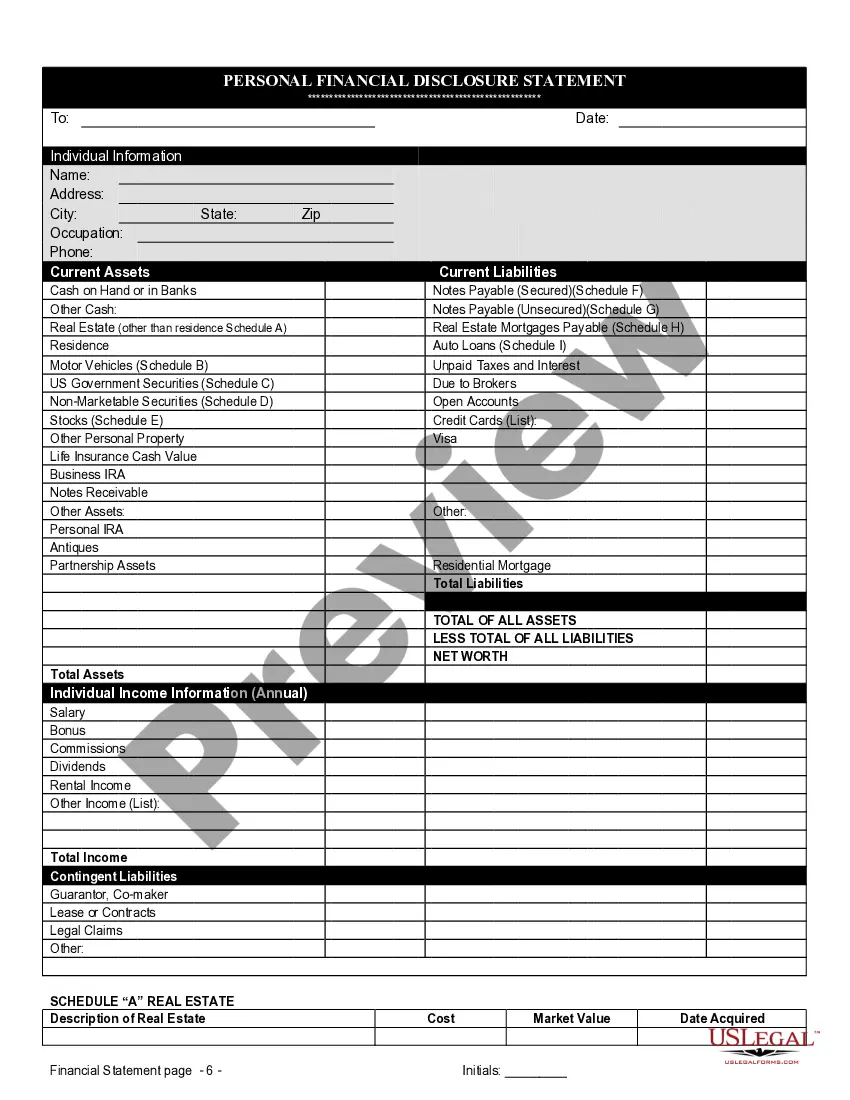
The Financial Statements only in Connection with Prenuptial Premarital Agreement is a legal form that provides a detailed disclosure of financial assets and liabilities for both parties entering a prenuptial agreement. This form ensures transparency during the agreement process, allowing each party to understand the other's financial situation, which is essential for a fair agreement. It differs from other financial forms by specifically tailoring its content to premarital situations, emphasizing full disclosure of finances before marriage.
Key components of this form
- Personal information of each party, including names and signatures.
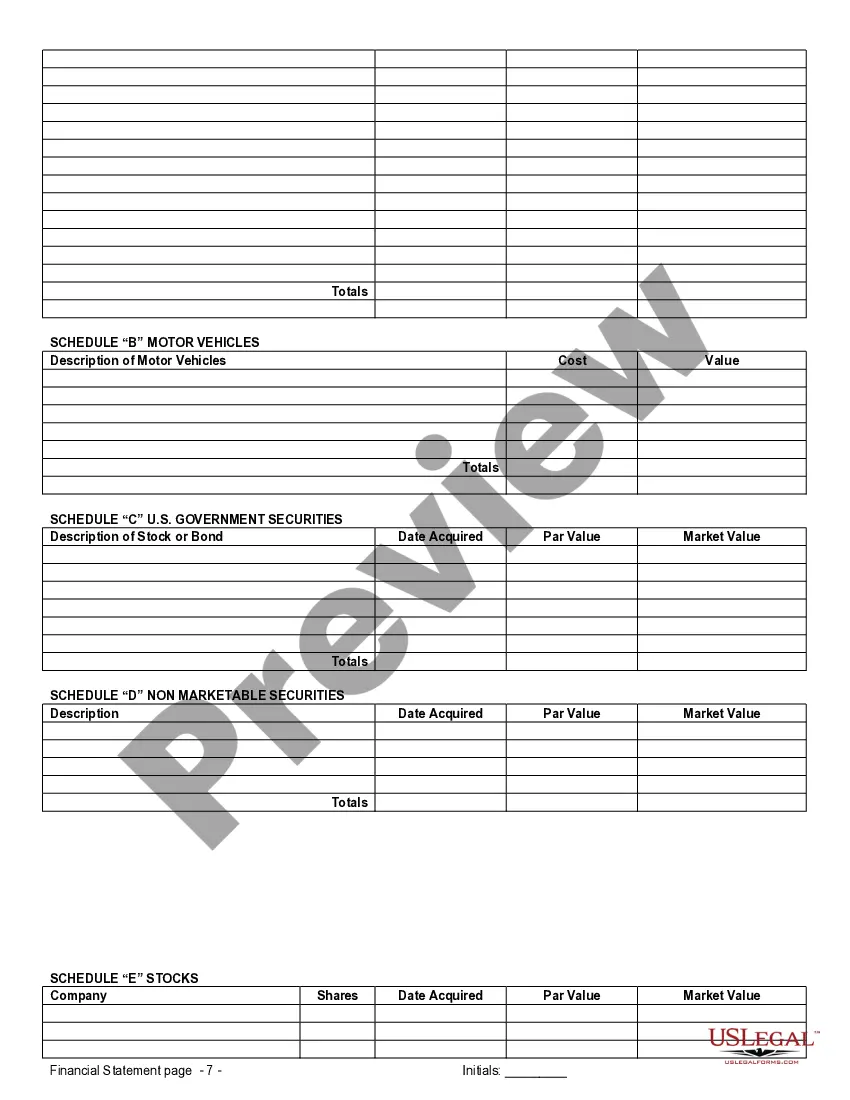
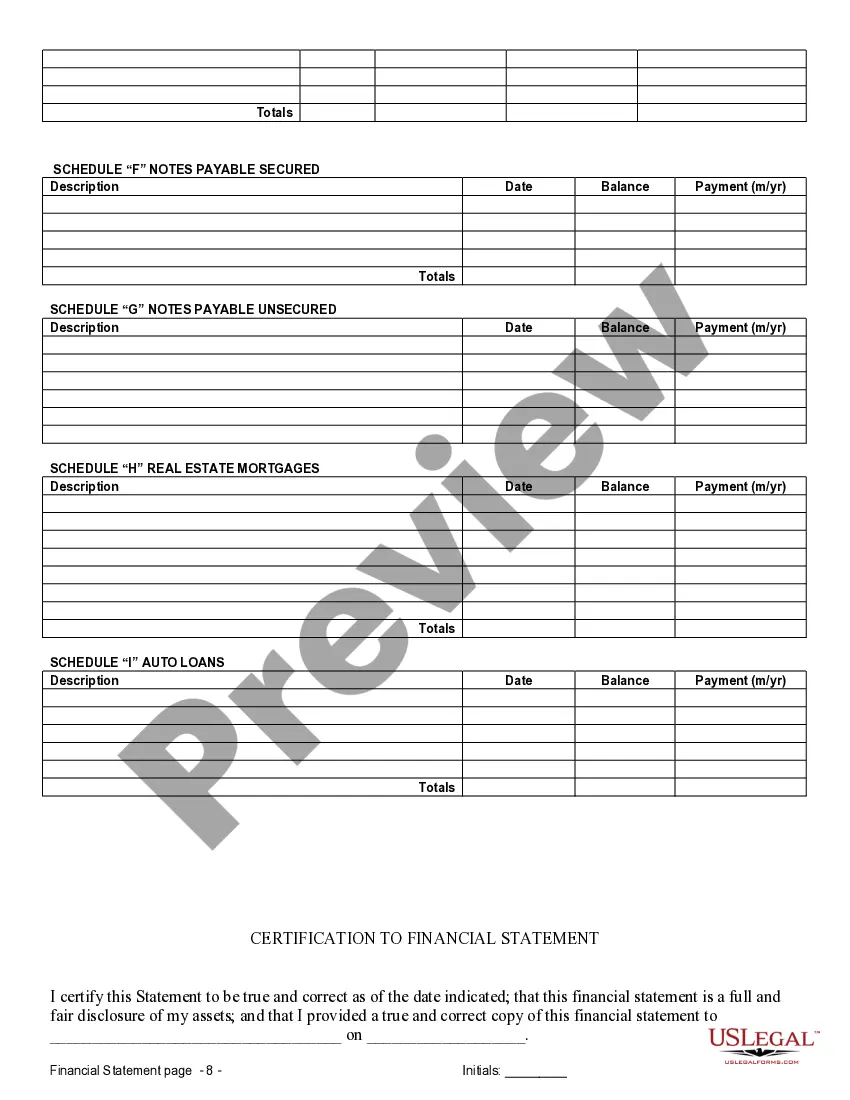
- Detailed sections for listing assets, liabilities, and net worth.
- Initials on each page to confirm acknowledgment of the content.
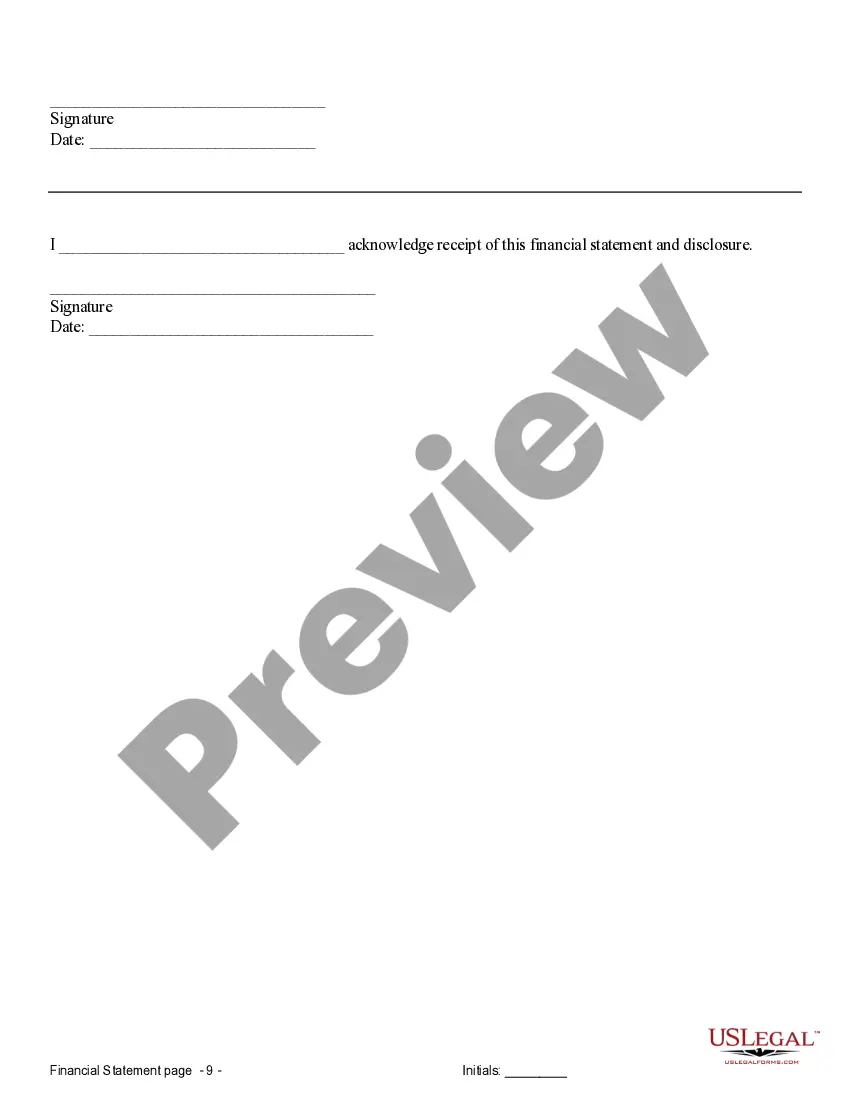
- Confirmation of receipt by the other party through signatures.
- Option to attach additional pages if extra space is needed for disclosures.

When this form is needed
This form should be used when both parties are preparing to enter into a prenuptial agreement. It is necessary to disclose complete financial information to facilitate open discussions about financial expectations and responsibilities within the marriage. Utilizing this form can help prevent potential disputes related to financial matters during the marriage or in the event of a divorce.
Who this form is for
- Couples planning to get married who wish to create a prenuptial agreement.
- Individuals who want to ensure transparency in financial matters before marriage.
- Parties seeking to avoid potential financial disputes in the future.
Instructions for completing this form
- Begin by entering your personal information at the top of the form, including your name and signature.
- List all your assets in the designated section, ensuring full disclosure.
- Detail any liabilities, including debts and obligations.
- Initial each page of the form to confirm that you have read and understand the contents.
- Both parties should sign the last page, acknowledging receipt of each other's financial statement.
- If additional space is required, attach extra pages to provide comprehensive financial data.
Notarization requirements for this form
This form does not typically require notarization unless specified by local law. It is advisable to consult local regulations to confirm any notarization requirements for prenuptial agreements.
Get your form ready online
Our built-in tools help you complete, sign, share, and store your documents in one place.
Make edits, fill in missing information, and update formatting in US Legal Forms—just like you would in MS Word.
Download a copy, print it, send it by email, or mail it via USPS—whatever works best for your next step.
Sign and collect signatures with our SignNow integration. Send to multiple recipients, set reminders, and more. Go Premium to unlock E-Sign.
If this form requires notarization, complete it online through a secure video call—no need to meet a notary in person or wait for an appointment.
We protect your documents and personal data by following strict security and privacy standards.

Make edits, fill in missing information, and update formatting in US Legal Forms—just like you would in MS Word.

Download a copy, print it, send it by email, or mail it via USPS—whatever works best for your next step.

Sign and collect signatures with our SignNow integration. Send to multiple recipients, set reminders, and more. Go Premium to unlock E-Sign.

If this form requires notarization, complete it online through a secure video call—no need to meet a notary in person or wait for an appointment.

We protect your documents and personal data by following strict security and privacy standards.
Typical mistakes to avoid
- Failing to provide complete and accurate information about assets and liabilities.
- Not initialing each page, which may lead to questions about acknowledgment of content.
- Forgetting to sign the last page, which is critical for validity.
- Not providing each party with a copy of the completed form.
Why complete this form online
- Convenience of filling out the form from anywhere at any time.
- Editability allows for easy updates to financial information as needed.
- Access to templates drafted by licensed attorneys ensures legal accuracy.
Looking for another form?
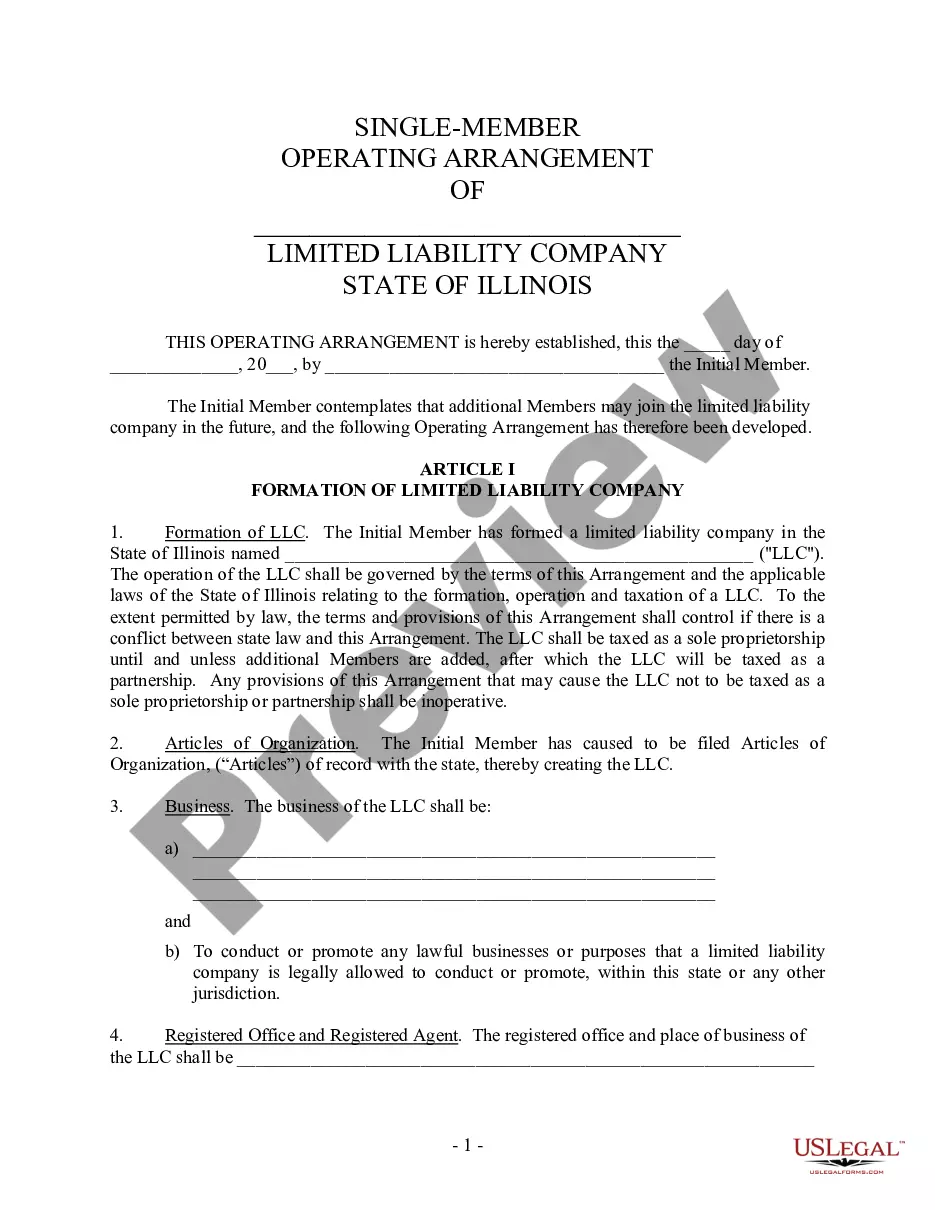
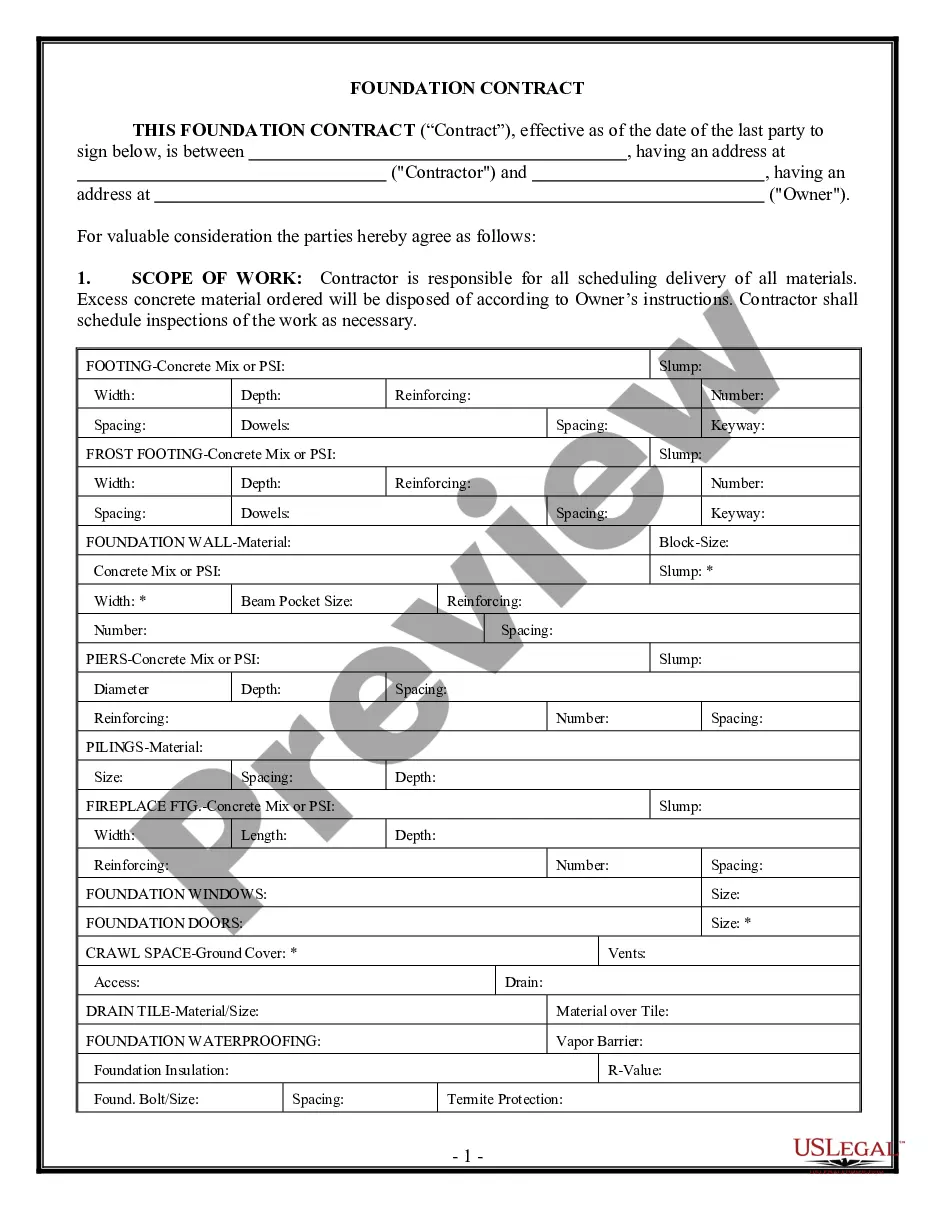
Form popularity
FAQ
In the event of divorce, a prenup can protect a spouse from being liable for any debt the other spouse brought into the marriage.A prenup can also protect any income or assets you earn during the marriage, as well as unearned income from a bequest or a trust distribution.
2. Prenups make you think less of your spouse. And at their root, prenups show a lack of commitment to the marriage and a lack of faith in the partnership.Ironically, the marriage becomes more concerned with money after a prenup than it would have been without the prenup.
One formality that many do not realize the importance of is a full and fair disclosure of assets and debts prior to the prenuptial agreement being signed. In other words, both parties are supposed to disclosure all the assets and debts that they are bringing into the marriage.
Prenups aren't just for the rich or famous more millennials are signing them before getting married, and you probably should too.Prenups set expectations for a division of assets and finances in the event of divorce. They may not be romantic to bring up, but most couples will benefit from having one.
Here are the top 10 reasons why a prenup could be invalid: There Isn't A Written Agreement: Premarital agreements are required to be in writing to be enforced. Not Correctly Executed: Each party is required to sign a premarital agreement prior to the wedding for the agreement to be deemed valid.
Just as a future asset can be protected by a prenup if adequately described, future income can also be treated as belonging to one partner but not both.
Despite the fact that a prenup is arranged before a marriage, you can still sign one after exchanging "I do's." This contract, known as a post-nuptial agreement, is drafted after marriage by those who are still married and either are contemplating separation or divorce or simply want to protect themselves from the
The three most common grounds for nullifying a prenup are unconscionability, failure to disclose, or duress and coercion.Duress and coercion can also invalidate a prenup. If the prenup was signed the day before your wedding, it may appear that the parties didn't have much time to fully review the agreement.
Prenuptial agreements can also protect each party from being responsible for any debts that existed prior to the marriage. Without an agreement, these debts can become marital property in some states if there's nothing that defines them otherwise.