North Carolina Last Will and Testament for Married person with Adult Children
What is this form?
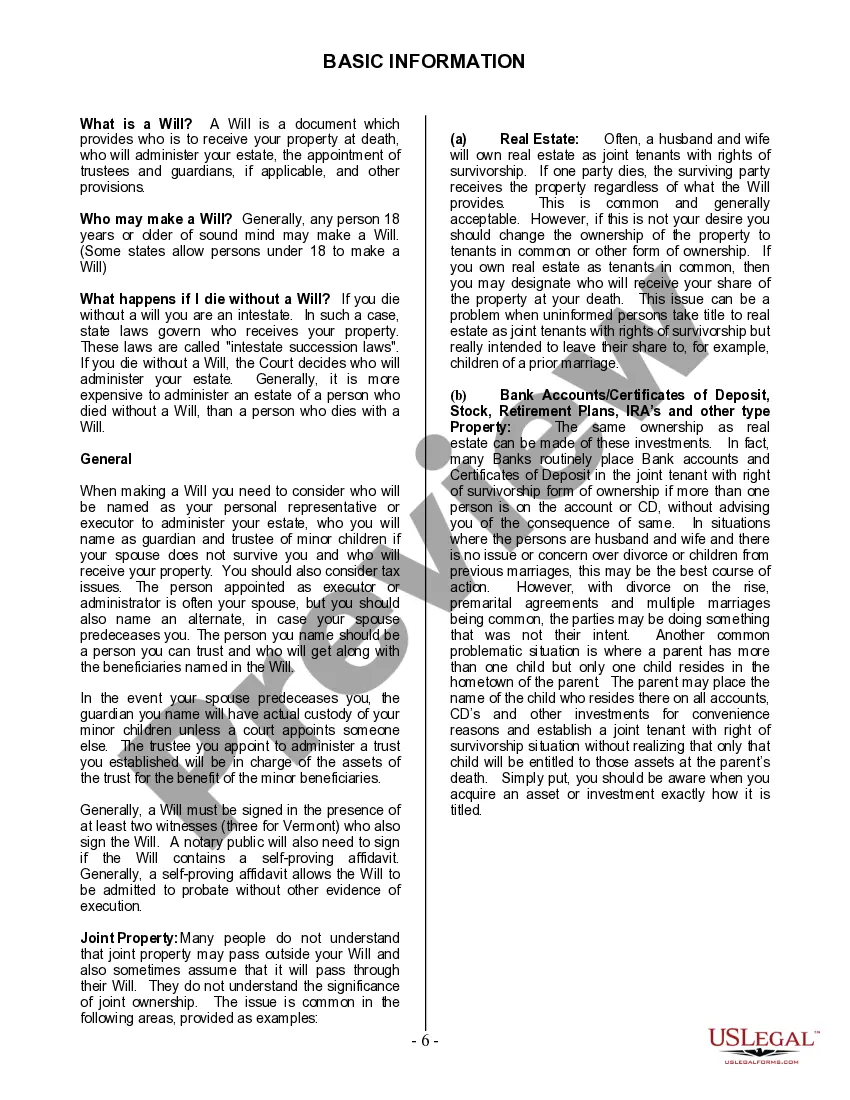
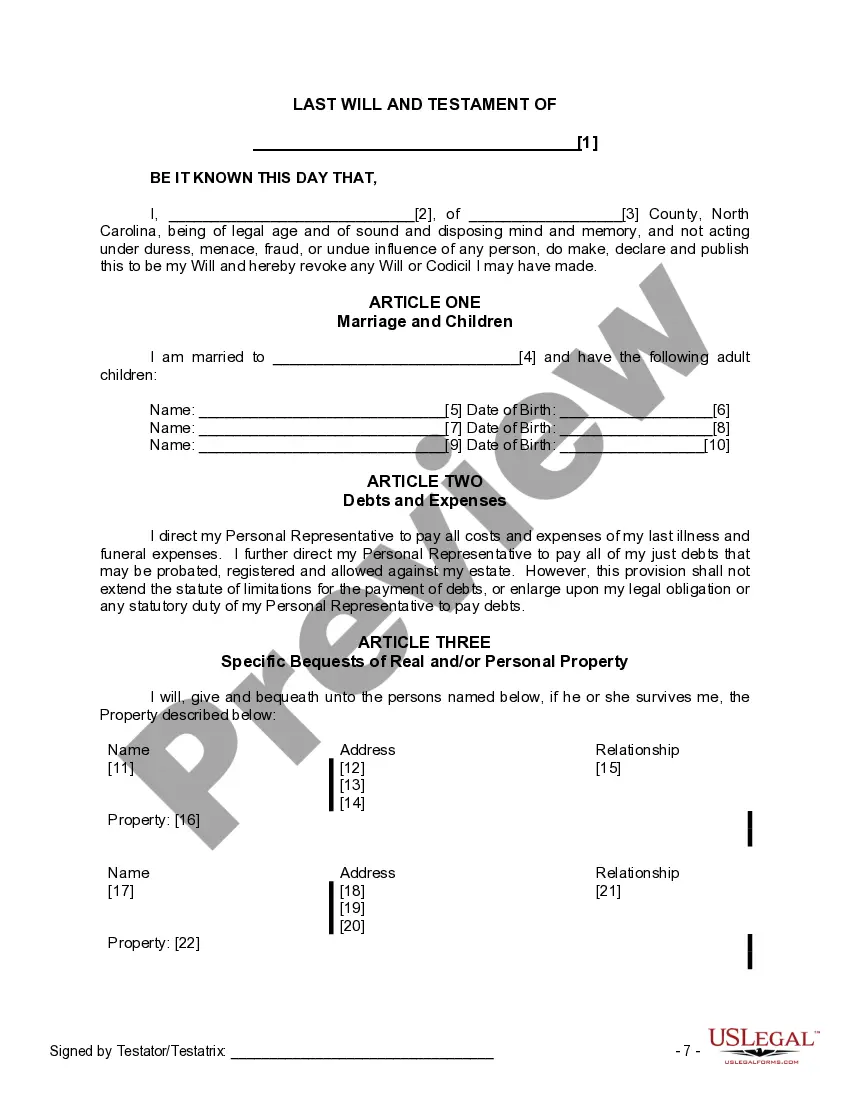
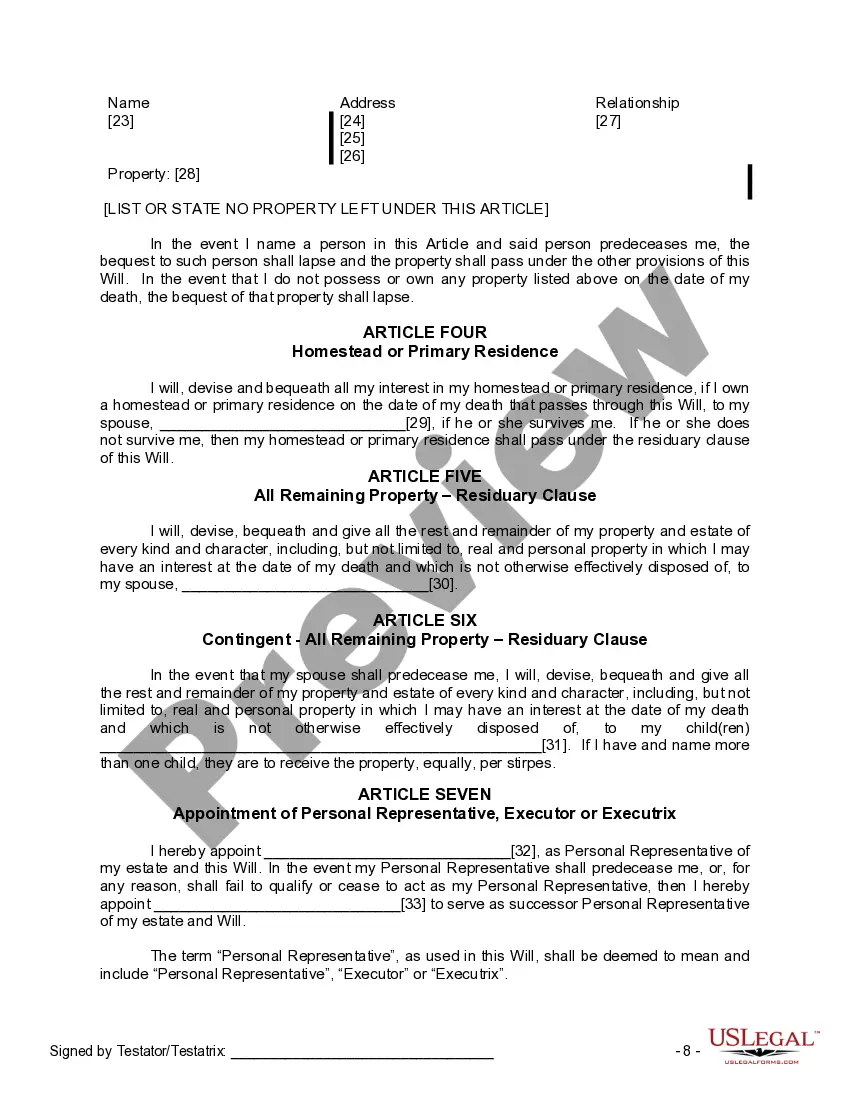
The Last Will and Testament for Married Person with Adult Children is a legal document that outlines how a married individual wants their assets distributed after their death. This form specifically addresses the needs of those with adult children, appoints a personal representative or executor, and incorporates provisions for both the spouse and children. Unlike wills meant for single individuals or those with minor children, this will recognizes the complexities of familial relationships within a marriage and provides a clear directive for asset distribution.
Key parts of this document
- Identification of the testator and revocation of prior wills.
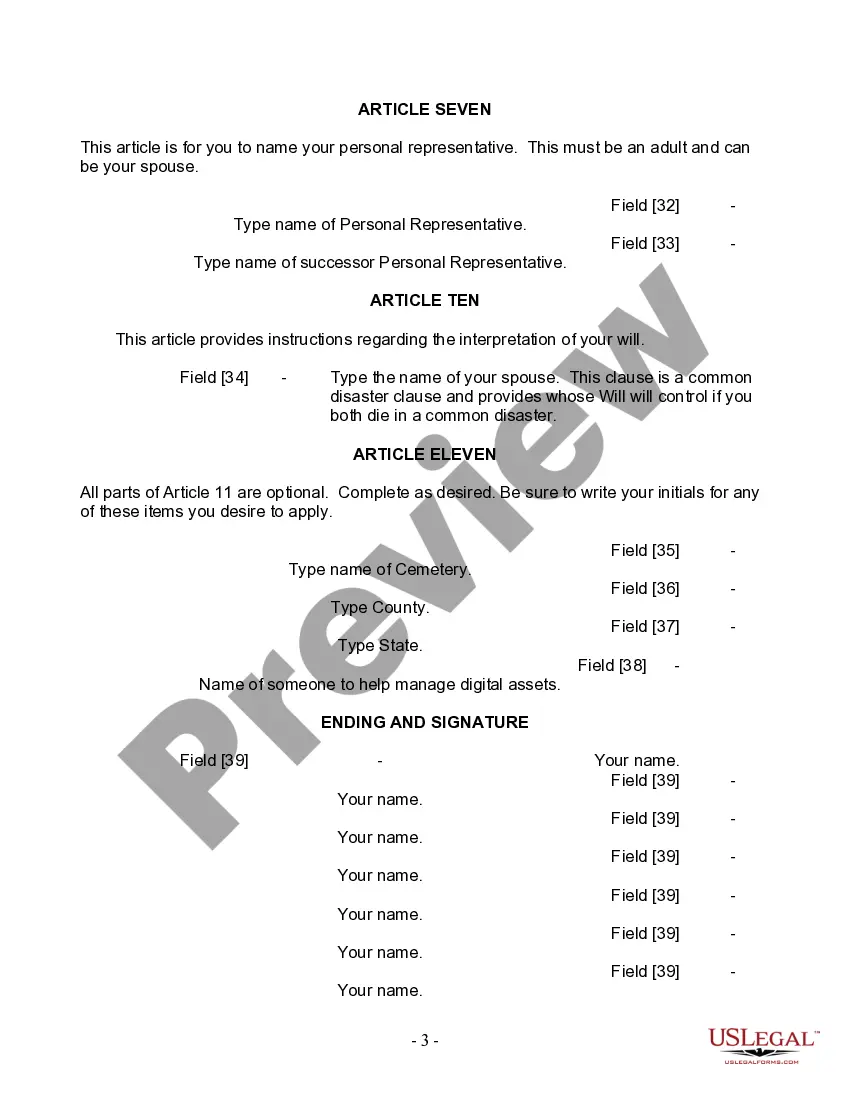
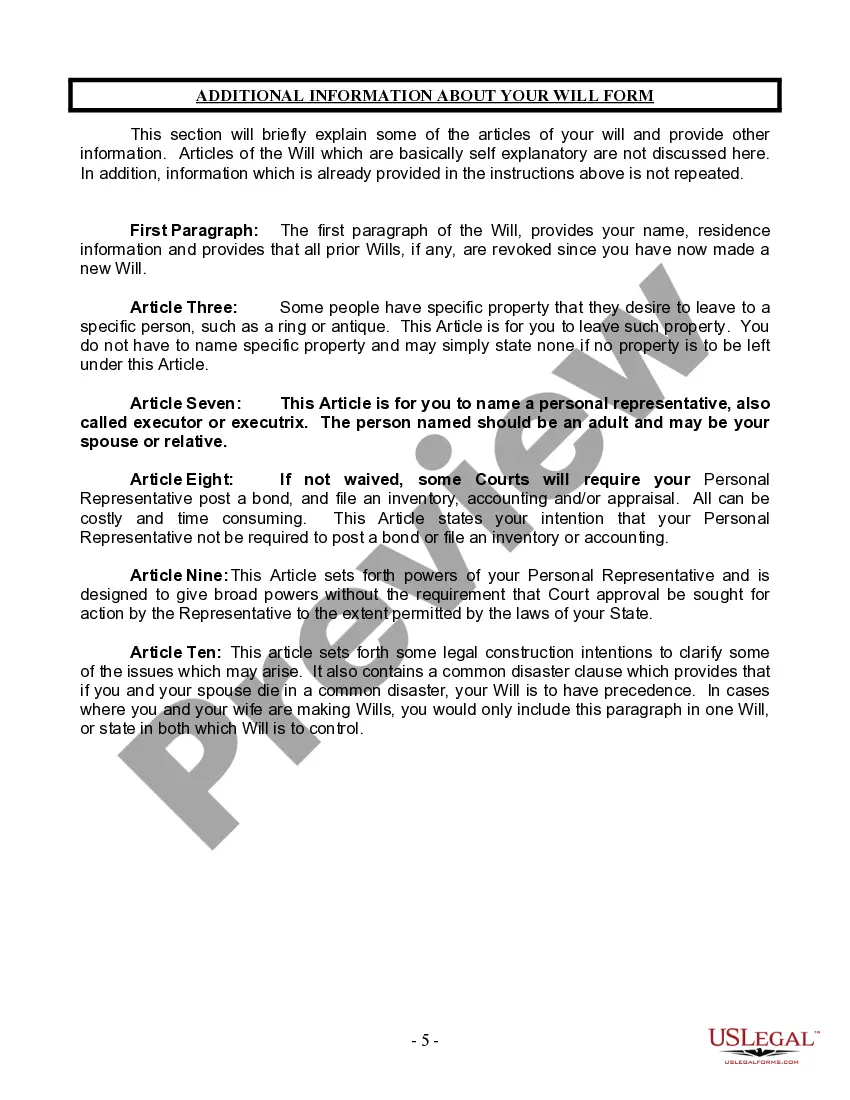
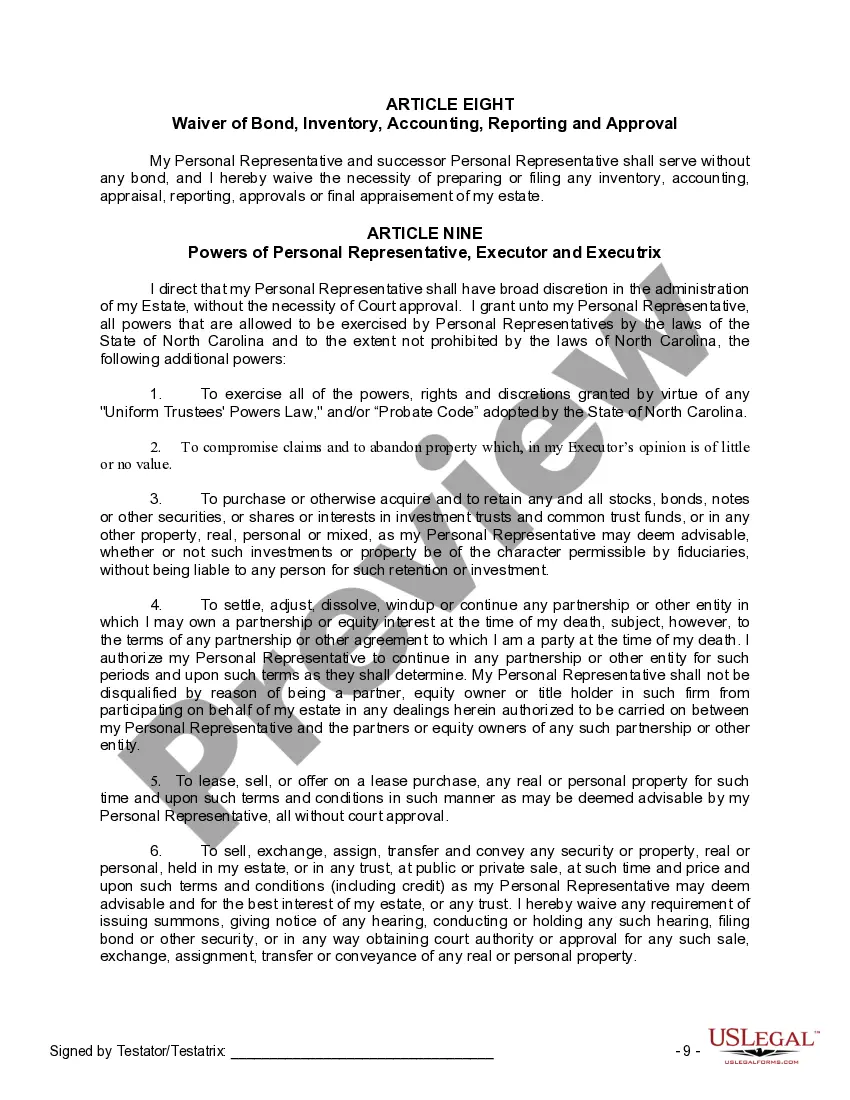
- Appointment of a personal representative to administer the estate.
- Provisions for specific bequests to named individuals.
- Designation of the spouse as the primary beneficiary of the homestead.
- Contingent clauses for asset distribution if the spouse predeceases the testator.
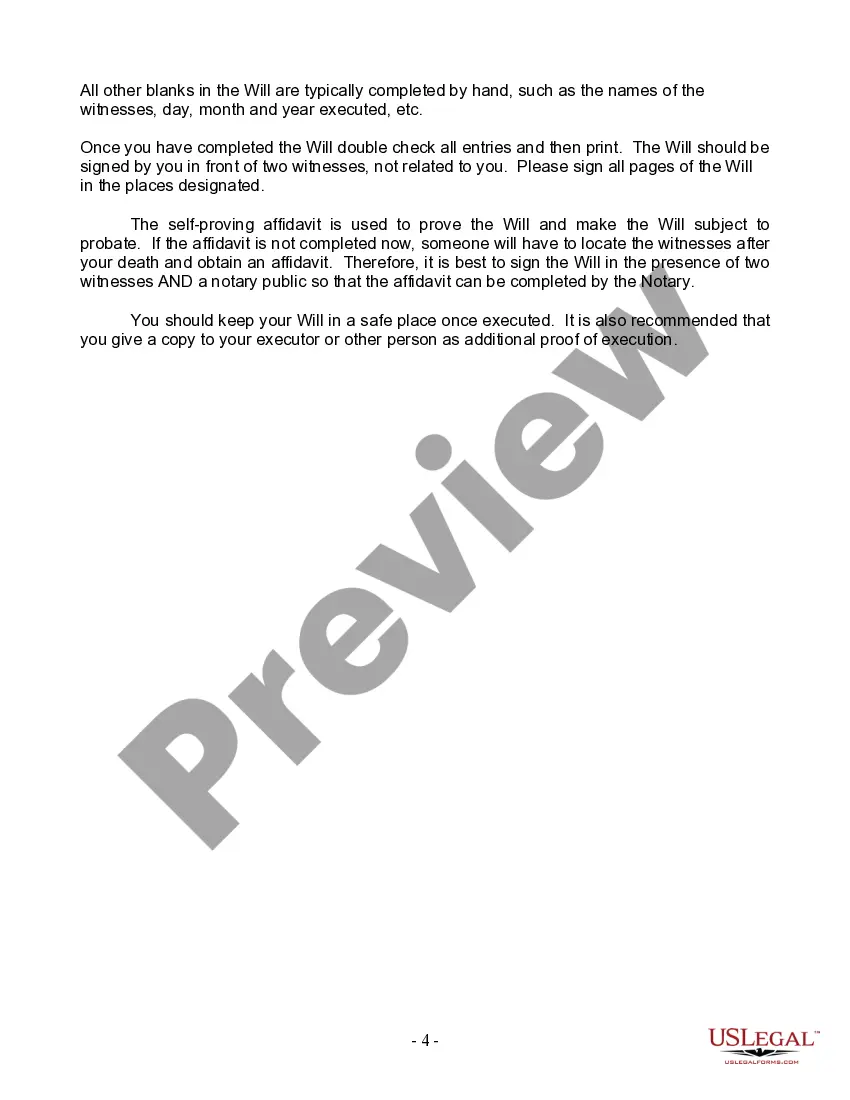
- Execution requirements including witnesses and notarization options.

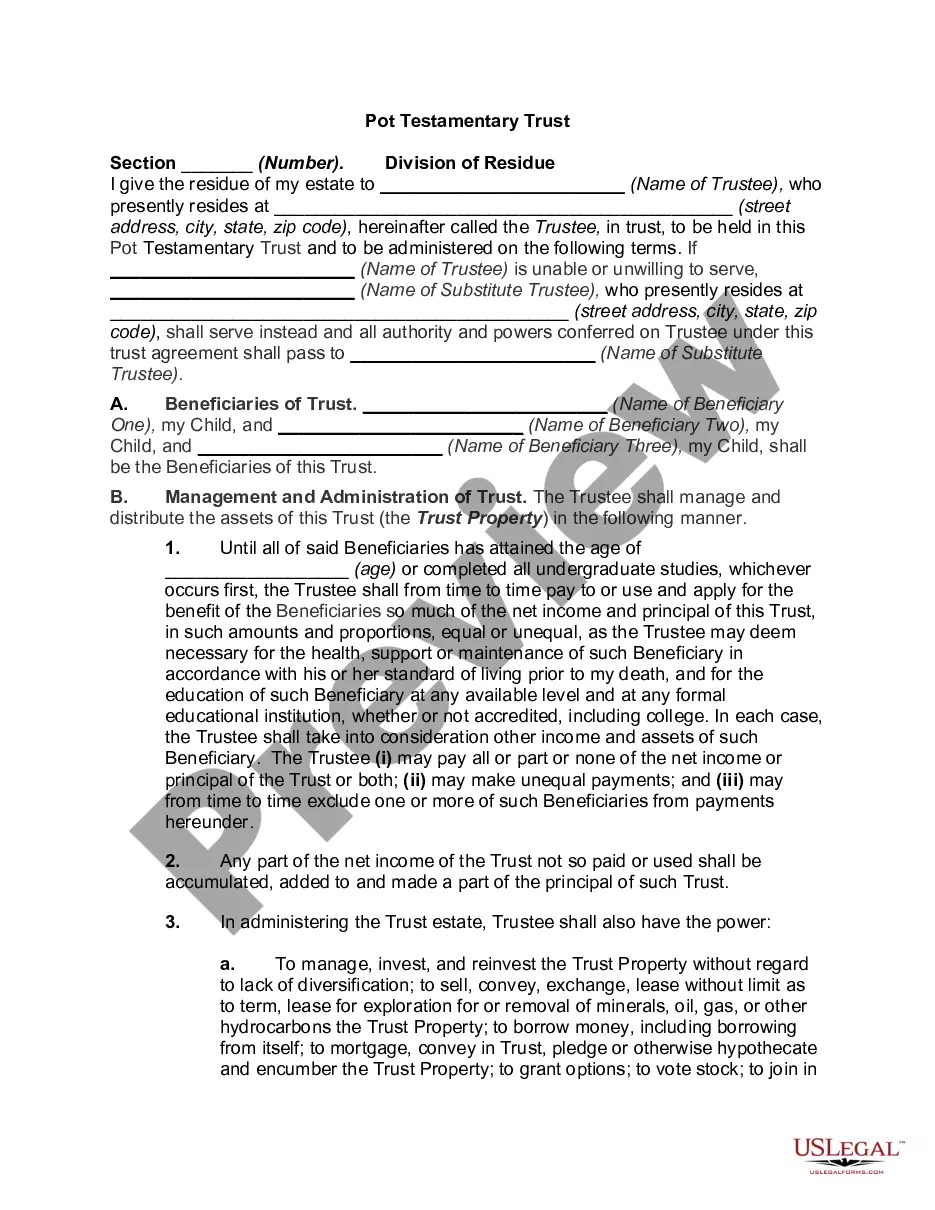
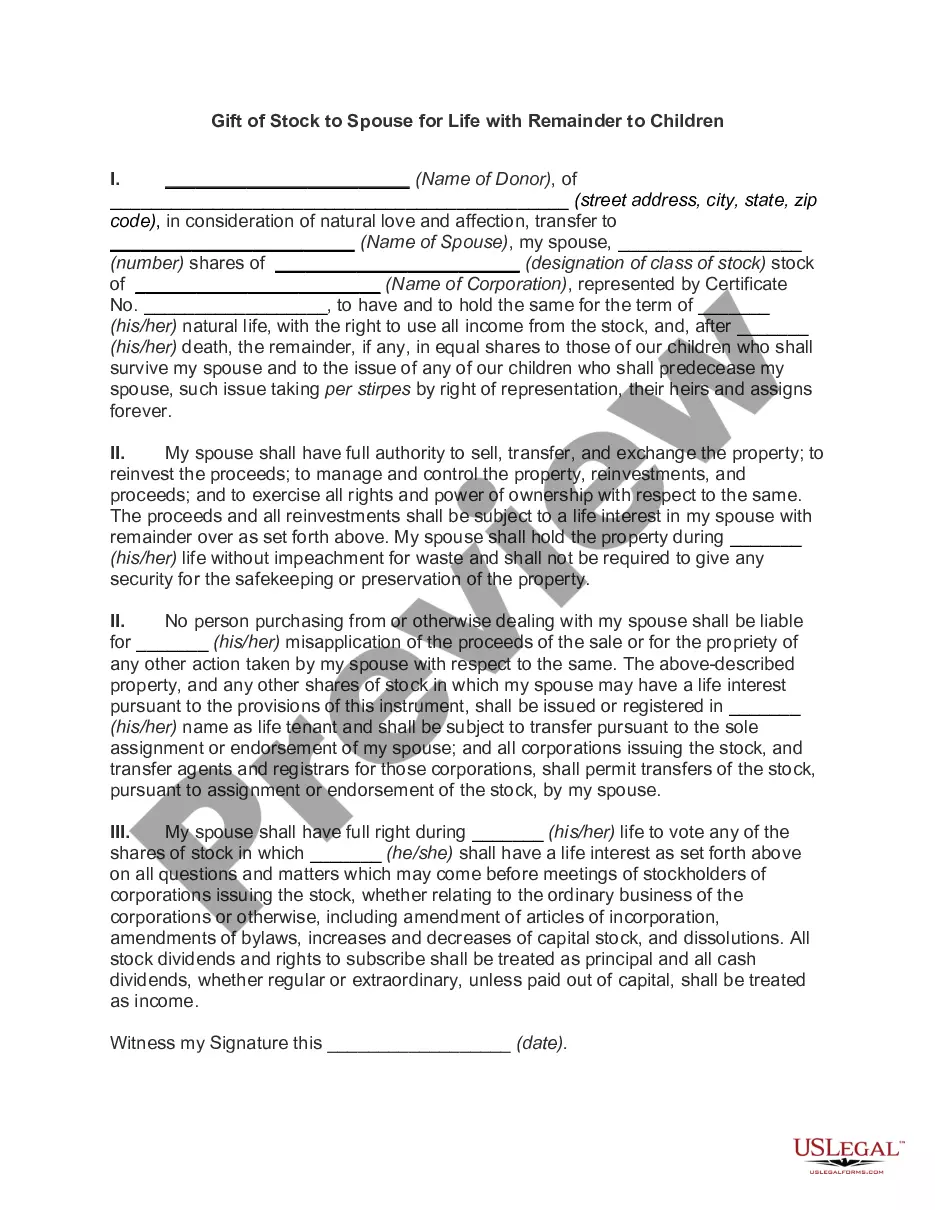



Situations where this form applies
This form should be used when a married individual with adult children wishes to outline their wishes regarding asset distribution after death. It is essential for ensuring that legal and personal wishes are honored, reducing potential disputes among heirs. Scenarios that warrant this will include: planning for possible future incapacity, establishing clear inheritance directives, and ensuring peace of mind regarding asset distribution among family members.
Who can use this document
- Any married individual with one or more adult children who wishes to create a legally binding will.
- Individuals wanting to specify particular assets for specific beneficiaries.
- Those looking to appoint an executor who will effectively manage their estate after death.
- Married persons who want to provide clear guidance on distributions to their spouse and children.
How to prepare this document
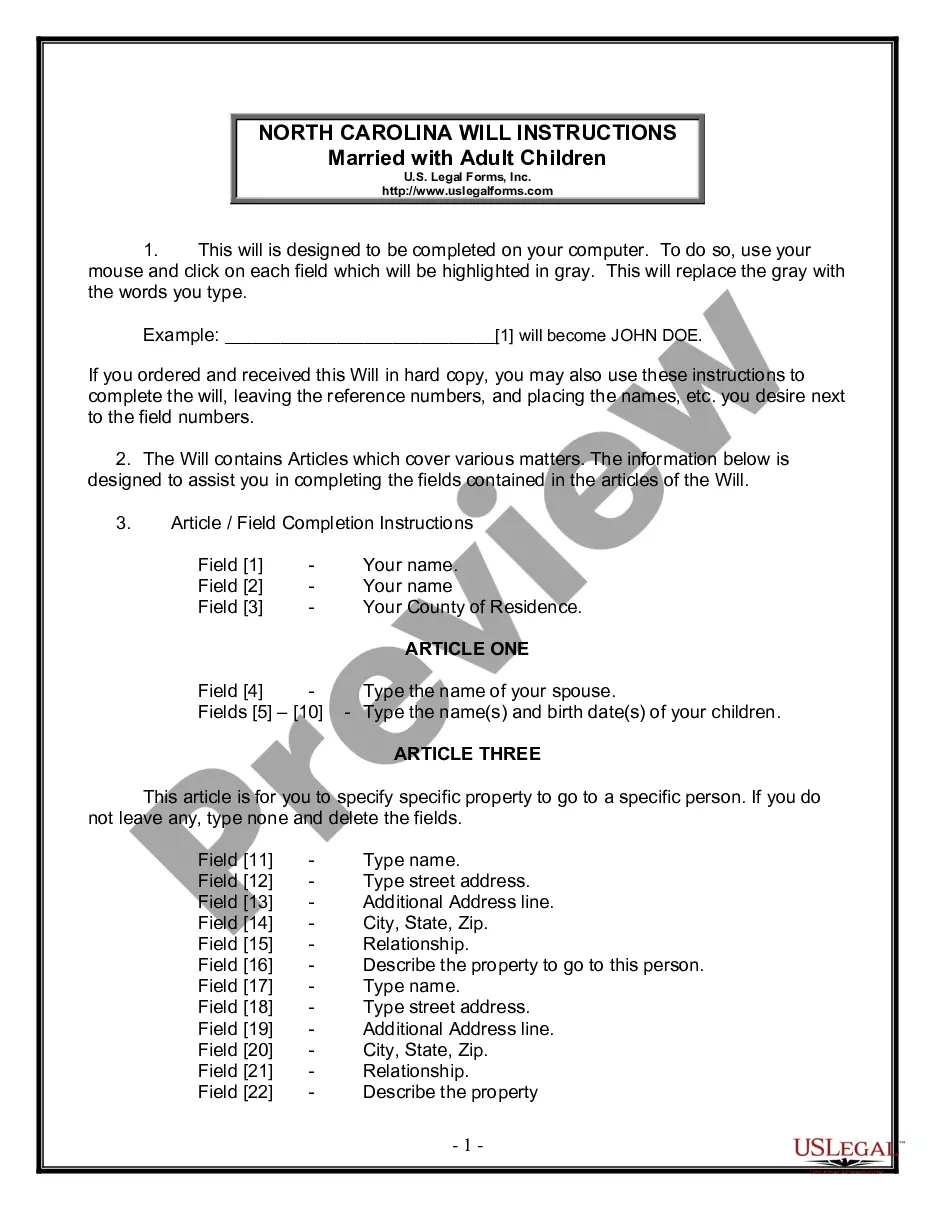
- Begin by entering your full name and county of residence at the top of the document.
- List your spouseâs name and the names and birth dates of your adult children.
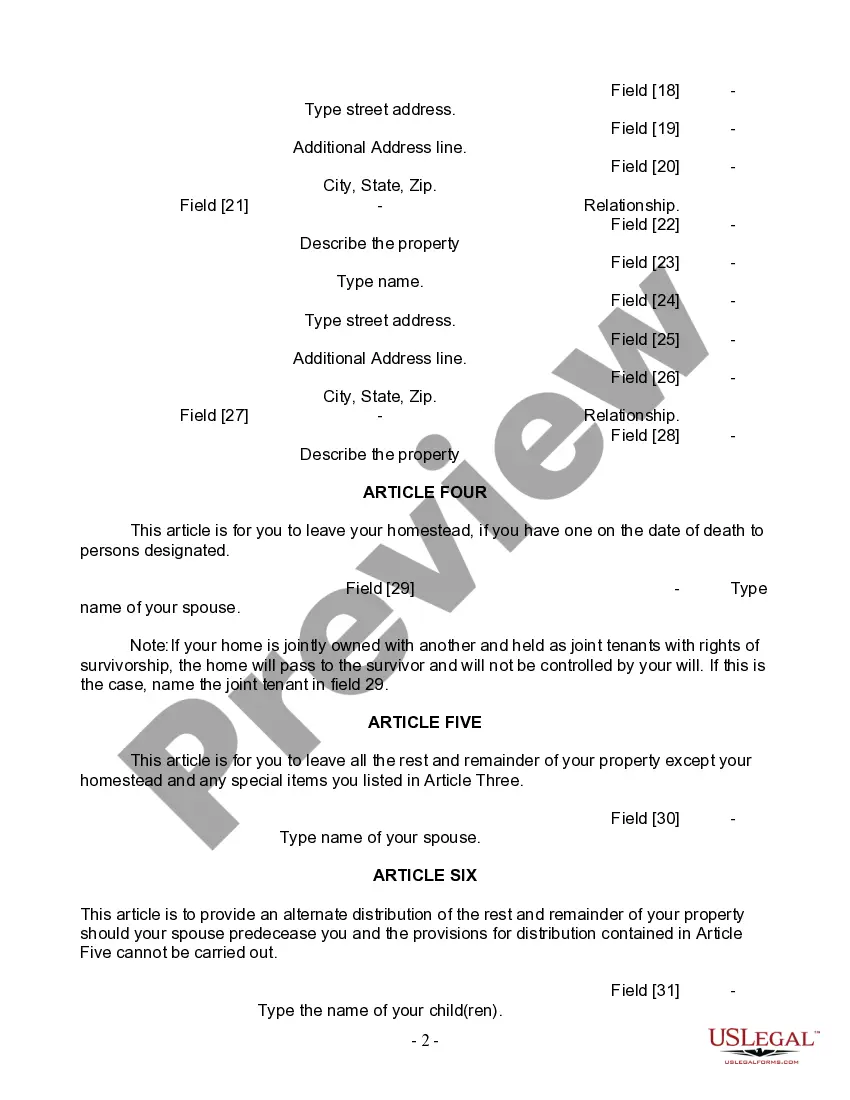
- Specify any specific property bequests to individuals, or state ânoneâ if there are no specific gifts.
- Identify your personal representative and any successor representatives.
- Complete the signature section in the presence of two witnesses and notate the date.
Does this form need to be notarized?
Yes, this form must be notarized to be legally valid if you opt to include a self-proving affidavit. This ensures that the will is accepted during the probate process without the need for further testimony from witnesses. US Legal Forms provides integrated online notarization options, allowing you to securely complete the notarization through video call at your convenience.
Get your form ready online
Our built-in tools help you complete, sign, share, and store your documents in one place.
Make edits, fill in missing information, and update formatting in US Legal Forms—just like you would in MS Word.
Download a copy, print it, send it by email, or mail it via USPS—whatever works best for your next step.
Sign and collect signatures with our SignNow integration. Send to multiple recipients, set reminders, and more. Go Premium to unlock E-Sign.
If this form requires notarization, complete it online through a secure video call—no need to meet a notary in person or wait for an appointment.
We protect your documents and personal data by following strict security and privacy standards.

Make edits, fill in missing information, and update formatting in US Legal Forms—just like you would in MS Word.

Download a copy, print it, send it by email, or mail it via USPS—whatever works best for your next step.

Sign and collect signatures with our SignNow integration. Send to multiple recipients, set reminders, and more. Go Premium to unlock E-Sign.

If this form requires notarization, complete it online through a secure video call—no need to meet a notary in person or wait for an appointment.

We protect your documents and personal data by following strict security and privacy standards.
Common mistakes to avoid
- Failing to have the will signed by the necessary witnesses.
- Not updating the will after major life changes such as divorce or the birth of a child.
- Leaving the homestead out of the will if it is intended to be included.
- Neglecting to review state-specific legal requirements for will execution.
Benefits of completing this form online
- Convenience of completing the will from home at your own pace.
- Easy to edit and customize to fit personal needs.
- Access to reliable legal language drafted by licensed attorneys.
- Digital record-keeping for easy retrieval and updates.
Legal use & context
- This Last Will and Testament is enforceable in North Carolina as per state laws.
- Failure to adhere to the signing and witnessing requirements may lead to challenges during probate.
- Provisions of the Will must be clear and legally binding to ensure accurate execution of your wishes.
Main things to remember
- A valid Last Will and Testament is essential for ensuring your assets are distributed according to your wishes.
- Always have your Will witnessed and notarized as required by state law.
- Clearly outline your desires for asset distribution, including specific bequests.
Looking for another form?



Form popularity
FAQ
Collect and inventory the deceased person's assets, and keep them safe. have assets professionally appraised, if necessary. sell some assets, if necessary. pay valid debts and taxes, and. give out the remaining property as the will (or if there's no will, state law) directs.
According to North Carolina law, a valid written Will is constituted by several formalities. The testator must be of sound mind and eighteen years of age or older.When constructing a Will, it should include a list of beneficiaries, choices for executor/executrix and choices of guardians for any minor children.
North Carolina recognizes the validity of handwritten wills. Under NC law, a handwritten will must satisfy the following requirements: Written entirely in the handwriting of the testator (the will-maker);Found after the testator's death among his valuable papers or effects or in a place of safekeeping.
No, in North Carolina, you do not need to notarize your will to make it legal.A self-proving will speeds up probate because the court can accept the will without contacting the witnesses who signed it.
When Is Probate Required? Probate is generally required in North Carolina only when a decedent owned property in their name alone. Assets that were owned with a spouse, for which beneficiaries were named outside of a will, or held in revocable living trusts, generally do not need to go through probate.
According to North Carolina law, a valid written Will is constituted by several formalities. The testator must be of sound mind and eighteen years of age or older. Essentially, the testator must be found competent at the time the Will is executed.
A notarized will does not need to be probated.When a person dies leaving behind a will that is not notarized, the law requires that its validity be ascertained by a notary or by a court. Similarly, any non-notarized modification made to a will must be probated, whether the will is notarized or not.