Montana New Resident Guide
Understanding this form
The New Resident Guide is an informative resource designed for individuals who have recently moved to a new state in the U.S. This guide helps newcomers navigate the state requirements for residency, voter registration, obtaining identification cards, and acquiring driverâs licenses and vehicle registration. Understanding these requirements is crucial as they vary significantly from state to state, and this guide ensures that new residents are well-informed and compliant with local laws.
Form components explained
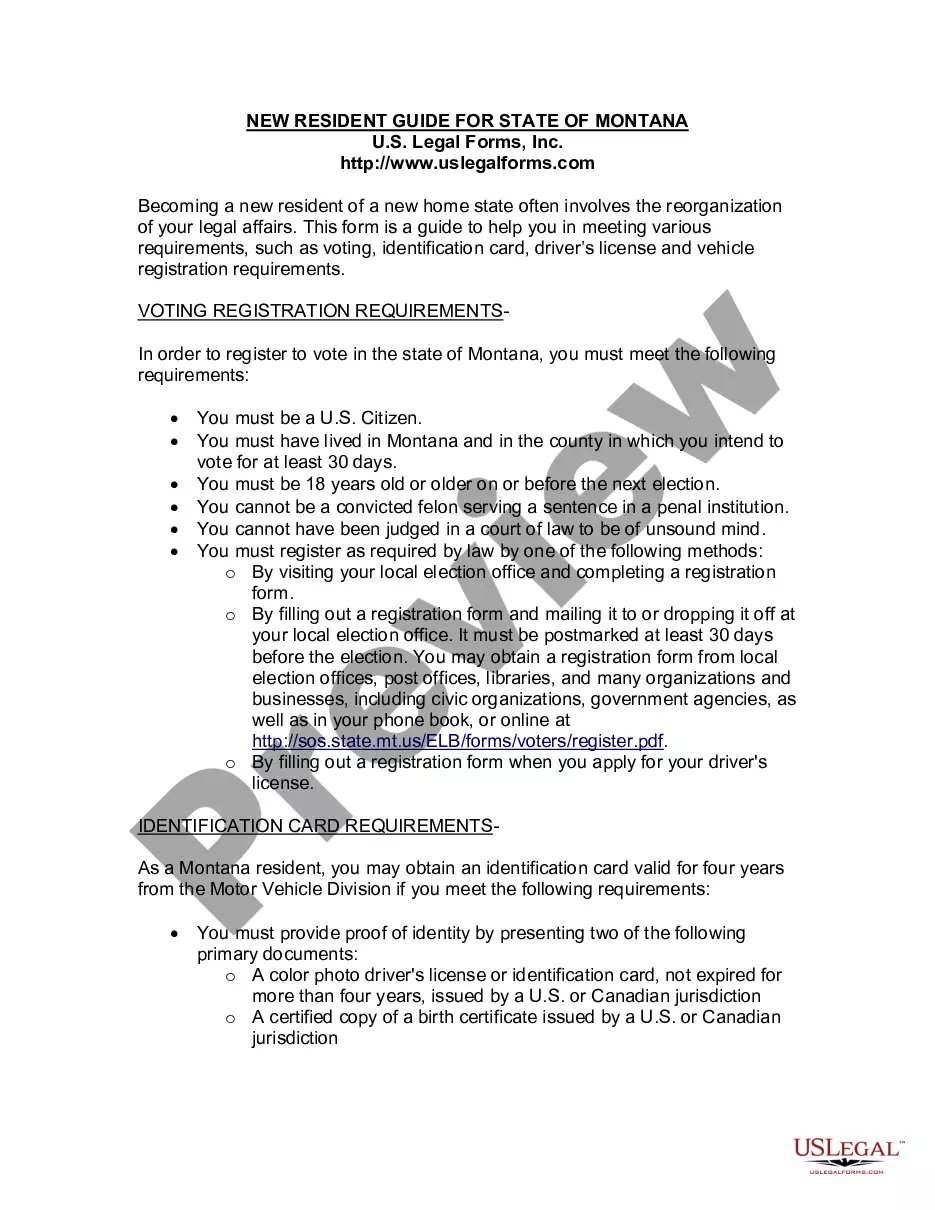
- Voter registration requirements, including eligibility criteria and methods to register.
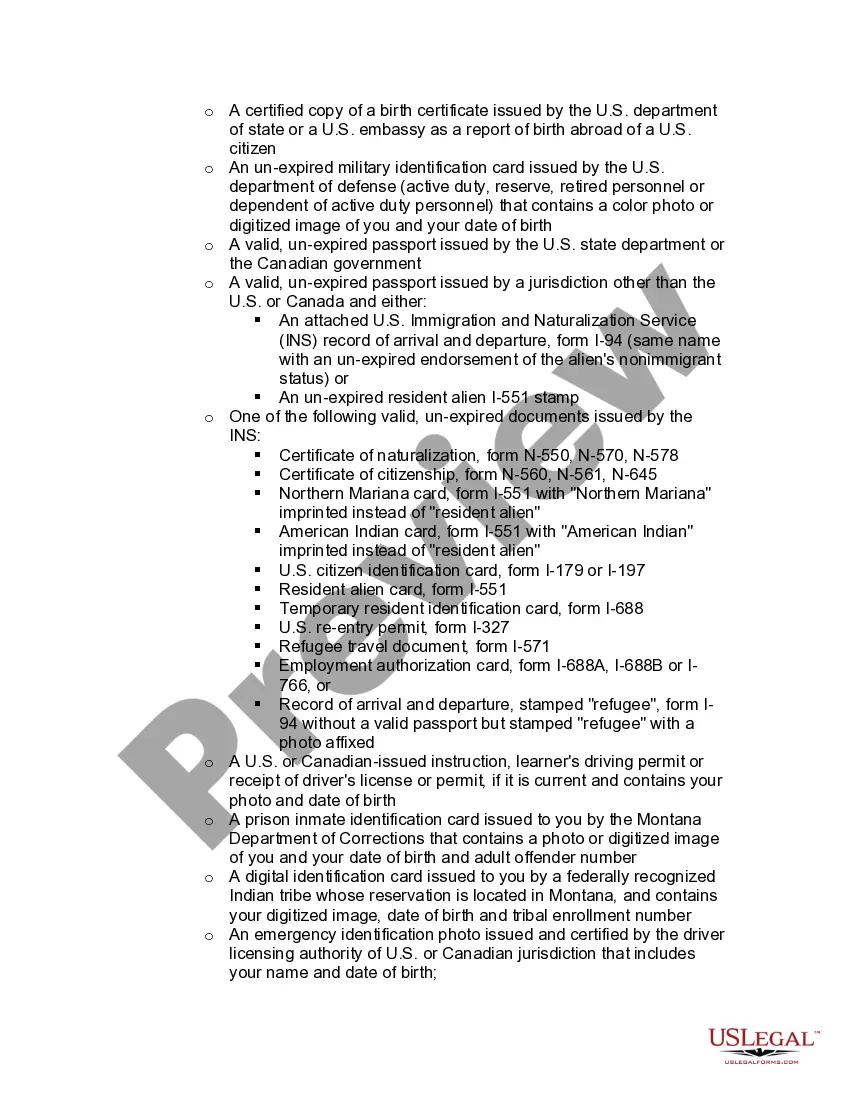
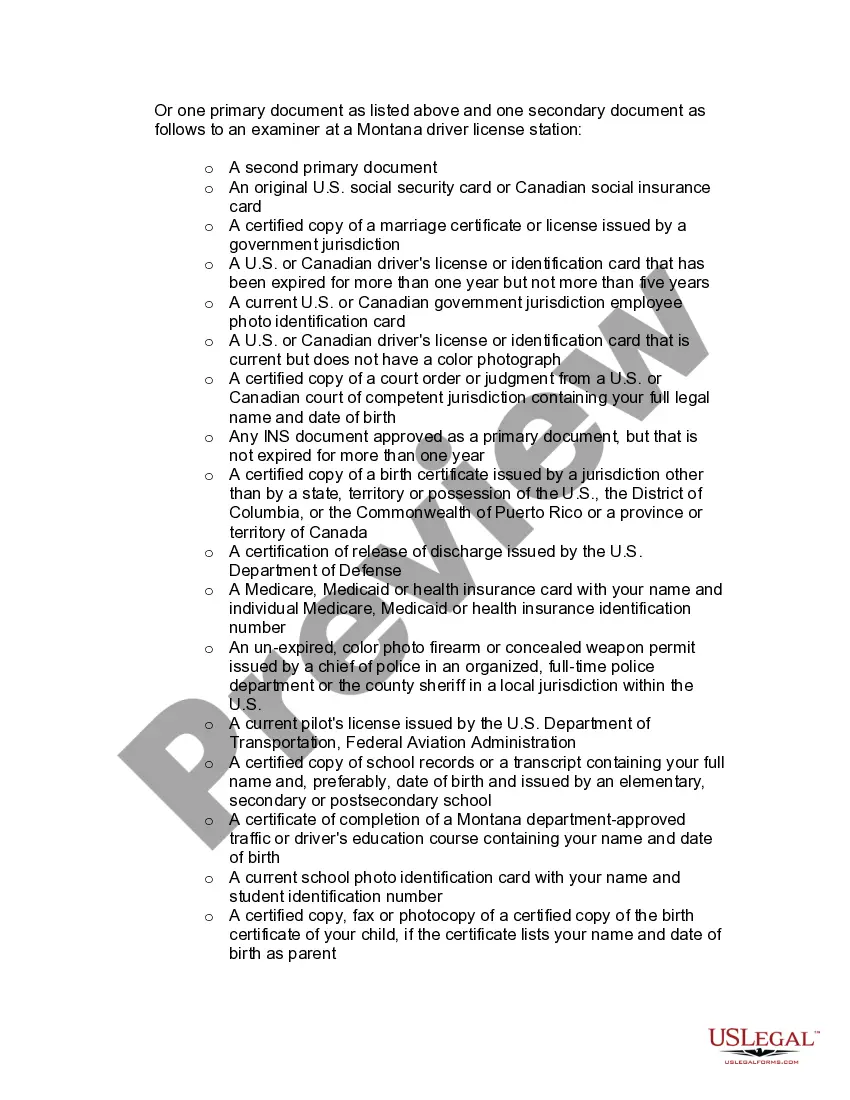
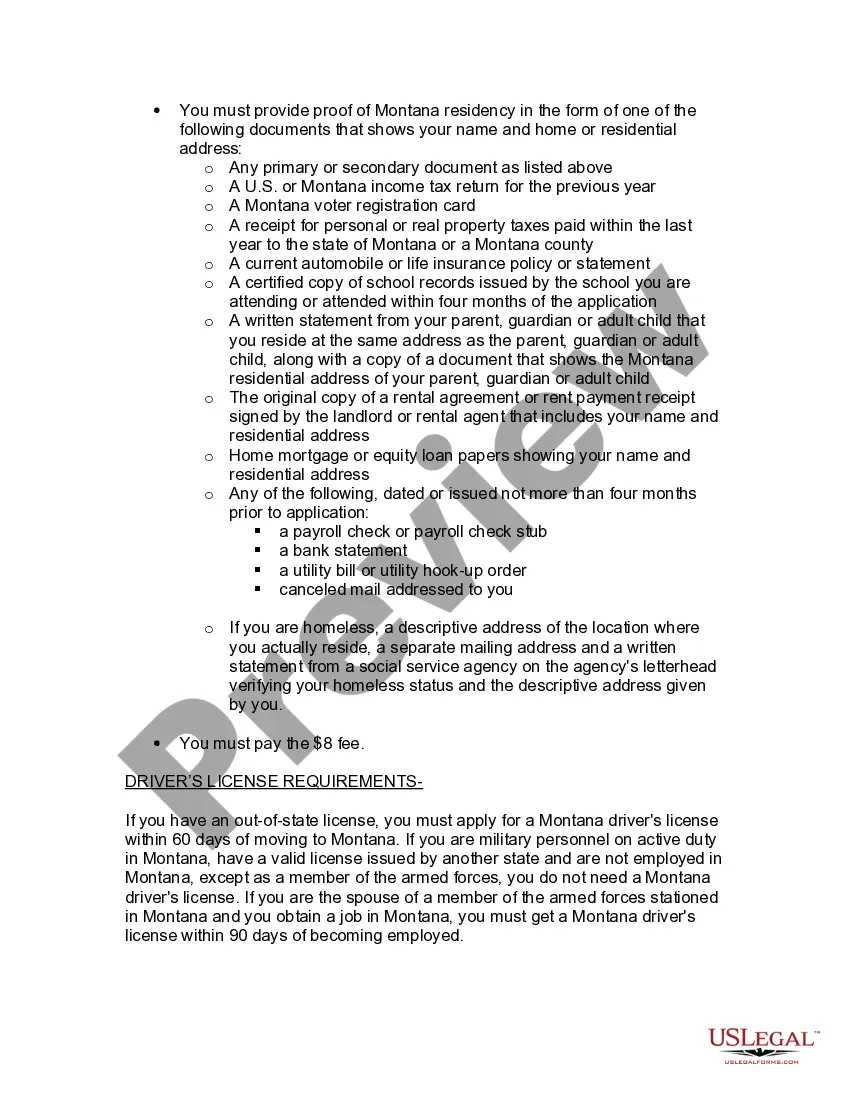
- Identification card requirements detailing acceptable proof of identity and residency.
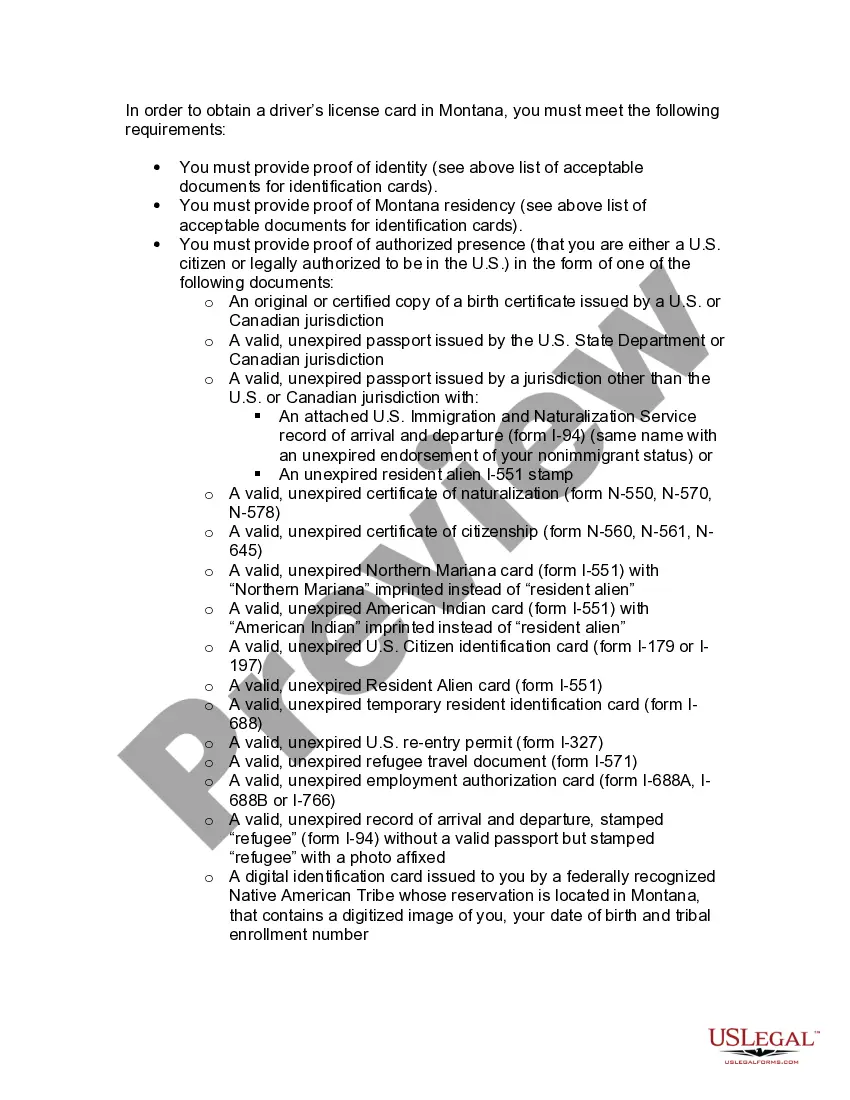
- Driverâs license requirements for transferring an out-of-state license to the new state.
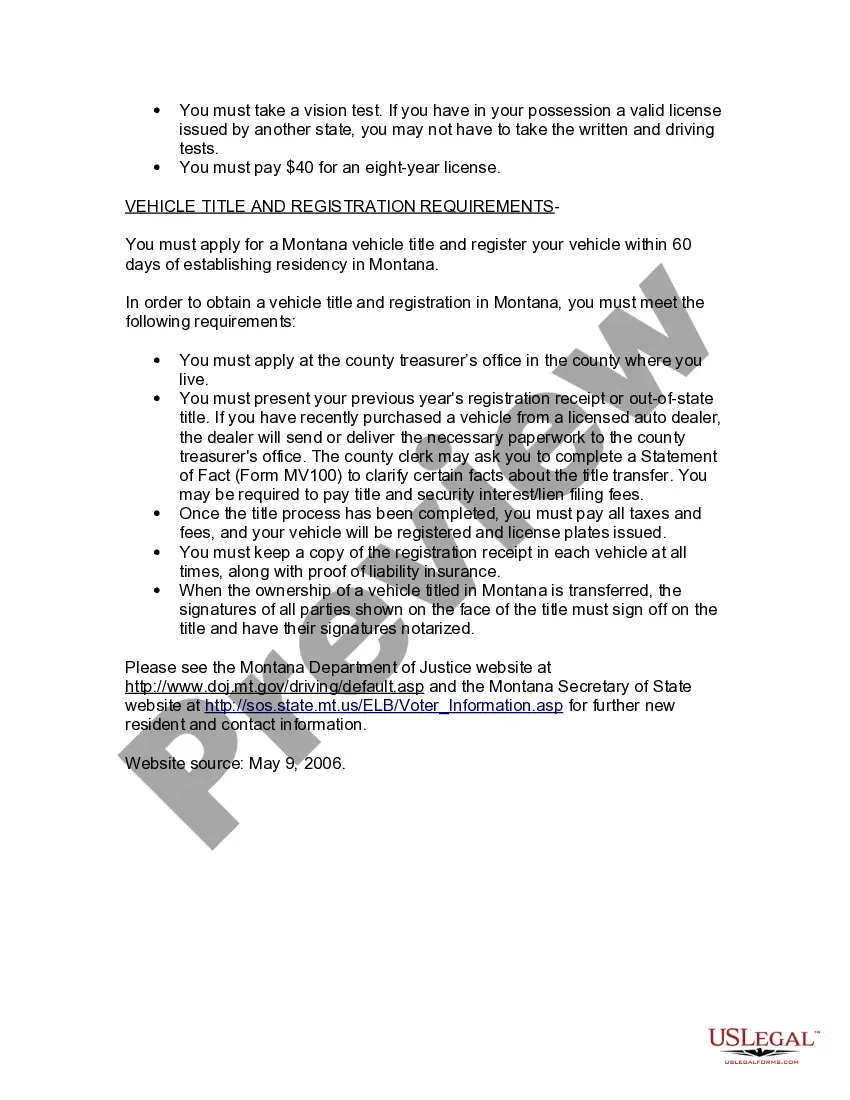
- Vehicle title and registration requirements to legally register a vehicle in the new state.
- Links to state-specific resources for further guidance on residency-related processes.
When to use this document
This form is essential for anyone who has recently relocated to a new state and needs to fulfill various legal obligations. Use this guide when you are ready to register to vote, obtain a state identification card, transfer your driverâs license, and register your vehicle in your new home state. It is particularly helpful during the first few months following your move, as you establish residency and comply with local regulations.
Who this form is for
This guide is suitable for:
- New residents relocating to a different state.
- Individuals looking to register to vote in their new state.
- Anyone needing to obtain state identification or driverâs licenses after moving.
- Individuals seeking to register their vehicles in a new state.
- Families and individuals unfamiliar with the legal processes in their new state.
How to prepare this document
- Familiarize yourself with the voter registration and eligibility requirements in your state.
- Gather the necessary documents for obtaining an identification card, such as proof of identity and residency.
- Check the requirements for transferring your out-of-state driverâs license, including any applicable tests.
- Prepare the paperwork needed for vehicle title and registration and visit your county treasurerâs office.
- Follow up with local authorities or state websites for any additional information or changes in requirements.
Does this document require notarization?
This form does not typically require notarization unless specified by local law. It is advisable to check your state's regulations for any specific notarization needs related to voter registration or vehicle title applications.
Get your form ready online
Our built-in tools help you complete, sign, share, and store your documents in one place.
Make edits, fill in missing information, and update formatting in US Legal Forms—just like you would in MS Word.
Download a copy, print it, send it by email, or mail it via USPS—whatever works best for your next step.
Sign and collect signatures with our SignNow integration. Send to multiple recipients, set reminders, and more. Go Premium to unlock E-Sign.
If this form requires notarization, complete it online through a secure video call—no need to meet a notary in person or wait for an appointment.
We protect your documents and personal data by following strict security and privacy standards.

Make edits, fill in missing information, and update formatting in US Legal Forms—just like you would in MS Word.

Download a copy, print it, send it by email, or mail it via USPS—whatever works best for your next step.

Sign and collect signatures with our SignNow integration. Send to multiple recipients, set reminders, and more. Go Premium to unlock E-Sign.

If this form requires notarization, complete it online through a secure video call—no need to meet a notary in person or wait for an appointment.

We protect your documents and personal data by following strict security and privacy standards.
Avoid these common issues
- Ignoring the specific voter registration deadlines and requirements.
- Failing to gather all necessary identification documents before applying for ID cards or licenses.
- Not applying for vehicle registration within the required timeframe after moving.
- Forgetting to check for additional local regulations that may apply.
Benefits of completing this form online
- Convenient access to all state requirements in one easy-to-understand format.
- Editable for personalization to suit your unique situation.
- Reliable information drafted by licensed attorneys with expertise in residency laws.
Quick recap
- The New Resident Guide assists newcomers in understanding residency laws in their new state.
- It provides detailed requirements for voter registration, ID cards, driver's licenses, and vehicle registration in Montana.
- Important to gather required documentation before applying for any of the services outlined in the guide.
- Check state-specific regulations to ensure compliance with the local laws related to residency.
Looking for another form?
Form popularity
FAQ
To get a REAL ID, state residents will need to make an in-person visit to the Montana Motor Vehicle Division and bring certain documents to prove U.S. citizenship, Social Security Number and Montana residency.
You are considered a Montana resident after having lived 180 consecutive days in Montana. After establishing Montana residency, you must live in the state of Montana a minimum of 120 days a year. Your principal home must be located in Montana.
Montana Drivers License Cost The cost of a regular, non-commercial (Class D) license is $40 for an eight-year license ($5 per year), plus the 50-cent fee for mailing the license renewal reminder. In order to apply for a state identification card, you must pay an $ 8 fee.
Pay the associated fees. bring all required documents. proof of identity. proof of Montana residency. proof of authorized presence. drive test documentation. a completed Graduated Driver Licensing Parent/Legal Guardian Certification (form 21-1600) potentially complete a drive test.
The Title and Registration Bureau regulates the issuance of vehicle license plates. Once you have titled and registered your vehicle and paid all taxes and fees, the county treasurer's office gives you your plates. If the plates you want are not on hand, the county treasurer gives you a 40-day temporary permit.
Make an appointment. Appear in person. Complete an application. Get your photograph taken. Present documents to prove: Your name and date of birth. You are a Montana resident. Know your social security number. Have your documents scanned by MVD staff.
A person must be physically present in Montana for twelve or more consecutive months without an absence in excess of a total of thirty days. One must demonstrate by appropriate actions during the twelve month period the intent to make Montana one's permanent home.
You are considered a Montana resident after having lived 180 consecutive days in Montana. After establishing Montana residency, you must live in the state of Montana a minimum of 120 days a year. Your principal home must be located in Montana.