Massachusetts Warranty Deed to Separate Property of One Spouse to Both Spouses as Joint Tenants
Overview of this form
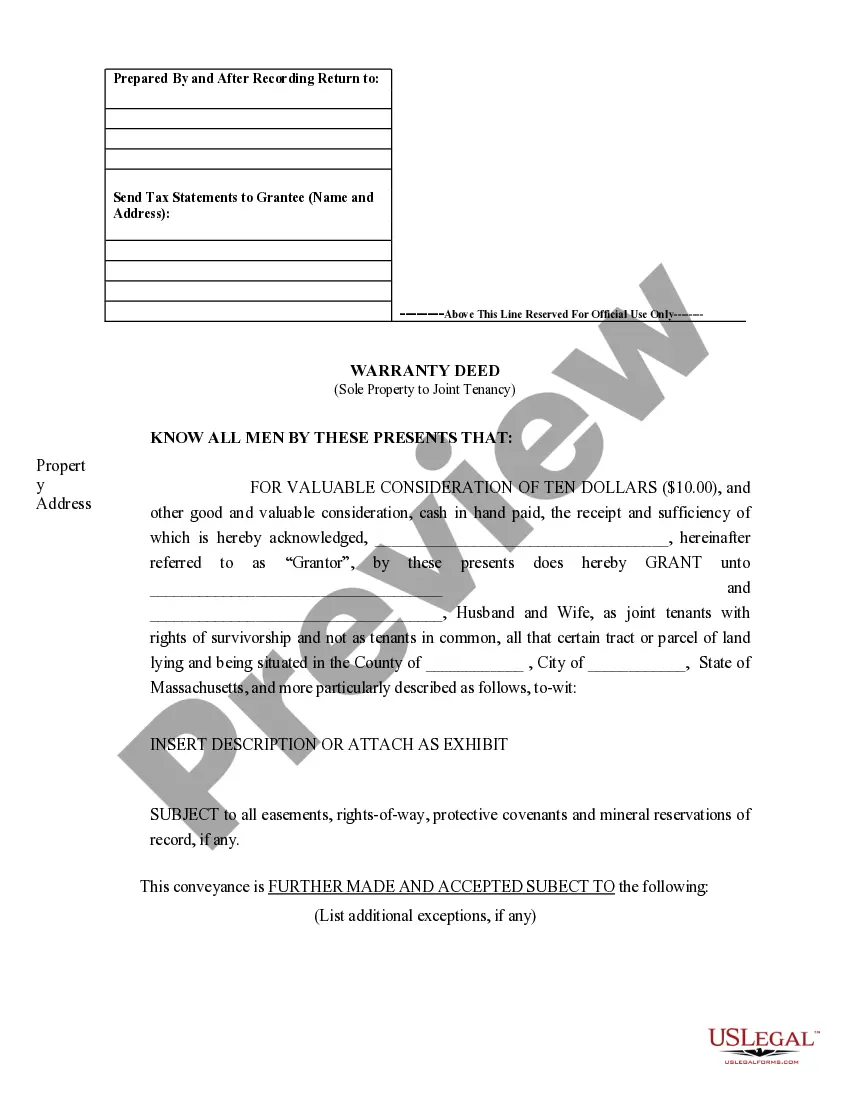
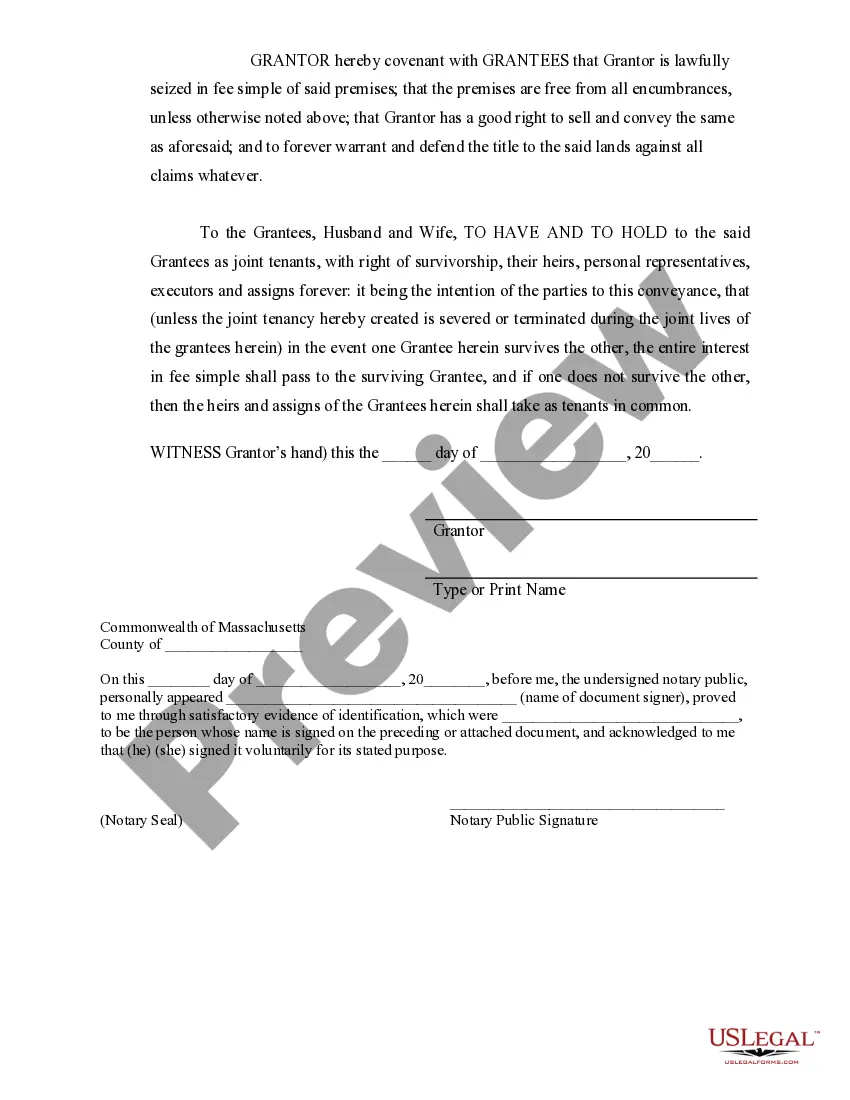
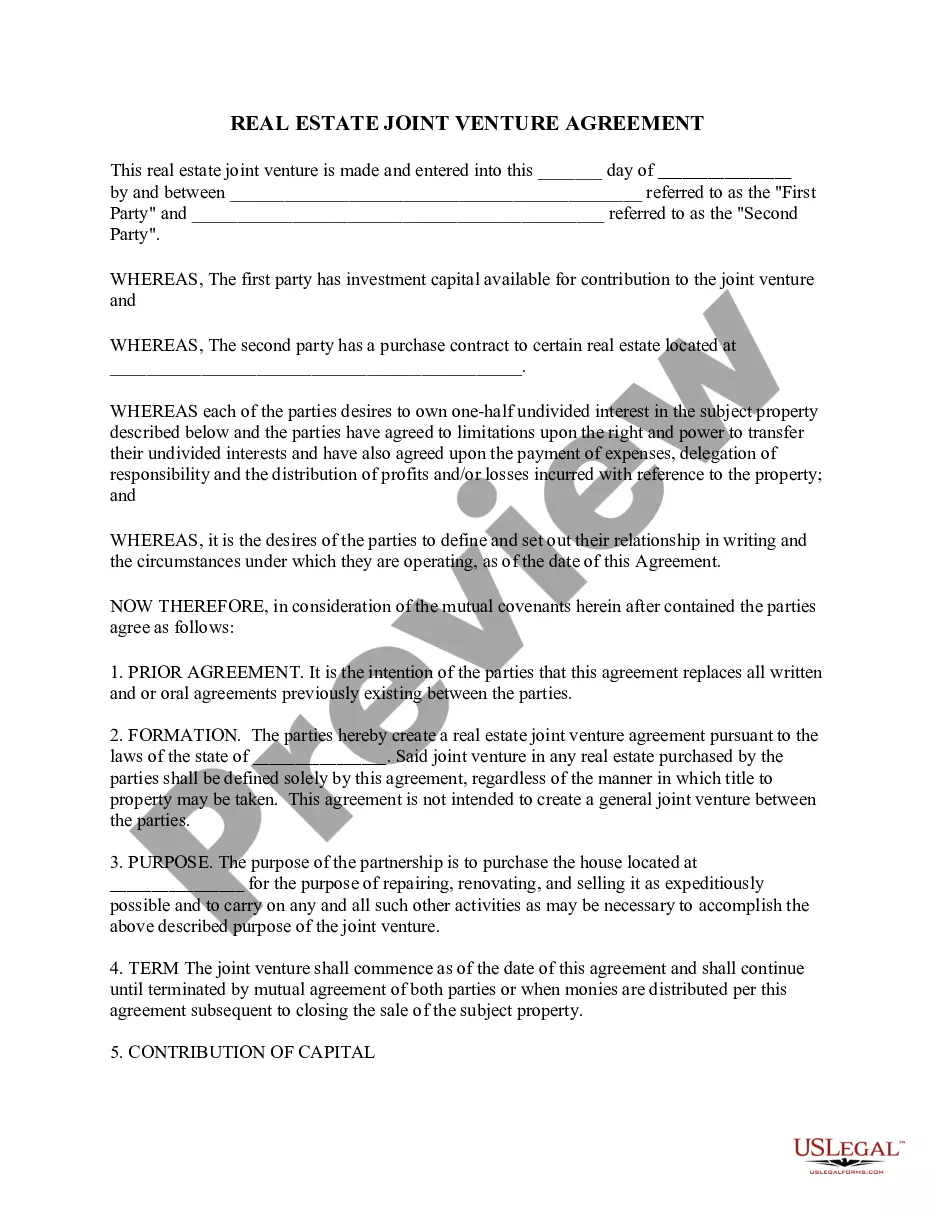
This Warranty Deed allows one spouse to transfer ownership of separate property to both spouses as joint tenants. This legal document is crucial for couples who want to ensure that both parties have equal rights to the property, particularly in the event of death, as it includes rights of survivorship. This form differs from other types of deeds, such as quitclaim deeds, by providing a warranty of clear title and protection against any future claims on the property.
Key components of this form
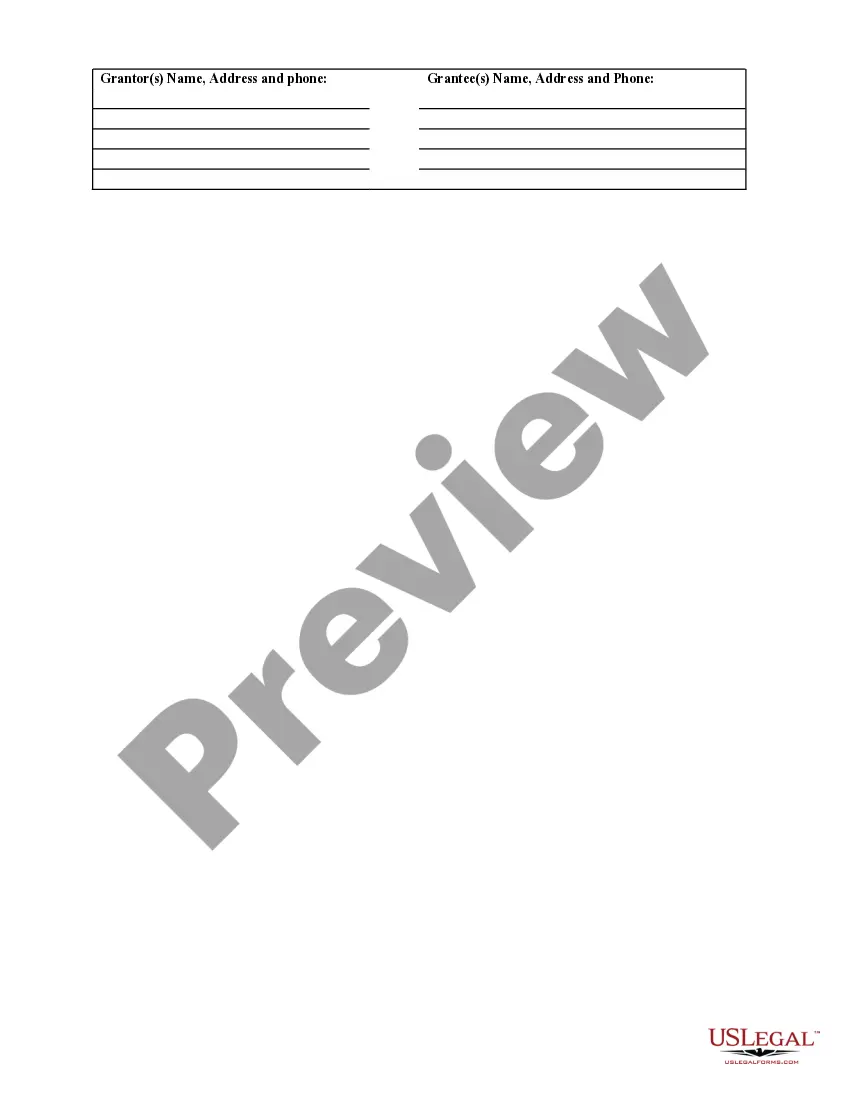
- Identification of the Grantor (the transferring spouse) and Grantees (both spouses).
- Description of the property being transferred.
- Statement affirming that the Grantor is legally entitled to transfer the property.
- Covenant that the property is free from encumbrances.
- Signatures and dates for the Grantor and a notary public acknowledgment.


When this form is needed
This form is typically used when a married couple wishes to change the ownership status of property that was originally owned by only one spouse. It is particularly relevant when spouses want to ensure that the property is jointly owned and that one spouse will inherit the otherâs share in case of death, avoiding the probate process.
Who this form is for
- Married couples who want to ensure joint ownership of a property.
- Spouses looking to simplify the transfer of property rights for estate planning purposes.
- Individuals who own separate property and wish it to be jointly held without complications in the event of death.
Instructions for completing this form
- Identify the Grantor (the spouse transferring the property) and both Grantees (the married couple receiving the property).
- Provide a detailed description of the property being transferred, including the address and any parcel number if applicable.
- Ensure the Grantor affirms they are the lawful owner of the property and that it is free from encumbrances.
- Gather signatures from the Grantor and have the document notarized according to the instructions within the form.
- File the completed Warranty Deed with the appropriate county office to finalize the transfer of ownership.
Is notarization required?
Yes, this form must be notarized to be legally valid. This ensures that the identities of the parties involved are verified and that the document is recognized legally. US Legal Forms offers integrated online notarization services, allowing you to complete this step through secure video calls at your convenience without needing to travel.
Get your form ready online
Our built-in tools help you complete, sign, share, and store your documents in one place.
Make edits, fill in missing information, and update formatting in US Legal Forms—just like you would in MS Word.
Download a copy, print it, send it by email, or mail it via USPS—whatever works best for your next step.
Sign and collect signatures with our SignNow integration. Send to multiple recipients, set reminders, and more. Go Premium to unlock E-Sign.
If this form requires notarization, complete it online through a secure video call—no need to meet a notary in person or wait for an appointment.
We protect your documents and personal data by following strict security and privacy standards.

Make edits, fill in missing information, and update formatting in US Legal Forms—just like you would in MS Word.

Download a copy, print it, send it by email, or mail it via USPS—whatever works best for your next step.

Sign and collect signatures with our SignNow integration. Send to multiple recipients, set reminders, and more. Go Premium to unlock E-Sign.

If this form requires notarization, complete it online through a secure video call—no need to meet a notary in person or wait for an appointment.

We protect your documents and personal data by following strict security and privacy standards.
Avoid these common issues
- Failing to clearly describe the property may lead to legal disputes.
- Not obtaining a notarization, which is essential for validity.
- Omitting signatures or providing incorrect dates.
- Neglecting to check for existing encumbrances or liens on the property before transferring.
Why complete this form online
- Convenient access for immediate download and completion from home.
- Editable fields allowing customization to individual needs.
- Prepared by licensed attorneys to ensure compliance with legal standards.
- Secure storage of completed forms for future reference.
Main things to remember
- This Warranty Deed allows for the transfer of property into joint tenancy between spouses.
- Proper completion and notarization are crucial for the deedâs validity.
- It is tailored for use in Massachusetts and adheres to state-specific legal requirements.
Looking for another form?
Form popularity
FAQ
'Joint tenants' means that two or more individuals hold equal rights to a property, with a right of survivorship. This means if one joint tenant dies, the property automatically goes to the surviving joint tenants. When setting up a Massachusetts Warranty Deed to Separate Property of One Spouse to Both Spouses as Joint Tenants, it is essential to establish these rights clearly to avoid future conflicts.
In that case, you simply divide your interest into equal parts. For example, if there are two of you, you would each agree to divide your shares 50/50. If you have a TIC, you have more options, because you don't have to divide your interests 50/50. Instead, you can divide the shares into fractional ownership.
Split ownership costs fairly until the house sells until the property sells. The amount owed by each party is typically split by the percentage of ownership. If you own 50%, and your two co-owners each own 25%, then you'll need to cover half of all housing expenses while your co-owners split the remainder.
In California, most married couples hold real property (such as land and buildings) as joint tenants with right of survivorship.For instance, many married couples share real property as joint tenants. This way, upon the death of a spouse, the surviving spouse will own 100% share of the property.
When you opt to co-own an asset with another individual, you can enter into a legal ownership agreement known as joint tenants with rights of survivorship or JTWROS. Upon the death of one of the owners, the surviving owner automatically becomes sole owner of the property, whether it's a vacation home, a plane, or
Co-owners have equal rights to possession of the property, and equal rights and responsibilities. If one co-owner excludes the other from the property, the excluded co-owner can recover the property's rental value from the excluding co-owner.
What is Community Property? Community property is also a form of co-ownership, but is applicable only between husband and wife. Like joint tenancy property, each spouse's interest in community property is equal during their marriage.
Like joint tenancy property, each spouse's interest in community property is equal during their marriage. Unlike joint tenancy, however, each spouse's one-half community property interest is subject to disposition by the deceased spouse's will.
Yes. Many lenders allow two families to combine their respective incomes in order to jointly purchase a house. Both households will need to meet the minimum qualifying loan requirements, which may vary lender to lender. Lenders may also require both families to hold equal ownership rights of the house.
When joint tenants have right of survivorship, it means that the property shares of one co-tenant are transferred directly to the surviving co-tenant (or co-tenants) upon their death. While ownership of the property is shared equally in life, the living owners gain total ownership of any deceased co-owners' shares.