Louisiana Siding Contract for Contractor
What is this form?
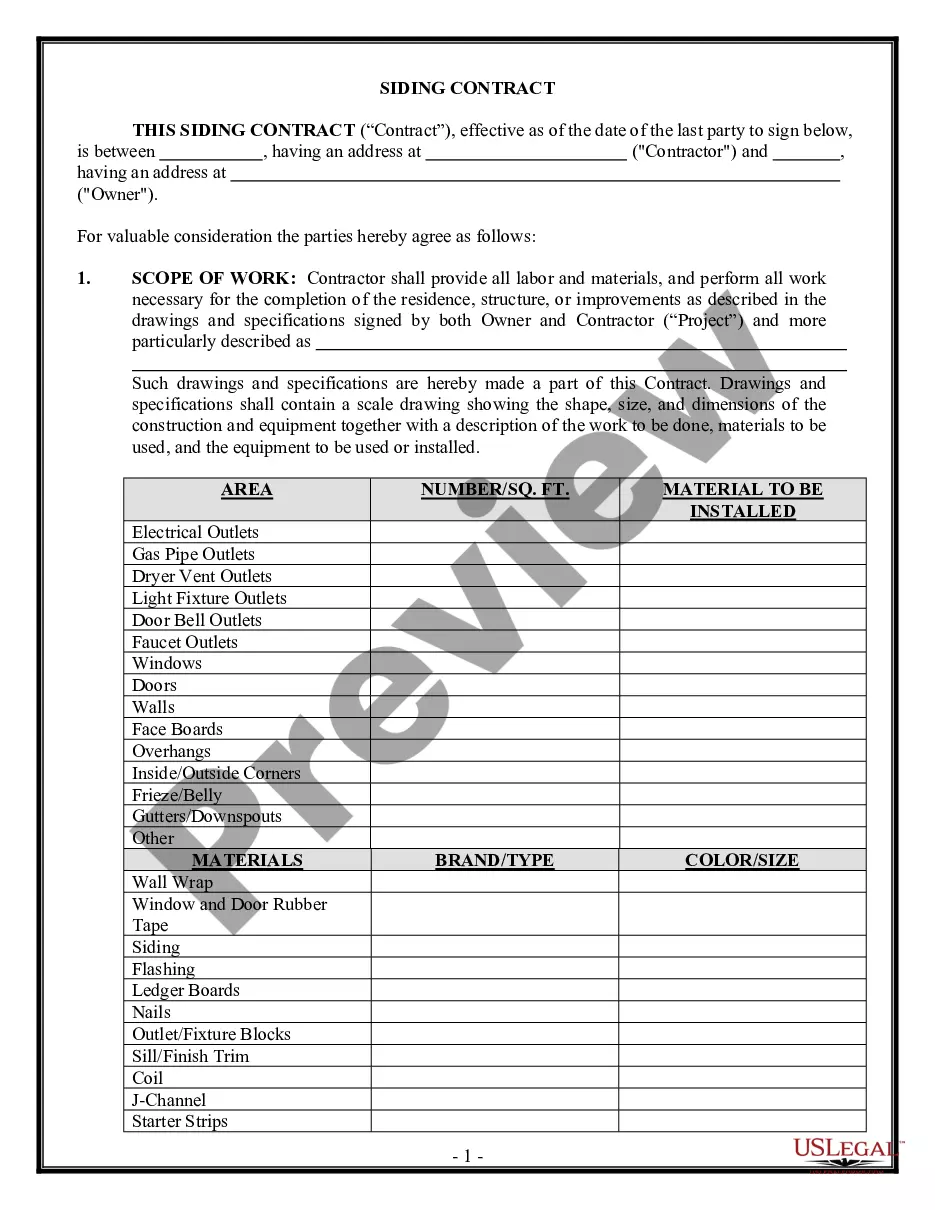
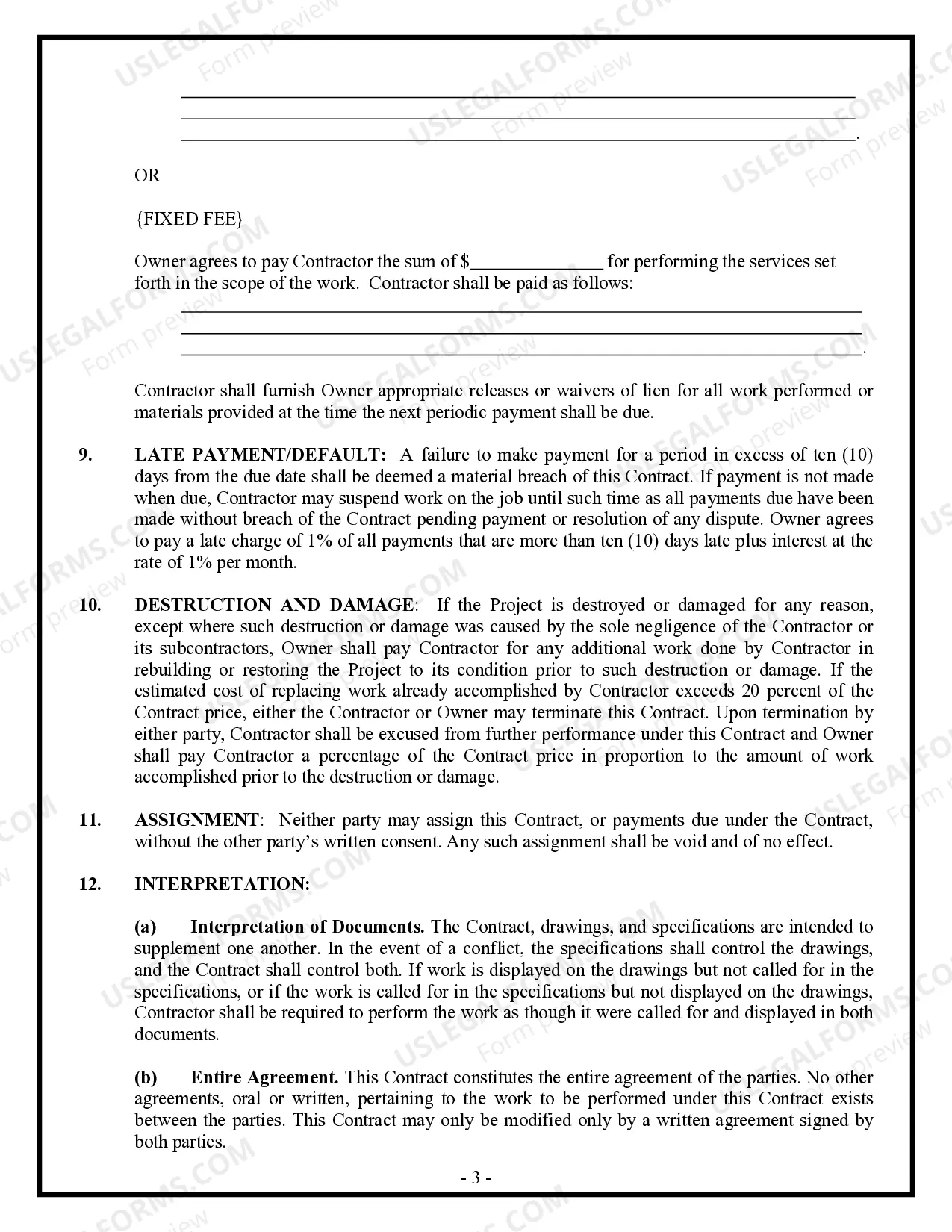
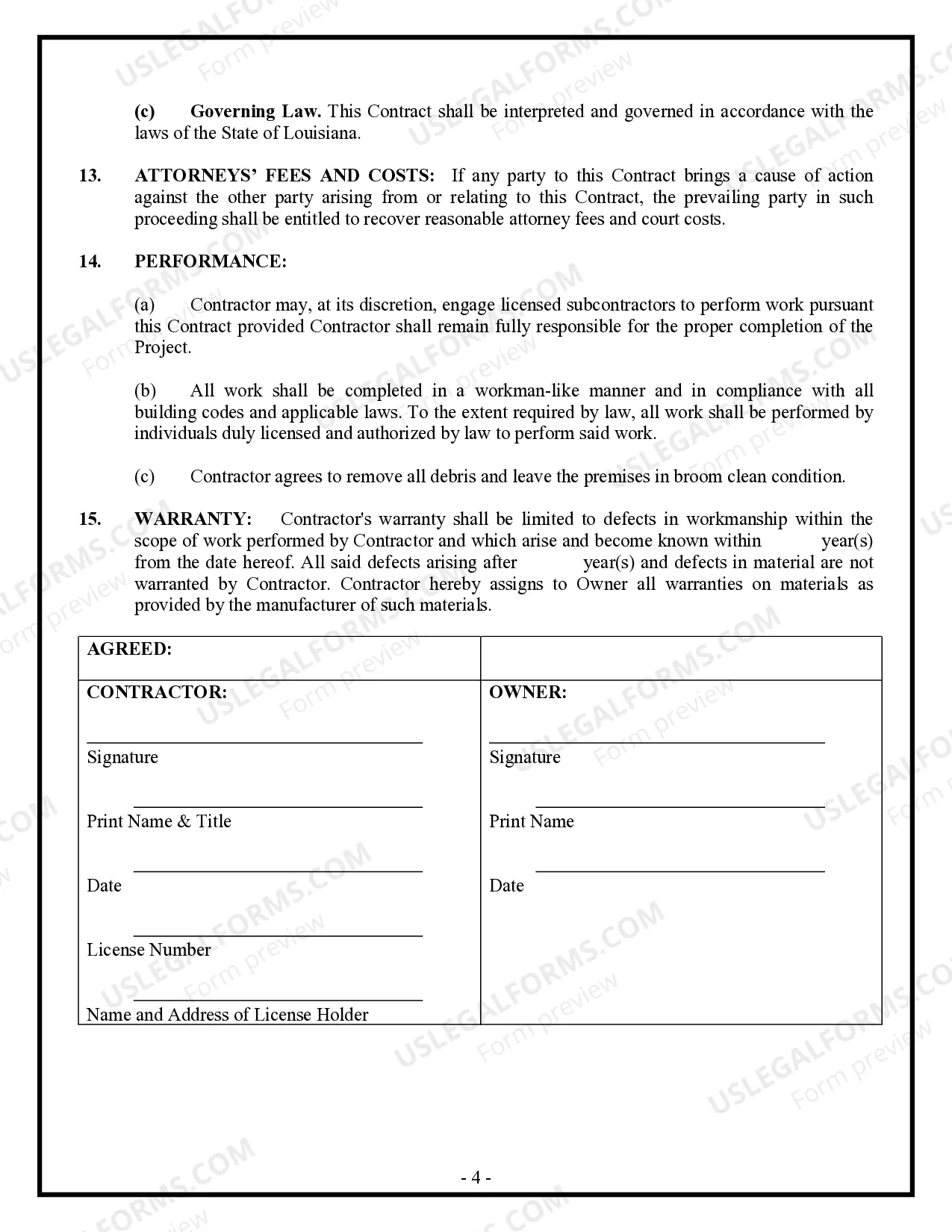
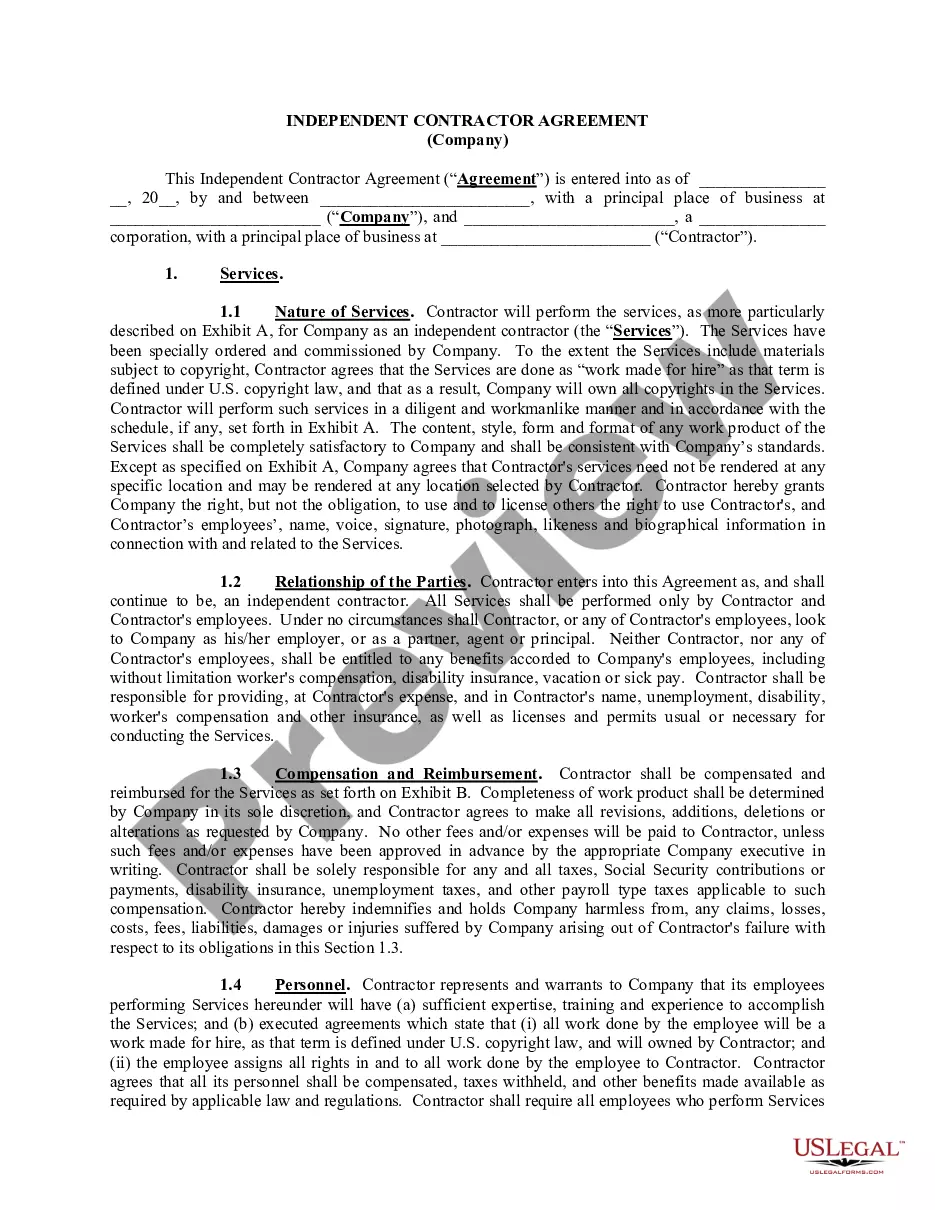
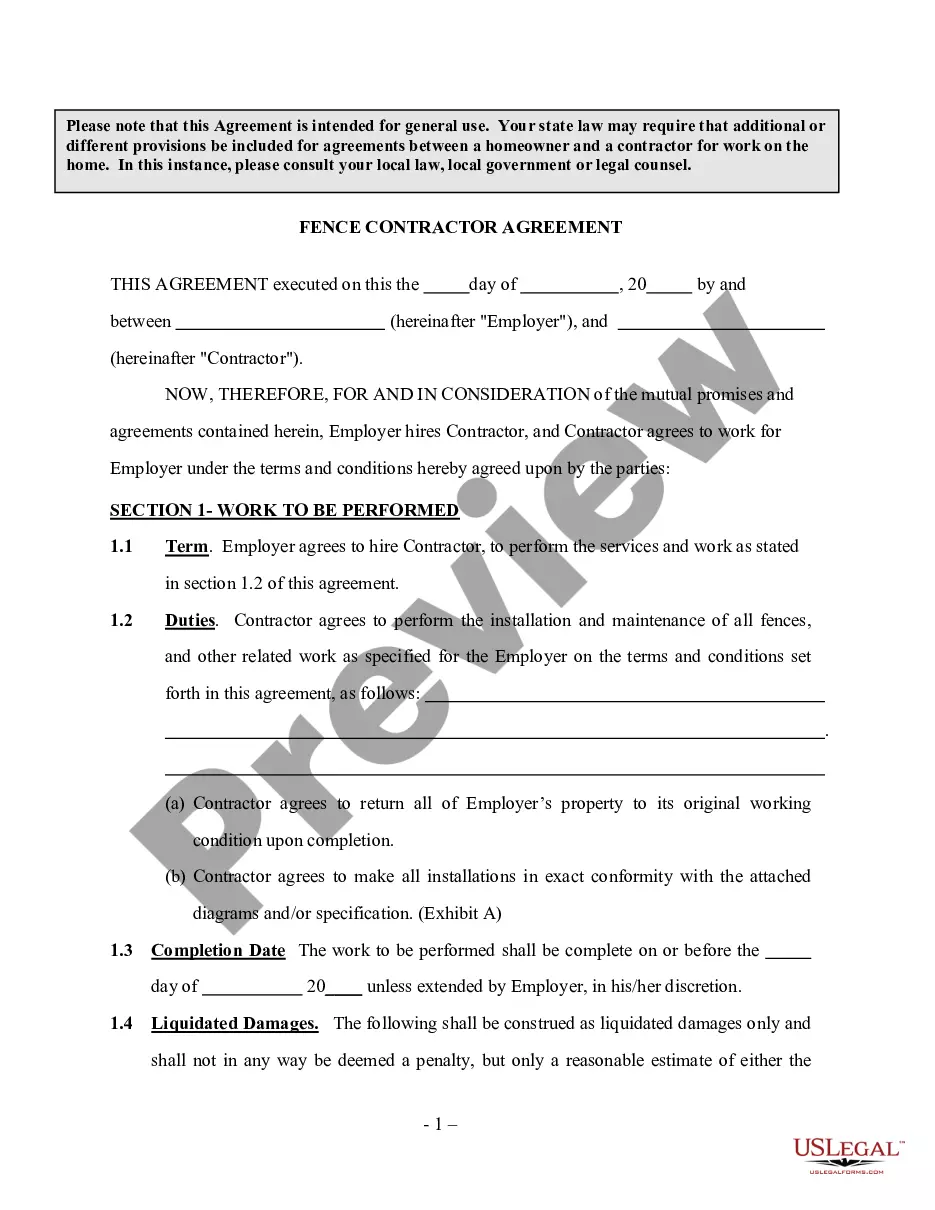
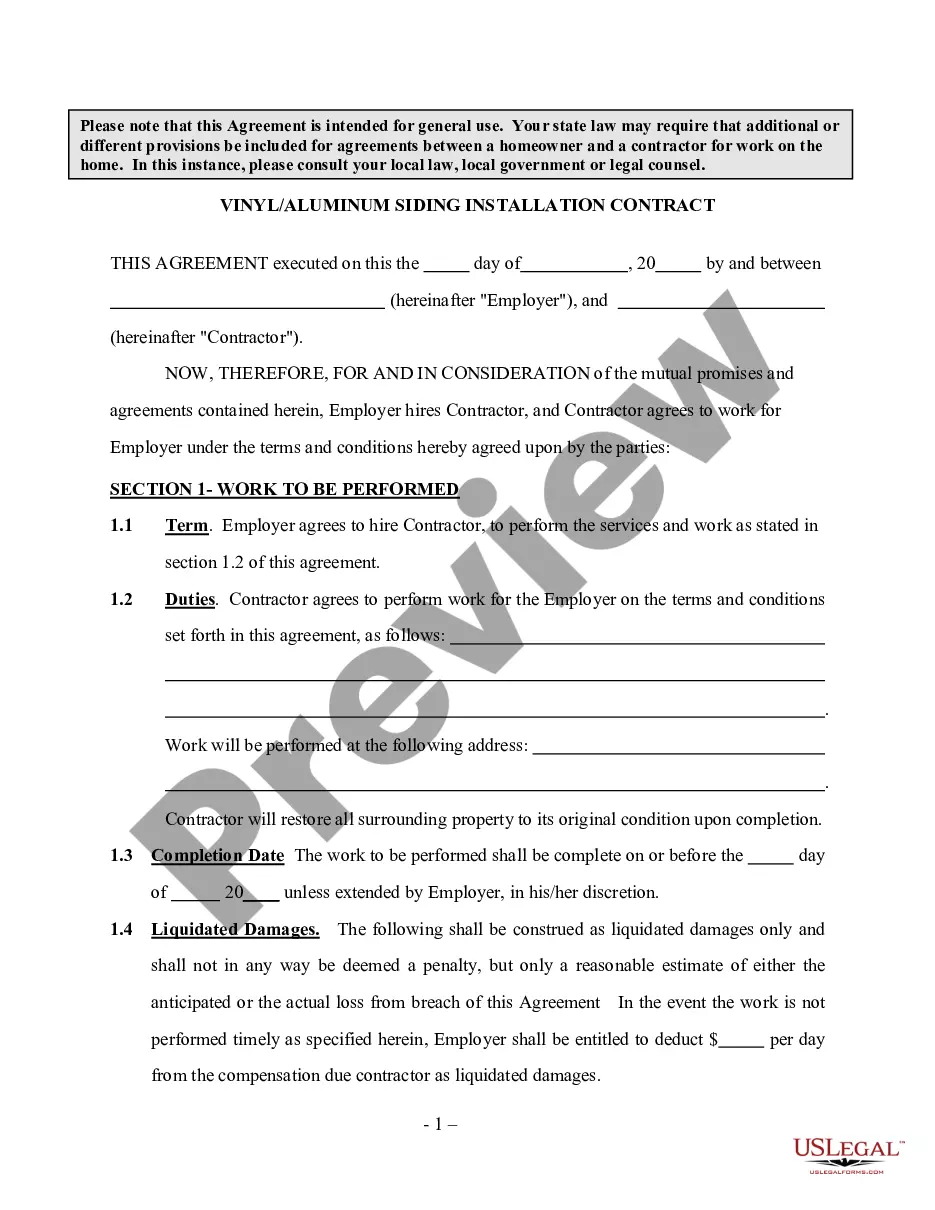
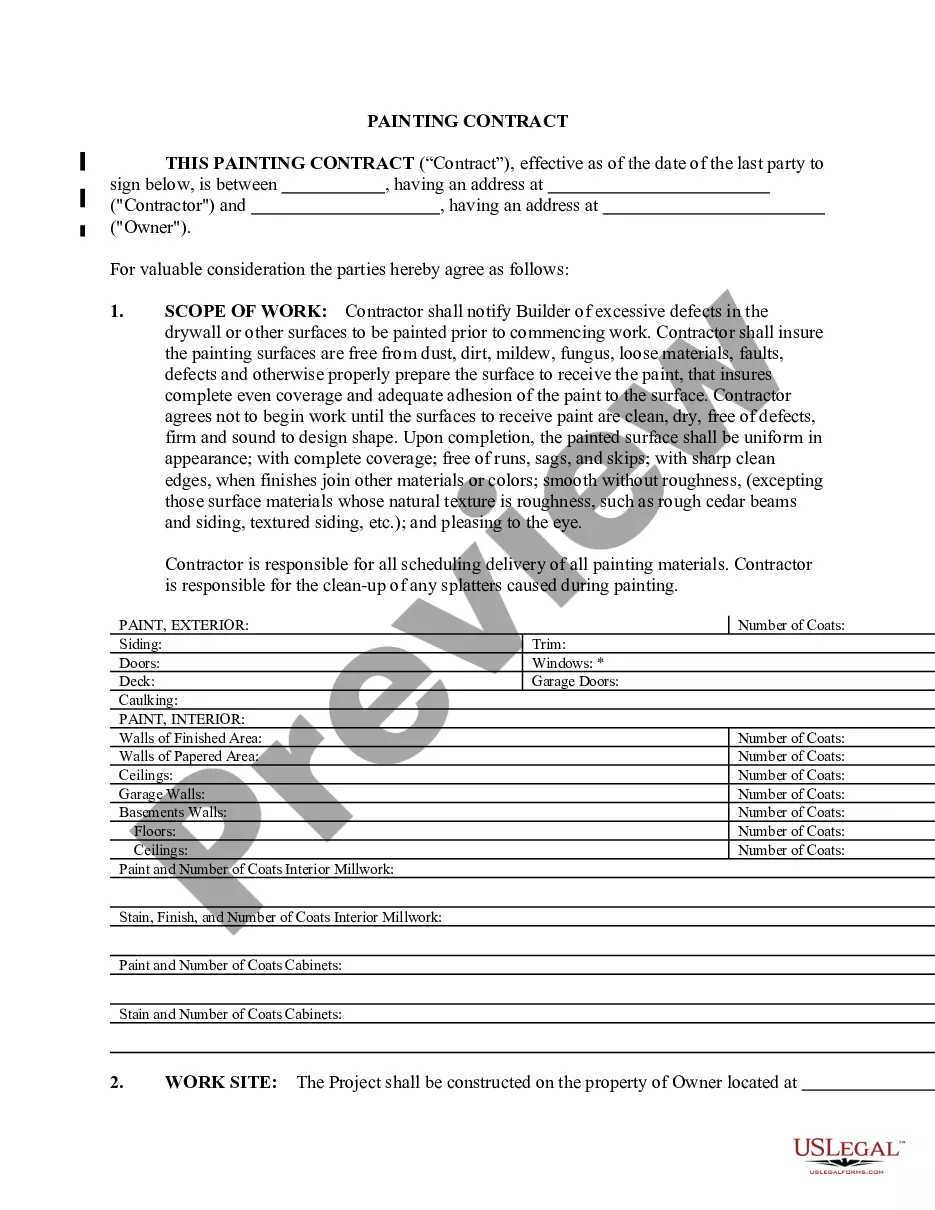
The Siding Contract for Contractor is a legal document designed to outline the agreement between siding contractors and property owners. This contract is essential for establishing the terms of a project, including payment arrangements, work scope, and responsibilities of both parties. Unlike generic contracts, this form is tailored to comply with the laws of Louisiana, ensuring that all contractual obligations are legally enforceable within the state.
What’s included in this form
- Project Details: Specify the area measurements and materials to be installed.
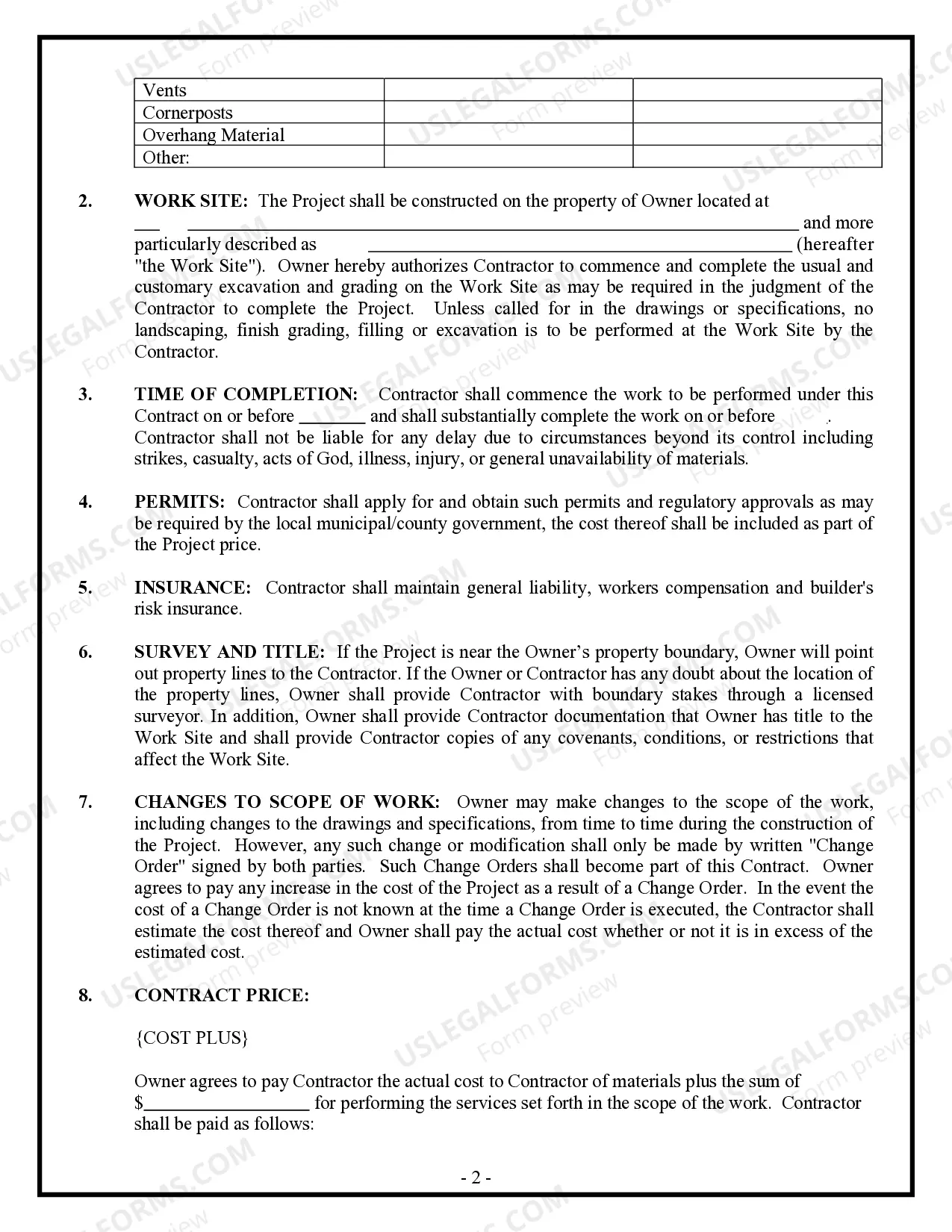
- Permits: Outline contractor responsibilities for obtaining necessary permits.
- Insurance Requirements: Detail the insurance types the contractor must maintain.
- Change Orders: Procedures for making modifications to the project scope.
- Destruction and Damage Clause: Terms for handling project damage and potential contract termination.
- Governing Law: Establishes that Louisiana law governs the contract.
When to use this form
This form is useful for property owners planning to hire a siding contractor for exterior work. Whether you are building a new home or renovating an existing structure, this contract clarifies the responsibilities and expectations of both parties. It is particularly important if changes in scope are anticipated during the project or if the work involves significant material and labor costs.
Who should use this form
This form is intended for:
- Property owners looking to engage siding contractors.
- Siding contractors who require a formal agreement with property owners.
- Individuals or businesses involved in home renovation or construction projects.
How to prepare this document
- Identify the parties: Include the full names and addresses of both the contractor and the property owner.
- Specify the project details: Fill in area measurements and list all materials to be installed.
- Outline payment terms: Choose between cost-plus or fixed fee arrangements.
- Include necessary permits: Check who is responsible for obtaining required approvals.
- Sign and date: Both parties must sign the contract and provide the contract date.
Does this form need to be notarized?
In most cases, this form does not require notarization. However, some jurisdictions or signing circumstances might. US Legal Forms offers online notarization powered by Notarize, accessible 24/7 for a quick, remote process.
Get your form ready online
Our built-in tools help you complete, sign, share, and store your documents in one place.
Make edits, fill in missing information, and update formatting in US Legal Forms—just like you would in MS Word.
Download a copy, print it, send it by email, or mail it via USPS—whatever works best for your next step.
Sign and collect signatures with our SignNow integration. Send to multiple recipients, set reminders, and more. Go Premium to unlock E-Sign.
If this form requires notarization, complete it online through a secure video call—no need to meet a notary in person or wait for an appointment.
We protect your documents and personal data by following strict security and privacy standards.

Make edits, fill in missing information, and update formatting in US Legal Forms—just like you would in MS Word.

Download a copy, print it, send it by email, or mail it via USPS—whatever works best for your next step.

Sign and collect signatures with our SignNow integration. Send to multiple recipients, set reminders, and more. Go Premium to unlock E-Sign.

If this form requires notarization, complete it online through a secure video call—no need to meet a notary in person or wait for an appointment.

We protect your documents and personal data by following strict security and privacy standards.
Avoid these common issues
- Failing to specify all project details, leading to misunderstandings later.
- Not including change order procedures, which can create disputes over modifications.
- Overlooking insurance requirements, potentially exposing parties to liability.
- Missing signatures or dates, rendering the contract unenforceable.
Why complete this form online
- Convenience: Download the form instantly for immediate use.
- Editability: Customize fields as needed to fit specific project requirements.
- Reliability: This form is drafted by licensed attorneys, ensuring compliance with legal standards.
Looking for another form?
Form popularity
FAQ
Yes, homeowners in Louisiana can self-contract their own house, provided they adhere to local laws and regulations. However, for projects requiring a license, homeowners must comply with licensing requirements. When pursuing a Louisiana siding contract for a contractor, being aware of these nuances can help you effectively manage your home project.
Louisiana has reciprocity agreements with several states, allowing licensed contractors to apply for mutual recognition in those states. The exact states may vary, so it’s beneficial to check with the licensing board. If you're involved in a Louisiana siding contract for a contractor and plan to operate in other states, understanding these agreements can facilitate your operations.
Generally speaking, a general contractor is someone who manages a team of subcontractors to help do various types of construction projects in your home. A custom home builder, however, is specialized in building custom homes and is able to complete this specific type of project start to finish on their own.
Identifying/Contact Information. Title and Description of the Project. Projected Timeline and Completion Date. Cost Estimate and Payment Schedule. Stop Work Clause and Stop Payment Clause. Act of God Clause. Change Order Agreement. Warranty.
Both parties should sign the contract, and both should be bound by the terms and conditions spelled out in the agreement. In general that means the contractor will be obliged to provide specified materials and to perform certain services for you. In turn, you will be required to pay for those goods and that labor.
Contract Types Overview. Express and Implied Contracts. Unilateral and Bilateral Contracts. Unconscionable Contracts. Adhesion Contracts. Aleatory Contracts. Option Contracts. Fixed Price Contracts.
Name of contractor and contact information. Name of homeowner and contact information. Describe property in legal terms. List attachments to the contract. The cost. Failure of homeowner to obtain financing. Description of the work and the completion date. Right to stop the project.
Begin with the Date and the Address of the Other Party. Start with the Basic Details of the Planned Work. Include Special Stipulations. State Whether There Will be a Further Agreement. Create an Area for Signatures. Sign and Date the Contract Letter.
Identifying/Contact Information. Title and Description of the Project. Projected Timeline and Completion Date. Cost Estimate and Payment Schedule. Stop Work Clause and Stop Payment Clause. Act of God Clause. Change Order Agreement. Warranty.
#1: Review Your Bid. #2: Review Complete Plans. #3: Review All Specifications. #4: Visit the Job Site. #5: Review the Job Schedule. #6: Complete a Project Checklist. #7: Verify Project Funding. #8: Read Complete Contract.