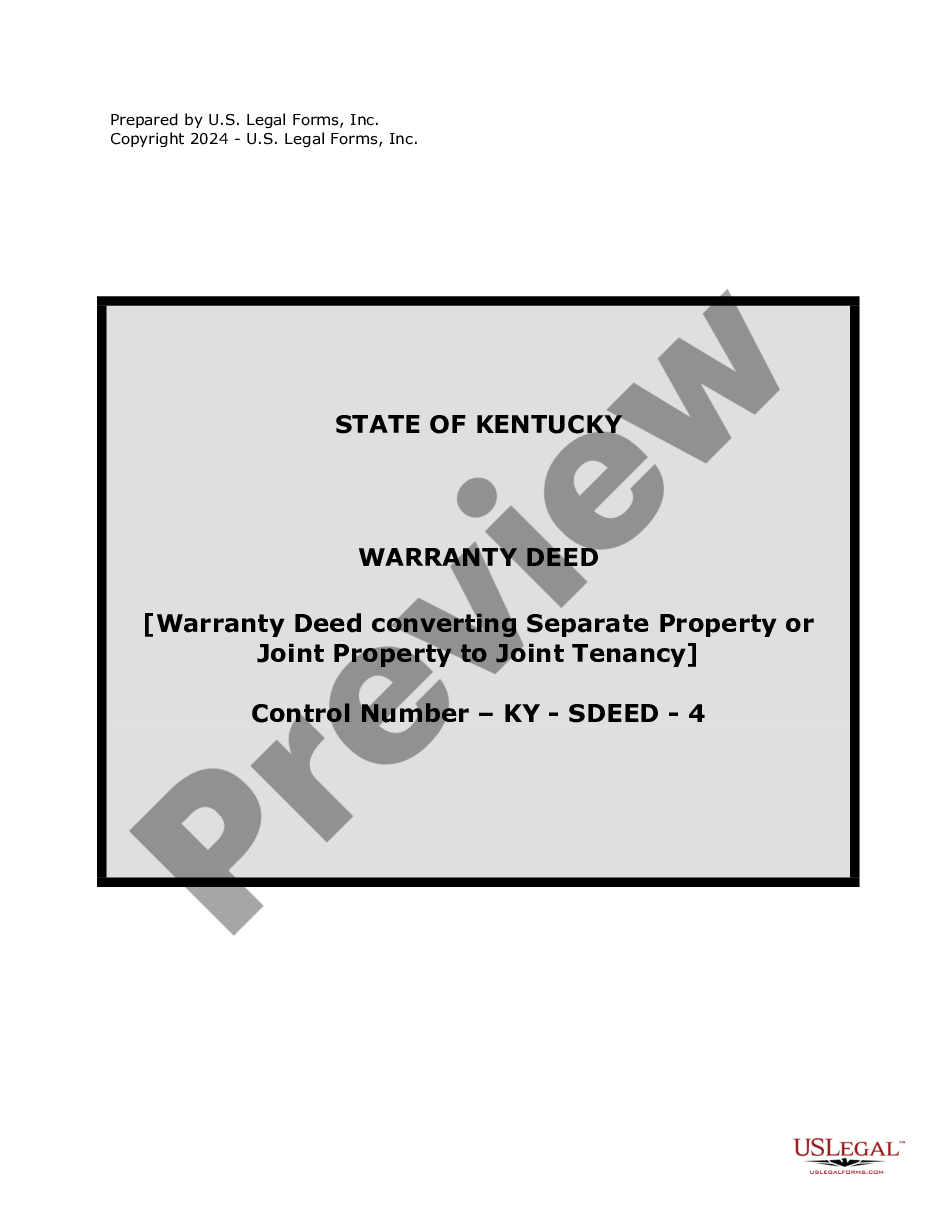
Kentucky Warranty Deed for Separate or Joint Property to Joint Tenancy
Overview of this form
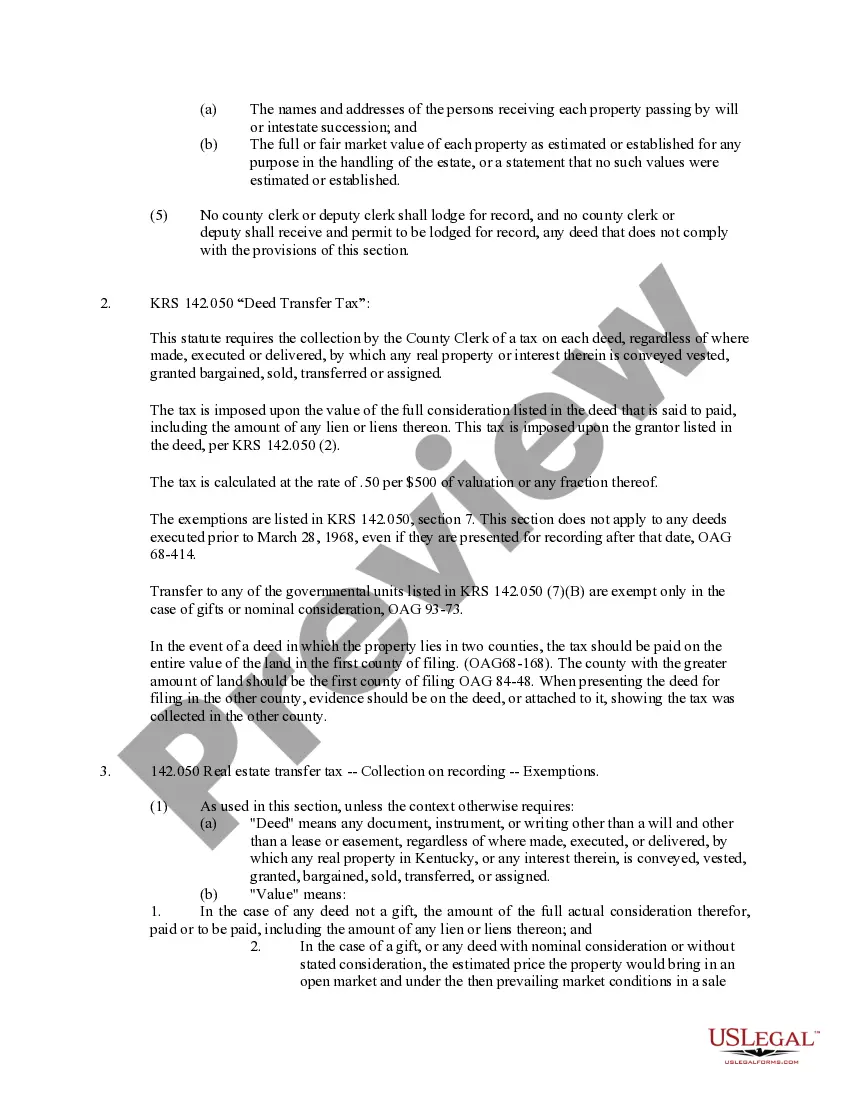
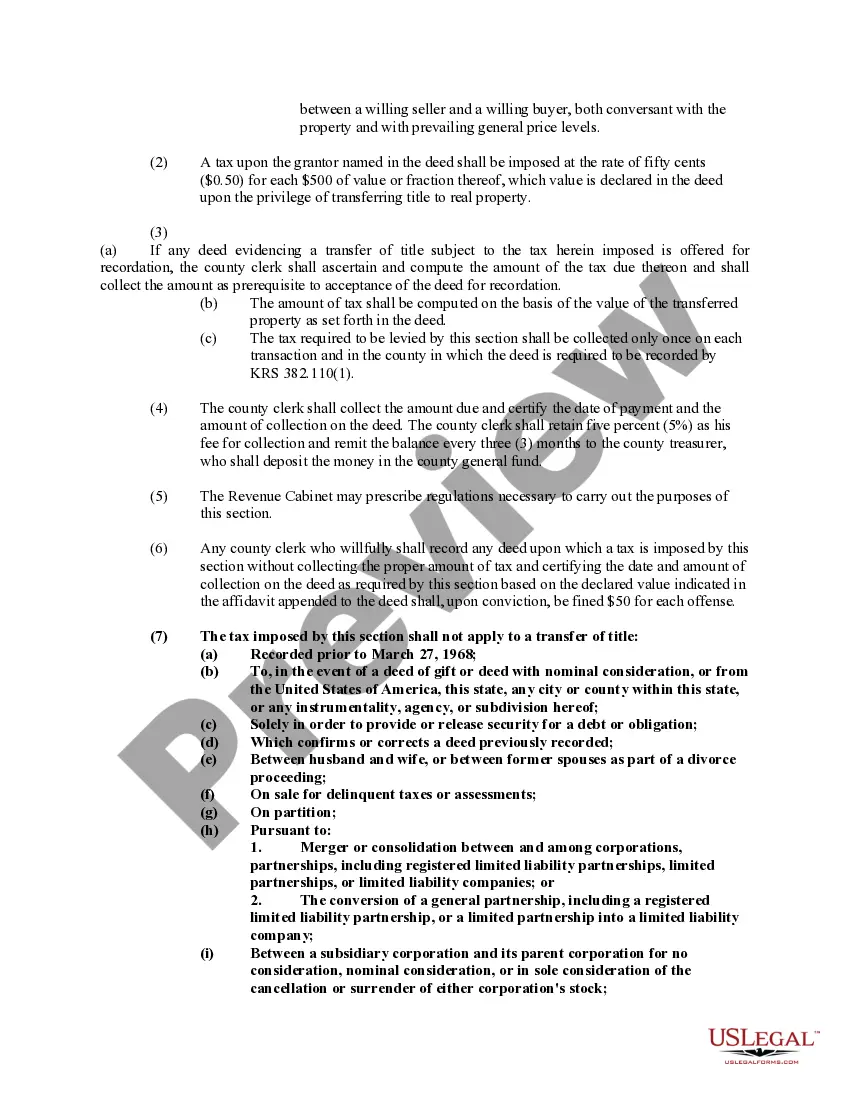
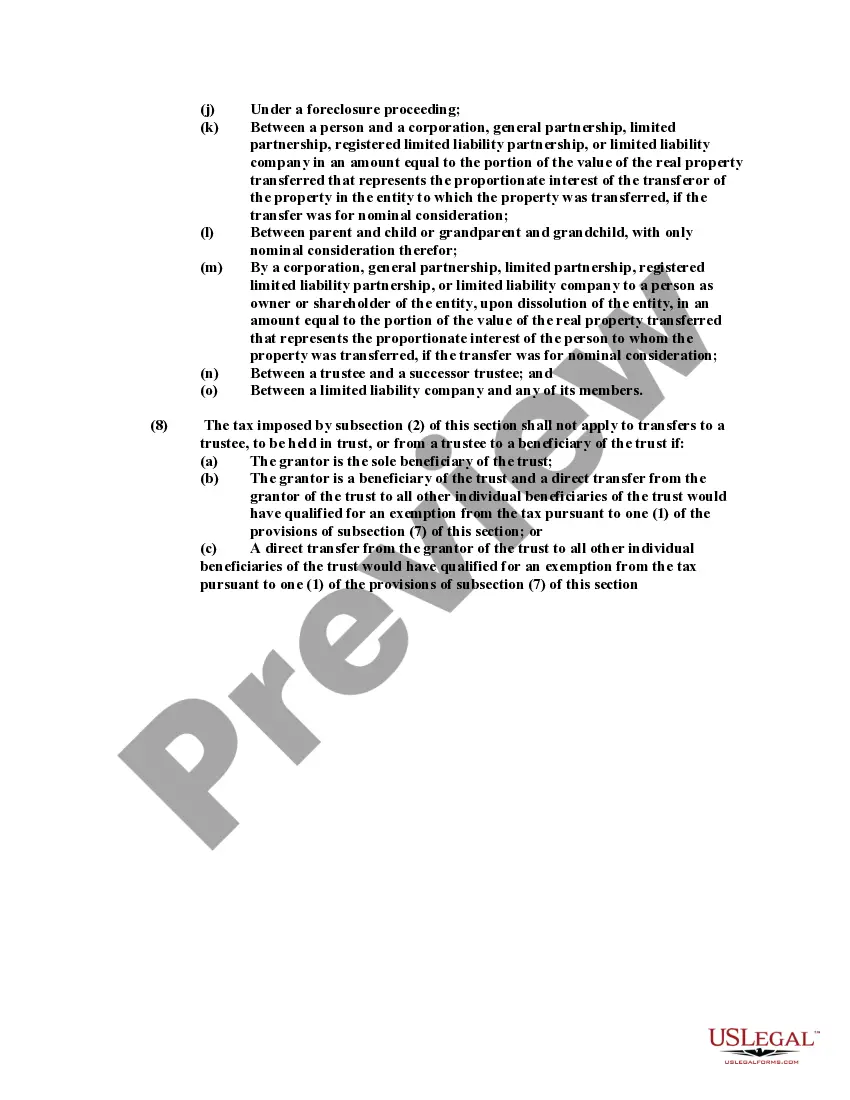
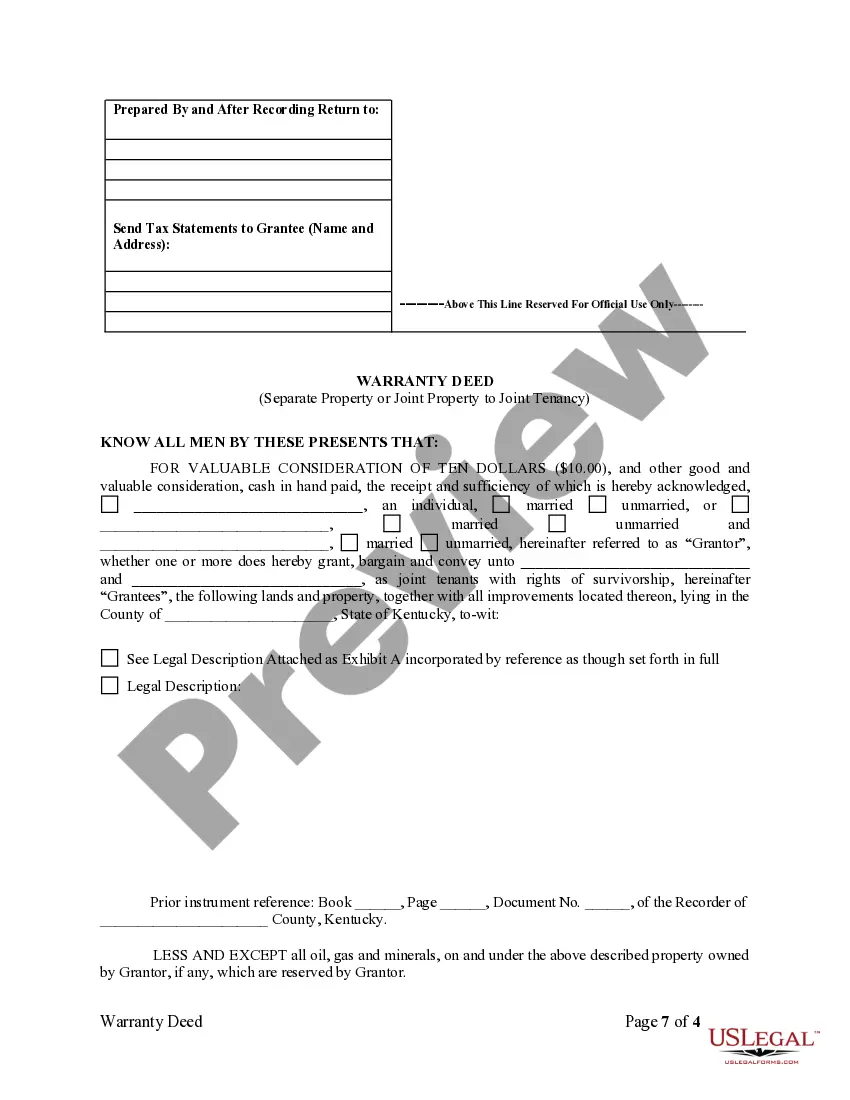
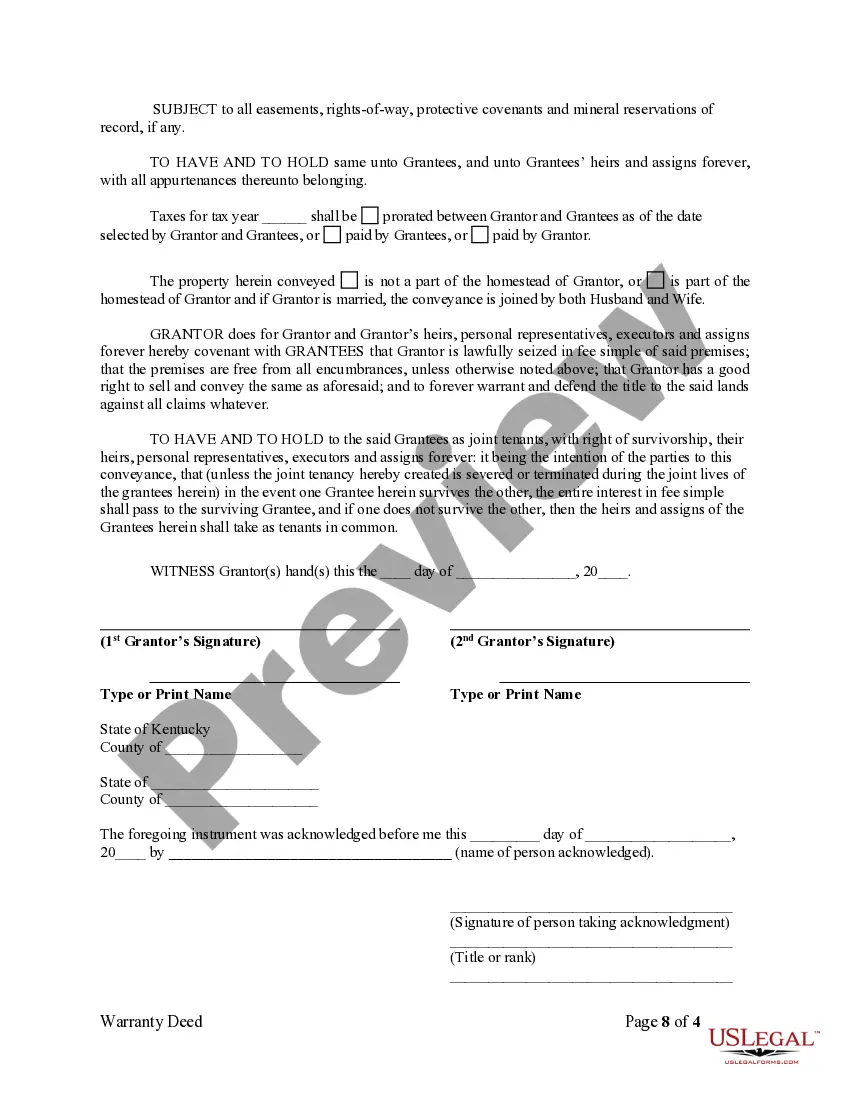
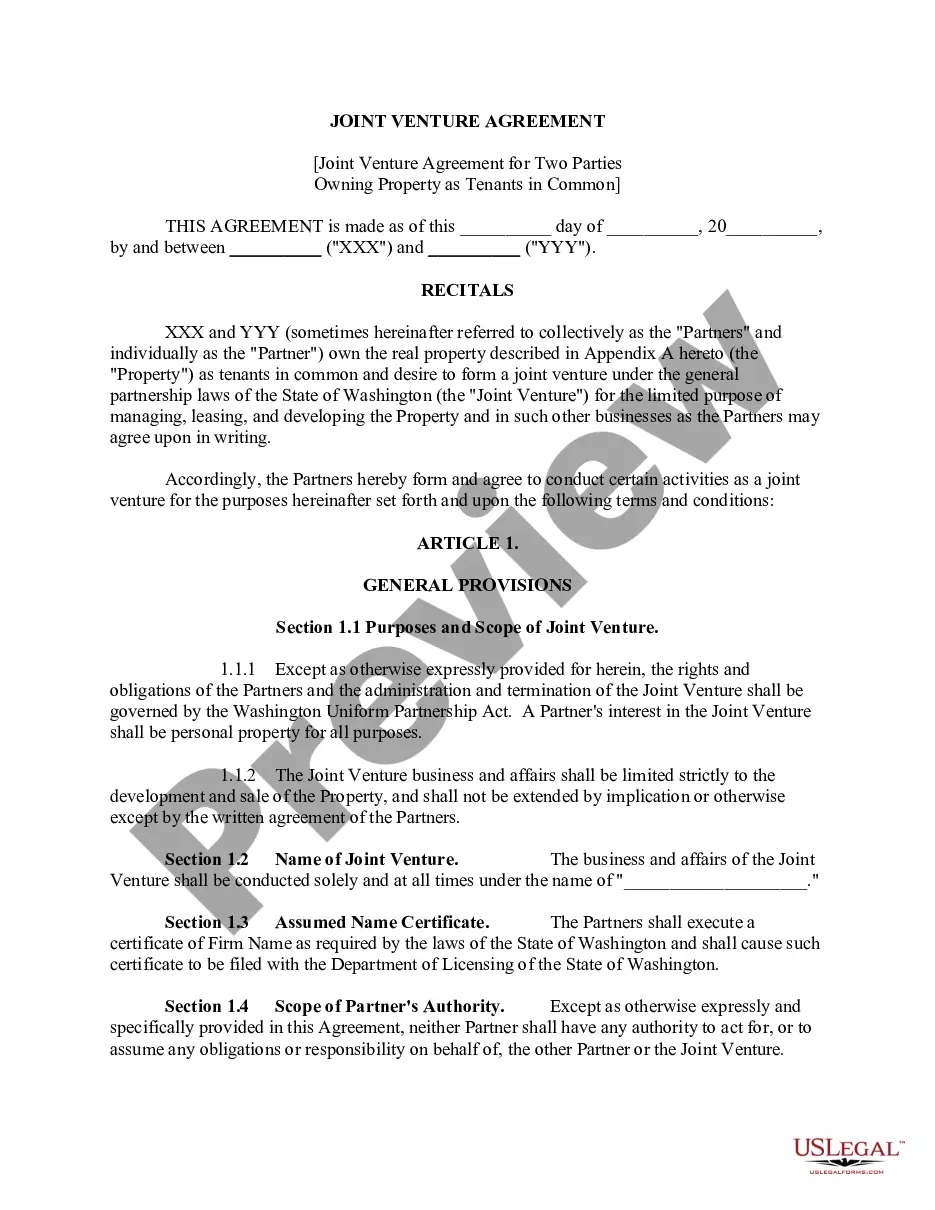
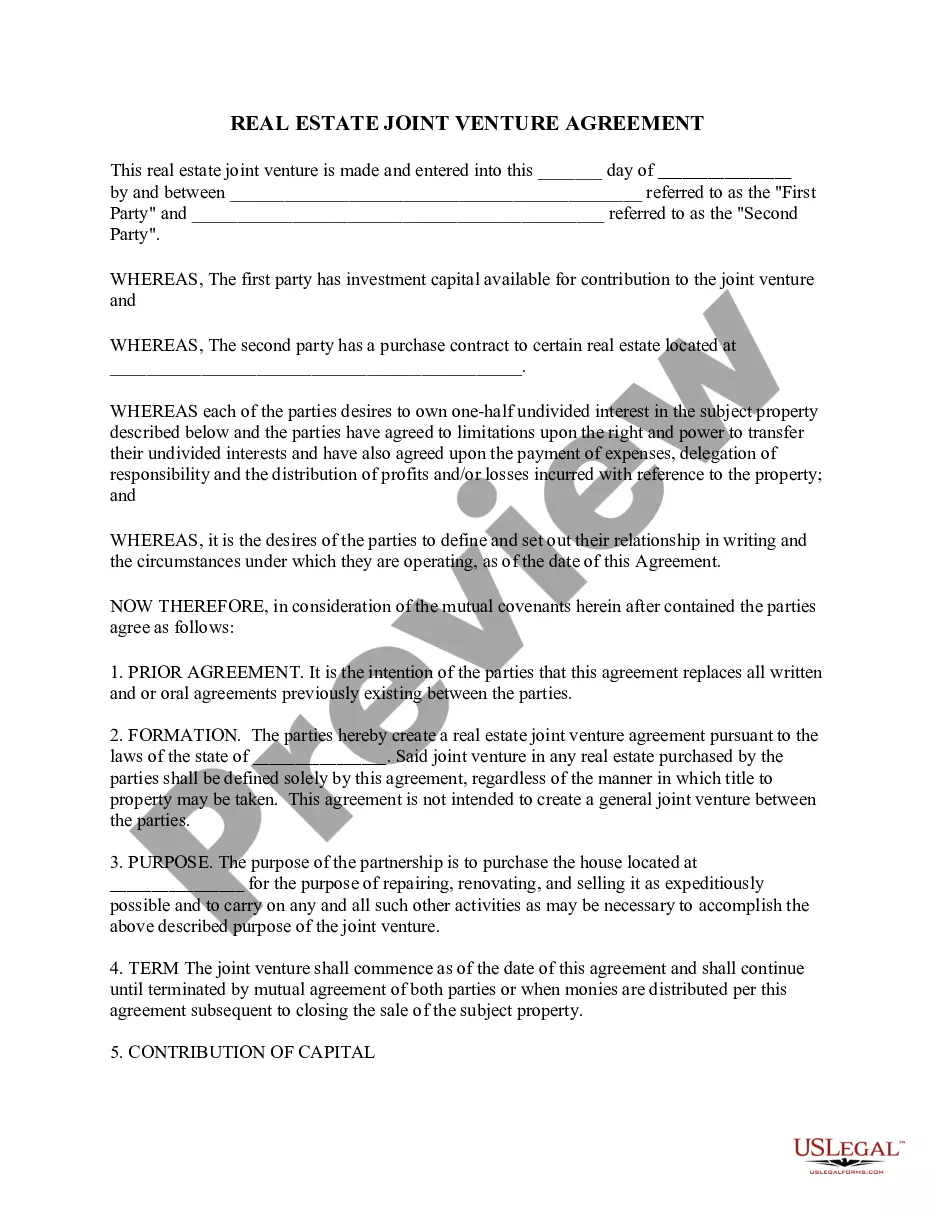
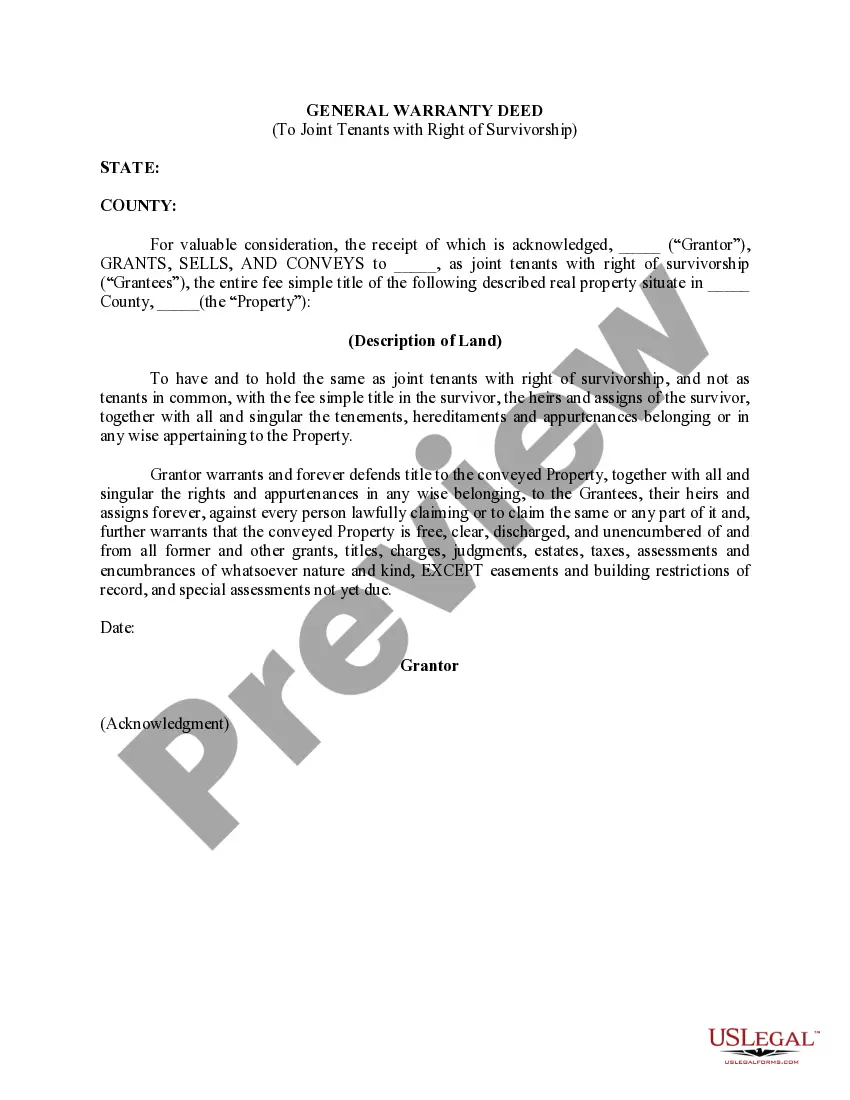
The Warranty Deed for Separate or Joint Property to Joint Tenancy is a legal document used to convert separate property or existing joint property into a joint tenancy. This form allows two or more individuals to hold property jointly, ensuring that when one owner passes away, their interest automatically transfers to the surviving owner(s) without the need for probate. Unlike a standard warranty deed, this document specifically establishes joint tenancy with rights of survivorship, providing clear instructions on ownership transfer upon the death of one tenant.
Main sections of this form
- Identification of grantors and grantees
- Legal description of the property being transferred
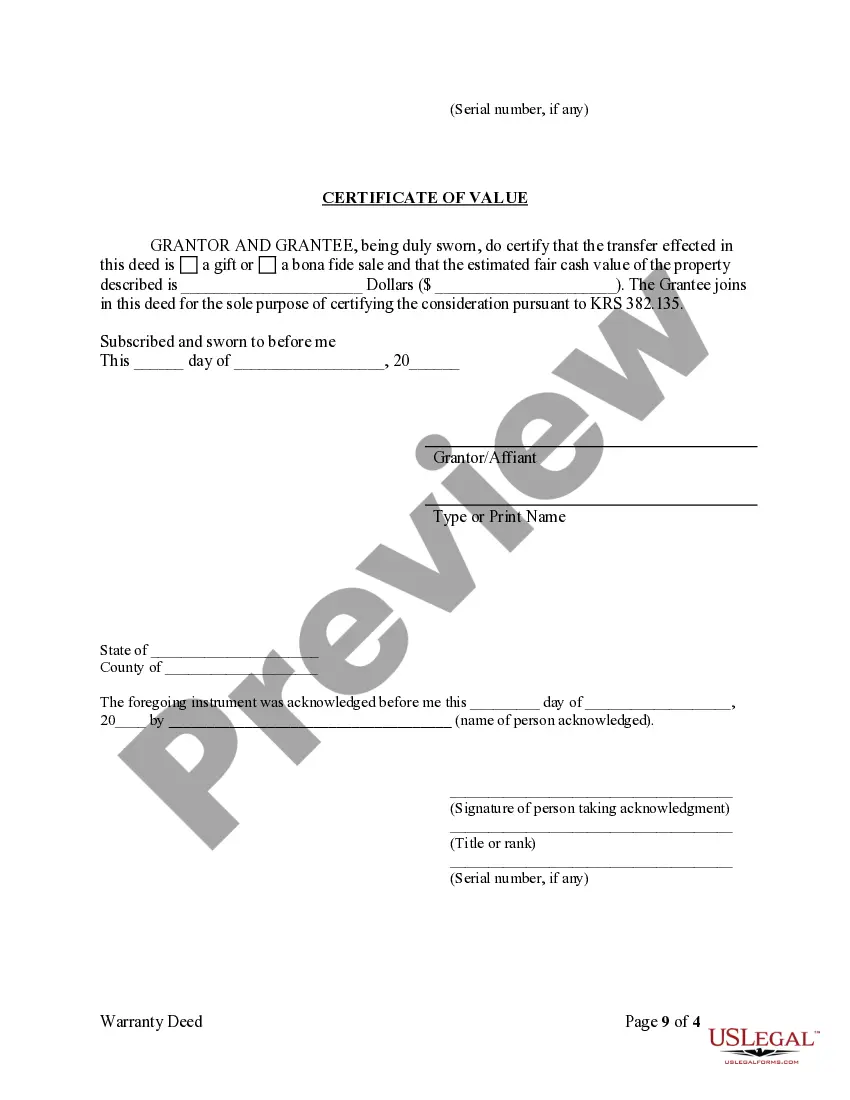
- Consideration statement documenting the transaction value
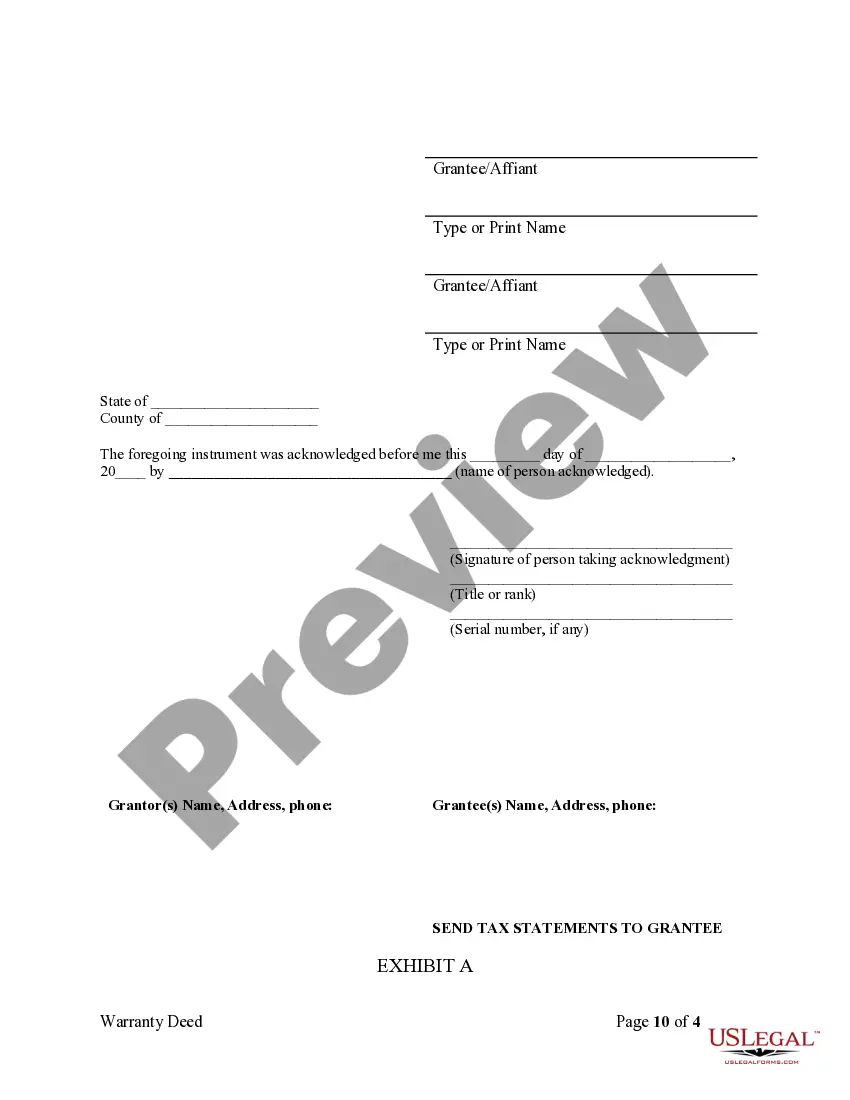
- Notary acknowledgment for validity
- Statement ensuring the property is free from encumbrances


Common use cases
This form is typically used when individuals want to change the ownership structure of property from separate or existing joint property to joint tenancy. Situations may include married couples wishing to ensure that their property passes directly to the surviving spouse or partners who want to share property ownership without going through probate after one passes away. It is also applicable in estate planning to provide clarity on the transfer of property rights.
Who can use this document
This warranty deed is intended for:
- Individuals or couples who own separate or joint property and intend to establish joint tenancy.
- Married couples seeking to simplify property transfer upon death.
- Partners looking to clarify ownership rights and survivorship provisions.
- Those needing a straightforward method to transfer real estate without probate complications.
How to prepare this document
- Identify the grantor(s) and ensure their names are correctly stated.
- Specify the grantee(s) to whom ownership is being transferred.
- Provide a complete legal description of the property being conveyed.
- Include the consideration amount and ensure both parties sign in the presence of a notary.
- Submit the completed deed to the appropriate county office for recording.
Notarization guidance
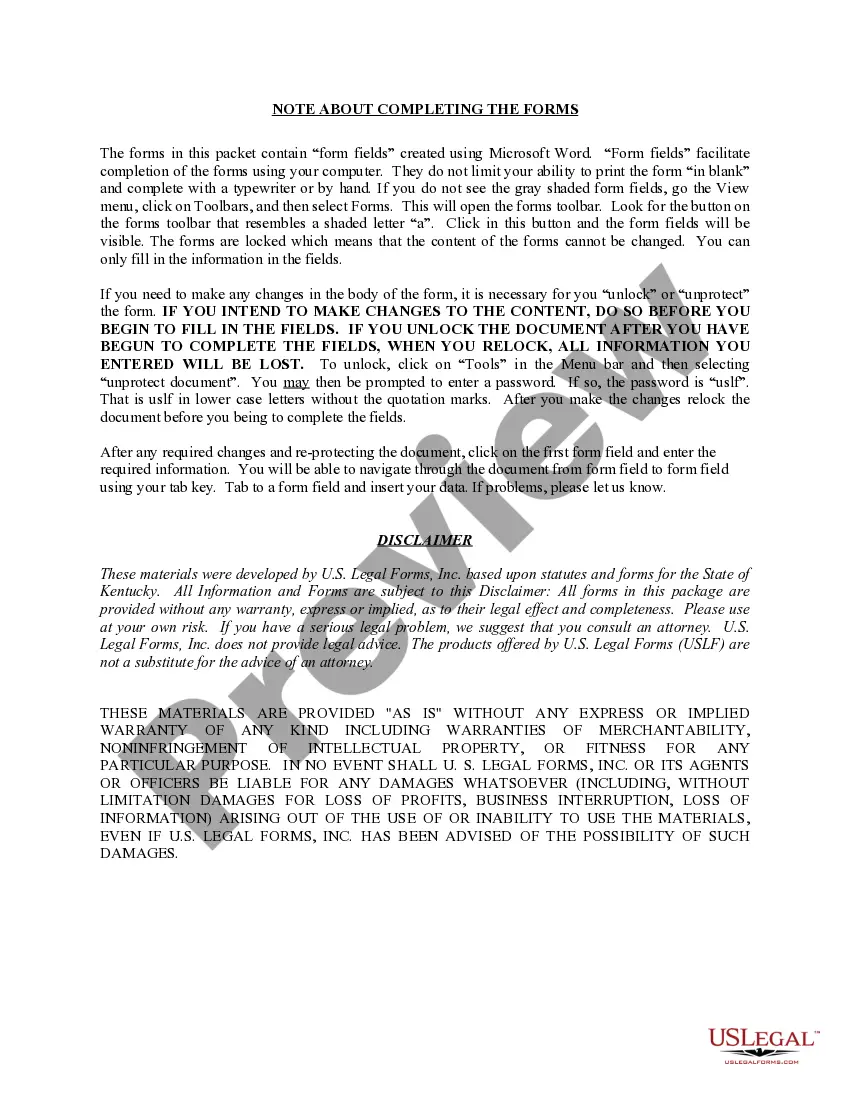
Yes, this form must be notarized to be legally valid. The notarization ensures that the identities of the signatories are verified and adds an additional layer of authenticity to the document. US Legal Forms offers an integrated online notarization service that is secure and convenient, allowing you to complete the notarization process anytime, anywhere.
Get your form ready online
Our built-in tools help you complete, sign, share, and store your documents in one place.
Make edits, fill in missing information, and update formatting in US Legal Forms—just like you would in MS Word.
Download a copy, print it, send it by email, or mail it via USPS—whatever works best for your next step.
Sign and collect signatures with our SignNow integration. Send to multiple recipients, set reminders, and more. Go Premium to unlock E-Sign.
If this form requires notarization, complete it online through a secure video call—no need to meet a notary in person or wait for an appointment.
We protect your documents and personal data by following strict security and privacy standards.

Make edits, fill in missing information, and update formatting in US Legal Forms—just like you would in MS Word.

Download a copy, print it, send it by email, or mail it via USPS—whatever works best for your next step.

Sign and collect signatures with our SignNow integration. Send to multiple recipients, set reminders, and more. Go Premium to unlock E-Sign.

If this form requires notarization, complete it online through a secure video call—no need to meet a notary in person or wait for an appointment.

We protect your documents and personal data by following strict security and privacy standards.
Common mistakes to avoid
- Failing to provide an accurate legal description of the property.
- Not having the deed notarized, which can lead to challenges in validity.
- Inaccurate information regarding grantor or grantee names.
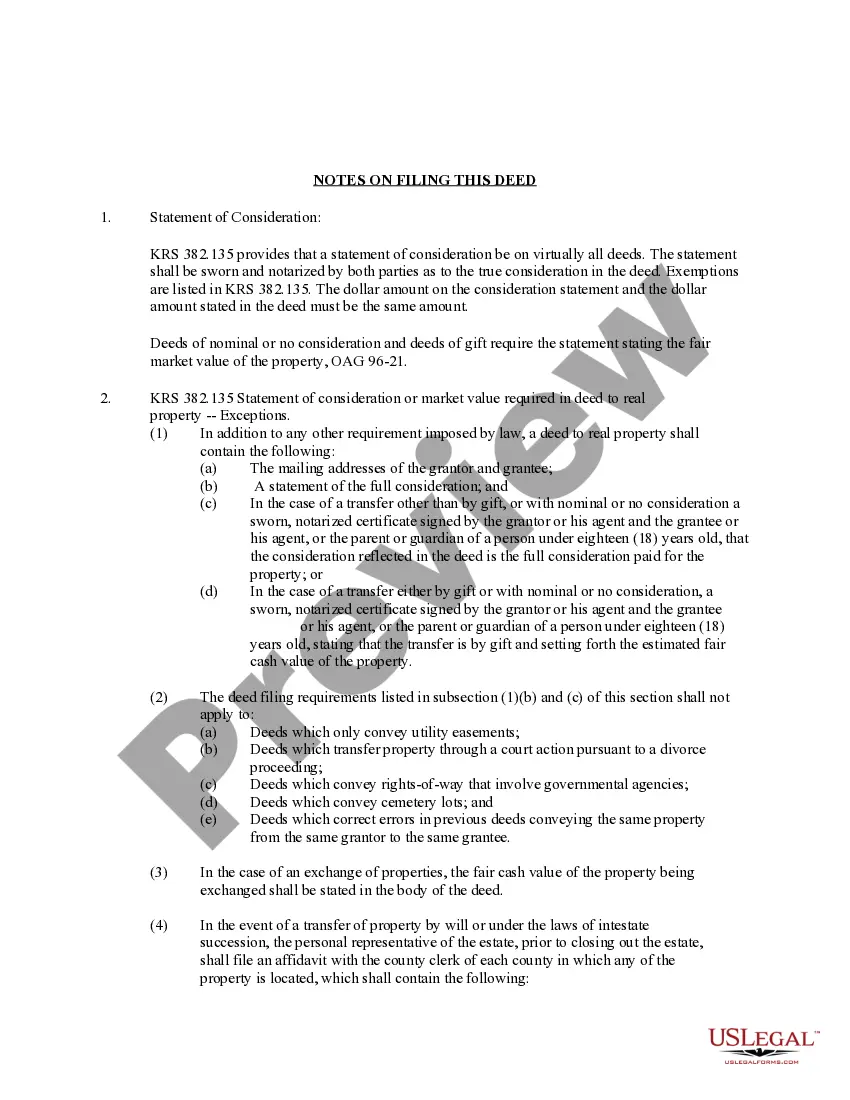
- Neglecting to include a statement of consideration required by law.
Why use this form online
- Easy access to documents tailored to Kentucky's legal requirements.
- Convenient digital filling and editing options.
- Reliable templates created by licensed attorneys.
- Time-efficient process with immediate downloads.
Legal use & context
- Establishing a joint tenancy can simplify property inheritance between co-owners.
- This deed is legally binding and enforceable in the state of Kentucky.
- Failure to adhere to state-specific requirements can result in legal complications and disputes.
Key takeaways
- The Warranty Deed for Separate or Joint Property to Joint Tenancy is essential for converting ownership to joint tenancy.
- It provides automatic transfer of property ownership upon the death of an owner.
- Proper completion and notarization are critical for the validity of the deed.
Looking for another form?


Form popularity
FAQ
The purpose of a deed is to transfer a title, a legal document proving ownership of a property or asset, to another person. For the document to be binding in a court of law, it must be filed in the public record by a local government official tasked with maintaining documents.
What Is the Difference Between a Warranty Deed & a Survivorship Deed?A warranty deed is the most comprehensive and provides the most guarantees. Survivorship isn't so much a deed as a title. It's a way to co-own property where, upon the death of one owner, ownership automatically passes to the survivor.
Technically, any seller (attorney or non-attorney) can prepare their own deed; however, it must contain all the correct language, for the specific situation, in order for it to do what you want it to do2026and in order for it to be acceptable for recording by the county clerk's office in the county in which the property
Retrieve your original deed. Get the appropriate deed form. Draft the deed. Sign the deed before a notary. Record the deed with the county recorder. Obtain the new original deed.
A deed is an official written document declaring a person's legal ownership of a property, while a title refers to the concept of ownership rights.
When you own a home, you own both the deed and title for that property. In real estate, title means you have ownership and a right to use the property.The deed is the physical legal document that transfers ownership. It shows who you bought your house from, and when you sell it, it shows who you sold it to.
A property deed is a legal document that transfers the ownership of real estate from a seller to a buyer. For a deed to be legal it must state the name of the buyer and the seller, describe the property that is being transferred, and include the signature of the party that is transferring the property.
Either (1) a sworn, notarized certificate signed by the grantor or his agent and the grantee or his agent, that the consideration reflected in the deed is the full consideration paid for the property, or (2) a sworn, notarized certificate signed by the grantor or his agent and the grantee or his agent, stating that the
With a Survivorship Deed in place, when one of the parties in a joint tenancy dies, the other party (or parties) takes over the deceased party's interest in the property instead of it passing to the deceased's heirs or beneficiaries.