Indiana Grant of Conservation Easement for Preservation of Habitat
About this form
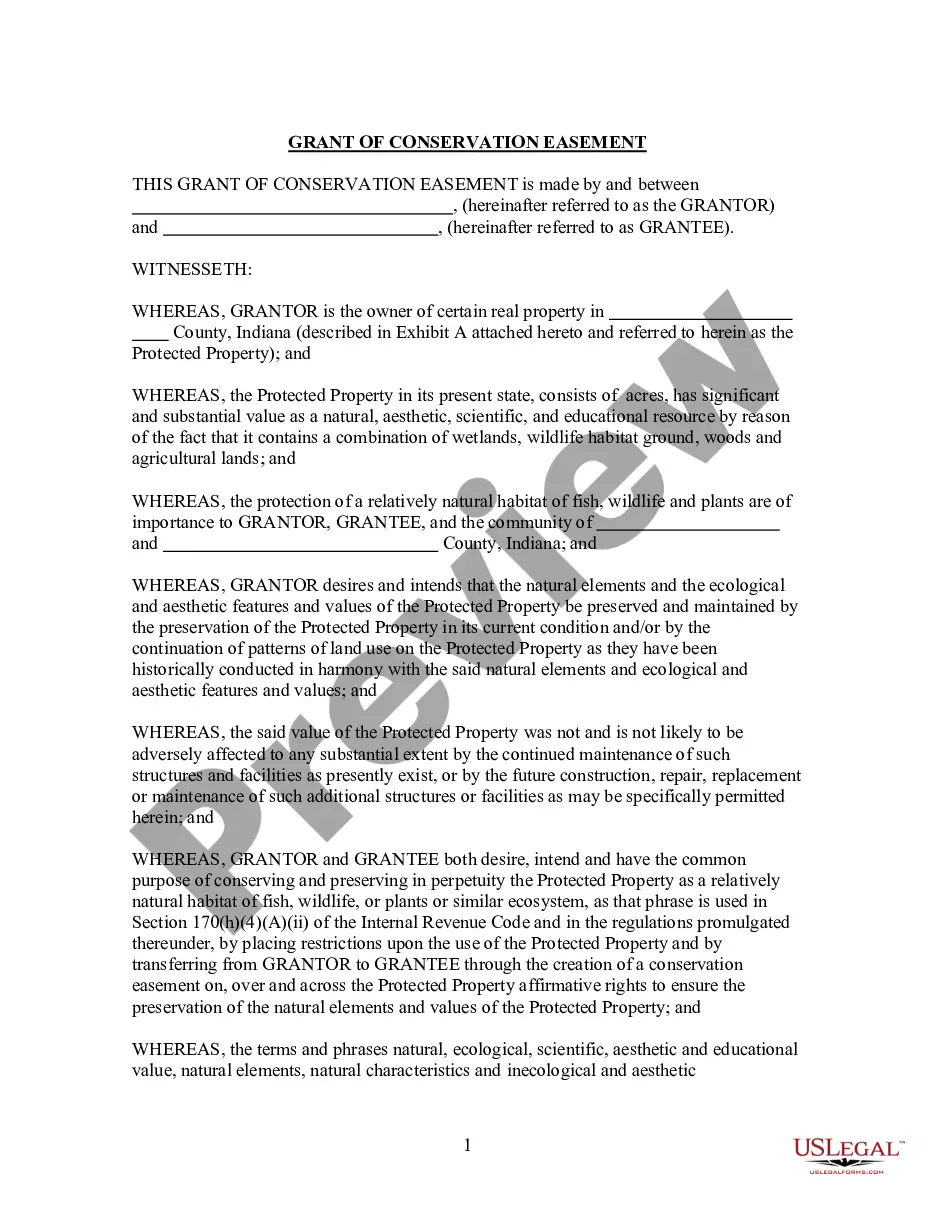
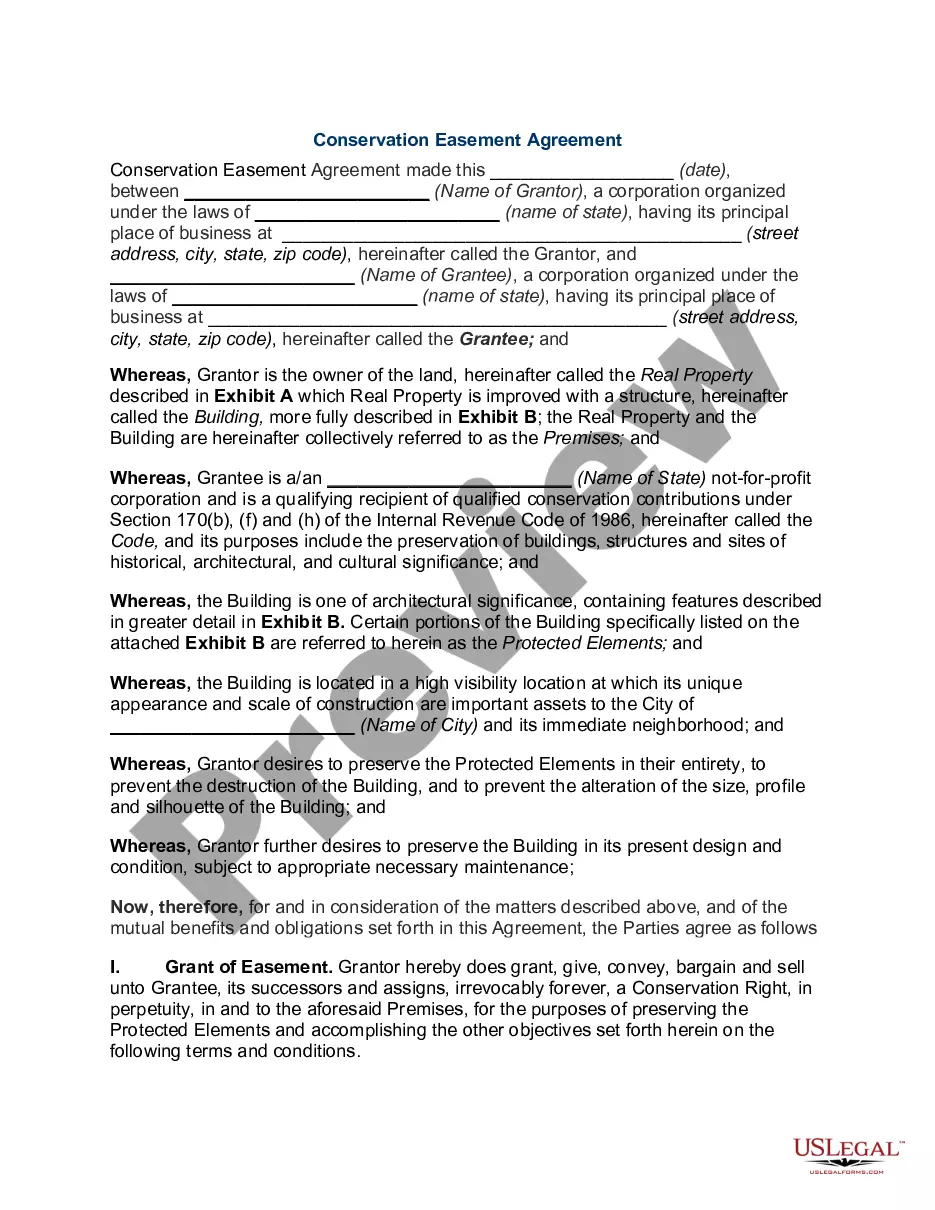
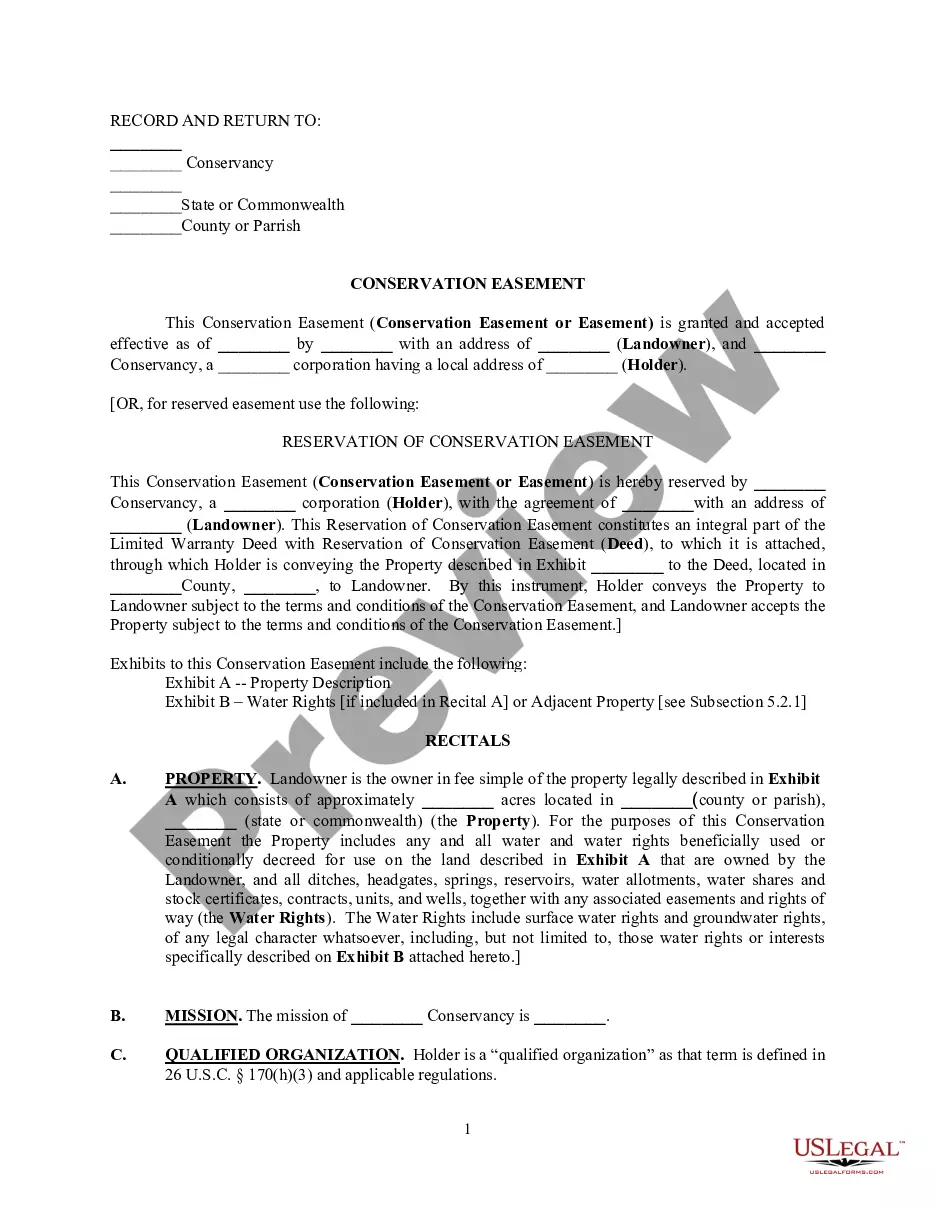
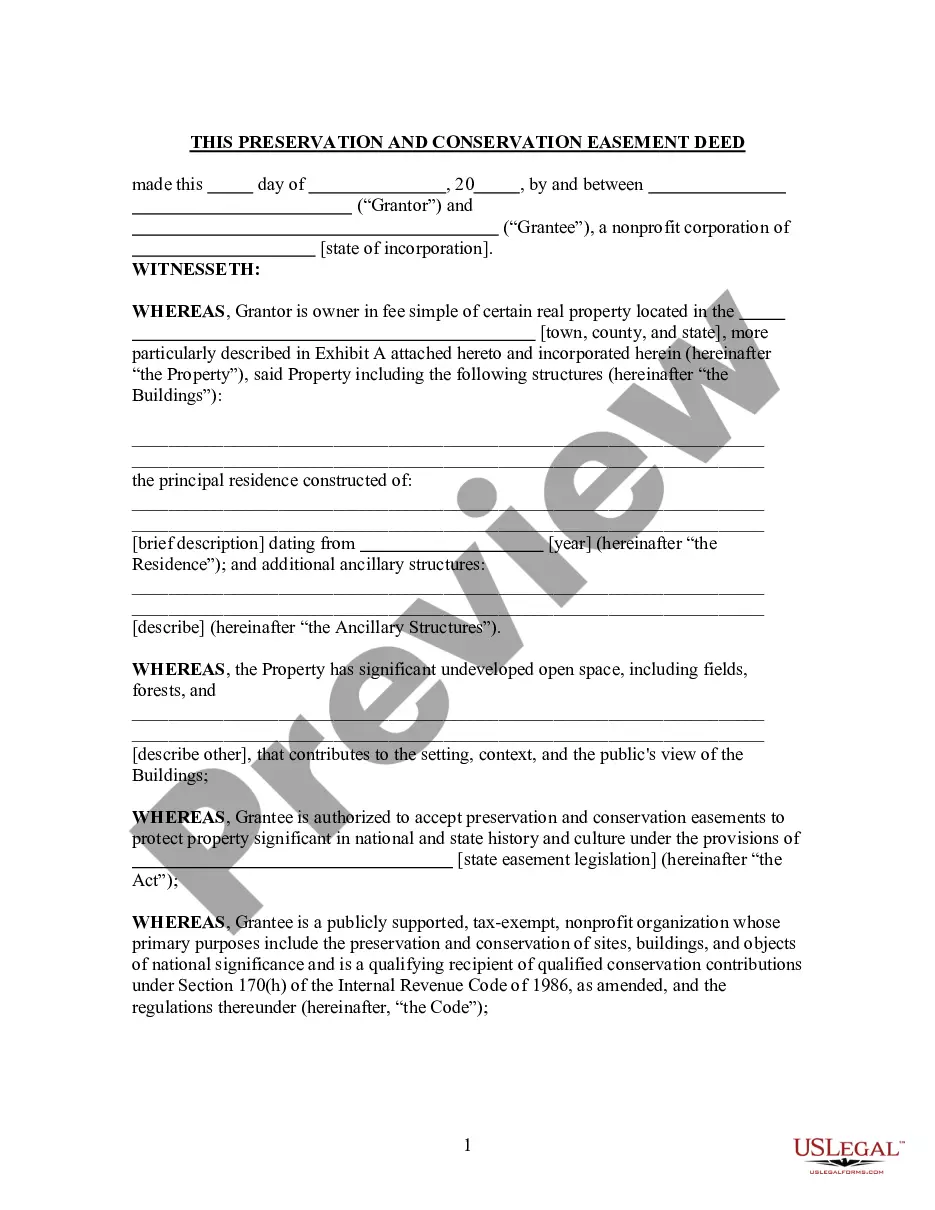
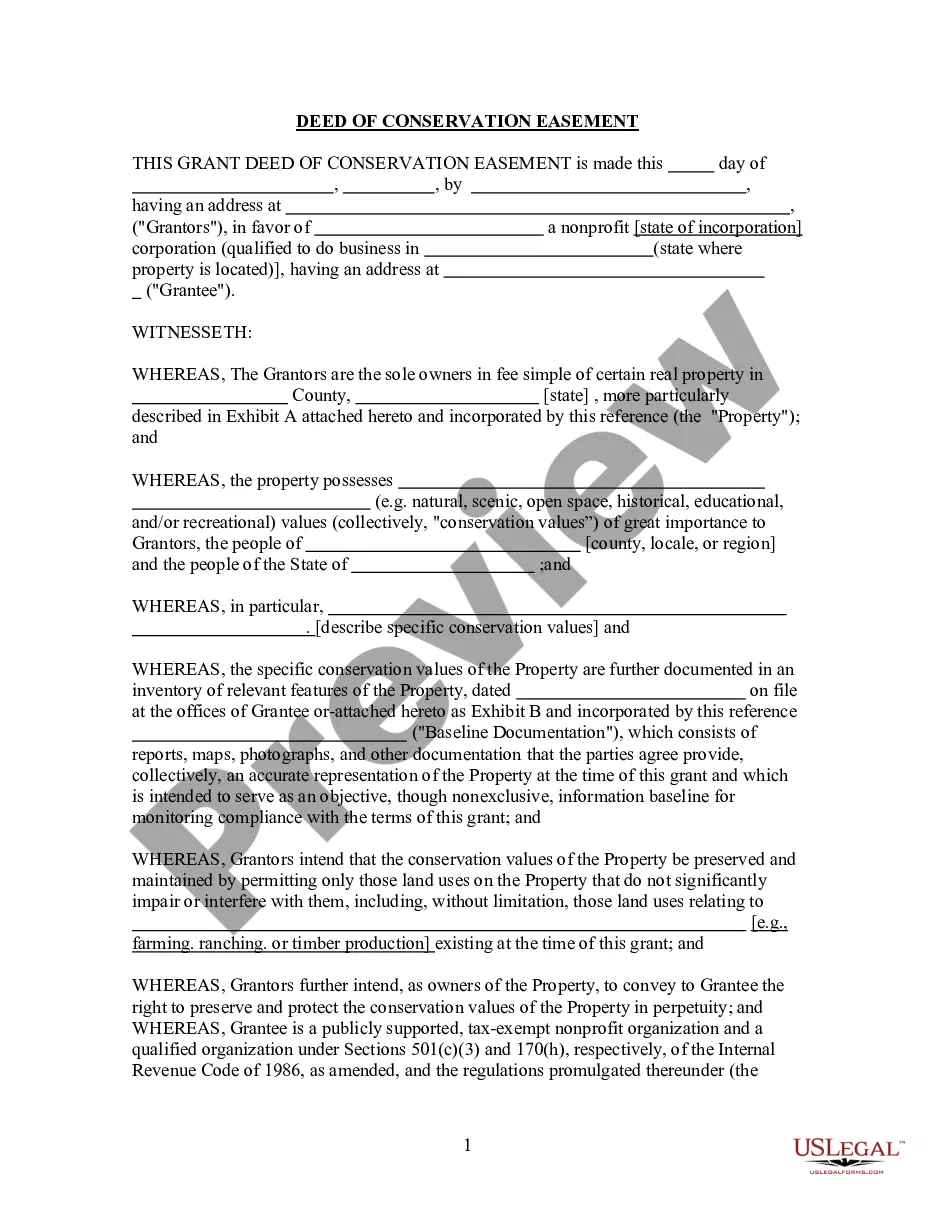
The Grant of Conservation Easement for Preservation of Habitat is a legal document that enables landowners to protect their property as a natural habitat for wildlife, plants, or ecosystems. By signing this form, the property owner (Grantor) places restrictions on the use of the land to ensure its ecological integrity, transferring rights to a conservation organization (Grantee) to enforce these restrictions. This differs from other land agreements in that it specifically focuses on long-term environmental preservation rather than commercial development or sale of property.
Main sections of this form
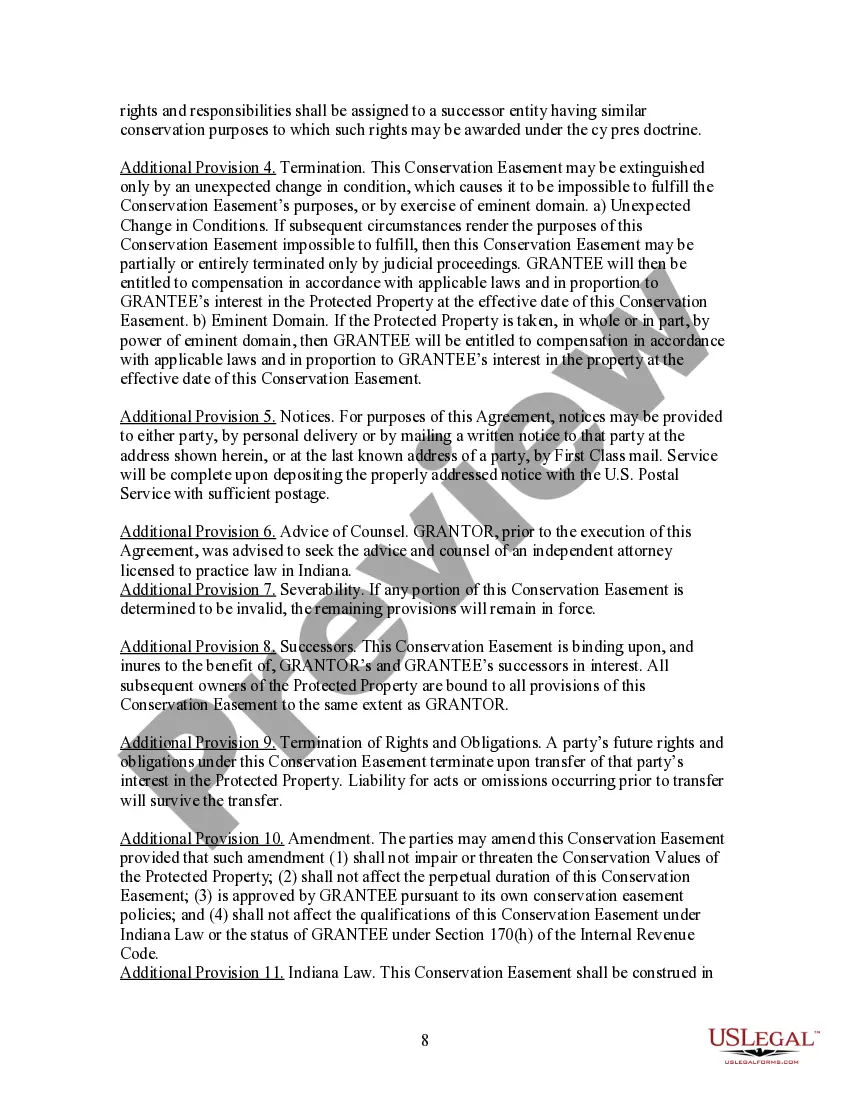
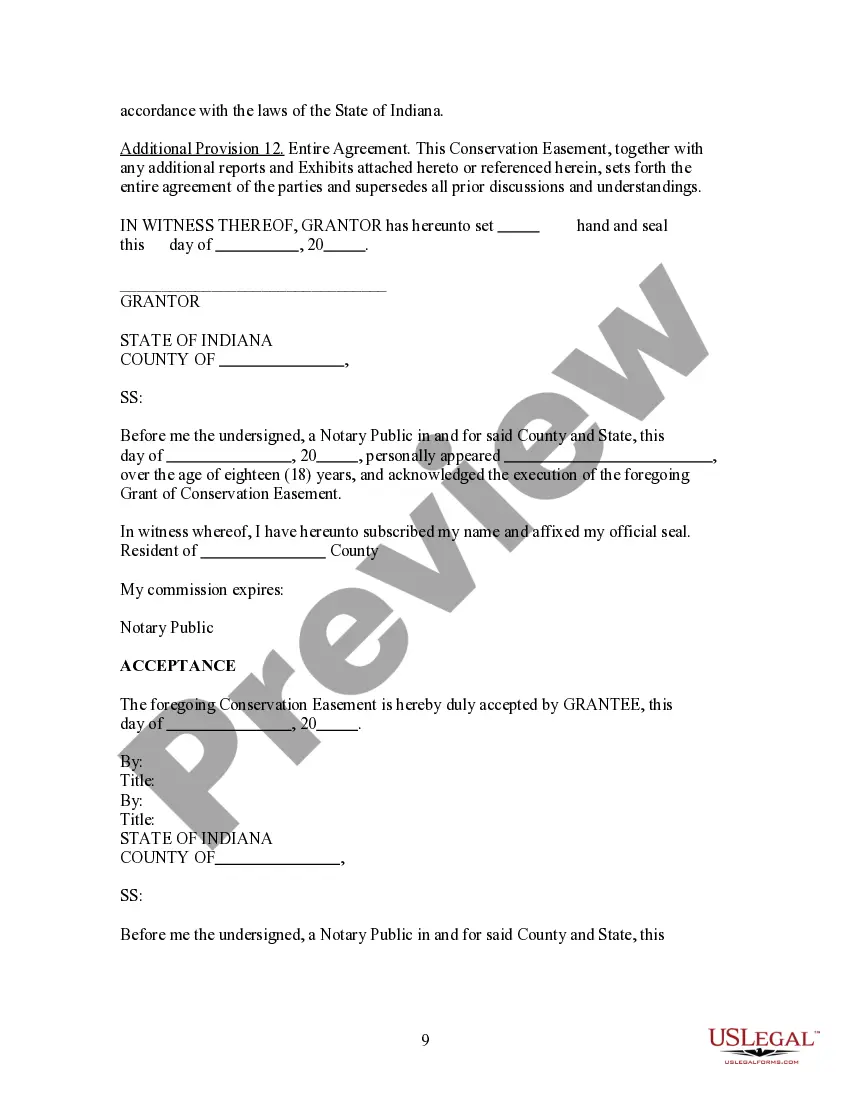
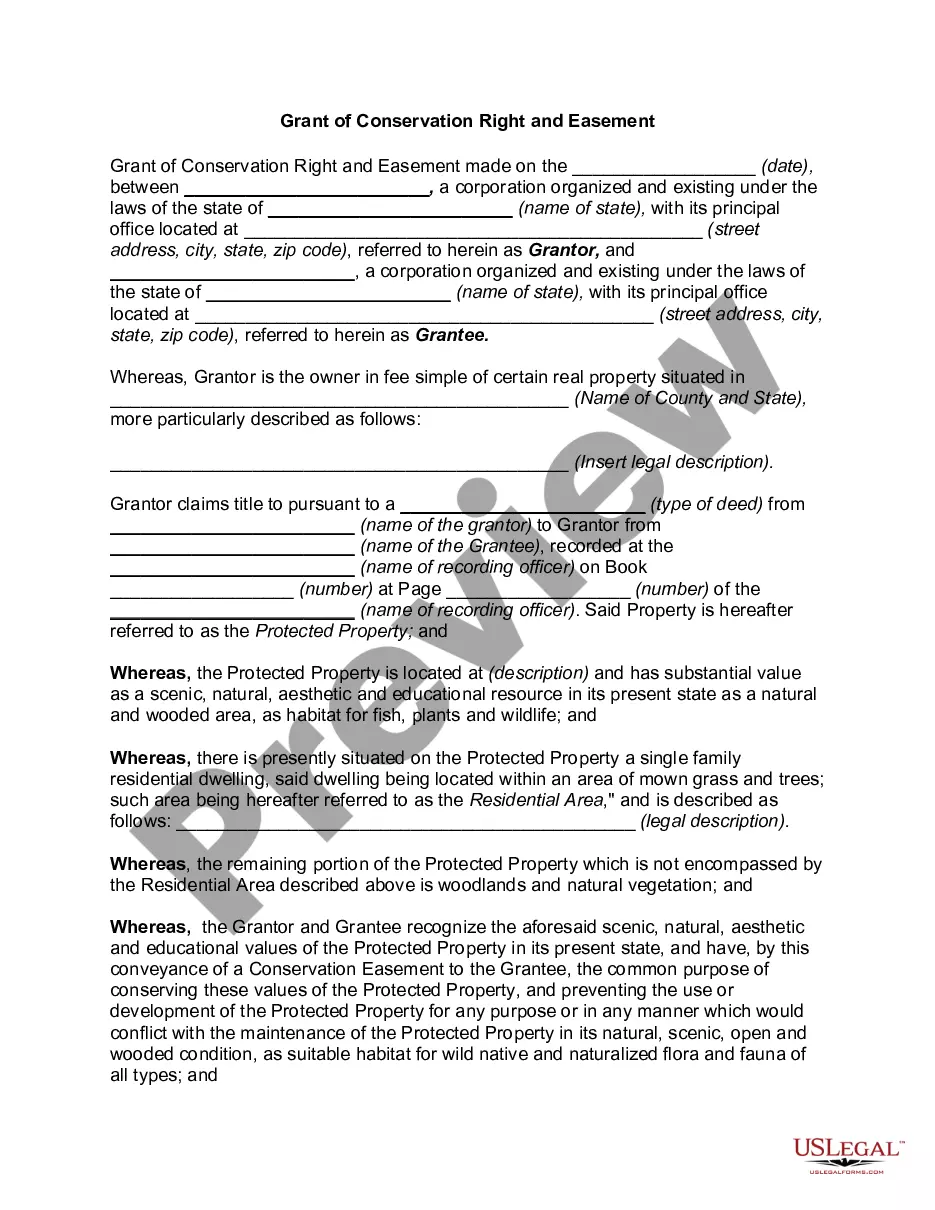
- Whereas Clauses: Initial statements explaining the intent of both the Grantor and Grantee regarding conservation.
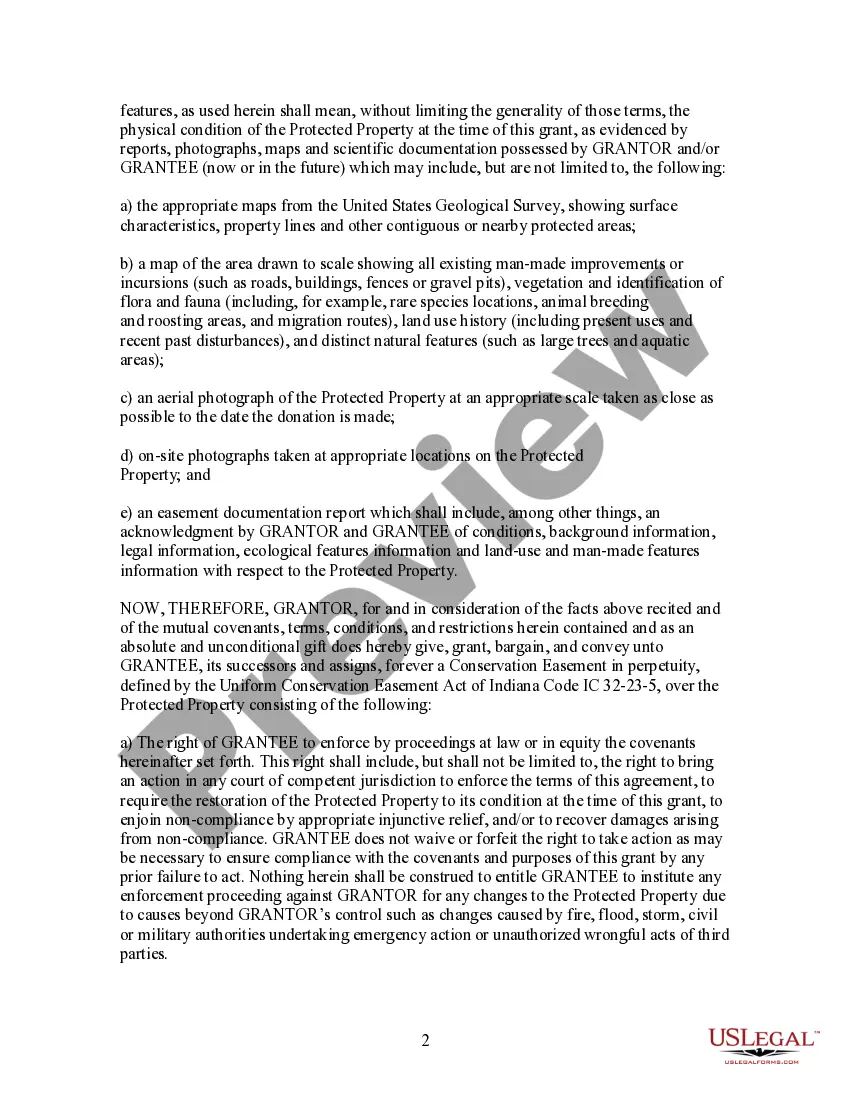
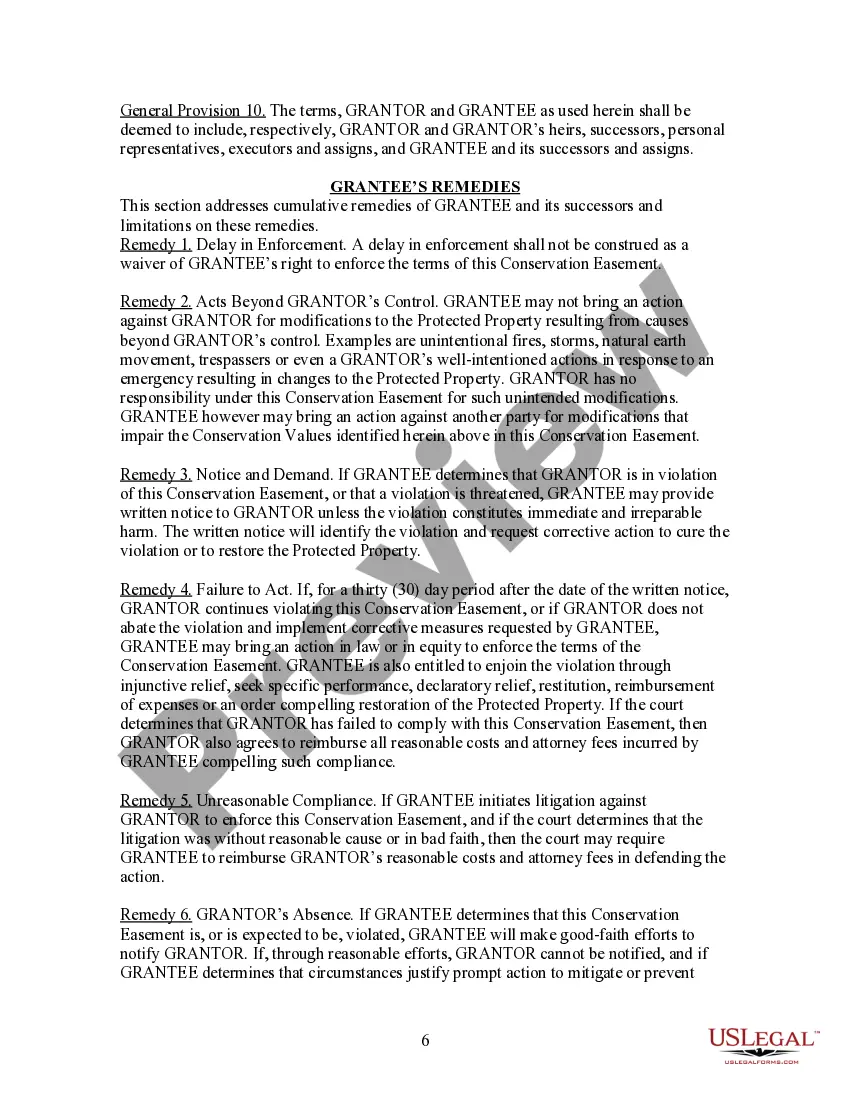
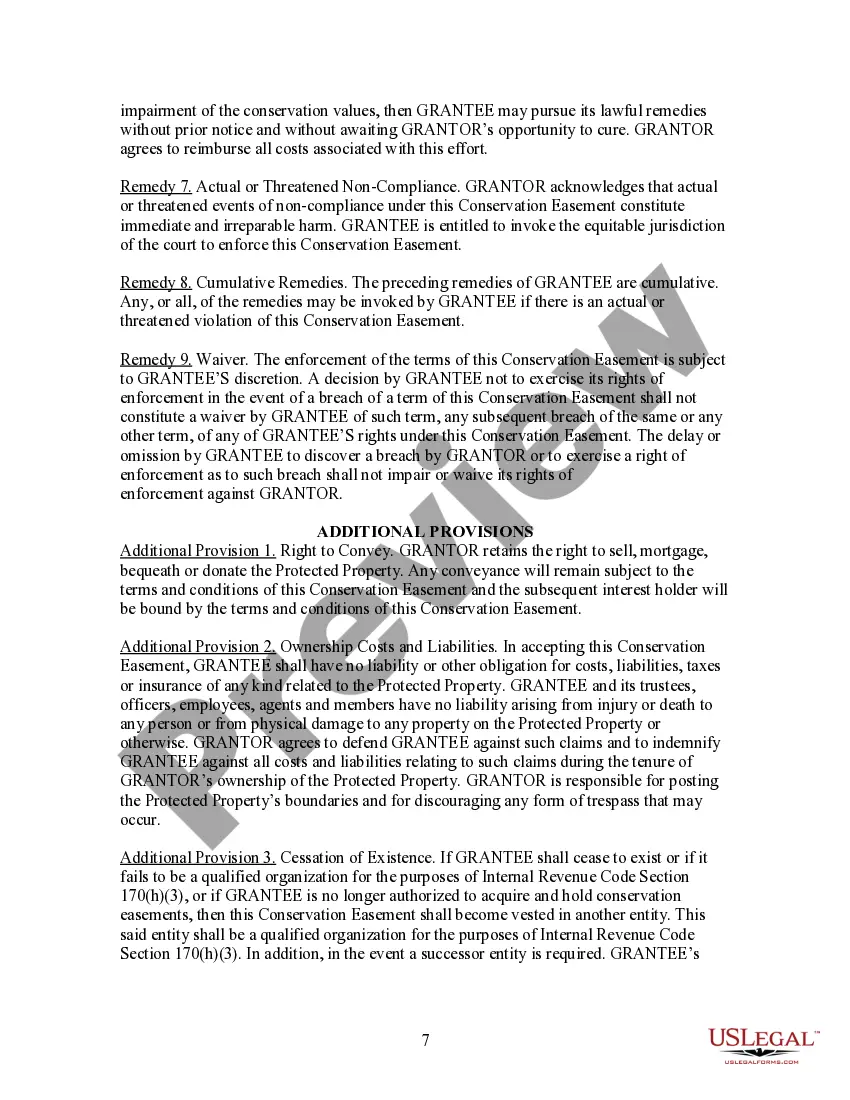
- Rights and Responsibilities: Outlines the rights of the Grantee to inspect, enforce restrictions, and maintain natural conditions on the property.
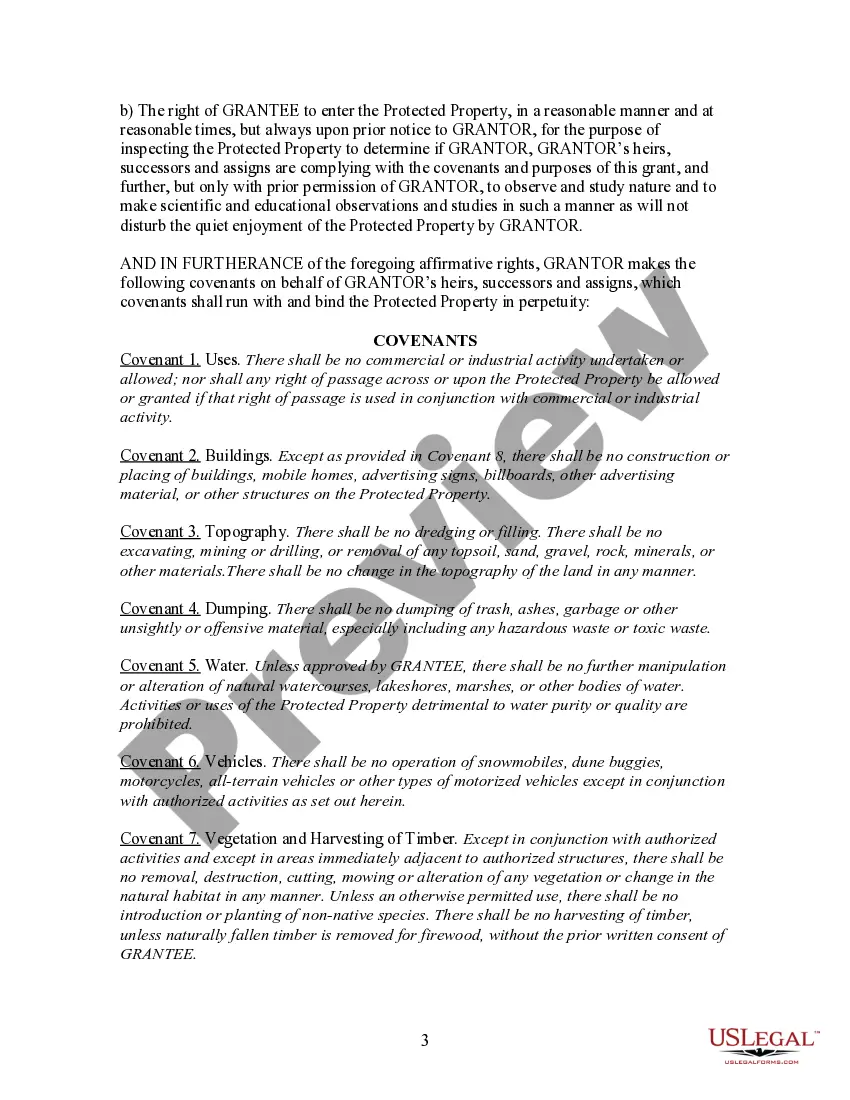
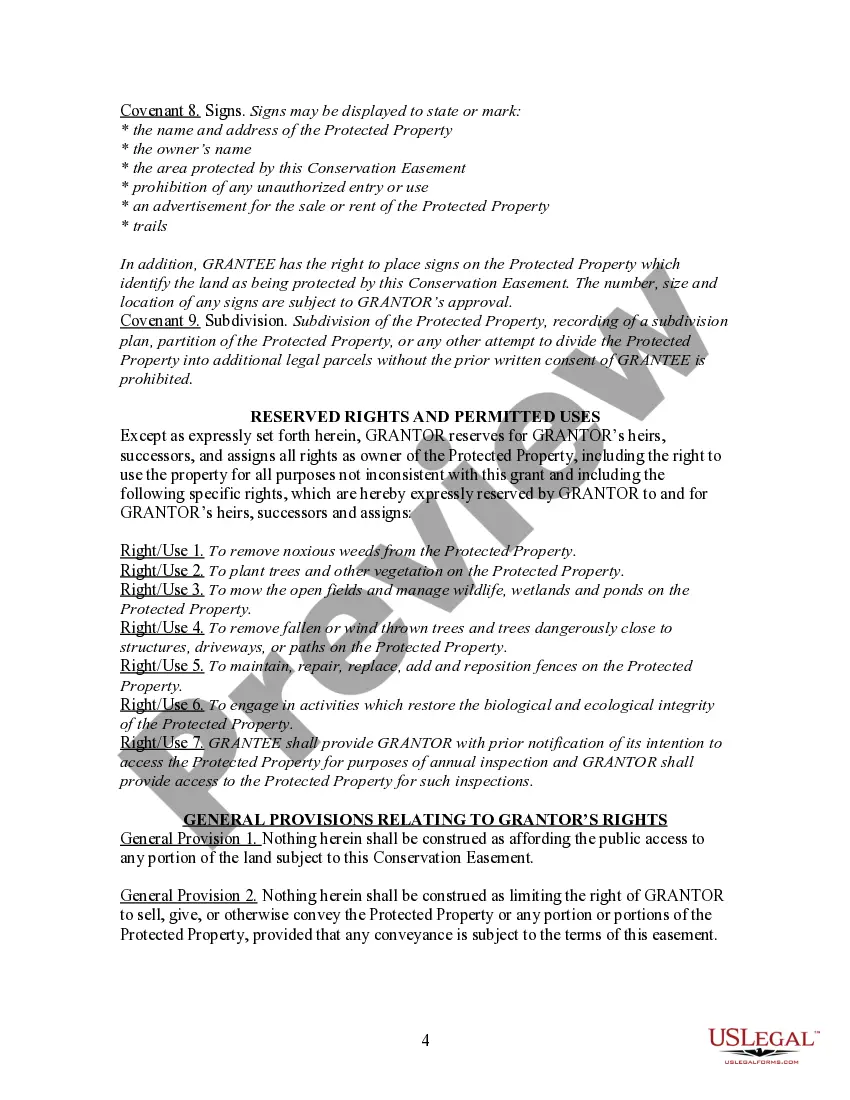
- Covenants: Lists prohibitions such as commercial activities, construction, and natural resource extraction.
- Reserved Rights: Specifies certain activities the Grantor can still pursue, like managing vegetation and wildlife.
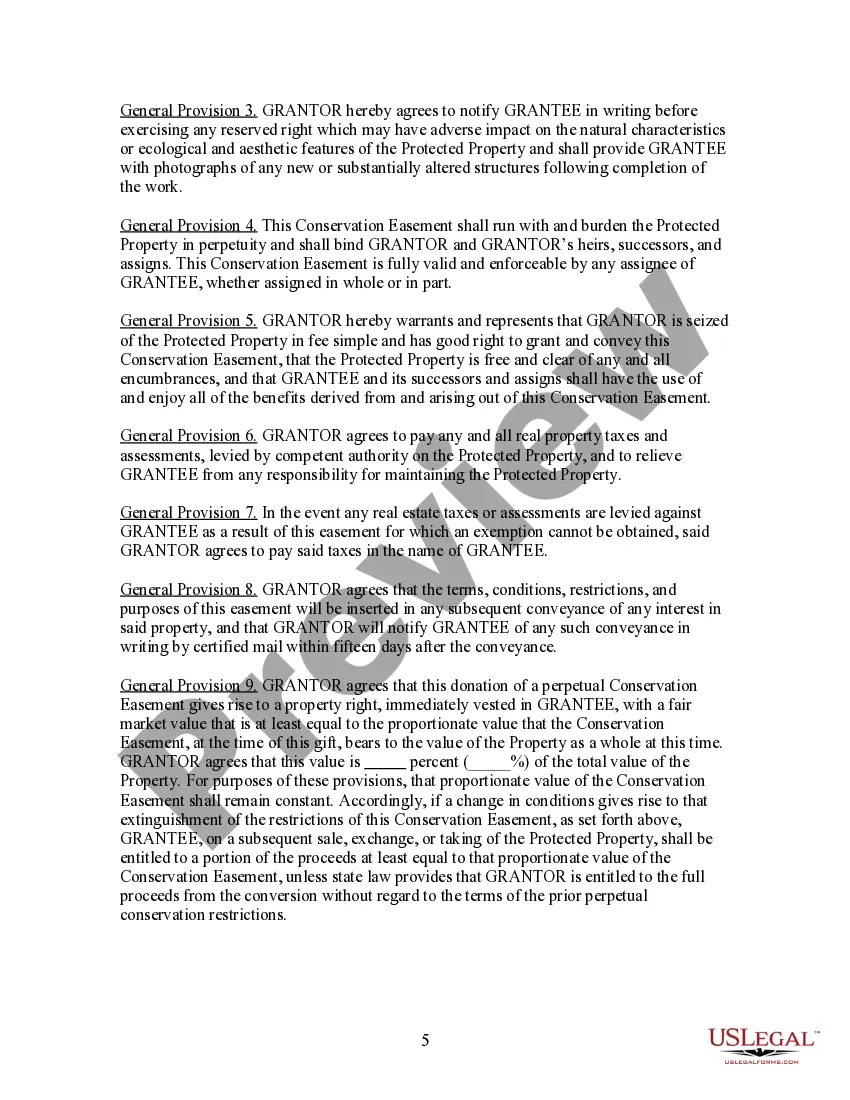
- General Provisions: Covers legal stipulations regarding transfer of property and tax responsibilities.
When this form is needed
This form is used when a landowner wishes to ensure the long-term conservation of their property. It is ideal for scenarios where the owner intends to preserve natural habitats for wildlife, create educational opportunities about ecosystems, or retain the aesthetic value of the land while preventing future development or misuse. It is suitable for both public and private landowners committed to environmental stewardship.
Intended users of this form
- Landowners looking to protect their property for ecological purposes.
- Conservation organizations interested in acquiring easements to secure natural habitats.
- Institutional funders supporting environmental sustainability and biodiversity efforts.
- Individuals or groups engaging in land preservation initiatives.
Completing this form step by step
- Identify the parties involved: name the Grantor and Grantee.
- Specify the protected property by providing a legal description and any maps or documentation.
- Complete the Whereas clauses to reflect the intent and rationale for the easement.
- Fill in the rights and responsibilities of both Grantor and Grantee as outlined in the form.
- Sign and date the form in presence of witnesses, if applicable, and ensure to meet all notarization requirements.
Notarization guidance
This form must be notarized to be legally valid. US Legal Forms provides secure online notarization powered by Notarize, allowing you to complete the process through a verified video call.
Get your form ready online
Our built-in tools help you complete, sign, share, and store your documents in one place.
Make edits, fill in missing information, and update formatting in US Legal Forms—just like you would in MS Word.
Download a copy, print it, send it by email, or mail it via USPS—whatever works best for your next step.
Sign and collect signatures with our SignNow integration. Send to multiple recipients, set reminders, and more. Go Premium to unlock E-Sign.
If this form requires notarization, complete it online through a secure video call—no need to meet a notary in person or wait for an appointment.
We protect your documents and personal data by following strict security and privacy standards.

Make edits, fill in missing information, and update formatting in US Legal Forms—just like you would in MS Word.

Download a copy, print it, send it by email, or mail it via USPS—whatever works best for your next step.

Sign and collect signatures with our SignNow integration. Send to multiple recipients, set reminders, and more. Go Premium to unlock E-Sign.

If this form requires notarization, complete it online through a secure video call—no need to meet a notary in person or wait for an appointment.

We protect your documents and personal data by following strict security and privacy standards.
Avoid these common issues
- Failing to correctly describe the protected property, which can lead to enforcement issues.
- Not clearly defining the roles and responsibilities of the Grantor and Grantee.
- Omitting necessary documentation or maps that support the conservation goals.
- Not obtaining signatures from both parties or failing to notarize the document when required.
Why use this form online
- Convenience of downloading the form directly from the website.
- Editable fields to customize the form according to specific needs without having to contact an attorney.
- Access to legal guidance during the completion process ensures accuracy and compliance.
- Secure digital storage options for future access and reference.
Looking for another form?
Form popularity
FAQ
Benefits the owner of adjacent land. The easement is thus appurtenant to the holder's land. The benefited land is called the dominant tenementThe land that benefits from an easement., and the burdened landthat is, the land subject to the easementis called the servient tenement.
Types of Easements An easement may be classified as either an easement appurtenant or an easement in gross. Easement Appurtenant. An easement appurtenant is an easement that benefits one parcel of land, known as the dominant tenement, to the detriment of another parcel of land, known as the servient tenement.
If an authority has an easement registered over your land, they have the right to access the easement to maintain or repair the easement land or their equipment on the land.
Easement holders have the right to use the land to their enjoyment as long as it does not place an unreasonable burden on the servient estate. Landowners have the right to make whatever use of the land as long as it doesn't unduly affect the easement.
An easement is a property right that provides its holder with a non-possessory interest on another person's land.If there are only personal individual benefits from an easement the term used is in gross. The majority of easements are affirmative, this means that they authorise the use of another person's land.