Louisiana Motion for Discovery City Court
About this form
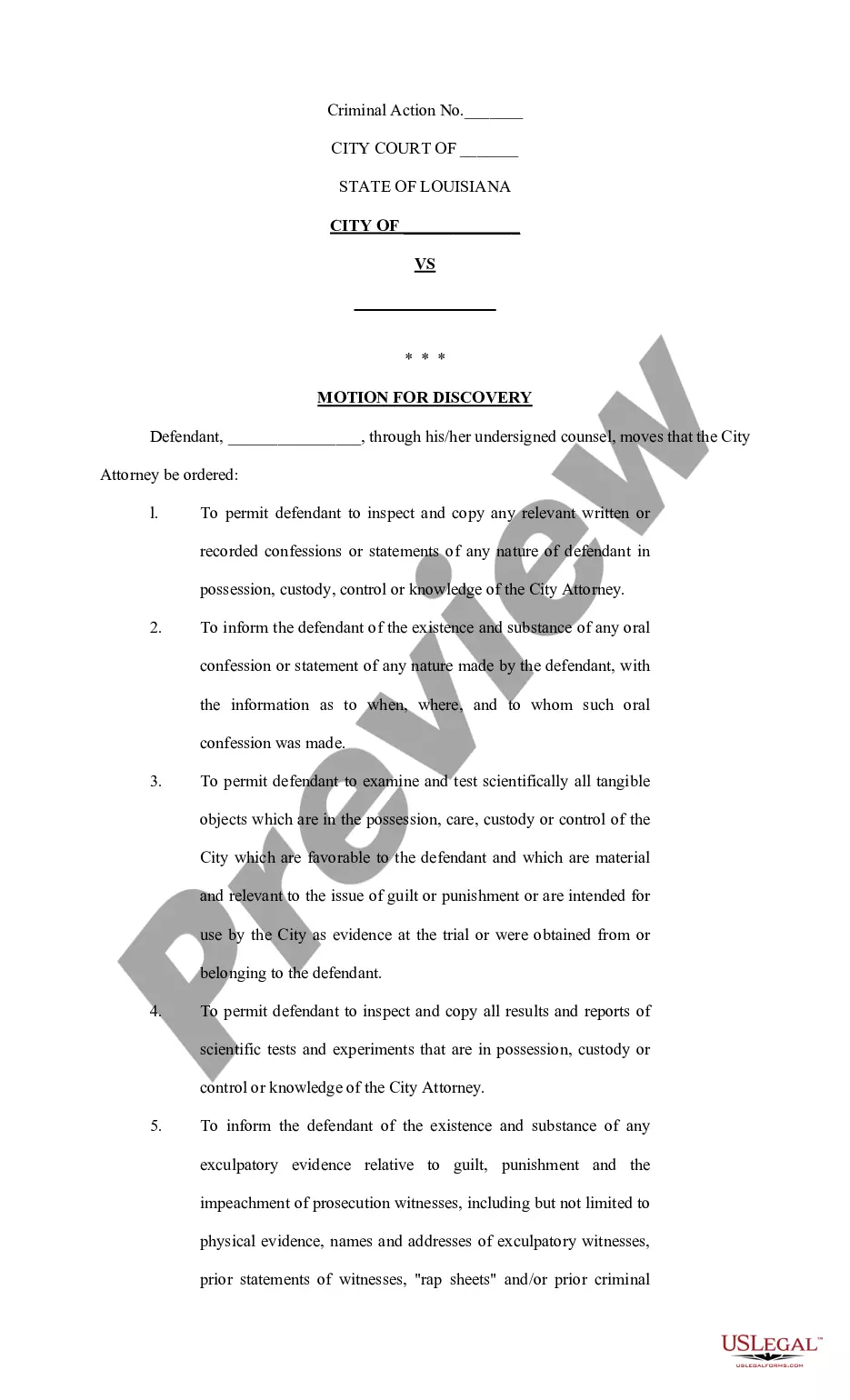
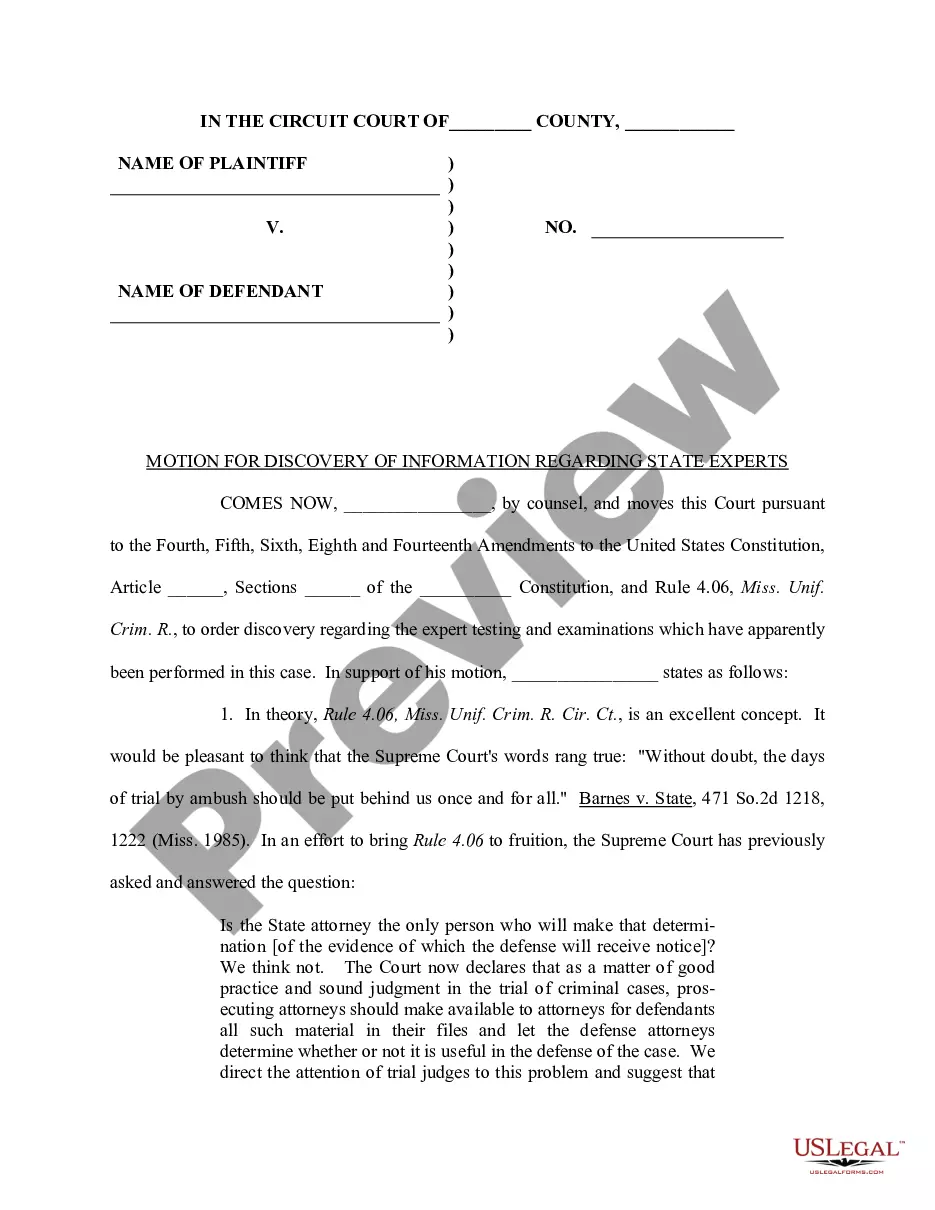
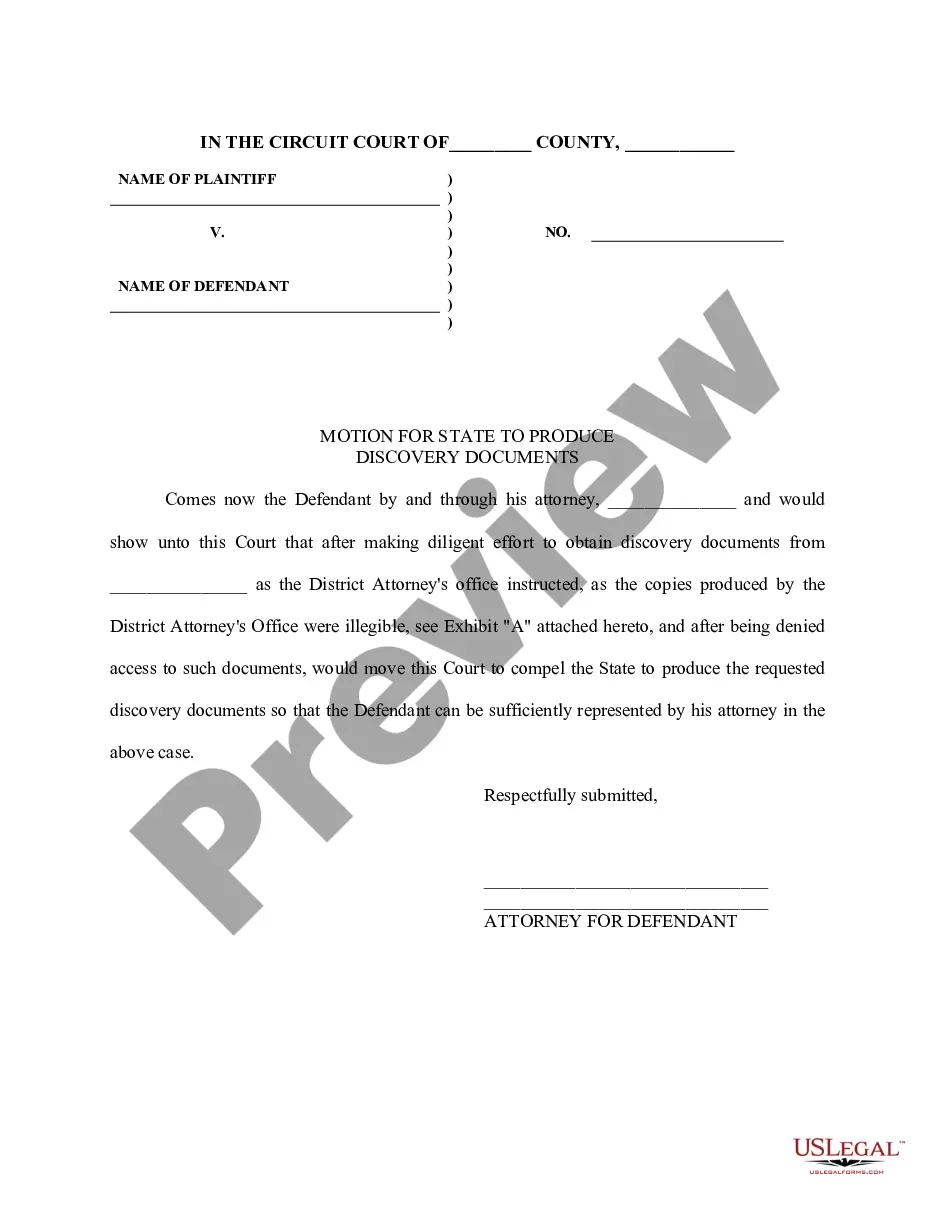
The Motion for Discovery is a legal document used by defendants in criminal cases to request information from the prosecution. This form specifically allows the defendant to obtain critical evidence, documents, and witness statements that may be used in their defense. It is essential for building a strong case and ensuring fair legal representation. Unlike other motions, this form focuses specifically on discovering evidence that the prosecution holds.
Key components of this form
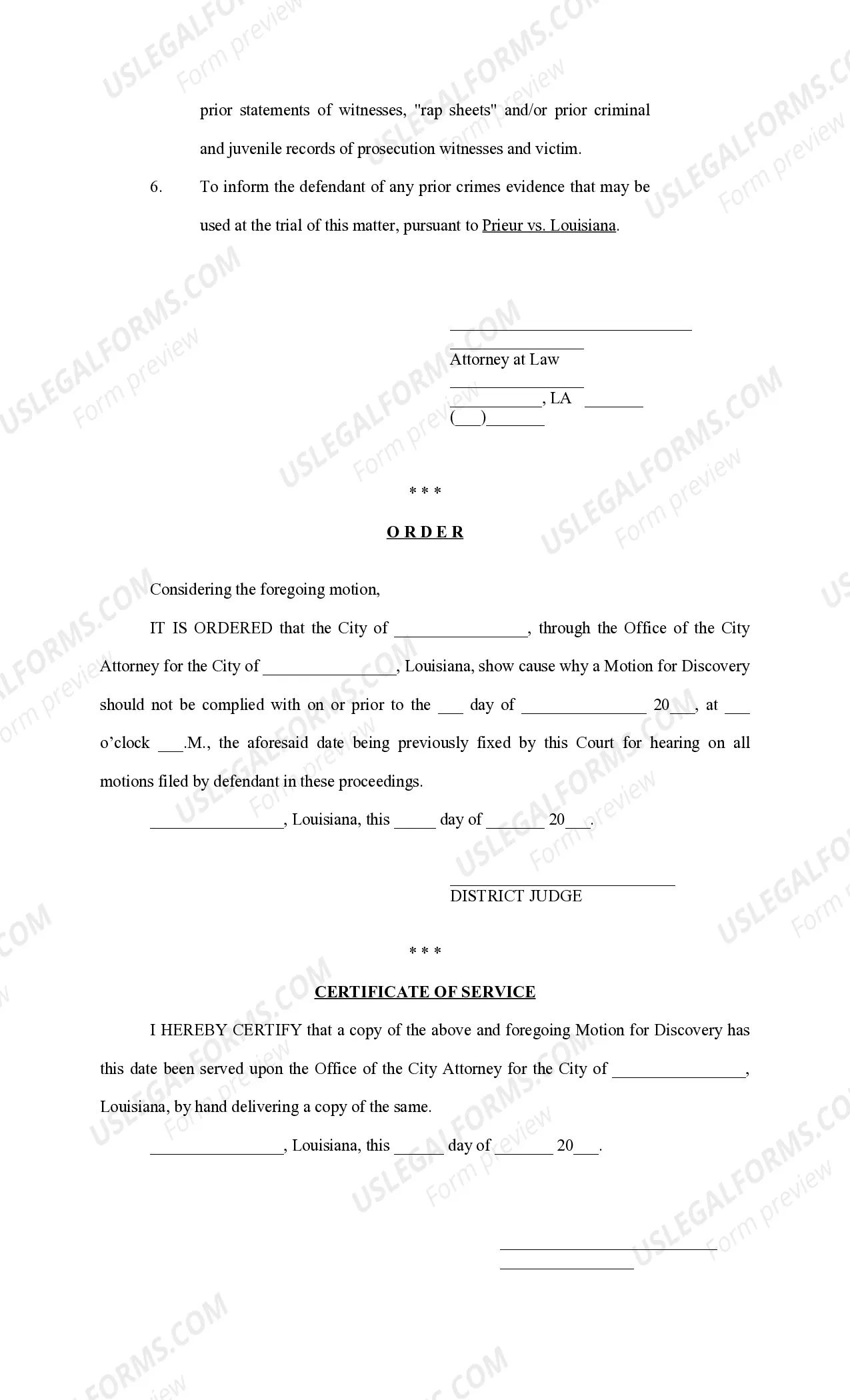
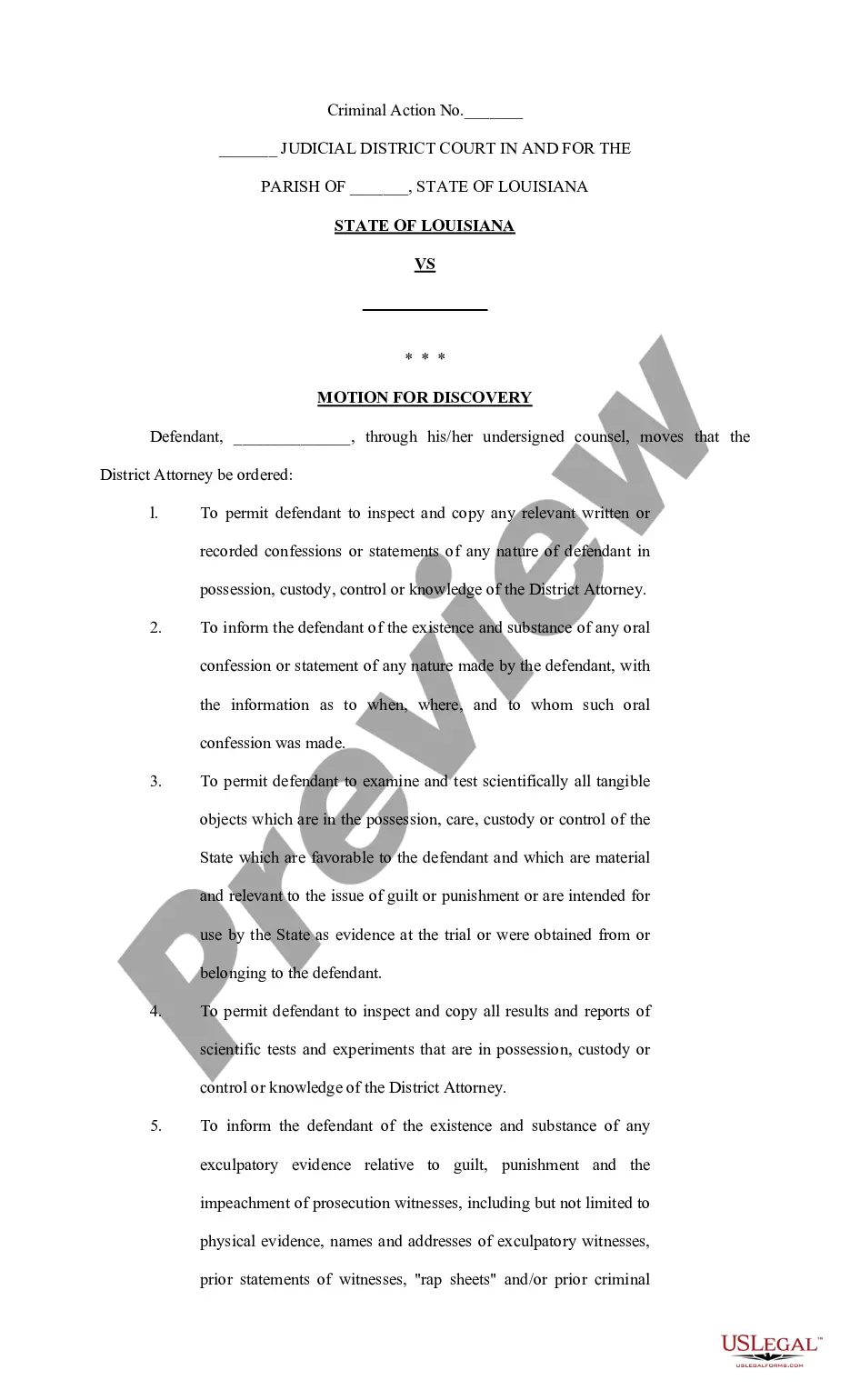
- Request to inspect and copy written or recorded confessions or statements.
- Notification of any oral confessions made by the defendant.
- Access to examine and test any tangible evidence in the possession of the city.
- Request for scientific reports and test results related to the case.
- Information regarding exculpatory evidence and prior criminal records of witnesses.
- Notification of any prior crimes evidence intended for use at trial.
When this form is needed
This form should be used when a defendant seeks to acquire evidence that the prosecution possesses, which may include witness statements, physical evidence, or documentation related to the charge. It is particularly useful in preparing for trial and ensuring that all relevant materials are available for review.
Who can use this document
- Defendants involved in criminal cases who wish to gather evidence from the prosecution.
- Individuals represented by legal counsel seeking to strengthen their defense.
- Defense attorneys preparing for trials on behalf of their clients.
Steps to complete this form
- Enter the name of the City Court and the relevant case details at the top of the form.
- Fill in your name as the defendant and provide contact information for your attorney.
- Specify the requests you are making regarding evidence to be disclosed by the prosecution.
- Complete the Order section by proposing a hearing date for the motion.
- Sign and date the certificate of service to confirm delivery to the City Attorney's office.
Is notarization required?
Notarization is generally not required for this form. However, certain states or situations might demand it. You can complete notarization online through US Legal Forms, powered by Notarize, using a verified video call available anytime.
Get your form ready online
Our built-in tools help you complete, sign, share, and store your documents in one place.
Make edits, fill in missing information, and update formatting in US Legal Forms—just like you would in MS Word.
Download a copy, print it, send it by email, or mail it via USPS—whatever works best for your next step.
Sign and collect signatures with our SignNow integration. Send to multiple recipients, set reminders, and more. Go Premium to unlock E-Sign.
If this form requires notarization, complete it online through a secure video call—no need to meet a notary in person or wait for an appointment.
We protect your documents and personal data by following strict security and privacy standards.

Make edits, fill in missing information, and update formatting in US Legal Forms—just like you would in MS Word.

Download a copy, print it, send it by email, or mail it via USPS—whatever works best for your next step.

Sign and collect signatures with our SignNow integration. Send to multiple recipients, set reminders, and more. Go Premium to unlock E-Sign.

If this form requires notarization, complete it online through a secure video call—no need to meet a notary in person or wait for an appointment.

We protect your documents and personal data by following strict security and privacy standards.
Avoid these common issues
- Failing to specify all types of evidence you wish to access.
- Incorrectly completing or omitting the details required in the Order section.
- Not serving the motion to the City Attorney, which can delay proceedings.
- Overlooking local court rules regarding formatting or timelines.
Benefits of completing this form online
- Instant access to professionally drafted templates specifically designed for legal needs.
- Easy customization to fit your case and jurisdiction.
- Convenient download options for quick filing in court.
- 24/7 availability to fill out and submit the form at your own pace.
Looking for another form?
Form popularity
FAQ
Rule 9.9 in Louisiana outlines the procedures for handling discovery disputes in civil cases. This rule emphasizes the necessity for cooperation between parties in the discovery process, promoting efficient resolution of issues before they escalate to court. Understanding Rule 9.9 is vital when navigating a Louisiana Motion for Discovery City Court, as it can help you avoid pitfalls and streamline your case. If you require guidance on compliance with this rule, consider consulting resources like US Legal Forms.
In both civil and criminal cases, discovery involves investigating the evidence that the other side plans to present. It can prevent any surprises at trial, narrow the issues that are disputed, and often help the two sides reach a resolution out of court rather than going through a full trial.
Discovery enables the parties to know before the trial begins what evidence may be presented. It's designed to prevent "trial by ambush," where one side doesn't learn of the other side's evidence or witnesses until the trial, when there's no time to obtain answering evidence.
Discovery, in the law of common law jurisdictions, is a pre-trial procedure in a lawsuit in which each party, through the law of civil procedure, can obtain evidence from the other party or parties by means of discovery devices such as interrogatories, requests for production of documents, requests for admissions and
Motions are not pleadings but are requests for the judge to make a legal ruling. Some of the most common pre-trial motions include: Motion to Discover. A motion by which one party seeks to gain information from the adverse party.
What it means to file a motion: A motion, in its simplest form is a list of requests that you are asking the Court grant on your behalf. You, or your attorney on your behalf, will file a Notice of Motion which includes a list of requests for the court to rule upon.
Learn how to file a motion (a written request for some type of relief) to get your case or part of your case - in front of the judge for a decision. You can use motions to try to resolve the case completely.
A hearing for the purpose of asking a judge to issue a ruling or order. The motion is typically filed by one side and a notice is sent to the opposing attorney who responds in writing.
If the motion has been filed with the Clerk of Court you would be able to obtain a copy from the clerk's office in the county where the motion was filed.
The plaintiff must respond by the deadline. There are different ways to make sure you get each kind of discovery if the plaintiff does not give it to you by the deadline. If the plaintiff does not respond to the court order, then you can file a Motion to Dismiss and you may win your case.