Louisiana Disbursement Sheet of Insurance Settlement with Attorney's Fees
Understanding this form
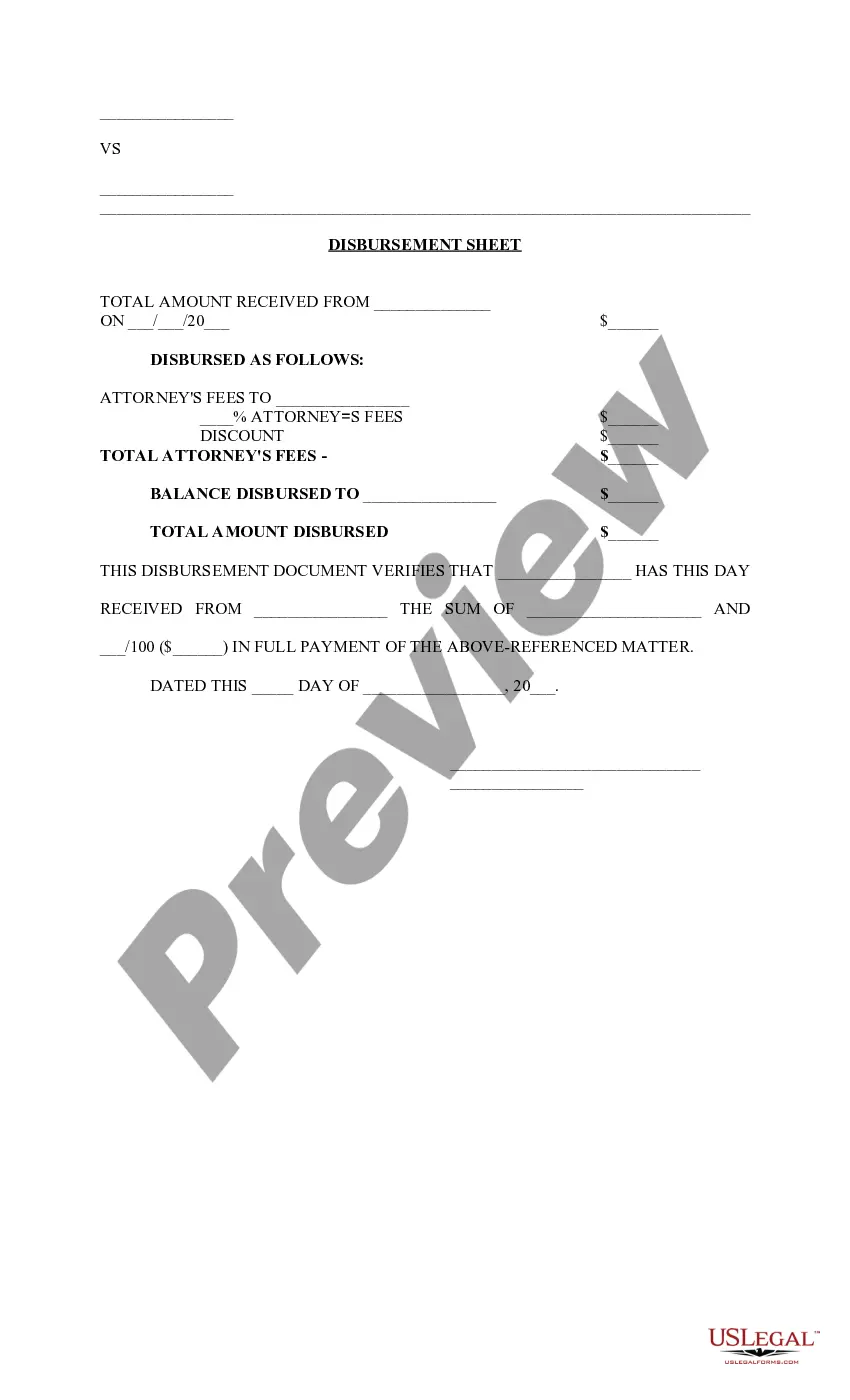
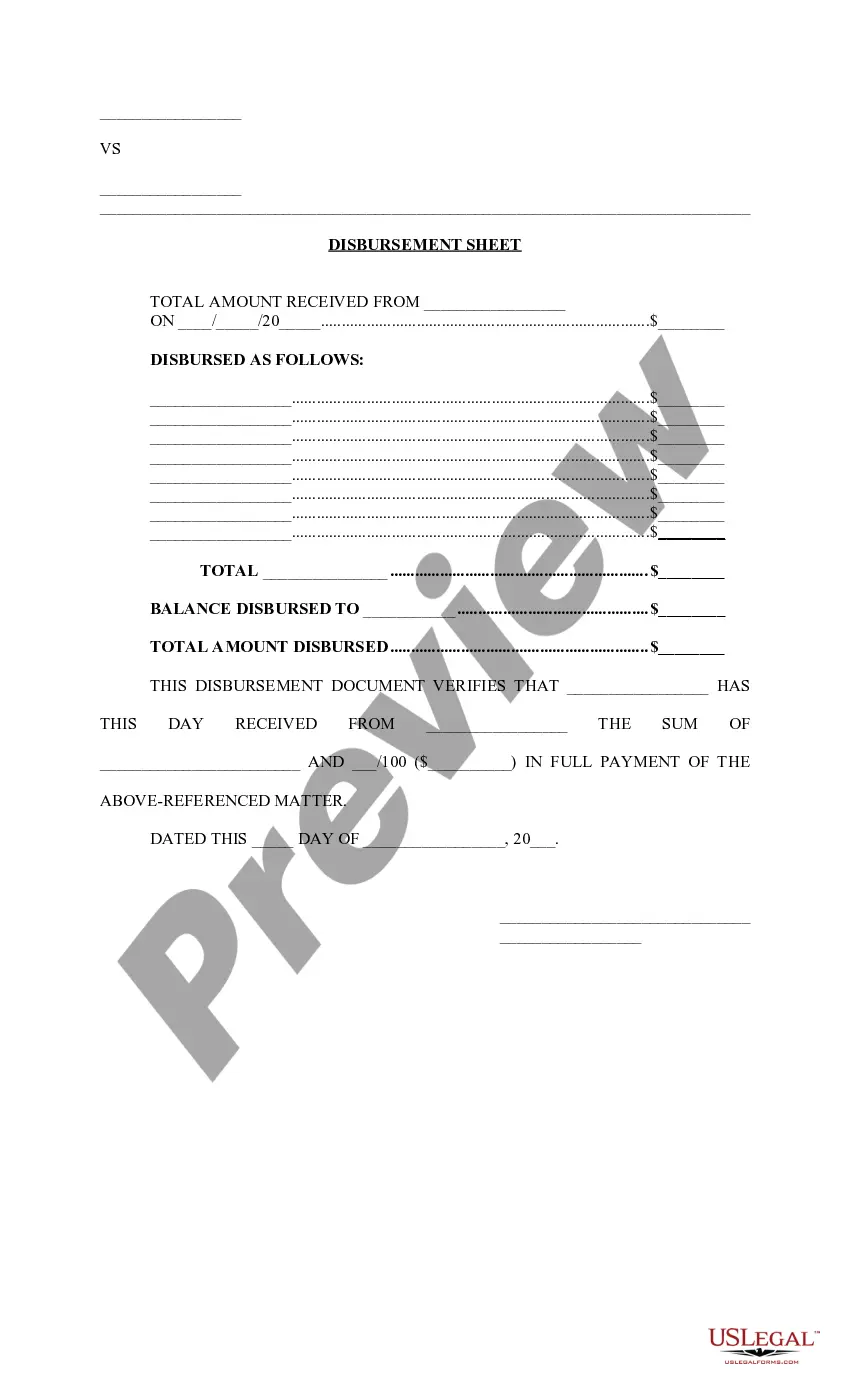
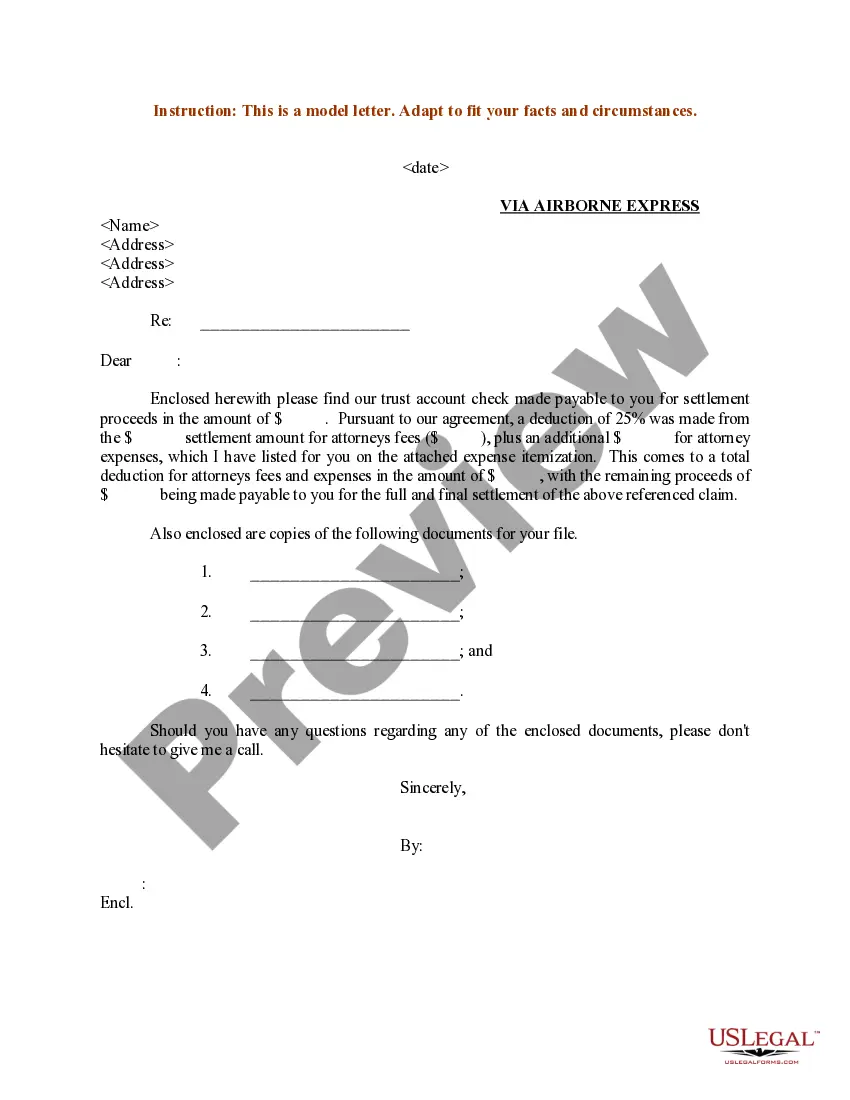
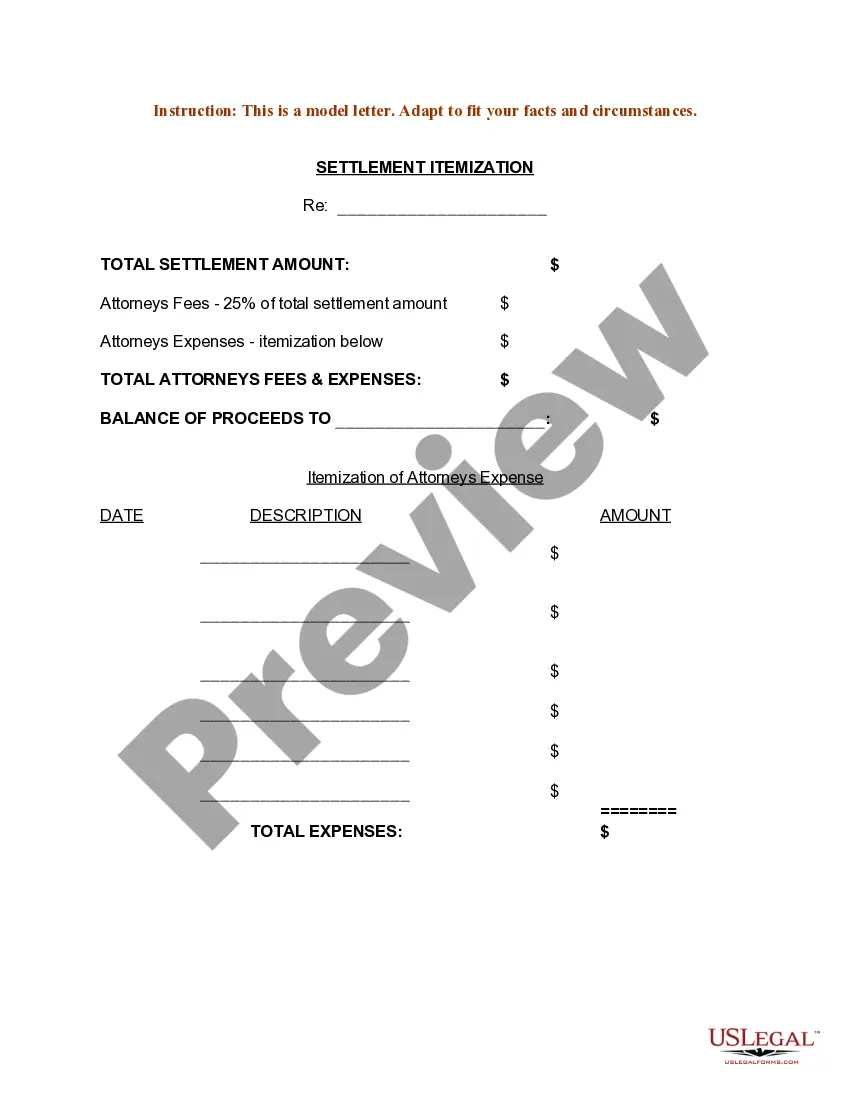
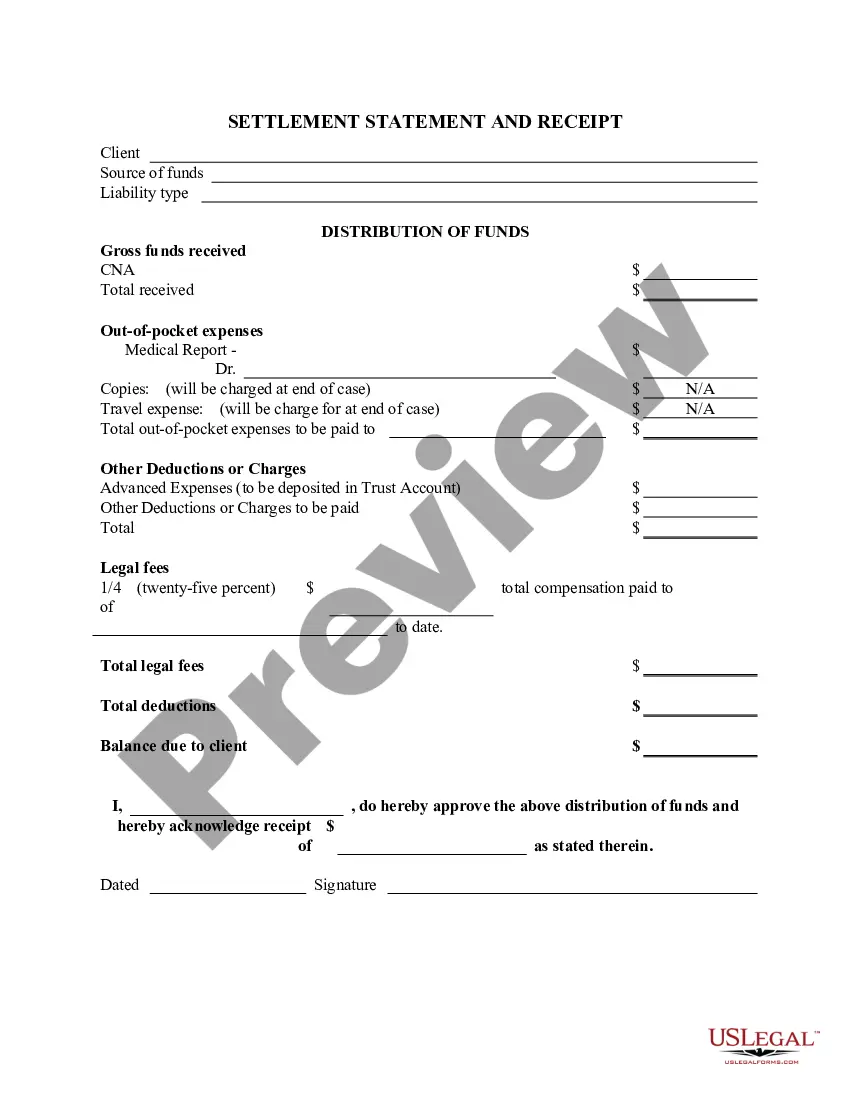
The Disbursement Sheet of Insurance Settlement with Attorney's Fees is a legal document that outlines how settlement funds are allocated following a personal injury case resolution. This form specifies the total amount received from the insurance company, breaks down attorney's fees, and records the final disbursement to the plaintiff. It serves to clarify financial transactions and rights related to settlements, distinguishing it from general settlement forms by focusing on the specific disbursement of funds and fees.
Main sections of this form
- Total amount received from the insurance company.
- Detailed breakdown of attorney's fees, including any discounts.
- Final balance disbursed to the plaintiff.
- Date of disbursement and parties involved.
- Signature lines for verification by involved parties.

Common use cases
This form is used after a personal injury case has been resolved, either through settlement or judgment. It is essential when funds have been received from an insurance company to ensure a clear record of the distribution of those funds, especially regarding attorney's fees and the remaining balance owed to the plaintiff. Utilizing this form helps prevent misunderstandings or disputes regarding the financial aspects of the settlement.
Who should use this form
This form is intended for:
- Plaintiffs involved in personal injury cases.
- Attorneys representing plaintiffs in settlement negotiations.
- Insurance companies processing settlement payments.
Steps to complete this form
- Identify the insurance company making the payment and enter their name and the date on which the funds were received.
- Detail the total amount received along with the breakdown of attorney's fees, indicating any applicable discounts.
- Calculate and record the total attorneys' fees and the final balance to be disbursed to the plaintiff.
- Ensure that the plaintiff acknowledges receipt of the funds by completing the verification section of the form.
- Have all involved parties sign and date the document to finalize the disbursement record.
Does this document require notarization?
Notarization is not commonly needed for this form. However, certain documents or local rules may make it necessary. Our notarization service, powered by Notarize, allows you to finalize it securely online anytime, day or night.
Get your form ready online
Our built-in tools help you complete, sign, share, and store your documents in one place.
Make edits, fill in missing information, and update formatting in US Legal Forms—just like you would in MS Word.
Download a copy, print it, send it by email, or mail it via USPS—whatever works best for your next step.
Sign and collect signatures with our SignNow integration. Send to multiple recipients, set reminders, and more. Go Premium to unlock E-Sign.
If this form requires notarization, complete it online through a secure video call—no need to meet a notary in person or wait for an appointment.
We protect your documents and personal data by following strict security and privacy standards.

Make edits, fill in missing information, and update formatting in US Legal Forms—just like you would in MS Word.

Download a copy, print it, send it by email, or mail it via USPS—whatever works best for your next step.

Sign and collect signatures with our SignNow integration. Send to multiple recipients, set reminders, and more. Go Premium to unlock E-Sign.

If this form requires notarization, complete it online through a secure video call—no need to meet a notary in person or wait for an appointment.

We protect your documents and personal data by following strict security and privacy standards.
Common mistakes to avoid
- Failing to specify the total amount received and how it is allocated.
- Omitting signatures, which can lead to disputes over receipt or understanding.
- Not updating the form with the correct date of disbursement.
Why use this form online
- Convenience of immediate access and download from any device.
- Editability allows for customization to suit specific case details.
- Reliability in terms of ensuring all necessary legal components are included.
What to keep in mind
- The form provides a structured way to document the distribution of insurance settlement funds.
- It's essential for both plaintiffs and attorneys to ensure clear communication and record-keeping.
- Proper completion helps prevent future disputes regarding financial transactions following a settlement.
Looking for another form?

Form popularity
FAQ
While your lawyer cannot release your settlement check until they resolve liens and bills associated with your case, it's usually best to be patient so you don't end up paying more than necessary.
Since your lawyer is legally obligated to keep your retainer in an escrow account and can't access the money without sending a formal bill to you, he or she will probably repay it without delay. If your lawyer fails to return these funds within 30 days, you may take several steps to ensure that you aren't cheated.
Your attorney cannot give you money in the form of a loan.The American Bar Association prohibits lawyers from subsidizing lawsuits or administrative proceedings brought on behalf of their clients, including making or guaranteeing loans to their clients for living expenses among other things.
A lawyer cannot steal a client's settlement money.
Usually, a settlement check is sent to the attorney of record. The attorney may hold the check in a trust or escrow account until it clears.Your attorney will also deduct his or her own share from the settlement funds for the legal services that he or she provided and for the advancement of any legal costs.
Most contingency fee agreements give the lawyer a percentage of between 33 and 40 percent, but you can always try to negotiate a reduced percentage or alternative agreement. In the majority of cases, a personal injury lawyer will receive 33 percent (or one third) of any settlement or award.
(2) a lawyer representing an indigent client may pay court costs and expenses of litigation on behalf of the client.Similarly, an exception allowing lawyers representing indigent clients to pay court costs and litigation expenses regardless of whether these funds will be repaid is warranted.
Deposit your injury settlement check in a segregated account & don't deposit any other money in the account. You must keep your settlement monies in a segregated, separate bank account. Do not mix up any other money with your settlement monies.
How Is a Settlement Paid Out? Compensation for a personal injury can be paid out as a single lump sum or as a series of periodic payments in the form of a structured settlement. Structured settlement annuities can be tailored to meet individual needs, but once agreed upon, the terms cannot be changed.