Indiana Living Trust Property Record
About this form
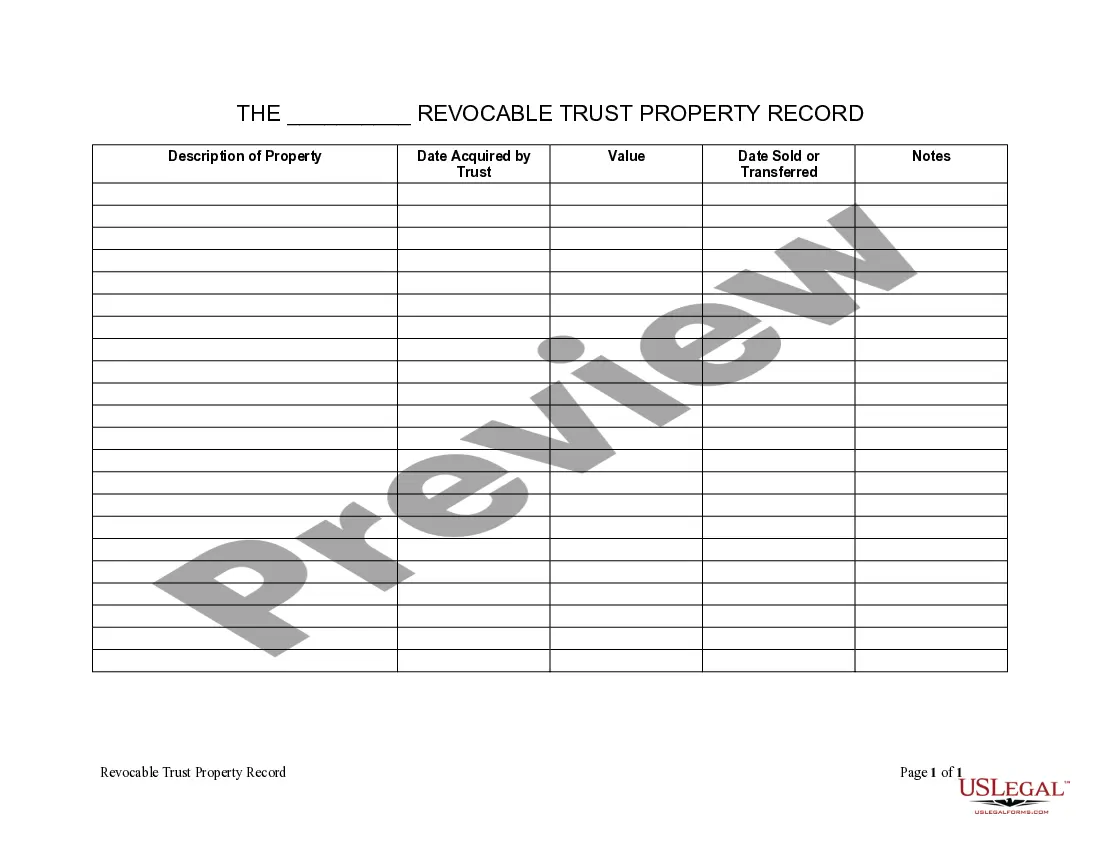
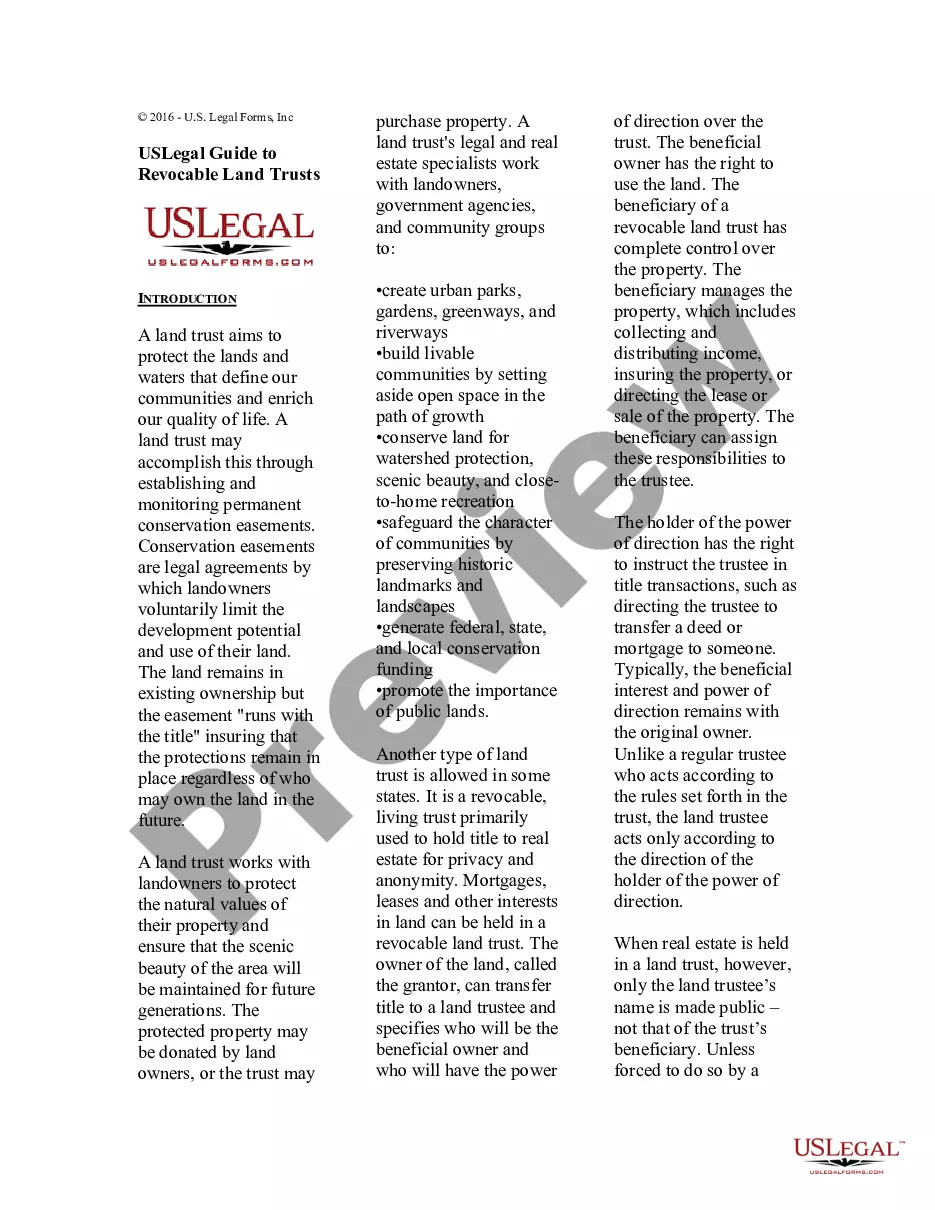
The Living Trust Property Record is a crucial estate planning document that allows you to outline and manage the assets held within a living trust. Unlike a last will, which only transfers property upon death, a living trust can be actively managed during your lifetime. This form enables the trustee to document property details, ensuring all assetsâreal, personal, or intellectualâare accounted for and easily accessible when needed.
Key components of this form
- Description of Property: Detailed information about each asset in the trust.
- Date Acquired by Trust: The date when each asset was placed into the trust.
- Value: Current monetary value of the property.
- Date Sold or Transferred: Records any transaction related to the assets in the trust.

When to use this form
You should use the Living Trust Property Record when you establish a living trust and need to keep track of its assets. It is particularly useful during life events such as significant asset acquisitions, property sales, or transfers to ensure that the trust remains organized and transparent. Additionally, updating this record is essential when the trust is reviewed or modified.
Who should use this form
- Trustees managing a living trust
- Individuals setting up a living trust for estate planning
- Beneficiaries seeking information about trust assets
Steps to complete this form
- Gather all necessary documents related to the property and assets held in the trust.
- Identify and describe each asset, including address and other relevant details.
- Record the purchase date or the date the asset was transferred to the trust.
- Determine and enter the current value of each property or asset.
- If applicable, note the date of any sale or transfer of the asset.
Is notarization required?
This form does not typically require notarization unless specified by local law. However, notarization may enhance the document's legal validity in certain situations.
Get your form ready online
Our built-in tools help you complete, sign, share, and store your documents in one place.
Make edits, fill in missing information, and update formatting in US Legal Forms—just like you would in MS Word.
Download a copy, print it, send it by email, or mail it via USPS—whatever works best for your next step.
Sign and collect signatures with our SignNow integration. Send to multiple recipients, set reminders, and more. Go Premium to unlock E-Sign.
If this form requires notarization, complete it online through a secure video call—no need to meet a notary in person or wait for an appointment.
We protect your documents and personal data by following strict security and privacy standards.

Make edits, fill in missing information, and update formatting in US Legal Forms—just like you would in MS Word.

Download a copy, print it, send it by email, or mail it via USPS—whatever works best for your next step.

Sign and collect signatures with our SignNow integration. Send to multiple recipients, set reminders, and more. Go Premium to unlock E-Sign.

If this form requires notarization, complete it online through a secure video call—no need to meet a notary in person or wait for an appointment.

We protect your documents and personal data by following strict security and privacy standards.
Mistakes to watch out for
- Failing to update the form after asset transactions.
- Not accurately recording the value of the property.
- Omitting important details about the asset description.
Benefits of completing this form online
- Convenient access from anywhere at any time.
- Easy to edit and update as your asset situation changes.
- Reliable templates drafted by licensed attorneys.
- The Living Trust Property Record serves as a valid legal document to maintain transparency regarding trust assets.
- Having an accurate record can help prevent disputes and confusion among trust beneficiaries.
- It aids in smooth administration of the trust after the trustor's passing.
What to keep in mind
- The Living Trust Property Record captures important information about trust assets.
- Use this form to maintain accurate estate planning documentation.
- Regular updates to this record are essential for effective trust management.
Looking for another form?
Form popularity
FAQ
Public RecordCalifornia law requires any deed transfer involving real estate property be recorded in the county clerk's or county recorder's office in the county where the property is located. The trust grantor must record the original trust document, real estate deed and appraisal report.
List Your Assets and Decide Which You'll Include in the Trust. Gather the Paperwork. Decide Whether You Will Be the Sole Grantor. Choose Beneficiaries. Choose a Successor Trustee. Choose Someone to Manage Property for Minor Children. Prepare the Trust Document. Sign and Notarize.
Pick a type of living trust. If you're married, you'll first need to decide whether you want a single or joint trust. Take stock of your property. Choose a trustee. Draw up the trust document. Sign the trust. Transfer your property to the trust.
Trusts Are Not Public Record.However, trusts aren't recorded. Not having to file the trust with the court is one of the biggest benefits of a trust because it keeps the settlement a private matter between the successor trustees and trust beneficiaries.
Make a List of All Your Assets. Be sure to include make a list of your assets that includes everything you own. Find the Paperwork for Your Assets. Choose Beneficiaries. Choose a Successor Trustee. Choose a Guardian for Your Minor Children.
When signing anything on behalf of the trust, always sign as John Smith, Trustee. By signing as Trustee, you will not be personally liable for that action as long as that action is within the scope of your authority under the trust.
A living trust, specifically a revocable living trust, is a legal document that places your assetsinvestments, bank accounts, real estate, vehicles and valuable personal propertyin trust for your benefit during your lifetime, and spells out where you'd like these things to go upon your death.
Assets Held in the Trustee's Name Kahane Revocable Living Trust or the Nessler Family Trust. In particular, look for a list of assets at the end of the document. It will likely be labeled Schedule A or something similar, and should list the items the person who set up the trust intended to hold in the trust.
Based on these rules, upon creation of a trust, title to trust property is split between the trustee and the beneficiaries. The trustee holds legal title to the property and the beneficiaries hold equitable title. Because the trustee holds legal title to the property, that property must be held in the trustee's name.