Indiana Divorce Worksheet and Law Summary for Contested or Uncontested Case of over 25 pages - Ideal Client Interview Form
What is this form?
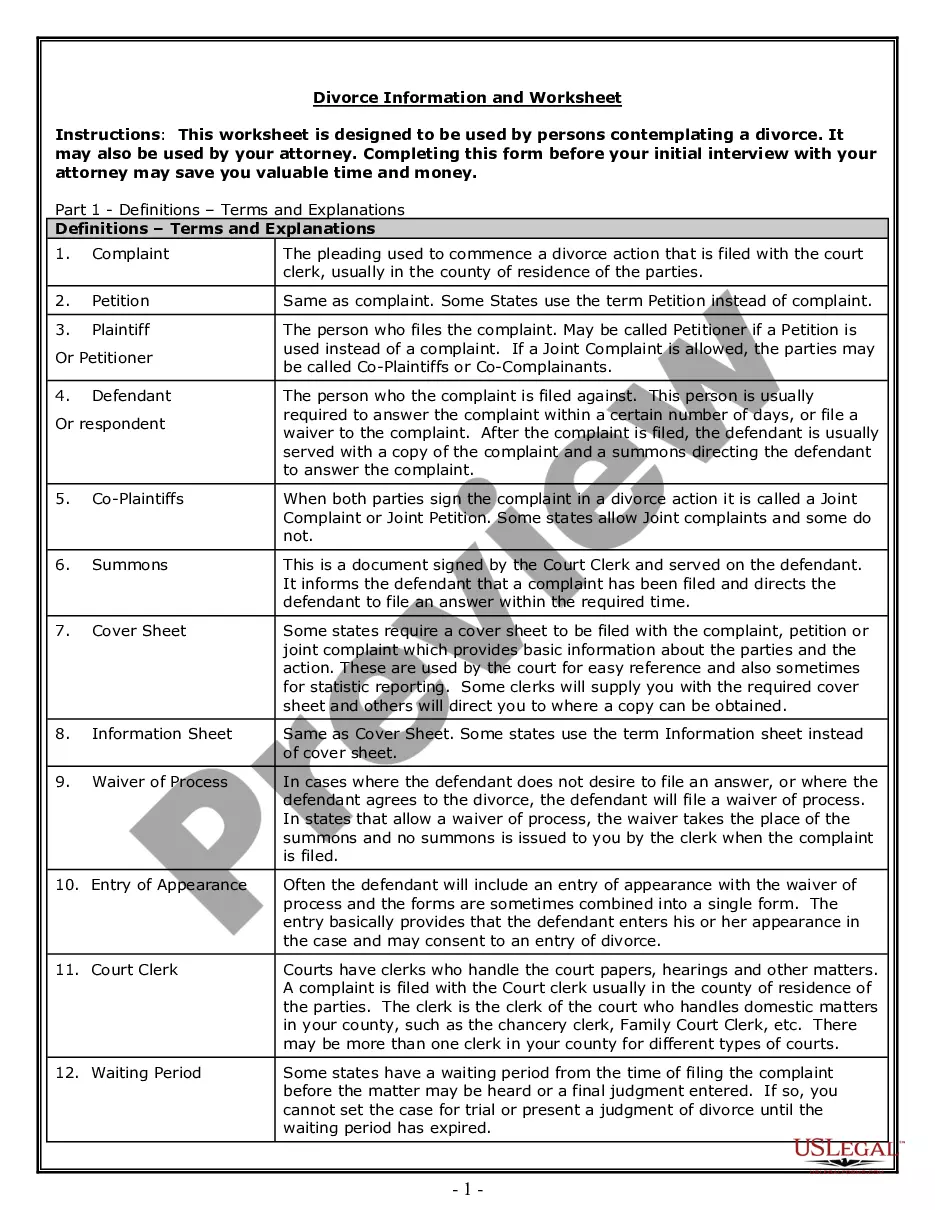
The Divorce Worksheet and Law Summary for Contested or Uncontested Case is a comprehensive legal document designed for individuals considering divorce. This 25+ page package includes essential information regarding divorce laws, critical terms and definitions, child custody, visitation, and child support. It also features worksheets for detailed personal information and financial disclosures, making it ideal for preparation before meeting with an attorney or for clients representing themselves. Unlike other generic divorce forms, this detailed worksheet is tailored to help users clarify their situations and streamline their legal processes.
Form components explained
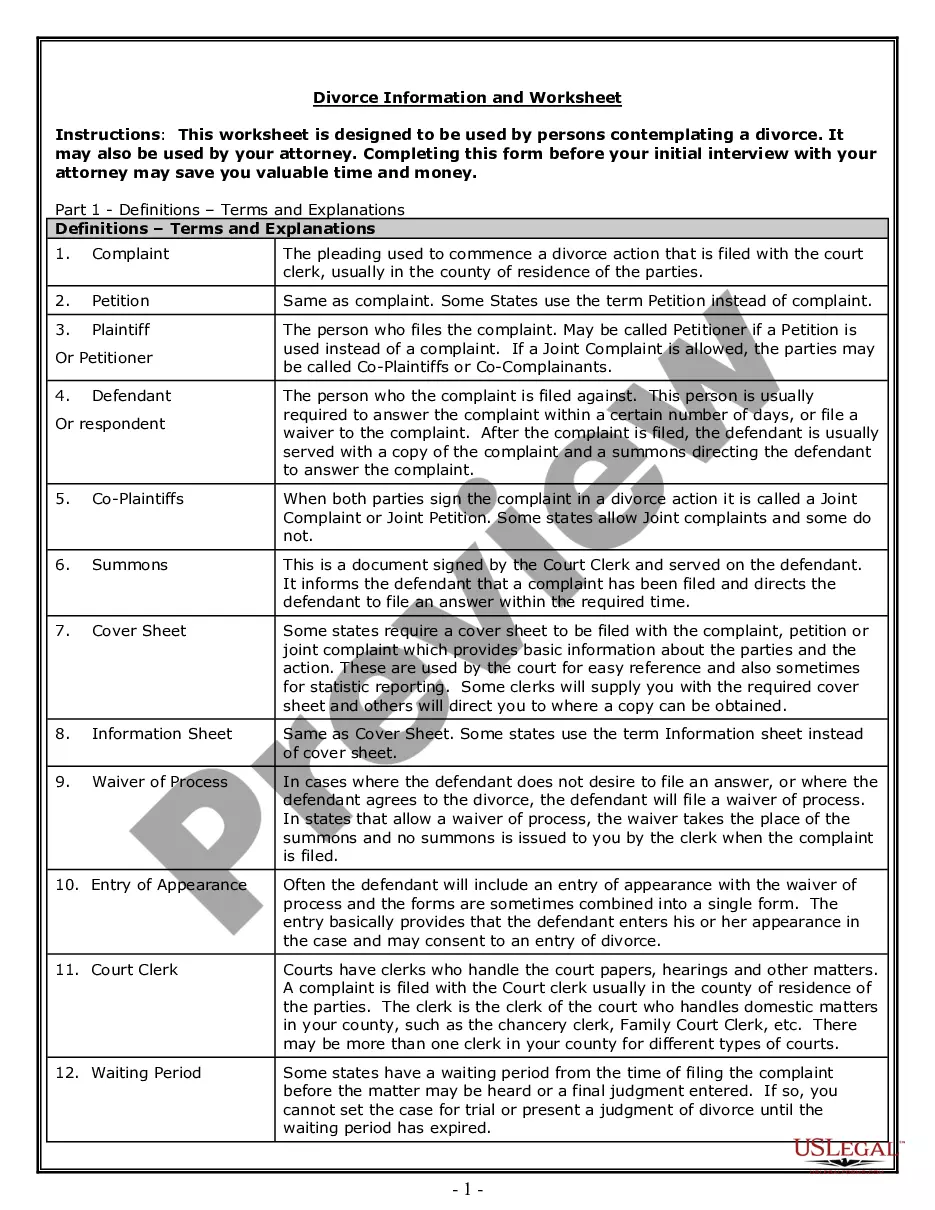
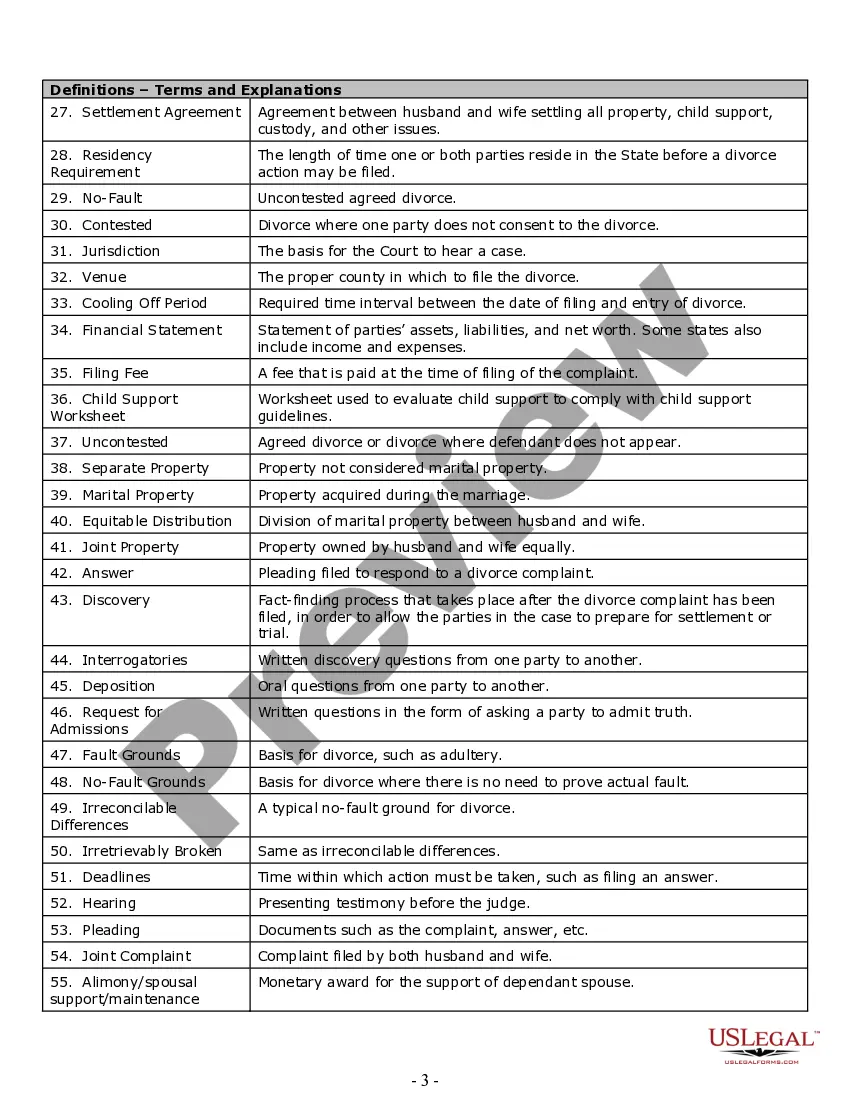
- Definitions of legal terms related to divorce
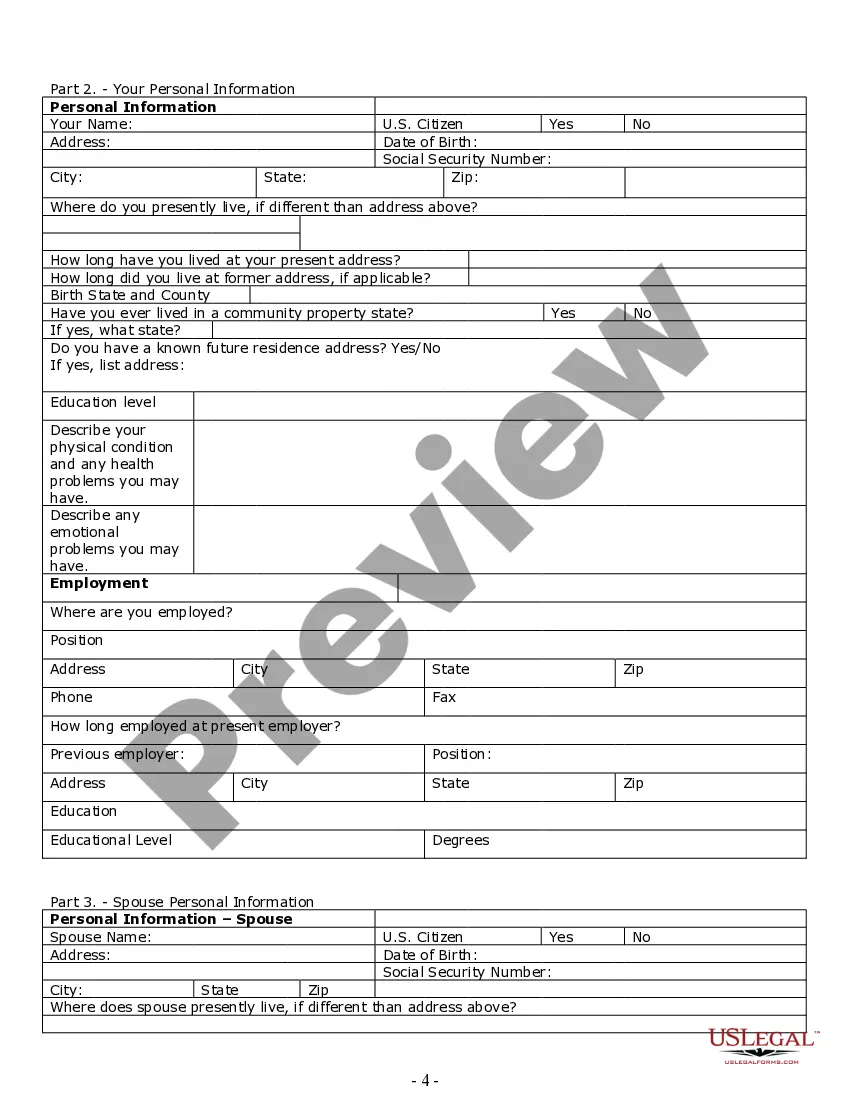
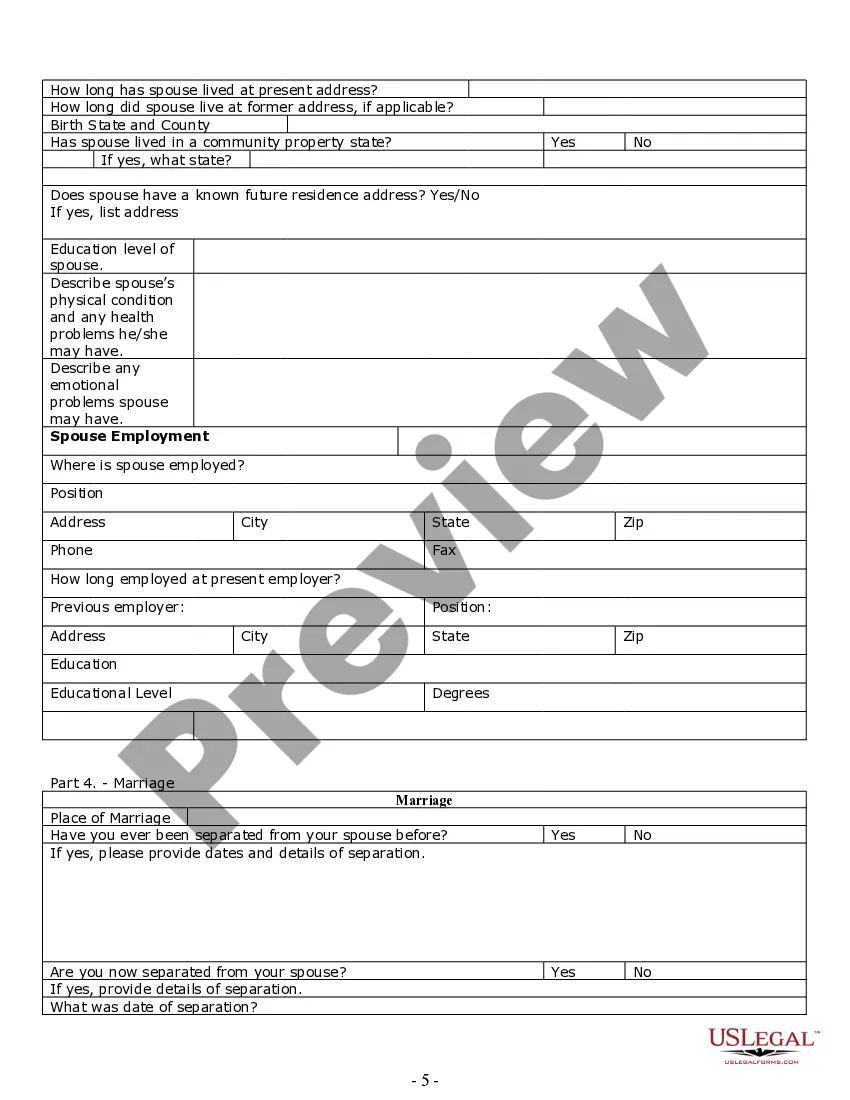
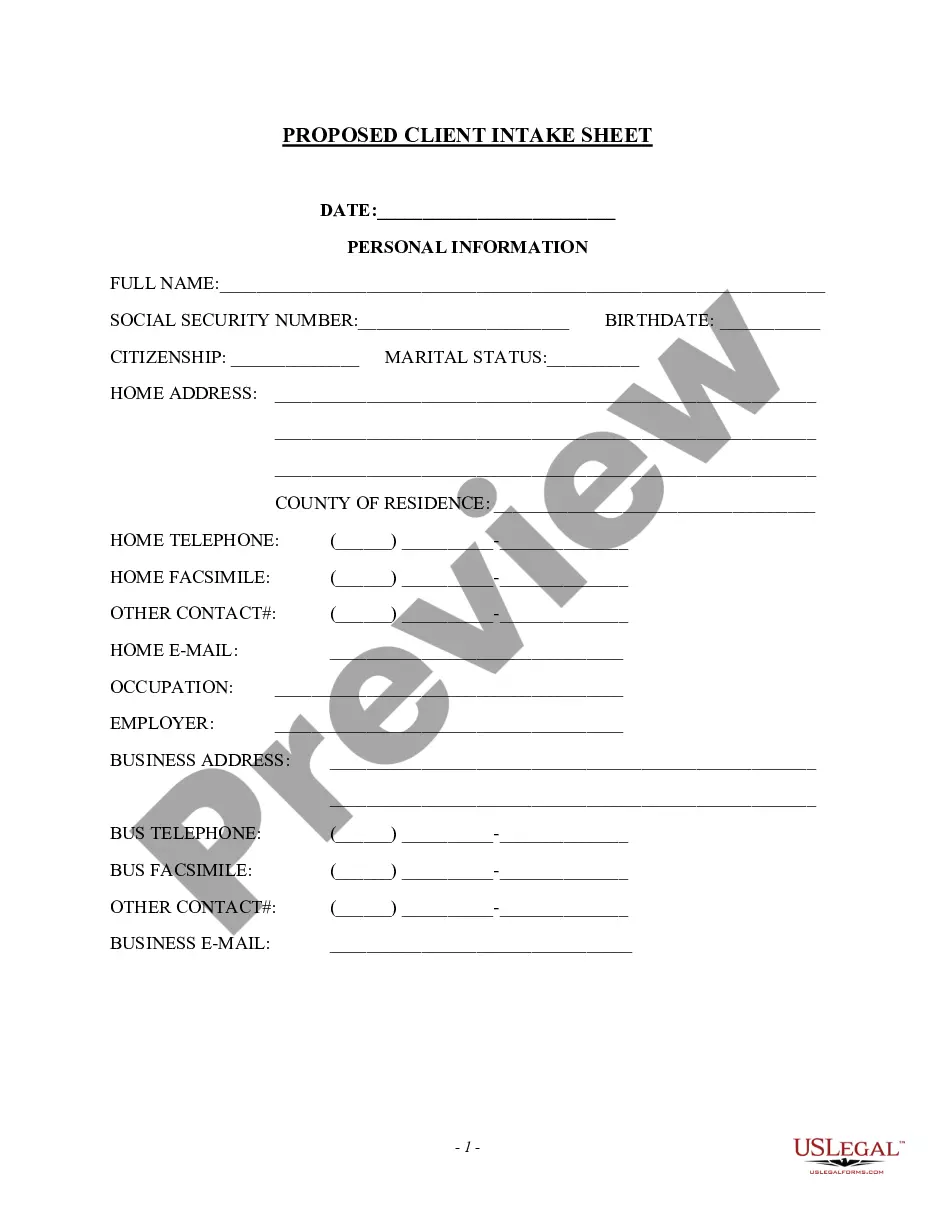
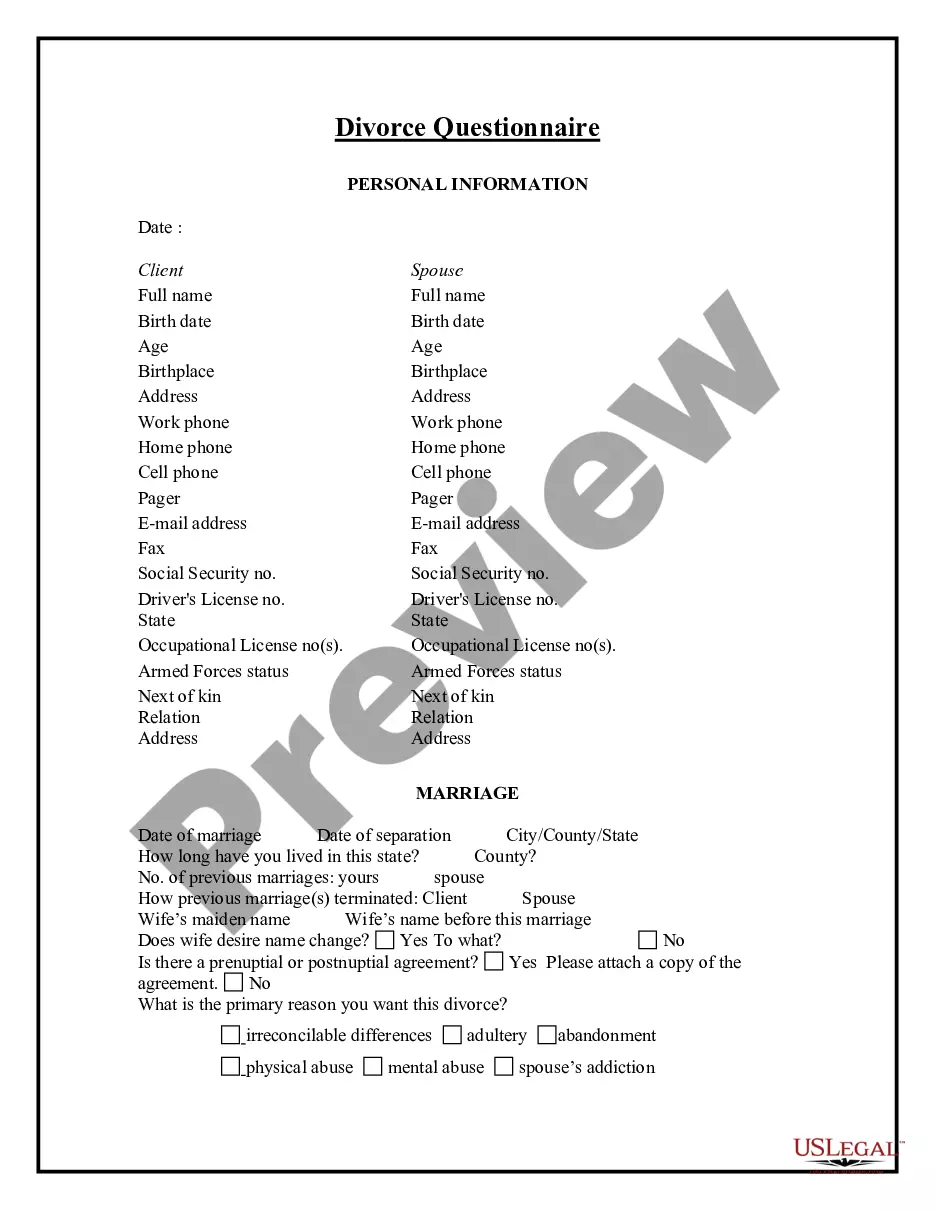
- Personal information sections for both spouses
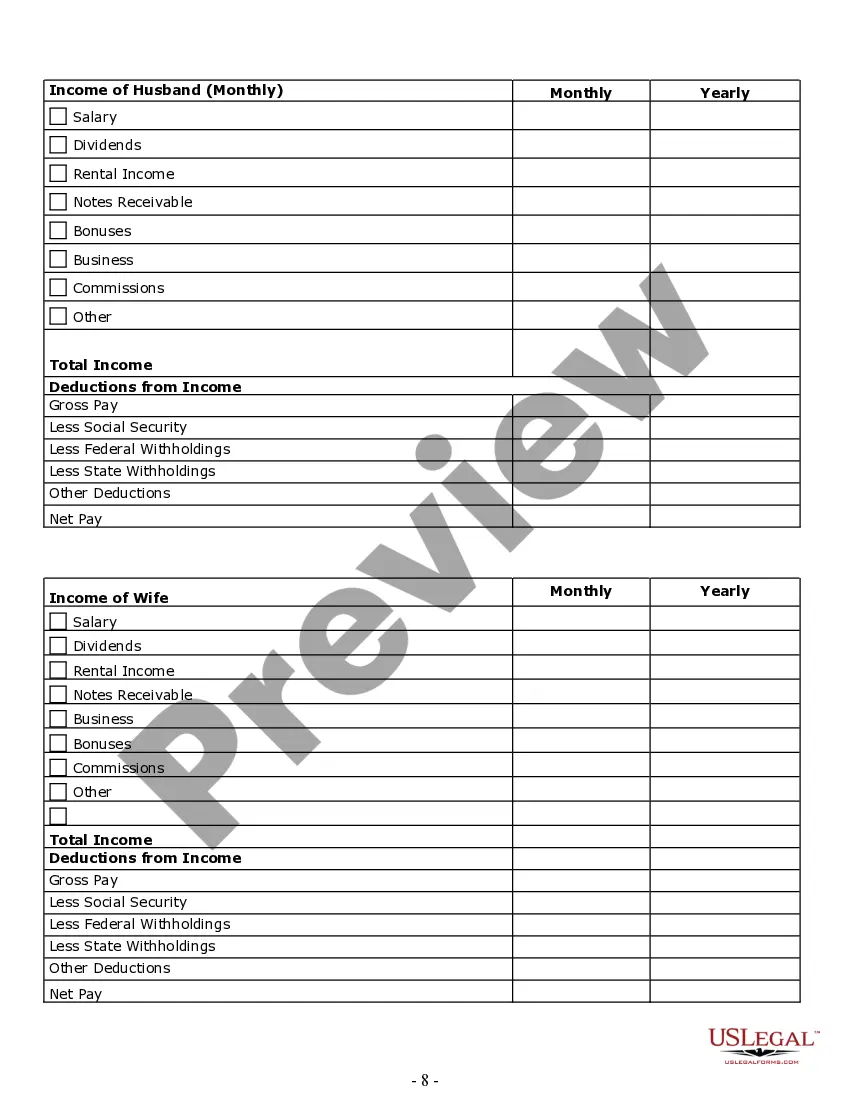
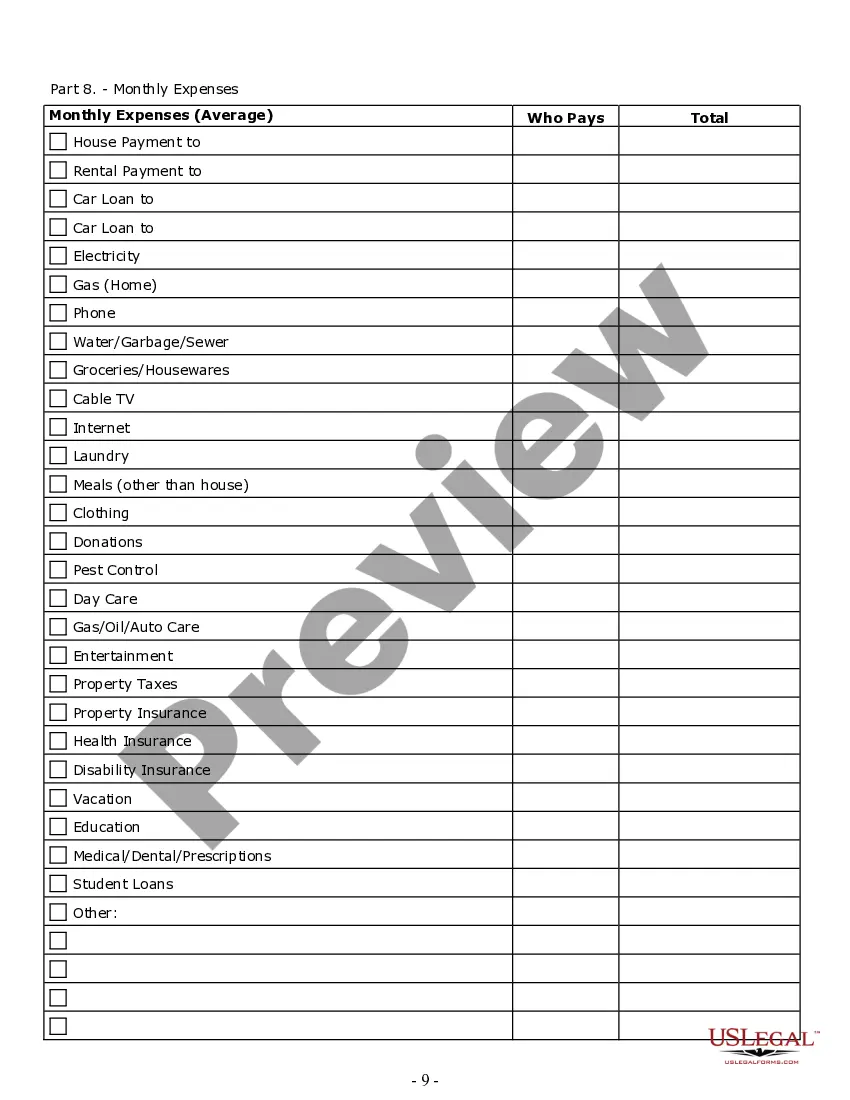
- Financial disclosures including income, expenses, and assets
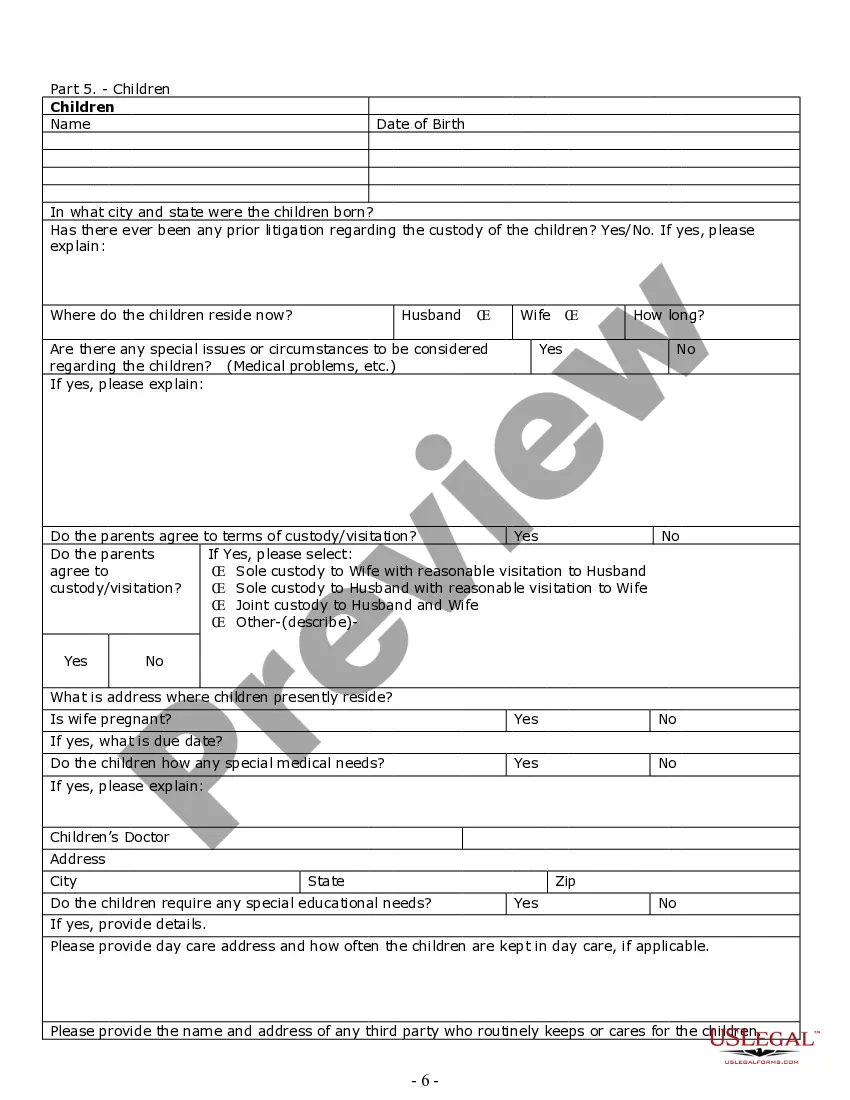
- Worksheet for child custody and support calculations
- Settlement proposal details for asset division
- Instructions for filing and following divorce procedures




When to use this form
This form is useful for individuals preparing for a divorce, whether contested or uncontested. It can assist those who wish to clarify their financial status and custody preferences before legal proceedings. Additionally, it is suitable for individuals seeking to understand their rights and obligations or for parents considering the impact of divorce on their children. By completing this worksheet, you can better organize your thoughts and documents, ultimately saving time and legal fees during the divorce process.
Who this form is for
- Individuals contemplating divorce
- Clients preparing for an initial consultation with a divorce attorney
- Persons wishing to represent themselves in a divorce proceeding
- Couples, in agreement or disagreement, seeking clarification on legal divorce procedures
Completing this form step by step
- Begin by filling out your personal information accurately, including name, address, and contact details.
- Provide detailed information about your spouse, including their personal and employment information.
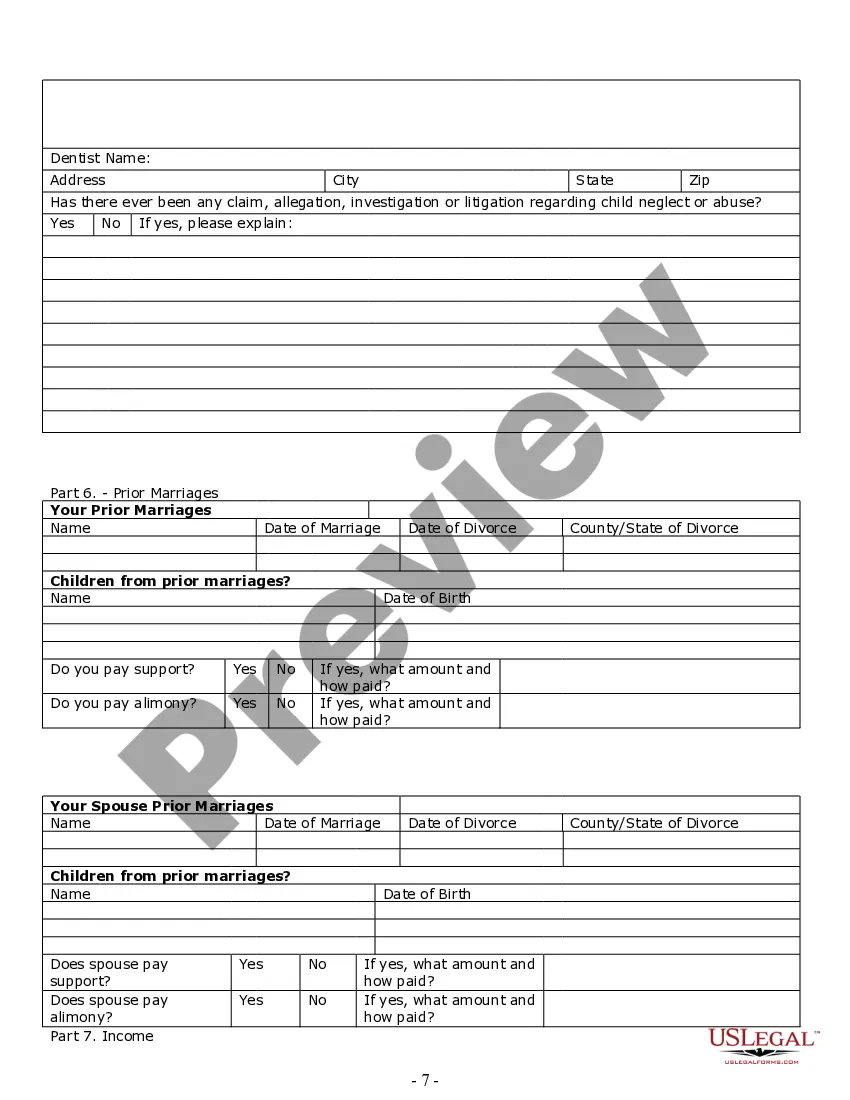
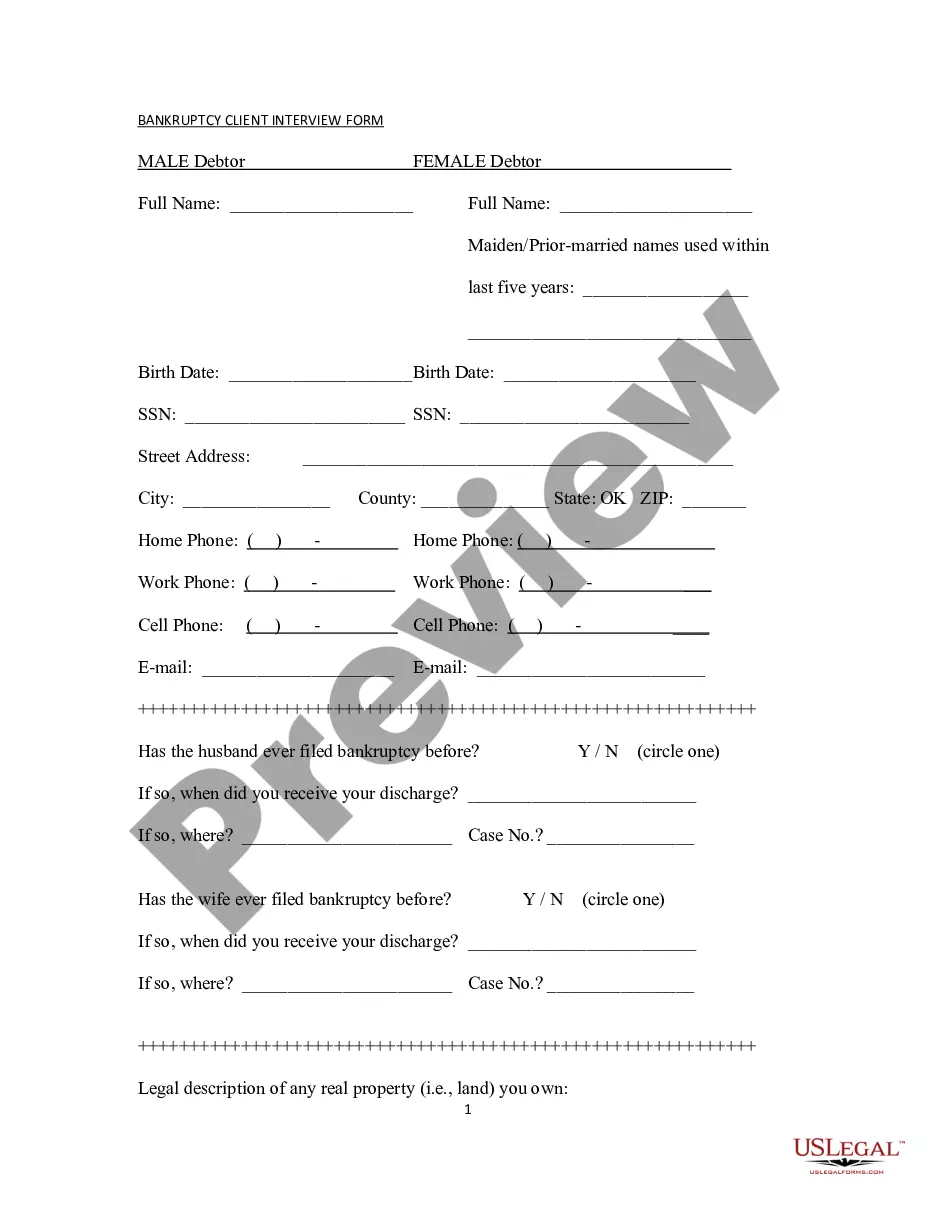
- Complete the sections regarding your marriage history and any children, along with relevant custody and visitation preferences.
- Detail your income, expenses, and current debts, ensuring clarity in financial disclosures.
- Review the definitions section to understand legal terms that may impact your divorce case.
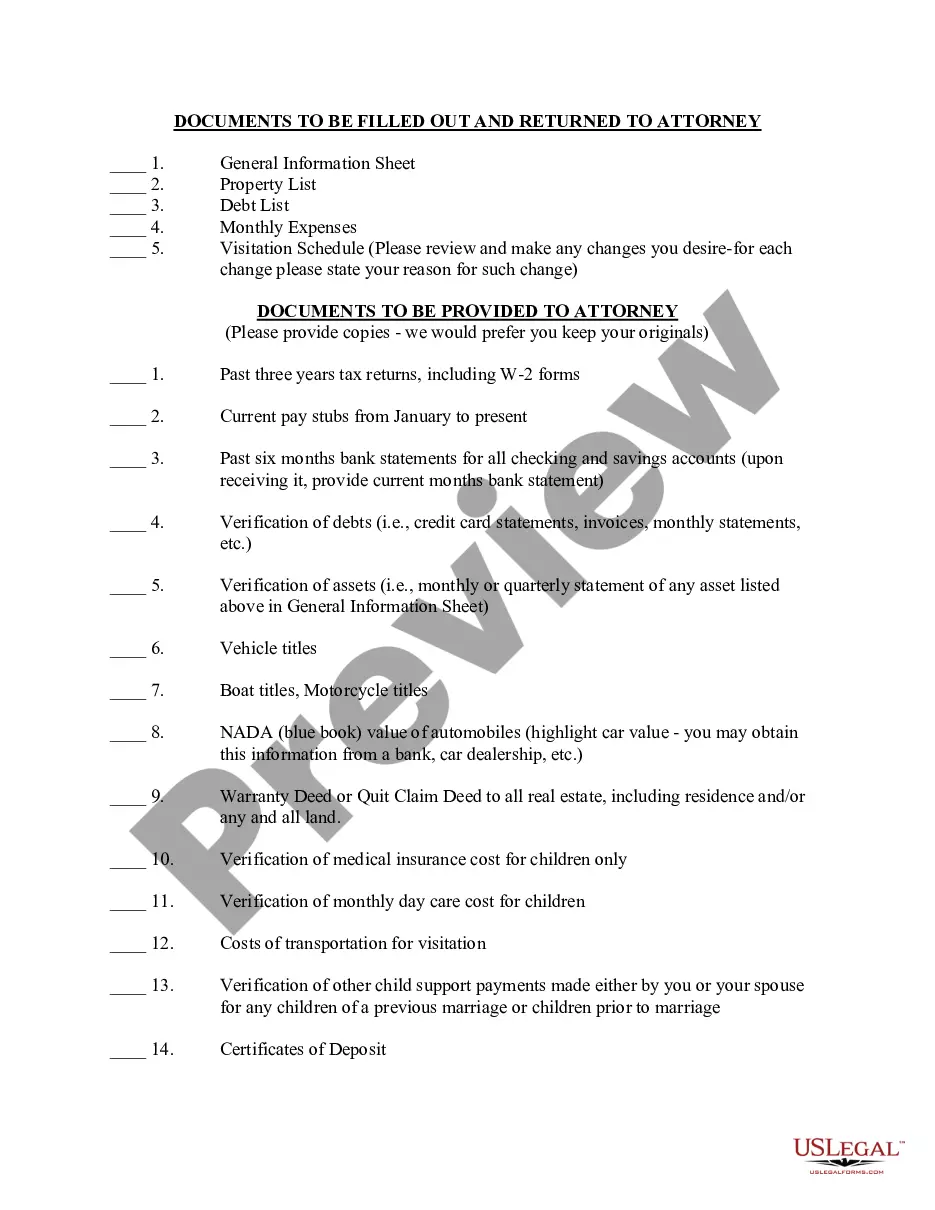
- Submit the completed worksheet along with any necessary documents to your attorney or the court as required.
Notarization guidance
This form does not typically require notarization unless specified by local law. Always check local regulations to ensure compliance with any notarization requirements for divorce-related documents.
Get your form ready online
Our built-in tools help you complete, sign, share, and store your documents in one place.
Make edits, fill in missing information, and update formatting in US Legal Forms—just like you would in MS Word.
Download a copy, print it, send it by email, or mail it via USPS—whatever works best for your next step.
Sign and collect signatures with our SignNow integration. Send to multiple recipients, set reminders, and more. Go Premium to unlock E-Sign.
If this form requires notarization, complete it online through a secure video call—no need to meet a notary in person or wait for an appointment.
We protect your documents and personal data by following strict security and privacy standards.

Make edits, fill in missing information, and update formatting in US Legal Forms—just like you would in MS Word.

Download a copy, print it, send it by email, or mail it via USPS—whatever works best for your next step.

Sign and collect signatures with our SignNow integration. Send to multiple recipients, set reminders, and more. Go Premium to unlock E-Sign.

If this form requires notarization, complete it online through a secure video call—no need to meet a notary in person or wait for an appointment.

We protect your documents and personal data by following strict security and privacy standards.
Typical mistakes to avoid
- Not providing complete and accurate personal and financial information.
- Overlooking crucial sections related to child custody and support.
- Neglecting to review state-specific requirements for filing.
- Failing to keep copies of the completed form and submitted documents.
- Missing deadlines related to filing or responding to divorce proceedings.
Why use this form online
- Convenient downloadable format allows for easy access and completion.
- Editable fields enable customization to individual legal situations.
- A comprehensive resource that integrates multiple aspects of the divorce process.
- Availability of legal guidance ensures accurate information and compliance.
This form can serve as a foundational document in the divorce process. It is crucial to ensure that all information is accurate and complete, as the content of these worksheets may influence court decisions regarding property division, child custody, and support arrangements. Users should consult legal counsel to confirm enforceability and address any jurisdiction-specific considerations.
Key takeaways
- This Divorce Worksheet provides essential guidance for individuals navigating the divorce process.
- The form includes extensive definitions and financial disclosures necessary for legal proceedings.
- Proper completion of this form can save time and legal fees during consultations and court appearances.
- It caters to both contested and uncontested divorce situations, including considerations for child custody.
- Users should take care to understand their legal rights and consult with an attorney as needed.
Definitions you should know
- Complaint: The formal document initiating a divorce action in court.
- Petition: Alternative term for complaint used in some states.
- Custody: Legal term for the care and control of a child.
- Alimony: Financial support one spouse pays to another after separation or divorce.
- Joint custody: Arrangement where both parents share in decision-making for a child.
Looking for another form?

Form popularity
FAQ
A divorce is contested if it is based on something other than the no-fault claim of irretrievable breakdown of the marriage. Divorces can be contested in two ways: 1) if the couple cannot come to an agreement, and/or 2) if a party chooses to pursue a ground for divorce and not pursue a no-fault divorce.
The seconda "contested" divorceis where the spouses can't agree on their divorce issues, and they end up in court, asking a judge to make these decisions for them. Whether it's one or all issues, if you disagree on anything, the court considers your divorce "contested."
As a general rule, a wife cannot force her husband to pay for their divorce. Each party in the divorce action pays for his or her attorney fees and costs. However, there are circumstances in which a judge may order a husband to pay the wife's attorney fees and costs.
How do you get a free divorce in Indiana? A free divorce in Indiana is only available for the parties who do not hire lawyers or use any paid alternative services, given that the petitioner cannot afford to pay the court filing fee and is considered qualified for a fee waiver.
Indiana is a one-pot property division state, so the court will begin with a presumption that all property is marital property and that it should be divided equally. But this can be overcome and will not necessarily mean that the final division will be equal.
Indiana has "no fault" divorce, which means you don't have to prove either spouse did anything wrong to get a divorce. (A divorce is sometimes called "dissolution of marriage"; both mean the same thing).
Yes. It does not matter who files for divorce; the wife can get her maiden or former name back as part of the final divorce as long as she asks the court to do this.
An uncontested divorce can be pretty quick if you meet Indiana's residency requirements. Before you can file for divorce in the state, you or your spouse must have been living in Indiana for six months. You'll need to file your divorce case in the county in which you have lived for the past three months.
Typically, it takes at least 60 days before the court can finalize a divorce in Indiana. Once the divorce is filed, the court can issue temporary orders, but the actual divorce cannot be finalized until 60 days have passed from the date that the divorce was filed.