Indiana Paternity Law and Procedure Handbook
What is this form?
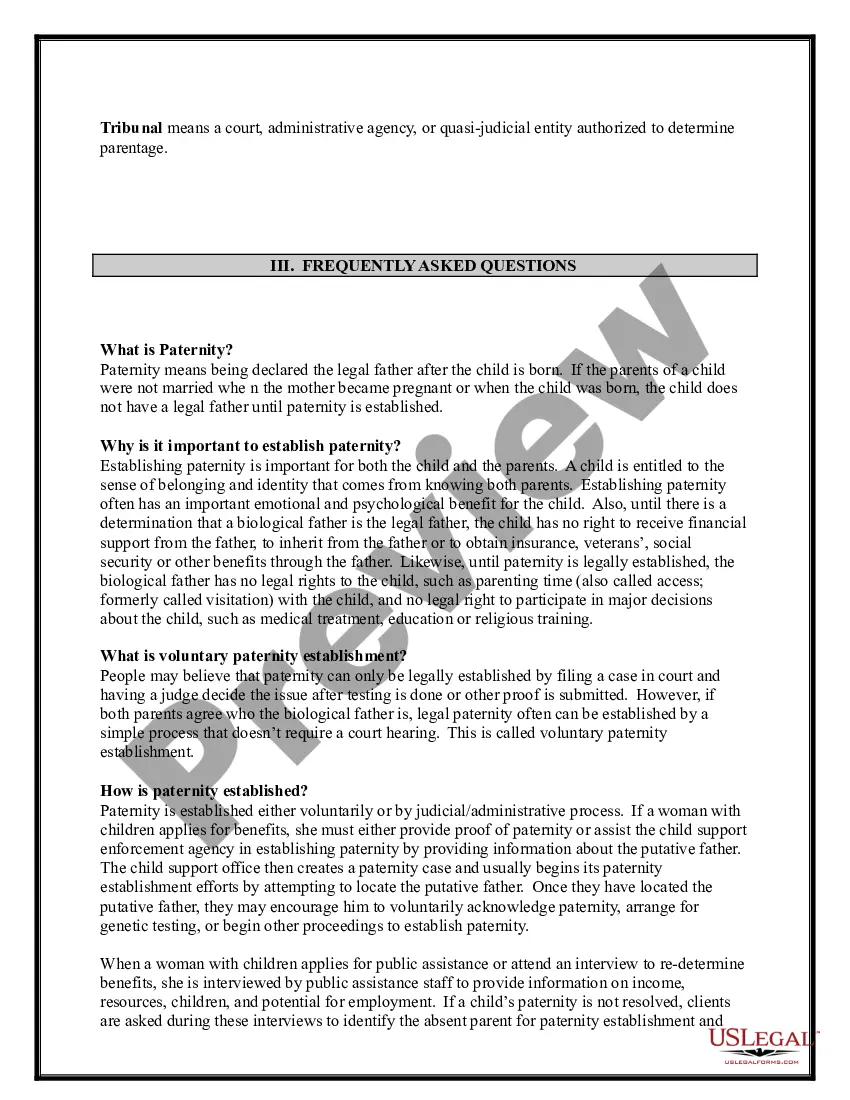
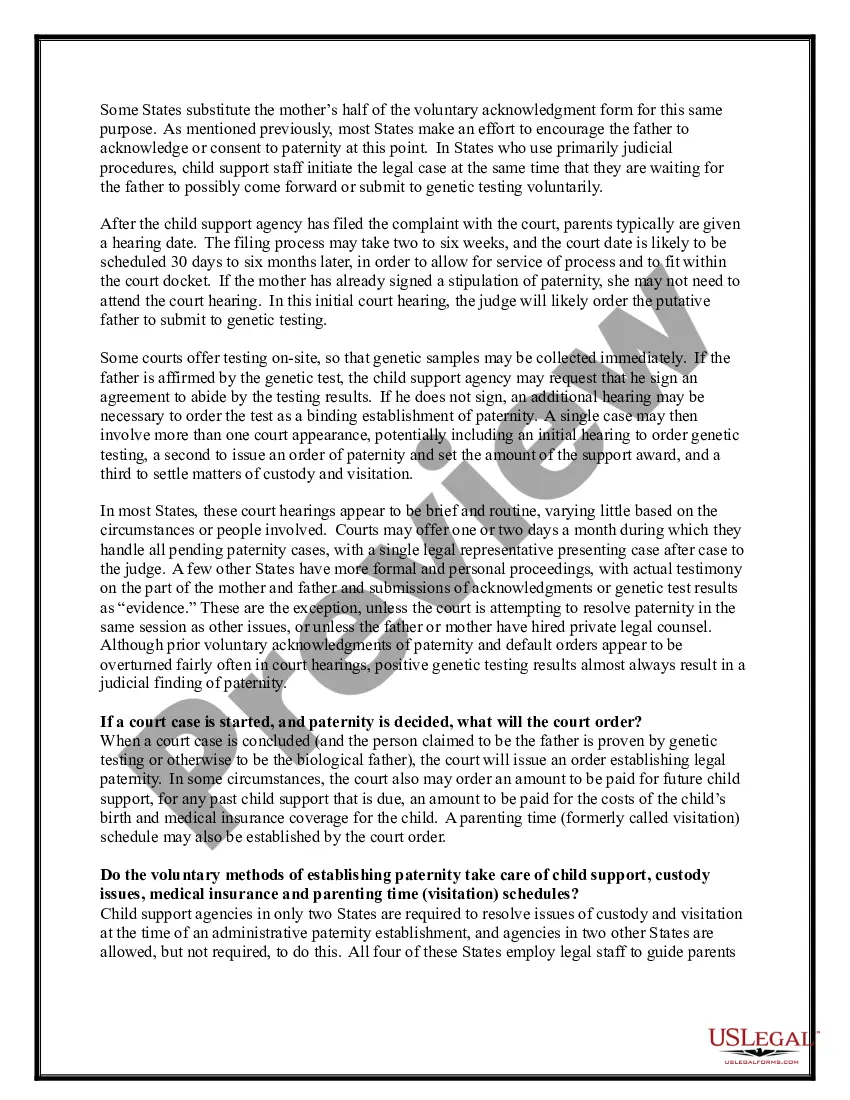
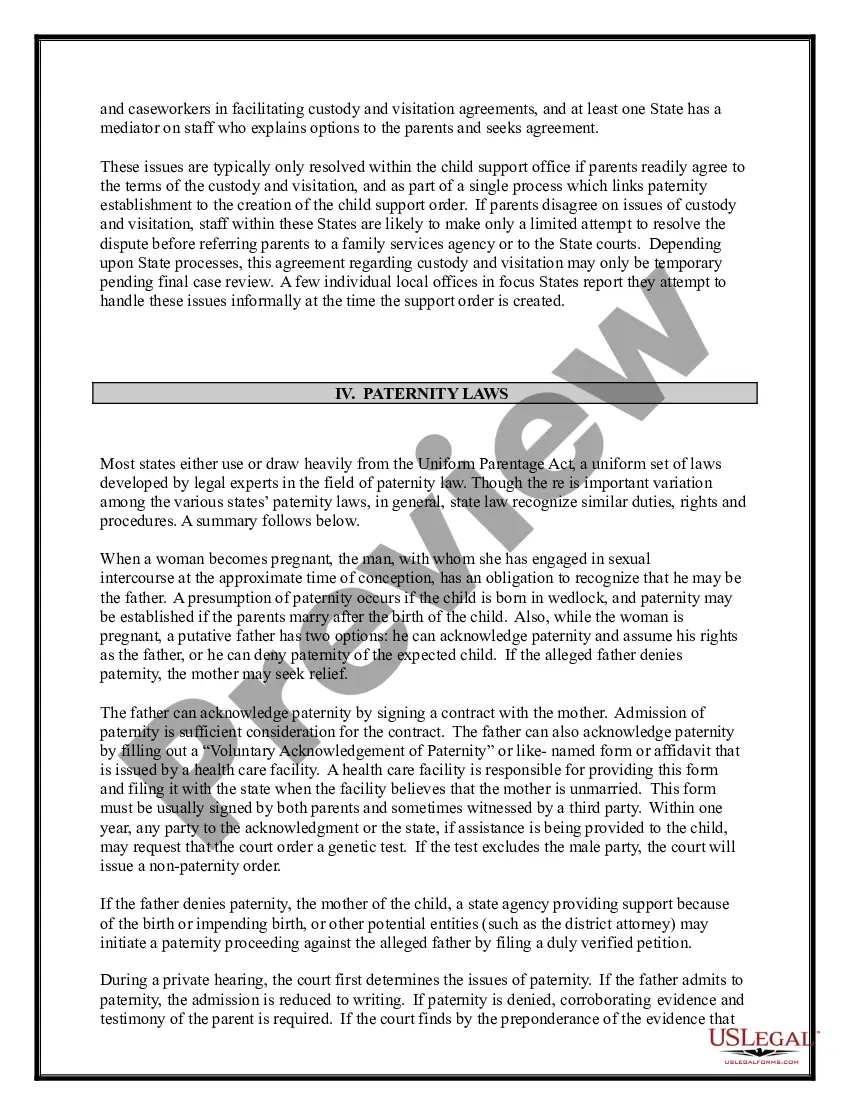
The Paternity Law and Procedure Handbook is a comprehensive guide that outlines the laws and procedures related to establishing paternity in the United States. This handbook provides valuable insights for unmarried parents about their legal responsibilities and rights regarding child support and involved parental relationships. Unlike other legal forms, it specifically addresses both voluntary and court-based procedures for establishing paternity, making it an essential resource for those navigating these complex situations.
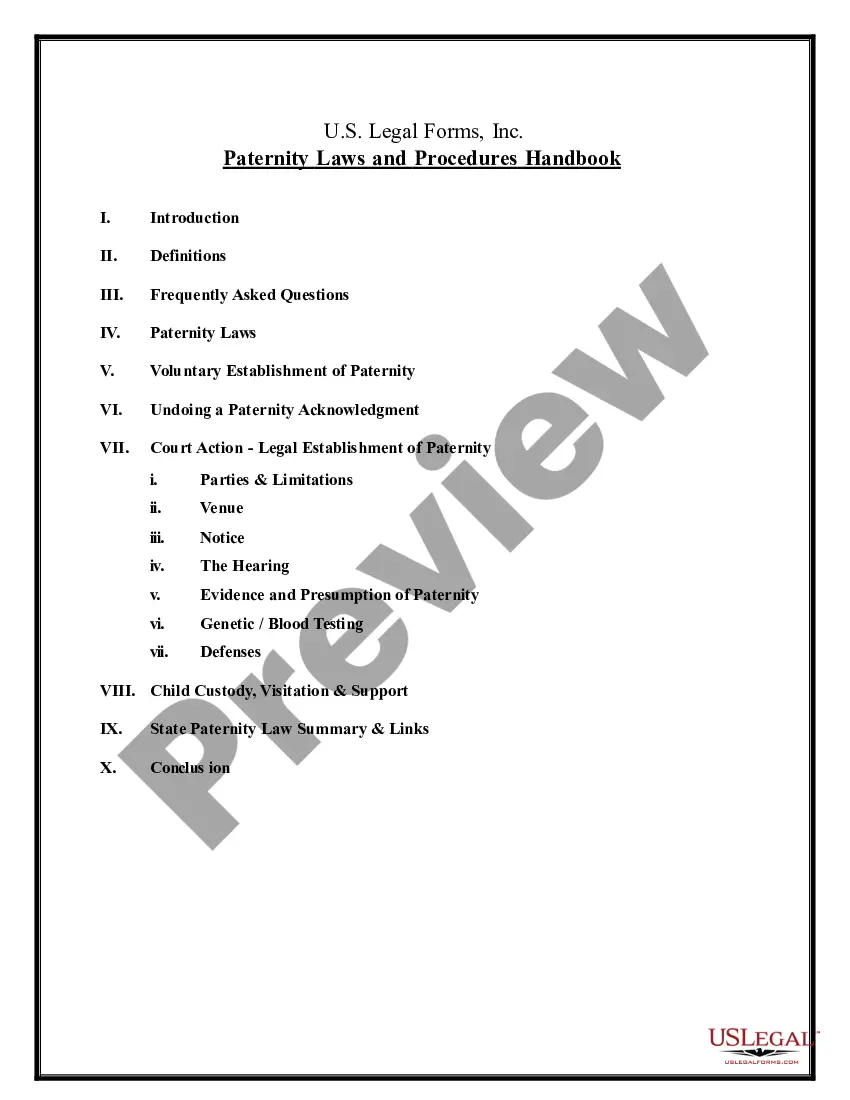
Key parts of this document
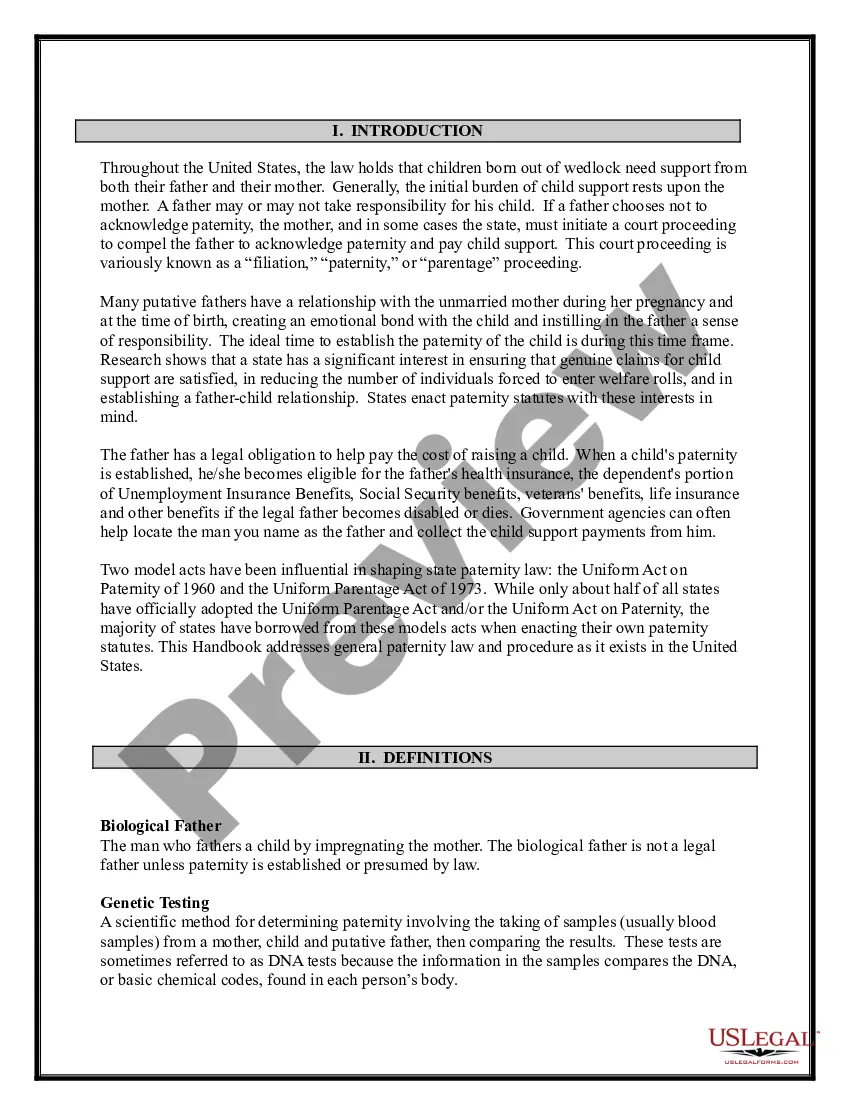
- Introduction to paternity laws and the necessity of establishing paternity.
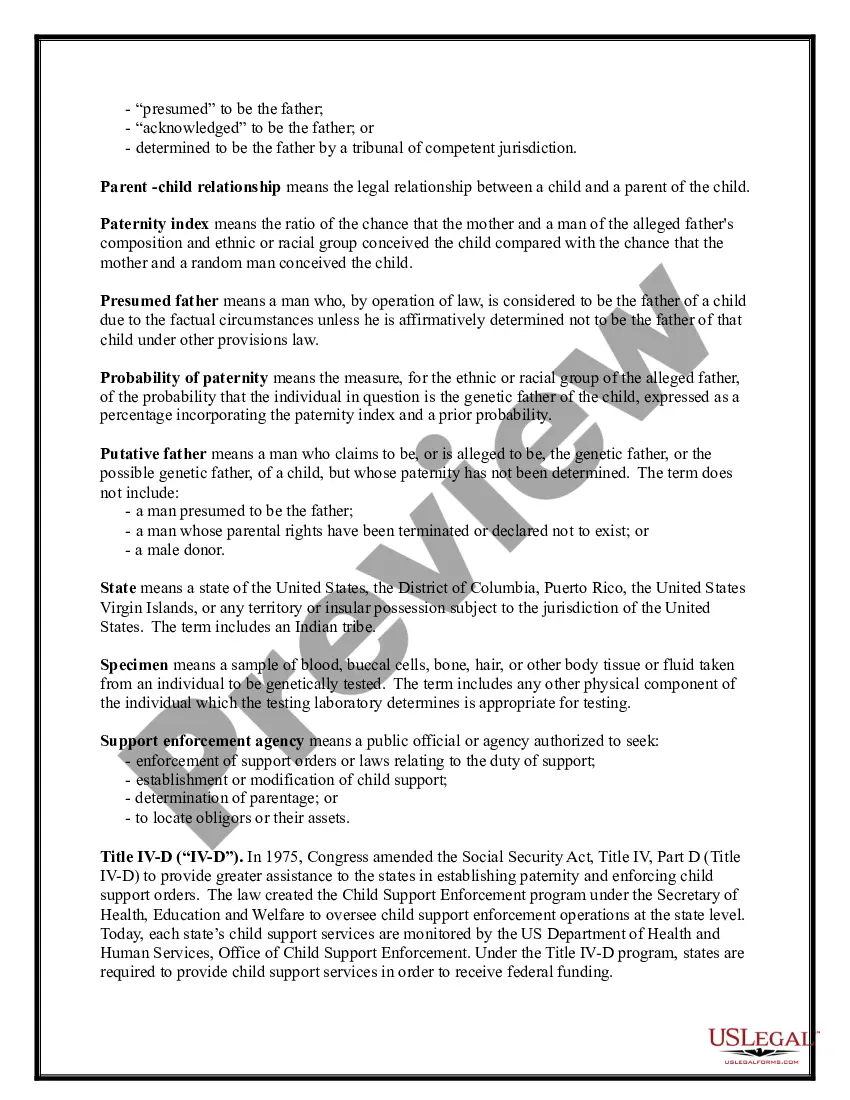
- Definitions of key terms such as biological father, legal father, and paternity acknowledgment.
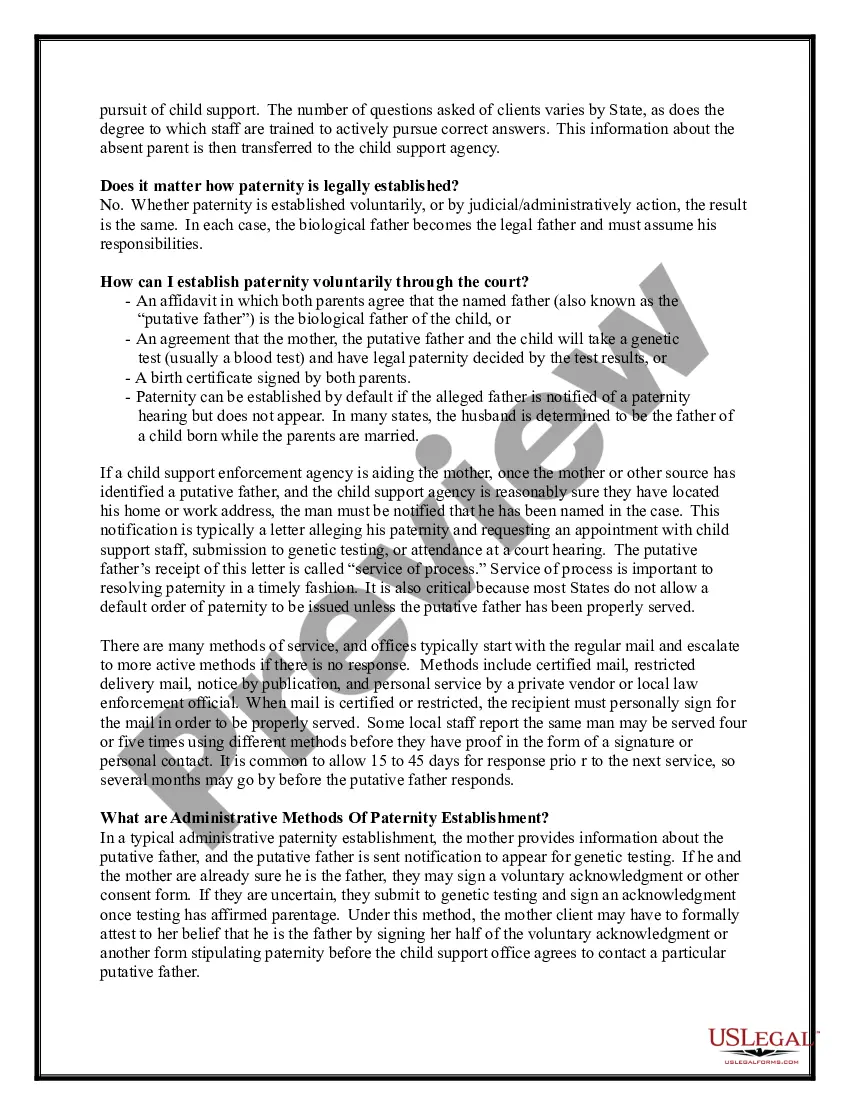
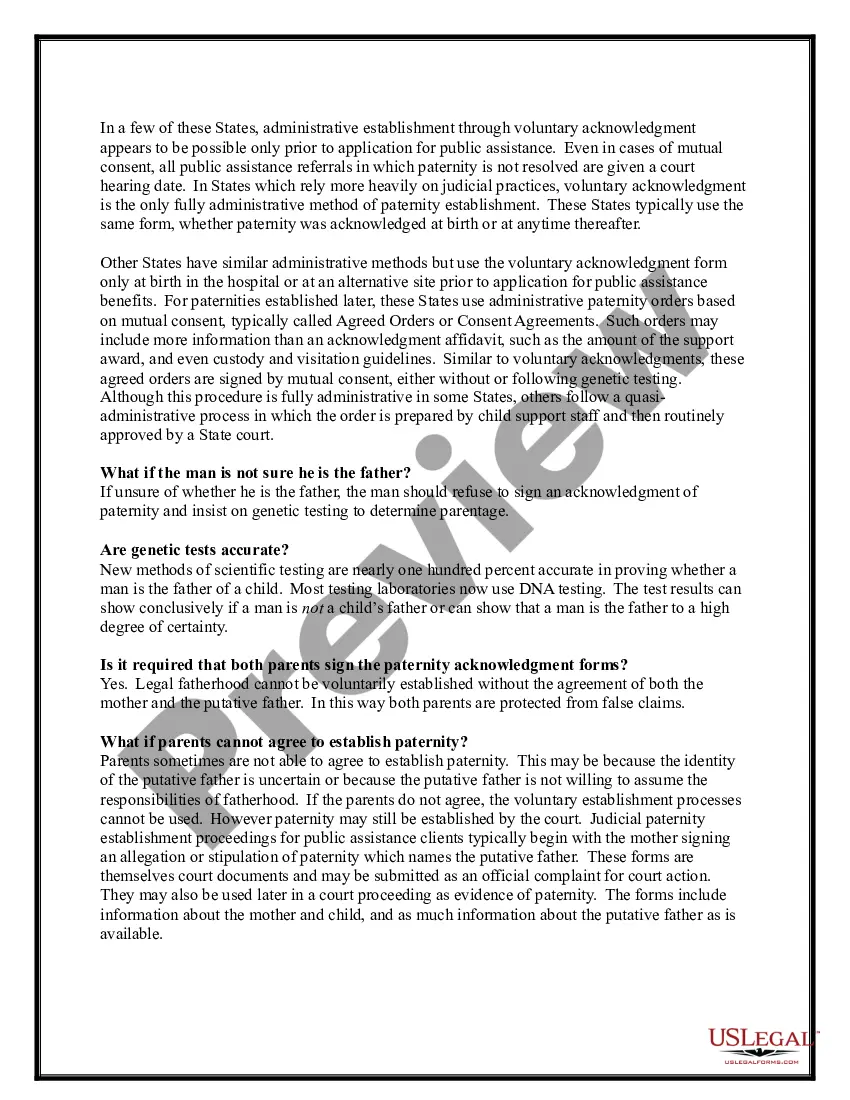
- Options for voluntary paternity establishment and legal processes for paternity cases.
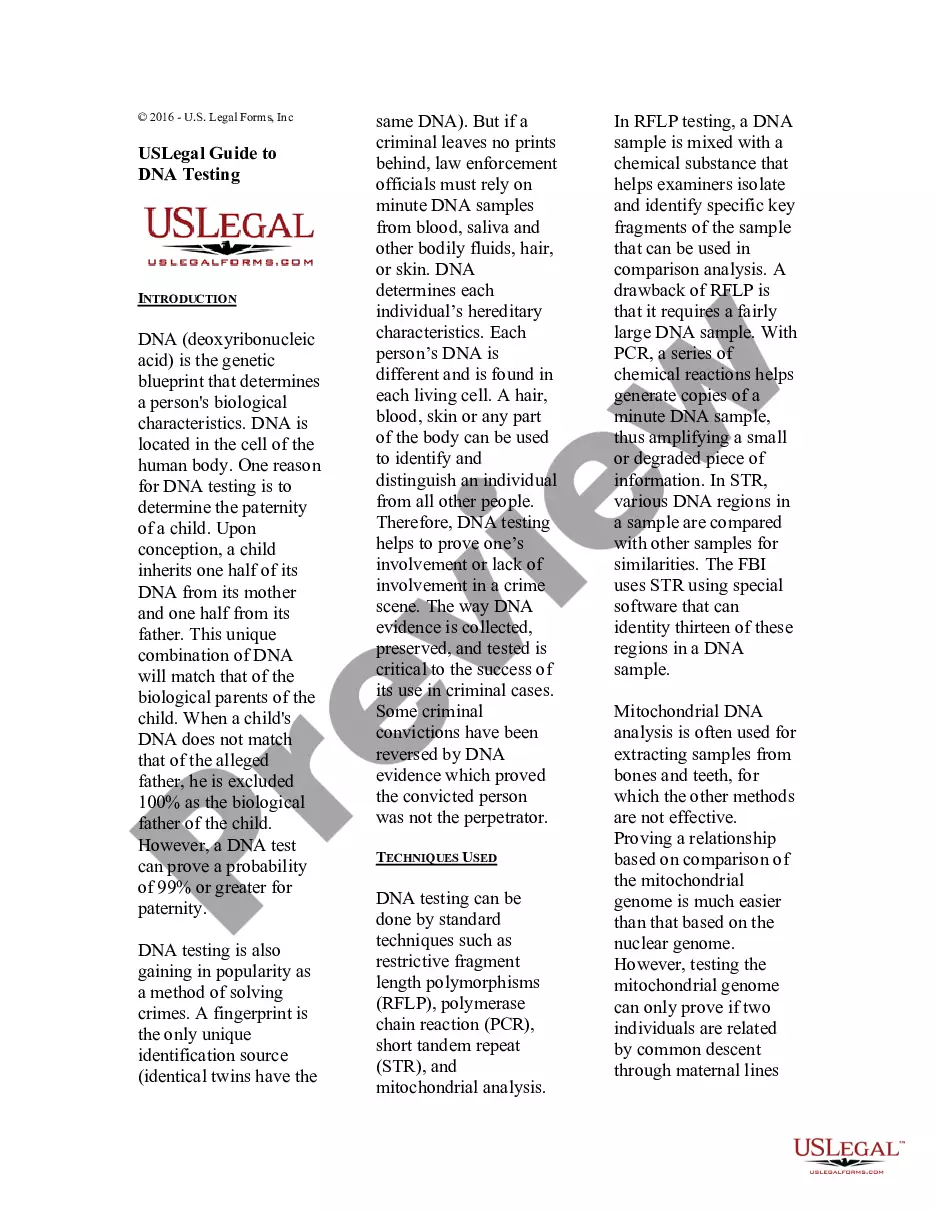
- Detailed discussions about genetic testing and its role in confirming paternity.
- FAQs covering the implications and procedures related to paternity establishment.
- A summary of state-specific paternity laws and resources to aid in the establishment process.


When to use this document
This handbook is crucial when parents are unsure about the legal status of a childâs paternity, particularly in cases where the child is born to unmarried parents. It applies to situations where legal acknowledgment of paternity is needed for purposes such as child support, health insurance, and inheritance. It serves as a guide for individuals wanting to understand their rights and responsibilities throughout the process of establishing paternity.
Who can use this document
The Paternity Law and Procedure Handbook is designed for:
- Unmarried parents seeking to establish the legal paternity of their child.
- Putative fathers who wish to acknowledge their parental status voluntarily.
- Mothers needing to secure financial support for their children.
- Legal professionals and advocates assisting clients with paternity issues.
- Anyone concerned about child's rights and benefits related to paternity.
How to complete this form
To effectively utilize this handbook, follow these steps:
- Read the introduction to understand the significance of establishing legal paternity.
- Familiarize yourself with definitions of essential terms related to paternity.
- Review the voluntary and court-based options for establishing paternity.
- Understand the role of genetic testing by reading appropriate sections.
- Refer to the FAQ section for common questions and clarifications.
- Utilize the state-specific resources section to find relevant laws in your jurisdiction.
Notarization guidance
This form does not typically require notarization unless specified by local law. It is advisable to check with your stateâs regulations regarding any necessary additional attestations for the forms related to paternity establishment.
Get your form ready online
Our built-in tools help you complete, sign, share, and store your documents in one place.
Make edits, fill in missing information, and update formatting in US Legal Forms—just like you would in MS Word.
Download a copy, print it, send it by email, or mail it via USPS—whatever works best for your next step.
Sign and collect signatures with our SignNow integration. Send to multiple recipients, set reminders, and more. Go Premium to unlock E-Sign.
If this form requires notarization, complete it online through a secure video call—no need to meet a notary in person or wait for an appointment.
We protect your documents and personal data by following strict security and privacy standards.

Make edits, fill in missing information, and update formatting in US Legal Forms—just like you would in MS Word.

Download a copy, print it, send it by email, or mail it via USPS—whatever works best for your next step.

Sign and collect signatures with our SignNow integration. Send to multiple recipients, set reminders, and more. Go Premium to unlock E-Sign.

If this form requires notarization, complete it online through a secure video call—no need to meet a notary in person or wait for an appointment.

We protect your documents and personal data by following strict security and privacy standards.
Avoid these common issues
- Not recognizing the importance of timely acknowledgment of paternity.
- Failing to seek genetic testing before signing a paternity acknowledgment if unsure of biological fatherhood.
- Assuming that voluntary acknowledgment covers all legal responsibilities, including child support and custody.
- Overlooking state-specific laws that may affect the paternity establishment process.
Why use this form online
- Convenient access to comprehensive legal information in a single resource.
- Clear explanations of complex legal terms and processes related to paternity.
- Ability to prepare for paternity establishment without expensive legal consultations.
- Guidance on how to navigate both voluntary and court-based paternity processes.
- The handbook serves as a legal reference for establishing paternity but does not offer legal advice.
- Information within the handbook is intended to assist in understanding and navigating paternity laws.
- Consulting with a qualified attorney is recommended for specific legal issues.
Key takeaways
- Establishing paternity is vital for securing parental rights and obligations.
- There are both voluntary and court-based methods for establishing paternity.
- Genetic testing can provide clarity in cases of uncertainty regarding paternity.
- The handbook offers a framework, but specific state laws may vary.
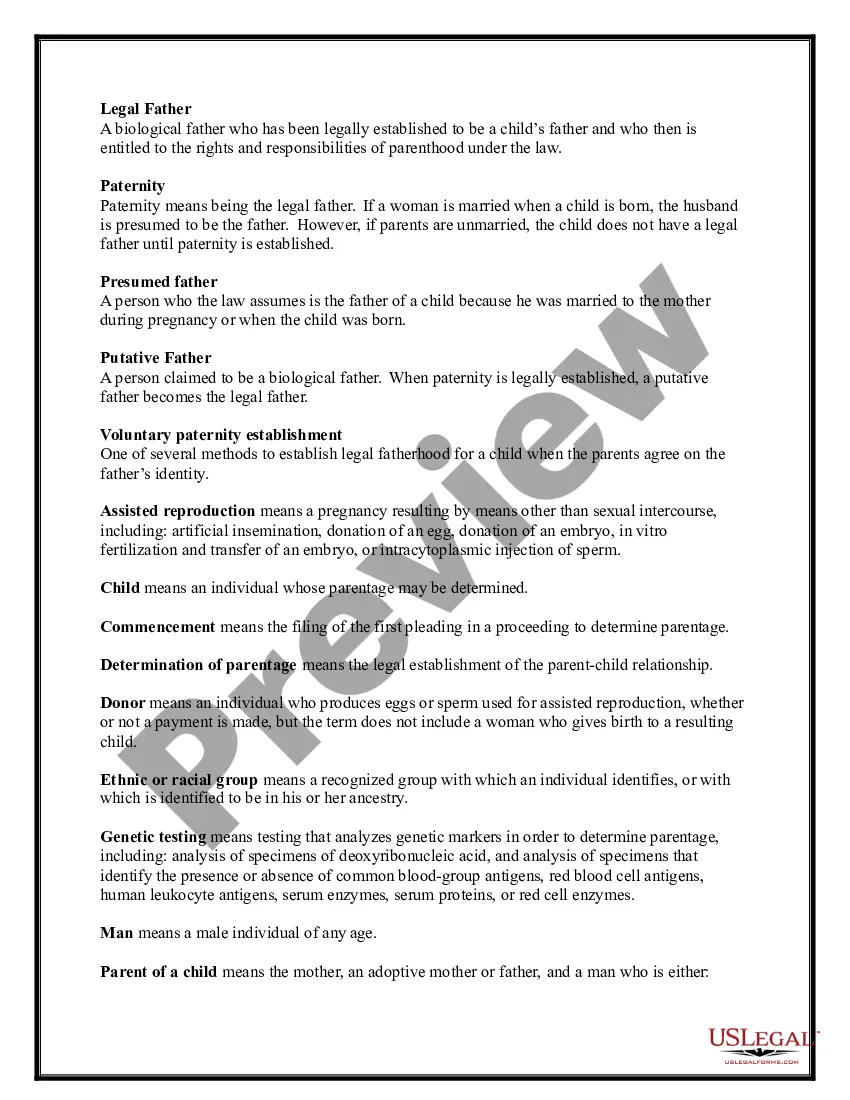
- Biological father: The man who impregnates a woman.
- Legal father: A man who has been legally recognized as a child's father.
- Paternity acknowledgment: A formal declaration of fatherhood by both parents.
- Genetic testing: Scientific testing to determine biological relationships.
Looking for another form?


Form popularity
FAQ
Establishing paternity when the father is deceased can be complex, but it’s possible in Indiana. The Indiana Paternity Law and Procedure Handbook outlines methods to confirm paternity through documentation or genetic testing. You may need to consult legal resources to navigate this process effectively.
The answer is no, it is not a crime to deny a parent parenting time. Also, if there is no order for custody or parenting time issued by a court with proper jurisdiction, then the father has no right to custody or parenting time at this time.It does not give the father any specific rights to the children.
The fathers' rights in Indiana include his rights to custody, whether legal and/or physical, and his rights to parenting time (visitation) with the child. Likewise, the father has responsibilities which include, but are not limited to, child support.
If you have sole physical custody, it is not legal for the other parent to take your child from you. Sometimes taking your child from you is a crime, like "parental kidnapping." But if you are married, and there is no court order of custody, it is legal for the other parent to take your child.
Indiana allows a man to execute a Voluntary Declaration of Paternity within the first 72 hours after a child's birth. If both parents sign the paternity affidavit (a form provided by the hospital from the state health department), the father's name will be put on the birth certificate and he will be the legal father.
The answer is usually no, a parent cannot stop a child from seeing the other parent unless a court order states otherwise.The parents have an existing court order, and a parent is violating the court order by interfering with the other parent's parenting time.
Can I refuse contact? Contact should only be refused where there is very good reason for doing so, for instance if there is an issue of safety or violence, when contact could be refused. Refusal to allow a parent to have contact is likely to result in an application being made to court.
The prosecutor will file the paternity case for free or for a $25 fee. The prosecutor will also usually ask for a child support order, but the prosecutor will not help with custody or visitation problems.
Generally, the only way to remove parental responsibility from someone is to make an application to the Court.If parental responsibility has been granted through a court order then this parental responsibility will be in place as long as the order is in force. This could include a Special Guardianship Order.
What exactly is an unfit parent? The legal definition of an unfit parent is when the parent through their conduct fails to provide proper guidance, care, or support. Also, if there is abuse, neglect, or substance abuse issues, that parent will be deemed unfit.