Illinois Notice of Breach of Written Lease for Violating Specific Provisions of Lease with No Right to Cure for Residential Property from Landlord to Tenant
Overview of this form
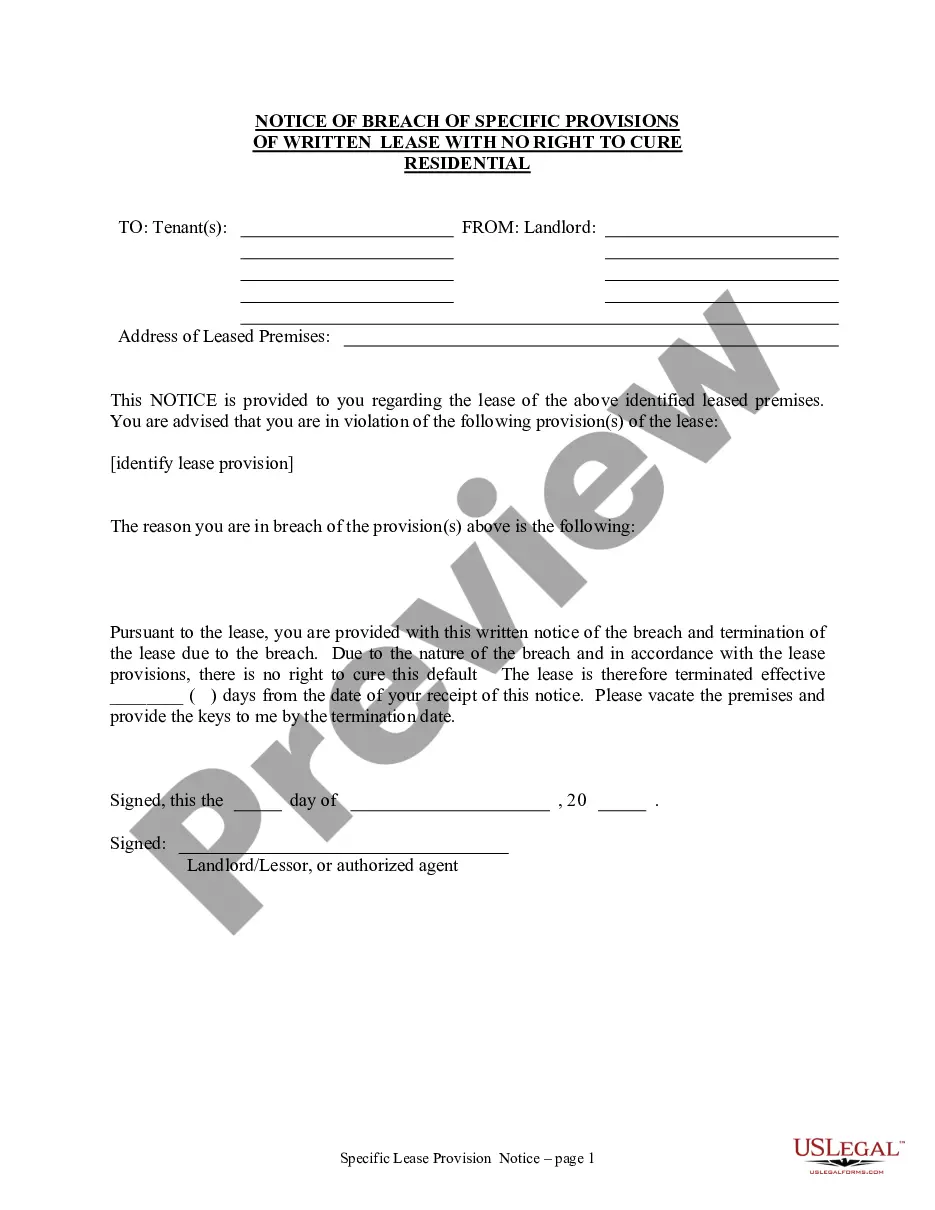
The Notice of Breach of Written Lease for Violating Specific Provisions of Lease with No Right to Cure for Residential Property is a legal document used by landlords to formally notify tenants of a breach in their lease agreement. Unlike regular notices, this form is designed for specific lease violations that do not allow for resolution, known as "curing" the breach. It serves as a crucial step in formalizing the landlord's intent to terminate the lease due to the tenant's failure to comply with specific terms outlined in the contract.
Key components of this form
- Address of the leased premises where the violation occurred.
- Specific provision from the lease that has been breached.
- Description of the reason for the breach.
- Notice of termination of lease effective from a specified date.
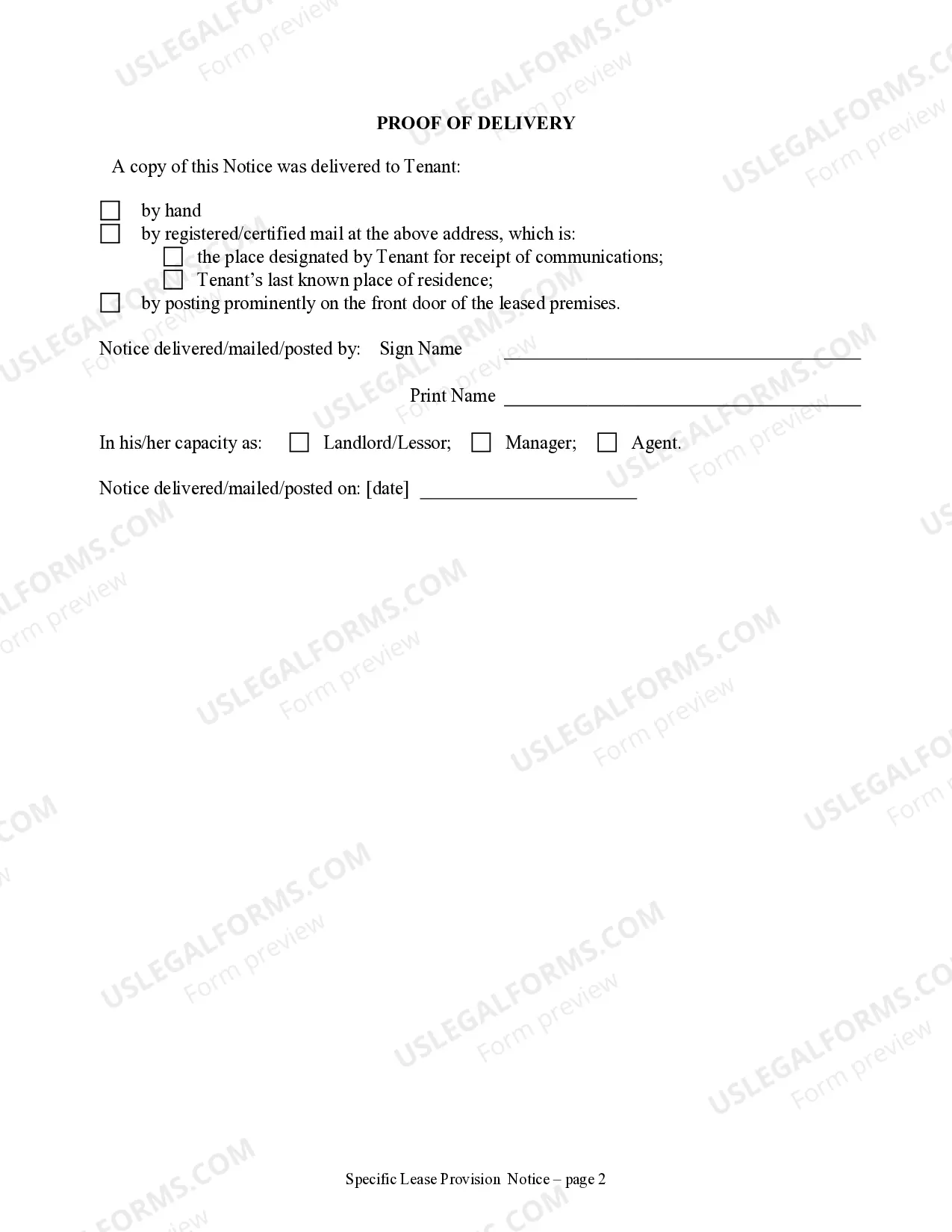
- Proof of delivery options (hand delivery, mail, or posting).




Situations where this form applies
This form is used when a tenant has violated specific provisions of their lease and the lease terms do not allow the tenant the option to remedy the breach. It is typically applicable in scenarios such as non-payment of rent, illegal activities on the premises, or other serious breaches that lead to immediate lease termination.
Who this form is for
- Landlords looking to terminate a lease due to specific tenant violations.
- Property managers handling legal lease issues for residential properties.
- Legal representatives acting on behalf of landlords in lease disputes.
Steps to complete this form
- Identify and enter the parties involved, including the landlord and tenant.
- Specify the address of the leased premises.
- Clearly state the specific provision of the lease that has been violated.
- Describe the details of the breach and why it cannot be cured.
- Enter the effective termination date which should follow the notice period.
- Sign and date the notice, ensuring delivery as specified in the document.
Is notarization required?
This form does not typically require notarization to be legally valid. However, some jurisdictions or document types may still require it. US Legal Forms provides secure online notarization powered by Notarize, available 24/7 for added convenience.
Get your form ready online
Our built-in tools help you complete, sign, share, and store your documents in one place.
Make edits, fill in missing information, and update formatting in US Legal Forms—just like you would in MS Word.
Download a copy, print it, send it by email, or mail it via USPS—whatever works best for your next step.
Sign and collect signatures with our SignNow integration. Send to multiple recipients, set reminders, and more. Go Premium to unlock E-Sign.
If this form requires notarization, complete it online through a secure video call—no need to meet a notary in person or wait for an appointment.
We protect your documents and personal data by following strict security and privacy standards.
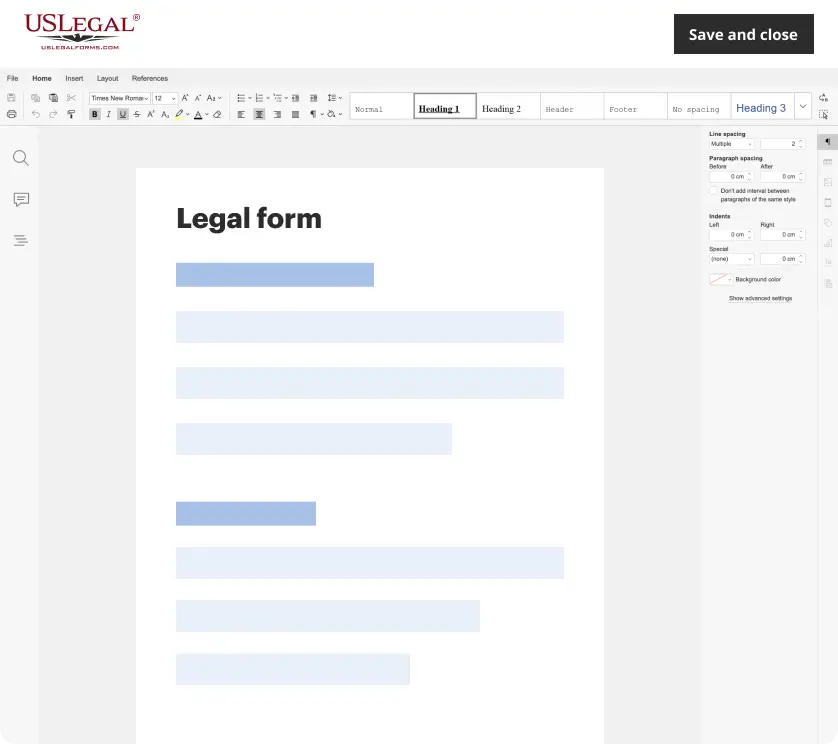
Make edits, fill in missing information, and update formatting in US Legal Forms—just like you would in MS Word.
Download a copy, print it, send it by email, or mail it via USPS—whatever works best for your next step.
Sign and collect signatures with our SignNow integration. Send to multiple recipients, set reminders, and more. Go Premium to unlock E-Sign.
If this form requires notarization, complete it online through a secure video call—no need to meet a notary in person or wait for an appointment.
We protect your documents and personal data by following strict security and privacy standards.
Mistakes to watch out for
- Failing to specify the exact provision of the lease that has been violated.
- Not providing sufficient details regarding the breach.
- Overlooking the correct notice period required by state law.
- Not delivering the notice according to the required methods stated in law or lease.
Why use this form online
- Convenience of downloading and customizing the form to fit specific lease situations.
- Access to professionally drafted templates that ensure legal compliance.
- Time-saving by avoiding traditional legal consultations for standard notices.
Legal use & context
- The notice serves as proof of communication regarding the lease violation.
- Failure to comply with the notice may lead to legal action for eviction.
- Understanding your rights and those of the tenant is crucial in these situations.
What to keep in mind
- Using this form is essential for formally notifying tenants of lease breaches.
- The lack of a right to cure indicates immediate termination upon notice.
- Ensure all fields are completed accurately to preserve legal rights.
Looking for another form?
Form popularity
FAQ
Leases can always be ended by mutual agreement Before Illinois tenants involve the court system in trying to break a lease, the best move may be to simply speak to the landlord. While leases are binding contracts, they can be dissolved at any time by mutual agreement of the parties.
A tenant must pay the rent up to and including the day their termination notice period ends and they vacate the property. If a tenant does not owe the landlord money at the end of their tenancy and there is no damage to the property, the bond paid at the beginning of the tenancy should be refunded in full.
If you pay all outstanding charges before moving, including any back rent and fees, breaking a lease won't hurt your credit score. However, breaking a lease can damage your credit if it results in unpaid debt.Landlords generally don't report unpaid rent to credit bureaus.
If a tenant fails to pay rent, breaks a rule, or significantly damages the property, then it is considered breach of contract and you have grounds for eviction. If there are people living in the unit that are not on the lease, then that is also breach of contract and you have grounds to evict them.
Normally, neither the tenant nor the landlord can change their mind and get out of the lease before it ends, unless the other side agrees. But both parties can agree to end the lease early by a written agreement. If no agreement is reached, the tenant must pay rent for the full lease term, even if they move out.
In Illinois, if there is no lease or if the lease does not specify a move out date, the Landlord must give at least 30 days of notice to a tenant that the landlord wants to move out. This notice must be in writing and must arrive to the tenant at least 30 days prior to their move out date.
In many cases, the lease may give the tenant the option to pay an early termination fee. If this is the case, tenants can expect to pay one to two months' rent in order to exit the lease agreement.
If you break a lease without legal grounds to do so, you may: Be required to pay the rent for the remaining months on your lease. Be subject to legal action from your landlord, and/or. Receive a negative mark on your credit report.
If a resident fails to abide by the agreed-upon terms, legal action can be taken. If an eviction is the end-result of this action, it will stay listed on the resident's record for up to seven years. The most common reason evictions are requested involves failure to pay rent.