Wisconsin Lease Subordination Agreement
Understanding this form
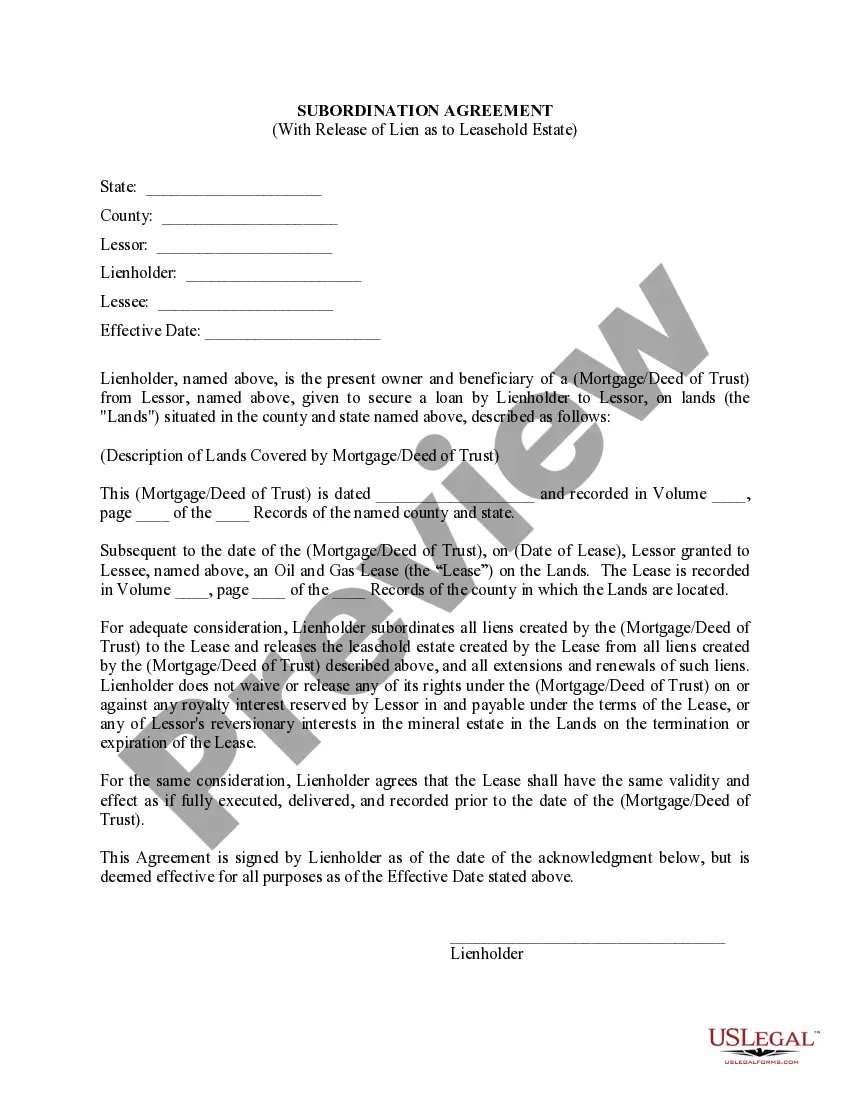
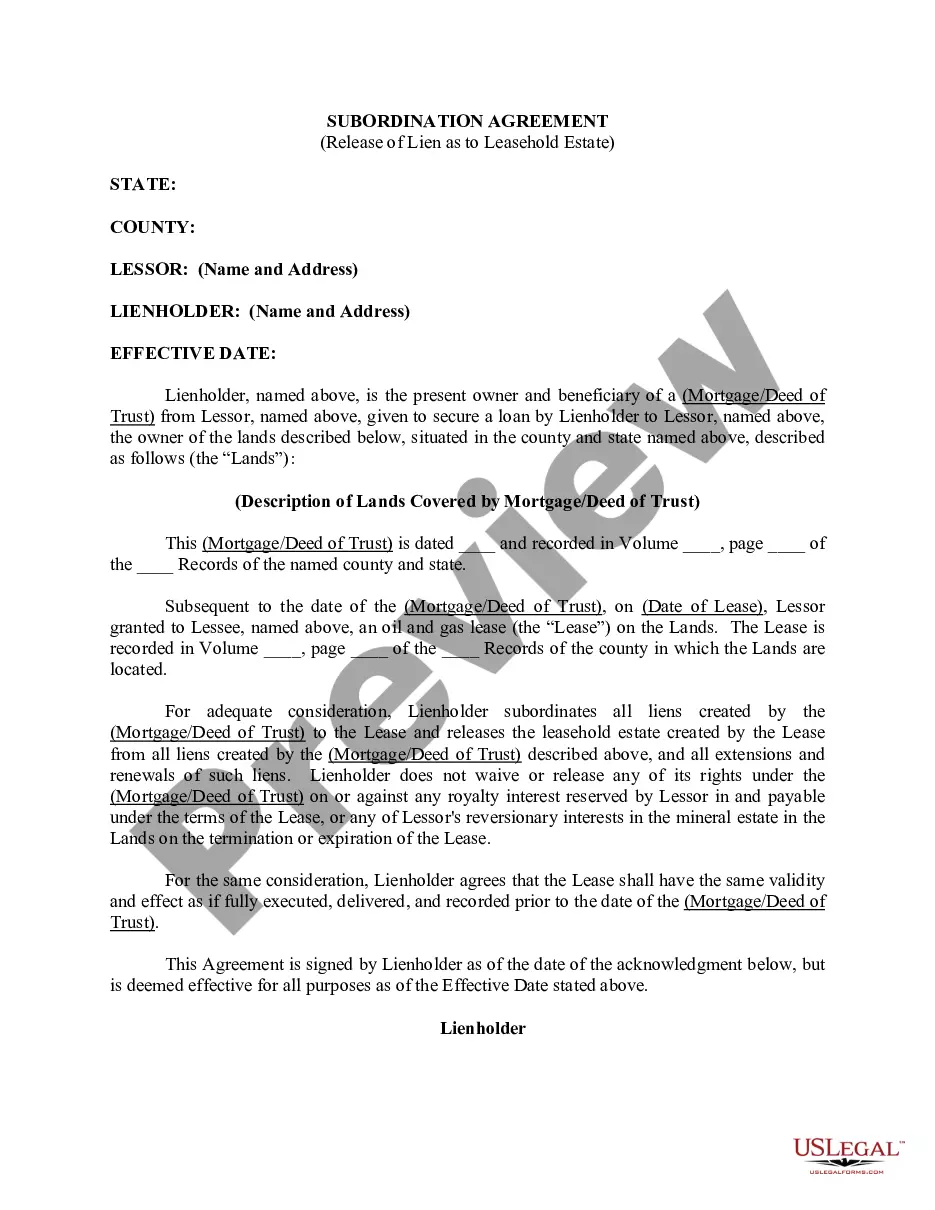
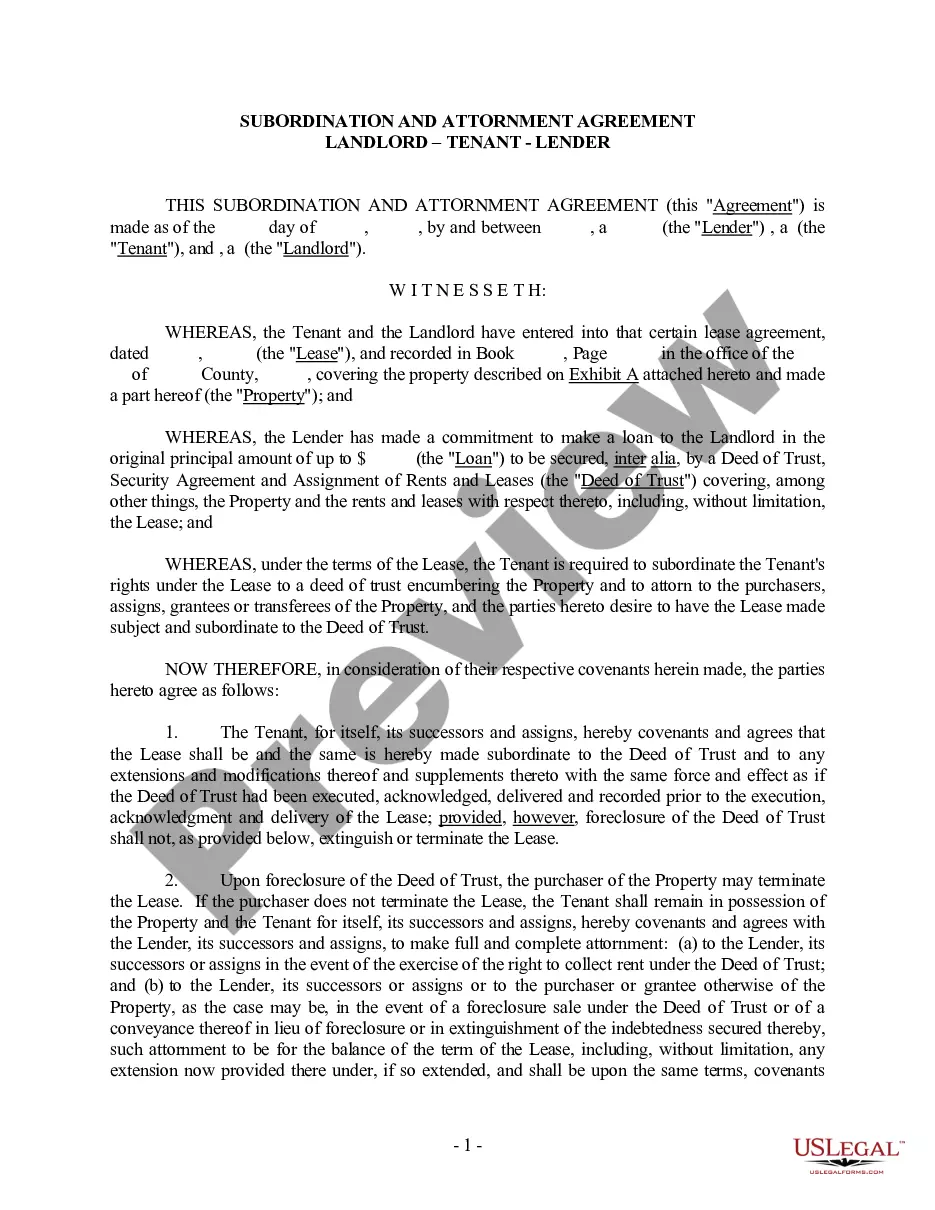
The Lease Subordination Agreement is a legal document that prioritizes certain liens over others, specifically in the context of mineral, oil, or gas leases. This agreement enables a lienholder's mortgage or deed of trust to be subordinated to an existing mineral lease, allowing the leasehold estate to be freed from the mortgage's claims. It is an important tool for property owners and lienholders who need to establish clear liens related to lease agreements while protecting their rights and interests.
Key components of this form
- Identification of the parties involved: Lessor, Lienholder, and Lessee.
- Description of the property subject to the mortgage and lease.
- Effective date of the agreement.
- Details of the original mortgage or deed of trust.
- Statement of lien subordination regarding the mineral lease.
- Acknowledgment of the rights retained by the lienholder.

When to use this document
This form is typically used when a property owner has an existing mortgage and is seeking to enter into a mineral, oil, or gas lease. It may be required by the lienholder to ensure that their loan has the proper priority over the lease. Using this agreement can help clarify the rights of all parties involved and ensure that the lease is valid and effective even when there are other financial interests at stake.
Who can use this document
- Property owners (Lessors) seeking to secure a mineral lease on their lands.
- Lienholders who need to establish the priority of their loan against a mineral lease.
- Lessees (potential tenants of mineral rights) looking to protect their leasehold interest.
Instructions for completing this form
- Identify and enter the names of all parties: Lessor, Lienholder, and Lessee.
- Specify the property by providing a complete legal description of the land.
- Input the effective date of the agreement.
- Detail the original mortgage or deed of trust information including date and recording details.
- Complete the subordination statement and ensure acknowledgment of rights retained by the lienholder.
- Have all parties sign and date the document as required.
Notarization guidance
To make this form legally binding, it must be notarized. Our online notarization service, powered by Notarize, lets you verify and sign documents remotely through an encrypted video session.
Get your form ready online
Our built-in tools help you complete, sign, share, and store your documents in one place.
Make edits, fill in missing information, and update formatting in US Legal Forms—just like you would in MS Word.
Download a copy, print it, send it by email, or mail it via USPS—whatever works best for your next step.
Sign and collect signatures with our SignNow integration. Send to multiple recipients, set reminders, and more. Go Premium to unlock E-Sign.
If this form requires notarization, complete it online through a secure video call—no need to meet a notary in person or wait for an appointment.
We protect your documents and personal data by following strict security and privacy standards.

Make edits, fill in missing information, and update formatting in US Legal Forms—just like you would in MS Word.

Download a copy, print it, send it by email, or mail it via USPS—whatever works best for your next step.

Sign and collect signatures with our SignNow integration. Send to multiple recipients, set reminders, and more. Go Premium to unlock E-Sign.

If this form requires notarization, complete it online through a secure video call—no need to meet a notary in person or wait for an appointment.

We protect your documents and personal data by following strict security and privacy standards.
Typical mistakes to avoid
- Failing to correctly identify all parties involved in the lease.
- Omitting the legal description of the property.
- Not including the effective date, which could lead to legal disputes.
- Neglecting to retain necessary rights under the original mortgage.
Advantages of online completion
- Immediate access to the form from anywhere at any time.
- Easy customization to meet specific legal needs.
- Reliable templates drafted by licensed attorneys ensuring compliance with legal standards.
Legal use & context
- The Lease Subordination Agreement legally establishes the order of claims on the property, ensuring clarity for financial institutions.
- It enhances the enforceability of leases concerning mineral rights, thus providing legal assurances to both lessors and lessees.
What to keep in mind
- The Lease Subordination Agreement clarifies lien priorities in mineral leases.
- It is essential for property owners with existing mortgages entering lease agreements.
- Accurate completion ensures the document's enforceability and protection of interests.
Looking for another form?


Form popularity
FAQ
In the case of commercial property changing hands, an attornment clause in a subordination, non-disturbance, and attornment (SNDA) agreement requires the tenant to acknowledge a new owner as their landlord and to continue paying rent regardless of whether the property changes hands through a normal sale or a
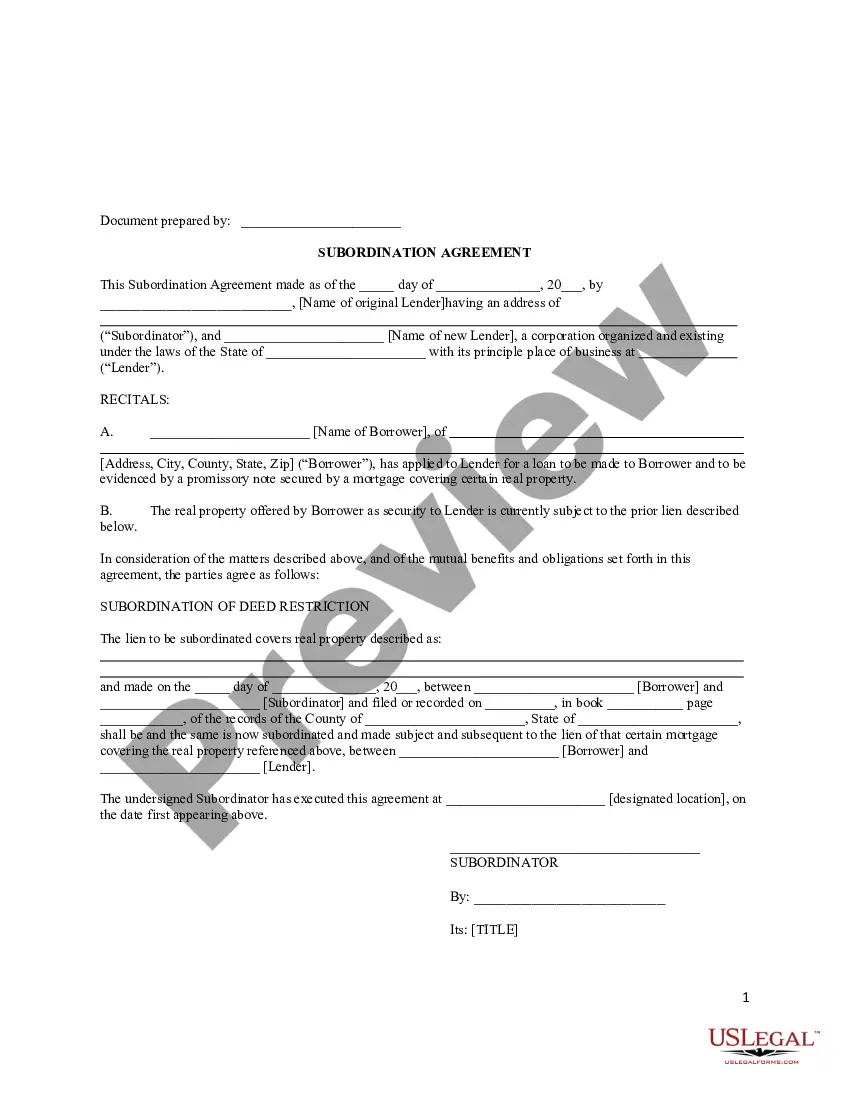
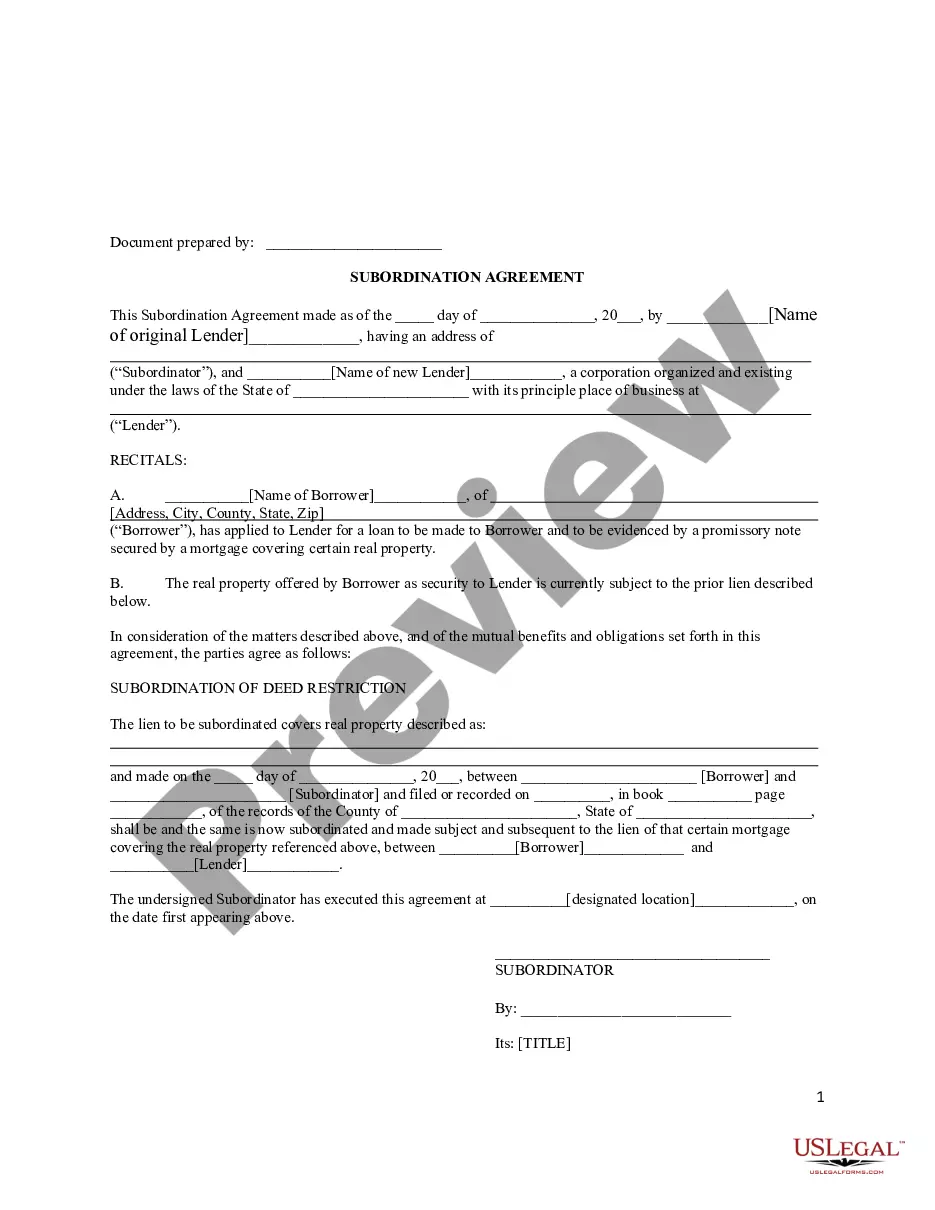
Despite its technical-sounding name, the subordination agreement has one simple purpose. It assigns your new mortgage to first lien position, making it possible to refinance with a home equity loan or line of credit. Signing your agreement is a positive step forward in your refinancing journey.
An SNDA is an agreement entered into between a tenant and the lender of the landlord (and, ideally, the landlord) to establish the relationship between the tenant and lender (who would not otherwise have a direct relationship) and provide relative priorities between them.
A Subordination and Non-Disturbance Agreement (SNDA) commonly called a non-disturb is an agreement that your landlord asks its lender to provide. The agreement basically says that if the building goes bankrupt and the lender takes control of the building from the landlord, the lender will honor your lease.
What are tenant estoppels and SNDAs? Conceptually, the tenant estoppel and SNDA are part of a normal lease transaction. The landlord will request that a tenant estoppel and/or SNDA be signed when the landlord is obtaining financing or when the property is being sold.
The Purpose of Tenant Estoppel Certificates By definition, an estoppel certificate is a signed statement by a party (such as a tenant or mortgagee) certifying for anoth- er's benefit that certain facts are correct, as that a lease exists, that there are no defaults, and that rent is paid to a certain date.
Subordination is the tenant's agreement that its interest under the lease will be subordinate to that of the lender.Attornment is the tenant's agreement to become the tenant of someone other than the original landlord and who has now taken title to the property.
One of the closing documents in a real estate financing transaction involving leased property is a subordination, non-disturbance and attornment agreement (SNDA). SNDAs have a number of purposes. They serve to connect the lender with the tenant and they provide other uses as well.
A rental agreement will be void and unenforceable if it allows the landlord to terminate the tenancy of a tenant for a crime committed in relation to the rental property if it does not also include the new domestic abuse protection language set forth in sec.