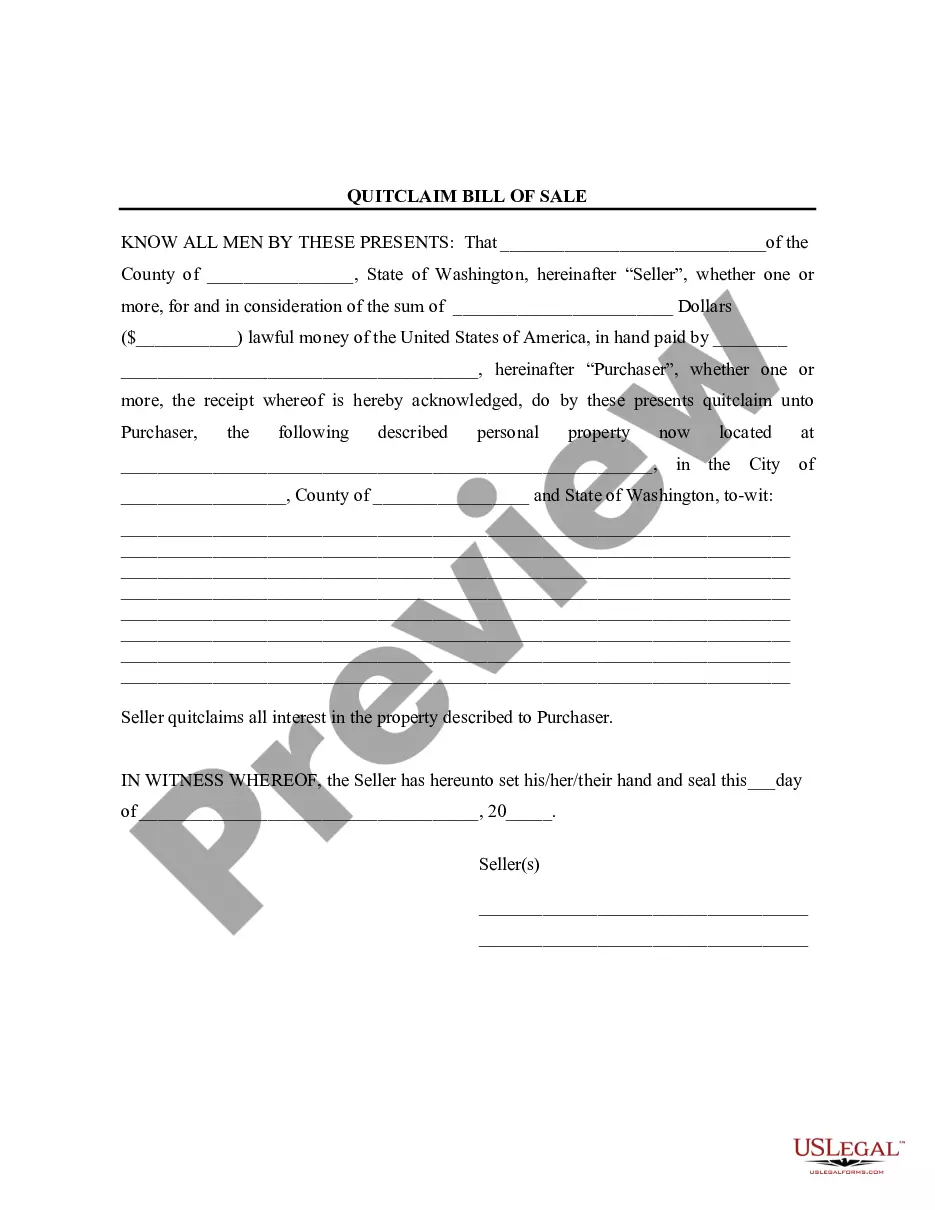
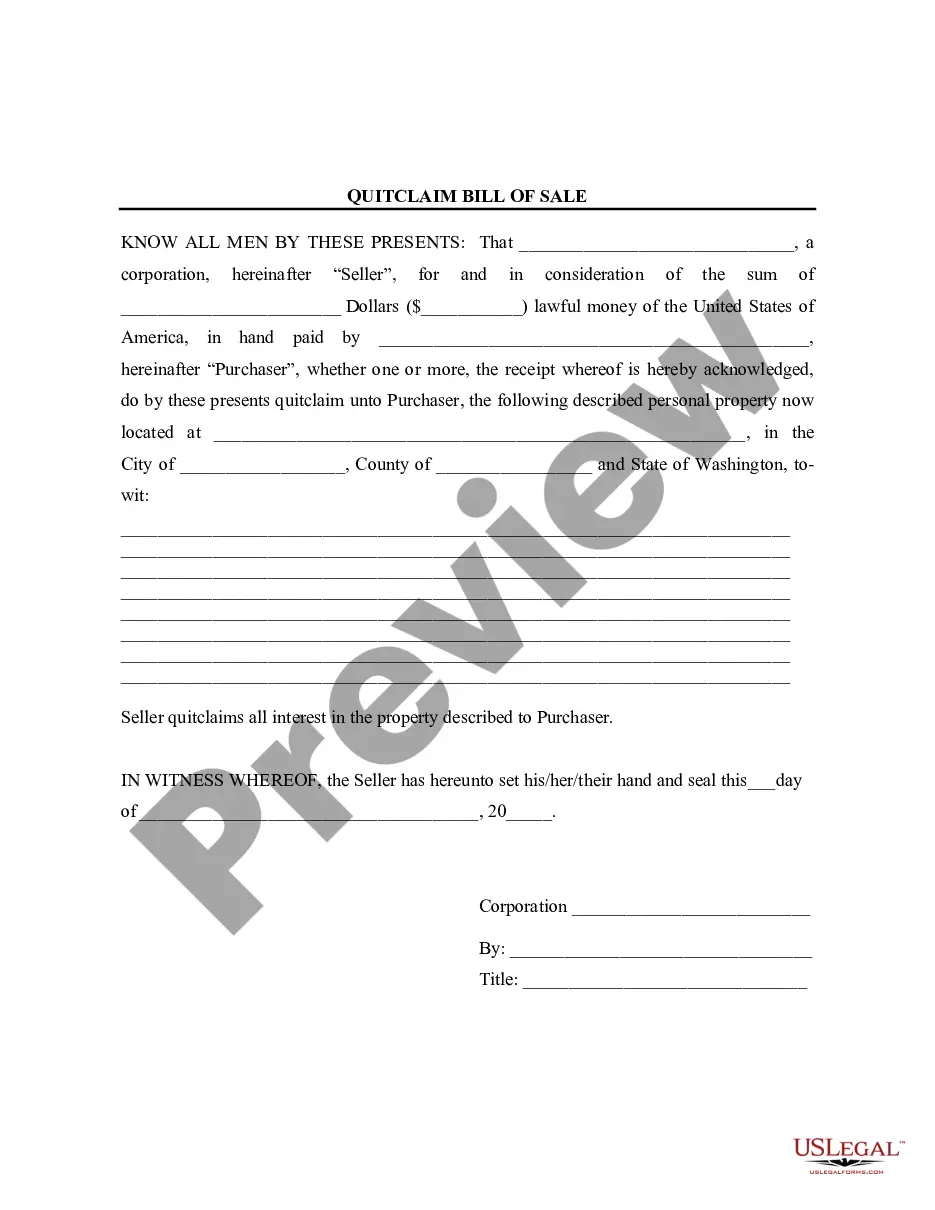
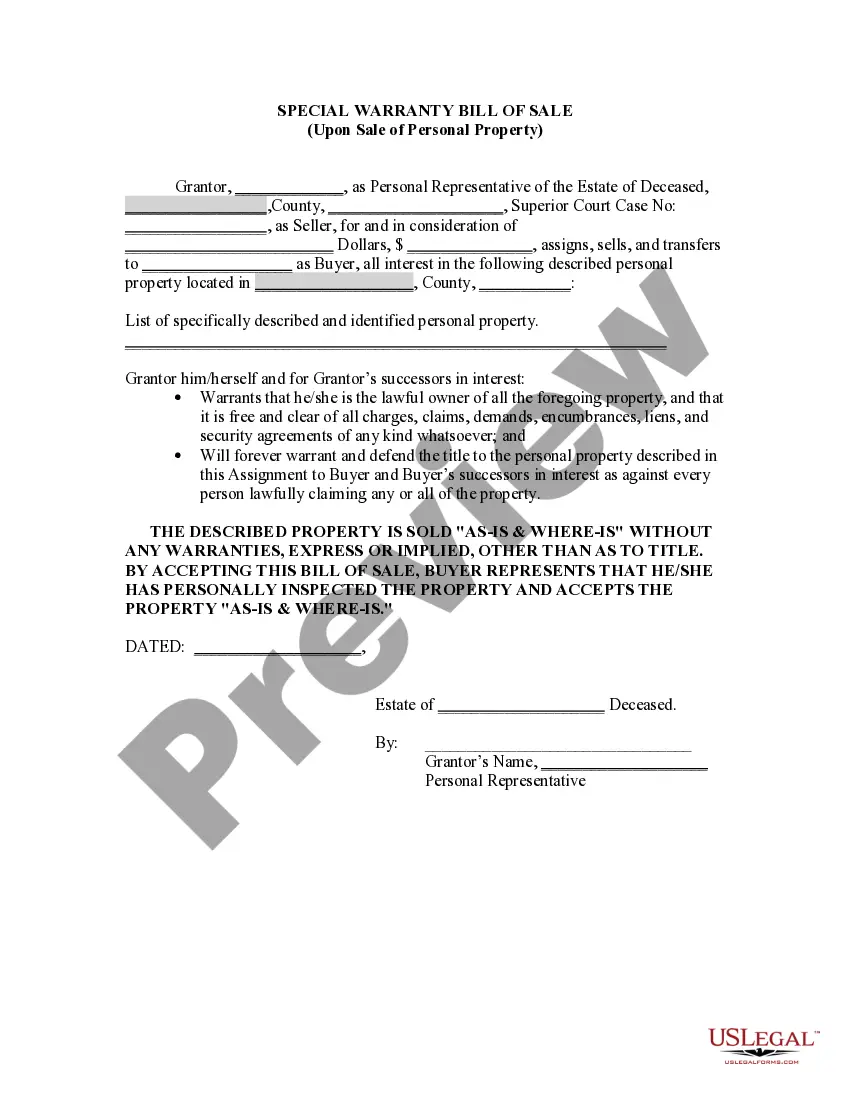
Iowa Fiduciary Deed for use by Executors, Trustees, Trustors, Administrators and other Fiduciaries
What this document covers
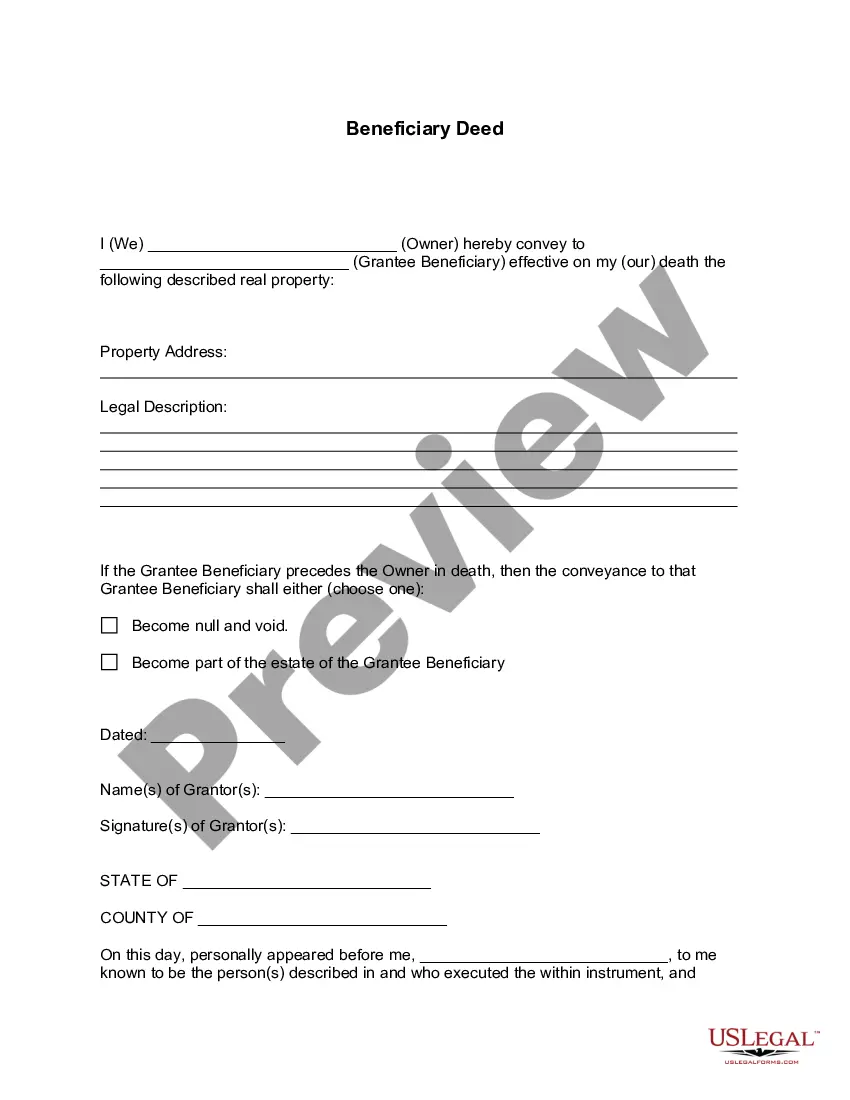
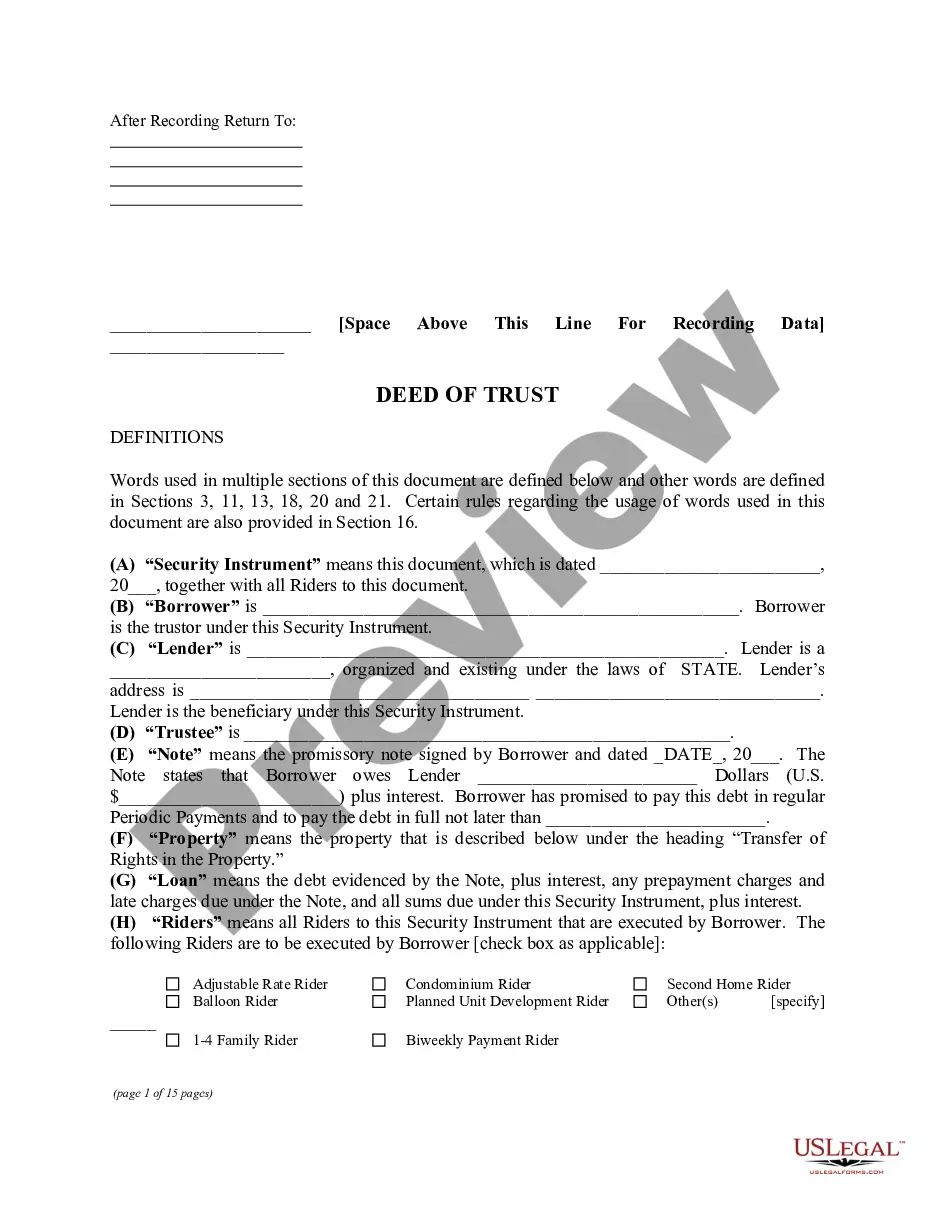
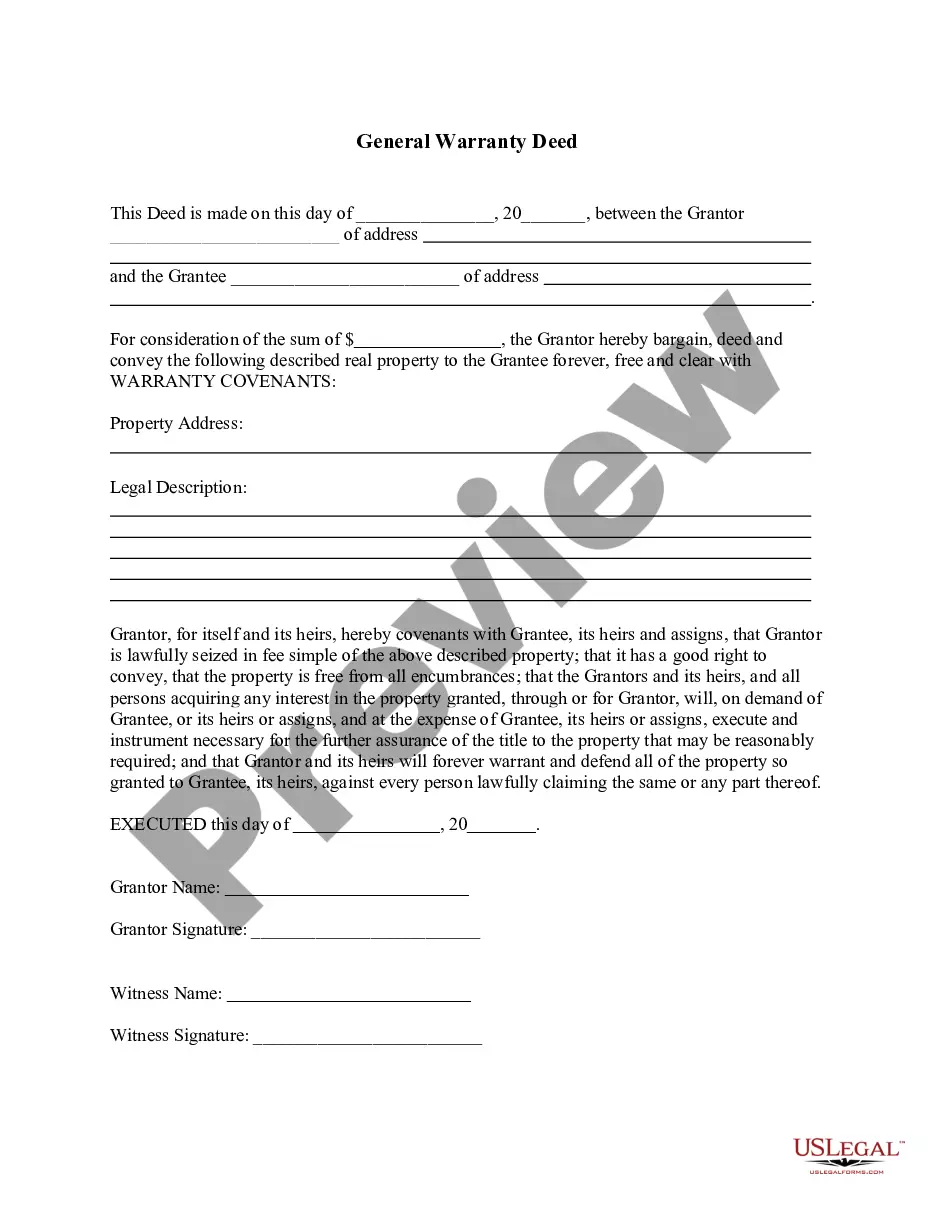
The Fiduciary Deed is a legal document used by individuals in various fiduciary roles, such as executors, trustees, and administrators, to transfer real estate. This form ensures that the grantor has the authority to act on behalf of another party and is different from a standard deed because it includes specific fiduciary covenants that hold the grantor accountable for their actions. This deed is essential for correctly executing property transfers in fiduciary situations, protecting the interests of all parties involved.
What’s included in this form
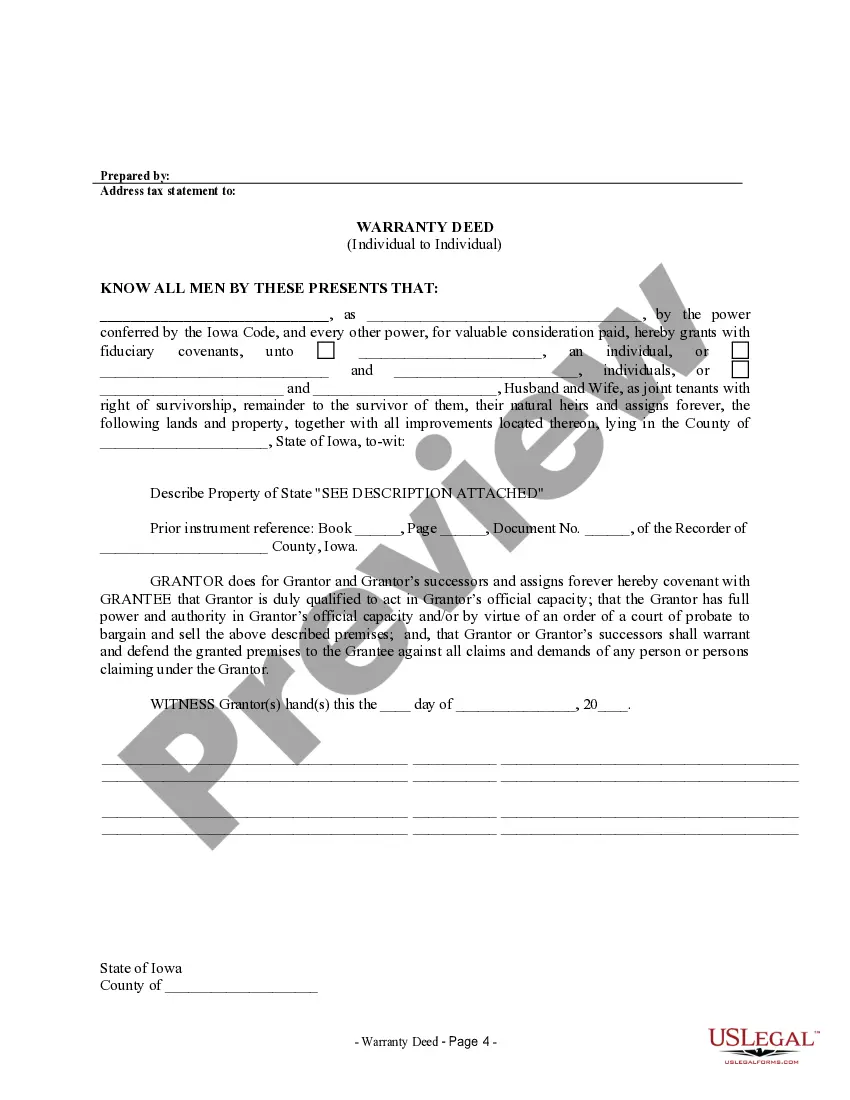
- Identification of the Grantor and Grantee: Clearly states the parties involved in the transfer.
- Description of the Property: Provides a detailed account of the real estate being transferred.
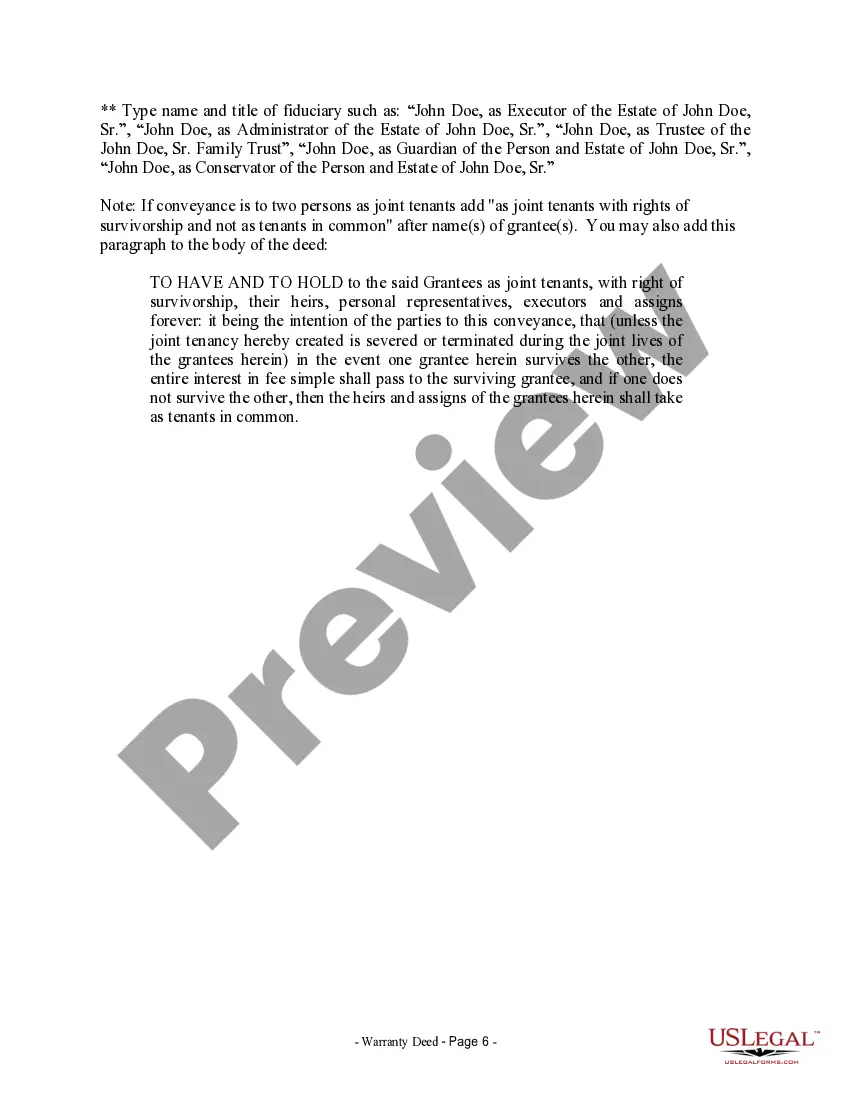
- Fiduciary Covenants: Outlines the responsibilities of the grantor in their official capacity.
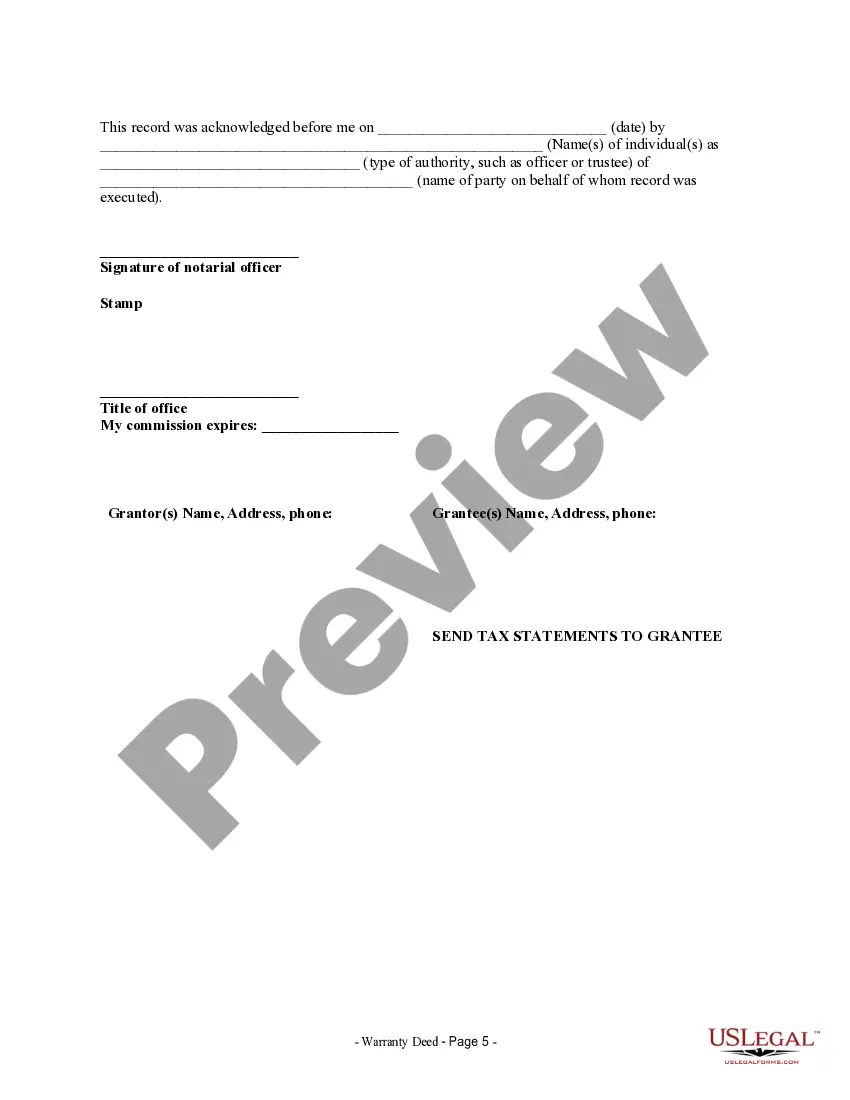
- Signatures and Notarization: Requires signatures from the grantor and a notary public to validate the transfer.
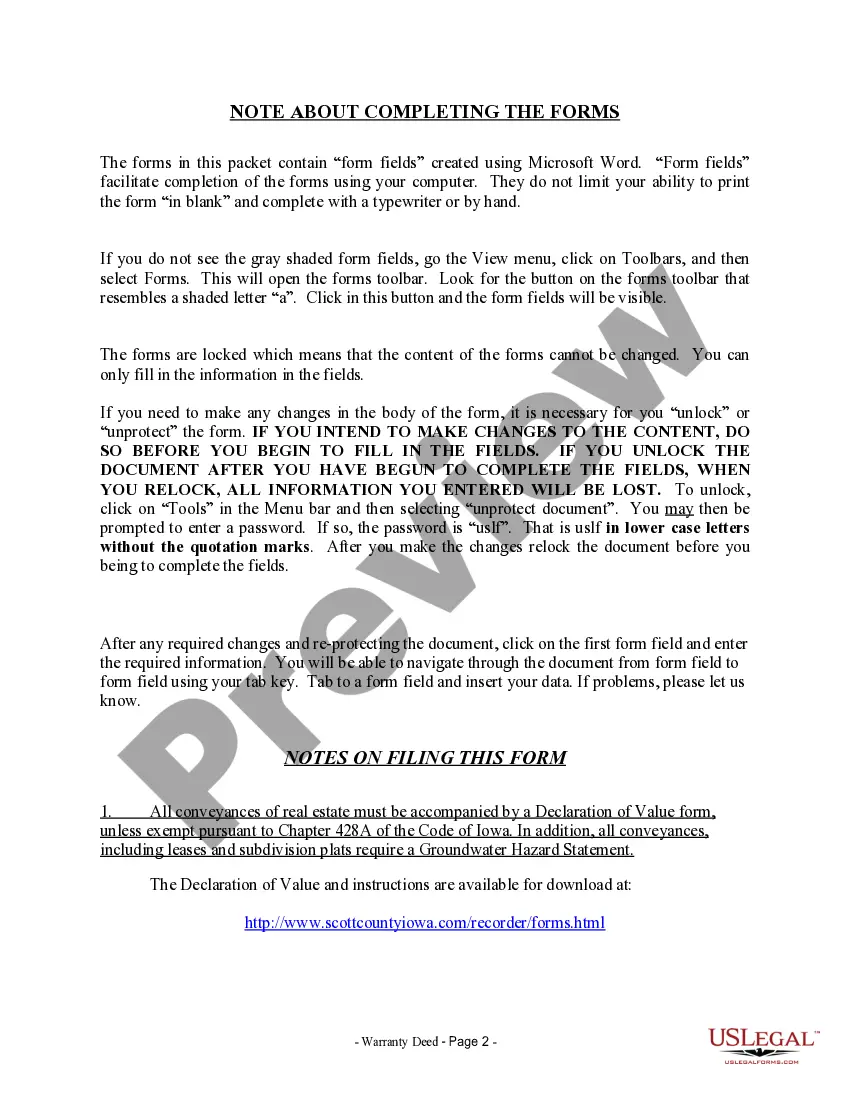
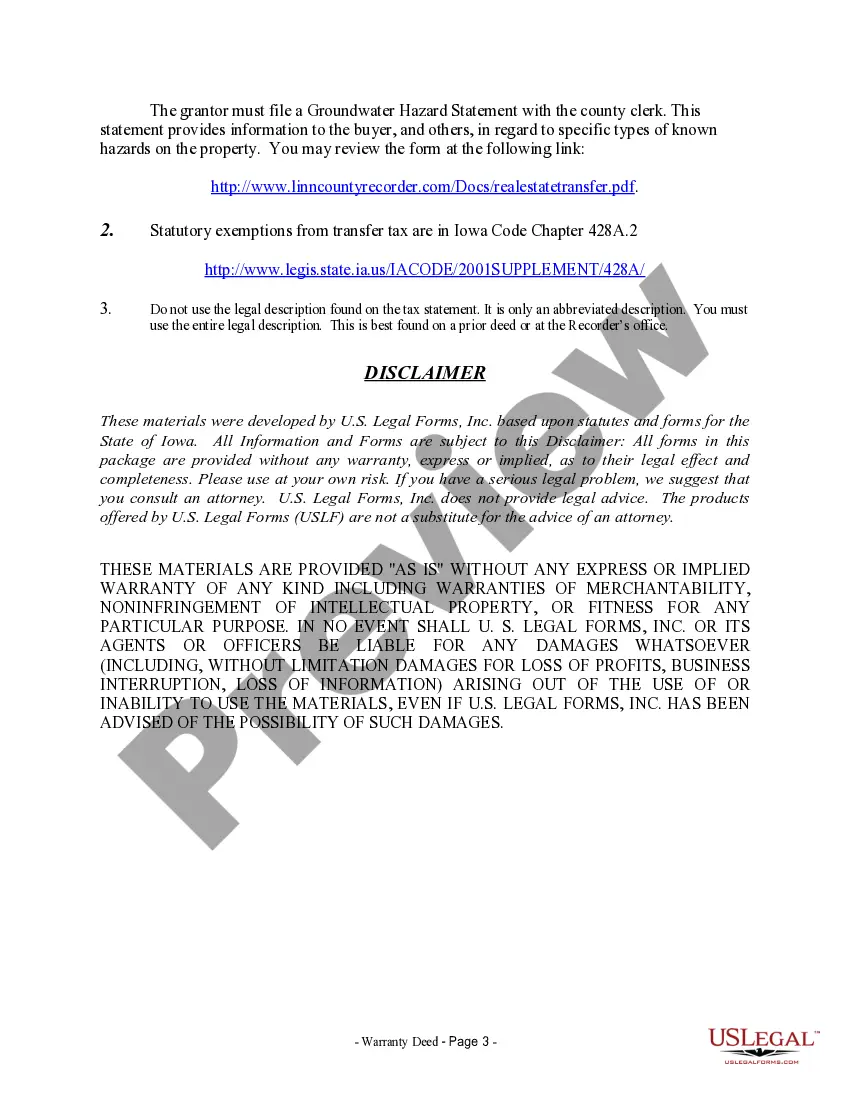
- Groundwater Hazard Statement: May require an additional document to disclose known property hazards.



When this form is needed
This Fiduciary Deed should be used when a fiduciary needs to transfer property as part of their duties. Common scenarios include transferring property from an estate as an executor of a will, managing and distributing assets held in a trust as a trustee, or acting on behalf of an incapacitated person as a guardian or conservator. Completing this form ensures legal compliance and facilitates smooth property transactions in fiduciary contexts.
Who needs this form
This form is intended for use by:
- Executors of wills managing estate properties.
- Trustees overseeing the disbursement of trust assets.
- Administrators appointed to manage the affairs of deceased individuals.
- Guardians or conservators acting on behalf of individuals who are unable to handle their own affairs.
How to prepare this document
- Identify the parties: Clearly state the names and roles of the grantor and grantee.
- Specify the property: Provide a complete legal description of the property being transferred.
- Fill in the details: Enter the date, sign the form, and include any required witness signatures.
- Complete necessary attachments: Ensure the Groundwater Hazard Statement and Declaration of Value, if applicable, are filled out.
- Notarization: Have the document signed in front of a Notary Public to validate the transfer.
Is notarization required?
This document requires notarization to meet legal standards. US Legal Forms provides secure online notarization powered by Notarize, allowing you to complete the process through a verified video call, available 24/7.
Get your form ready online
Our built-in tools help you complete, sign, share, and store your documents in one place.
Make edits, fill in missing information, and update formatting in US Legal Forms—just like you would in MS Word.
Download a copy, print it, send it by email, or mail it via USPS—whatever works best for your next step.
Sign and collect signatures with our SignNow integration. Send to multiple recipients, set reminders, and more. Go Premium to unlock E-Sign.
If this form requires notarization, complete it online through a secure video call—no need to meet a notary in person or wait for an appointment.
We protect your documents and personal data by following strict security and privacy standards.

Make edits, fill in missing information, and update formatting in US Legal Forms—just like you would in MS Word.

Download a copy, print it, send it by email, or mail it via USPS—whatever works best for your next step.

Sign and collect signatures with our SignNow integration. Send to multiple recipients, set reminders, and more. Go Premium to unlock E-Sign.

If this form requires notarization, complete it online through a secure video call—no need to meet a notary in person or wait for an appointment.

We protect your documents and personal data by following strict security and privacy standards.
Typical mistakes to avoid
- Using an abbreviated legal description instead of the full description of the property.
- Failing to include a Groundwater Hazard Statement if required.
- Not obtaining notarization, leading to potential legal issues.
- Incorrectly identifying the roles of grantor and grantee, which can create ambiguity.
Why use this form online
- Convenience: Easily download and fill out the form from the comfort of your home.
- Editability: Customize the form to suit your specific needs without the hassle of physical paperwork.
- Reliability: Access forms created by licensed attorneys, ensuring accuracy and legal validity.
Quick recap
- The Fiduciary Deed is essential for fiduciaries transferring property legally.
- Proper completion and notarization are necessary to avoid legal issues.
- Always accompany the deed with required state-specific forms.
- Understanding your role as a fiduciary is crucial in this process.
Looking for another form?
Form popularity
FAQ
Fiduciary ownership refers to the responsibility one party has to manage property or assets for the benefit of another. Executors, Trustees, Trustors, Administrators, and other Fiduciaries hold fiduciary ownership when they are entrusted with managing an estate or a trust. They must act prudently and in good faith, ensuring that the beneficiaries' best interests are central to every decision made regarding the Iowa Fiduciary Deed.
The Executor is responsible for wrapping up the deceased person's affairs and distributing the assets to, or for the benefit of, the persons named in the will (beneficiaries). An Administrator is the person in charge of the estate when my someone dies without a Last Will and Testament.
A fiduciary is a person who stands in a position of trust with you (or your estate after your death) and your beneficiaries. There are different types of fiduciaries depending on the context: an executor or executrix is named in a will; a trustee is named by a trust; an agent is appointed by a power of attorney.
A trustee is personally liable for a breach of his or her fiduciary duties. The trustee's fiduciary duties include a duty of loyalty, a duty of prudence, and subsidiary duties.The trustee will always have duties, or the trust will become passive and legal title will pass to the beneficiaries.
If the will names multiple executors, but only one person wishes to take out a grant of probate, it is wise for at least one of the others to sign a power reserved letter, just in case the acting executor cannot complete the administration of the estate.
Your executor and successor trustee can usually be the same person, and it's actually a quite common arrangement.It helps to understand the roles of the executor and the successor trustee in your estate plan as you make a decision because some of the factors can be personal.
Trustees, executors, administrators and other types of personal representatives are all fiduciaries.Executor - (Also called personal representative; a woman is sometimes called an executrix) An individual or trust company that settles the estate of a testator according to the terms of the will.
Yes an estate can have 2 administrators but it is not likely. If a names co-executors the Court may allow this, but if two people want to serve as co-administrators most Courts say "No" to the future conflicts between adminsitrators.
CO-ADMINISTRATOR. One of several administrators. In general, they have, like executors, the power to act singly to the personal estate of the intestate.
In most situations, it's not a good idea to name co-executors. When you're making your will, a big decision is who you choose to be your executorthe person who will oversee the probate of your estate. Many people name their spouse or adult child. You can, however, name more than one person to serve as executor.