Georgia Warranty Deed from Husband and Wife to an Individual
Understanding this form
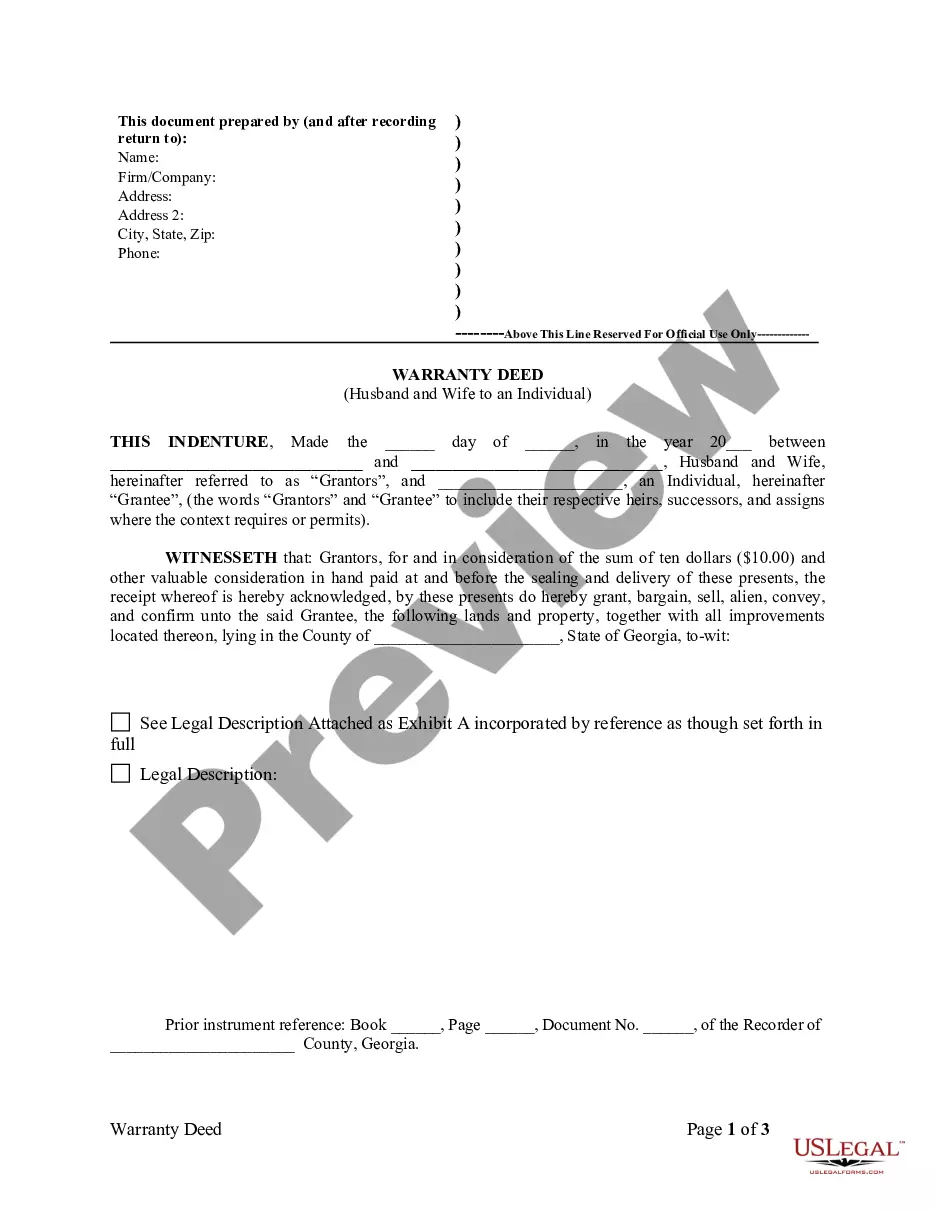
This Warranty Deed from Husband and Wife to an Individual is a legal document used to transfer ownership of real property from a husband and wife (the grantors) to a single individual (the grantee). This form indicates that the grantors are conveying their property while warranting the title against any claims. Unlike other deeds, this warranty deed includes specific disclaimers about the reservation of rights to oil, gas, and minerals, providing detailed assurances regarding the property's title and encumbrances.
Key parts of this document
- Identification of the Grantors and Grantee
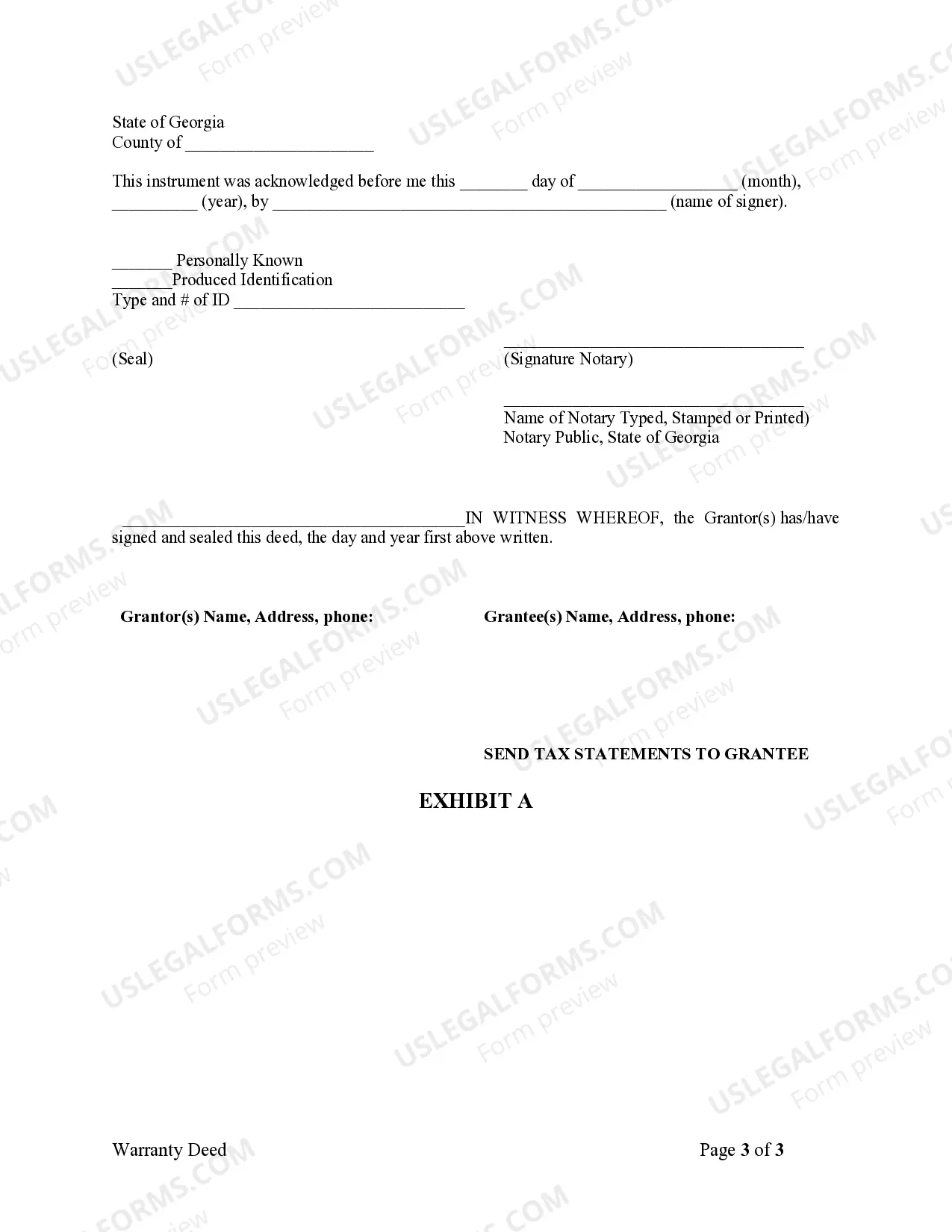
- Legal description of the property being transferred
- Consideration amount for the property
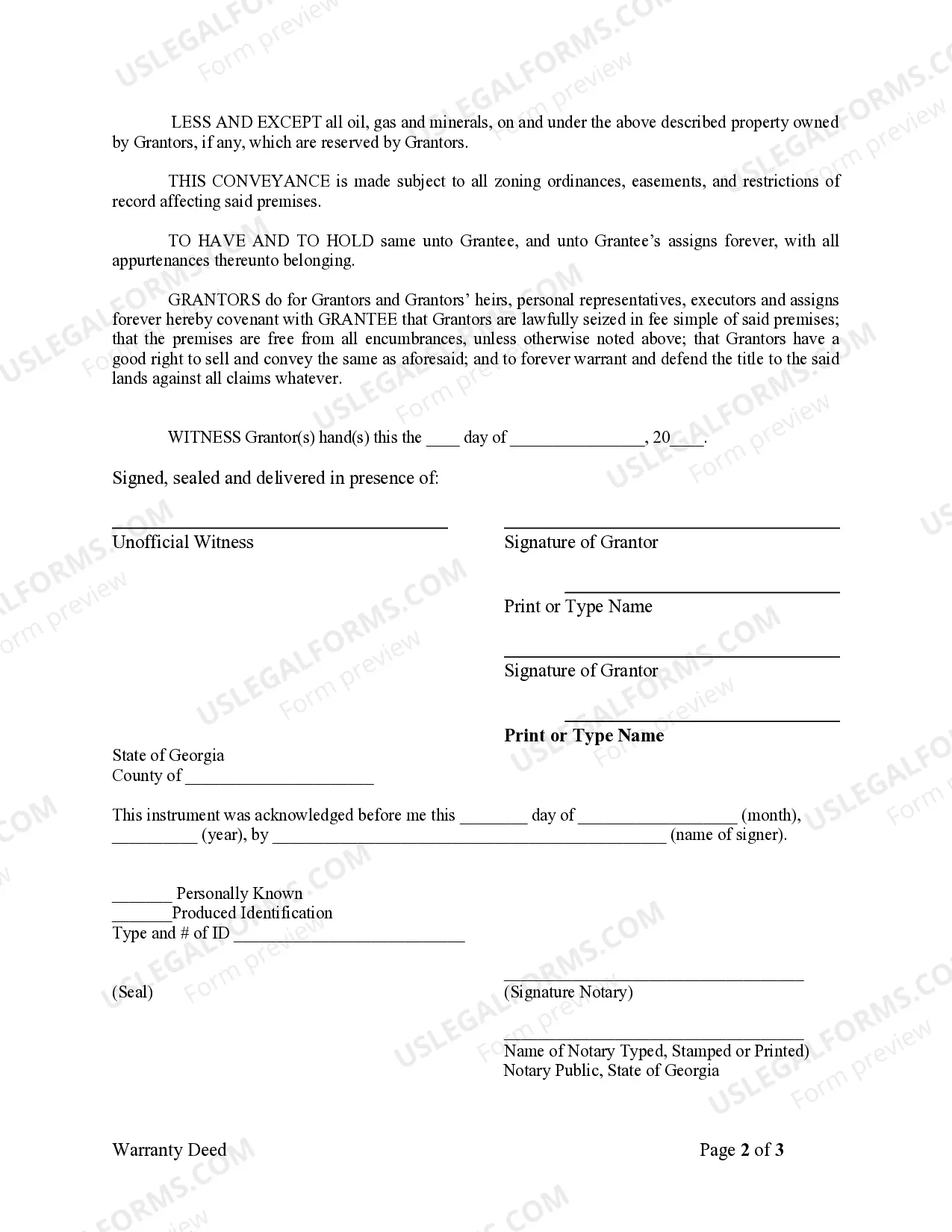
- Warranties regarding the title to the property
- Signature section for Grantors and witnesses





When to use this document
This form is used when a husband and wife wish to transfer their property to an individual. It is suitable in situations such as selling a home to a family member or friend, transferring property as part of a divorce settlement, or gifting property to an individual. It ensures that the new owner receives full ownership rights without any hidden claims against the property.
Who this form is for
- Husbands and wives looking to transfer real estate to a third party
- Individuals managing property transitions in familial or friendly relationships
- Those involved in real estate transactions requiring a warranty deed
How to complete this form
- Identify the parties: Clearly state the names of the husband and wife as grantors and the individual as the grantee.
- Specify the property: Provide a detailed legal description of the property being transferred, as included in Exhibit A.
- Enter the consideration: Note the amount of consideration, typically ten dollars, along with any other valuable considerations agreed upon.
- Review warranties: Confirm that the grantors will warrant the property title against any claims.
- Sign and date: The grantors must sign the deed in the presence of a witness to validate the transfer.
Is notarization required?
This form does not typically require notarization unless specified by local law. However, it is recommended to have the document notarized to enhance its legal validity and maintain its enforceability in real estate transactions.
Get your form ready online
Our built-in tools help you complete, sign, share, and store your documents in one place.
Make edits, fill in missing information, and update formatting in US Legal Forms—just like you would in MS Word.
Download a copy, print it, send it by email, or mail it via USPS—whatever works best for your next step.
Sign and collect signatures with our SignNow integration. Send to multiple recipients, set reminders, and more. Go Premium to unlock E-Sign.
If this form requires notarization, complete it online through a secure video call—no need to meet a notary in person or wait for an appointment.
We protect your documents and personal data by following strict security and privacy standards.

Make edits, fill in missing information, and update formatting in US Legal Forms—just like you would in MS Word.

Download a copy, print it, send it by email, or mail it via USPS—whatever works best for your next step.

Sign and collect signatures with our SignNow integration. Send to multiple recipients, set reminders, and more. Go Premium to unlock E-Sign.

If this form requires notarization, complete it online through a secure video call—no need to meet a notary in person or wait for an appointment.

We protect your documents and personal data by following strict security and privacy standards.
Common mistakes
- Failing to provide a complete legal description of the property.
- Not having the deed witnessed properly.
- Leaving out the consideration amount or entering it incorrectly.
- Not checking for existing encumbrances before the transfer.
Why use this form online
- Convenience of downloading and completing the form at your own pace.
- Access to attorney-drafted templates ensuring legal compliance.
- Ability to edit and customize the form to fit your needs before finalizing.
- Immediate availability without the need for in-person visits to a lawyer or office.
Looking for another form?
Form popularity
FAQ
To obtain a copy of a warranty deed in Georgia, you can visit the local county clerk's office where the property is located. Additionally, many counties provide online access to public records, making it easier to find documents like the Georgia Warranty Deed from Husband and Wife to an Individual. If you're unsure about the process, consider using USLegalForms as a resource to guide you in retrieving the necessary documentation.
Yes, a warranty deed is transferable, allowing the new owner to convey the property to someone else if desired. This includes the ability to use the Georgia Warranty Deed from Husband and Wife to an Individual as a basis for future sales. However, it is important to meticulously follow the proper legal procedures when transferring the property.
One disadvantage of a warranty deed is that it can expose the seller to potential liabilities. If any title issues arise after the transfer, the seller may be responsible for resolving them. Thus, understanding the implications of a Georgia Warranty Deed from Husband and Wife to an Individual is crucial for both parties to ensure a smooth transaction.
To fill out a warranty form, start by entering the names and addresses of the husband and wife, followed by the name and address of the individual receiving the property. Provide a detailed legal description of the property being transferred. For assistance, consider using the resources at USLegalForms, which can guide you through completing a Georgia Warranty Deed from Husband and Wife to an Individual, ensuring accuracy and compliance.
A Georgia Warranty Deed from Husband and Wife to an Individual should clearly state the grantors' names, the grantee's name, and a detailed description of the property. It should include a warranty clause, promising that the grantors hold clear title and will defend it against any claims. The deed must also contain the signatures of the grantors, notary acknowledgment, and the date of execution.
The primary beneficiary of a Georgia Warranty Deed from Husband and Wife to an Individual is the grantee. This document provides them with clear title to the property, protection against claims, and assurance of ownership. Additionally, the grantors can benefit by officially transferring ownership, simplifying their property management matters.
To fill out a Georgia Warranty Deed from Husband and Wife to an Individual, start by including the names of the grantors (the husband and wife) and the grantee (the individual receiving the deed). Next, accurately describe the property, including its legal description. Be sure to sign the deed in the presence of a notary public to ensure its validity.
To add your wife to your house deed in Georgia, you typically need to complete a Georgia Warranty Deed from Husband and Wife to an Individual. This process involves drafting the new deed, signing it in front of a notary, and filing it with the county clerk’s office. This legal action effectively transfers ownership rights, ensuring your wife’s name is included on the property deed.
A spouse may choose to execute a quit claim deed to transfer their interest in a property, especially in situations like divorce or separation. This deed allows for a clear transfer of ownership, avoiding potential disputes in the future. By using a quit claim deed, you can ensure that the property is solely in the hands of one individual, which aligns with the principles of Georgia Warranty Deed from Husband and Wife to an Individual.
Yes, a warranty deed can be transferred to another party. This allows the current owner to pass property rights to someone else. If you're considering this deed type, a Georgia Warranty Deed from Husband and Wife to an Individual serves as an effective means of ensuring a proper transfer with necessary legal protections.