Colorado Interrogatories to Plaintiff for Motor Vehicle Occurrence
What is this form?
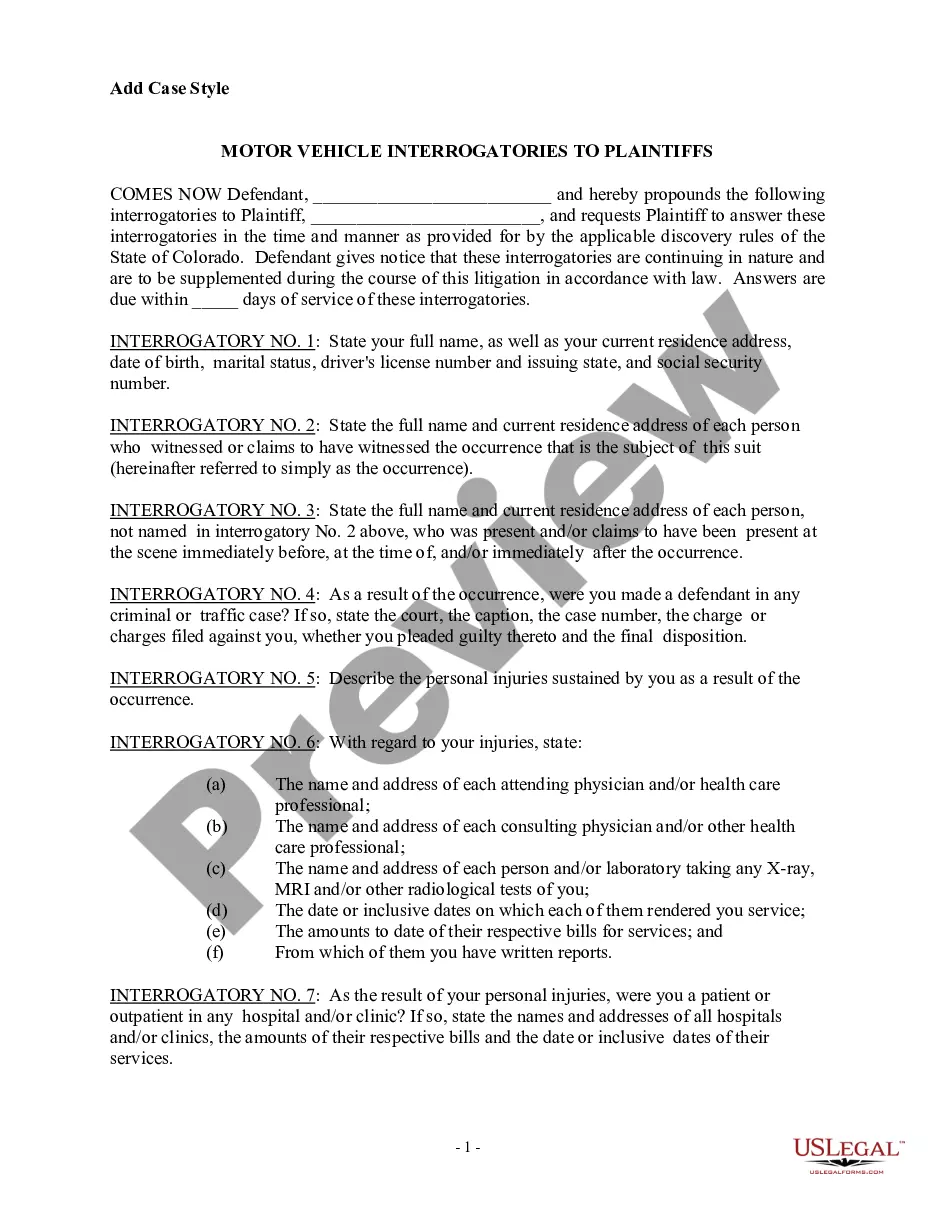
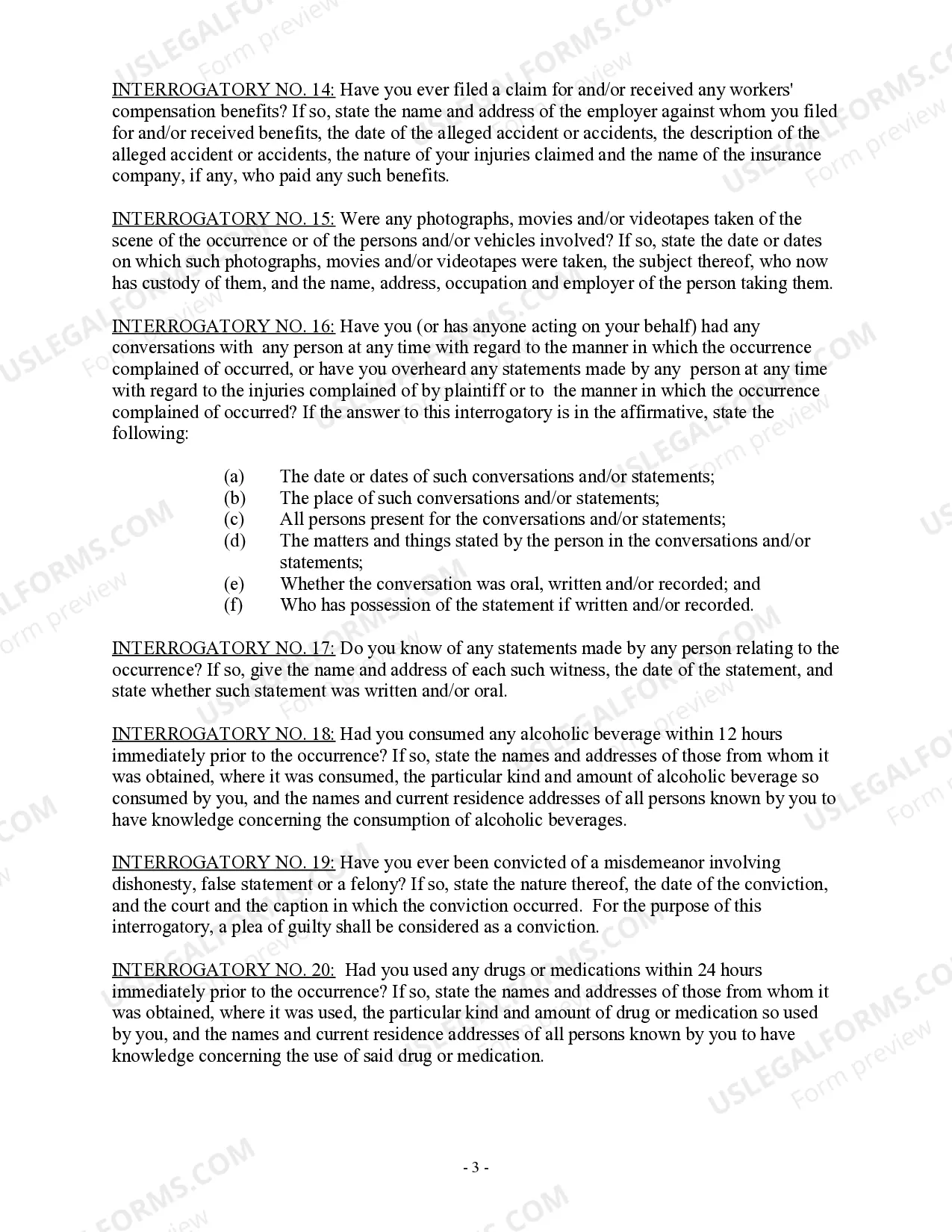
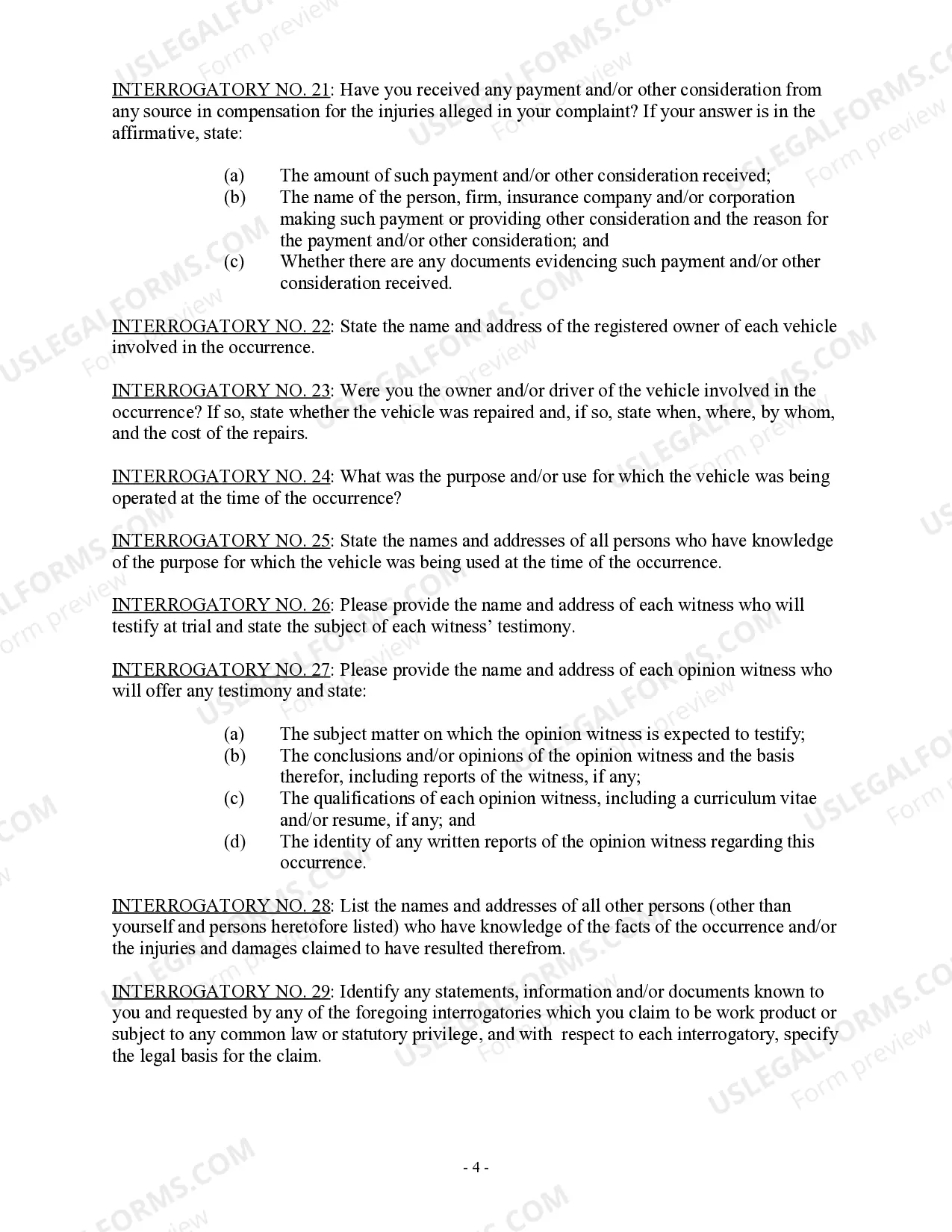
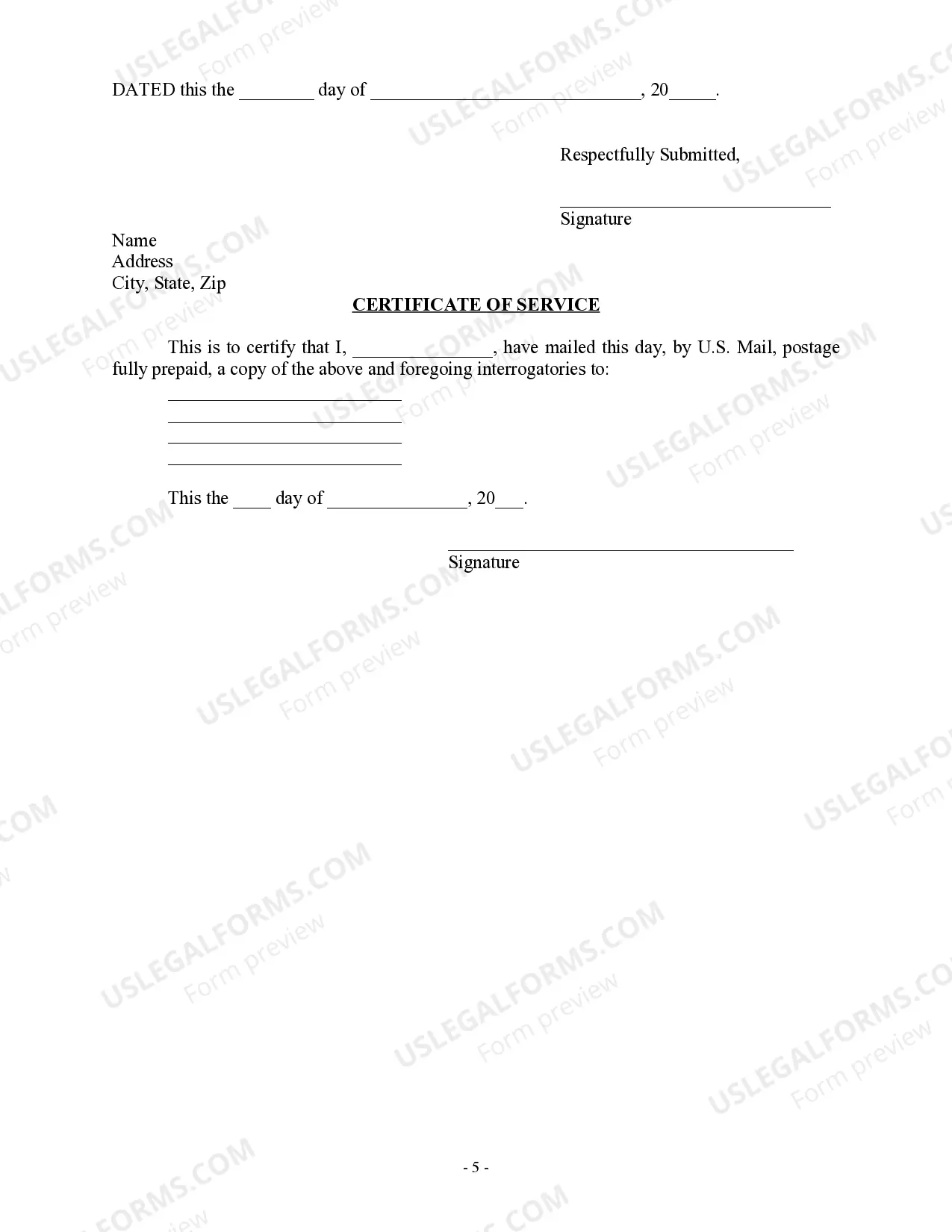
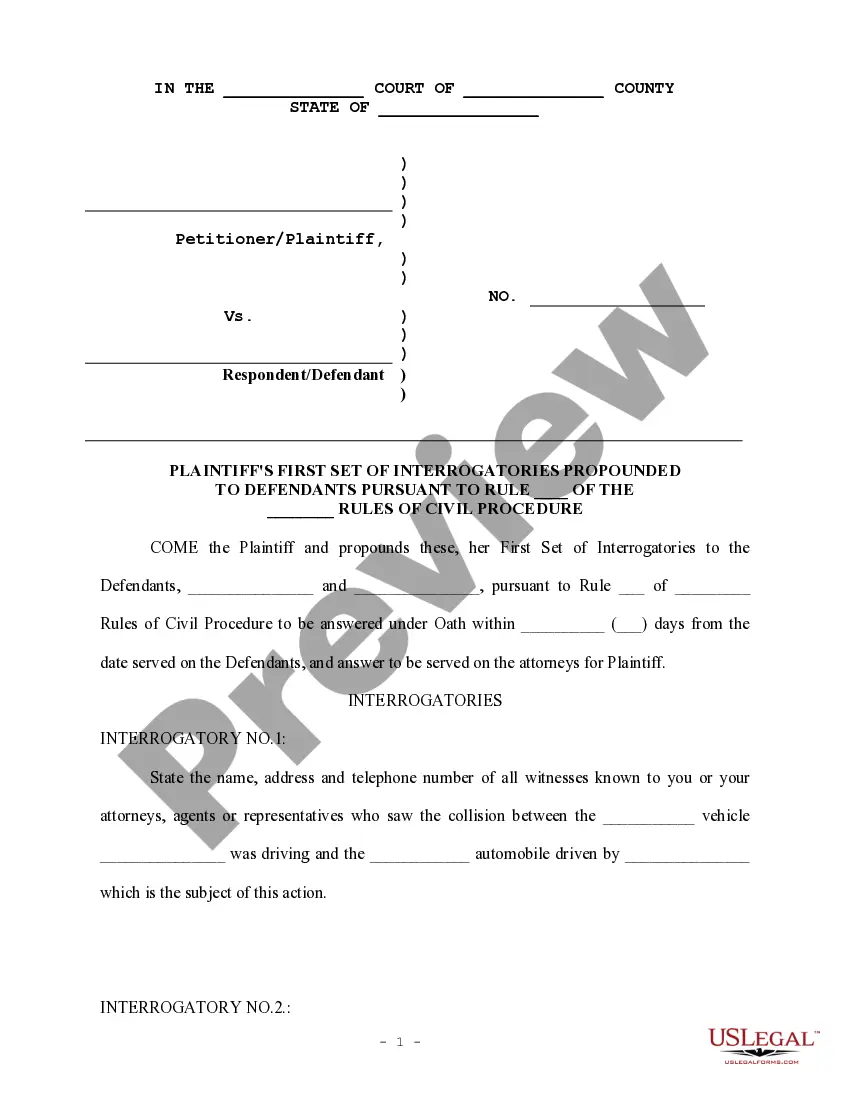
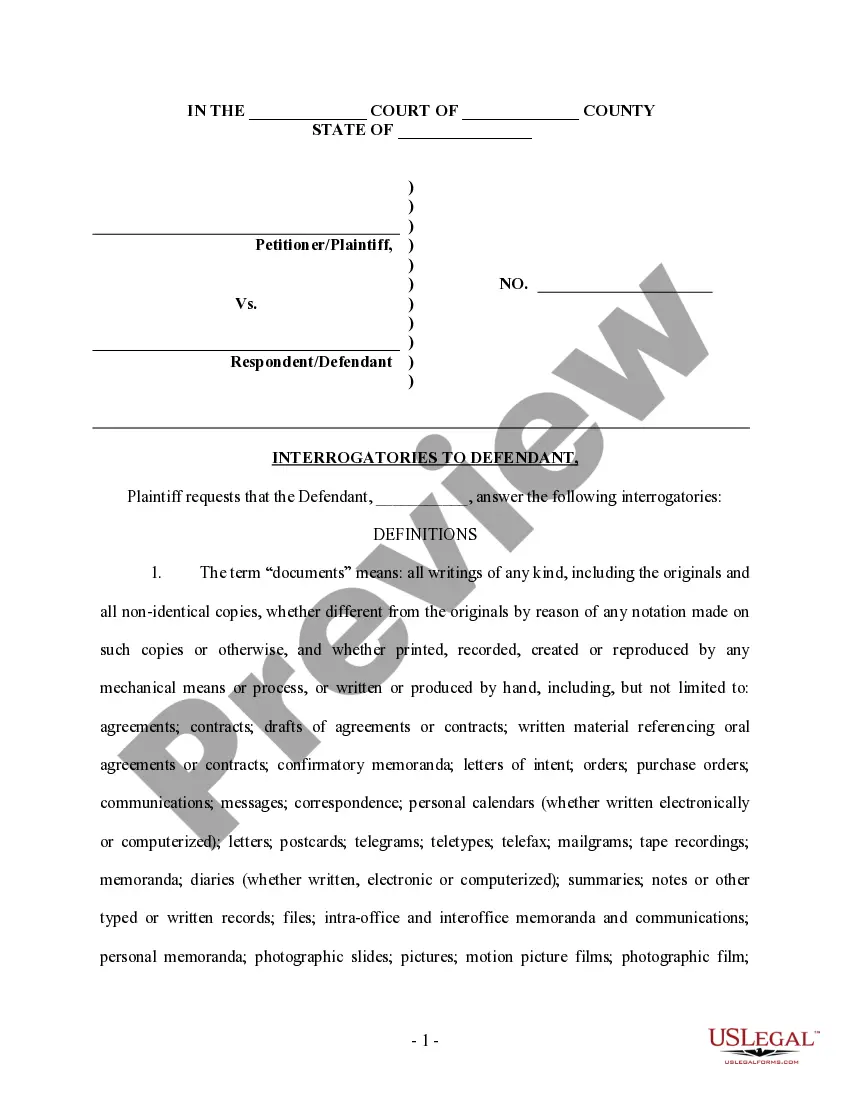
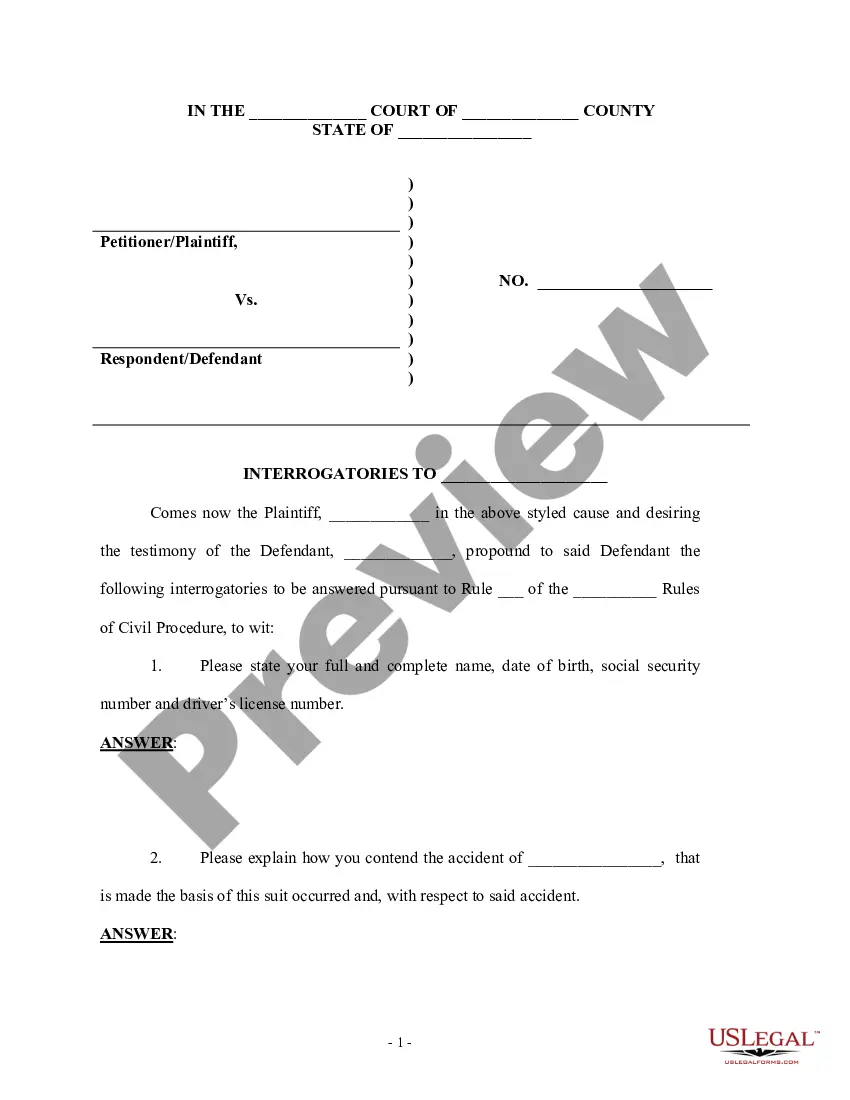
The Interrogatories to Plaintiff for Motor Vehicle Occurrence is a legal document used by defendants in motor vehicle accident cases to gather information from the plaintiff. This form consists of a series of questions designed to elicit detailed facts about the incident, the injuries claimed, and any related issues. It helps ensure a thorough understanding of the plaintiff's claims and the circumstances surrounding the vehicle occurrence, differentiating it from other legal discovery tools by focusing specifically on questions that can substantiate or challenge claims in motor vehicle cases.
Main sections of this form
- Identity information: Full name, address, date of birth, and social security number of the plaintiff.
- Witness details: Names and addresses of witnesses to the vehicle occurrence.
- Injury descriptions: Detailed accounts of personal injuries sustained as a result of the incident.
- Medical records: Information about attending physicians, treatment received, and medical expenses incurred.
- Employment impact: Details regarding missed work and income loss due to injuries.
- Prior injuries: Disclosure of any previous injuries or claims for personal injuries.

Common use cases
This form should be used when a defendant needs to formally request information from a plaintiff in a motor vehicle accident case. It is particularly important during the discovery phase of litigation, allowing defendants to gather necessary facts to prepare their defense, evaluate potential liabilities, and assess settlement options. Use this form when preparing for trial or when responding to a plaintiff's allegations.
Who needs this form
- Defendants in motor vehicle accidents who are required to respond to the plaintiff's claims.
- Legal representatives handling motor vehicle accident cases on behalf of the defendant.
- Insurance companies assessing claims related to vehicle occurrences.
Instructions for completing this form
- Identify the parties: Fill in the names of the defendant and the plaintiff at the beginning of the document.
- Answer the interrogatories: Provide accurate and complete responses to each of the 28 interrogatories listed.
- Document medical and employment details: Collect and include any necessary documentation related to medical treatments and employment impacts.
- Review for relevance: Include only the questions relevant to your case and modify as necessary.
- Sign and date the form: Ensure the form is signed by the defendant or their legal representative before submission.
Does this form need to be notarized?
Notarization is generally not required for this form. However, certain states or situations might demand it. You can complete notarization online through US Legal Forms, powered by Notarize, using a verified video call available anytime.
Get your form ready online
Our built-in tools help you complete, sign, share, and store your documents in one place.
Make edits, fill in missing information, and update formatting in US Legal Forms—just like you would in MS Word.
Download a copy, print it, send it by email, or mail it via USPS—whatever works best for your next step.
Sign and collect signatures with our SignNow integration. Send to multiple recipients, set reminders, and more. Go Premium to unlock E-Sign.
If this form requires notarization, complete it online through a secure video call—no need to meet a notary in person or wait for an appointment.
We protect your documents and personal data by following strict security and privacy standards.

Make edits, fill in missing information, and update formatting in US Legal Forms—just like you would in MS Word.

Download a copy, print it, send it by email, or mail it via USPS—whatever works best for your next step.

Sign and collect signatures with our SignNow integration. Send to multiple recipients, set reminders, and more. Go Premium to unlock E-Sign.

If this form requires notarization, complete it online through a secure video call—no need to meet a notary in person or wait for an appointment.

We protect your documents and personal data by following strict security and privacy standards.
Common mistakes to avoid
- Failing to answer all interrogatories or leaving questions incomplete.
- Not reviewing the form for relevance to the specific case, leading to irrelevant or unnecessary questions.
- Missing deadlines for responding to the interrogatories.
Advantages of online completion
- Convenience: Download and fill out the form at your own pace, avoiding trips to legal offices.
- Editability: Easily modify the document to suit your specific needs and case requirements.
- Reliability: Access forms created by licensed attorneys, ensuring legal compliance and accuracy.
What to keep in mind
- The Interrogatories to Plaintiff for Motor Vehicle Occurrence is essential for defendants to gather relevant facts in vehicle accident cases.
- Complete and accurate responses to each interrogatory are crucial for the successful defense in litigation.
- Utilizing this form effectively can streamline the discovery process and prepare a thorough defense.
Looking for another form?

Form popularity
FAQ
To create effective interrogatories, begin by outlining the information you need for your case. Craft clear and concise questions that guide the plaintiff to provide detailed answers. By using Colorado Interrogatories to Plaintiff for Motor Vehicle Occurrence, you can ensure that your interrogatories align with the requirements of your legal strategy, making the process smoother and more efficient.
The two primary types of interrogatories are standard and specialized interrogatories. Standard interrogatories include general questions applicable to many cases, while specialized interrogatories focus on specific aspects of a motor vehicle occurrence. Utilizing Colorado Interrogatories to Plaintiff for Motor Vehicle Occurrence allows you to tailor your approach depending on the unique circumstances of your case.
In interrogatories, you typically ask questions that seek factual information about the case. Questions may involve details of the accident, the parties involved, and any claims made by witnesses. By employing Colorado Interrogatories to Plaintiff for Motor Vehicle Occurrence, you ensure that you cover all necessary aspects required for thorough case preparation.
An example of an interrogatory in a motor vehicle occurrence case could be, 'Please describe the circumstances leading to the accident involving your vehicle on the date in question.' This type of question is specific and seeks detailed information about the event. By using Colorado Interrogatories to Plaintiff for Motor Vehicle Occurrence, you can gather crucial facts that support your case.
Yes, you are generally required to answer questions in interrogatories as part of the discovery process in legal proceedings. Failing to respond can lead to legal consequences, so it is advisable to provide answers to all relevant interrogatories. Utilizing platforms like US Legal Forms can simplify this process, helping you navigate the specifics of the Colorado Interrogatories to Plaintiff for Motor Vehicle Occurrence.
If you encounter an interrogatory that you do not know how to answer, it is essential to indicate this clearly in your response. Never guess or provide inaccurate information. Instead, you may state that you do not have sufficient knowledge to respond fully, while still acknowledging the importance of each interrogatory in the context of the Colorado Interrogatories to Plaintiff for Motor Vehicle Occurrence.
To answer a plaintiff's interrogatories effectively, begin by reviewing the questions meticulously. You should provide complete and honest responses, referring to the Colorado Interrogatories to Plaintiff for Motor Vehicle Occurrence to understand the context of each query. It's important to draft your answers in a way that supports your case, while remaining compliant with legal standards.
When responding to the plaintiff's first set of interrogatories, carefully read each question and formulate accurate answers. Utilize resources like the Colorado Interrogatories to Plaintiff for Motor Vehicle Occurrence to guide your responses. Make sure to address each interrogatory individually, providing the necessary details while being honest and concise.
Filling out an interrogatories form requires you to provide clear and accurate information. Start by entering the relevant case details, including the title, parties, and jurisdiction, paying attention to the specific requirements of the Colorado Interrogatories to Plaintiff for Motor Vehicle Occurrence. Use straightforward language to answer each question, ensuring that your responses reflect the facts of the case.
If the plaintiff does not answer interrogatories, the defendant can take action to obtain the necessary responses. This may involve filing a motion to compel answers, which requires the court's attention. In cases requiring accurate information, such as Colorado Interrogatories to Plaintiff for Motor Vehicle Occurrence, ensuring timely responses is vital to maintaining the integrity of the legal process.