Colorado Transfer on Death Deed or TOD - Beneficiary Deed for Grantor to Five Grantee Beneficiaries
Understanding this form
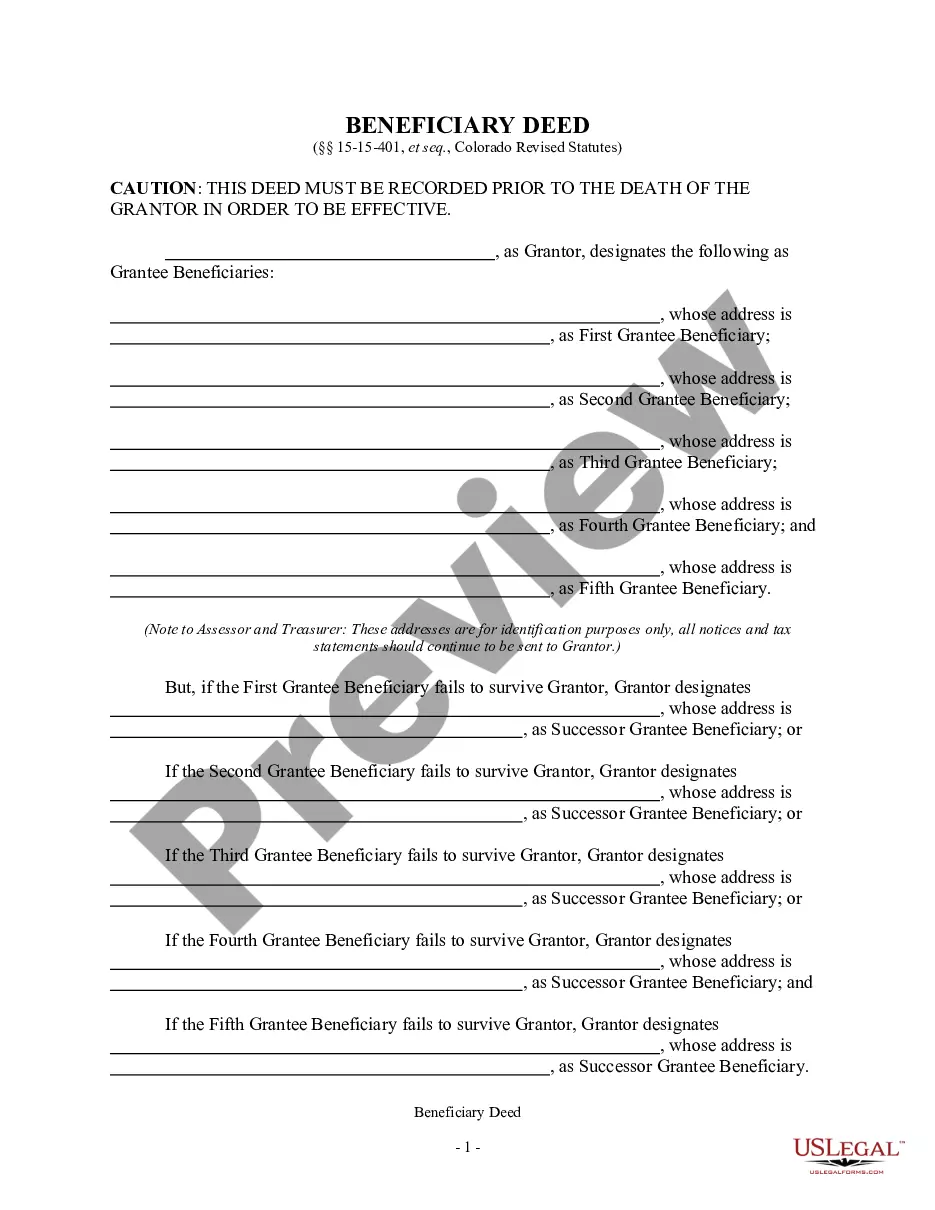
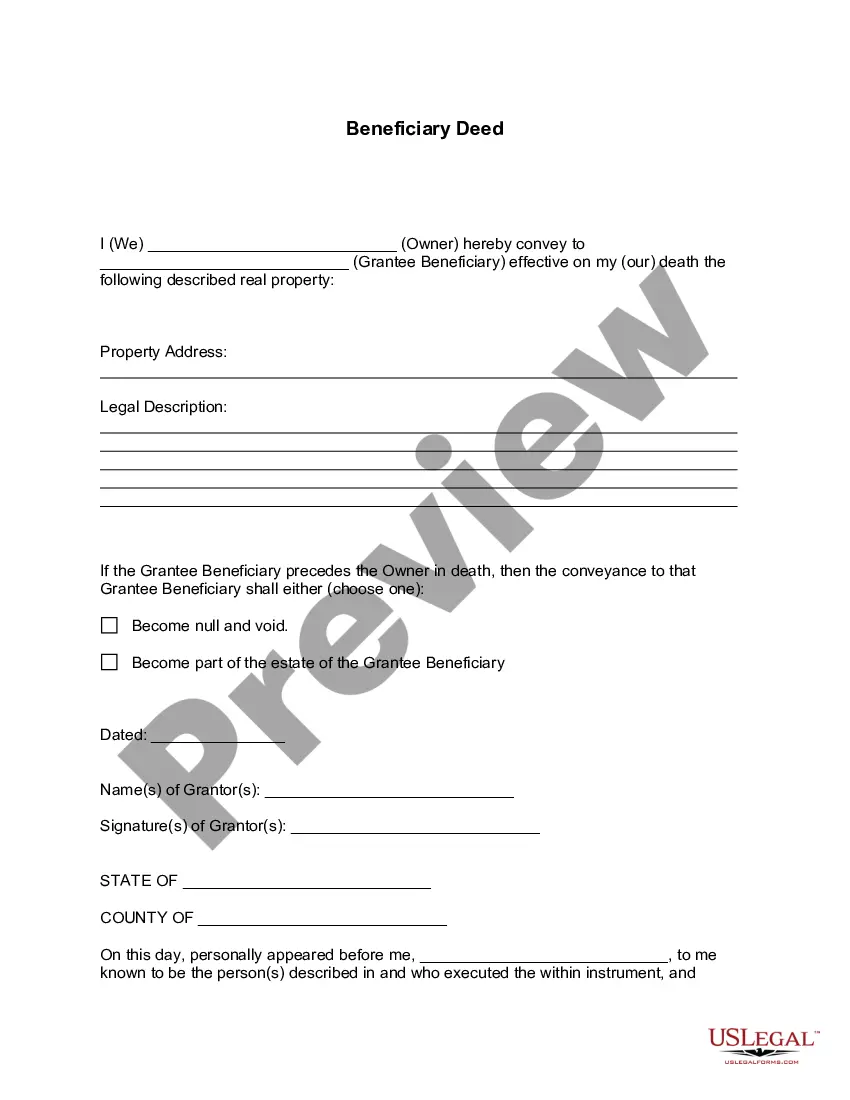
The Transfer on Death Deed (TOD) is a legal document that allows the Grantor to designate beneficiaries who will inherit property after the Grantor's death without going through probate. This specific form details the transfer of property to five Grantee Beneficiaries, along with named Successor Grantee Beneficiaries. Unlike traditional deeds, it does not take effect until the Grantor passes away, making it a popular choice for individuals looking to simplify the transfer of assets to multiple heirs.
What’s included in this form
- Grantor information, including name and address.
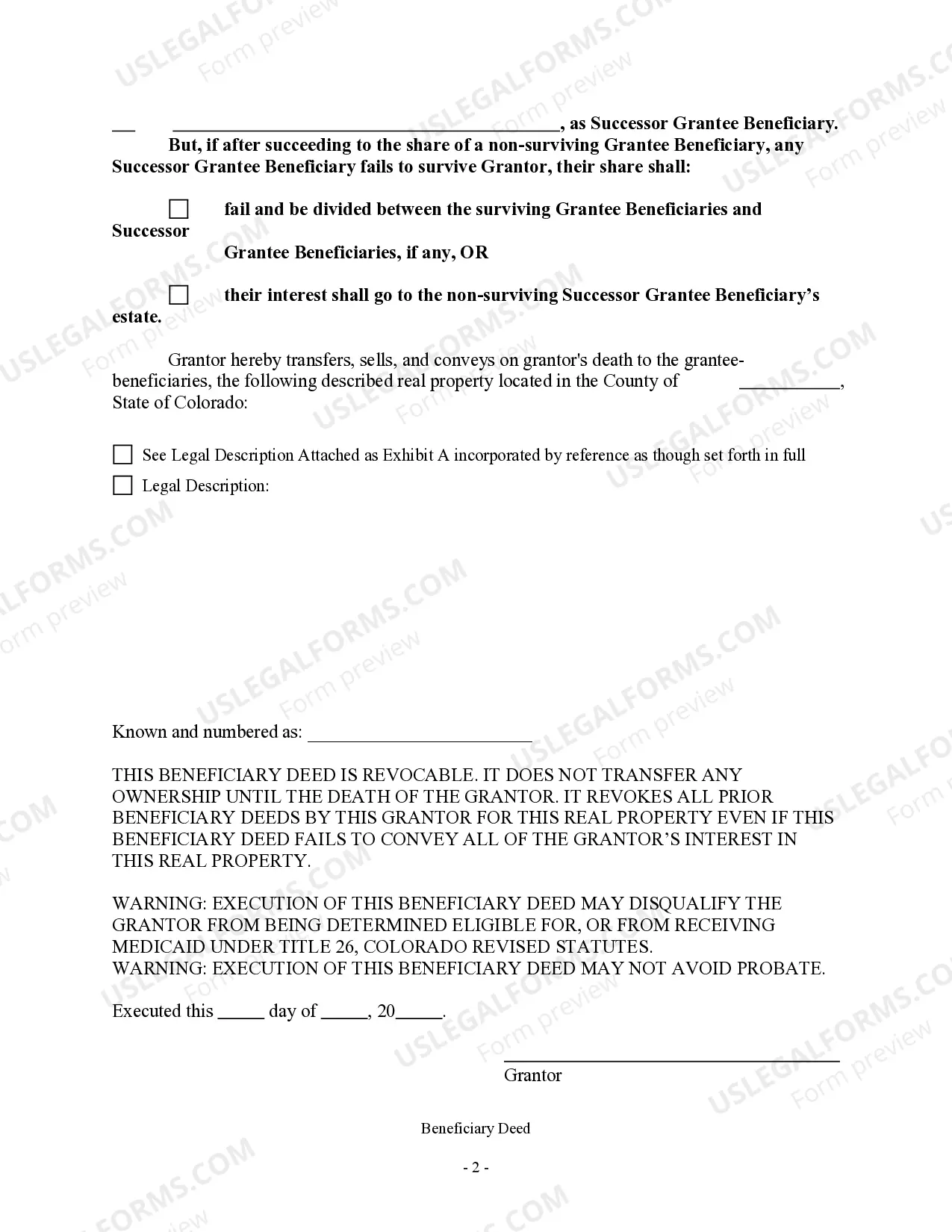
- Details of the property being transferred.
- Names and addresses of the five Grantee Beneficiaries.
- Names of five Successor Grantee Beneficiaries, should the primary beneficiaries be unavailable.
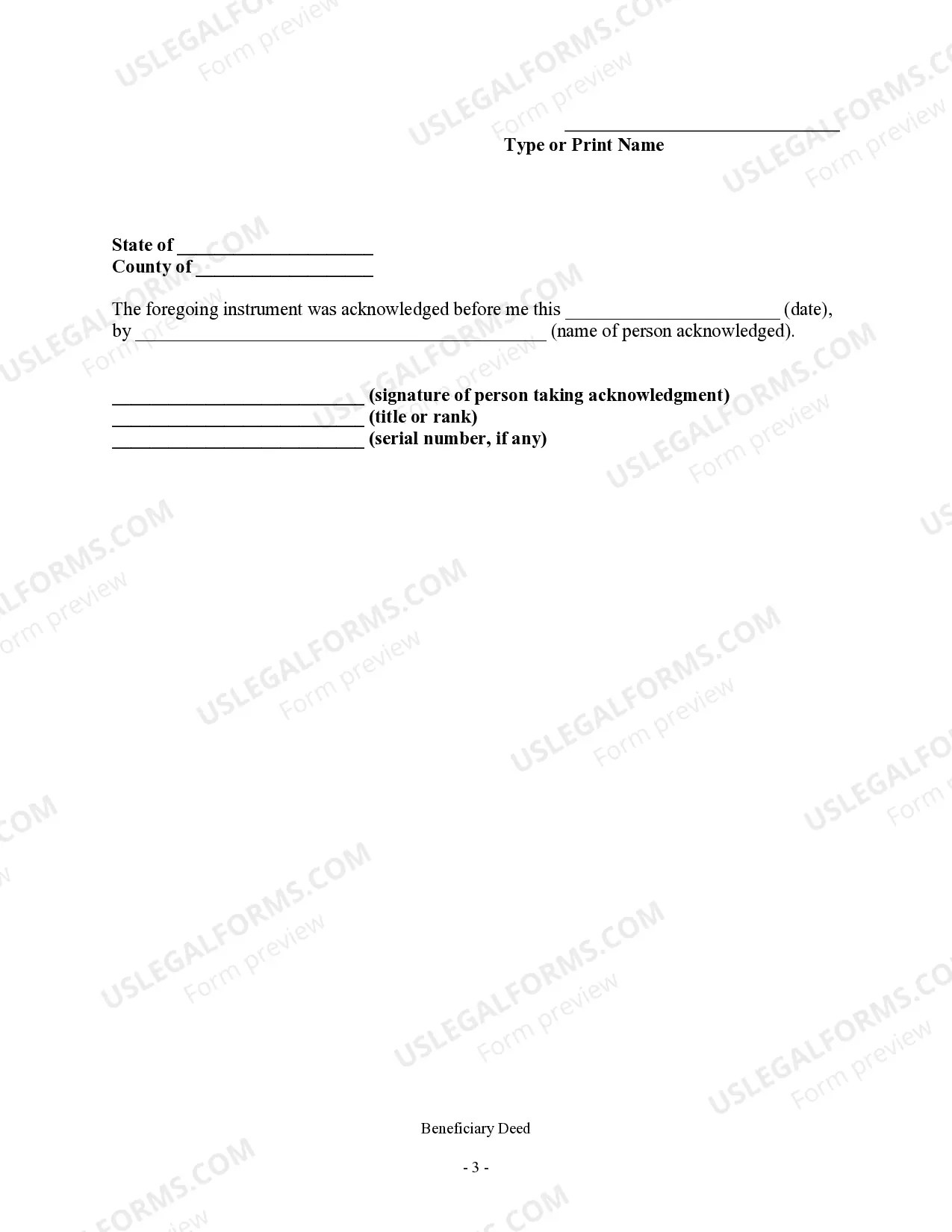
- Signature of the Grantor and any required witnesses.



When to use this form
This form is useful when a property owner wishes to ensure that their assets are passed directly to their chosen beneficiaries without the delays and costs associated with probate. It is particularly beneficial in cases where the owner has multiple intended heirs, providing a clear and structured way to manage the distribution of property. Additionally, it can be utilized as part of estate planning strategies to simplify the transfer process for heirs.
Who should use this form
- Individuals who own real estate and want to designate beneficiaries for property transfer.
- Grantors aiming to avoid probate for their estate.
- Property owners with multiple beneficiaries who wish to ensure equitable distribution.
- Those looking to establish clear instructions for property transfer after their death.
How to complete this form
- Identify and enter the Grantor's details, including full name and address.
- Clearly describe the property being transferred.
- List the names and addresses of the five primary Grantee Beneficiaries.
- Provide the names of five Successor Grantee Beneficiaries, if necessary.
- Sign the document in the presence of required witnesses, if applicable.
Does this form need to be notarized?
This form does not typically require notarization unless specified by local law. However, it is advisable to review your state's regulations for any specific requirements regarding the execution of a Transfer on Death Deed.
Get your form ready online
Our built-in tools help you complete, sign, share, and store your documents in one place.
Make edits, fill in missing information, and update formatting in US Legal Forms—just like you would in MS Word.
Download a copy, print it, send it by email, or mail it via USPS—whatever works best for your next step.
Sign and collect signatures with our SignNow integration. Send to multiple recipients, set reminders, and more. Go Premium to unlock E-Sign.
If this form requires notarization, complete it online through a secure video call—no need to meet a notary in person or wait for an appointment.
We protect your documents and personal data by following strict security and privacy standards.

Make edits, fill in missing information, and update formatting in US Legal Forms—just like you would in MS Word.

Download a copy, print it, send it by email, or mail it via USPS—whatever works best for your next step.

Sign and collect signatures with our SignNow integration. Send to multiple recipients, set reminders, and more. Go Premium to unlock E-Sign.

If this form requires notarization, complete it online through a secure video call—no need to meet a notary in person or wait for an appointment.

We protect your documents and personal data by following strict security and privacy standards.
Common mistakes
- Failing to accurately list all Grantee Beneficiaries.
- Not including the required witness signatures.
- Leaving out important property details.
- Not checking state-specific requirements before signing.
Why use this form online
- Convenient access to customizable legal documents from home.
- Easy to download and edit as necessary.
- Reliability from forms drafted by licensed attorneys.
- Time-saving, allowing you to complete the form at your own pace.
Looking for another form?


Form popularity
FAQ
Writing a beneficiary deed requires specific information, including the grantor's name, a legal description of the property, and the beneficiary names. You should structure the deed clearly, specifying how the property will transfer upon your death. It's important to ensure that it meets Colorado state requirements, as mistakes can lead to confusion or legal issues later. Resources like uslegalforms can provide templates and guidance to help you write an effective Colorado Transfer on Death Deed or TOD - Beneficiary Deed for Grantor to Five Grantee Beneficiaries.
Filling out a Colorado beneficiary deed involves providing key information such as your name, the description of the property, and the names of your chosen beneficiaries. It’s important to use clear and concise language while ensuring compliance with state requirements. Additionally, be mindful of including any necessary witness signatures or notarization, which can validate the document. For a seamless process, you can utilize tools available on uslegalforms to guide you through the details.
To transfer a Colorado Transfer on Death Deed to two beneficiaries, you must clearly list both names in the deed. It is essential to specify how the property will be divided between the beneficiaries—equally or in other proportions. The proper wording in the deed is crucial to ensure that your intentions are carried out as you wish. You may want to consult legal resources or platforms like uslegalforms for assistance in drafting the deed correctly.
Yes, Colorado allows the use of Transfer on Death Deeds. This legal instrument enables you to designate beneficiaries who will inherit your property upon your passing, thus avoiding probate. The state’s acceptance of TOD deeds makes estate planning more straightforward and efficient for individuals and families. If you’re considering this option, ensure that your deed is properly drafted to comply with Colorado laws.
A Colorado Transfer on Death Deed, or TOD deed, and a beneficiary deed serve a similar purpose, but there are key differences. A TOD deed allows you to transfer property ownership to beneficiaries upon your death without going through probate, while a beneficiary deed, specifically named in Colorado law, accomplishes the same goal but might have variations in how it’s structured. Both deeds can name multiple beneficiaries, but the specific language and stipulations may differ. Understanding these distinctions can help you choose the right option based on your needs.
While you can complete a Transfer on Death Deed in Colorado without a lawyer, consulting one can be beneficial for ensuring compliance and accuracy. An attorney can help clarify your options and ensure the Colorado Transfer on Death Deed or TOD - Beneficiary Deed for Grantor to Five Grantee Beneficiaries meets all legal requirements. If you prefer, platforms like US Legal Forms provide templates and guidance for creating your deed correctly.
Filing a Transfer on Death Deed in Colorado involves several key steps. First, create the deed that complies with state guidelines, ensuring it specifies that it is a Colorado Transfer on Death Deed or TOD - Beneficiary Deed for Grantor to Five Grantee Beneficiaries. Then, sign the document before a notary public and submit it to your local county clerk and recorder. This simple process allows your chosen beneficiaries to inherit your property directly.
Yes, Colorado is a TOD state, which means it allows property owners to designate beneficiaries who will inherit their real estate automatically upon their death. This process simplifies the transfer of ownership and helps avoid probate, making it easier for your heirs. Utilizing the Colorado Transfer on Death Deed or TOD - Beneficiary Deed for Grantor to Five Grantee Beneficiaries enhances your estate planning significantly.
To file a Transfer on Death Deed (TOD) in Colorado, you must first create the deed according to state laws. Once you draft the Colorado Transfer on Death Deed or TOD - Beneficiary Deed for Grantor to Five Grantee Beneficiaries, you need to sign it in front of a notary public. After signing, file the deed with the county clerk and recorder's office in the county where the property is located. This ensures your deed is legally recognized and effective upon your passing.
While a Colorado Transfer on Death Deed or TOD - Beneficiary Deed for Grantor to Five Grantee Beneficiaries offers several advantages, one notable disadvantage is that it may delay the full transfer of property until the grantor's death. This could cause complications if there are disagreements among beneficiaries or if any incumbent debts exist. It's vital to weigh these factors before deciding if a TOD is the right choice for your estate planning needs.