Michigan Application for Sublease
Overview of this form
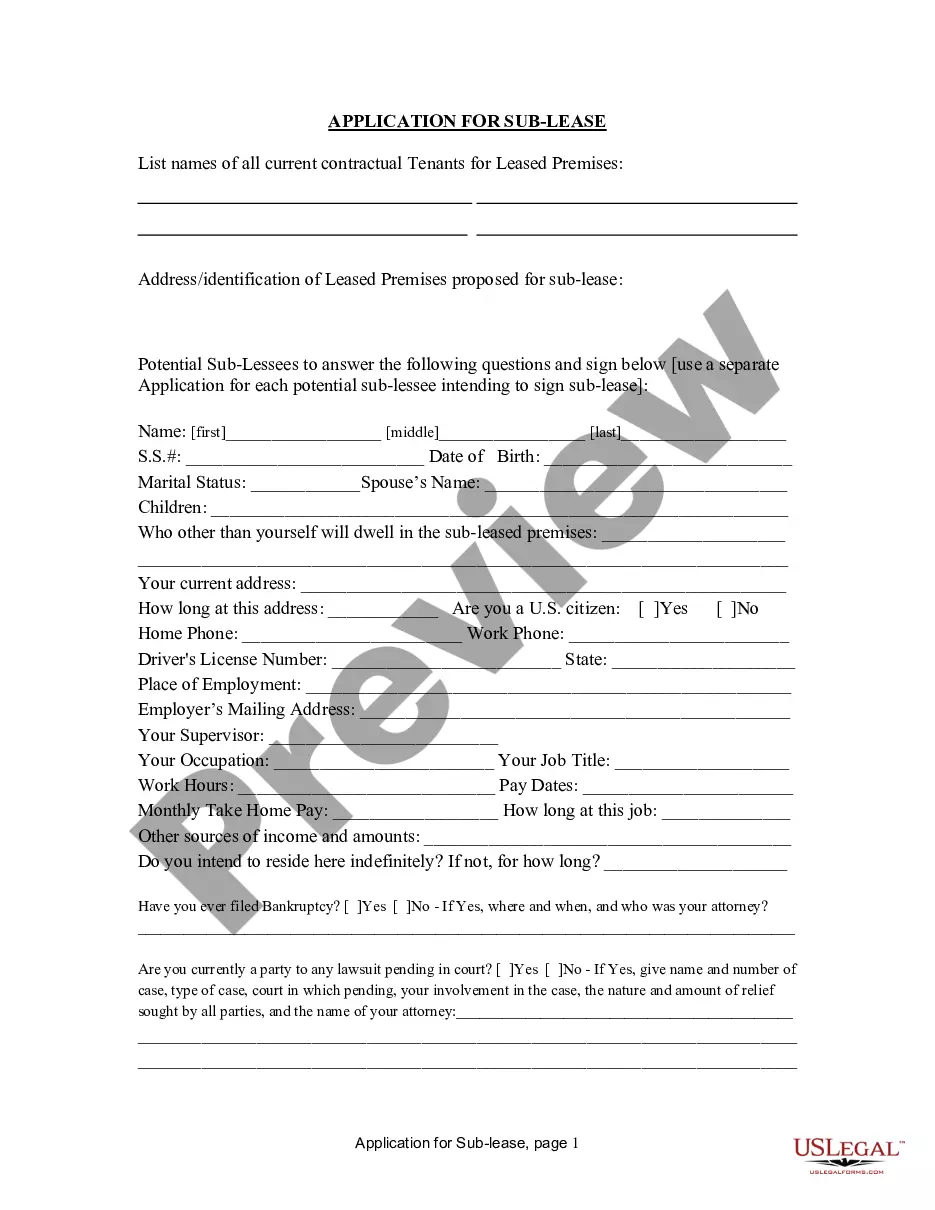
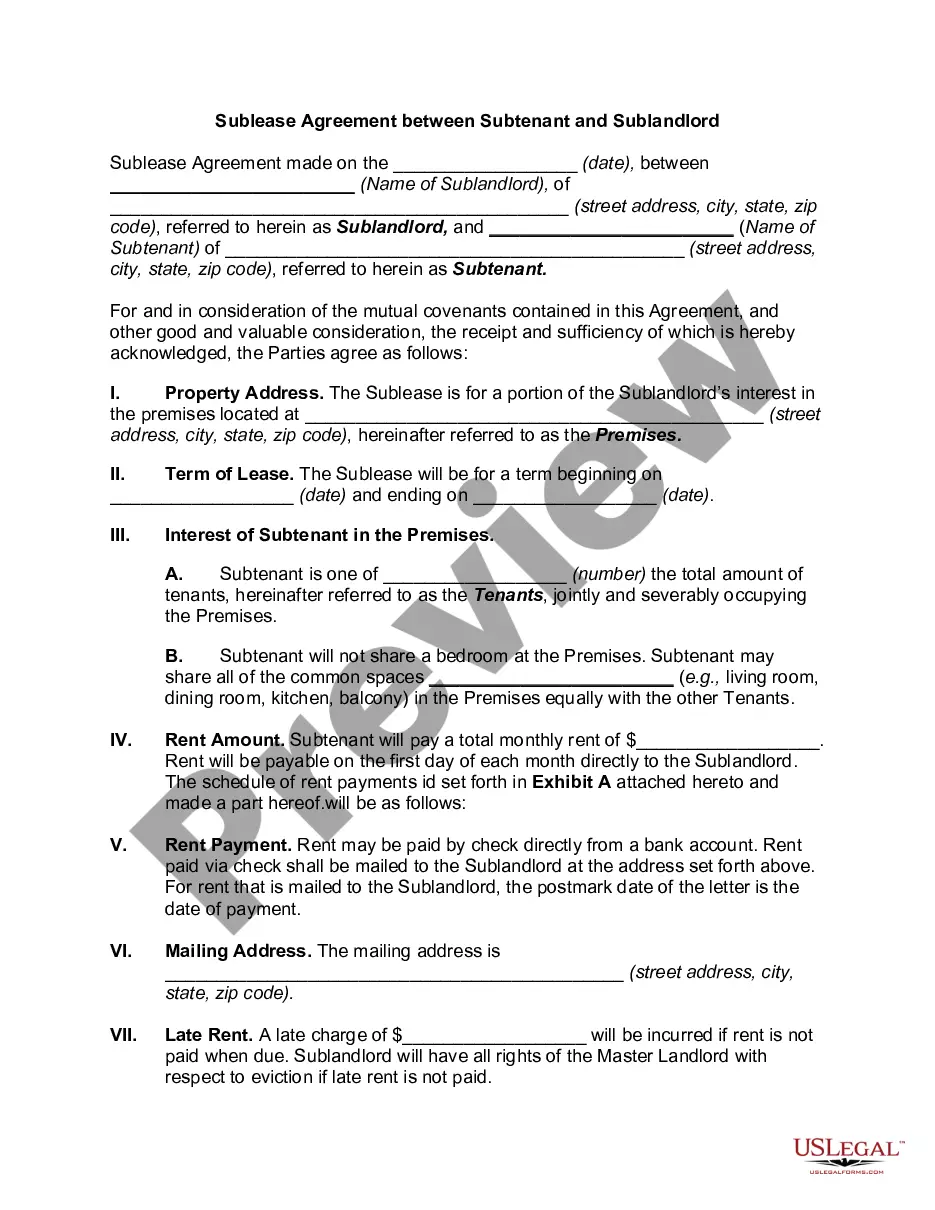
The Application for Sublease is a legal document that allows a potential sub-tenant to apply to a landlord for the right to sublet a rental property. This form provides essential information that helps the landlord decide whether to approve or deny the sublease application. Different from standard lease agreements, this form specifically addresses the terms and requirements related to subleasing a property under an existing lease.
Key components of this form
- Marital status and spouse's name
- Children living at the subleased premises
- Current address and duration of stay
- Employment details including occupation and income
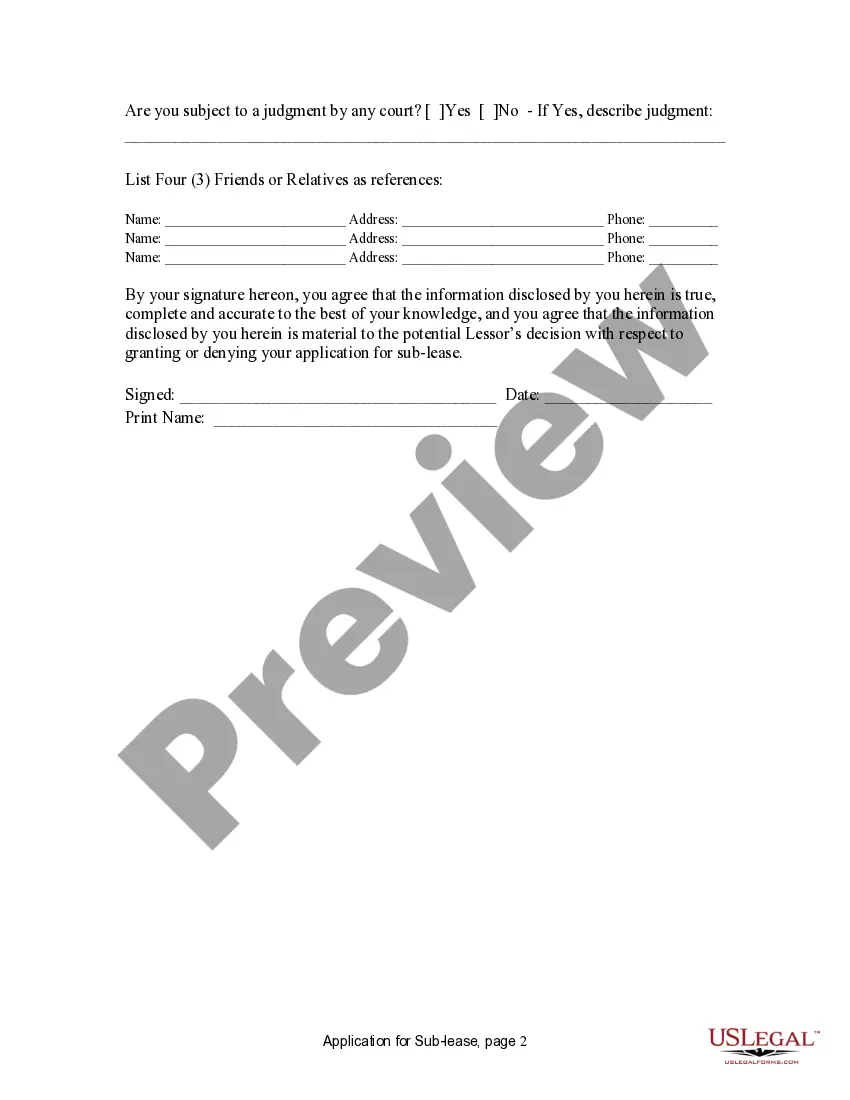
- Personal references, including friends or relatives
- Signature confirming the accuracy of the provided information
When to use this document
This form should be used when a tenant wishes to sublet their rental property to another individual, known as a sub-tenant. It is essential when the original lease agreement requires the tenant to seek approval from the landlord before subleasing. Completing this application helps the landlord evaluate the sub-tenant's suitability based on established criteria.
Who should use this form
- Current tenants who want to sublet their rented property
- Potential sub-tenants looking to formalize their residency
- Landlords who need to assess sub-tenant applications
How to prepare this document
- Fill in your marital status and names of dependents.
- Provide your current address and how long you have lived there.
- Detail your employment information, including income and job title.
- List references, including friends or relatives with their contact information.
- Sign and date the application, certifying the accuracy of the information provided.
Does this document require notarization?
Notarization is not commonly needed for this form. However, certain documents or local rules may make it necessary. Our notarization service, powered by Notarize, allows you to finalize it securely online anytime, day or night.
Get your form ready online
Our built-in tools help you complete, sign, share, and store your documents in one place.
Make edits, fill in missing information, and update formatting in US Legal Forms—just like you would in MS Word.
Download a copy, print it, send it by email, or mail it via USPS—whatever works best for your next step.
Sign and collect signatures with our SignNow integration. Send to multiple recipients, set reminders, and more. Go Premium to unlock E-Sign.
If this form requires notarization, complete it online through a secure video call—no need to meet a notary in person or wait for an appointment.
We protect your documents and personal data by following strict security and privacy standards.

Make edits, fill in missing information, and update formatting in US Legal Forms—just like you would in MS Word.

Download a copy, print it, send it by email, or mail it via USPS—whatever works best for your next step.

Sign and collect signatures with our SignNow integration. Send to multiple recipients, set reminders, and more. Go Premium to unlock E-Sign.

If this form requires notarization, complete it online through a secure video call—no need to meet a notary in person or wait for an appointment.

We protect your documents and personal data by following strict security and privacy standards.
Mistakes to watch out for
- Failing to provide accurate income information.
- Omitting references or using incorrect contact details.
- Not signing the application, which makes it invalid.
Benefits of using this form online
- Convenience of completing the form from anywhere.
- Editable templates that allow for easy modification.
- Reliable support from licensed attorneys during the drafting process.
Legal use & context
- The application serves as a formal request to the landlord regarding the sub-leasing of property.
- Sublease agreements entered into without landlord approval may lead to legal ramifications.
Main things to remember
- Use this form to formally apply for subletting a rental property.
- Ensure all information is accurate and complete to avoid delays.
- Review your original lease for specific subleasing requirements and conditions.
Looking for another form?
Form popularity
FAQ
Subleasing is not illegal in Michigan; however, it is subject to the terms set by the original lease and the landlord. Tenants should check their lease for any clauses that may restrict or prohibit subleasing. The Michigan Application for Sublease can help tenants navigate these regulations while ensuring they comply with local laws. By being proactive and informed, tenants can safely engage in subleasing without legal issues.
Yes, landlords can impose restrictions on subleasing, depending on the lease agreement. Some landlords may require written consent before a tenant proceeds with a sublease. It's important for tenants to refer to their lease terms and discuss their plans with their landlord. Utilizing the Michigan Application for Sublease can help clarify these terms and establish a fair agreement between all parties involved.
When a tenant decides to sublet their apartment, they take on the responsibility of finding someone to temporarily occupy their space. This process involves filling out the Michigan Application for Sublease, which is essential for ensuring that both parties understand their rights and responsibilities. The original tenant must also inform the landlord and may need to obtain their approval. Failure to do so can lead to complications and potential eviction.
Landlords often view subletting as a risk because it can complicate tenancy arrangements. They fear issues such as missed rent payments or unauthorized alterations to their property. To mitigate these concerns, many landlords prefer that tenants stick to their original lease agreements rather than pursuing a Michigan Application for Sublease without proper authorization.
The 3x rent rule in Michigan indicates that your monthly income should be at least three times the rent amount. This guideline helps landlords determine if a tenant can afford the rent consistently. When considering a Michigan Application for Sublease, ensuring that your prospective subtenant meets this income requirement can help secure landlord approval and prevent future complications.
Subleasing can be either good or bad, depending on your situation. It provides flexibility for tenants who need to leave temporarily while still covering their rental costs. However, without a proper Michigan Application for Sublease, tenants may expose themselves to liability and potential conflicts with landlords. Therefore, it's crucial to understand the risks involved and proceed with caution.
Landlords often dislike subleasing because it complicates property management. They worry about the quality of tenants and potential damages caused by those who were not initially screened. Additionally, the Michigan Application for Sublease may introduce new risks, making landlords feel exposed. Ultimately, they prefer to have direct control over their rental agreements.
In Michigan, subleasing requires clear agreements between the original tenant and the subtenant, as well as the landlord’s approval. Tenants must provide a formal Michigan Application for Sublease to ensure compliance with local laws. This document outlines the terms and responsibilities, making the process smoother and more transparent for all involved.
Subletting involves a similar approach to subleasing, where a tenant allows another person to rent part or all of their rental unit. The original tenant must still acquire permission from their landlord before proceeding. It's advisable to use a Michigan Application for Sublease to document this arrangement and protect everyone's rights in the agreement.
Subleasing may lead to issues such as miscommunication between all parties involved. Additionally, the primary tenant remains responsible for any damages or issues that arise during the sublease period. Using a Michigan Application for Sublease can help clarify responsibilities and expectations, but it's crucial to thoroughly vet potential subtenants.