South Dakota Transfer on Death Deed or TOD - Beneficiary Deed for Two Individuals to a Trust
Understanding this form
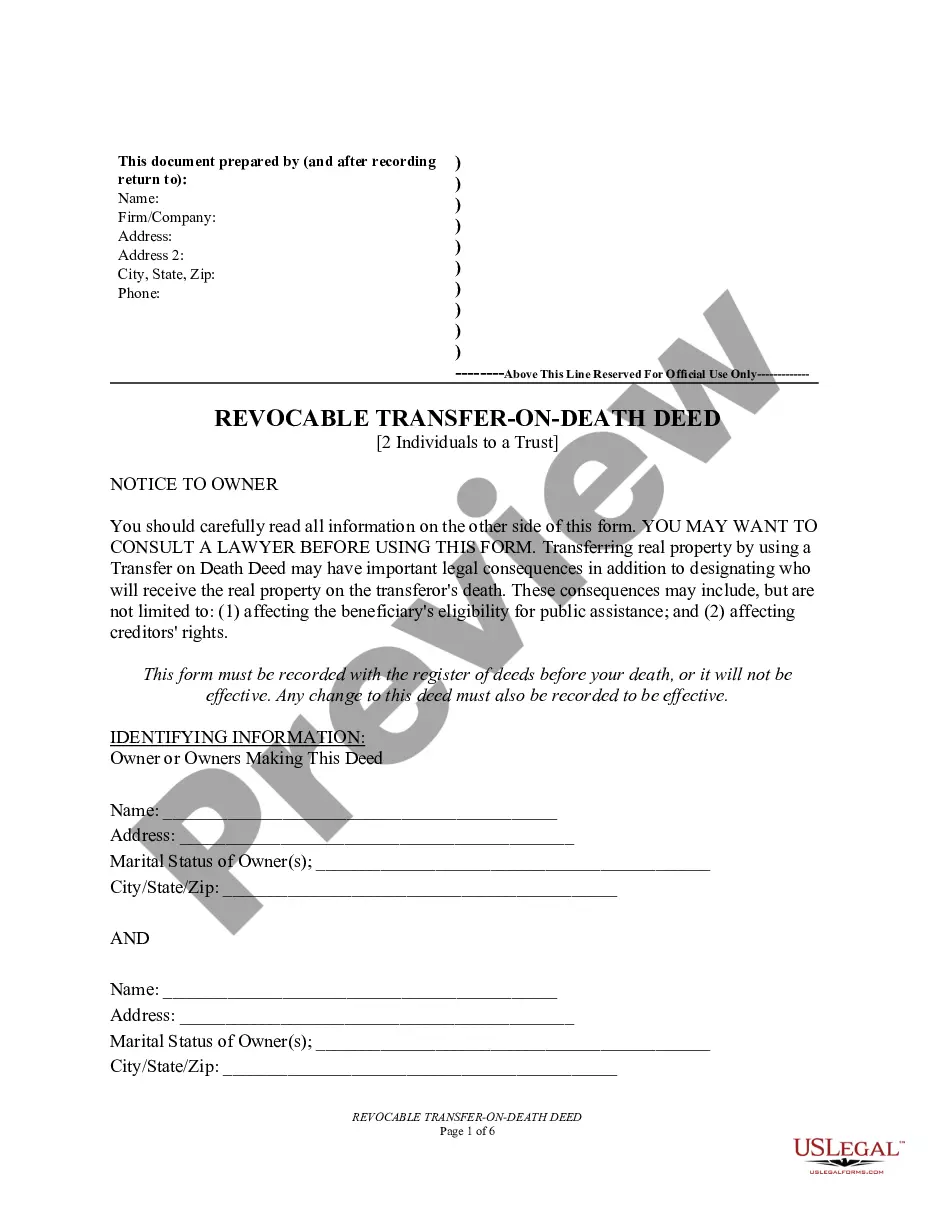
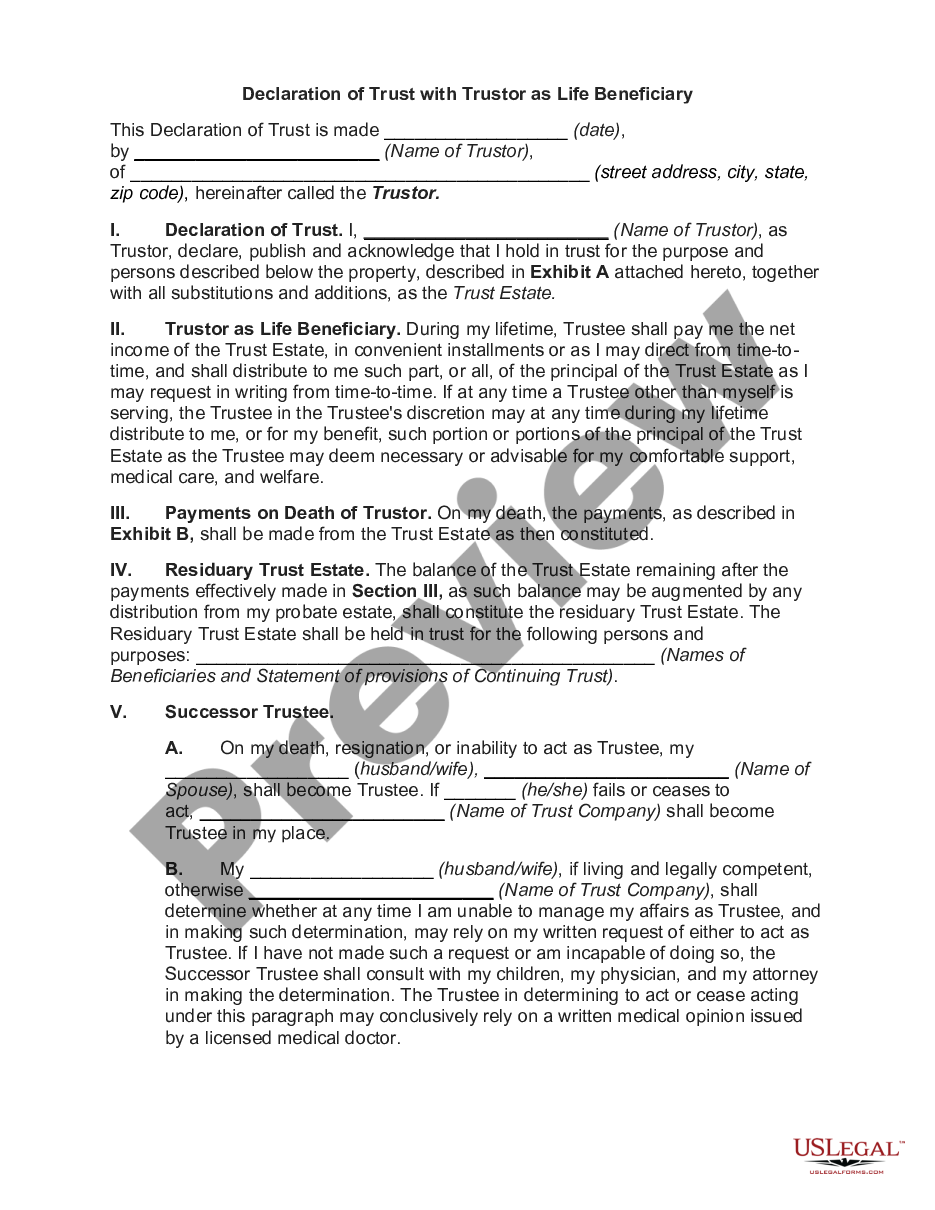
The Transfer on Death Deed (TOD) is a legal document that allows property owners to designate beneficiaries who will receive ownership of a property upon the owner's death. This deed does not transfer any current ownership interest; instead, it ensures the smooth transfer of title while allowing owners to retain full control during their lifetime. Unlike other forms of property transfer, such as a will, a TOD deed is revocable and can be altered at any time before the owner's death, making it a flexible estate planning tool.
What’s included in this form
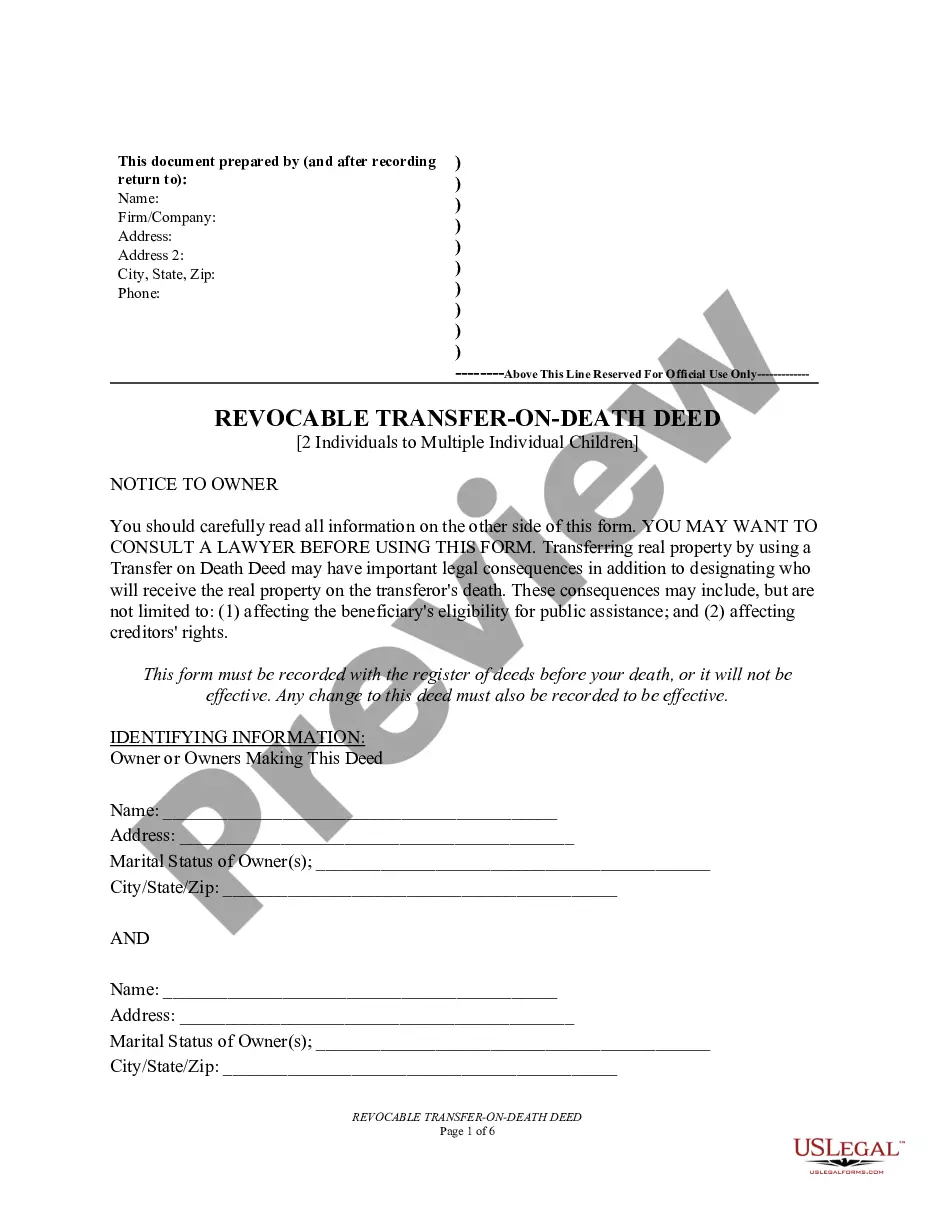
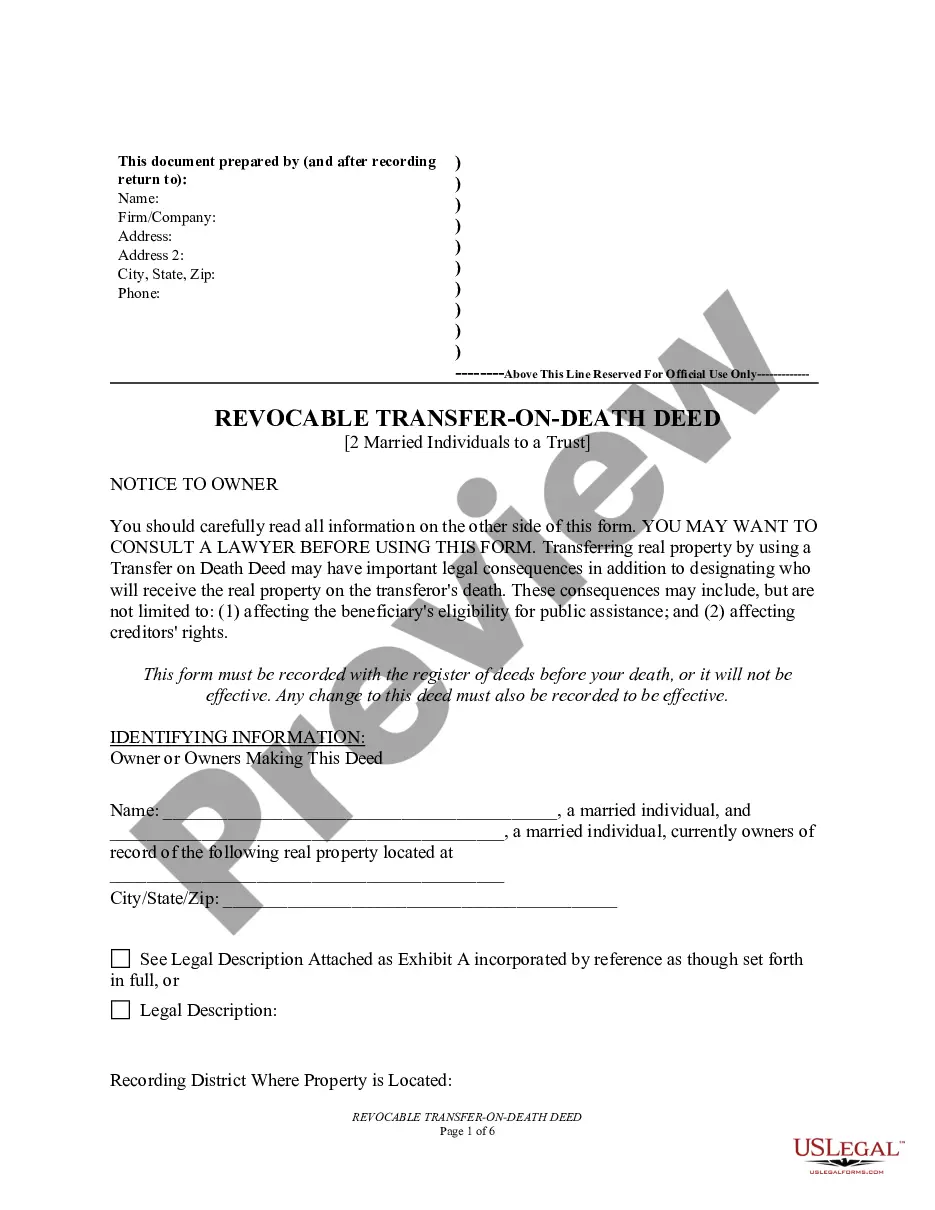
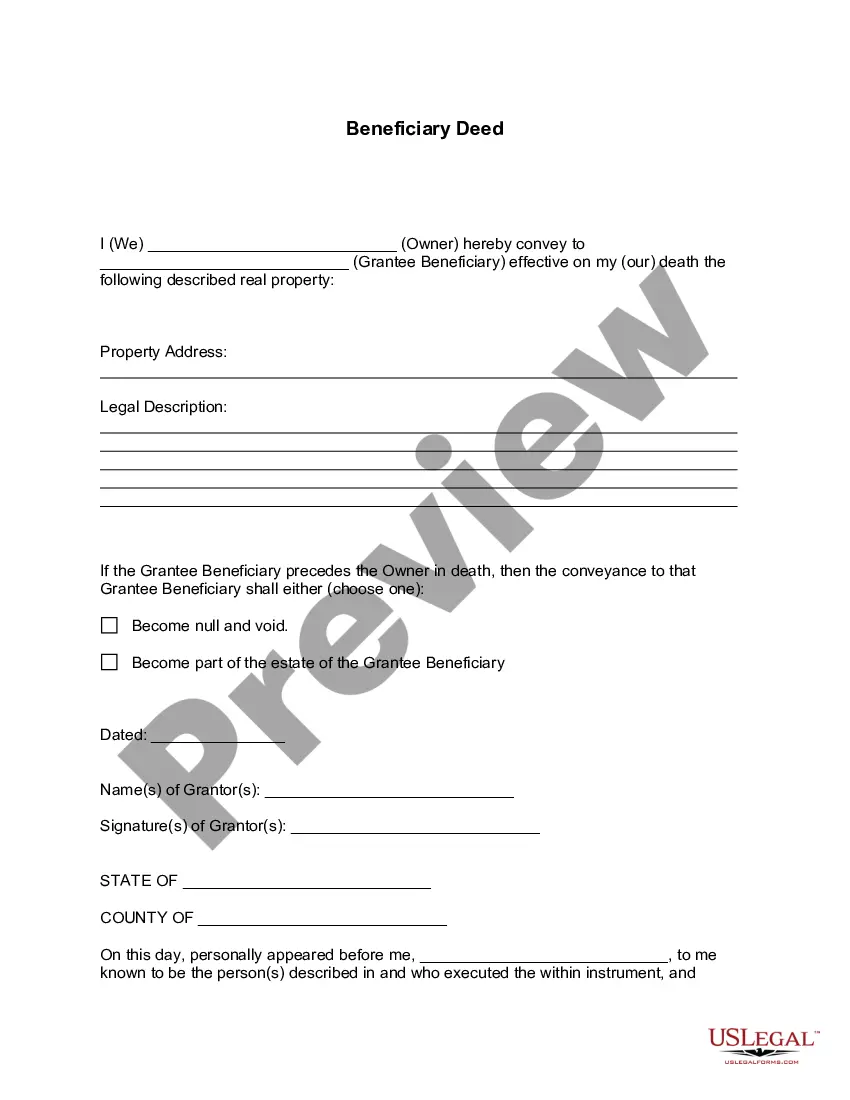
- Identifying information for the property owners and beneficiaries.
- Legal description of the property being transferred.
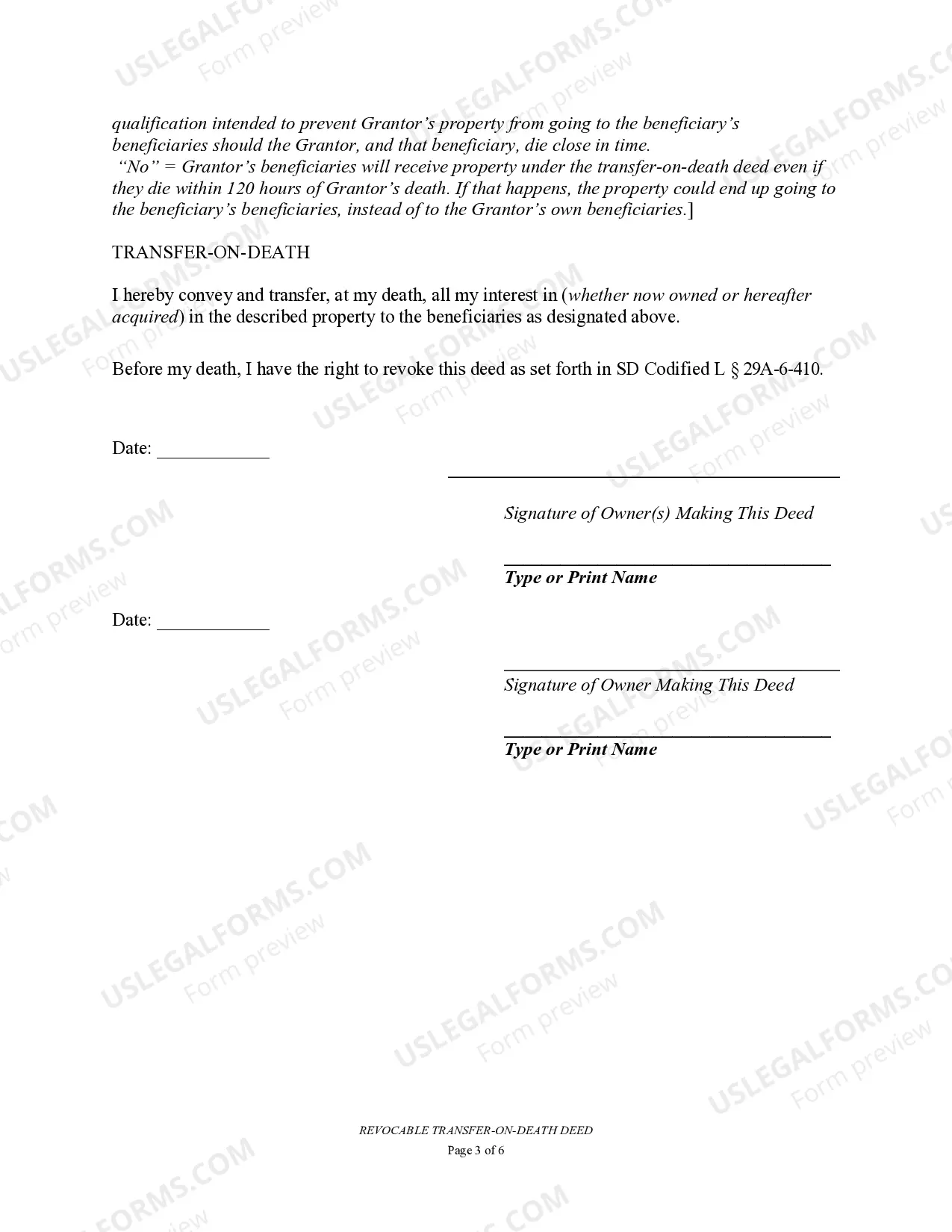
- 120-hour survival rule option for beneficiaries.
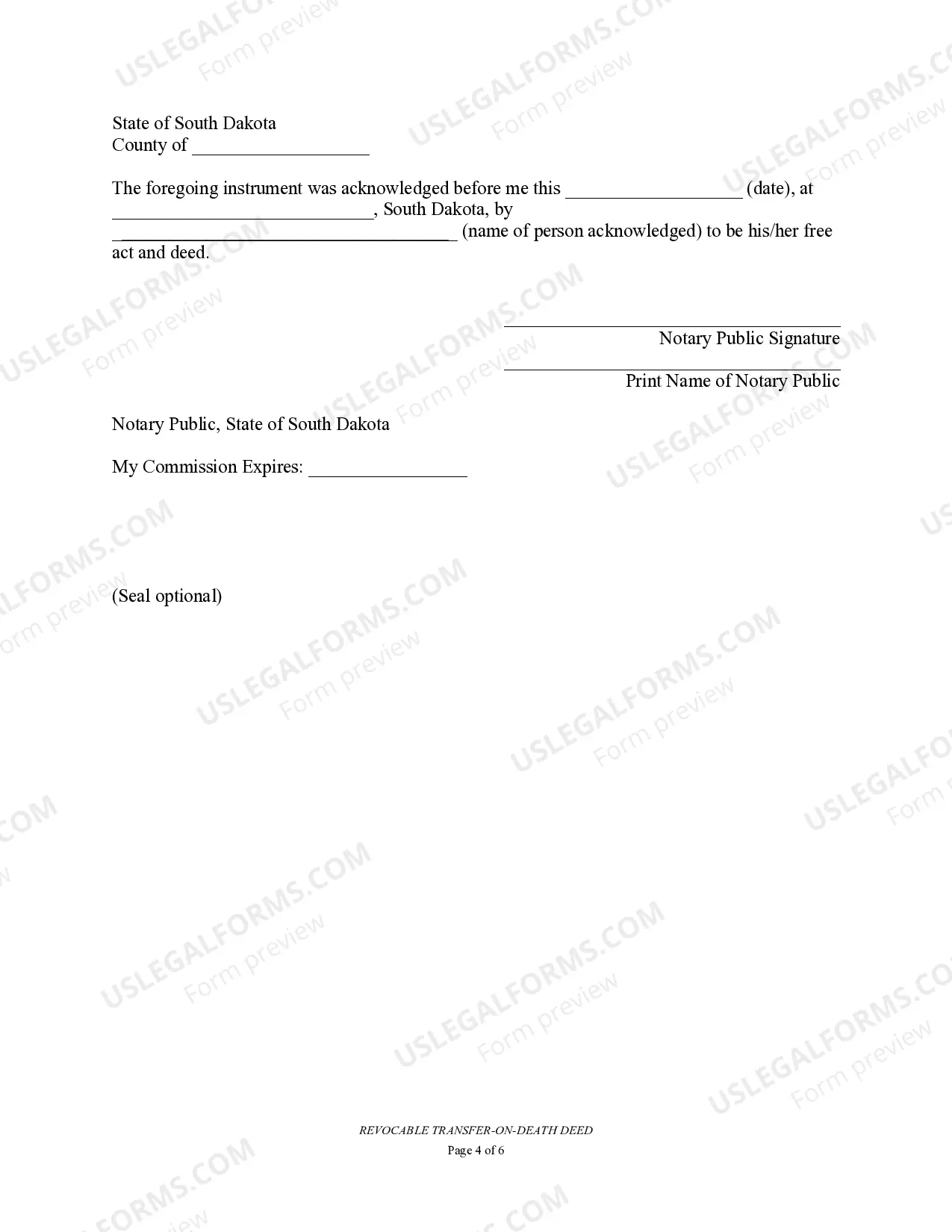
- Signature lines for property owners and notary acknowledgment.
- Revocability clause allowing the owner to change the deed before death.




When to use this form
This form is useful when an individual, or couple, wants to ensure that their property automatically transfers to designated beneficiaries upon their deaths, rather than going through probate. It is ideal for estate planning, particularly for those who wish to retain ownership and control of the property while alive, yet want to simplify the transfer process for their heirs.
Who needs this form
- Property owners looking to pass on property to their beneficiaries without probate.
- Individuals interested in estate planning who desire flexibility in their property transfers.
- Couples who jointly own property and want to ensure both parties' wishes are honored.
Steps to complete this form
- Identify the full names and addresses of all property owners.
- Provide the propertyâs legal description, including details from Exhibit A.
- Designate primary and alternate beneficiaries, including their addresses.
- Sign and date the form in front of a notary public.
- File the completed deed with the local register of deeds before your death.
Does this form need to be notarized?
Yes, this form must be notarized to be legally valid. Notarization provides an extra level of authenticity and ensures that the signers of the deed are properly identified. US Legal Forms offers integrated online notarization services for your convenience, available 24/7 via secure video call, so you don't need to travel to a notary's office.
Get your form ready online
Our built-in tools help you complete, sign, share, and store your documents in one place.
Make edits, fill in missing information, and update formatting in US Legal Forms—just like you would in MS Word.
Download a copy, print it, send it by email, or mail it via USPS—whatever works best for your next step.
Sign and collect signatures with our SignNow integration. Send to multiple recipients, set reminders, and more. Go Premium to unlock E-Sign.
If this form requires notarization, complete it online through a secure video call—no need to meet a notary in person or wait for an appointment.
We protect your documents and personal data by following strict security and privacy standards.

Make edits, fill in missing information, and update formatting in US Legal Forms—just like you would in MS Word.

Download a copy, print it, send it by email, or mail it via USPS—whatever works best for your next step.

Sign and collect signatures with our SignNow integration. Send to multiple recipients, set reminders, and more. Go Premium to unlock E-Sign.

If this form requires notarization, complete it online through a secure video call—no need to meet a notary in person or wait for an appointment.

We protect your documents and personal data by following strict security and privacy standards.
Typical mistakes to avoid
- Failing to record the deed with the appropriate authorities.
- Not specifying alternate beneficiaries, which can complicate transfers.
- Overlooking the 120-hour survival rule, potentially leading to unintended beneficiaries.
Why use this form online
- Convenience of completing the form at your own pace and reviewing it easily.
- Editability allows you to make changes before finalizing the document.
- Reliability ensures that the form is drafted according to current legal standards.
Legal use & context
- This form provides a clear and binding way to transfer property outside of probate, thus avoiding lengthy legal processes.
- It is important to understand the implications of using a Transfer on Death Deed, including potential impacts on public assistance and creditors' rights.
What to keep in mind
- The Transfer on Death Deed is a revocable way to transfer property upon death without probate.
- Complete and record the deed correctly to avoid legal complications later on.
- Consult with a lawyer if unsure about the implications or how to complete the form.