California Estate Planning Questionnaire and Worksheets
What this document covers
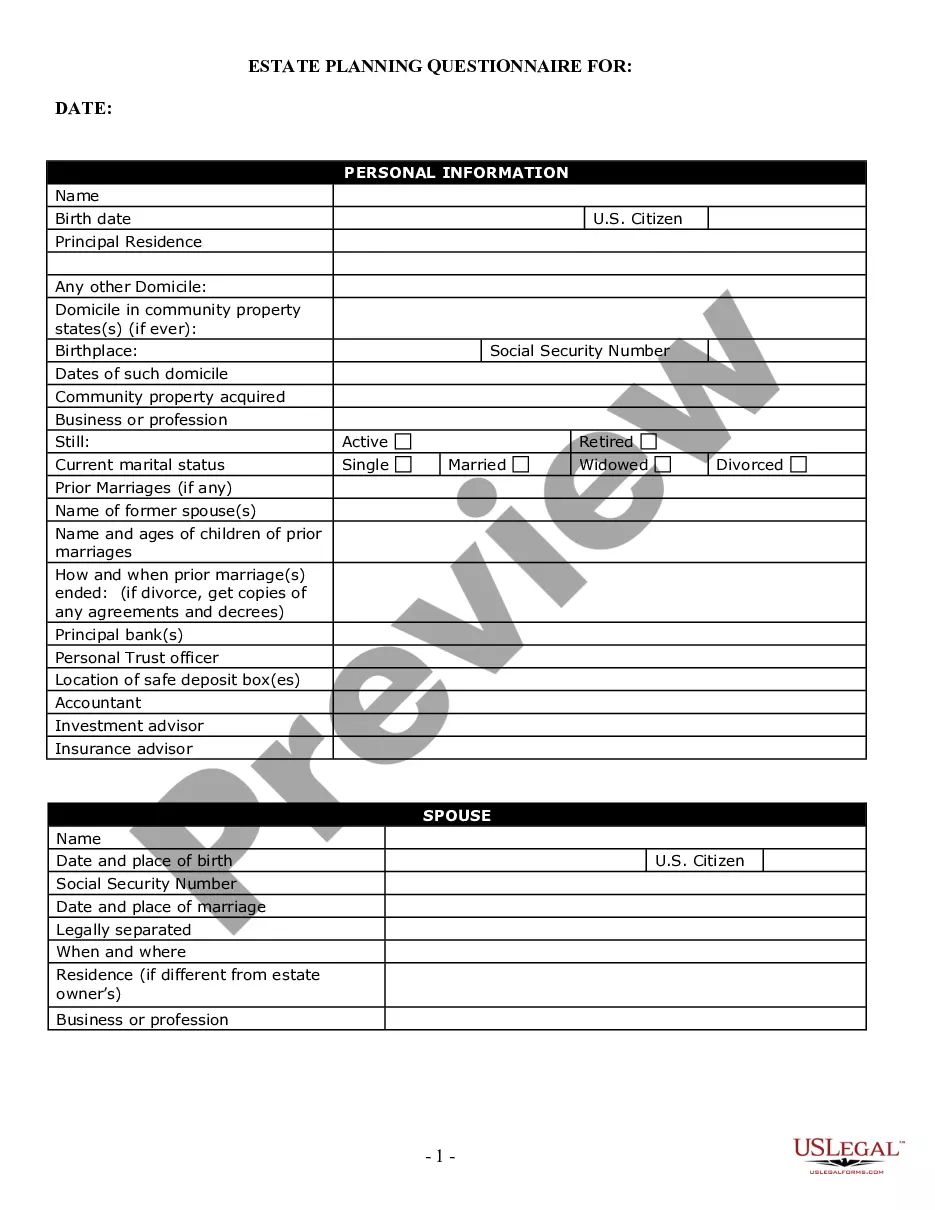
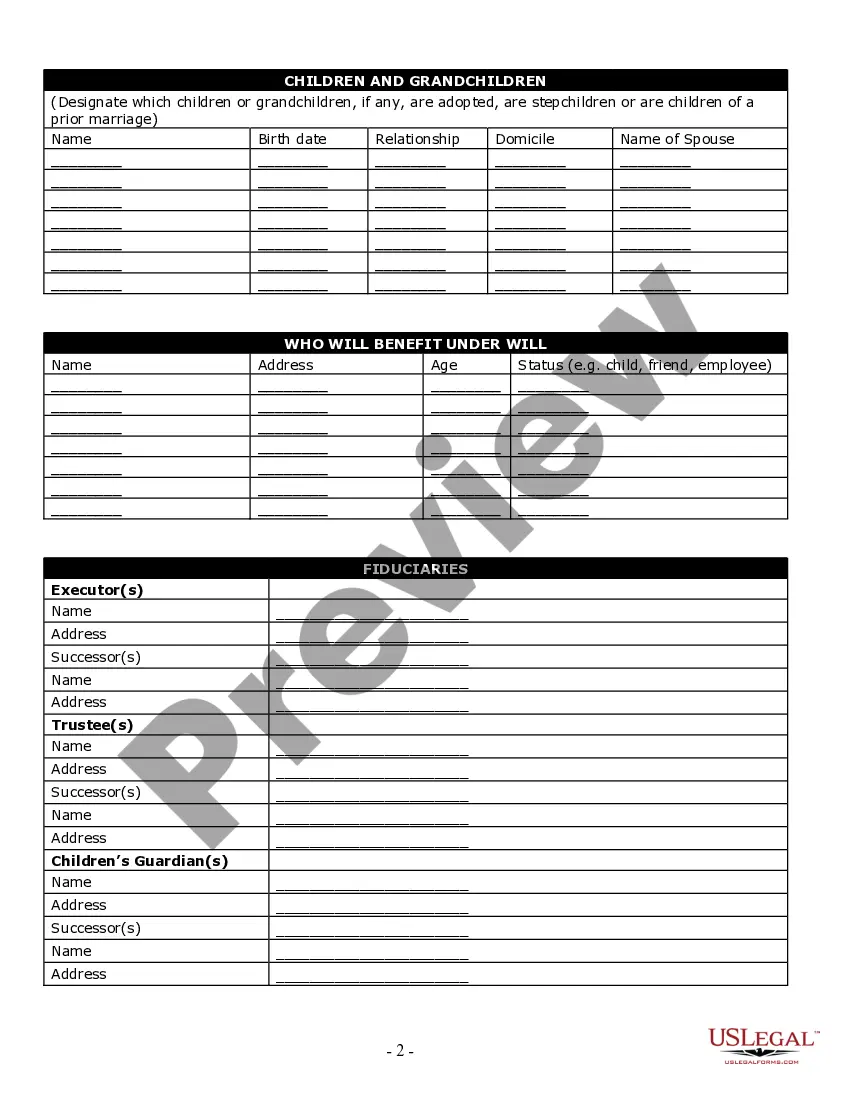
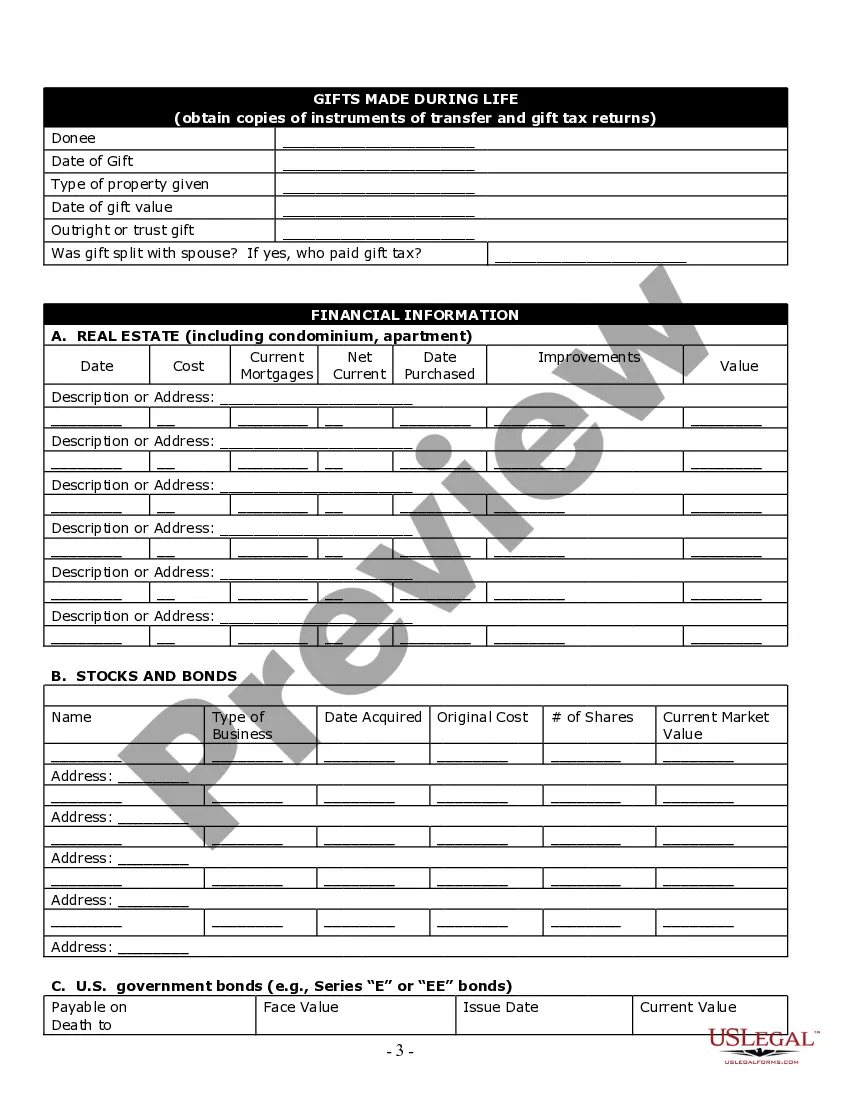
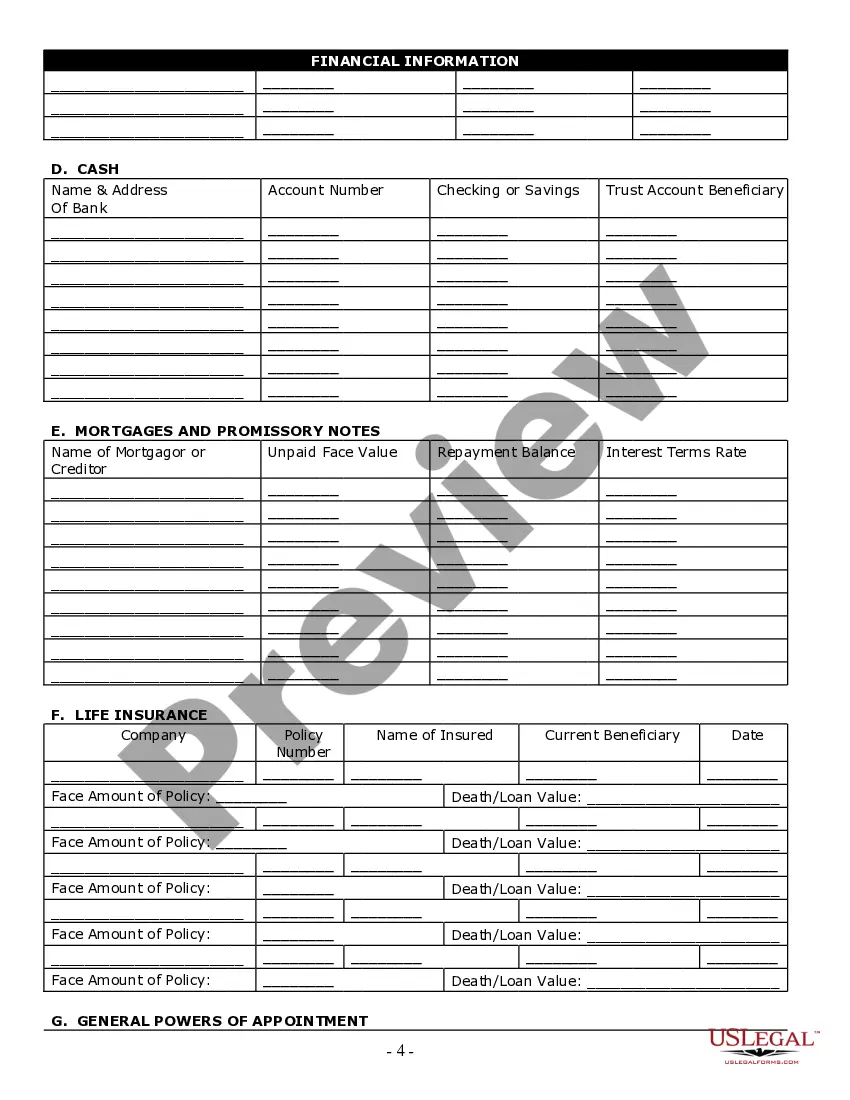
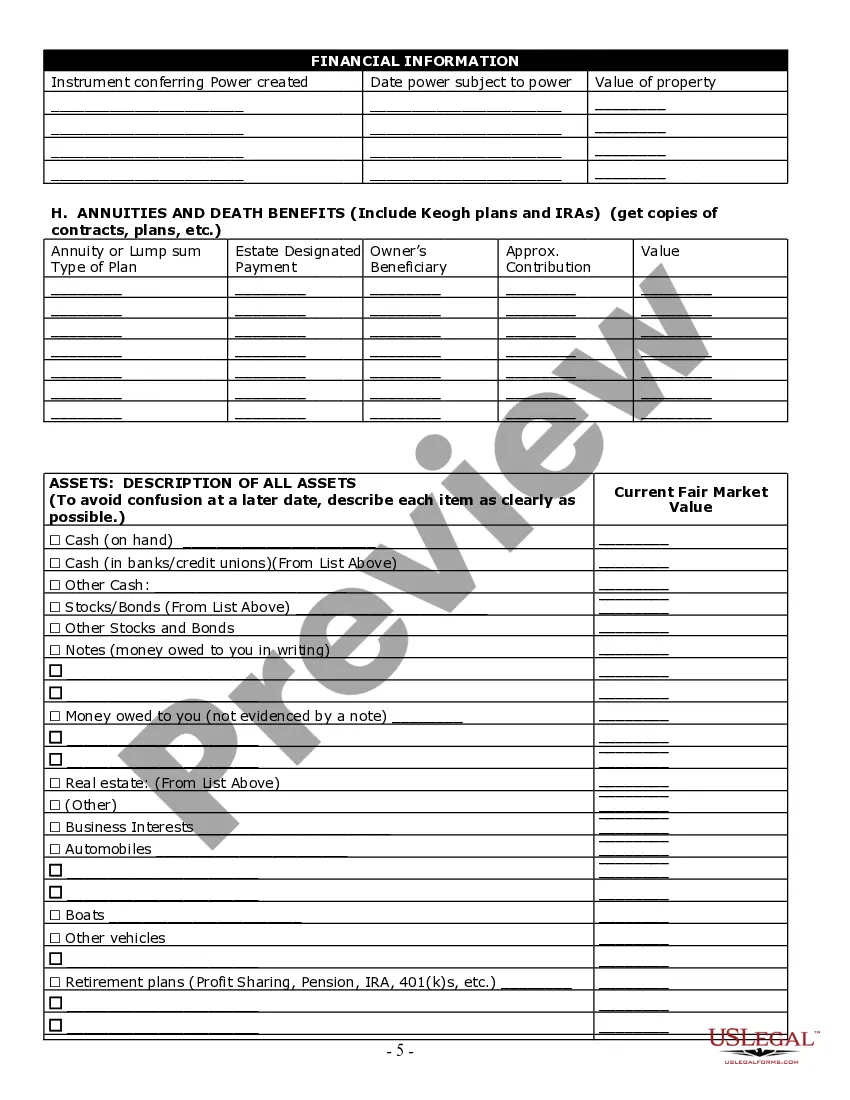
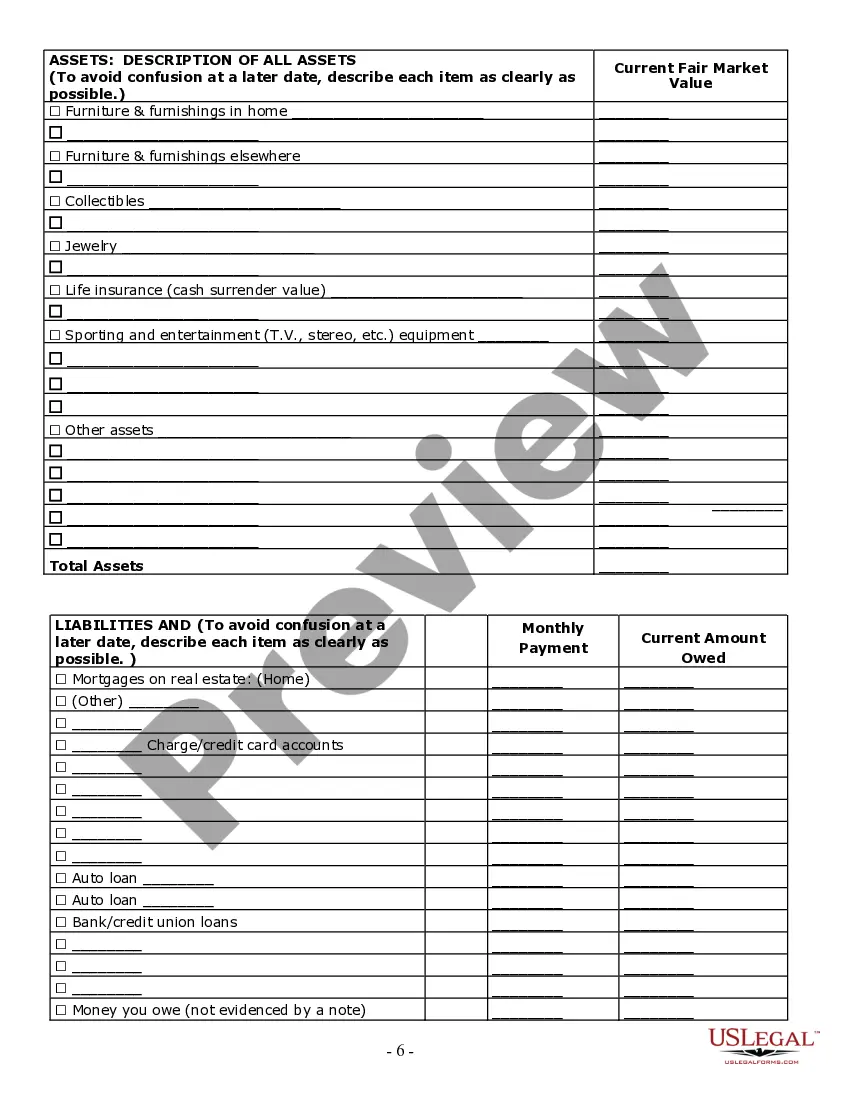
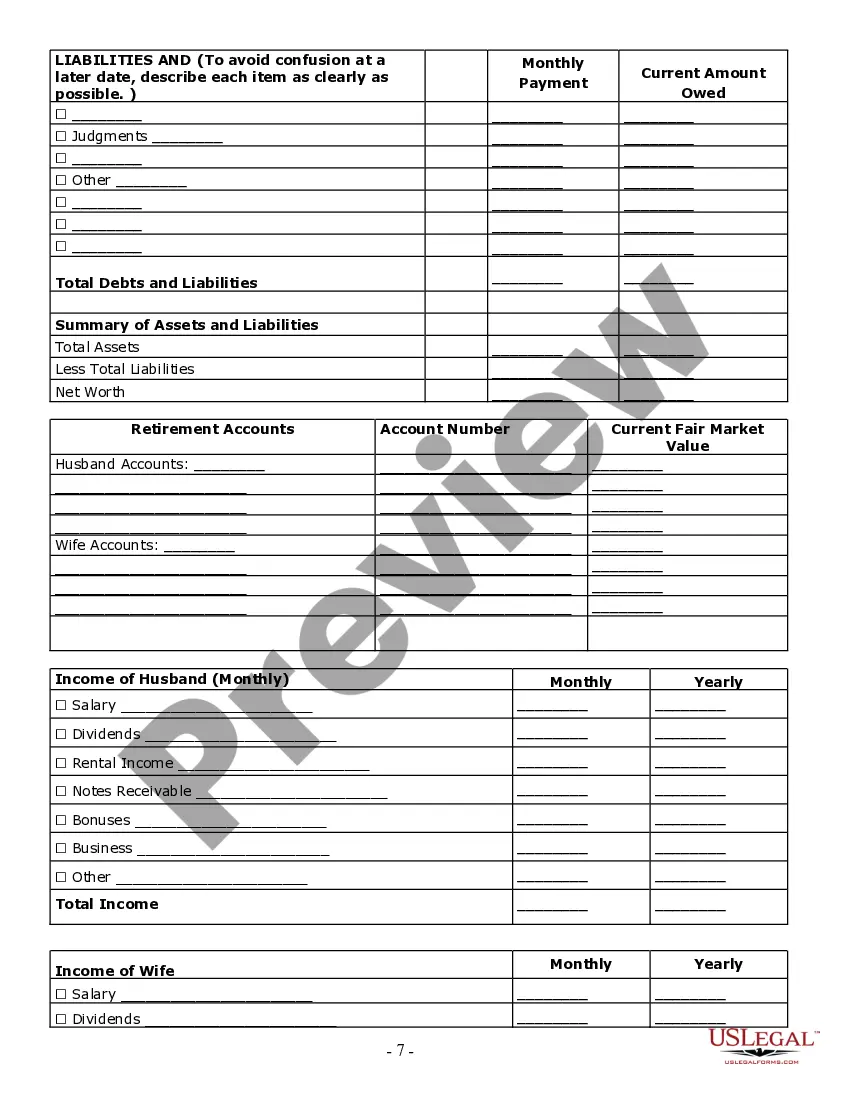
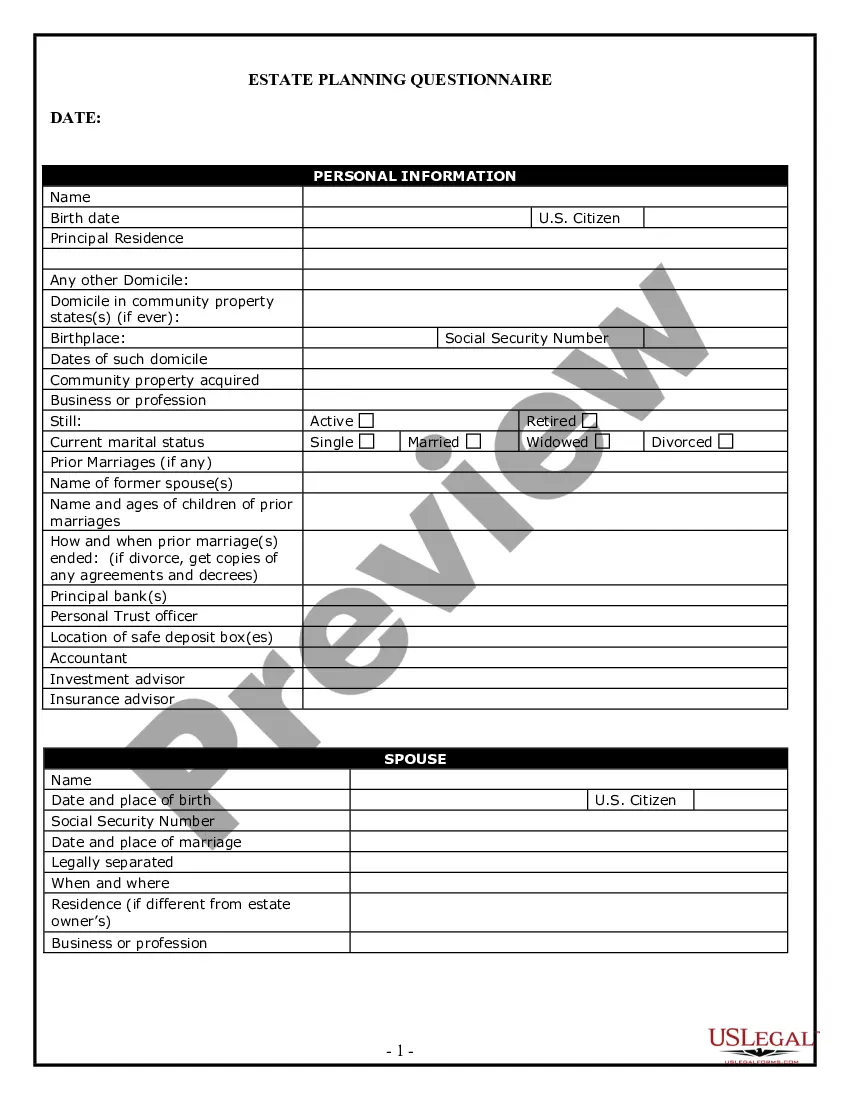
The Estate Planning Questionnaire and Worksheets is a useful tool designed to gather important personal and financial information relevant to your estate. This form facilitates client interviews and serves as a self-assessment guide for individuals to understand their overall financial situation as part of the estate planning process, making it distinct from other estate planning documents.
Key parts of this document
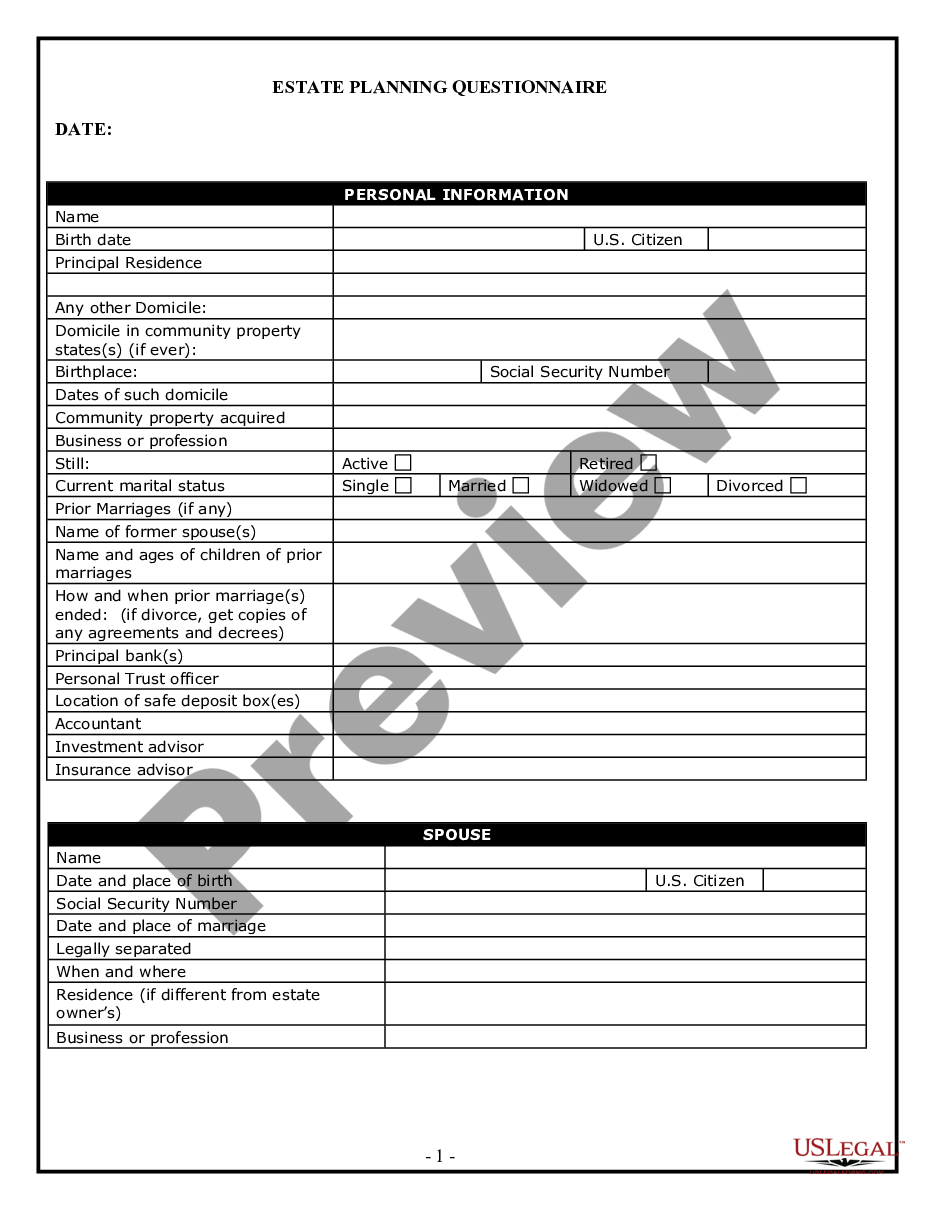
- Personal information section for recording key details about your identity.
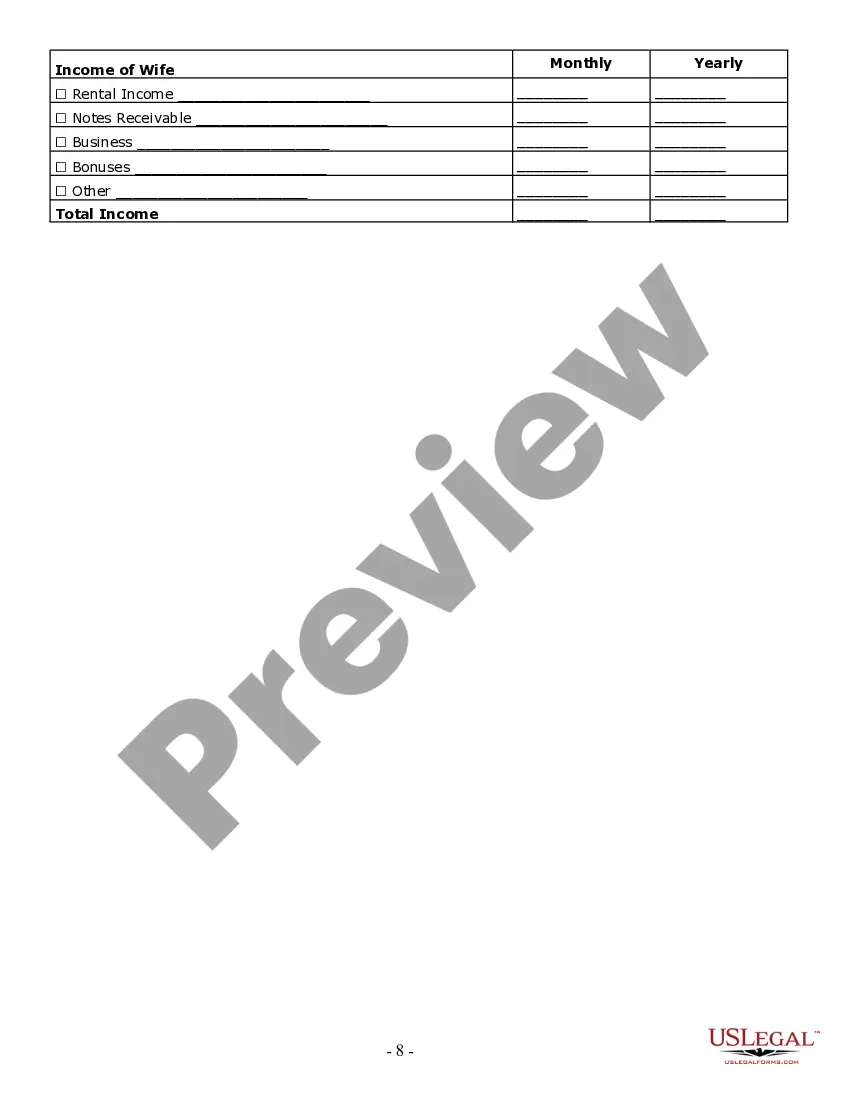
- Financial information section covering assets, liabilities, and income sources.
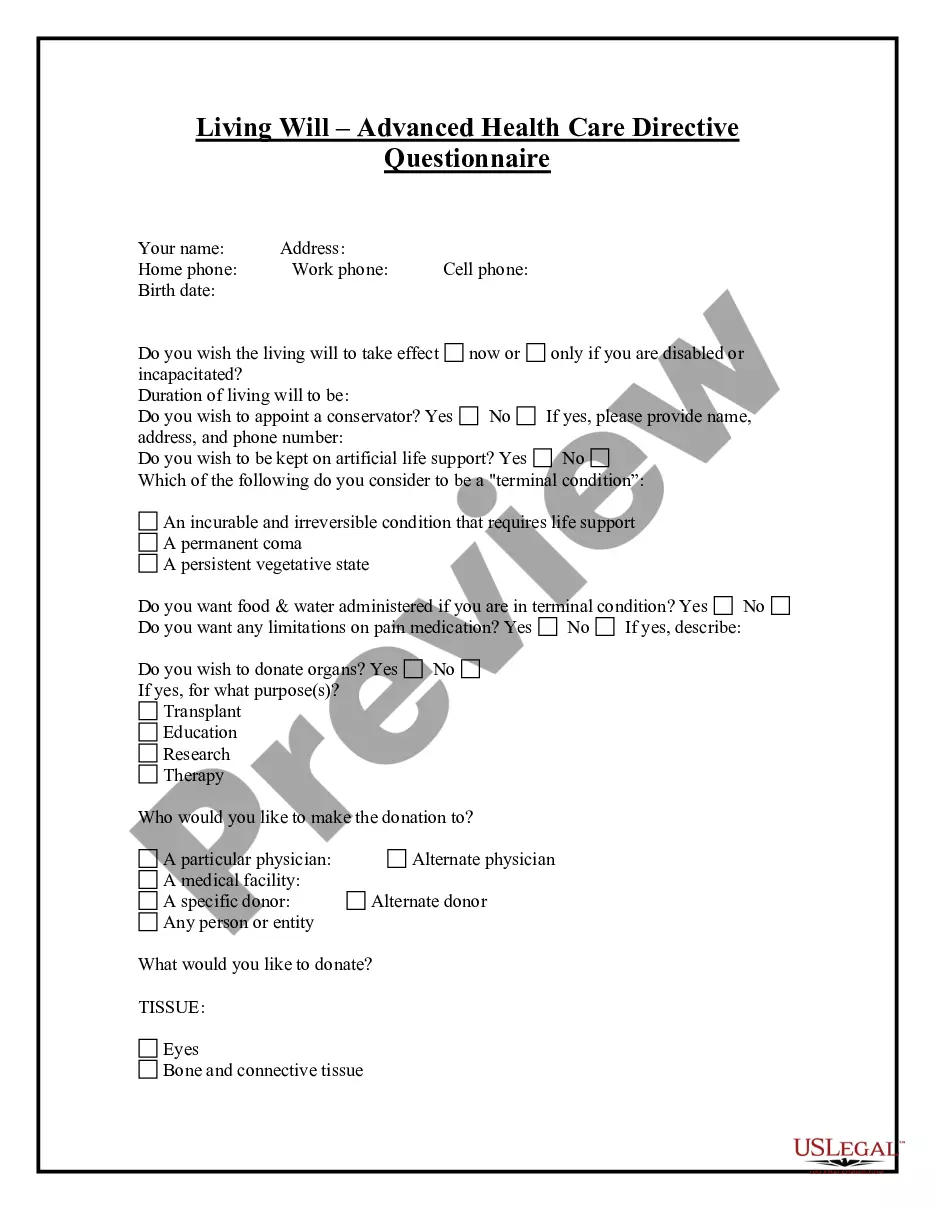
- Questions to guide discussions during client interviews about estate goals.
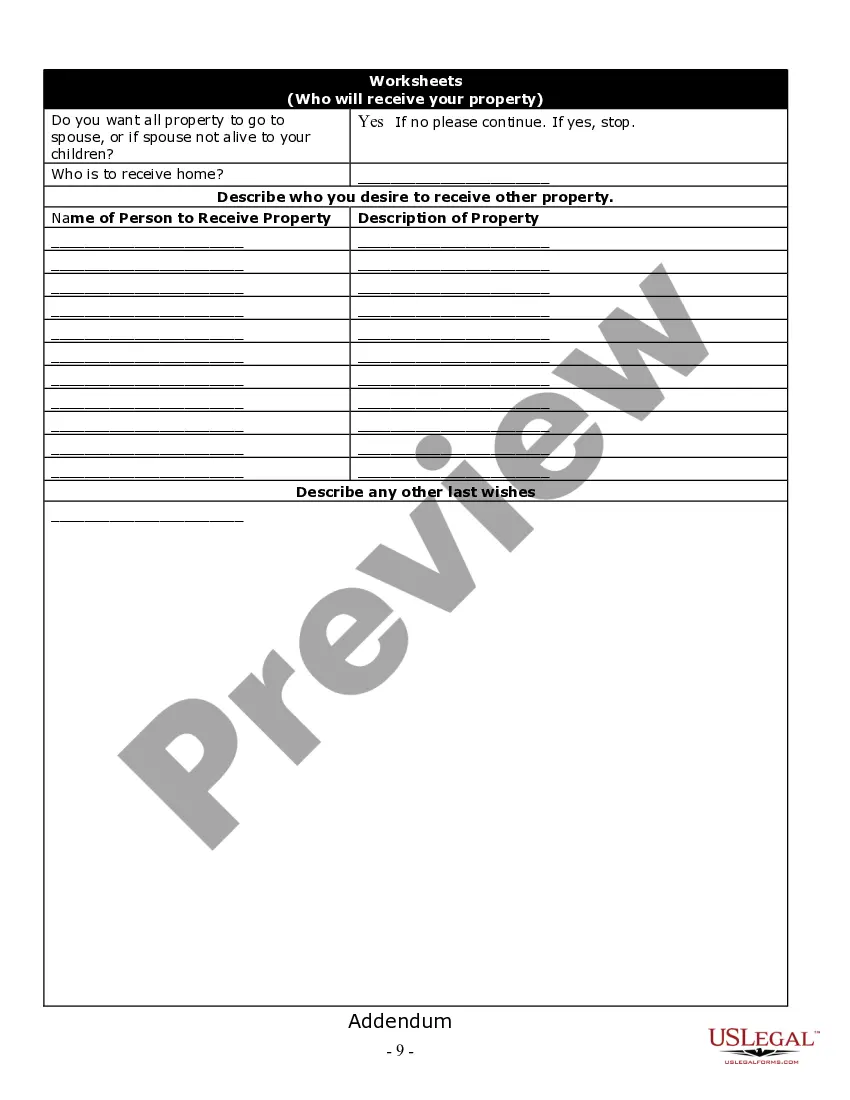
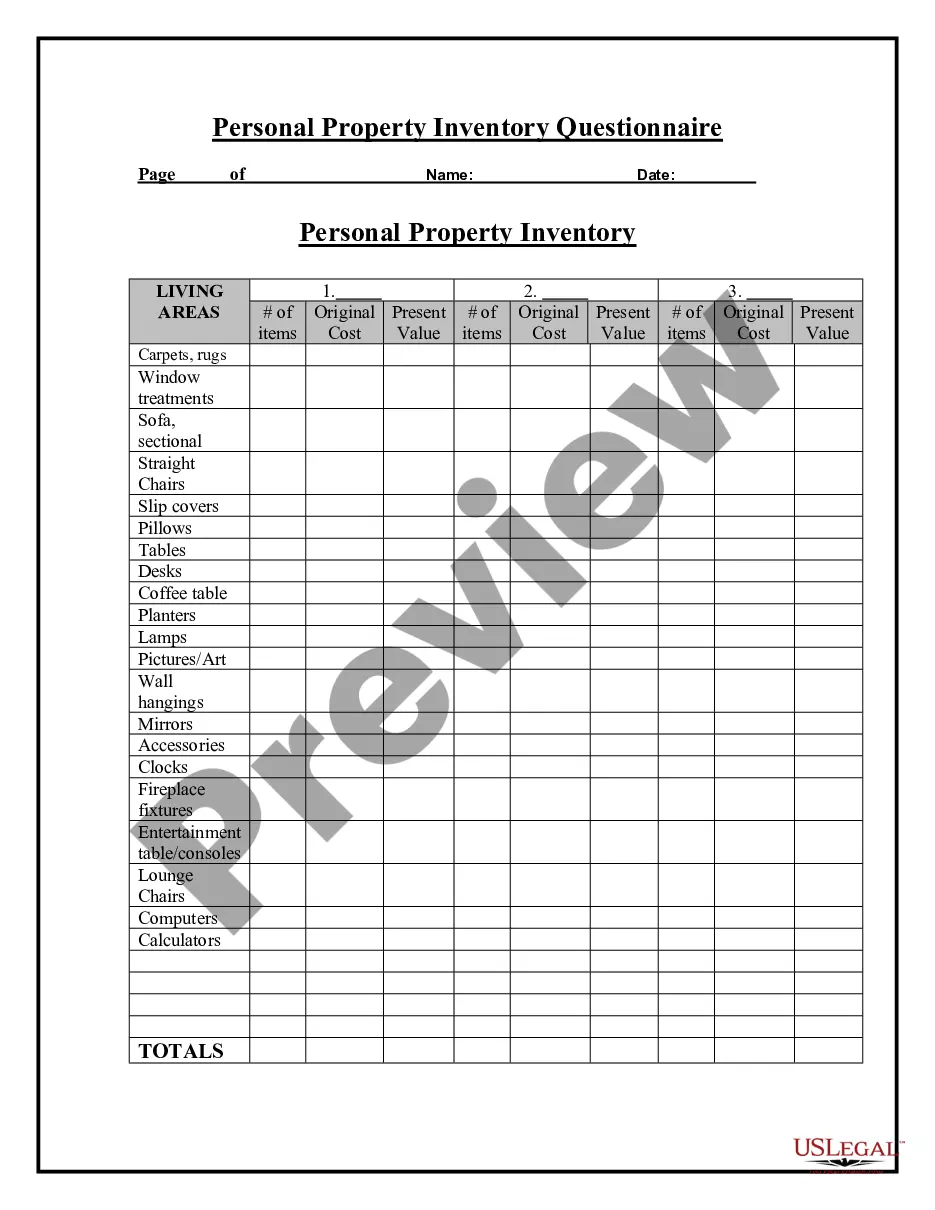
- Worksheets to assess overall financial health and estate planning needs.

When to use this document
This form is ideal for use during initial client meetings to discuss estate planning needs. It can also be completed by individuals looking to get a clearer picture of their financial standing in light of future planning. If you are preparing for discussions around wills, trusts, or other estate tools, this questionnaire will help clarify your thoughts and streamline the process.
Who can use this document
- Individuals planning their estates, particularly those with significant assets.
- Attorneys conducting estate planning interviews with their clients.
- Financial planners assisting clients in understanding their financial landscape.
- Anyone looking to review their financial situation for future planning purposes.
Instructions for completing this form
- Gather personal identification information, including names and addresses.
- Compile financial data, such as assets, debts, and income sources.
- Answer the questionnaire thoroughly to provide complete insights into estate goals.
- Use the worksheets to analyze your financial status and plan accordingly.
- Review all entries for accuracy before discussing with your attorney or financial advisor.
Does this document require notarization?
This form does not typically require notarization unless specified by local law.
Get your form ready online
Our built-in tools help you complete, sign, share, and store your documents in one place.
Make edits, fill in missing information, and update formatting in US Legal Forms—just like you would in MS Word.
Download a copy, print it, send it by email, or mail it via USPS—whatever works best for your next step.
Sign and collect signatures with our SignNow integration. Send to multiple recipients, set reminders, and more. Go Premium to unlock E-Sign.
If this form requires notarization, complete it online through a secure video call—no need to meet a notary in person or wait for an appointment.
We protect your documents and personal data by following strict security and privacy standards.

Make edits, fill in missing information, and update formatting in US Legal Forms—just like you would in MS Word.

Download a copy, print it, send it by email, or mail it via USPS—whatever works best for your next step.

Sign and collect signatures with our SignNow integration. Send to multiple recipients, set reminders, and more. Go Premium to unlock E-Sign.

If this form requires notarization, complete it online through a secure video call—no need to meet a notary in person or wait for an appointment.

We protect your documents and personal data by following strict security and privacy standards.
Typical mistakes to avoid
- Leaving questions blank or incomplete, which may lead to misunderstandings.
- Not including up-to-date financial information, which can skew results.
- Failing to discuss the information with an estate planning professional after completing the form.
Advantages of online completion
- Convenient access from anywhere, allowing for efficient completion at your own pace.
- Editable formats facilitate personalized adjustments as your situation changes.
- Reliable templates designed by licensed attorneys ensure compliance with current laws.
Legal use & context
- This form serves as a foundational tool for gathering information critical to estate planning.
- It does not constitute legal advice but rather assists in preparing for discussions with legal professionals.
- Ensure all information is complete and accurate to enhance effectiveness.
What to keep in mind
- The Estate Planning Questionnaire and Worksheets are essential for informed decision-making.
- Accurate and complete information leads to better estate planning outcomes.
- Using this form can streamline discussions with your estate planning attorney or advisor.
Looking for another form?
Form popularity
FAQ
Avoid putting specific assets that need beneficiary designations, such as life insurance policies, joint accounts, or retirement funds, in your will. These assets typically have their own transfer methods that bypass probate. For other insights, the California Estate Planning Questionnaire and Worksheets can offer valuable information to help you make informed decisions.
One of the most significant mistakes in a will is failing to update it as life circumstances change, such as marriage, divorce, or the birth of children. Outdated wills can lead to unintended distributions and family conflicts. By utilizing the California Estate Planning Questionnaire and Worksheets, you can regularly reassess your will and keep it current.
An estate planning questionnaire is a tool designed to help individuals collect and organize their essential estate-related information. It typically asks about assets, debts, family members, and personal wishes. Using the California Estate Planning Questionnaire and Worksheets ensures you have a comprehensive understanding of your estate.
Certain assets, such as retirement accounts, life insurance benefits, and property held in trust, cannot be included in a will. These assets pass directly to named beneficiaries and do not undergo probate. For a clearer picture, refer to the California Estate Planning Questionnaire and Worksheets.
Items like directly owned life insurance policies, retirement accounts, and joint property should not be included in a will since they have designated beneficiaries. It’s crucial to differentiate between assets that can and cannot be included. This understanding will be enhanced by using the California Estate Planning Questionnaire and Worksheets.
The 5 and 5 rule in estate planning allows individuals to gift up to $15,000 per recipient without incurring gift taxes, while also permitting a total of $5,000 to be gifted to any individual or charity during one's lifetime. Understanding this rule can help you maximize your estate's value. Utilize the California Estate Planning Questionnaire and Worksheets to navigate these complex rules.
The 5 D's of estate planning include death, divorce, disability, disinheritance, and disagreement. Each of these factors can significantly impact your estate and require careful consideration during the planning process. Exploring the California Estate Planning Questionnaire and Worksheets will help address these issues effectively.
Filling out an estate planning questionnaire involves gathering essential information about your financial situation and your wishes for asset distribution. Start by listing your assets, debts, and beneficiaries. Using California Estate Planning Questionnaire and Worksheets can guide you through this organized process, ensuring you don’t miss important details.
Assets that typically aren't listed in a will include those with designated beneficiaries, such as retirement accounts and life insurance policies. Additionally, assets held in joint tenancy or living trusts bypass probate and will not be part of your will. Make sure to review the California Estate Planning Questionnaire and Worksheets to understand the implications of these asset types.
The 5 by 5 rule is an estate planning guideline that allows trustees to distribute a specific amount to beneficiaries each year. Beneficiaries can withdraw the greater of $5,000 or 5% of the trust's value, making this a helpful tool in managing trust distributions. To make the most of this rule in your estate plan, consider utilizing a California Estate Planning Questionnaire and Worksheets. This resource can help clarify your options and optimize your estate planning efforts.