New Hampshire Last Will and Testament for Civil Union Partner with Adult Children from Prior Marriage
What is this form?
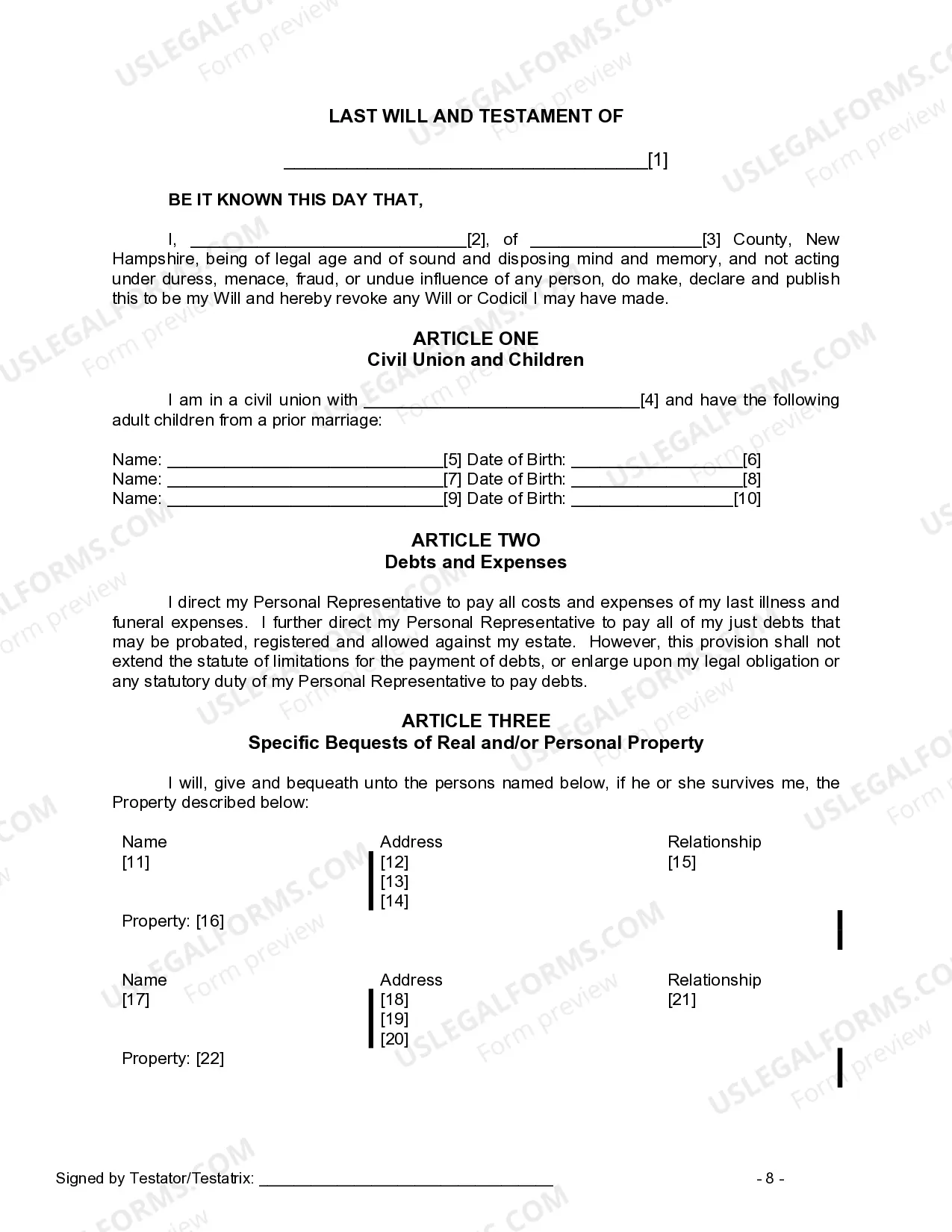
The Last Will and Testament for Civil Union Partner with Adult Children from Prior Marriage is a legal document that outlines how your assets will be distributed upon your death, specifically tailored for individuals in a civil union who have adult children from a previous marriage. This will ensures that both your civil union partner and your prior children are mentioned and provided for in your estate plan, differentiating it from a standard will that may not account for those specific circumstances.
Form components explained
- Your name and county of residence.
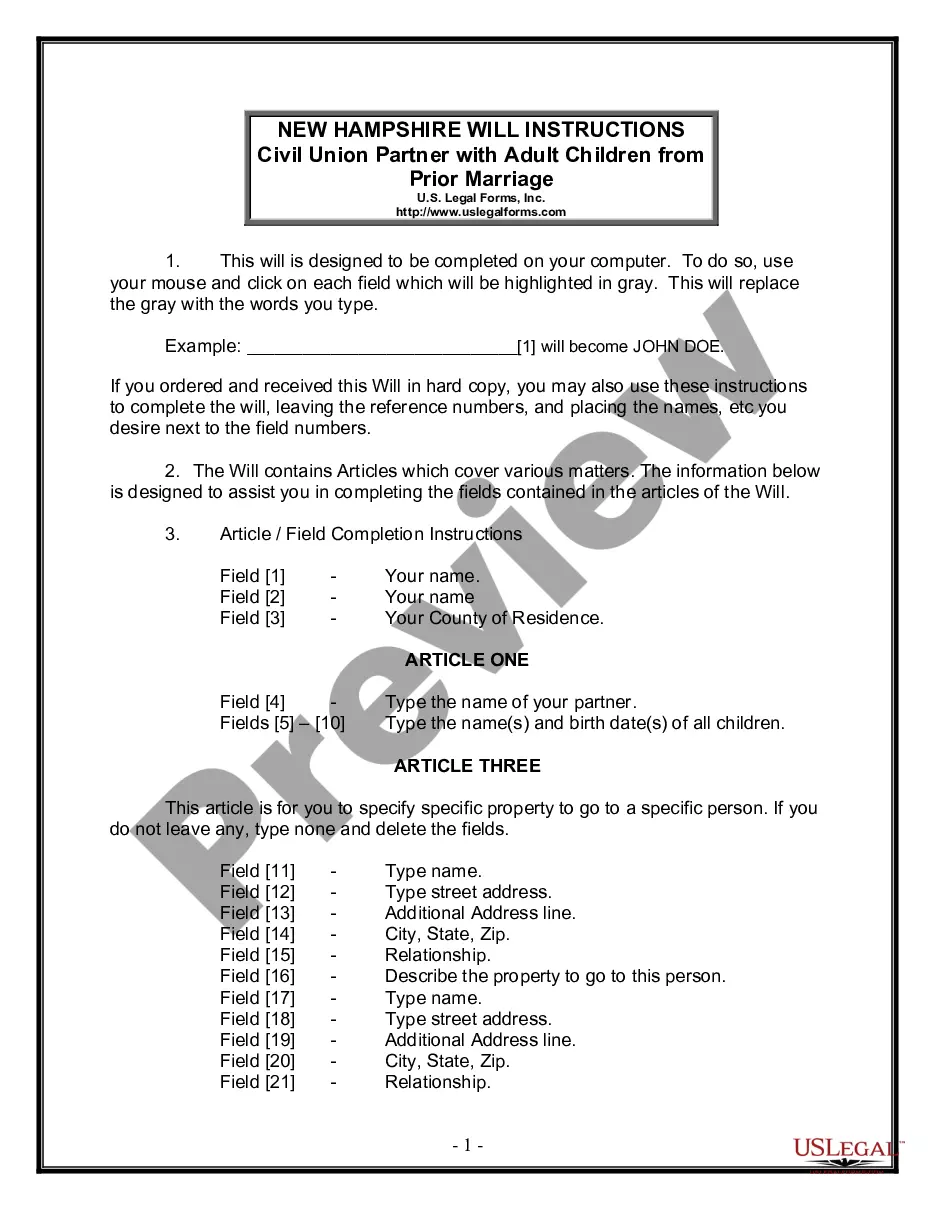
- Details of your civil union partner and adult children from a prior marriage.
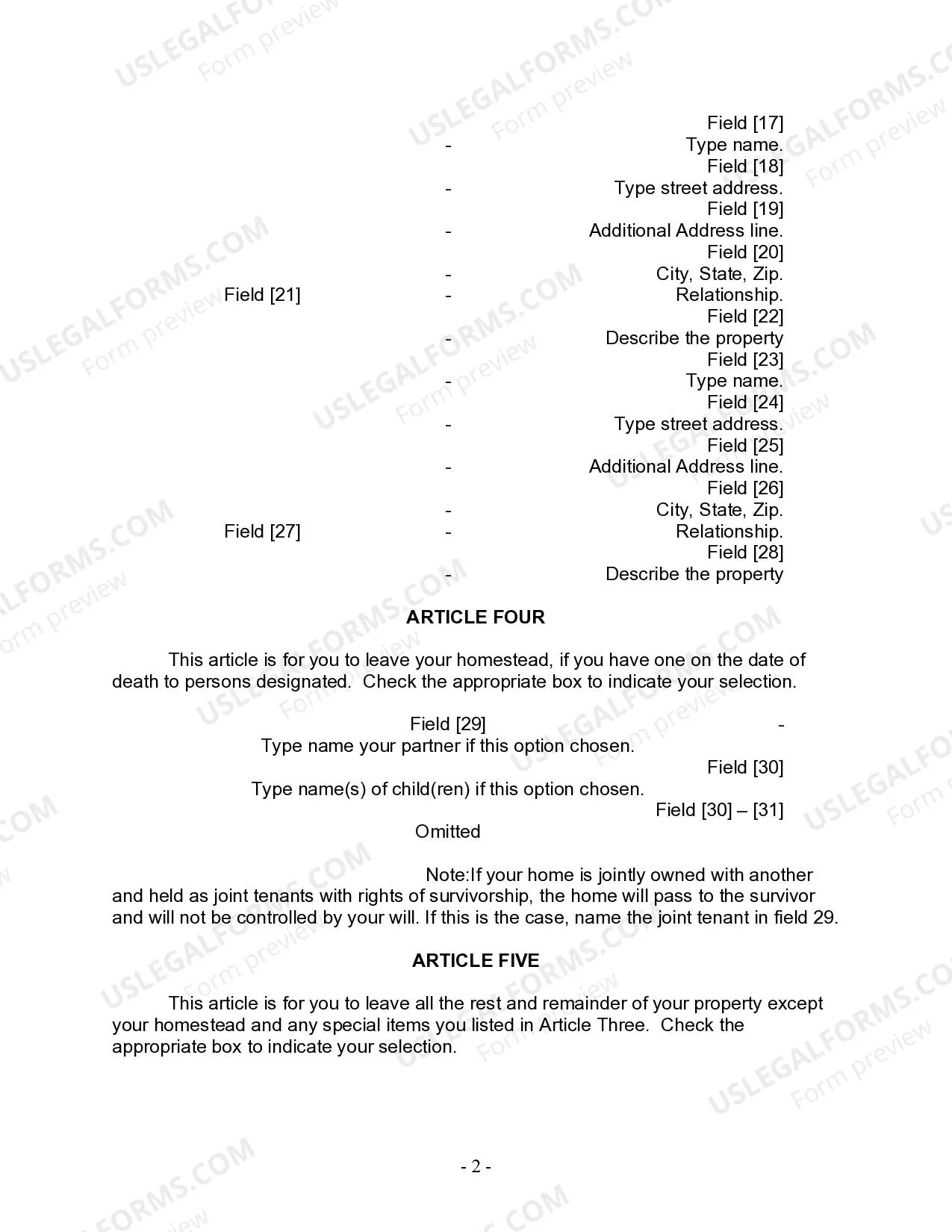
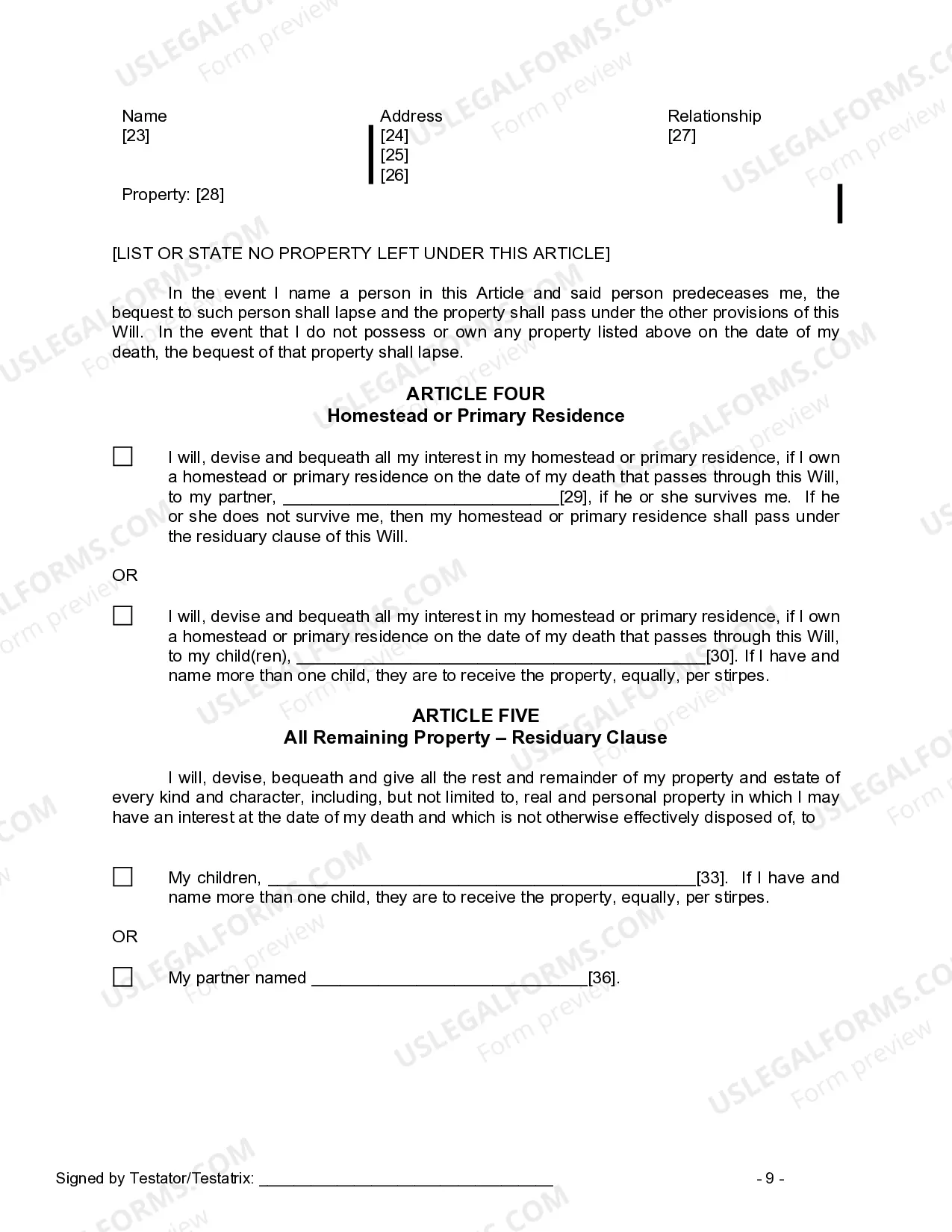
- Specific bequests of property to named individuals.
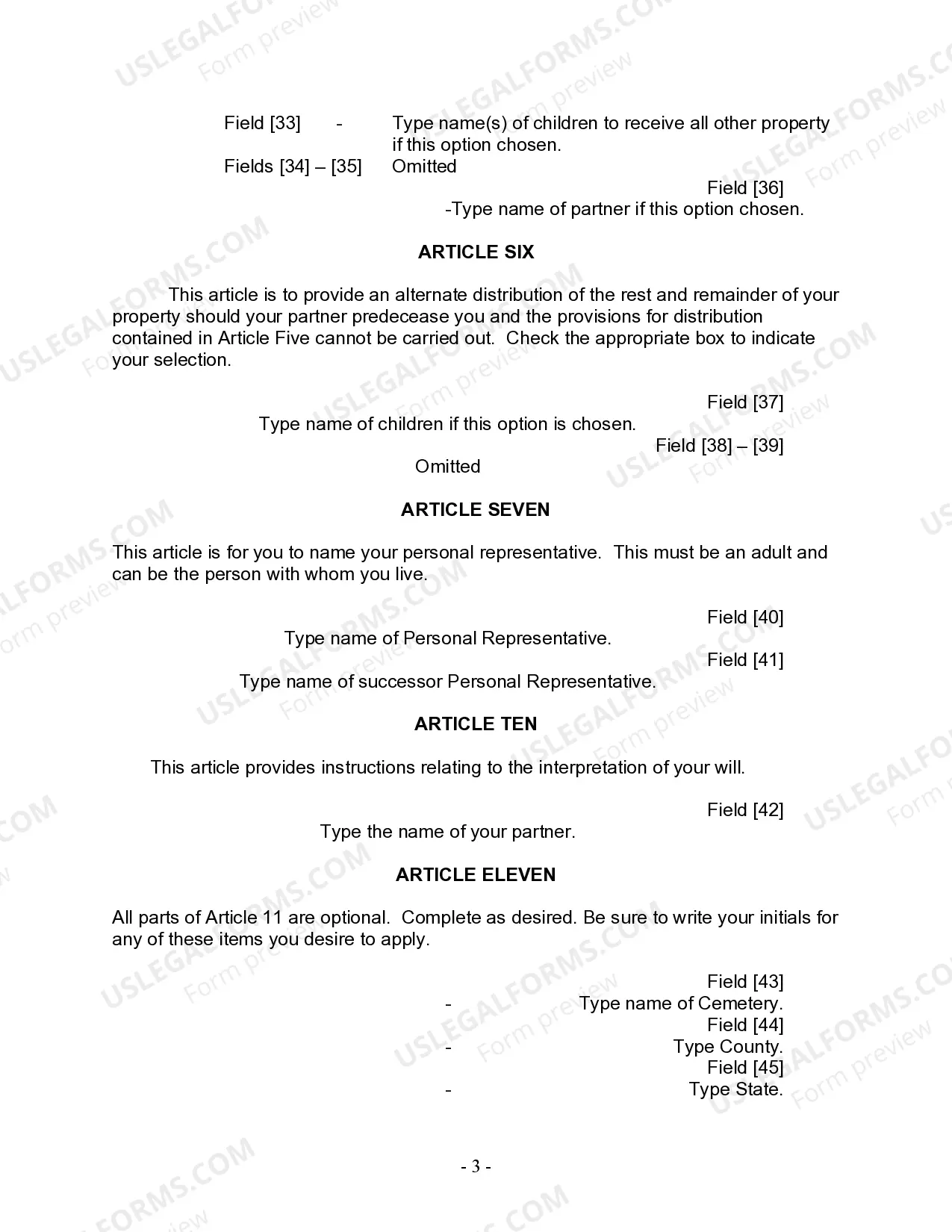
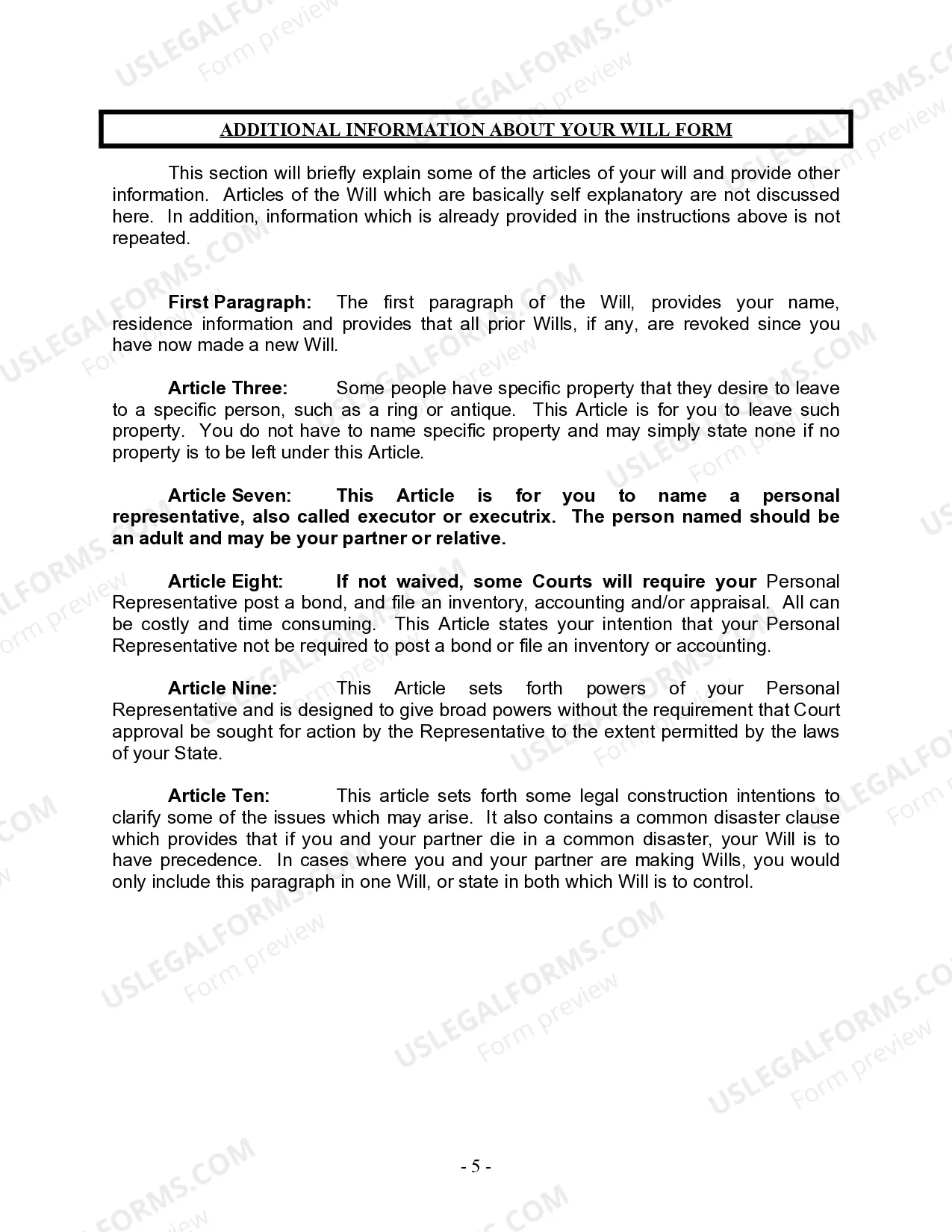
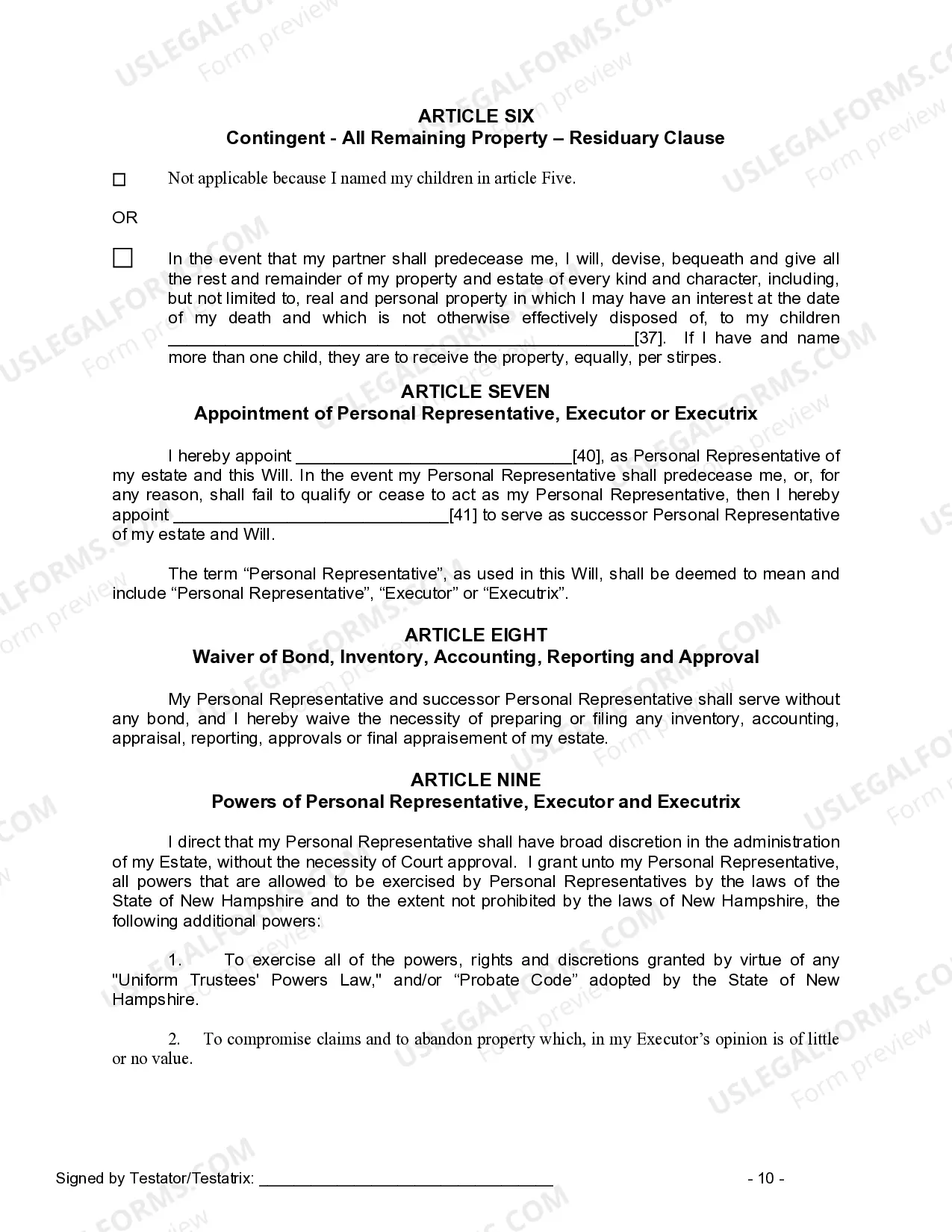
- Appointment of a personal representative to handle your estate.
- Provisions regarding your homestead or primary residence.
- Alternate distributions if your civil union partner predeceases you.





Common use cases
This form is essential when you wish to create a legally binding document that specifies how your assets will be distributed, particularly if you are in a civil union and have adult children from a prior marriage. Use this will to ensure that your wishes are honored and that both your partner and children are adequately provided for after your passing.
Who this form is for
- Individuals in a civil union seeking to establish a clear estate plan.
- People with adult children from a prior marriage who want to include them in their estate planning.
- Anyone wanting to ensure their partner and children are recognized in their will.
- Individuals who want to prevent disputes among heirs after their death.
Steps to complete this form
- Enter your name and county of residence at the beginning of the document.
- Provide the names and birth dates of your civil union partner and children from prior marriage.
- Specify any particular property you want to bequeath, including addresses and descriptions.
- Designate your personal representative and provide their information.
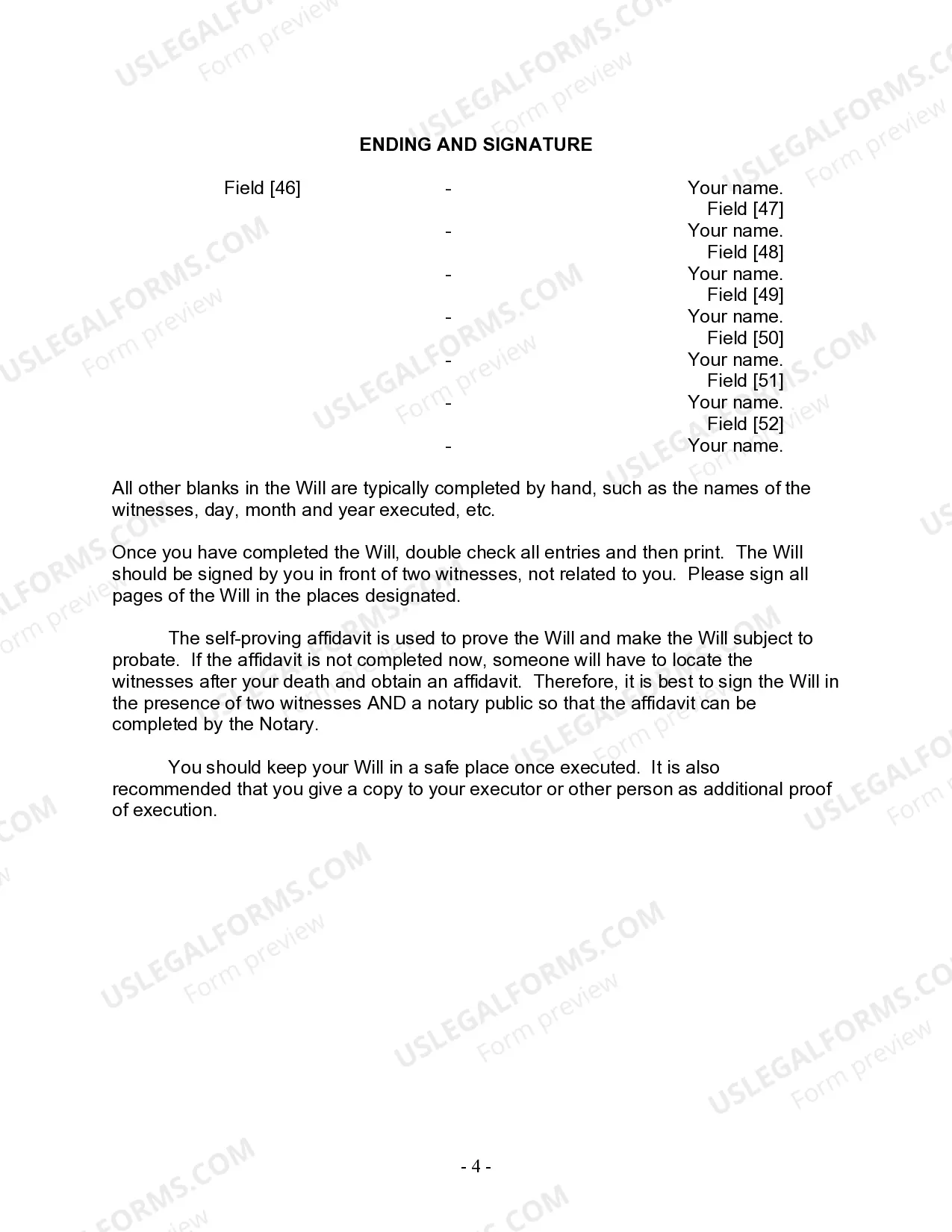
- Sign the will in the presence of two witnesses and a notary public if required.
Notarization requirements for this form
Yes, this form must be notarized to be legally valid in your state. When you sign the will, you should do so in the presence of a notary public, which can help ensure that the will is accepted without contestation during probate.
Get your form ready online
Our built-in tools help you complete, sign, share, and store your documents in one place.
Make edits, fill in missing information, and update formatting in US Legal Forms—just like you would in MS Word.
Download a copy, print it, send it by email, or mail it via USPS—whatever works best for your next step.
Sign and collect signatures with our SignNow integration. Send to multiple recipients, set reminders, and more. Go Premium to unlock E-Sign.
If this form requires notarization, complete it online through a secure video call—no need to meet a notary in person or wait for an appointment.
We protect your documents and personal data by following strict security and privacy standards.

Make edits, fill in missing information, and update formatting in US Legal Forms—just like you would in MS Word.

Download a copy, print it, send it by email, or mail it via USPS—whatever works best for your next step.

Sign and collect signatures with our SignNow integration. Send to multiple recipients, set reminders, and more. Go Premium to unlock E-Sign.

If this form requires notarization, complete it online through a secure video call—no need to meet a notary in person or wait for an appointment.

We protect your documents and personal data by following strict security and privacy standards.
Typical mistakes to avoid
- Not including all relevant parties, such as previous children or additional beneficiaries.
- Failing to sign the will in front of the necessary witnesses.
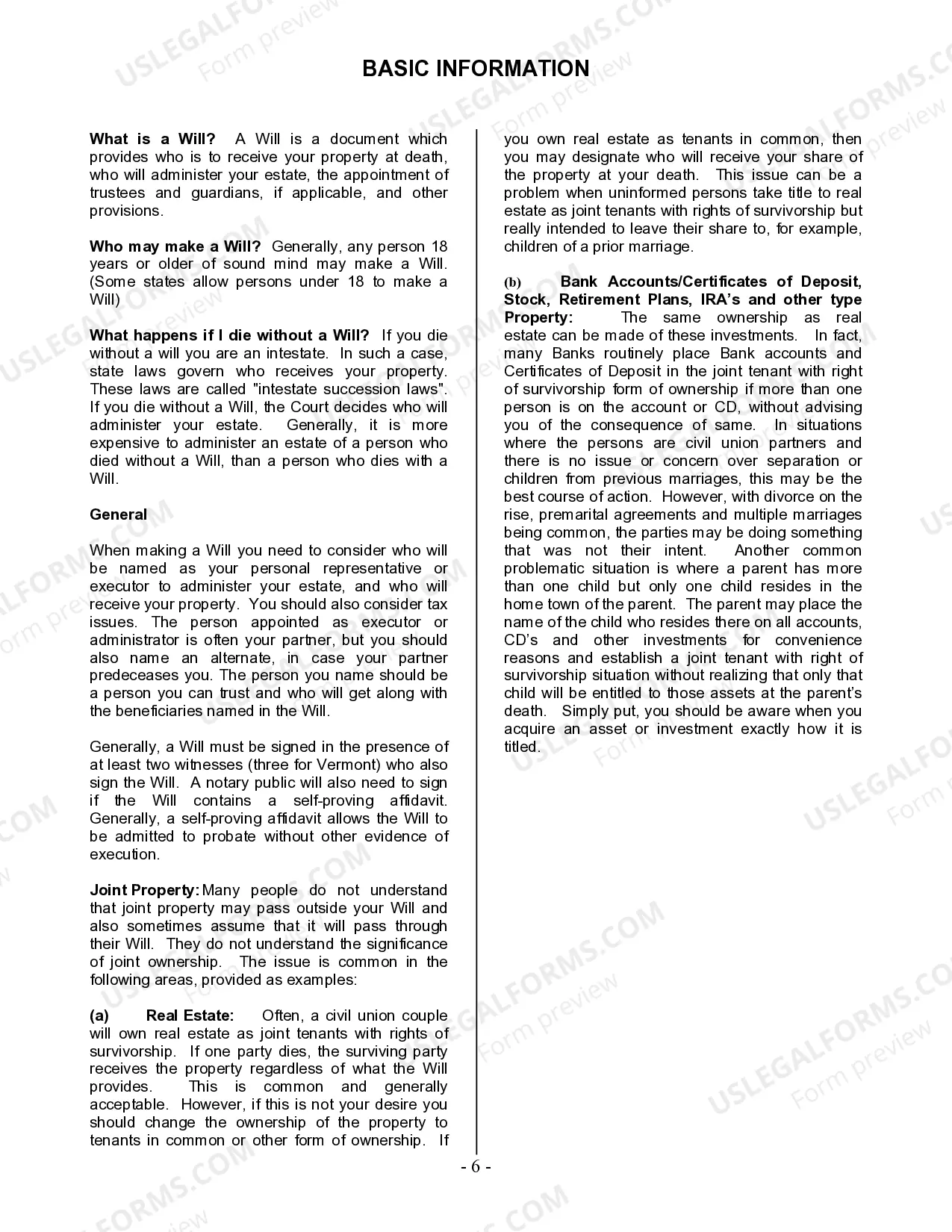
- Neglecting to address jointly owned property, which may pass outside the will.
- Overlooking the need for a self-proving affidavit if required by state law.
Benefits of completing this form online
- Convenience of filling out the form digitally from anywhere.
- Immediate access to the legal terms and instructions for completing your will.
- Editability to ensure all your details are accurately captured before printing.
- Access to legal templates drafted by licensed attorneys, ensuring compliance with legal standards.
Main things to remember
- A Last Will and Testament is essential for individuals in civil unions with adult children from previous marriages.
- The form addresses critical decisions regarding asset distribution and personal representative appointments.
- Legal compliance with state laws is vital for the validity of your Will.
- Using an online form service can simplify the process significantly while ensuring that legal standards are met.
Looking for another form?
Form popularity
FAQ
Bank accounts. Brokerage or investment accounts. Retirement accounts and pension plans. A life insurance policy.
Create the initial document. Start by titling the document Last Will and Testament" and including your full legal name and address. Designate an executor. Appoint a guardian. Name the beneficiaries. Designate the assets. Ask witnesses to sign your will. Store your will in a safe place.
You can either download a template (many are free) and write your Will at your own pace offline using your word processor, or tell us your wishes in our online questionnaire and let us write it for you.
Value your estate. Get an idea of what your estate will be worth by drawing up a list of your assets and debts. Decide how you want to divide your estate. You may decide to leave a donation to a charity. Choose your executors. Write your will. Sign your will.
Include personal identifying information. Include a statement about your age and mental status. Designate an executor. Decide who will take care of your children. Choose your beneficiaries. List your funeral details. Sign and date your Last Will and Testament.
It does not matter whether the will was prepared online or by an attorney, so long as it is valid. In order for a will to be valid, it must meet the requirements of the state where the testator lives.
In most situations, a will template is an easy and inexpensive way to make sure your wishes are known and carried out. Most people can get everything they need by using a will template, with little cost or hassle.
Contrary to popular belief, you do not need to have an attorney draft a will for you. Anyone can write this document on their own, and as long as it meets all of the legal requirements of the state, courts will recognize one you wrote yourself.