California Quitclaim Deed - Husband and Wife to Trust
What this document covers
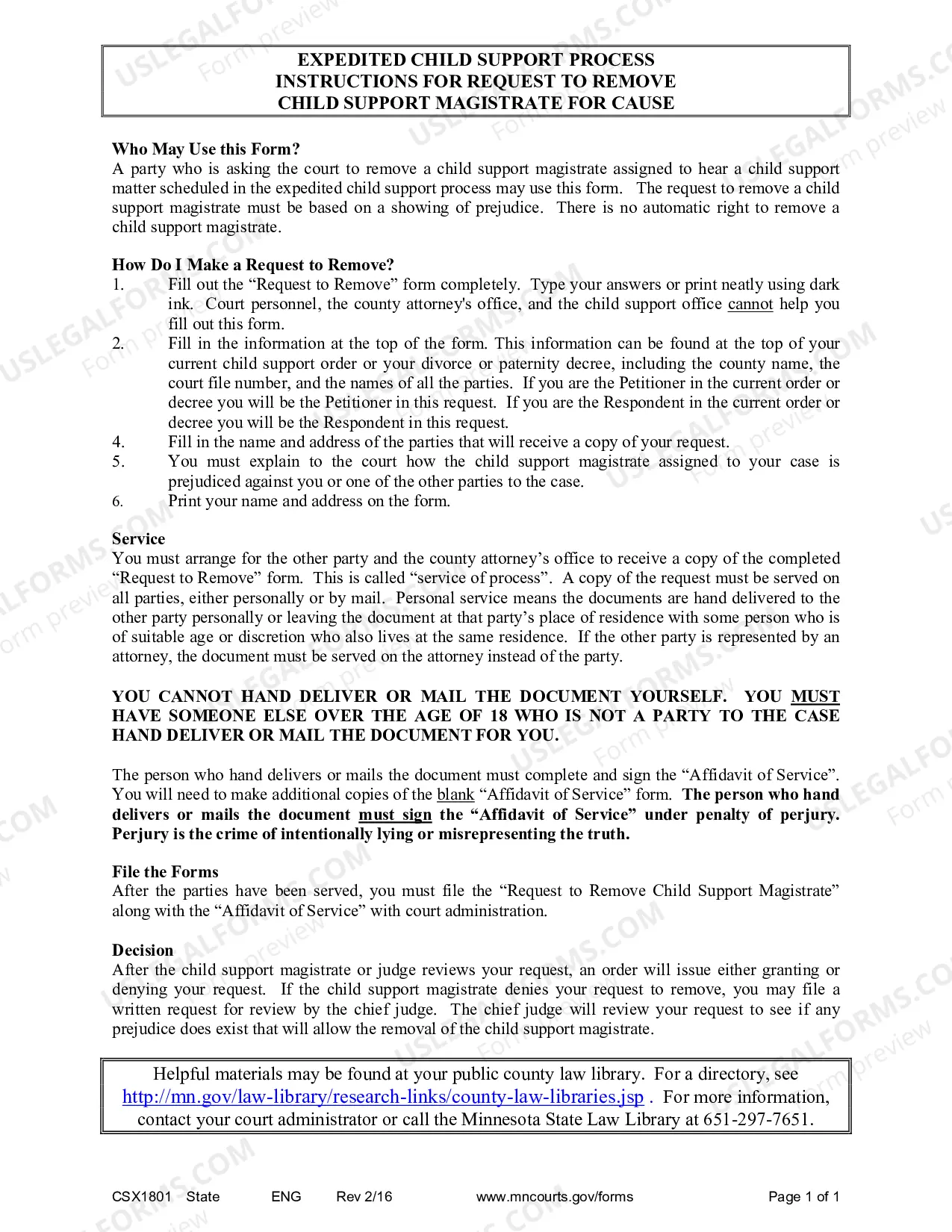
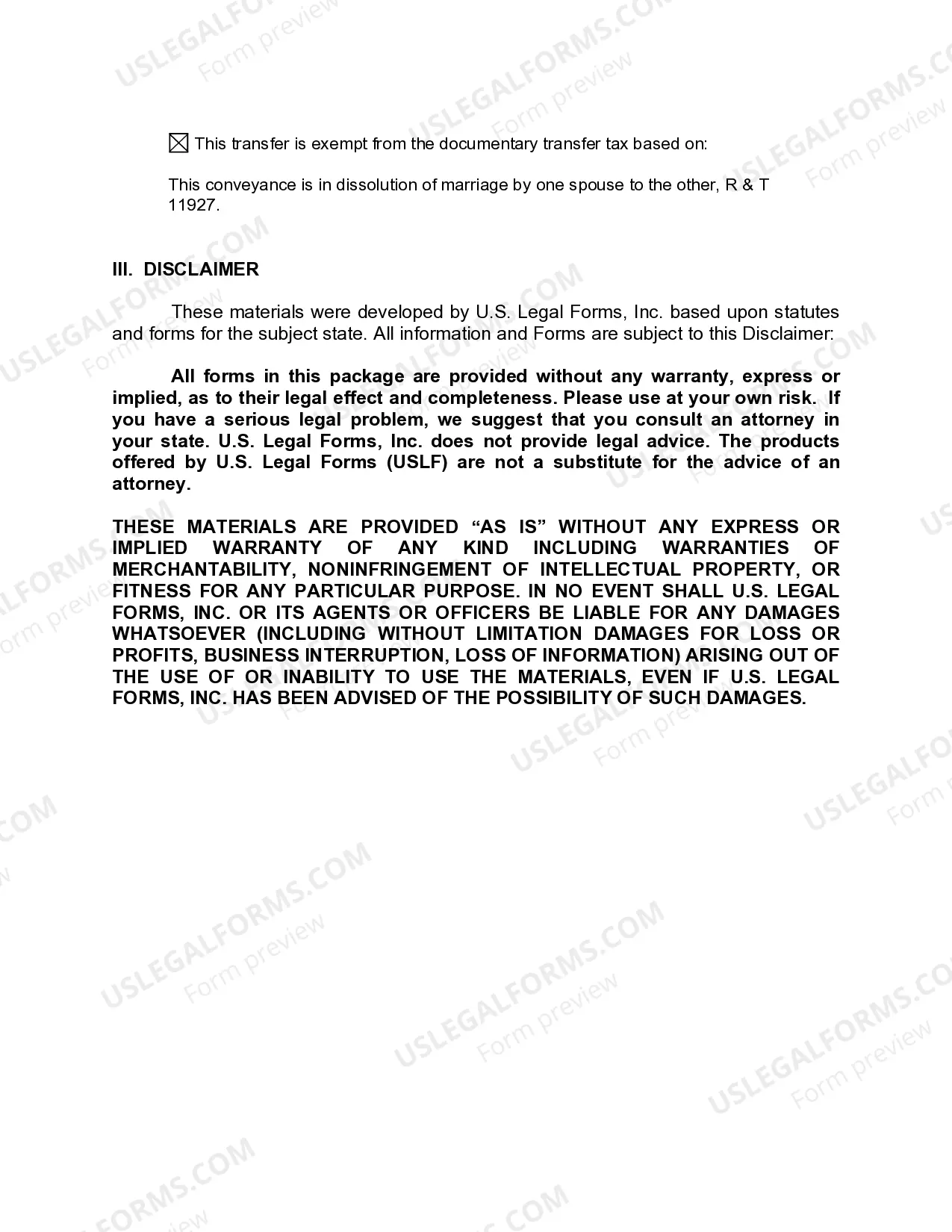
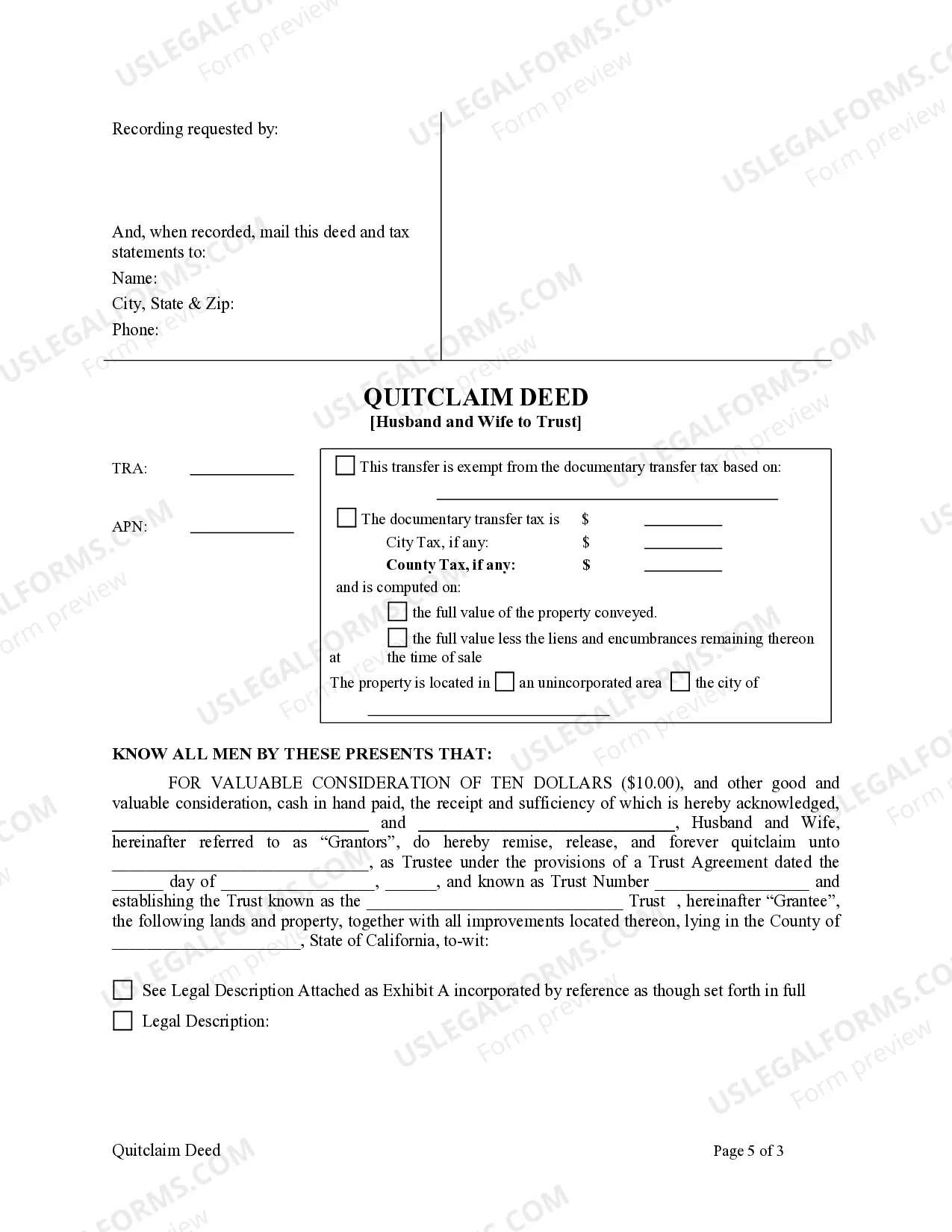
This Quitclaim Deed is a legal document that allows a husband and wife to transfer ownership of property to a trust. Unlike warranty deeds, a quitclaim deed does not guarantee that the grantors hold valid title to the property or that the property is free of claims. This form serves to convey the described property from the grantors directly to the trust, complying with all necessary state statutes.
Main sections of this form
- Names and addresses of the husband and wife (grantors)
- Name and details of the trust (grantee)
- Description of the property being transferred
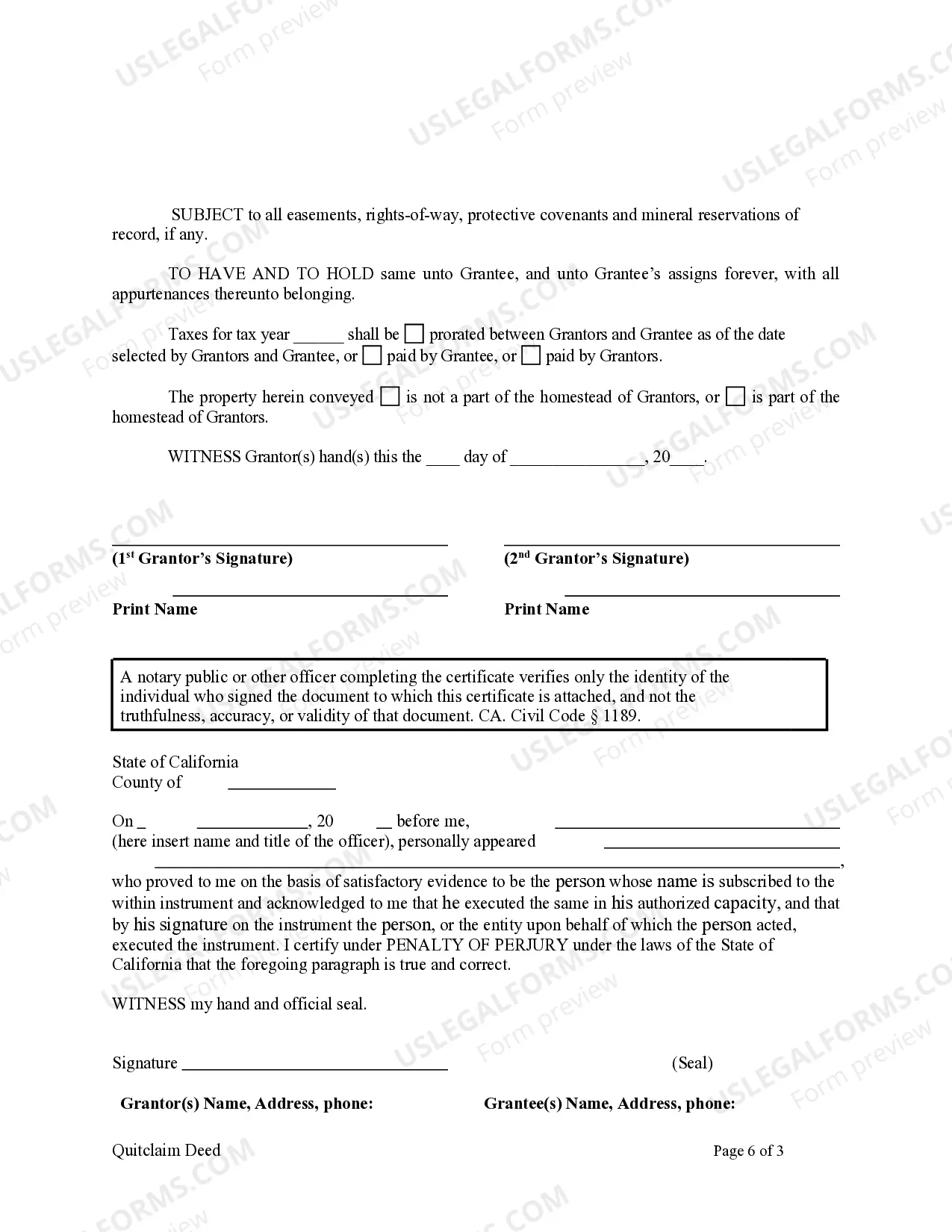
- Statement regarding the possession of the property and rights of ownership
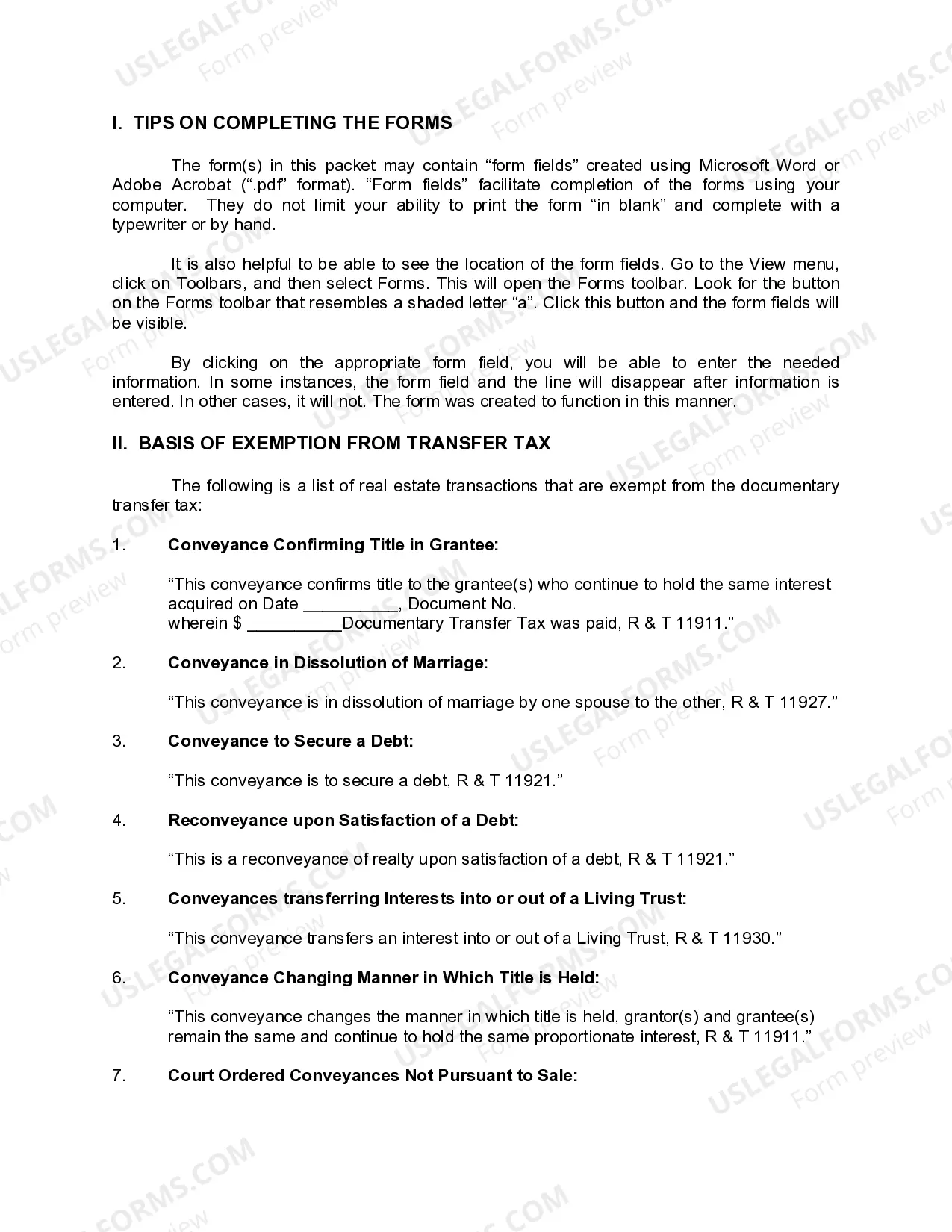
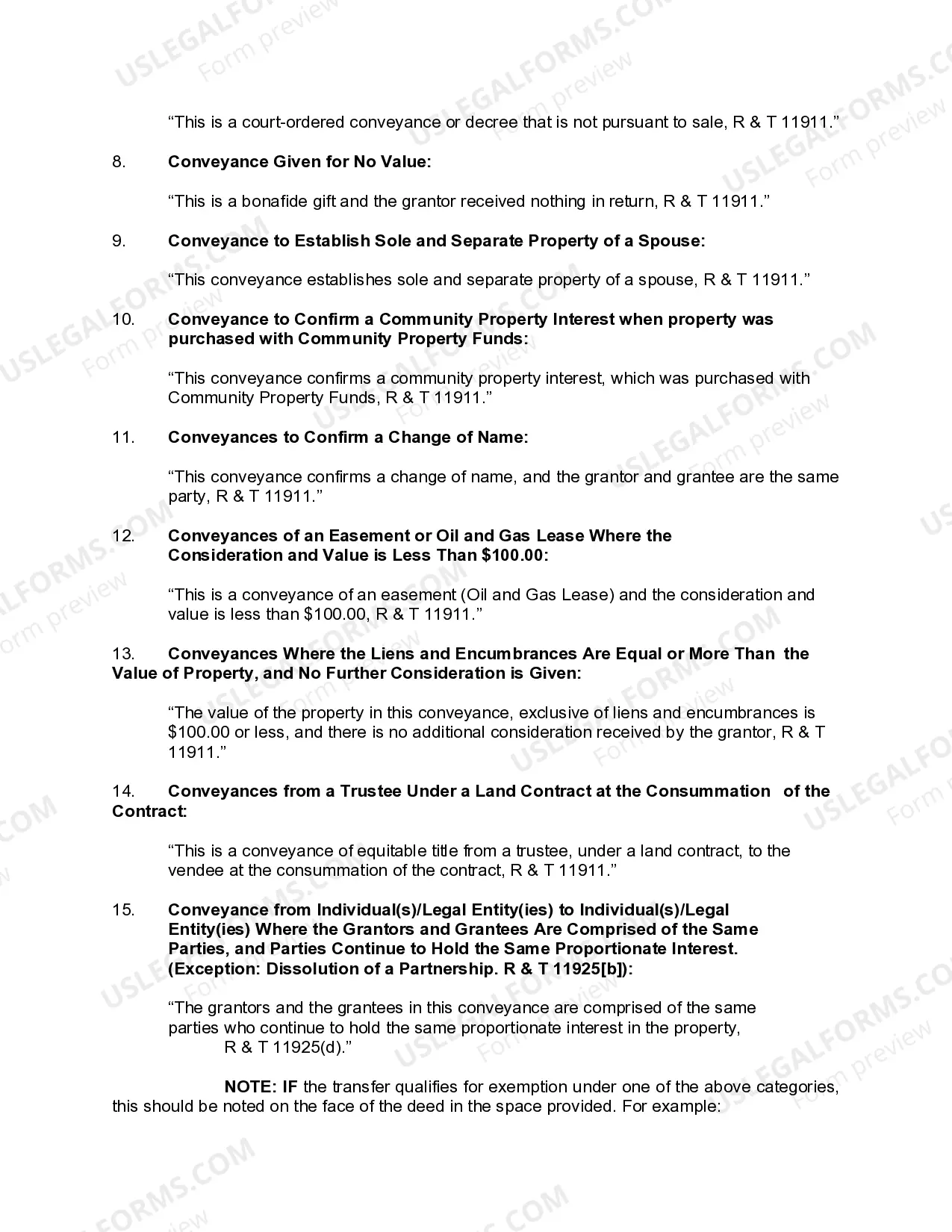
- Details regarding the documentary transfer tax exemption, if applicable
- Signatures of the grantors and witnesses, if required







When to use this document
This form should be used when a married couple wishes to transfer real estate to a trust for estate planning purposes or any other reason. It can be beneficial in contexts such as simplifying the transfer of assets upon the couple's passing, protecting assets from creditors, or when managing property as part of a trust arrangement.
Who should use this form
- Married couples looking to transfer property into a trust
- Individuals engaged in estate planning
- Spouses involved in property transfers as part of divorce settlements
- Couples seeking to clarify ownership interests in the context of property law
Steps to complete this form
- Identify the names and addresses of both grantors (husband and wife).
- Provide the name and details of the trust to which the property is being transferred.
- Clearly describe the property, including its location and legal description.
- Indicate whether the property is part of the grantors' homestead.
- Ensure all grantors sign the document in the presence of a witness, if required.
- Confirm any applicable exemptions from the documentary transfer tax on the deed.
Does this form need to be notarized?
This form does not typically require notarization unless specified by local law. However, having the deed notarized can add an extra layer of legal assurance to the transfer of property, confirming the identities of the grantors during execution.
Get your form ready online
Our built-in tools help you complete, sign, share, and store your documents in one place.
Make edits, fill in missing information, and update formatting in US Legal Forms—just like you would in MS Word.
Download a copy, print it, send it by email, or mail it via USPS—whatever works best for your next step.
Sign and collect signatures with our SignNow integration. Send to multiple recipients, set reminders, and more. Go Premium to unlock E-Sign.
If this form requires notarization, complete it online through a secure video call—no need to meet a notary in person or wait for an appointment.
We protect your documents and personal data by following strict security and privacy standards.

Make edits, fill in missing information, and update formatting in US Legal Forms—just like you would in MS Word.

Download a copy, print it, send it by email, or mail it via USPS—whatever works best for your next step.

Sign and collect signatures with our SignNow integration. Send to multiple recipients, set reminders, and more. Go Premium to unlock E-Sign.

If this form requires notarization, complete it online through a secure video call—no need to meet a notary in person or wait for an appointment.

We protect your documents and personal data by following strict security and privacy standards.
Typical mistakes to avoid
- Failing to accurately describe the property in question.
- Not including all necessary signatures or witness information.
- Inadvertently omitting the date of the transfer.
- Assuming that this deed provides the same assurances as a warranty deed.
Why complete this form online
- Convenient access to legally reviewed templates without the need for a lawyer.
- Immediate download options that save time compared to traditional legal services.
- Editability allows users to customize the deed to their specific needs.
- Secure process, ensuring the safety of personal information when completing the form.
Looking for another form?
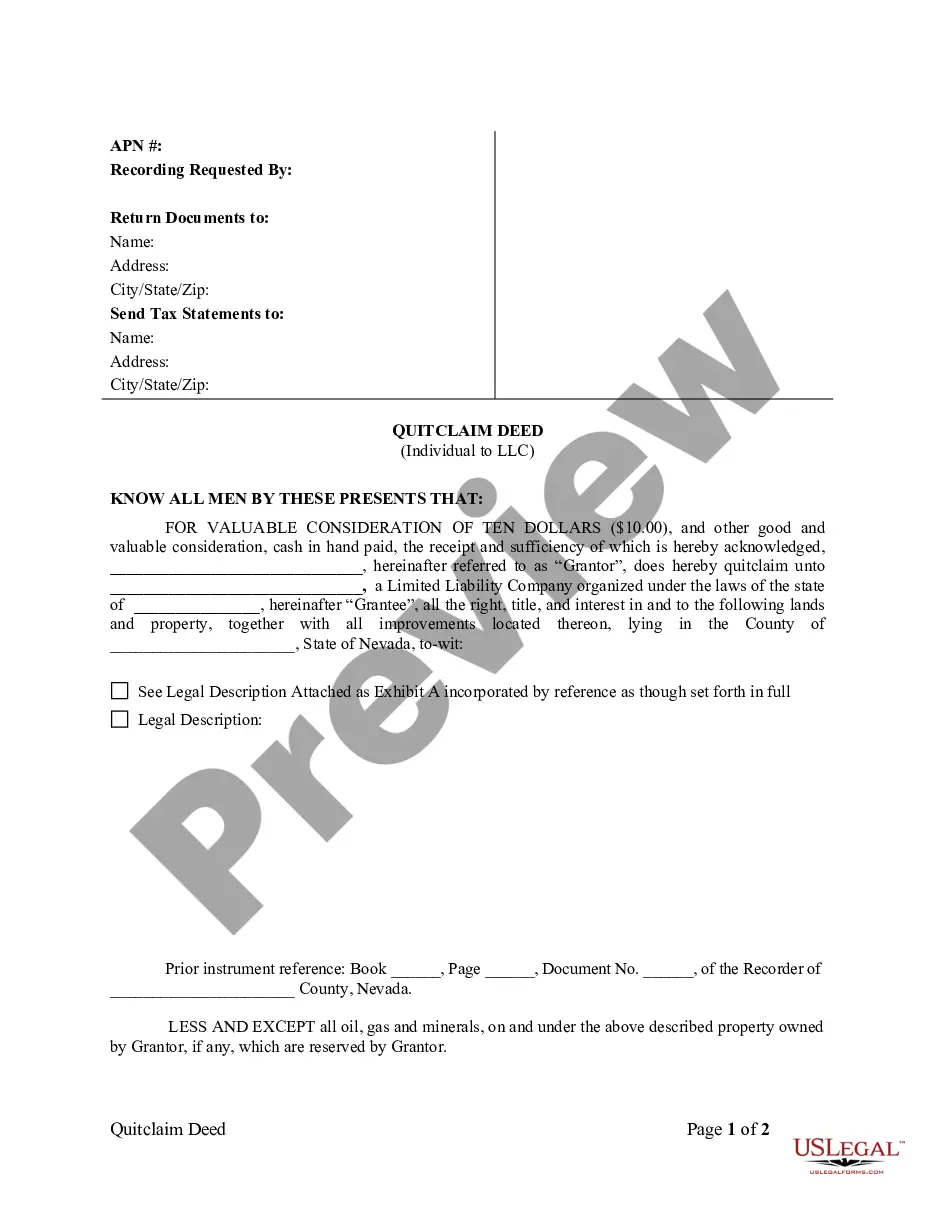
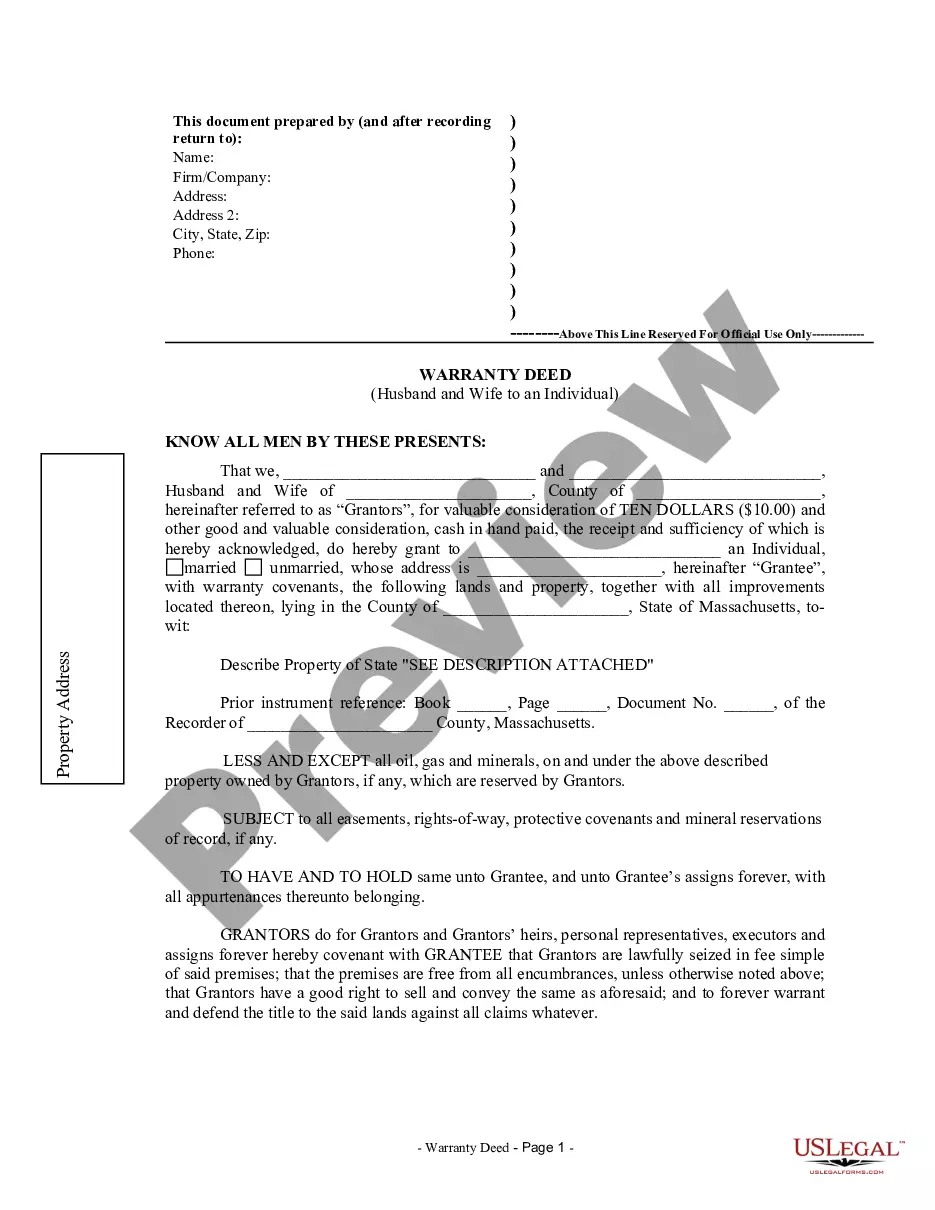
Form popularity
FAQ
A quitclaim deed does not inherently override a trust. If property is titled in a trust, transferring it via a quitclaim deed may not be effective without proper trust management procedures. Therefore, it is crucial to ensure that the trust's terms reflect ownership appropriately. For assistance with legal documentation, US Legal Forms can be a helpful resource.
The primary beneficiaries of a quitclaim deed often include spouses and family members looking to simplify ownership transfers. This deed allows for quick and uncomplicated property transfers without the need for extensive legal procedures. It is particularly useful in situations like estate planning or when one spouse transfers property rights to another. For clarity on this process, refer to US Legal Forms.
If your name is not on a property deed in California, but you are married, you still may have rights to the property due to community property laws. California views property acquired during marriage as jointly owned, even if only one spouse's name appears on the deed. This legal framework protects your interest in the property. To ensure your rights are upheld, consult US Legal Forms for comprehensive guidance.
Yes, a quitclaim deed in California transfers ownership of the property from one party to another. However, it is vital to note that the deed only conveys whatever interest the grantor has at the time of the transfer. If there are any issues related to the title, those problems remain regardless of the deed. For a straightforward process, utilizing US Legal Forms is advisable.
A quitclaim deed between husband and wife is a legal document used to transfer ownership of property between these two parties. It allows one spouse to transfer their interest in a property to the other, effectively simplifying the transfer without affecting ownership rights. This type of deed is commonly used in divorce or estate planning situations. Understanding its implications can be complex, so refer to US Legal Forms for a clearer understanding.
In California, a spouse generally retains certain rights to property even after signing a quitclaim deed. A quitclaim deed transfers ownership but does not eliminate rights that stem from marriage, such as community property rights. Therefore, it is essential to understand that signing this deed does not necessarily mean a spouse gives up their claim to the property. For personalized guidance, consider using US Legal Forms to navigate these complex issues.
Transferring a deed to a living trust in California requires executing a California Quitclaim Deed - Husband and Wife to Trust. Begin by drafting the quitclaim deed that includes the names of the current owners and the trust. After signing the deed, file it with the county recorder’s office to make the transfer official. For a streamlined experience, consider using US Legal Forms to obtain the necessary legal forms and ensure proper compliance.
To place your property in a trust in California, start by drafting the trust document, clearly naming the trust and its beneficiaries. Next, execute a California Quitclaim Deed - Husband and Wife to Trust to transfer the property from your name into the trust's name. This deed must then be recorded with the county recorder's office to finalize the transfer. You can rely on US Legal Forms for templates and guidance tailored to fit California real estate regulations.
While there are benefits, using a California Quitclaim Deed - Husband and Wife to Trust can also have disadvantages. The main concern is the loss of control; once property is placed in a trust, the original owners may have limited access to it. There may also be costs associated with setting up and maintaining the trust, along with potential tax implications. It is essential to weigh these factors carefully to determine if a trust is the right option for you.
Yes, a California Quitclaim Deed - Husband and Wife to Trust can be used to transfer property from a trust to another individual or entity. This process involves executing a quitclaim deed that reflects the trust's name as the current property owner. It is crucial to ensure that all parties involved understand the implications of the transfer. Utilizing resources from US Legal Forms can simplify this process and ensure compliance with California laws.