New Hampshire Seller's Information for Appraiser provided to Buyer
What is this form?
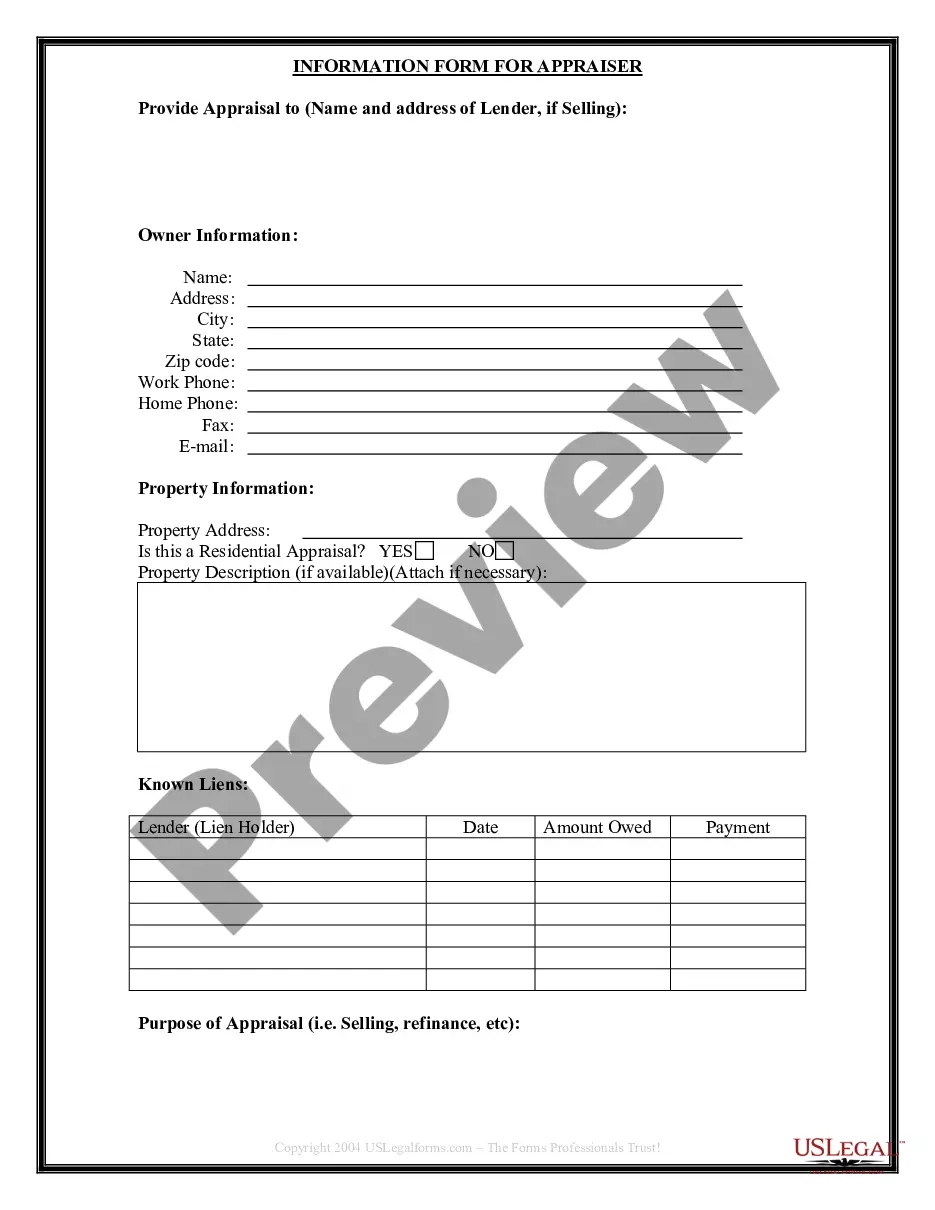
The Seller's Information for Appraiser provided to Buyer form is a crucial document in the real estate buying process. It serves to collect and convey necessary information from the seller to the buyer, enabling the appraiser to conduct a professional appraisal of the property. This form is specifically designed for New Hampshire transactions, ensuring that relevant details are provided efficiently and accurately, distinguishing it from other real estate forms.
Main sections of this form
- Seller's contact information
- Property details, including address and type
- Disclosure of any known issues with the property
- Details about recent improvements or renovations
- Signature line for the seller to certify the information

Situations where this form applies
This form should be used when a buyer is preparing to purchase property in New Hampshire and an appraisal is required. It is typically utilized after an offer has been accepted but before the closing process begins. By providing the appraiser with detailed seller information ahead of time, the buyer can facilitate a smoother appraisal process, potentially avoiding delays in the transaction.
Who this form is for
This form is intended for use by:
- Home sellers in New Hampshire
- Buyers who need an appraisal on a property
- Real estate agents assisting buyers and sellers
- Appraisers requiring seller information for their assessments
Instructions for completing this form
- Gather all relevant property details, including the address and type of property.
- Fill in your complete contact information as the seller.
- Provide information on any known issues or disclosures required by law.
- List any significant improvements or renovations made to the property.
- Review the form for accuracy and sign to certify the information provided.
Does this form need to be notarized?
This form does not typically require notarization unless specified by local law. However, it is essential to ensure that all signatures are authentic to avoid complications during the appraisal and transaction processes.
Get your form ready online
Our built-in tools help you complete, sign, share, and store your documents in one place.
Make edits, fill in missing information, and update formatting in US Legal Forms—just like you would in MS Word.
Download a copy, print it, send it by email, or mail it via USPS—whatever works best for your next step.
Sign and collect signatures with our SignNow integration. Send to multiple recipients, set reminders, and more. Go Premium to unlock E-Sign.
If this form requires notarization, complete it online through a secure video call—no need to meet a notary in person or wait for an appointment.
We protect your documents and personal data by following strict security and privacy standards.

Make edits, fill in missing information, and update formatting in US Legal Forms—just like you would in MS Word.

Download a copy, print it, send it by email, or mail it via USPS—whatever works best for your next step.

Sign and collect signatures with our SignNow integration. Send to multiple recipients, set reminders, and more. Go Premium to unlock E-Sign.

If this form requires notarization, complete it online through a secure video call—no need to meet a notary in person or wait for an appointment.

We protect your documents and personal data by following strict security and privacy standards.
Common mistakes
- Leaving out important property details, such as the address or type.
- Failing to disclose known issues with the property, which could delay the appraisal.
- Not including contact information or signature, making the form invalid.
Why complete this form online
- Convenient access to a professionally drafted document.
- Easy to download and edit to fit your specific needs.
- Ensures compliance with legal standards, reducing the risk of errors.
Summary of main points
- The Seller's Information for Appraiser is essential for ensuring accurate property valuations.
- Completing this form fosters transparency and trust in property transactions.
- Using this form online can simplify the process of preparing for a property appraisal.
Looking for another form?
Form popularity
FAQ
Death in the Home. Neighborhood Nuisances. Hazards. HOA Information. Repairs. Water Damage. Missing Items. Other Possible Disclosures.
While it is unethical for a REALTOR to speak to another agent's client, there is nothing wrong with a buyer and seller communicating directly. They are not held to the same ethical standards. It is completely ok for a buyer and seller to directly speak to each other. But just because you can, is it wise?
Why is it that agents are so reluctant to let buyers and sellers get together? Unlike most business deals, the sale of a home can get very personal and real estate agents are nervous about the parties dealing with each other. That's because most agents have seen what can go wrong when buyers and sellers meet directly.
Home sellers aren't entitled to copies of the appraisals mortgage lenders conduct on behalf of their borrowers. If a home seller wants a copy of an appraisal, she should consider asking for a copy from the buyer.However, a copy may come in handy if the appraisal comes in low and price negotiations must ensue.
A: An appraisal is generally considered a professional opinion of the market value of a property, not a fact. Although it's both legally and ethically necessary to disclose a material fact, the same requirement doesn't apply to an opinion.
Technically, yes, a buyer or seller can contact the other side. However, their own agent cannot suggest or recommend it and they probably prefer you not. The other agent shouldn't really talk with you, but if you made the initial contact, it would be rude of them to hang up.
A property deed is an official document used to transfer ownership from the buyer to the seller. The deed should not be confused with the house title, which refers to a home's history of ownership. During closing, the newly signed deed is collected by the county recorder and made public.
Buyer's agents are trained to gather information and use it against the seller. Agents who are REALTORS® are not allowed to talk to the seller in a manner that would be deemed unethical. 1feff However, not every agent is a member of the National Association of REALTORSA®.
As a general rule it certainly is not a good idea for a buyer and seller to talk directly with each other during negotiations.Good communications between the buyer and seller are important, and that also means that both Realtors need to be good communicators, too.