California Revocation of Postnuptial Property Agreement
What is this form?
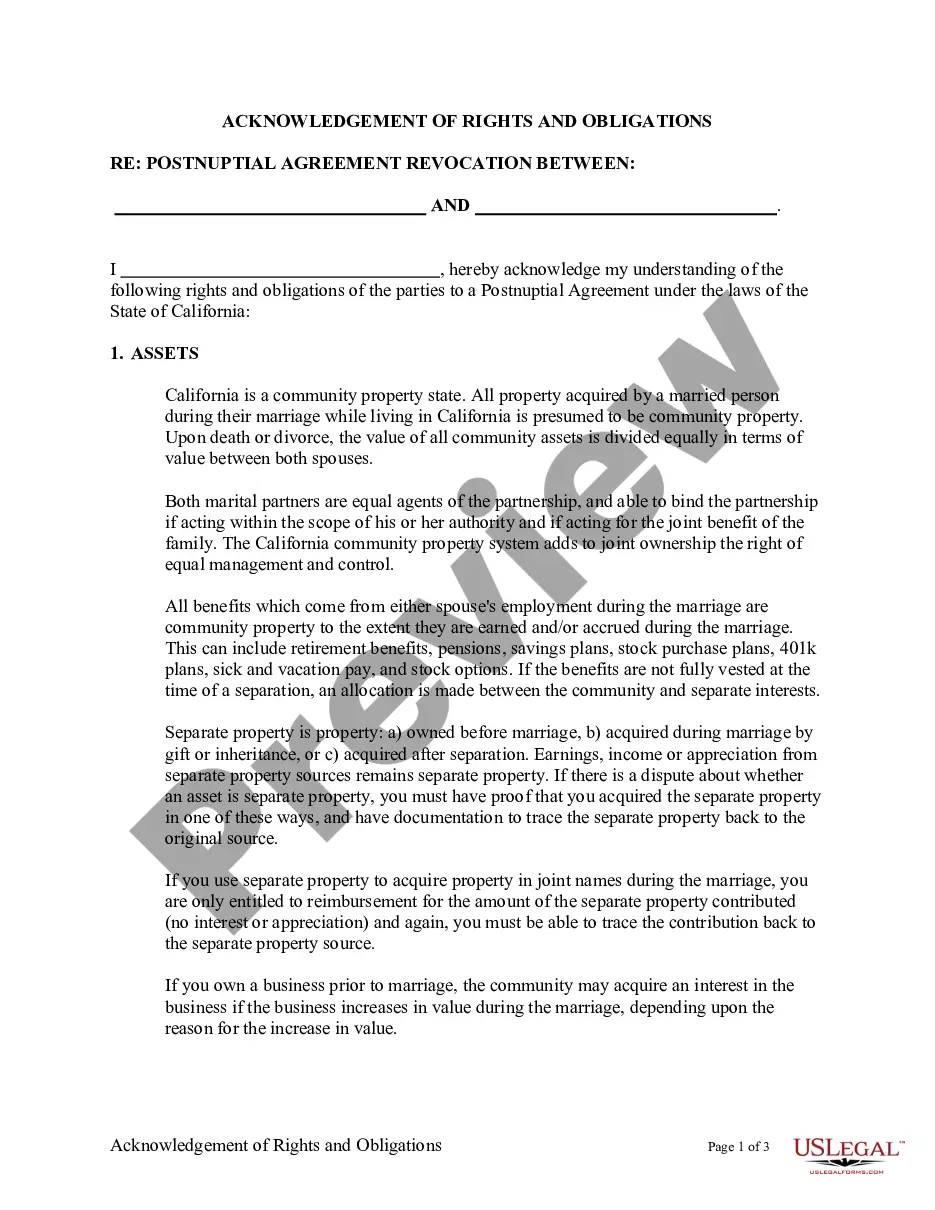
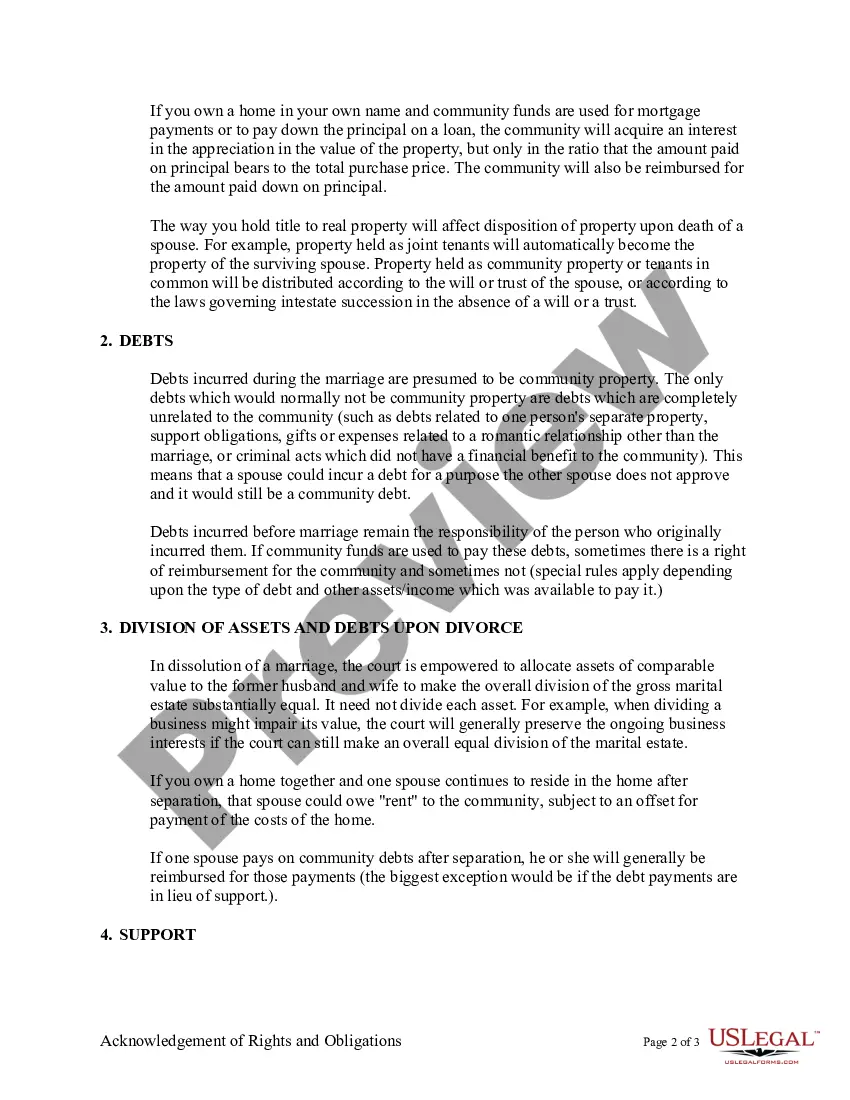
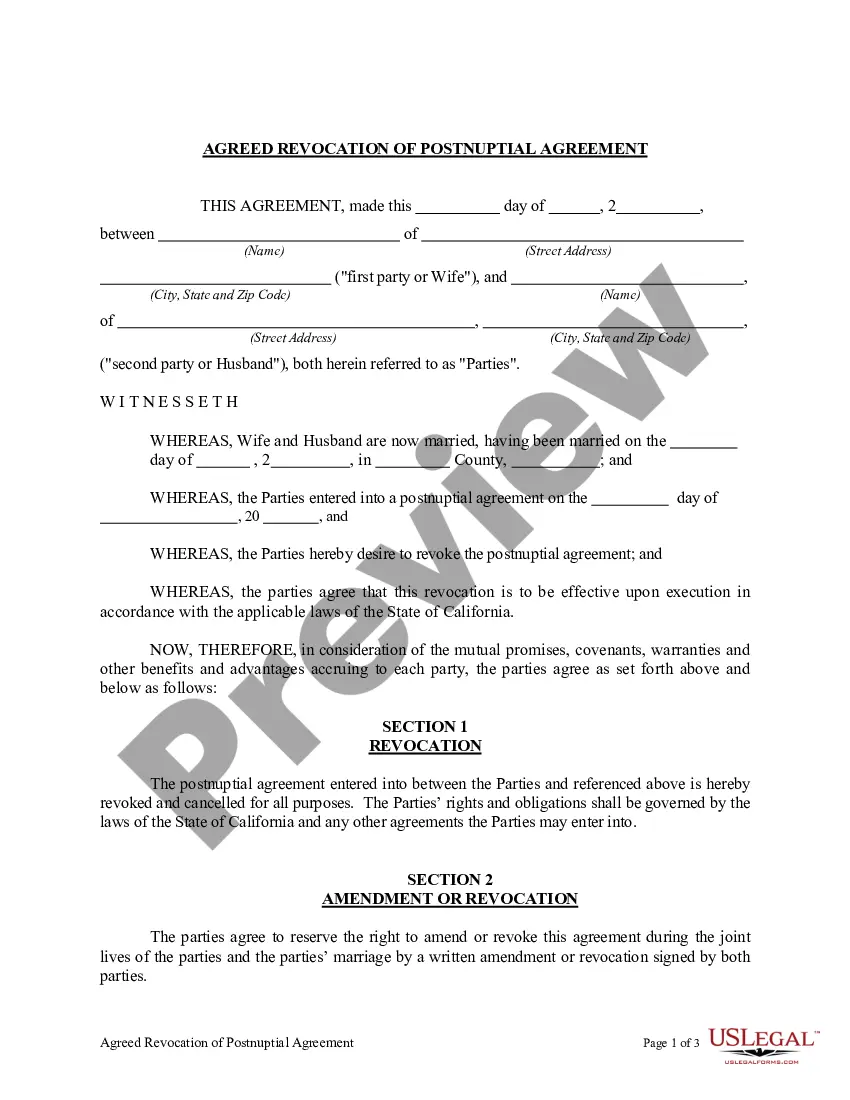
The Revocation of Postnuptial Property Agreement form is a legal document used by couples to revoke an existing postnuptial agreement. This essential form requires the signatures of both parties in the presence of a notary public. It differs from other forms, such as postnuptial agreements, as it officially cancels any previous agreements regarding property rights established after marriage.
Key parts of this document
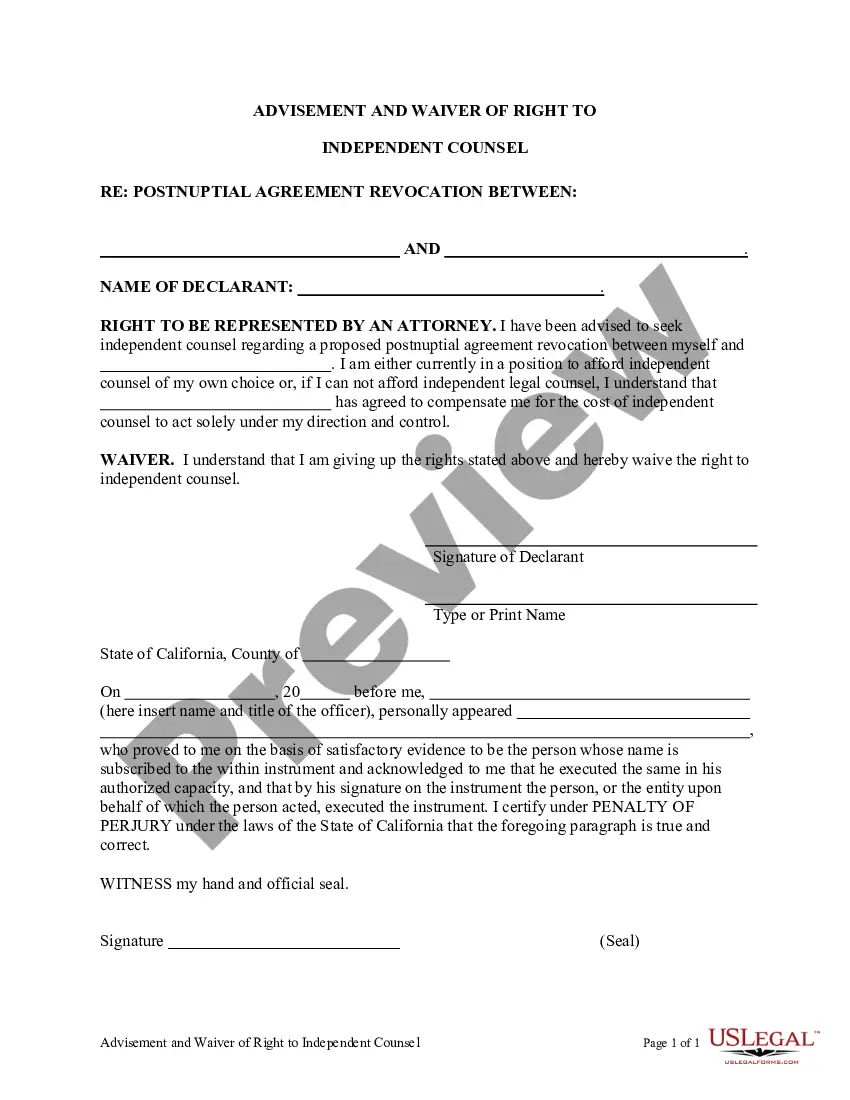
- Identification of the parties involved in the original postnuptial agreement.
- Clear statement revoking the previous postnuptial agreement.
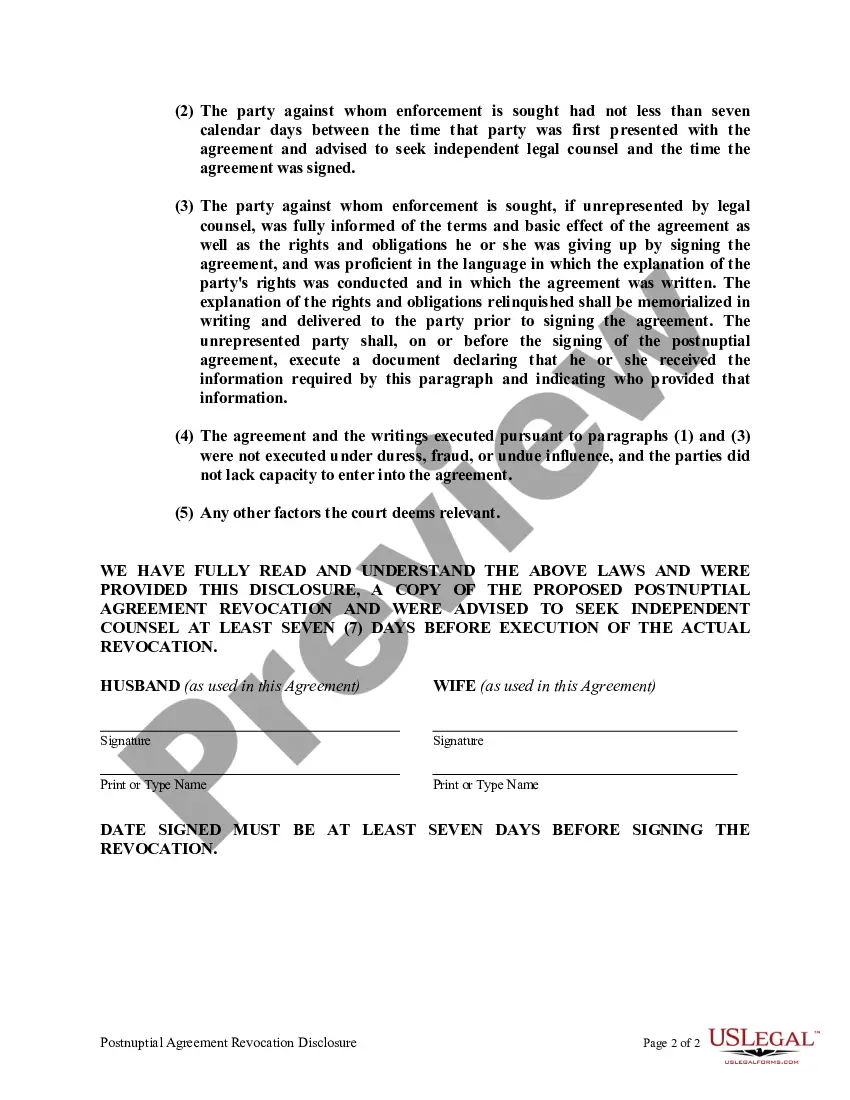
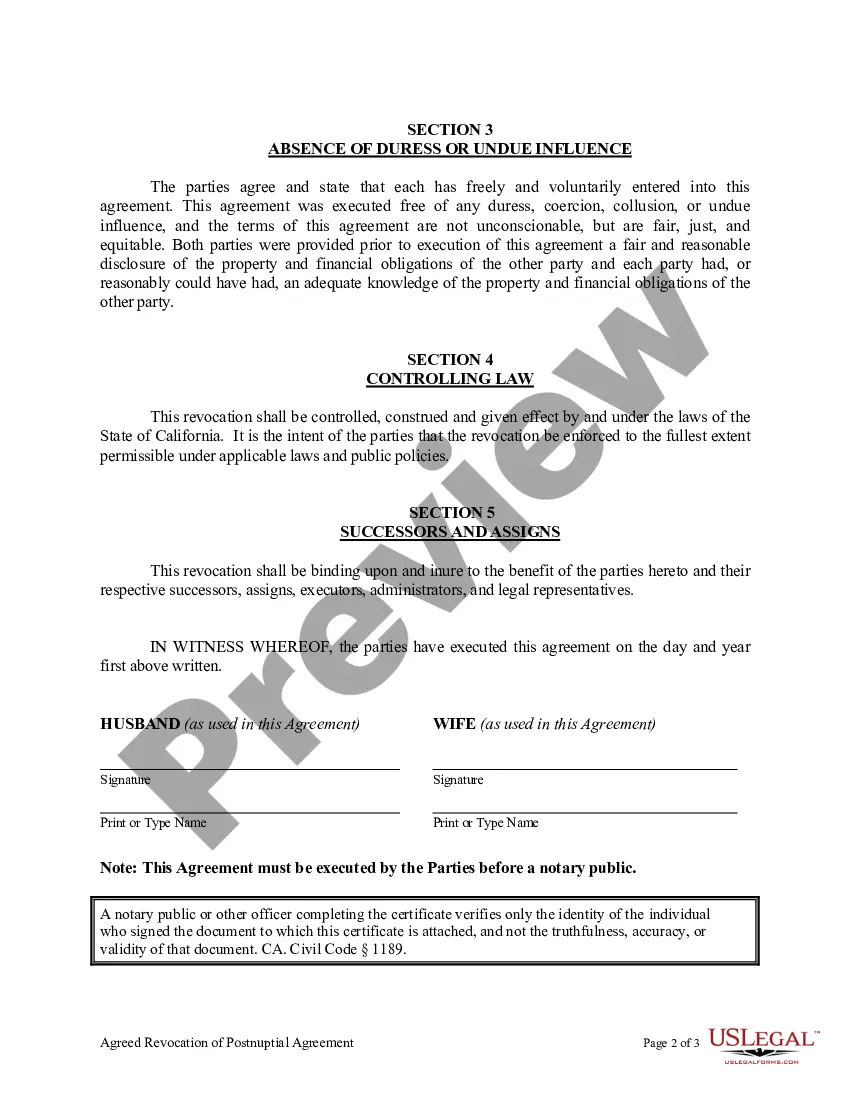
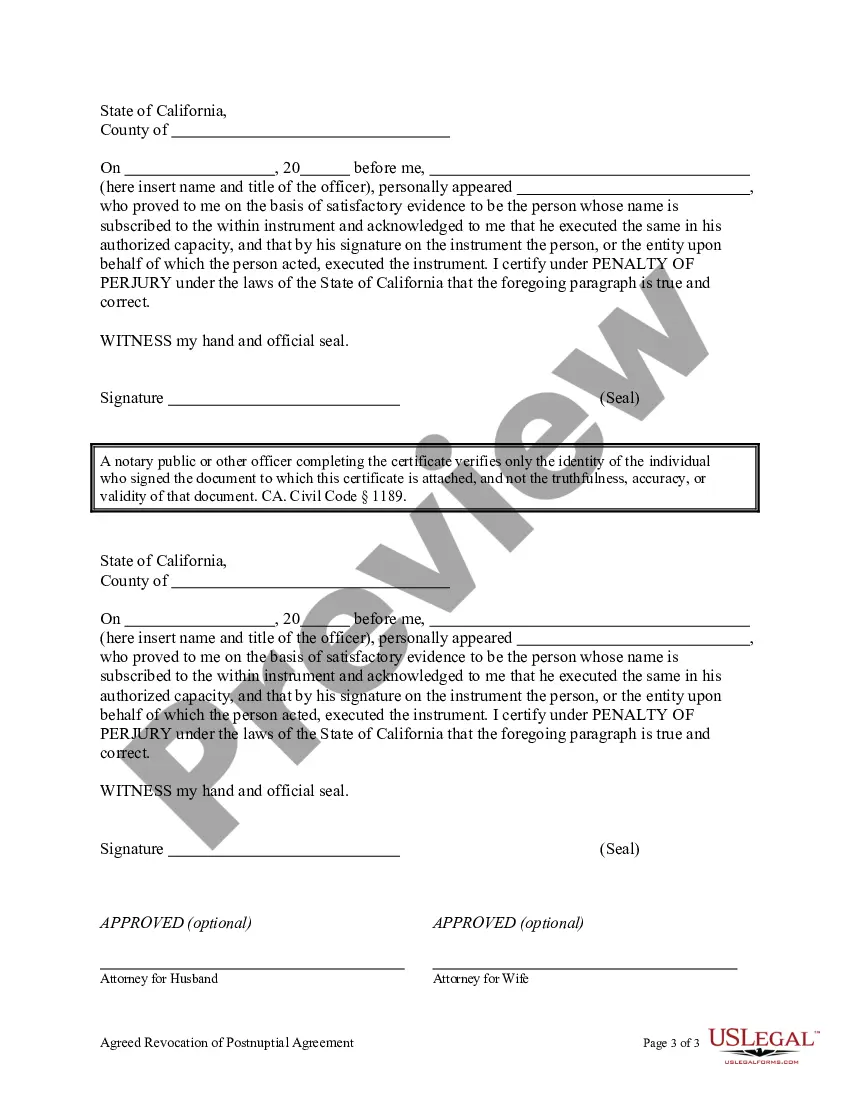
- Signature lines for both parties, requiring notarization.
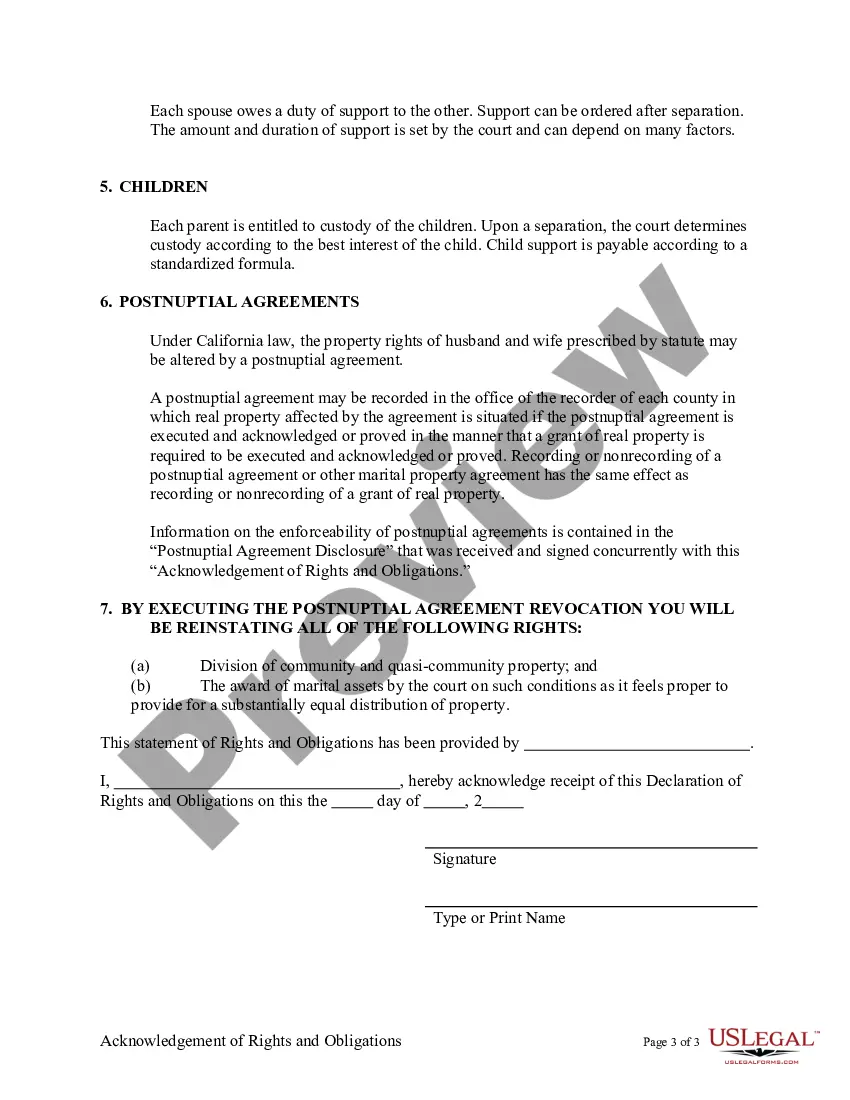
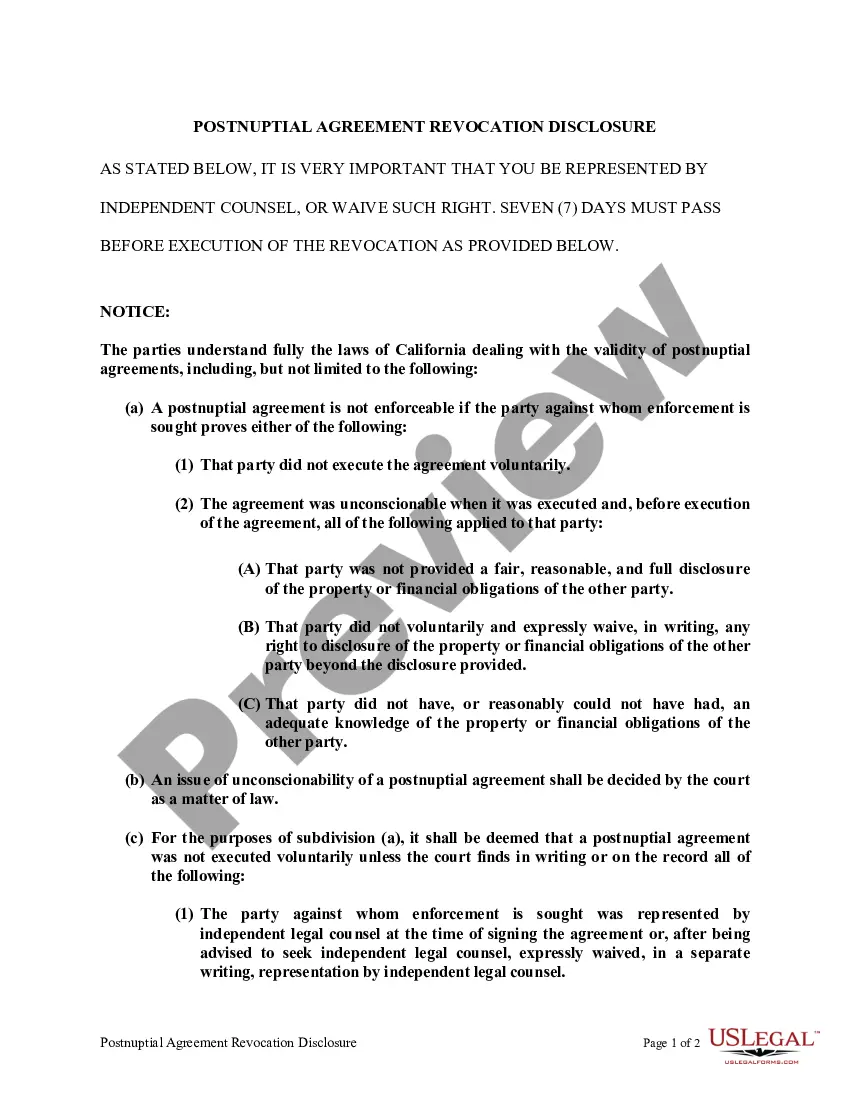
- Disclosures regarding rights waived and the effect of the revocation.
- Legal references to California state law governing postnuptial agreements.

Situations where this form applies
You should use this form when you and your spouse wish to withdraw from an existing postnuptial agreement. This may be necessary due to changes in your financial circumstances, relational dynamics, or mutual agreement that the previous arrangement no longer reflects your current intentions regarding property rights.
Who can use this document
- Married couples in California who wish to revoke a postnuptial agreement.
- Individuals seeking to clarify their property rights and obligations following a change in marital circumstances.
- Couples who have decided to reevaluate their financial agreements and want a clear separation from past contracts.
Instructions for completing this form
- Start by clearly identifying both parties involved in the postnuptial agreement.
- State the intention to revoke the previous agreement explicitly.
- Sign the document in the presence of a notary public to ensure legal validity.
- Both parties should retain a copy of the signed and notarized revocation for their records.
- Consider consulting an attorney for guidance on any potential legal implications.
Notarization guidance
To make this form legally binding, it must be notarized. Our online notarization service, powered by Notarize, lets you verify and sign documents remotely through an encrypted video session.
Get your form ready online
Our built-in tools help you complete, sign, share, and store your documents in one place.
Make edits, fill in missing information, and update formatting in US Legal Forms—just like you would in MS Word.
Download a copy, print it, send it by email, or mail it via USPS—whatever works best for your next step.
Sign and collect signatures with our SignNow integration. Send to multiple recipients, set reminders, and more. Go Premium to unlock E-Sign.
If this form requires notarization, complete it online through a secure video call—no need to meet a notary in person or wait for an appointment.
We protect your documents and personal data by following strict security and privacy standards.

Make edits, fill in missing information, and update formatting in US Legal Forms—just like you would in MS Word.

Download a copy, print it, send it by email, or mail it via USPS—whatever works best for your next step.

Sign and collect signatures with our SignNow integration. Send to multiple recipients, set reminders, and more. Go Premium to unlock E-Sign.

If this form requires notarization, complete it online through a secure video call—no need to meet a notary in person or wait for an appointment.

We protect your documents and personal data by following strict security and privacy standards.
Avoid these common issues
- Failing to notarize the document before submission, which may invalidate the revocation.
- Not signing the form simultaneously, leading to questions about the agreement's authenticity.
- Overlooking the importance of legal counsel and not understanding the rights waived.
- Neglecting to keep copies of the revocation for both parties' records.
Benefits of completing this form online
- Convenience: Download and complete the form at your own pace.
- Editability: Easily modify details as needed before finalizing the document.
- Reliability: Use professionally drafted forms to ensure compliance with legal standards.
Legal use & context
- The revocation must be executed voluntarily by both parties.
- Failure to understand the implications of the revocation can lead to disputes; it is advisable to consult legal counsel before signing.
- This form re-establishes the parties' rights as they would exist without the terms of the original postnuptial agreement.
Looking for another form?
Form popularity
FAQ
Postnuptial agreements in the UK can be legally binding, but their enforceability depends on various factors, including fairness and consideration of both parties' needs. Unlike the California Revocation of Postnuptial Property Agreement, UK postnups have specific requirements to ensure validity in family law. It is crucial to have proper legal advice while drafting such agreements in any jurisdiction. Understanding the local laws can help secure your financial interests effectively.
Yes, it is possible to undo a postnuptial agreement, but the process requires careful consideration. The California Revocation of Postnuptial Property Agreement involves negotiating terms to dissolve or modify the existing agreement. Both parties must mutually agree to revoke or alter the terms, and it's advisable to document this process legally. Consulting with a legal professional can help navigate the revocation process effectively.
Yes, postnuptial agreements are generally enforceable in California, provided they meet specific legal requirements. The California Revocation of Postnuptial Property Agreement must be written, signed by both parties, and executed voluntarily. Courts typically uphold these agreements, as long as they do not contain unconscionable terms. Consulting with a legal expert can help ensure that your postnup is robust and enforceable.
A postnuptial agreement serves the same purpose as a prenup, but it is established after marriage. The California Revocation of Postnuptial Property Agreement allows couples to renegotiate their financial arrangements based on their current circumstances. Both agreements provide security regarding asset division in case of divorce. Therefore, while a postnup can be effective, it is essential to ensure it is properly drafted and executed.
Yes, a postnuptial agreement can be overturned under certain circumstances. In California, the revocation of a postnuptial property agreement may occur if one party can prove that the agreement is invalid due to fraud, lack of voluntary consent, or unfairness at the time of signing. If you are considering the California Revocation of Postnuptial Property Agreement, it is essential to seek legal advice to understand your rights and options. US Legal Forms provides various resources and forms to help you navigate this process effectively.
Yes, a postnuptial agreement can be voided under certain circumstances. Grounds for voiding may include lack of capacity, coercion, or undisclosed assets. To ensure your agreement is enforceable, it’s vital to adhere to state laws and guidelines. Engaging with a professional who understands the nuances of the California Revocation of Postnuptial Property Agreement can help clarify your situation.
Yes, postnuptial agreements, or postnups, are enforceable in California if they meet the proper legal requirements. These include mutual consent, full financial disclosure, and the absence of coercion. A well-drafted agreement will stand up in court and outline how property and debts will be managed in the event of a separation. Always consider reviewing this with a legal expert familiar with the California Revocation of Postnuptial Property Agreement for guidance.
The 7-day rule refers to the requirement for couples to sign a prenuptial agreement at least seven days before the wedding date in California. This rule emphasizes the importance of informed consent and minimizes potential claims of coercion. While this rule applies to prenuptial agreements, understanding its implications can also be relevant when considering the California Revocation of Postnuptial Property Agreement. Consulting a legal specialist can help clarify these timelines.
Yes, California does recognize postnuptial agreements as valid and enforceable contracts. These agreements provide a framework for couples to outline their rights and responsibilities regarding property and finances. To ensure legality, the agreement must meet all state requirements, including being signed willingly and with full financial disclosure. Familiarizing yourself with the California Revocation of Postnuptial Property Agreement will be beneficial in understanding your rights.
To invalidate a postnuptial agreement, you must prove that it was signed under duress, fraud, or undue influence. Additionally, if one party was not fully informed of all relevant financial information, this might be grounds for invalidation. Understanding the intricacies of the California Revocation of Postnuptial Property Agreement can shed light on this process. Legal assistance can help navigate these challenges effectively.