Arizona New Resident Guide
Understanding this form
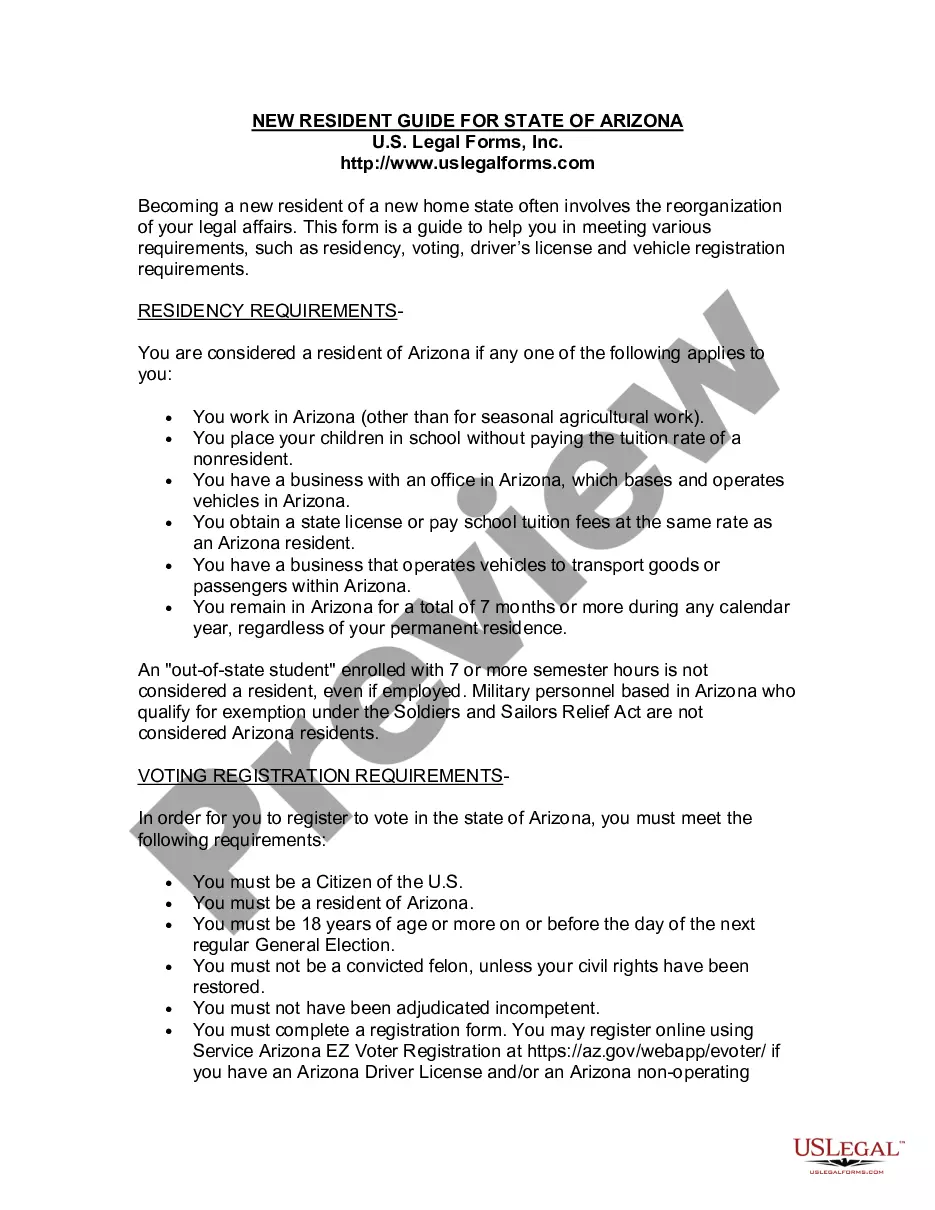
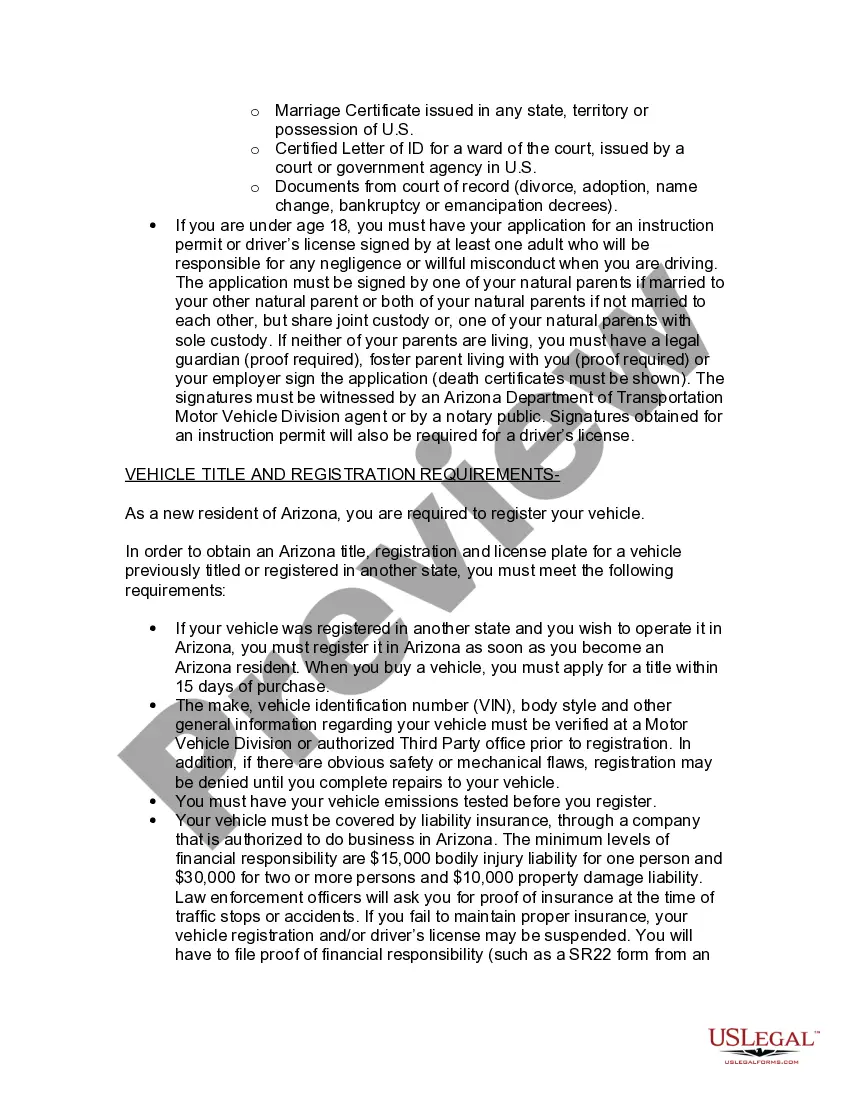
The New Resident Guide is an essential tool for anyone relocating to a new state. It provides detailed information about residency requirements, voter registration processes, identification cards, driverâs licenses, and vehicle title and registration in your new state. Unlike general relocation resources, this guide specifically outlines the legal obligations and steps to ensure compliance with local laws as a new resident.
Key parts of this document
- Residency requirements specific to the state.
- Steps for voter registration along with eligibility criteria.
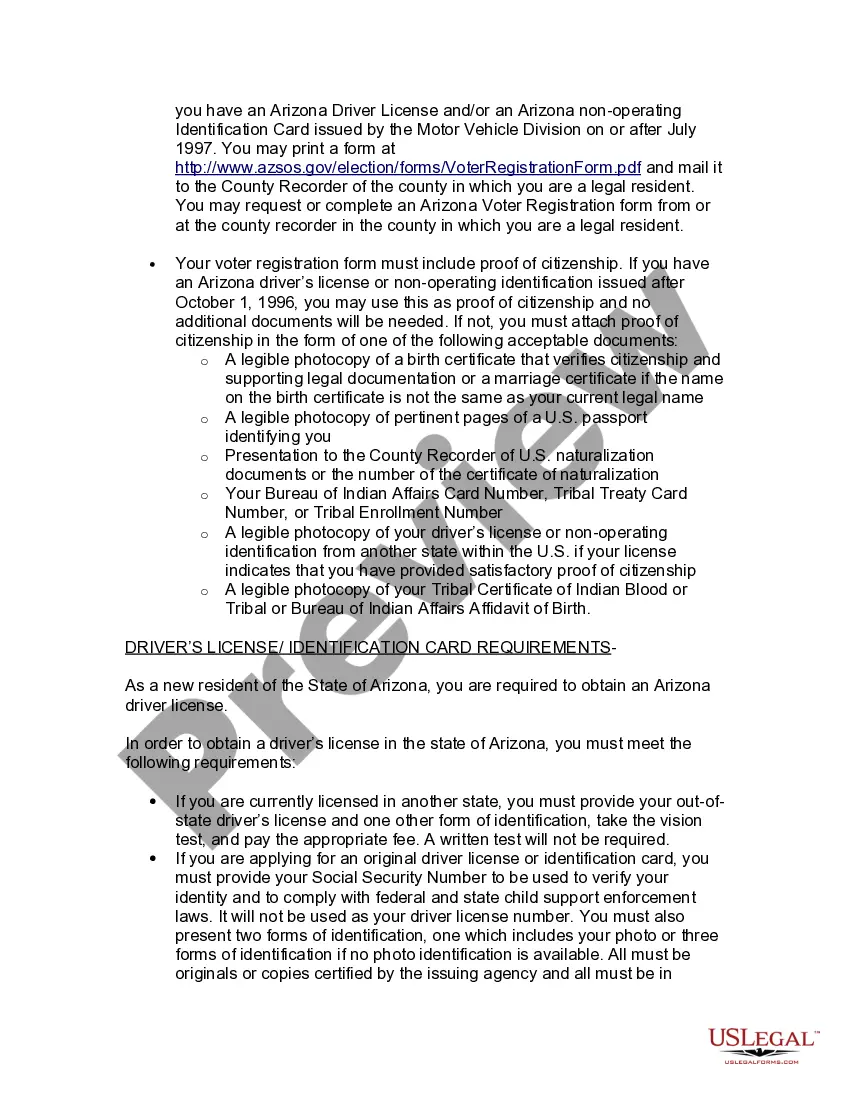
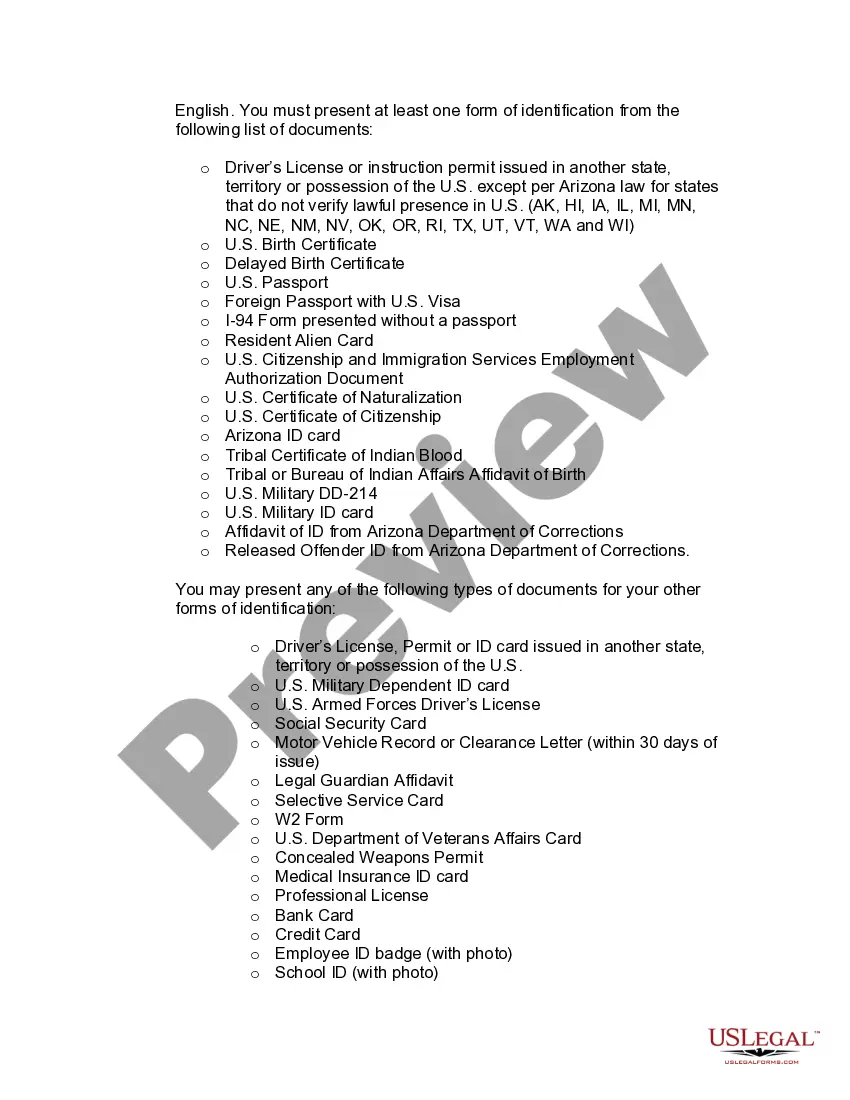
- Process for obtaining a state driverâs license or identification card.
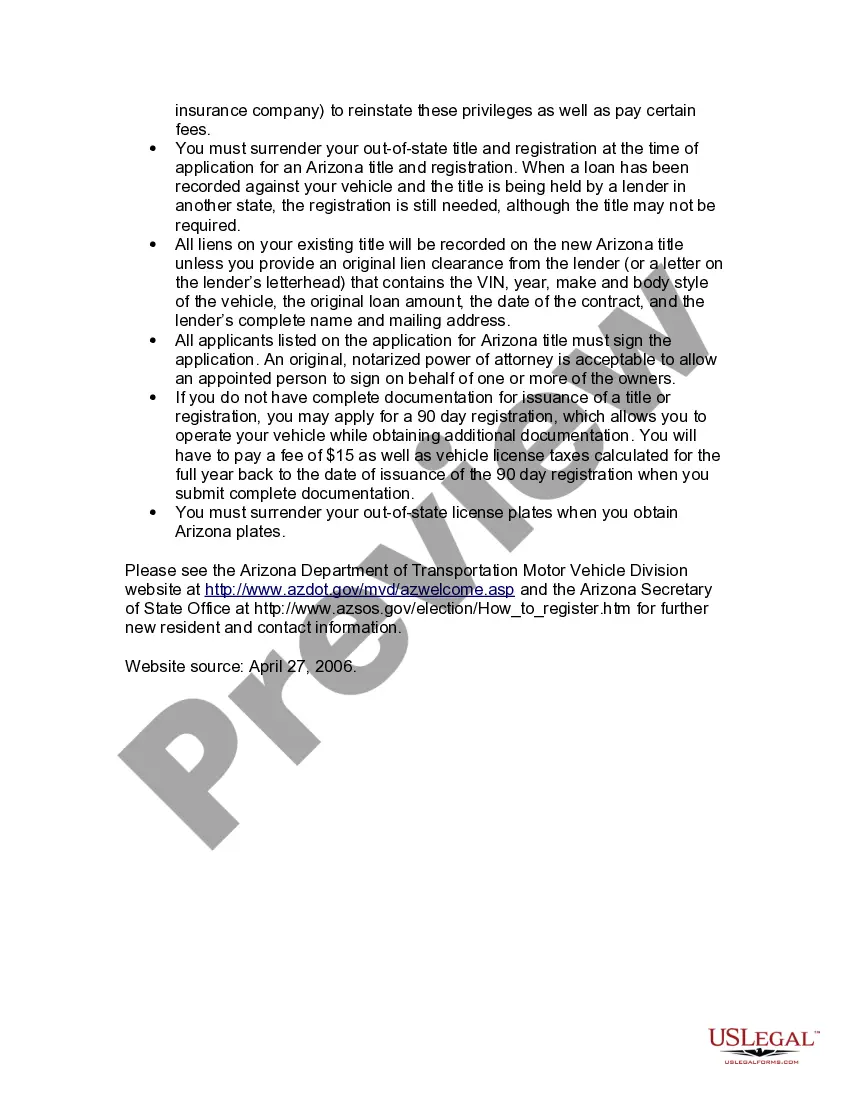
- Guidelines for vehicle title and registration, including insurance requirements.
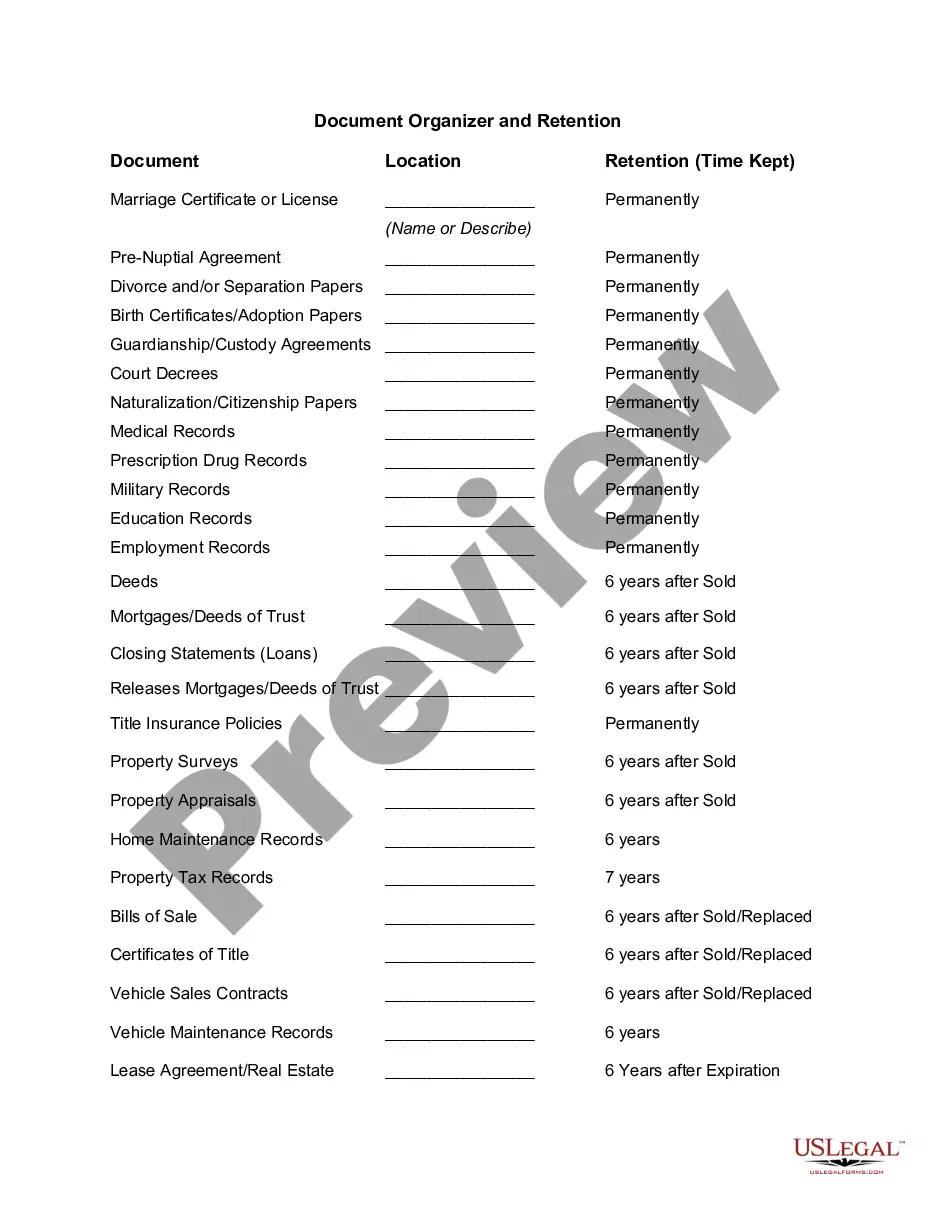
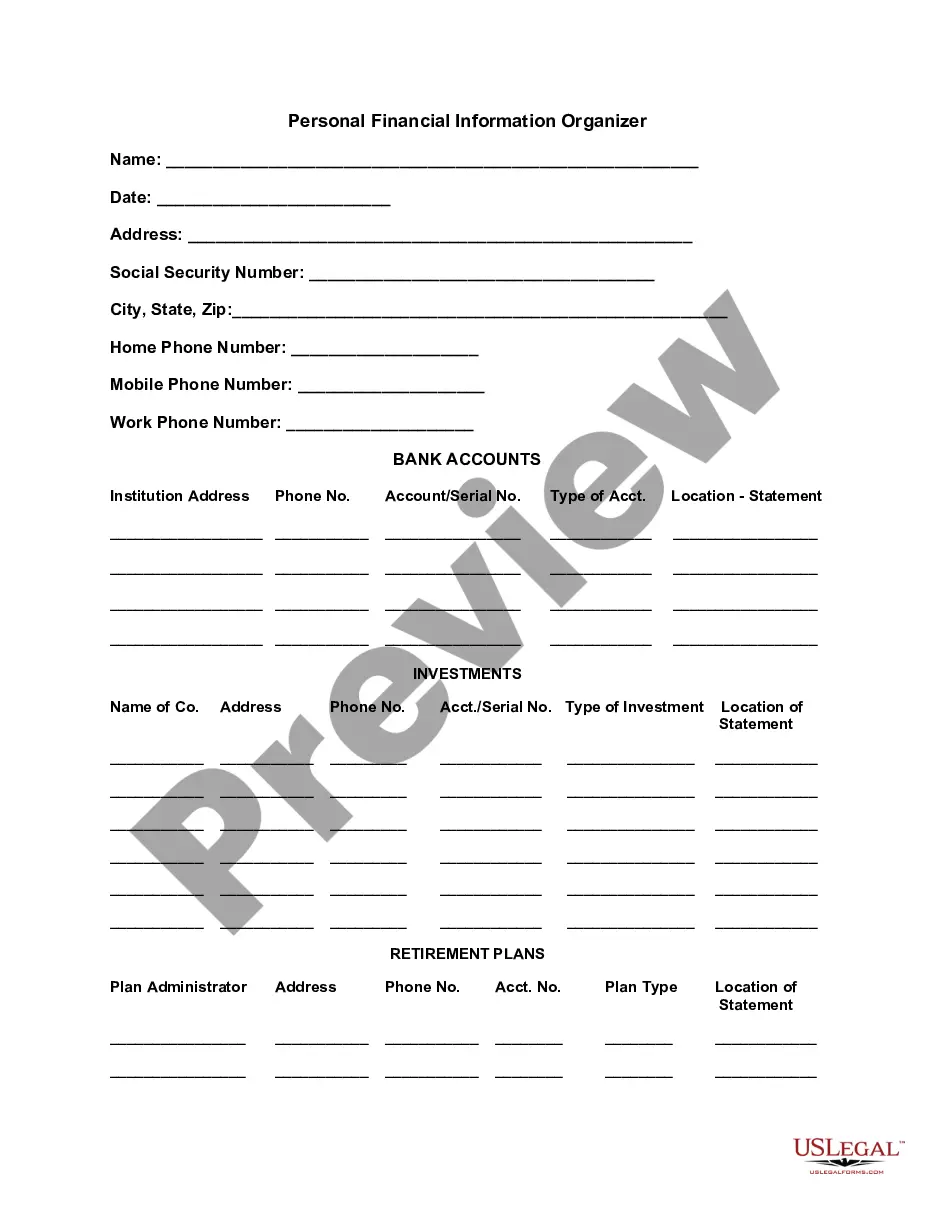
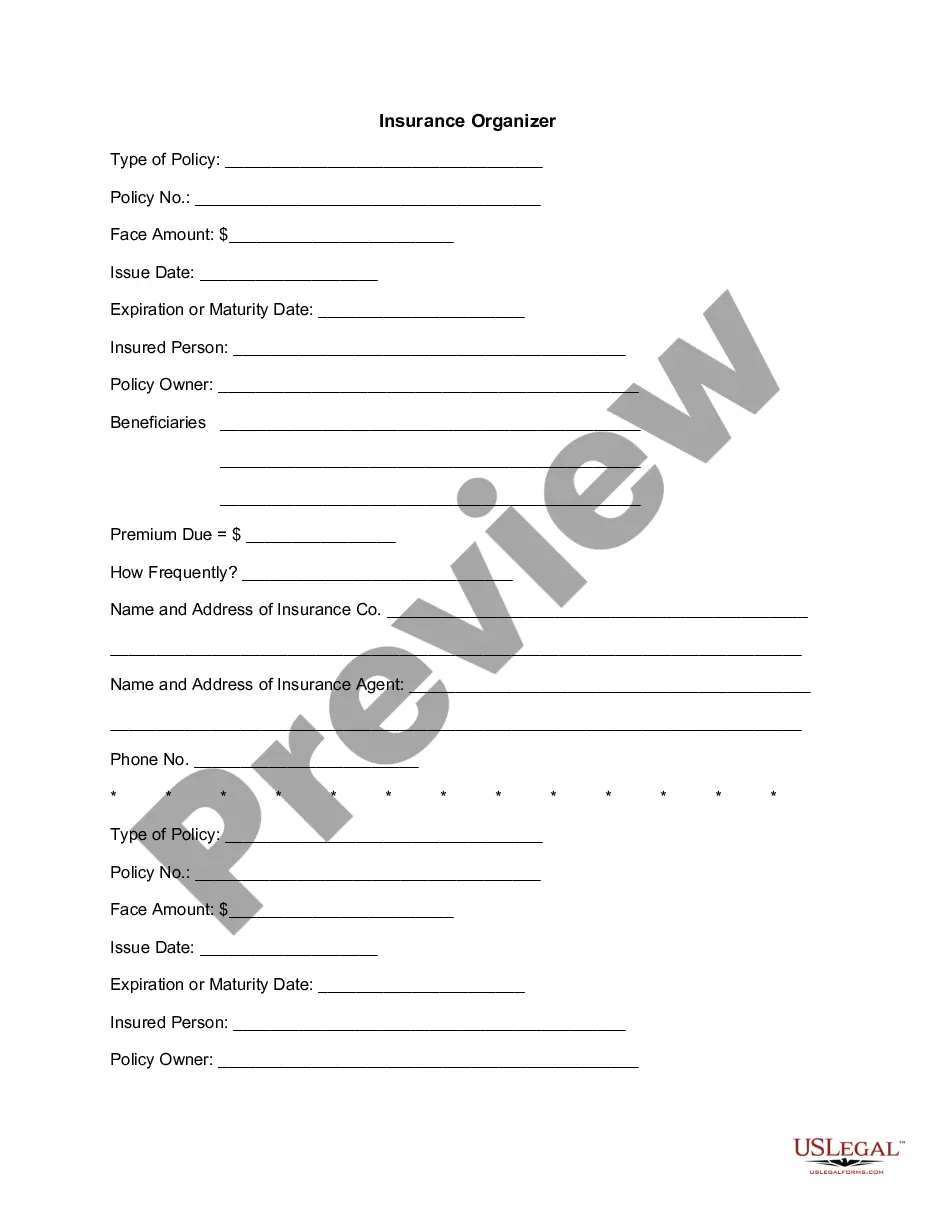
When to use this document
This form is useful whenever you move to a new state. It helps you understand what documentation you need to establish residency, how to register to vote, and the necessary steps for obtaining a driverâs license and registering your vehicle. Utilize this guide during your transition to ensure compliance with local laws and regulations.
Intended users of this form
- Individuals relocating to a new state.
- New residents seeking to understand local legal requirements.
- Anyone needing assistance with voter registration or vehicle registration processes.
How to complete this form
- Review residency criteria to confirm you meet local requirements.
- Fill out the voter registration application, ensuring all personal information is accurate.
- Gather necessary identification documents for driverâs license application.
- Complete the vehicle registration forms and submit them with required documentation.
Does this form need to be notarized?
This form does not typically require notarization unless specified by local law. However, certain components, like vehicle title transfers or specific voter registration submissions, may require notarized documents.
Get your form ready online
Our built-in tools help you complete, sign, share, and store your documents in one place.
Make edits, fill in missing information, and update formatting in US Legal Forms—just like you would in MS Word.
Download a copy, print it, send it by email, or mail it via USPS—whatever works best for your next step.
Sign and collect signatures with our SignNow integration. Send to multiple recipients, set reminders, and more. Go Premium to unlock E-Sign.
If this form requires notarization, complete it online through a secure video call—no need to meet a notary in person or wait for an appointment.
We protect your documents and personal data by following strict security and privacy standards.

Make edits, fill in missing information, and update formatting in US Legal Forms—just like you would in MS Word.

Download a copy, print it, send it by email, or mail it via USPS—whatever works best for your next step.

Sign and collect signatures with our SignNow integration. Send to multiple recipients, set reminders, and more. Go Premium to unlock E-Sign.

If this form requires notarization, complete it online through a secure video call—no need to meet a notary in person or wait for an appointment.

We protect your documents and personal data by following strict security and privacy standards.
Typical mistakes to avoid
- Failing to provide proof of residency when registering to vote.
- Not obtaining a new driverâs license within the required timeframe after moving.
- Missing necessary documentation for vehicle registration leading to delays.
Benefits of using this form online
- Immediate access to the most current legal requirements and processes.
- Downloadable and editable format for your convenience.
- Streamlined completion and organization of needed information.
Legal use & context
- The New Resident Guide is intended to provide essential information for legal compliance.
- Understanding state-specific laws can prevent legal complications after relocating.
- The guidance in this form can aid in successfully establishing residency and fulfilling obligations.
Summary of main points
- The New Resident Guide is vital for understanding legal requirements when moving to a new state.
- Each section addresses essential aspects of residency, voting, and vehicle regulations specific to Arizona.
- Proper completion ensures compliance with state laws and helps facilitate a smooth transition.
Looking for another form?
Form popularity
FAQ
As a nonresident in Arizona, you only need to file state taxes if you have income sourced from Arizona. This includes income from working, renting property, or other earnings within the state. It's important to understand your tax obligations to avoid penalties. For more details, refer to the Arizona New Resident Guide.
You should mail your Arizona state tax forms to the address listed on the instruction sheet that comes with your form. Typically, the Arizona Department of Revenue has different addresses depending on whether you are filing with a payment or requesting a refund. Make sure to verify the address to ensure timely processing. For additional information, visit the Arizona New Resident Guide.
The 183 day rule in Arizona refers to how the state determines residency for tax purposes. If you spend 183 days or more in Arizona during the tax year, you may be considered a resident. This classification affects how much you owe in state taxes. To learn more about this rule, look into the Arizona New Resident Guide.
To declare Arizona residency, you should establish a physical presence in the state, usually by obtaining a driver's license or registering to vote here. Additionally, it helps to open a local bank account and obtain utility services in your name. This process is crucial for various legal and tax purposes. For a complete understanding, refer to the Arizona New Resident Guide.
To file an amended sales tax return in Arizona, you must complete the amended form provided by the Arizona Department of Revenue. Provide all the necessary details, including the reason for amendment, and file it within the required time frame. Once completed, submit the form either online or via mail. Check the Arizona New Resident Guide for more guidance on this process.
You should send your completed Arizona form 285 to the address specified on the form itself. Typically, this address is the Arizona Department of Revenue. It's essential to double-check the mailing instructions to avoid delays. For further assistance on this topic, see the Arizona New Resident Guide.
To submit form 285 in Arizona, you need to download the form from the Arizona Department of Revenue website. Fill out the form according to the instructions provided. After completing the form, you can mail it to the designated address or submit it electronically if you prefer. For detailed steps, consult the Arizona New Resident Guide.
To apply for power of attorney in Arizona, you must complete the appropriate forms outlining the powers you wish to grant. You can find these forms through the Arizona Department of Revenue or other legal resources. It's advisable to have the documents notarized to ensure validity. For a comprehensive overview, refer to the Arizona New Resident Guide.
While ease of obtaining residency can vary greatly by individual situation, states like Florida and Texas are often viewed as more straightforward. However, each state has its unique requirements. For those considering a move to Arizona, the Arizona New Resident Guide provides essential insights to help make your residency process simpler and more efficient.
To be considered a resident of Arizona, you generally need to live there for at least 9 months of the year. This helps establish your connection to the state. With insights from the Arizona New Resident Guide, you can better understand all the requirements necessary to achieve residency.