Salary Fit
Description
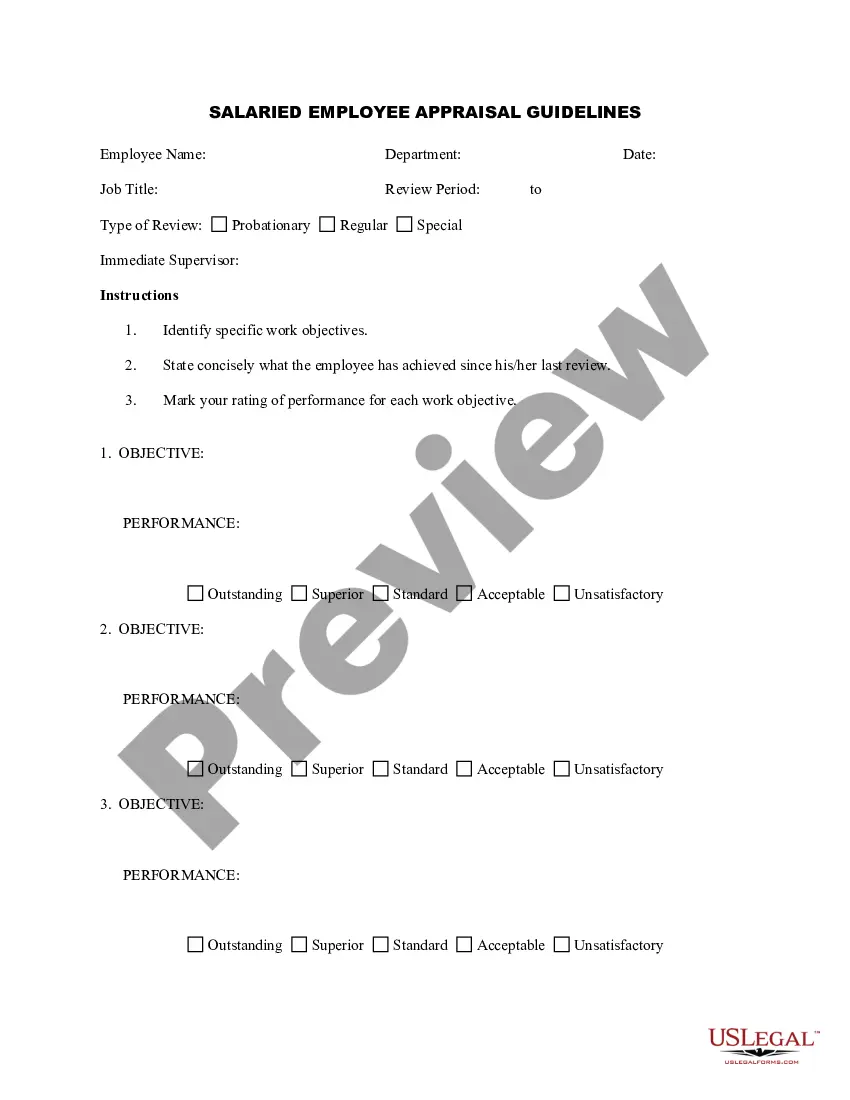
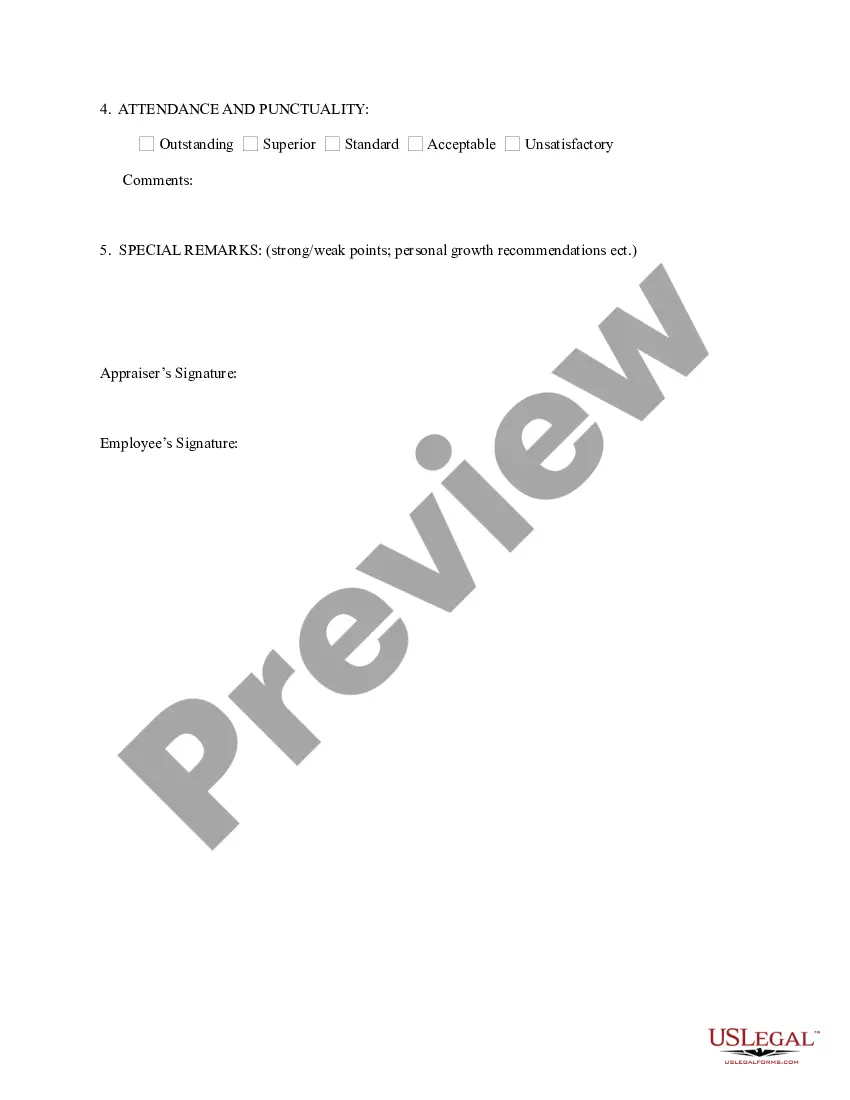
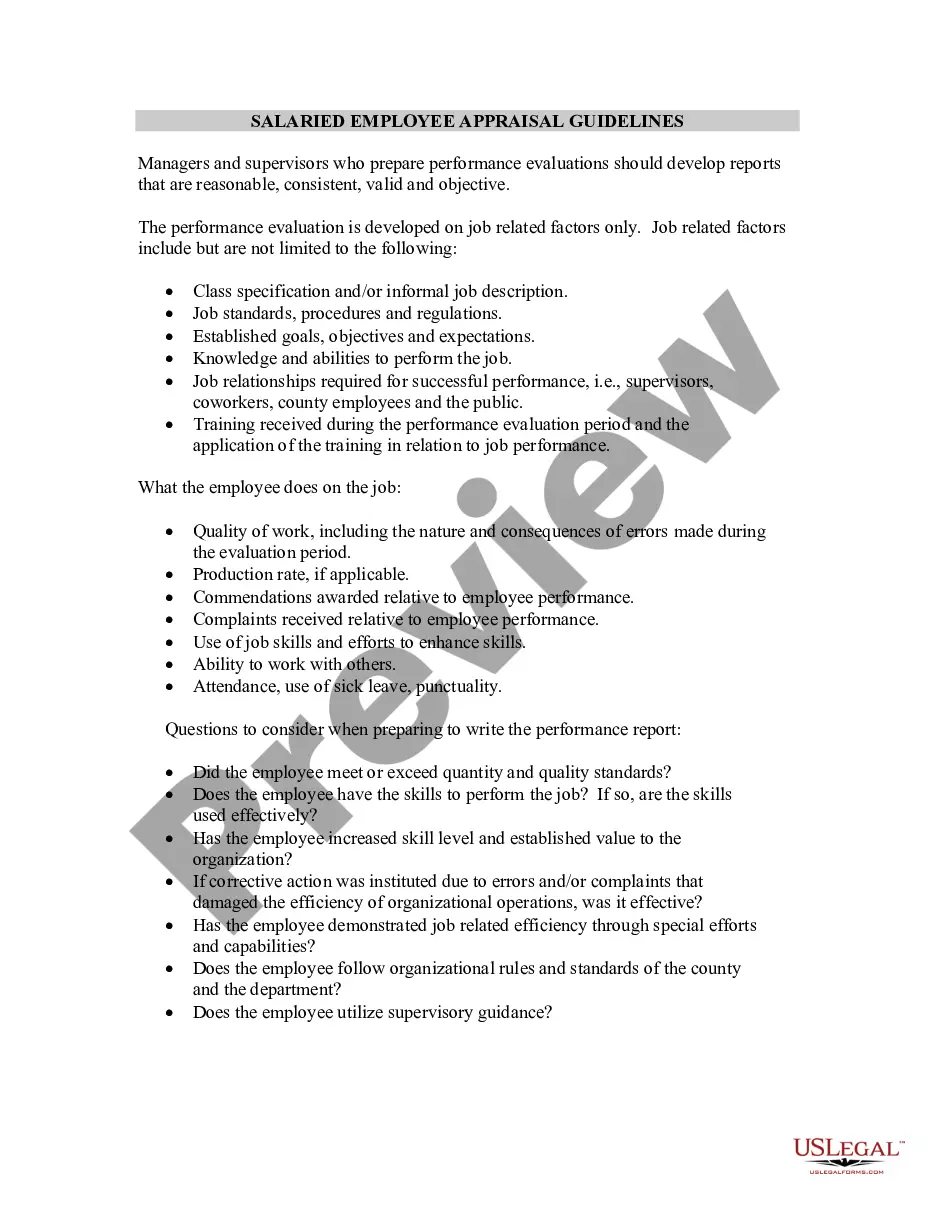
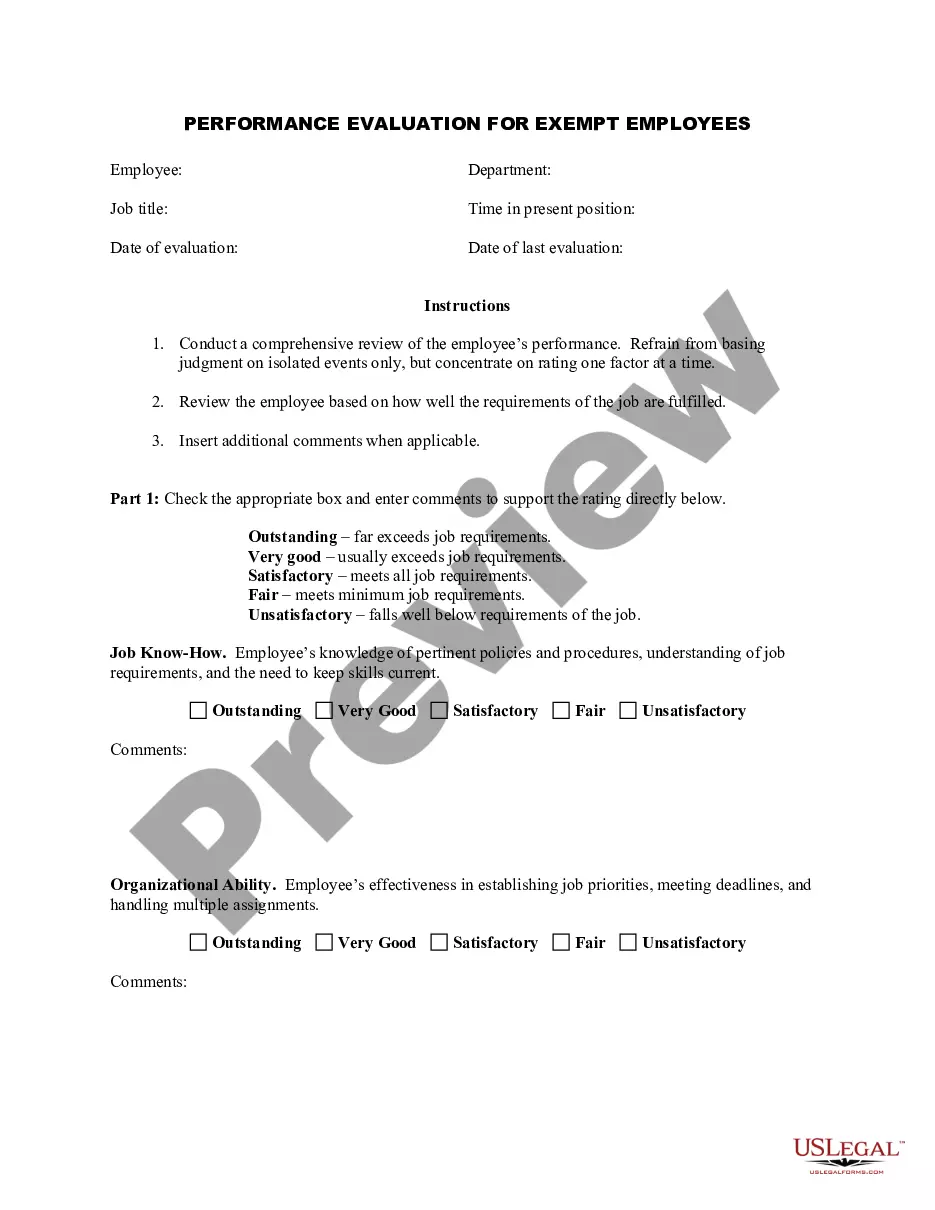
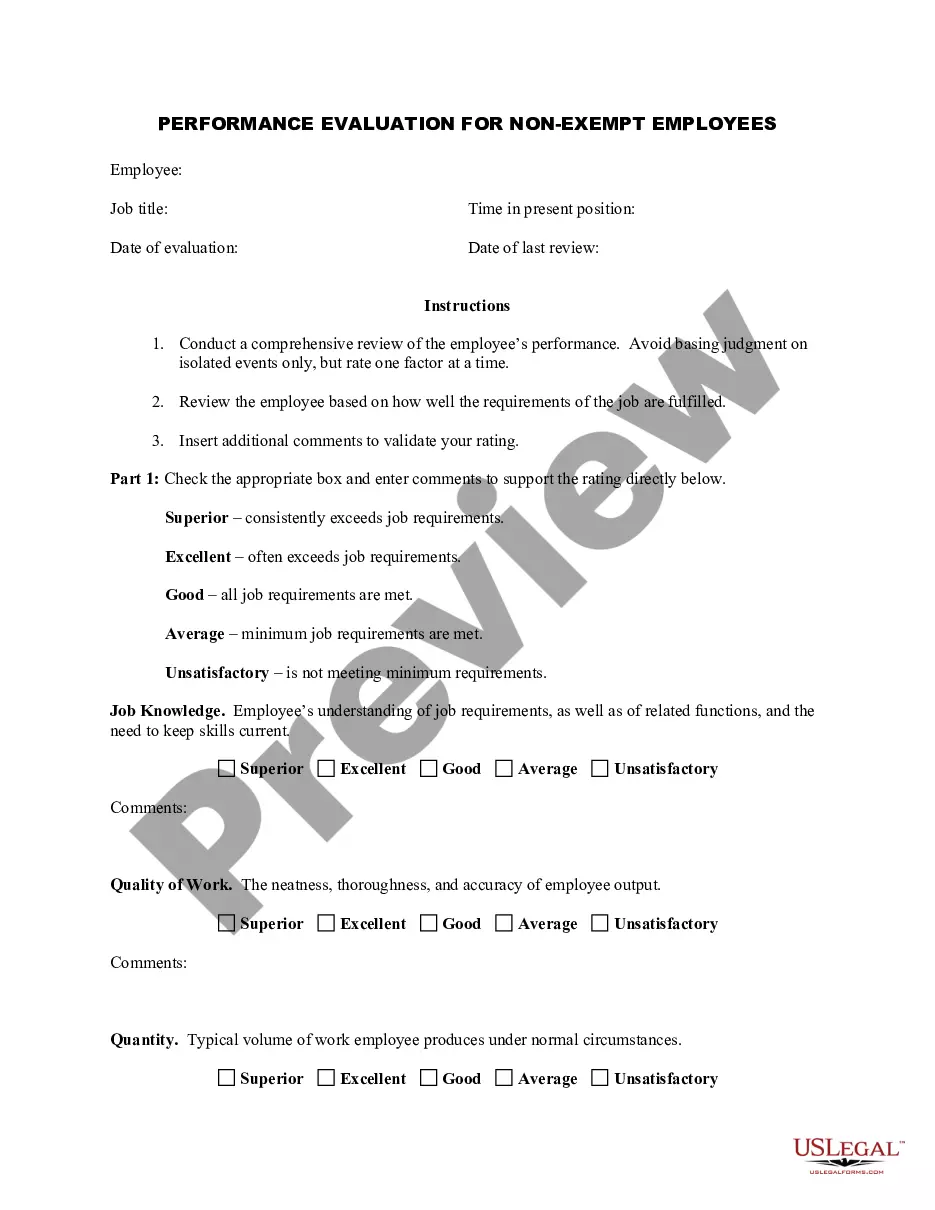
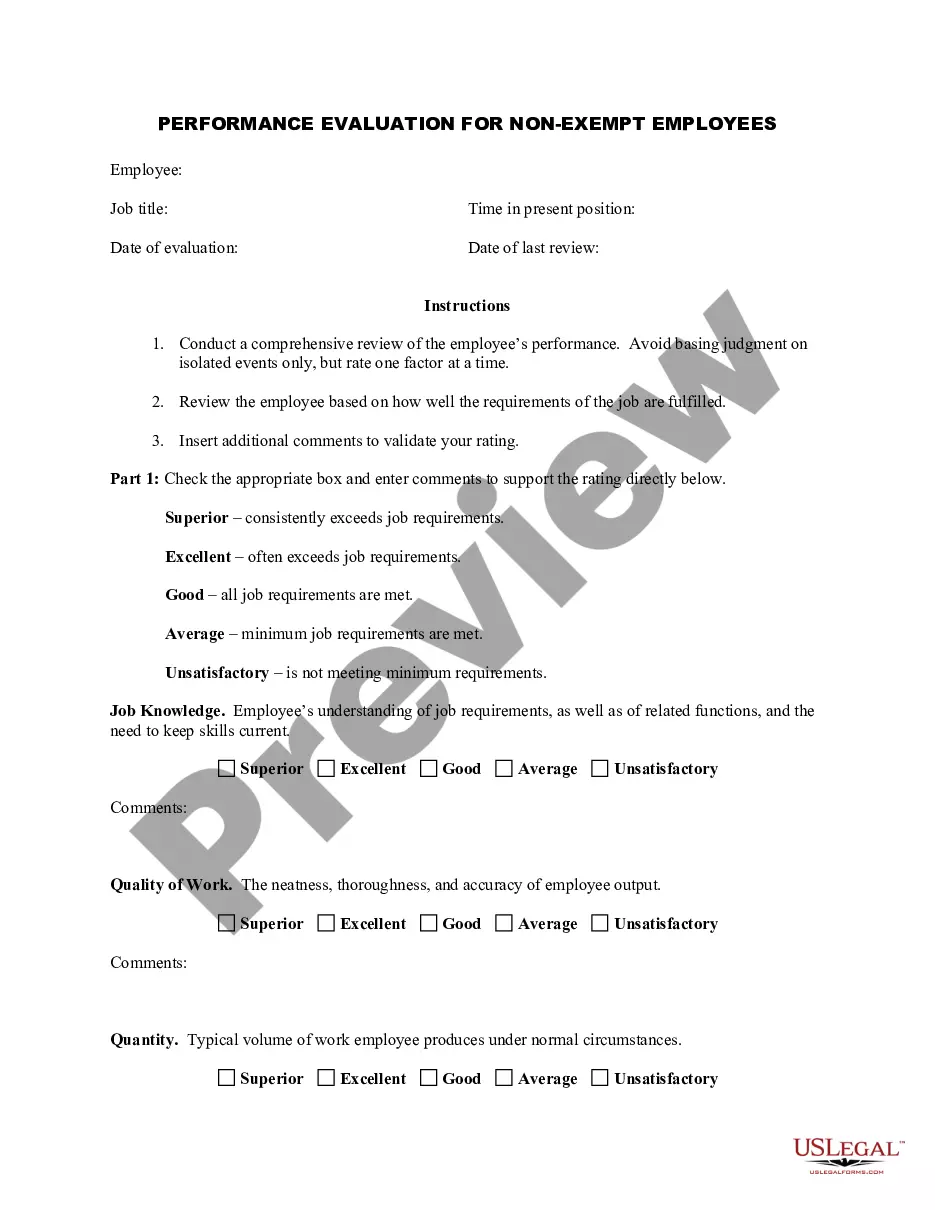
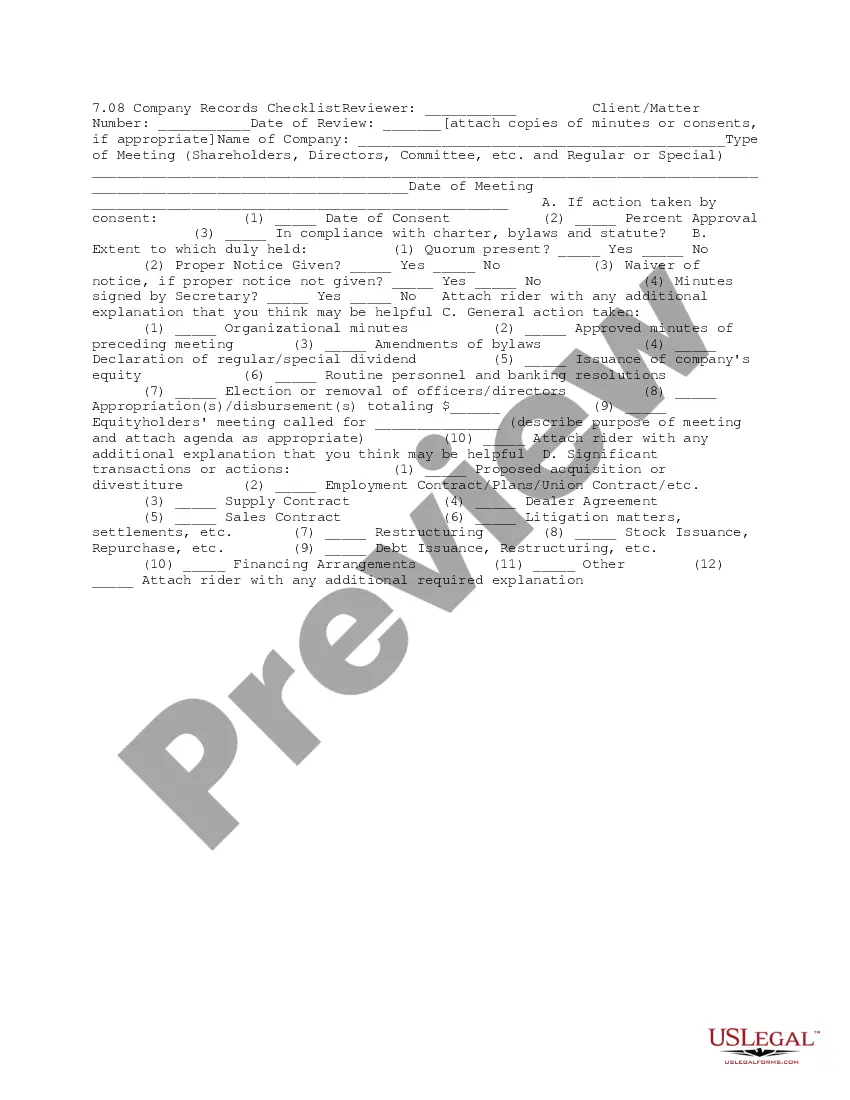
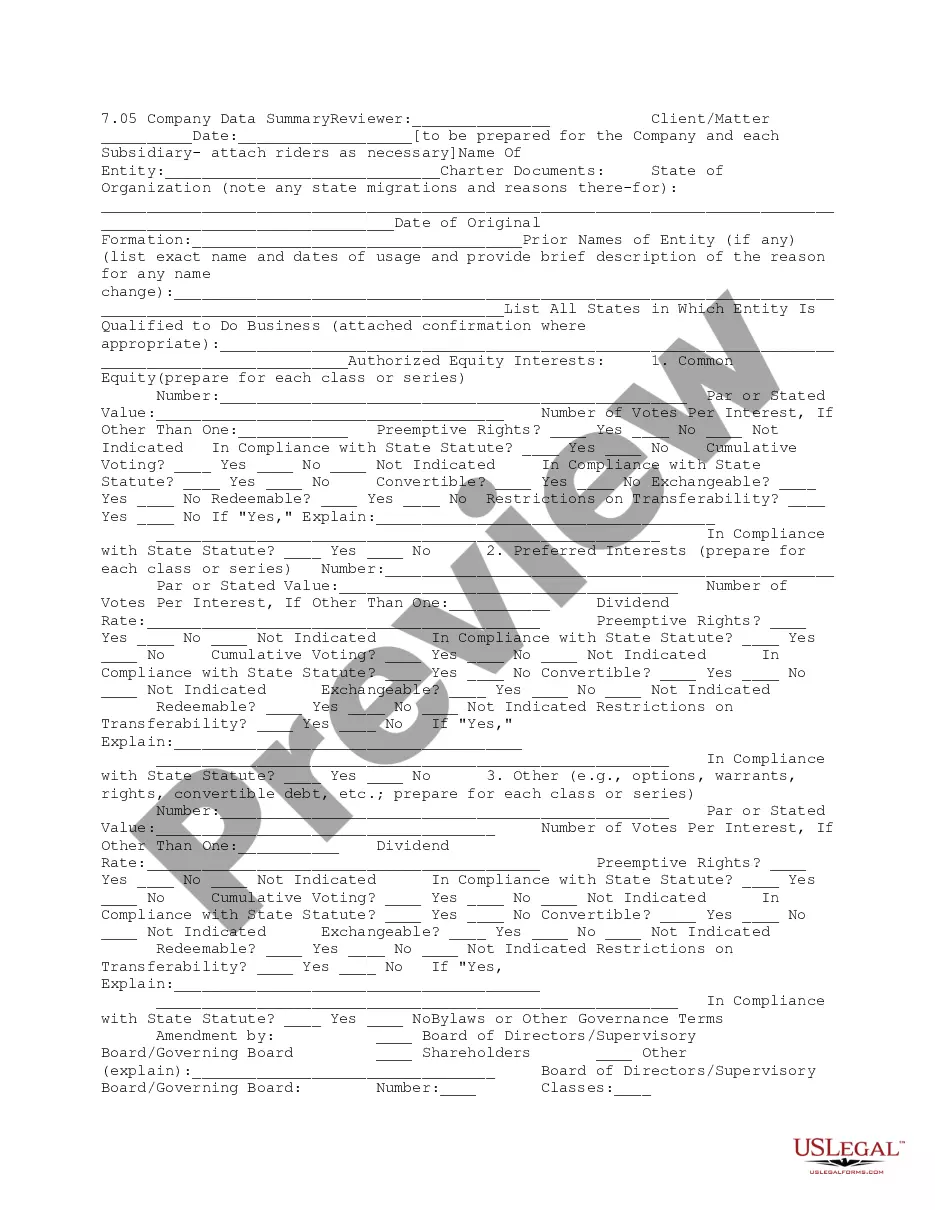
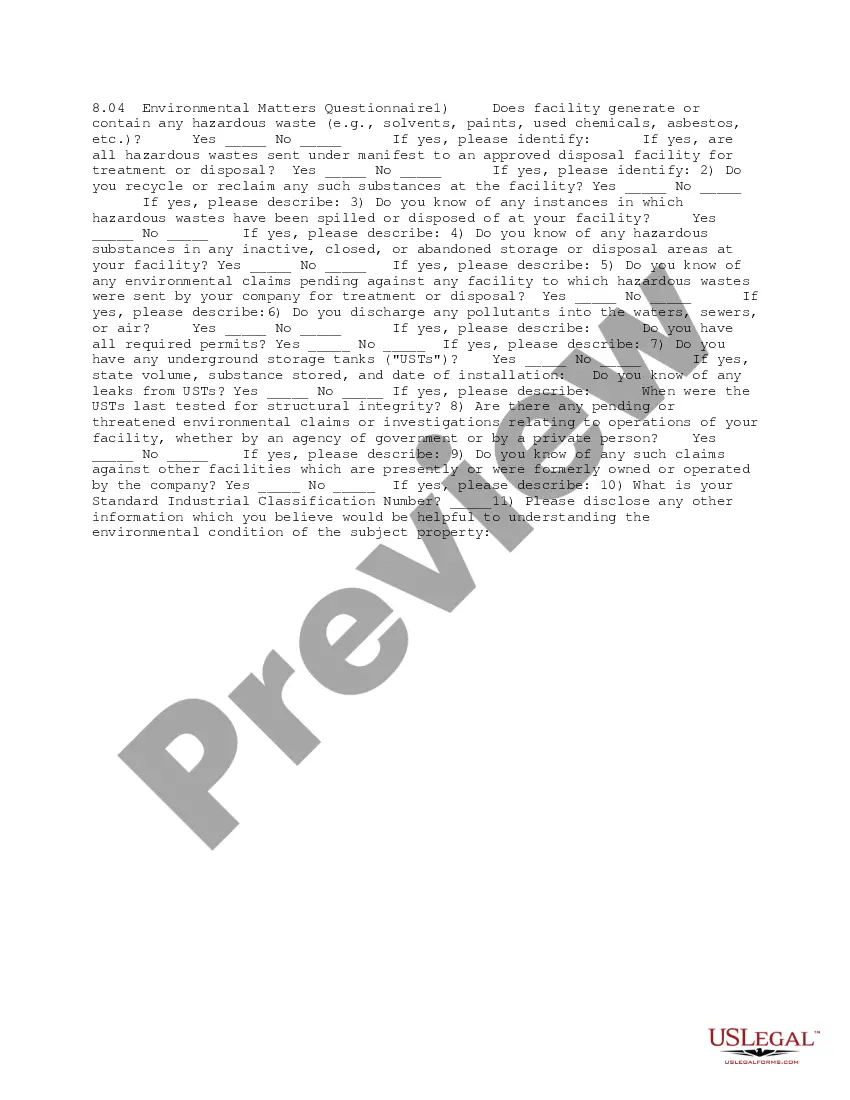
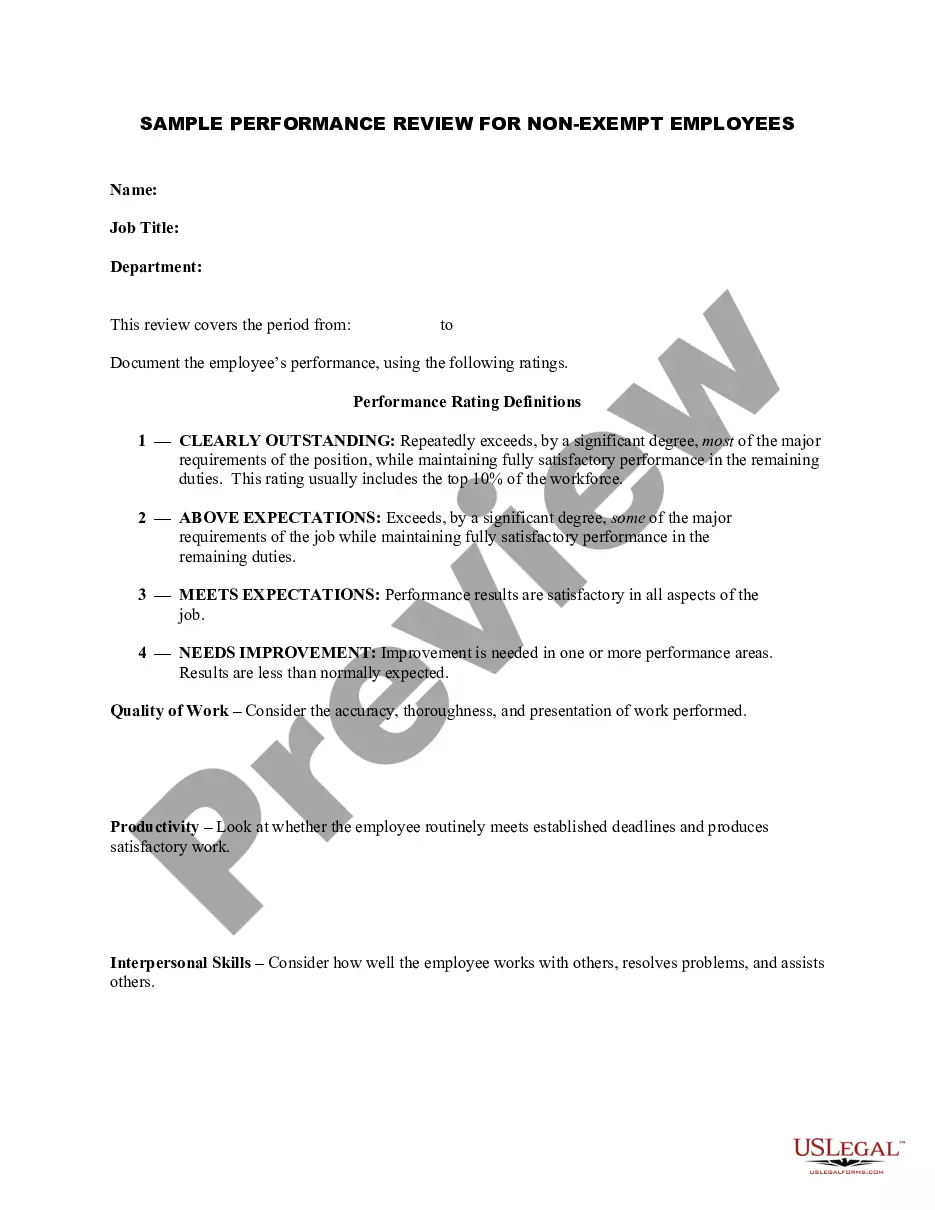
How to fill out Salaried Employee Appraisal Guidelines - Employee Specific?
- Log in to your account if you're a returning user and ensure your subscription is active. If it's expired, renew it according to your payment plan.
- Explore the Preview mode and read the form descriptions carefully. This helps to confirm that you've selected the appropriate form that suits your specific jurisdiction requirements.
- If you find any discrepancies or need additional templates, utilize the Search feature to discover the correct one. Once satisfied, proceed to the next step.
- Purchase the document by clicking on the Buy Now button, then select your preferred subscription plan. Create an account to unlock access to more resources.
- Finalize your purchase by entering your payment details or opting for PayPal. This secures your subscription successfully.
- Download the form to your device for completion. You can always access it later in the My Documents section of your profile.
By following these straightforward steps, you can effectively access the extensive library of over 85,000 legal forms provided by US Legal Forms.
Start your journey today to ensure you achieve the right salary fit for your legal documentation needs!
Form popularity
FAQ
Earning $15 a year is a misconception; rather, it is crucial to calculate that per hour to understand its impact. If you mean $15 per hour, that easily translates to an annual income of approximately $31,200, subject to hours worked weekly. Understanding this salary fit allows you to evaluate job opportunities effectively. If you need further insights or personalized advice, platforms like US Legal Forms can guide you in salary discussions.
When you want to ask for your salary to be matched, approach the conversation professionally and confidently. Start by researching average salaries in your field to present data that supports your request. Clearly express your accomplishments and how they align with the expected salary fit for your role. This method shows your employer that you value your work and want equitable compensation.
If you earn $15 an hour and work 40 hours a week, you can expect to make about $31,200 a year before taxes. This calculation demonstrates a clear salary fit for those considering job offers or salary negotiations. Knowing your annual earnings helps you assess your financial goals and make informed decisions about your career. Use resources like US Legal Forms to access tools for salary negotiations and better understand your worth.
Leaving the desired salary blank can lead to missed opportunities. Employers might perceive this as uncertainty about your expectations, which can negatively impact your chances. Instead, being proactive and providing a salary range can enhance your salary fit and help you stand out positively to potential employers.
While it may seem acceptable to put 0 for the desired salary, this can diminish your negotiating power. Employers may view this as a lack of confidence in your skills and worth. A clearer approach involves stating a salary range that reflects your experience, thus improving your salary fit.
When answering your salary expectations, research the average salary for your role and location. Provide a range that reflects your qualifications and the market rate. This way, you present yourself as knowledgeable and ensure a better salary fit that meets both your needs and those of the employer.
Choosing to put 0 in your desired salary may signal to employers that you are flexible. However, this can also imply that you lack a clear understanding of your worth in the job market. It's important to consider your experience and skills to determine a salary fit that aligns with your expectations.
The best answer to salary expectations is to provide a realistic range based on thorough research of market rates. Highlight your experience and skills that justify your expectations, emphasizing the benefits of hiring you. This strategy not only establishes a strong salary fit but also opens the door for a fruitful conversation about your potential contribution to the company.
To effectively respond to an expected salary inquiry, first, evaluate your worth based on industry standards and personal qualifications. Deliver a concise salary range instead of a specific figure; this approach demonstrates your flexibility. Ultimately, solidify your salary fit by emphasizing your value to the organization while remaining open to negotiations.
When discussing salary expectations, it’s important to research your industry and understand common salary ranges for your position. Clearly express your desired salary while considering your skills, qualifications, and experience. By establishing a strong salary fit, you can negotiate a compensation that matches your abilities, ensuring both you and your employer benefit.