Difference Between Withdraw And Withdrew
Description

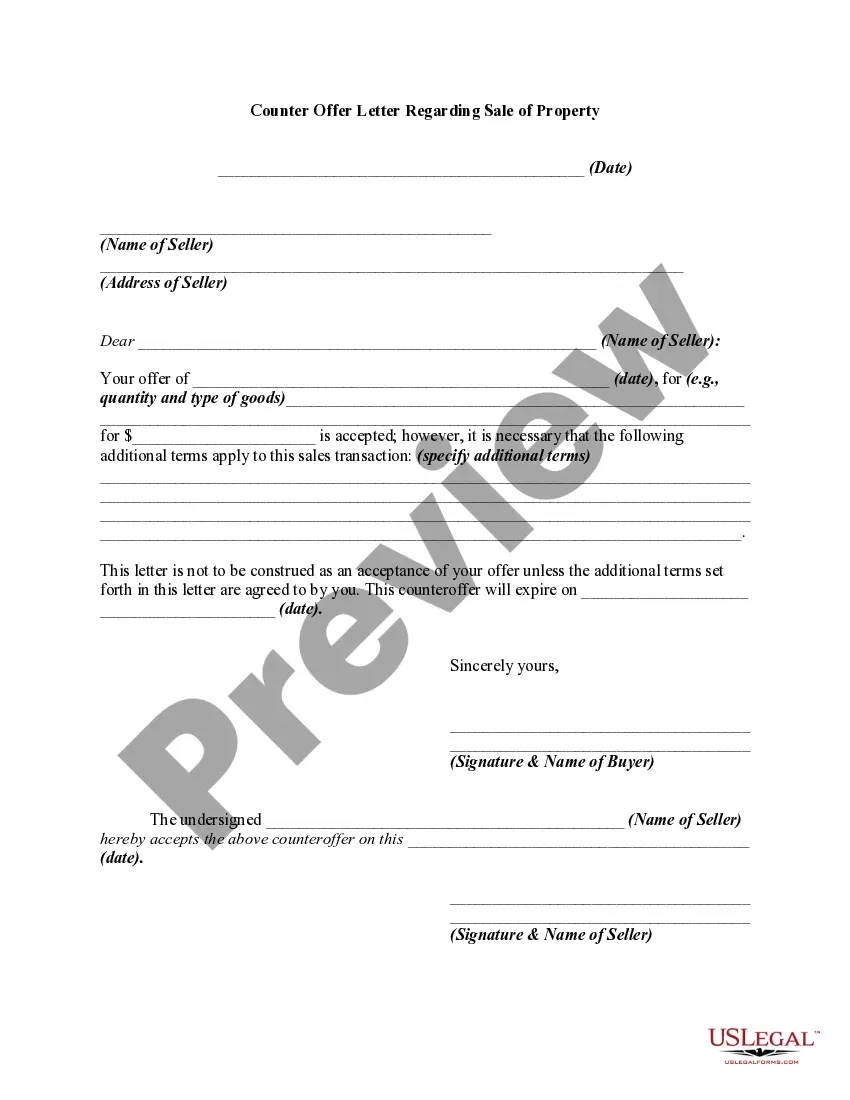





How to fill out Sample Letter Withdrawing Offer To Purchase House?
The Distinction Between Withdraw And Withdrew you encounter on this webpage is a reusable legal template crafted by experienced attorneys in accordance with federal and state guidelines.
For over 25 years, US Legal Forms has offered individuals, enterprises, and legal practitioners more than 85,000 verified, state-specific documents for any business or personal situation. It’s the quickest, simplest, and most dependable method to obtain the forms you require, as the service ensures bank-grade data security and anti-malware safeguards.
Subscribe to US Legal Forms to have verified legal templates for all of life's situations readily available.
- Search for the document you need and review it.
- Browse the template you searched for and preview it or check the form description to confirm it meets your needs. If it doesn't, utilize the search feature to find the correct one. Click Buy Now once you have located the template you require.
- Register and Log In.
- Choose the pricing option that fits you and create an account. Use PayPal or a credit card to make an immediate payment. If you already have an account, Log In and verify your subscription to continue.
- Obtain the editable template.
- Select the format you desire for your Distinction Between Withdraw And Withdrew (PDF, DOCX, RTF) and save the document on your device.
- Fill out and sign the documents.
- Print the template to fill it out by hand. Alternatively, use an online versatile PDF editor to swiftly and accurately complete and sign your form with a valid signature.
- Download your documents once more.
- Access the same document again whenever needed. Go to the My documents tab in your profile to redownload any forms you previously downloaded.
Form popularity
FAQ
When using 'withdrew,' ensure it fits a narrative of past occurrences. For example, you might say, 'They withdrew from the agreement last month.' This choice highlights the completion of an action, making your message clear. Knowing the difference between withdraw and withdrew enhances your writing and speaking proficiency.
You use 'withdrew' when discussing an action that occurred in the past, such as 'He withdrew his application last week.' This verb form is clear and effective for conveying events that are no longer current. By understanding the difference between withdraw and withdrew, you can express past actions accurately.
In this case, the correct form is 'did you withdraw' because 'did' requires the base form of the verb. Thus, you should say, 'Did you withdraw the funds yesterday?' Recognizing the difference between withdraw and withdrew allows for clearer communication and correct sentence structure.
You primarily use 'withdraw' to describe the action of taking something back or removing oneself from a situation. This verb is in the present tense, making it suitable for current or ongoing actions. Understanding the difference between withdraw and withdrew will help you use the correct form based on the time frame of your action.
The correct phrase is 'have withdrawn,' as 'withdrawn' is the past participle used with auxiliary verbs. Using 'has withdrew' is incorrect since 'withdrew' does not serve as a past participle. It's essential to grasp the difference between withdraw and withdrew to ensure proper verb usage.
You use 'withdrew' when you refer to a past action of pulling back or taking something away. On the other hand, 'withdrawn' is an adjective describing a state of having been removed or taken back. The difference between withdraw and withdrew lies in their tense, so be mindful of the context you are using them in.
Withdrawn is the past participle of withdraw. Someone who is withdrawn is very quiet, and does not want to talk to other people. He had become withdrawn and moody.
The company withdrew [=retracted] the job offer. The prosecutor withdrew her question to the witness. They have withdrawn the charges.
"withdrawn from school" is correct and usable in written English.
Withdrew is the past tense of withdraw.