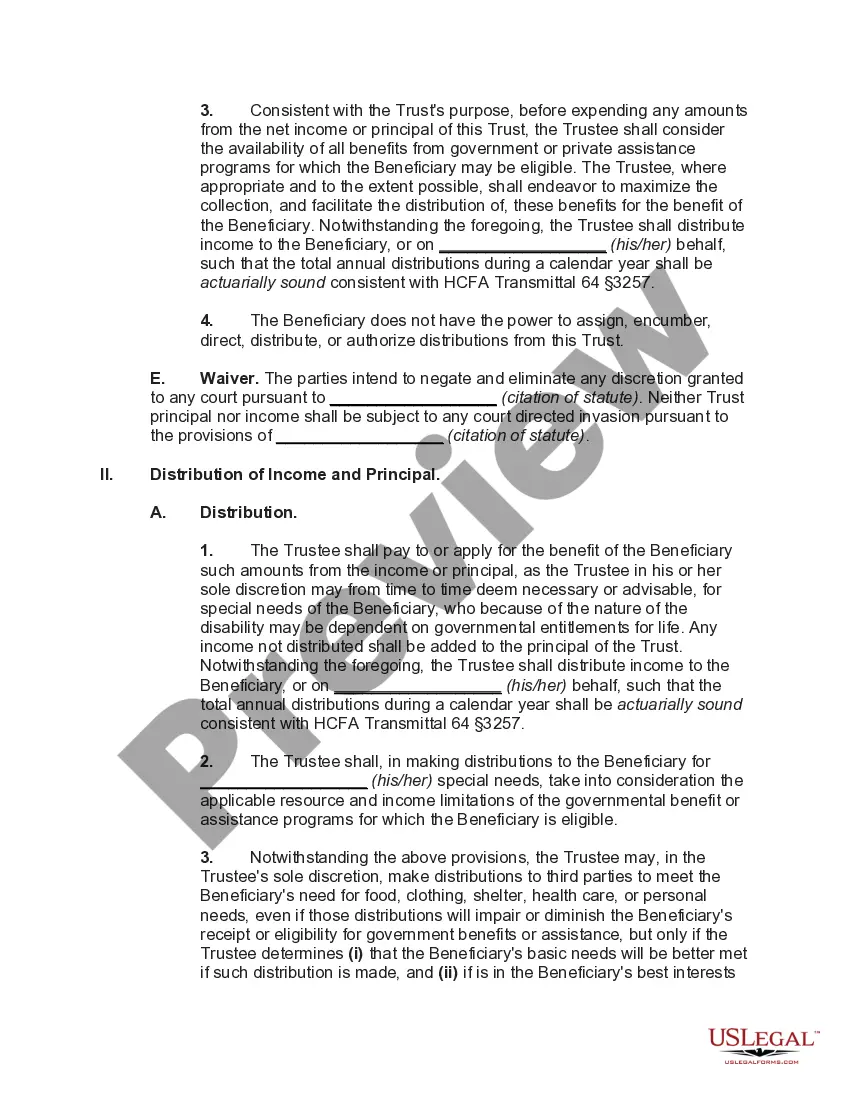
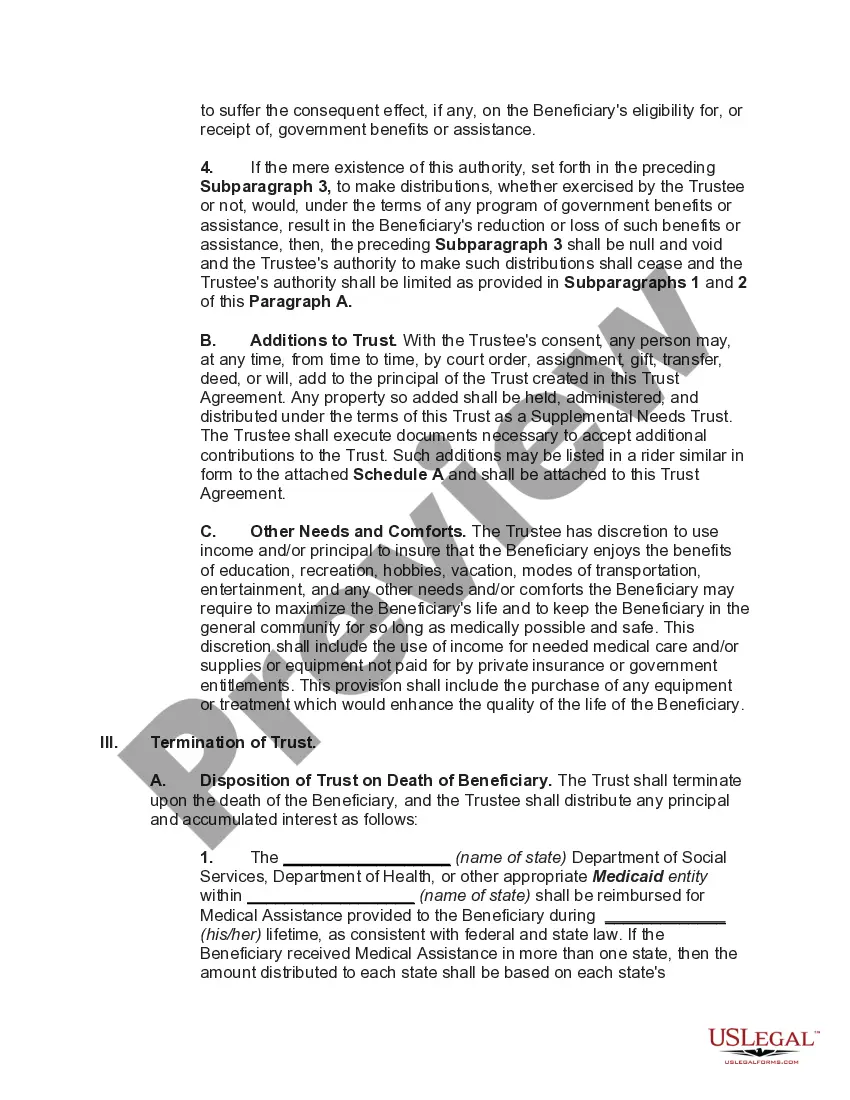
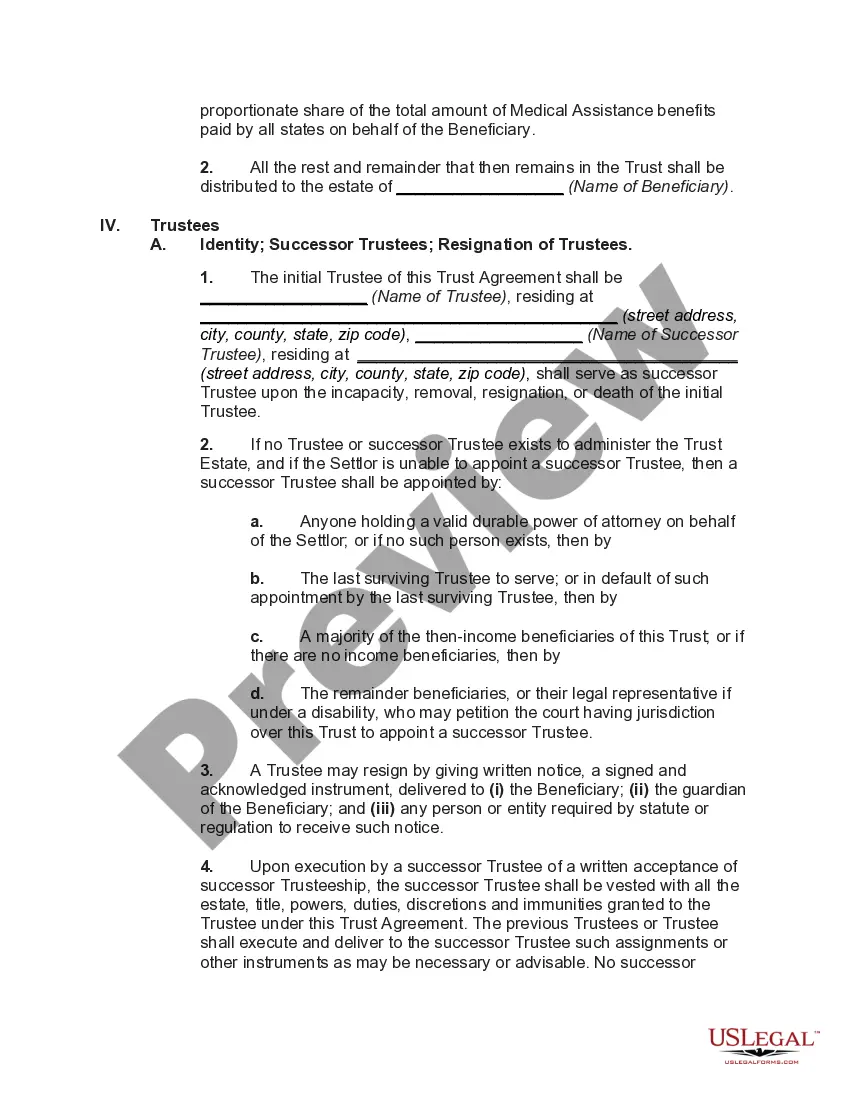
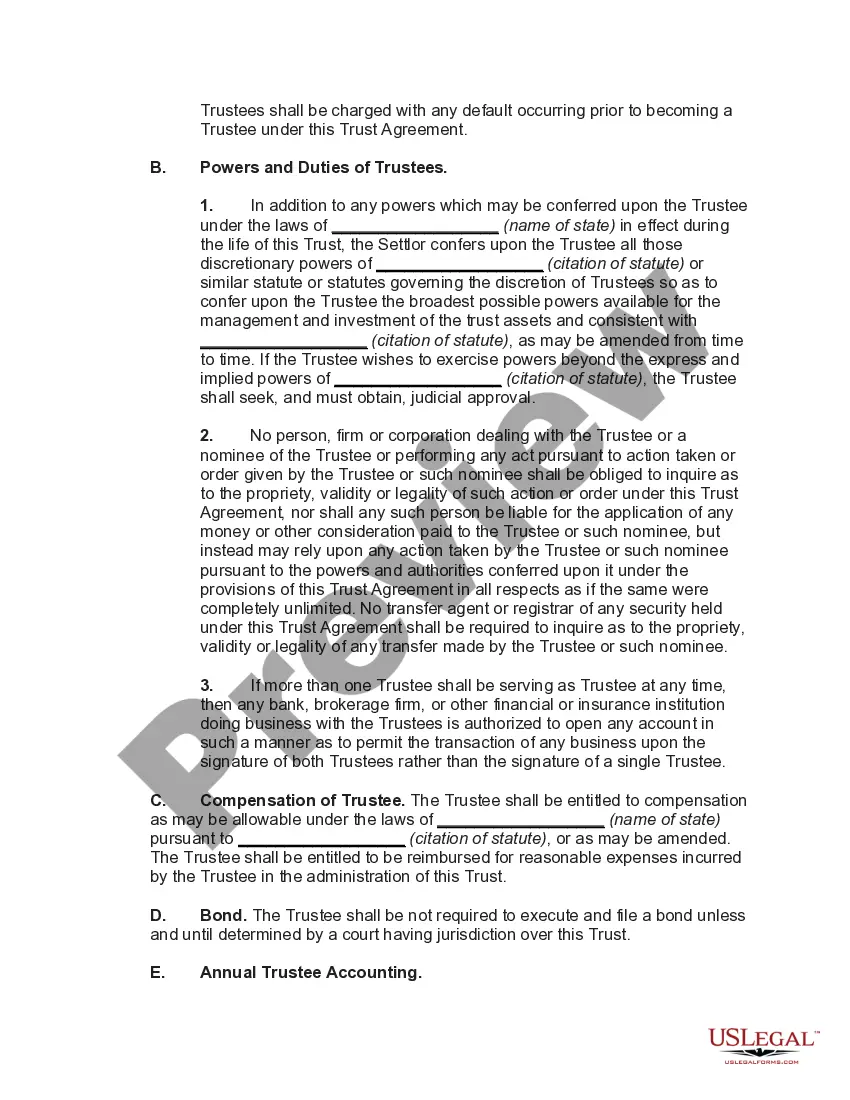
Special Needs Trust Definition For Medicaid
Description

Get your form ready online
Our built-in tools help you complete, sign, share, and store your documents in one place.
Make edits, fill in missing information, and update formatting in US Legal Forms—just like you would in MS Word.
Download a copy, print it, send it by email, or mail it via USPS—whatever works best for your next step.
Sign and collect signatures with our SignNow integration. Send to multiple recipients, set reminders, and more. Go Premium to unlock E-Sign.
If this form requires notarization, complete it online through a secure video call—no need to meet a notary in person or wait for an appointment.
We protect your documents and personal data by following strict security and privacy standards.

Make edits, fill in missing information, and update formatting in US Legal Forms—just like you would in MS Word.

Download a copy, print it, send it by email, or mail it via USPS—whatever works best for your next step.

Sign and collect signatures with our SignNow integration. Send to multiple recipients, set reminders, and more. Go Premium to unlock E-Sign.

If this form requires notarization, complete it online through a secure video call—no need to meet a notary in person or wait for an appointment.

We protect your documents and personal data by following strict security and privacy standards.
Looking for another form?






How to fill out Special Needs Irrevocable Trust Agreement For Benefit Of Disabled Child Of Trustor?
Legal administration can be perplexing, even for the most seasoned professionals.
If you are looking for a Special Needs Trust Definition For Medicaid and lack the time to search for the correct and current version, the tasks can be onerous.
US Legal Forms addresses all your needs, from personal to business documents, all in a single location.
Utilize sophisticated tools to complete and oversee your Special Needs Trust Definition For Medicaid.
Here are the actions to take after obtaining the form you require: Verify that this is the correct form by reviewing it and examining its details. Confirm that the template is valid in your state or county. Select Buy Now when you are prepared. Choose a monthly subscription option. Locate the format you need, and Download, complete, eSign, print, and send your document. Enjoy the US Legal Forms online library, backed by 25 years of experience and reliability. Transform your daily document management into a straightforward and user-friendly experience today.
- Access a resource hub of articles, tutorials, and guides pertinent to your circumstances and requirements.
- Save time and energy searching for the documents you need, and use US Legal Forms’ advanced search and Preview function to find Special Needs Trust Definition For Medicaid and acquire it.
- If you have a monthly subscription, Log In to your US Legal Forms account, search for the form, and obtain it.
- Check the My documents section to review the documents you have previously downloaded and organize your folders as needed.
- If this is your first experience with US Legal Forms, create a complimentary account to gain unrestricted access to all features of the platform.
- A comprehensive online template repository can be transformative for anyone wishing to navigate these matters efficiently.
- US Legal Forms is a top provider in online legal documents, offering over 85,000 state-specific legal templates available to you at any time.
- With US Legal Forms, you can access various legal and business documents tailored to state or county requirements.
Form popularity
FAQ
Some common mistakes when establishing a special needs trust include failing to comply with Medicaid regulations, not consulting with legal experts, and misunderstanding the trust's purpose. It's crucial to adhere to the special needs trust definition for Medicaid to avoid jeopardizing benefits. Additionally, improper management of trust funds can lead to unintended consequences. Utilizing resources like USLegalForms can guide you in creating a compliant and effective special needs trust.
An example of a special needs trust could include a trust established for a child with a disability, allowing funds to be used for education, healthcare, and personal care without affecting their Medicaid eligibility. This aligns with the special needs trust definition for Medicaid, ensuring that the child can receive both care and financial support. By setting clear guidelines, families can create a trust that meets their specific needs while maintaining access to essential benefits.
Generally, Medicaid cannot pursue a properly established special needs trust for repayment. The special needs trust definition for Medicaid specifically protects these funds, allowing them to be used for the beneficiary's supplemental needs without being counted as available assets. However, it's important to navigate the rules carefully to avoid any complications. Consulting experts can help you ensure compliance and protection.
A special needs trust, when properly established, does not negatively impact Medicaid eligibility. This trust is designed to provide for individuals with disabilities without disqualifying them from receiving Medicaid benefits. By adhering to the special needs trust definition for Medicaid, families can ensure that their loved ones have access to necessary support without jeopardizing their financial assistance. It's essential to work with professionals who understand these nuances.
A trust can indeed affect Medicaid eligibility, depending on its structure and the assets involved. Specifically, a special needs trust definition for Medicaid ensures that assets held in the trust do not count against the recipient's asset limit for Medicaid. This allows individuals to maintain their eligibility while benefiting from additional resources. Therefore, understanding how a trust operates is crucial for effective Medicaid planning.
Hear this out loud PauseThere are two types of special needs trusts: first-party and third-party. Neither can be used to pay for certain basic expenses covered by government programs. ABLE accounts can be funded to help cover basic needs not paid for by government aid.
Hear this out loud PauseThe SNT allows a person who is certified as disabled and who has excess resources to receive Medicaid, if the excess resources are placed within the SNT. Trust funds pay for expenses not paid for by public benefits. This arrangement helps to improve the quality of life for the person with a disability.
Hear this out loud PauseThe trustee works in very close contact with the beneficiary and/or their caregiver to manage the trust and its financial distributions to pay for these things. The main takeaway regarding distribution of SNT funds is this: The beneficiary never sees the money directly, but the money is used to pay for their needs.
The Trustee simply transfers all assets to the beneficiary. Distribution is also fairly easy if the trust document identifies all assets and specific amounts to be paid to each beneficiary. Distributions by percentages are a little more complicated as the Trustee should first establish the estate's fair market value.
Hear this out loud PauseA special needs trust, also known as a supplemental needs trust, is a type of irrevocable trust that can provide benefits to minors and physically or mentally challenged individuals.