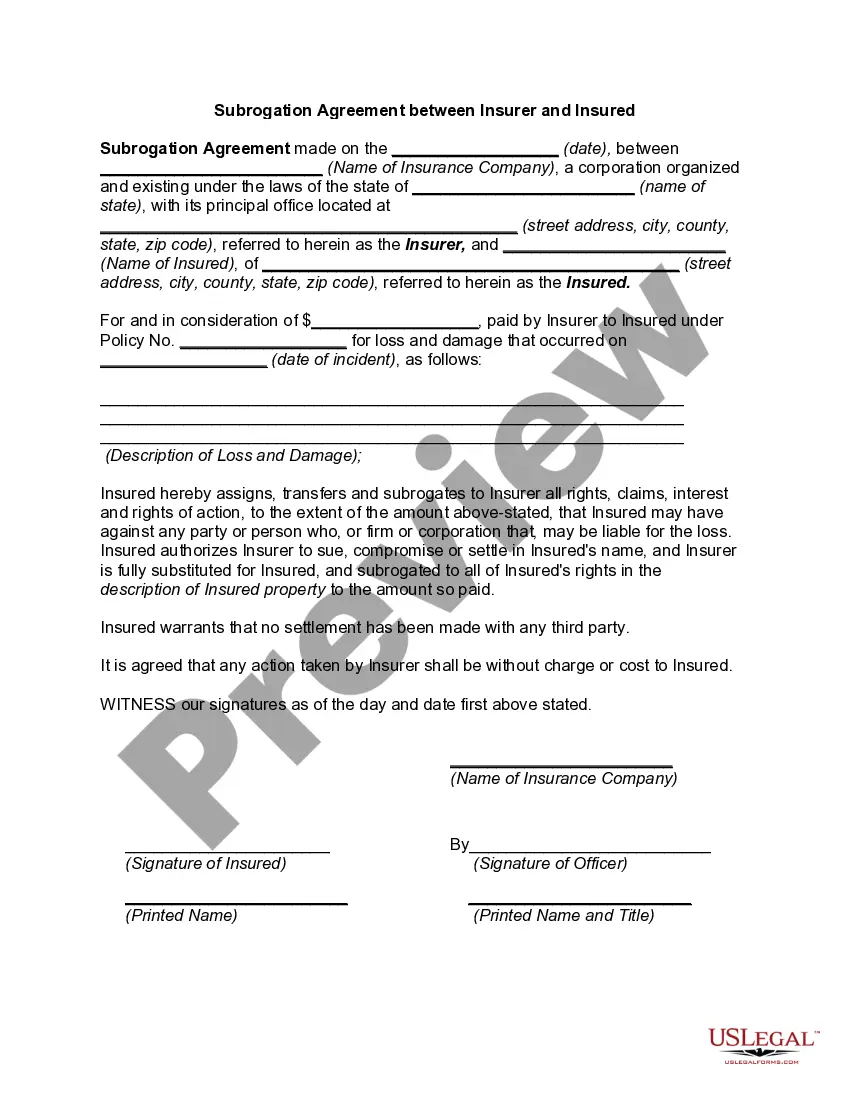
What Is Subrogation
Description
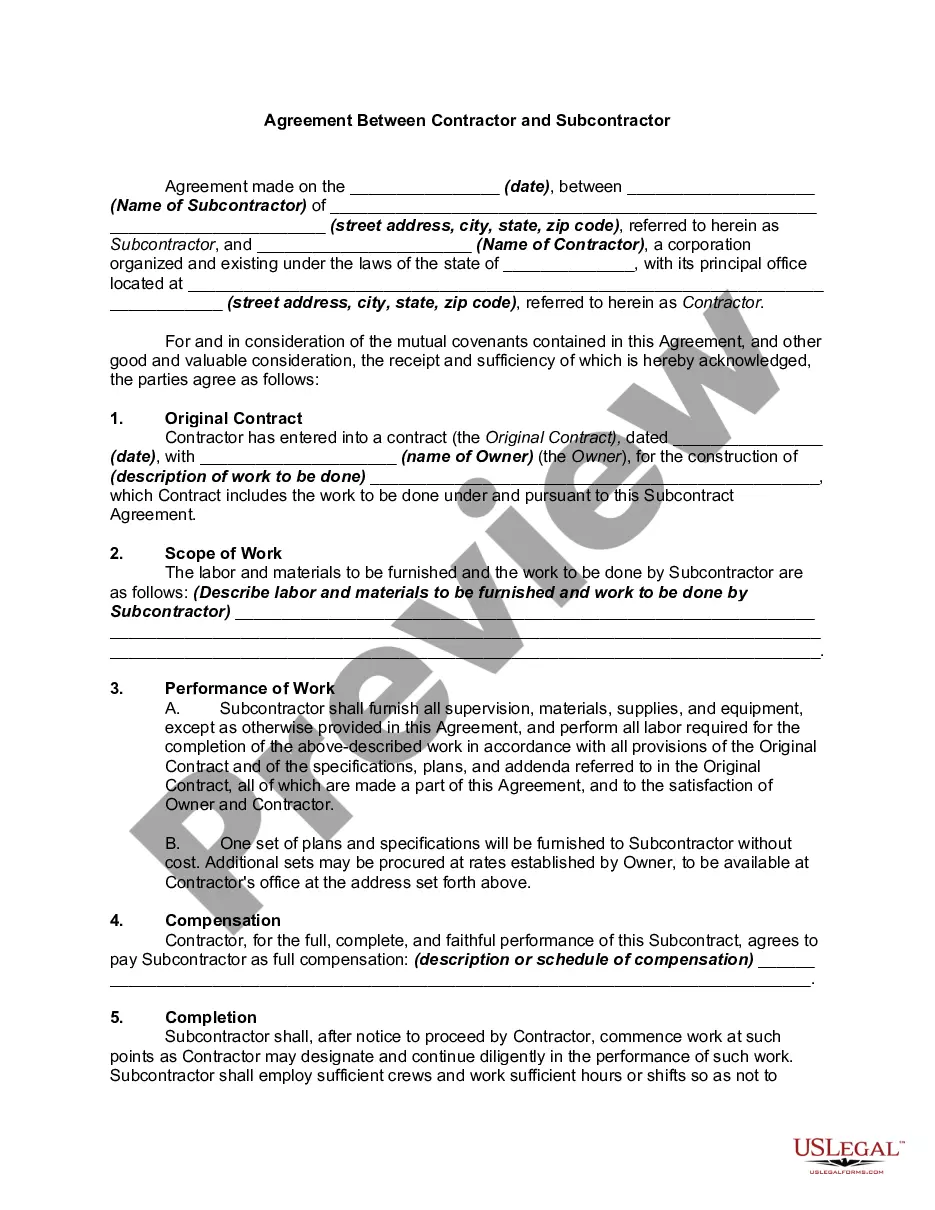
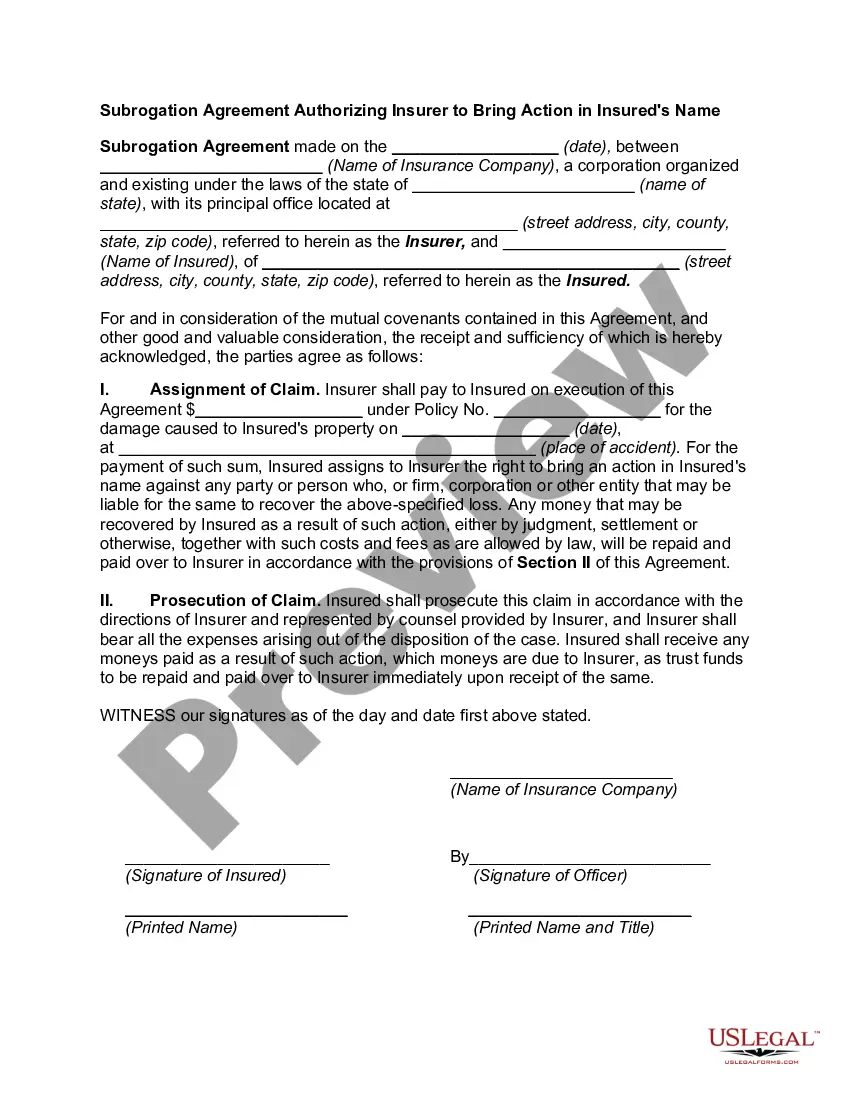
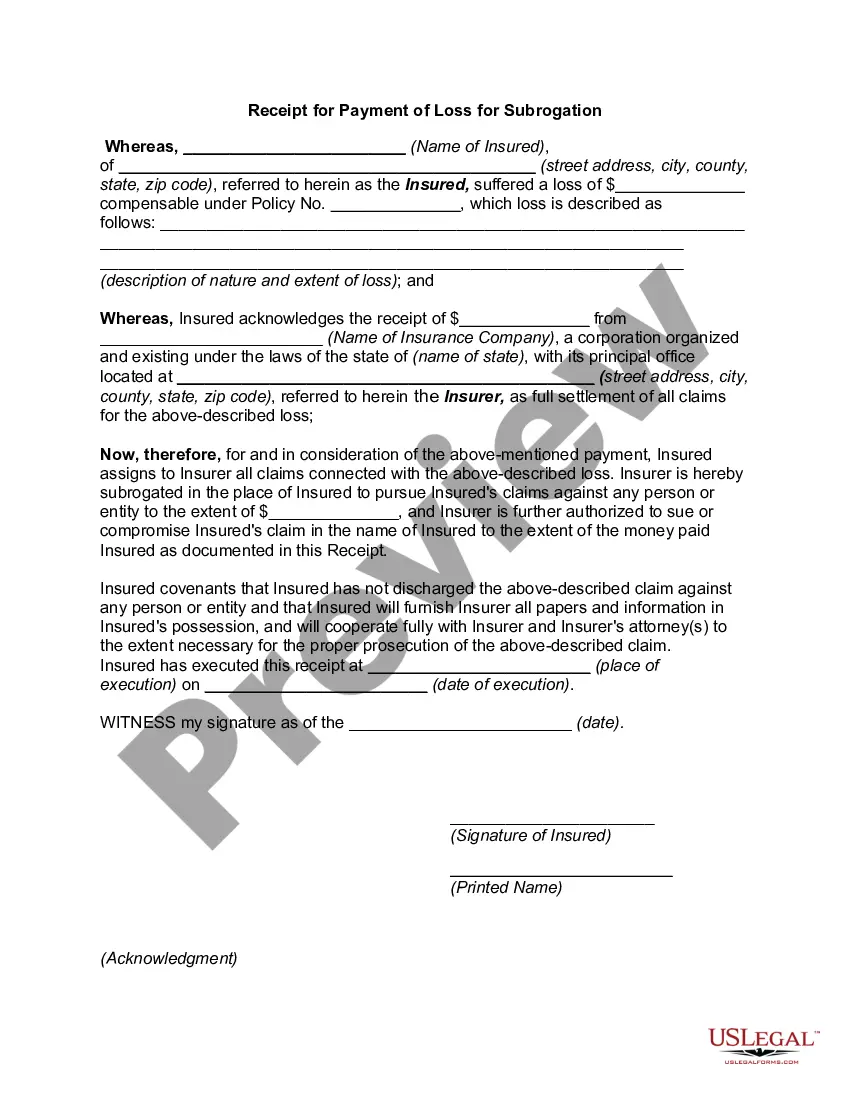
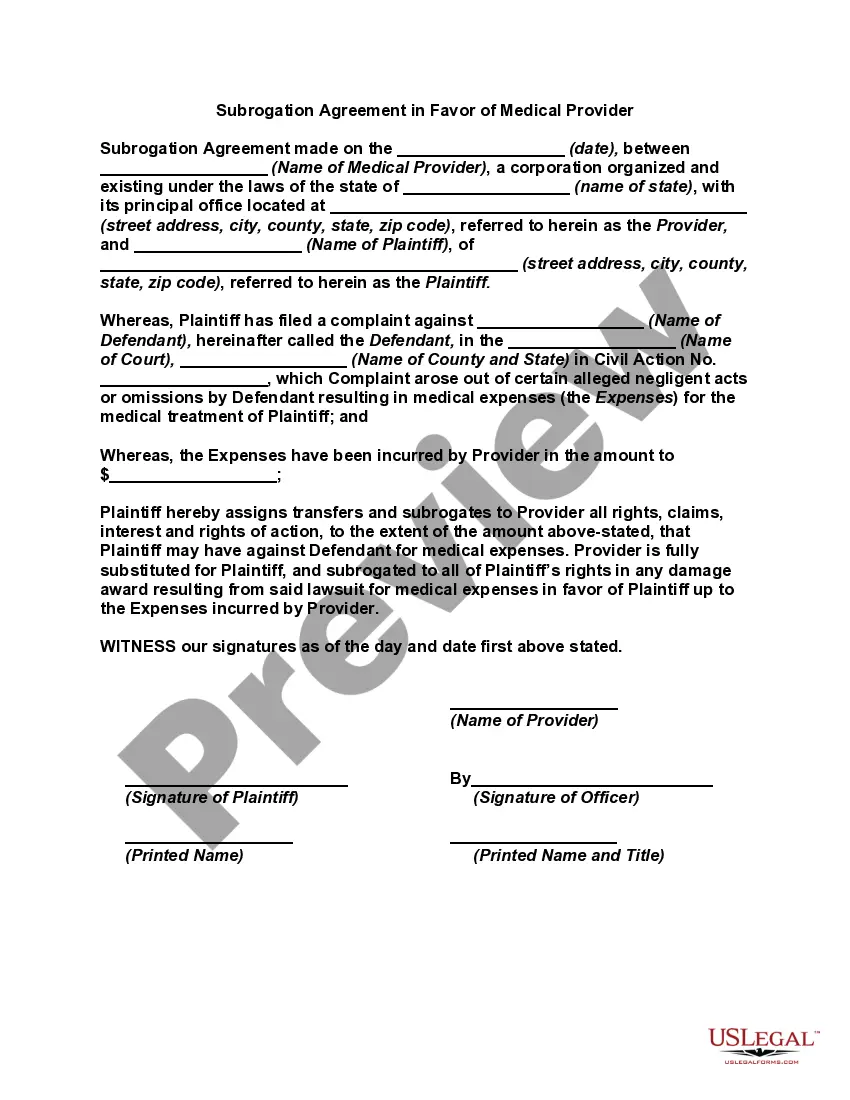
Get your form ready online
Our built-in tools help you complete, sign, share, and store your documents in one place.
Make edits, fill in missing information, and update formatting in US Legal Forms—just like you would in MS Word.
Download a copy, print it, send it by email, or mail it via USPS—whatever works best for your next step.
Sign and collect signatures with our SignNow integration. Send to multiple recipients, set reminders, and more. Go Premium to unlock E-Sign.
If this form requires notarization, complete it online through a secure video call—no need to meet a notary in person or wait for an appointment.
We protect your documents and personal data by following strict security and privacy standards.

Make edits, fill in missing information, and update formatting in US Legal Forms—just like you would in MS Word.

Download a copy, print it, send it by email, or mail it via USPS—whatever works best for your next step.

Sign and collect signatures with our SignNow integration. Send to multiple recipients, set reminders, and more. Go Premium to unlock E-Sign.

If this form requires notarization, complete it online through a secure video call—no need to meet a notary in person or wait for an appointment.

We protect your documents and personal data by following strict security and privacy standards.
Looking for another form?

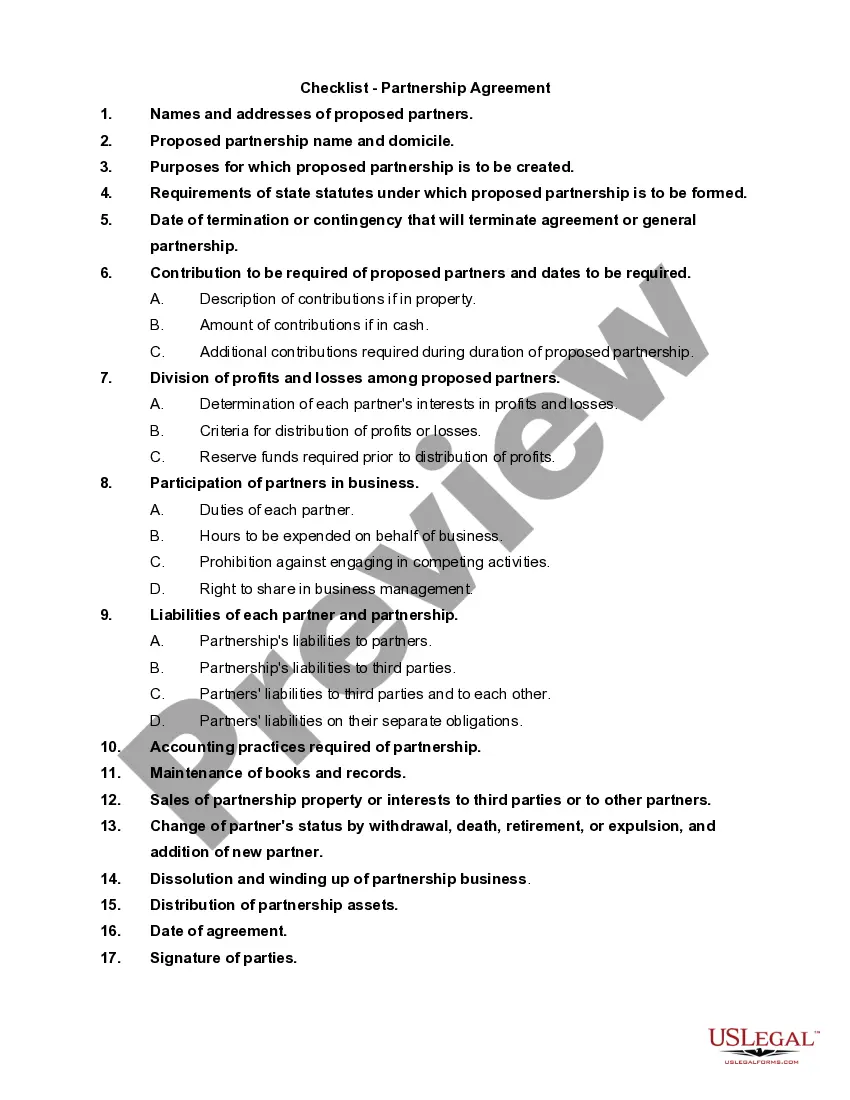






How to fill out Subrogation Agreement Between Insurer And Insured?
- Log in to your US Legal Forms account if you're a returning user. Ensure your subscription remains active for uninterrupted access.
- For first-time users, browse through the extensive library. Utilize the Preview mode to review form descriptions and confirm the document suits your jurisdiction.
- If the form doesn't meet your requirements, utilize the Search tab to find an alternative to better fit your needs.
- Once you find the right document, click on the Buy Now button. Choose a suitable subscription plan and create an account to gain full access.
- Complete your purchase by entering your payment details through credit card or PayPal to finalize your subscription.
- Finally, download your form to your device. Access it anytime through the My Forms menu for future reference.
Utilizing US Legal Forms grants you access to over 85,000 editable legal documents, far outpacing competitors. Each form is designed for ease of use and accuracy, ensuring legal compliance.
In conclusion, US Legal Forms is an essential tool for anyone needing legal documentation. Take control of your legal needs today and experience the ease of form completion with our platform.
Form popularity
FAQ
A simple example of the principle of subrogation is when your insurer pays for water damage to your home due to a neighbor's faulty plumbing. After settling your claim, your insurance company may seek reimbursement from your neighbor’s insurance. This illustrates how subrogation works to ensure that the responsible party is held accountable.
Subrogation, in simple terms, means that when your insurance pays for your damages, it can then go after the party that caused those damages to recover costs. This process helps keep insurance costs down and ensures that the responsible party bears the financial burden. A clear understanding of subrogation can help you navigate insurance claims efficiently.
Yes, you should respond to the subrogation letter, especially if it comes from an insurance company. Ignoring it could have legal consequences or delay the resolution of your claim. If you are unsure how to answer, consider using US Legal Forms for guidance on drafting a proper response.
Subrogation does not necessarily mean that you are not at fault. Instead, it indicates that after your insurance pays for a loss, they assume the right to pursue the party that caused the loss. Therefore, the determination of fault is still crucial in the subrogation process.
An example of subrogation occurs when your insurance company pays for your car repairs after an accident. In this case, your insurer may seek reimbursement from the at-fault driver's insurance. This process illustrates the principle of subrogation, where one party stands in for another to recover damages.
An example of subrogation occurs when your insurance company pays for your car repairs after an accident. If the accident was someone else's fault, your insurer can seek reimbursement from the at-fault party’s insurance. This process illustrates what subrogation is, where the insurance company steps into your shoes to recover costs. It helps ensure that the responsible party ultimately pays for damages.
Subrogation has both positive and negative aspects. On one hand, it can lead to lower insurance costs for policyholders by allowing insurance companies to recover their losses. On the other hand, it may create misunderstandings and stress during claims processing. Recognizing the implications of what subrogation means can help you make informed choices, and uslegalforms can equip you with the necessary knowledge.
Handling a subrogation claim requires careful attention to details. You should document all communications and keep accurate records of damages and expenses. Understanding what subrogation entails can help you navigate this process more effectively. For assistance, uslegalforms provides templates and guidelines that simplify managing your claim.
Insurance companies choose to subrogate to recover costs they have incurred from paying out claims. By pursuing subrogation, they hold the responsible party accountable, ensuring that funds are not wasted. This process benefits policyholders by keeping premiums lower over time. If you want to learn more about how subrogation works, uslegalforms offers useful insights.
You may receive calls related to subrogation if you are involved in a claim where another party is seeking reimbursement. This usually happens when your insurance company pays for damages caused by someone else. It's essential to understand what subrogation means in this context, as it affects your finances and responsibilities. For guidance, uslegalforms can help clarify your role in these situations.