Subrogation With Medicare
Description
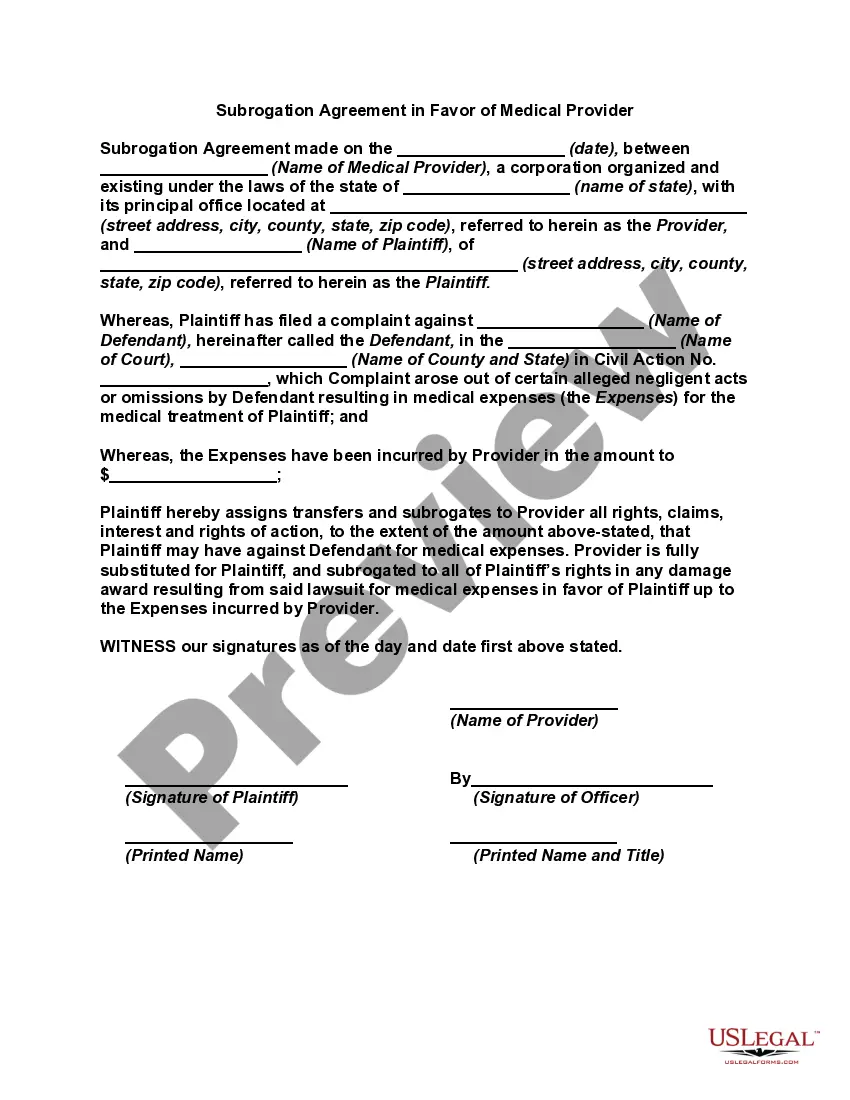
Get your form ready online
Our built-in tools help you complete, sign, share, and store your documents in one place.
Make edits, fill in missing information, and update formatting in US Legal Forms—just like you would in MS Word.
Download a copy, print it, send it by email, or mail it via USPS—whatever works best for your next step.
Sign and collect signatures with our SignNow integration. Send to multiple recipients, set reminders, and more. Go Premium to unlock E-Sign.
If this form requires notarization, complete it online through a secure video call—no need to meet a notary in person or wait for an appointment.
We protect your documents and personal data by following strict security and privacy standards.

Make edits, fill in missing information, and update formatting in US Legal Forms—just like you would in MS Word.

Download a copy, print it, send it by email, or mail it via USPS—whatever works best for your next step.

Sign and collect signatures with our SignNow integration. Send to multiple recipients, set reminders, and more. Go Premium to unlock E-Sign.

If this form requires notarization, complete it online through a secure video call—no need to meet a notary in person or wait for an appointment.

We protect your documents and personal data by following strict security and privacy standards.
Looking for another form?



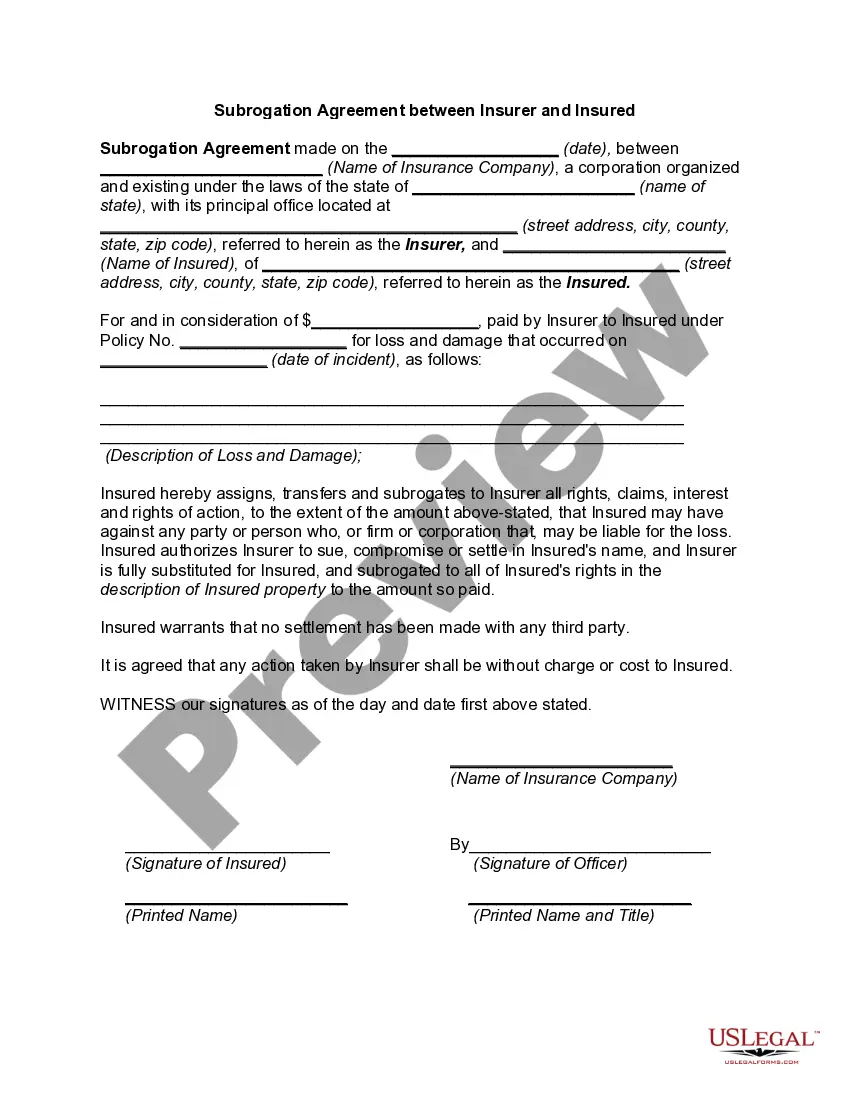
How to fill out Subrogation Agreement Between Insurer And Insured?
- Begin by logging into your account at US Legal Forms if you're a returning user. Ensure your subscription is active to access document downloads.
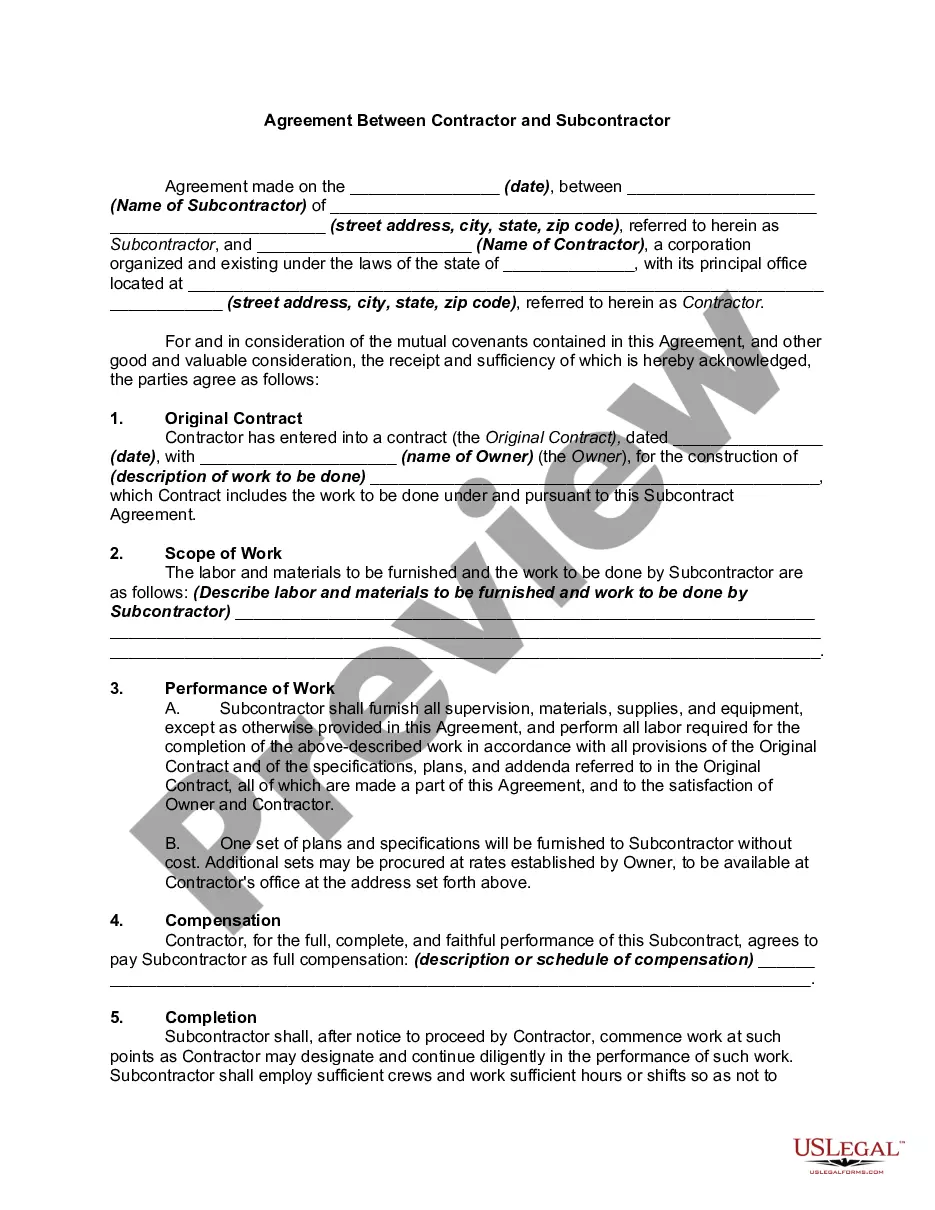
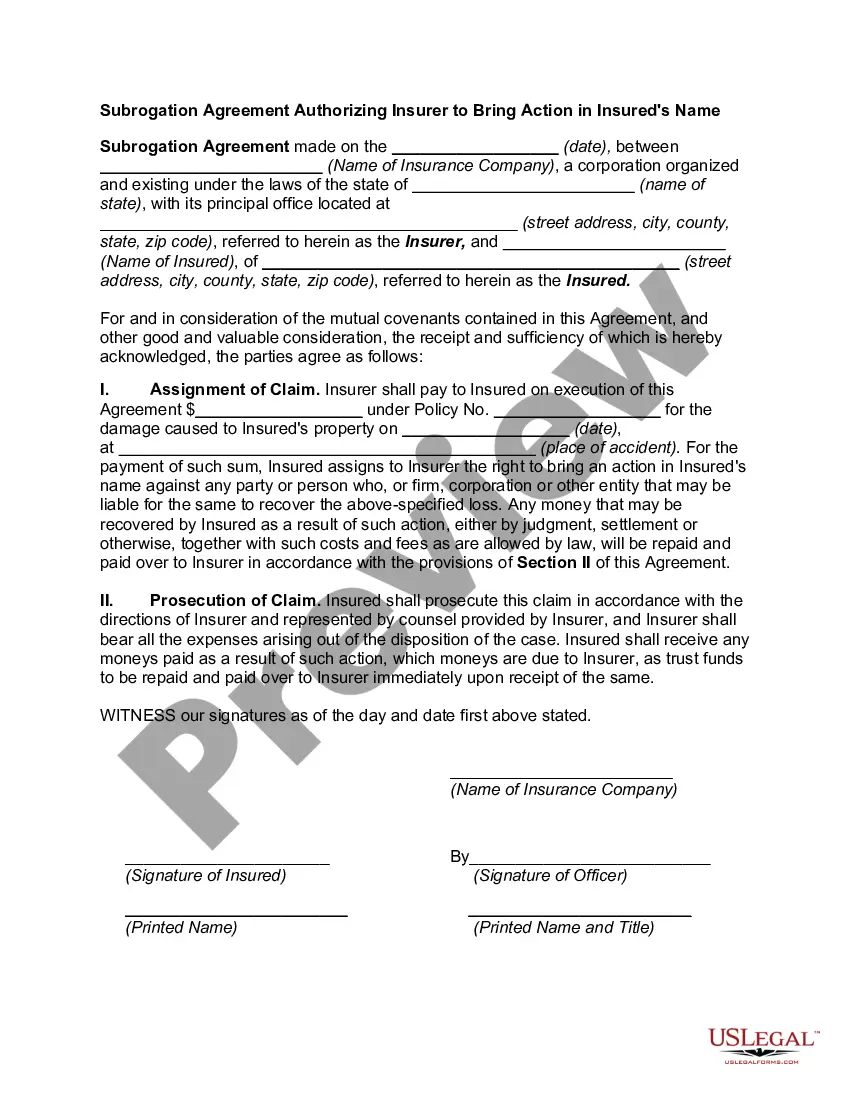
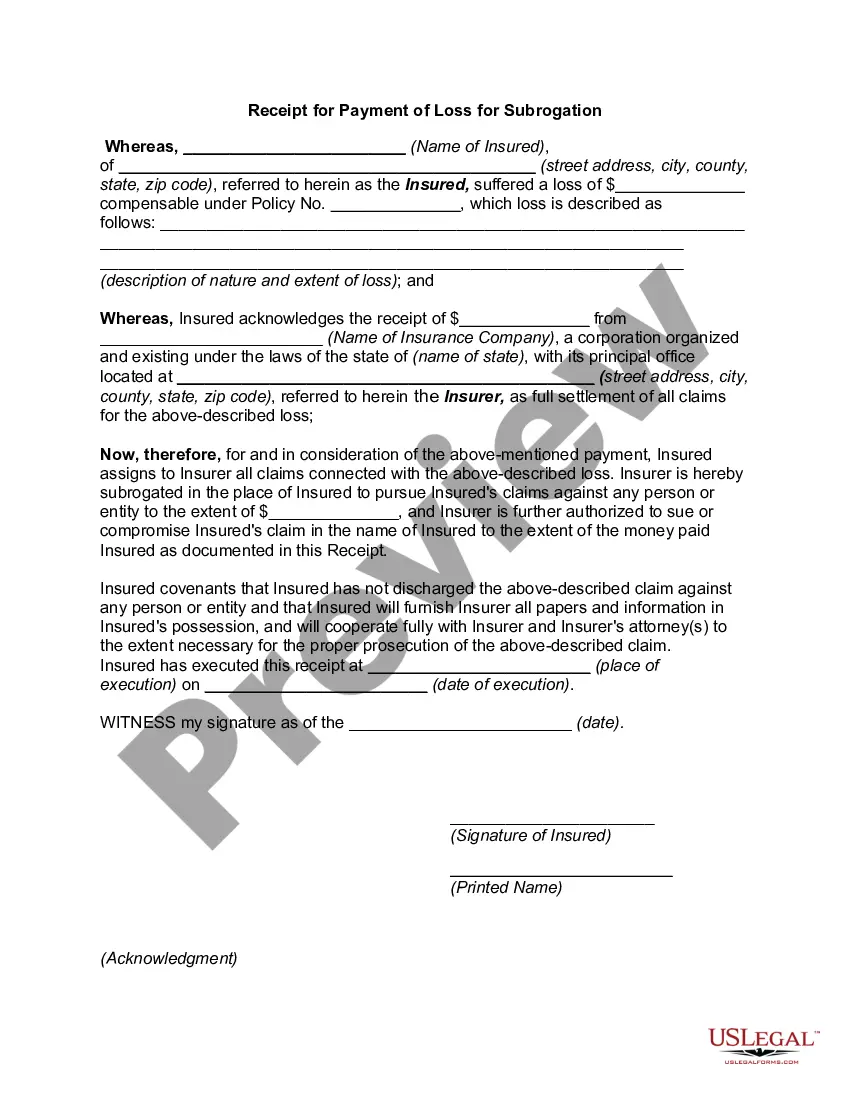
- For new users, start by reviewing the form preview and description, confirming that it meets your specific needs and local jurisdiction requirements.
- If the listed document does not suit you, utilize the Search tab to explore alternative templates that may fit your requirements better.
- Once you've found the correct form, click the Buy Now button, select your desired subscription plan, and create an account for full access.
- Proceed to make your payment using your credit card or PayPal account to finalize your subscription.
- After the purchase, download the document to your device, and you can access it anytime in the My Forms section of your profile.
US Legal Forms stands out with its extensive form collection, offering over 85,000 easily editable and fillable legal documents. The platform not only provides access to a robust library but also connects users with premium experts for assistance, ensuring documents are completed accurately.
Don't let the complexities of legal documentation overwhelm you. Start your journey with US Legal Forms today and experience intuitive solutions for all your legal needs!
Form popularity
FAQ
The statute of limitations for Medicare subrogation typically depends on the state law but often falls within three to six years. This timeframe allows Medicare to recover payments made for services related to a third party's responsibility. It is essential to be aware of your state's specific laws regarding the statute of limitations for subrogation with Medicare. Knowing this can help you act promptly if you're involved in a claim.
Yes, Medicare does engage in subrogation. When another party is liable for medical expenses, Medicare seeks to recover the costs it covered for those services. This process ensures that Medicare funds are used appropriately, benefiting all Medicare recipients. If you find yourself in a situation involving subrogation with Medicare, understanding your rights can be crucial.
To report a Medicare compliance issue, you can contact the Medicare Administrative Contractor in your area. They provide guidance and can assist you with specific concerns or violations. It’s essential to address any compliance issues promptly, especially related to subrogation with Medicare, to avoid potential penalties or complications in your healthcare billing.
The subrogation process involves several steps. Initially, Medicare pays for your medical expenses, assuming you will hold another party responsible. After that, Medicare seeks reimbursement from that party or their insurance company. Being familiar with subrogation with Medicare can help you navigate this process effectively and ensure compliance with regulations.
Yes, you can submit claims directly to Medicare for covered services. Typically, healthcare providers send claims on your behalf, but you can also file claims yourself. Keep detailed records and ensure you have all necessary documents for reimbursement. Utilizing the subrogation with Medicare can streamline this process if another party is liable for your medical expenses.
Yes, Medicare has a right of subrogation. This means that when Medicare pays for a healthcare service, and another party is responsible for that expense, Medicare can seek reimbursement. Essentially, if you receive a settlement or judgment, Medicare may require you to repay them for the costs they covered. Understanding the subrogation with Medicare is crucial for managing your healthcare expenses effectively.
Medicare subrogation operates in a similar way to standard subrogation processes, focusing on recovering costs from liable third parties. If Medicare pays for medical expenses due to an accident, it may seek reimbursement from the responsible party or their insurance. This ensures that Medicare resources are used effectively, while also protecting taxpayer dollars. Understanding how to navigate subrogation with Medicare can help patients and insurers alike streamline their financial responsibilities.
Subrogation in medical insurance refers to the process where an insurer seeks reimbursement for costs from a party responsible for a policyholder's injury or illness. When you receive treatment and your insurer pays for it, they may pursue subrogation with Medicare if applicable. This process ensures that the party at fault ultimately bears the financial burden, which can help lower insurance costs over time. Ultimately, understanding this process can lead to better financial outcomes for everyone involved.
Yes, a settlement can affect your Medicare coverage. When you receive a settlement related to an injury, it may trigger a review of your entitlement to benefits, especially if it involves medical expenses. Subrogation with Medicare ensures that Medicare can reclaim any payments made on your behalf related to the injury. Thus, it's crucial to handle settlements carefully and seek guidance to understand how your Medicare benefits may be influenced.
The amount Medicare will recover from your Roundup settlement depends on the medical expenses it covered related to your injury. Typically, Medicare assesses each case individually to calculate the reimbursement amount, which adheres to the principles of subrogation with Medicare. This means that the more your treatment costs, the higher the recovery amount may be. Consulting with an expert can clarify how to approach your specific situation.