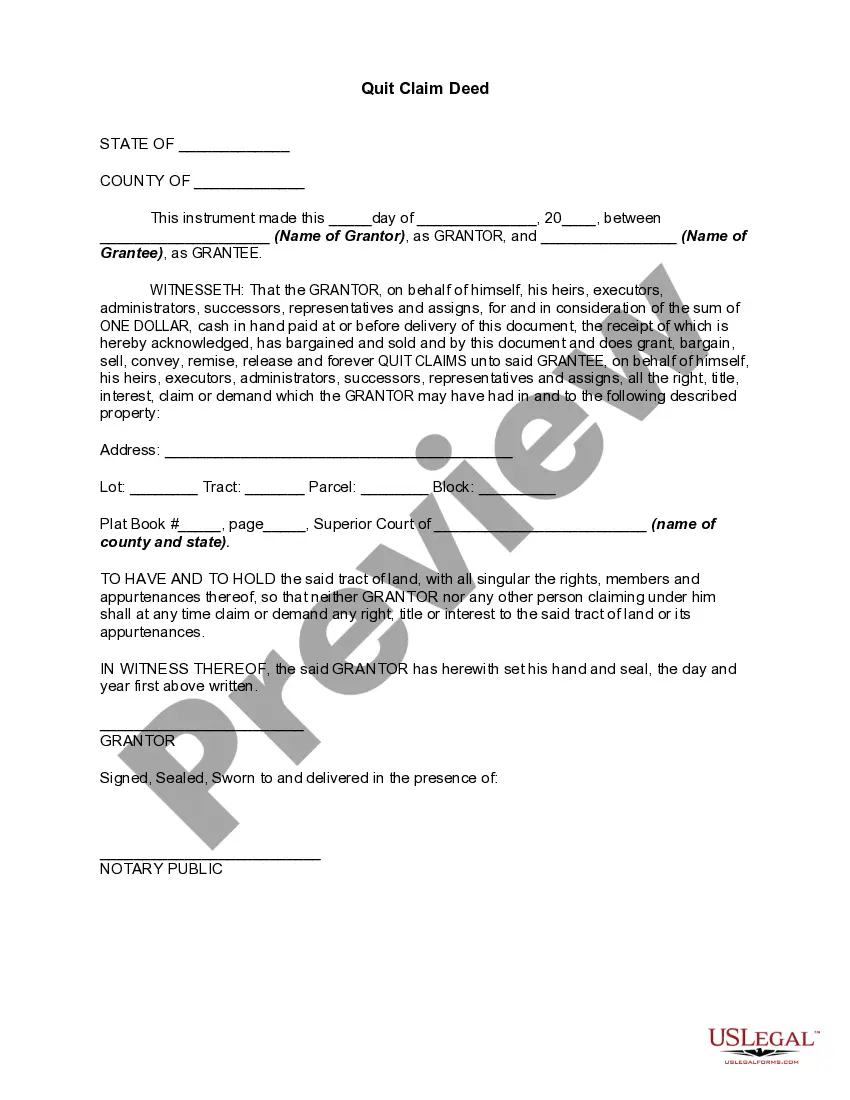
Quitclaim Deed With Life Estate Clause
Description
Get your form ready online
Our built-in tools help you complete, sign, share, and store your documents in one place.
Make edits, fill in missing information, and update formatting in US Legal Forms—just like you would in MS Word.
Download a copy, print it, send it by email, or mail it via USPS—whatever works best for your next step.
Sign and collect signatures with our SignNow integration. Send to multiple recipients, set reminders, and more. Go Premium to unlock E-Sign.
If this form requires notarization, complete it online through a secure video call—no need to meet a notary in person or wait for an appointment.
We protect your documents and personal data by following strict security and privacy standards.

Make edits, fill in missing information, and update formatting in US Legal Forms—just like you would in MS Word.

Download a copy, print it, send it by email, or mail it via USPS—whatever works best for your next step.

Sign and collect signatures with our SignNow integration. Send to multiple recipients, set reminders, and more. Go Premium to unlock E-Sign.

If this form requires notarization, complete it online through a secure video call—no need to meet a notary in person or wait for an appointment.

We protect your documents and personal data by following strict security and privacy standards.
Looking for another form?
How to fill out Quitclaim Deed?
Regardless of whether for commercial reasons or personal issues, everyone eventually encounters legal circumstances in their lifetime.
Filling out legal documents requires meticulous care, starting with choosing the right form template.
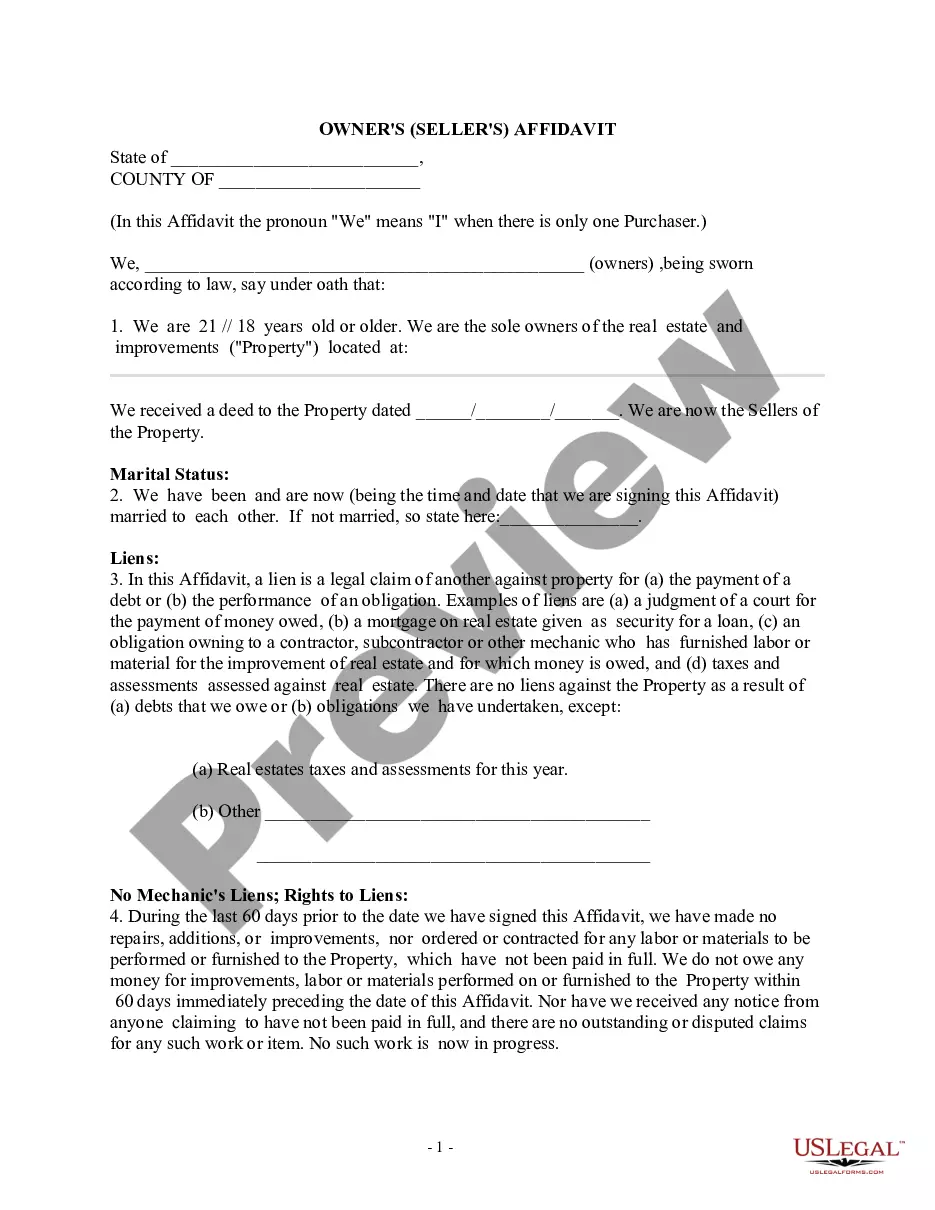
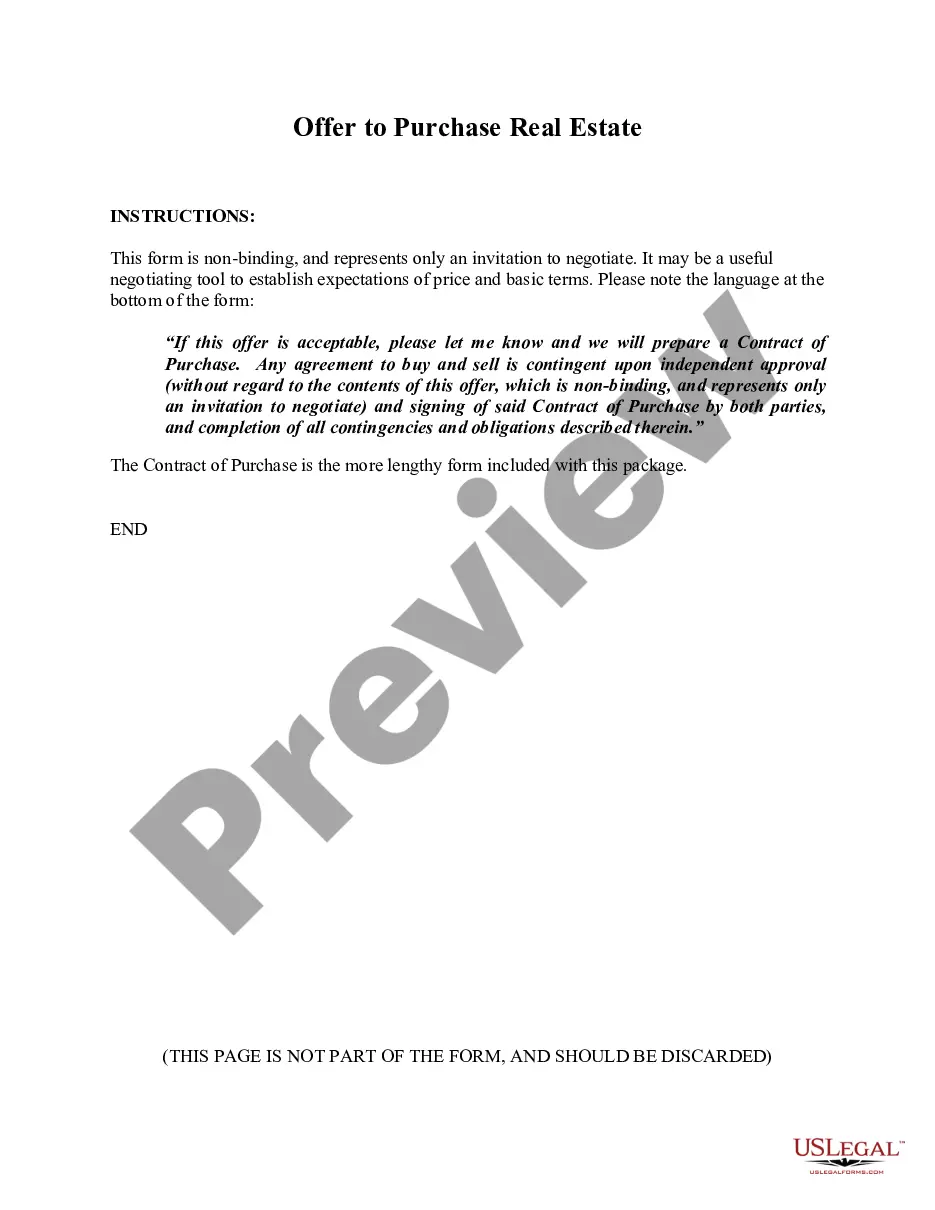
Choose the document format you prefer and download the Quitclaim Deed With Life Estate Clause. Once saved, you can fill out the form using editing software or print it and complete it by hand. With a vast US Legal Forms library available, you do not have to waste time searching for the correct sample online. Take advantage of the library’s straightforward navigation to locate the suitable template for any scenario.
- For example, if you select an incorrect version of the Quitclaim Deed With Life Estate Clause, it will be rejected upon submission.
- Thus, it is crucial to find a trustworthy source of legal documents such as US Legal Forms.
- If you wish to obtain a Quitclaim Deed With Life Estate Clause template, follow these straightforward steps.
- Access the sample you require by utilizing the search feature or browsing the catalog.
- Review the form’s details to confirm it aligns with your situation, state, and county.
- Click on the form’s preview to review it.
- If it is the wrong form, return to the search feature to find the Quitclaim Deed With Life Estate Clause template you need.
- Download the file if it meets your specifications.
- If you already possess a US Legal Forms account, simply click Log in to access previously saved documents in My documents.
- If you do not have an account yet, you can acquire the form by clicking Buy now.
- Choose the appropriate pricing option.
- Fill out the profile registration form.
- Select your payment method: you may use a credit card or PayPal account.
Form popularity
FAQ
A quitclaim deed with a life estate clause can pose some challenges. First, it limits the property owner's ability to sell or mortgage the property because the new owner only holds the interest for the duration of their lifetime. Additionally, when the life estate owner passes away, the property automatically transfers to the remainderman, which may create tax implications or disputes among heirs. It's essential to consult with a professional who can help navigate these concerns and ensure you fully understand your options.
Yes, a quitclaim deed with life estate clause helps in avoiding probate. By designating a beneficiary directly in the deed, the property automatically transfers to the beneficiary upon your passing. This allows for a smoother transition and prevents delays associated with the probate process, giving you peace of mind about your property and your heirs.
When considering a quitclaim deed with life estate clause, it’s essential to understand its tax implications. Typically, the property is assessed for tax purposes at its fair market value when you pass away, potentially allowing your heirs to benefit from a stepped-up basis. However, during your lifetime, you remain responsible for property taxes. Consulting a tax professional will help you navigate these considerations.
One of the significant benefits of a quitclaim deed with life estate clause is the ability to pass on property to heirs directly, avoiding probate. This simplifies the transfer process and saves time and costs associated with probate proceedings. Furthermore, it allows you to retain control over the property during your lifetime, ensuring that you can continue to live there while providing for your beneficiary's future.
While a quitclaim deed with life estate clause offers several benefits, it also has drawbacks. One key concern is that once you establish a life estate, you cannot sell or transfer your interest in the property without the consent of the remainderman. Additionally, the property may not be shielded from creditors and could complicate estate planning if other heirs are involved. It's important to assess these factors carefully.
A will generally cannot override a life estate deed. When you create a quitclaim deed with life estate clause, you essentially transfer property rights to a beneficiary while retaining the right to live in the property during your lifetime. Once you pass away, the property directly goes to the named beneficiary, bypassing the will. This feature ensures that your wishes regarding property distribution are honored without being influenced by a will.
Selling a house that is subject to a life estate can be complicated. The life tenant holds the right to use the property until their death, which affects the ability to sell. However, with a quitclaim deed with life estate clause, the property can be sold with proper legal guidance, ensuring all parties understand their rights and obligations.
To remove a life estate from a deed, all parties need to agree on the change. Some may choose to create a new deed, such as a quitclaim deed with life estate clause, stating the revised ownership structure. It's advisable to consult a legal professional to ensure compliance with state laws and to protect your interests.
Yes, a life estate can be transferred by will, but the specifics depend on the language used in the will and state laws. This transfer allows the estate holder to designate the future owner after passing. Utilizing a quitclaim deed with life estate clause can make this process smoother, as it clearly outlines the rights of both parties involved.
An example of a life estate clause includes language stating that the grantor retains the right to live in the property for their lifetime, after which ownership will transfer to a specified person or entity. This clause protects the grantor while clearly defining future ownership. A quitclaim deed with life estate clause often contains this element to ensure clarity for all parties involved.